Thursday, Feast of St. Alphonsus Liguori, 01 August 2019
Exodus 40:16-21, 34-38 >< )))*> <*((( >< Matthew 13:47-53
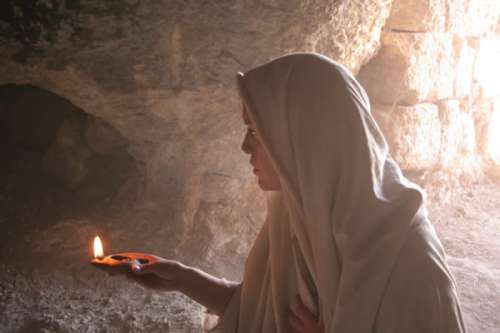
Photo by Lorenzo Atienza, 12 June 2019, Malolos City.
You must have heard so many times, Lord, our many wishful thinking of being with you like in our bible readings today.
We always think – and believe – that if we were there with you in the wilderness with Moses or with Jesus in his time in Galilee, we would have obeyed and followed you.
So many times we waste our prayers with so many wishful thinking how you would just let your cloud appear like that in the wilderness so we would know if we must continue with our journey or stop for a rest.
We waste precious moments wishing we are face to face with Jesus inside the house, listening to him explain his parables as if we would understand it easily.
On this feast of St. Alphonsus Liguori, we pray to you O God that we may imitate him to be like “every scribe who has been instructed in the Kingdom of heaven who brings from his storeroom both the new and the old” (Mt. 13:52).
Give us the grace like what you have given St. Alphonsus to continually seek you and your will at all time, in sickness and in health, especially in the most trying moments of life when we are old and sick, when those we have trusted betray us, relying solely in your fidelity and mercy and love.
Instead of entertaining flights of fancies about you, may we be like St. Alphonsus who was so open to your presence and reality especially among the poor and the suffering, the confused and the lost.
May we rediscover not only you, Lord, but through the intercession of St. Alphonsus Liguori, may we also rediscover the beauty and practicality of your morals so we may truly follow your ways of holiness in life.
Likewise, on this feast of St. Alphonsus Liguori, we pray in a special way those suffering various forms of arthritis that afflicted too our blessed saint today. Amen.
According to stories, St. Alphonsus Liguori’s arthritis was so severe that his head was bent down acutely that the pressure of his chin caused a wound on his chest.
Wednesday, Feast of St. Ignatius of Loyola, 31 July 2019
Exodus 34:29-35 >< )))*> <*((( >< Matthew 13:44-46
Lake Tiberias in Galilee, May 2017.
Dearest Lord:
Please teach us to be generous like your servant St. Ignatius of Loyola whose feast we celebrate today.
Teach us to be generous in examining our conscience so we may readily confess our sins to you each day.
Likewise, teach us Lord to be generous in examining our consciousness too so that we may gratefully acknowledge the good things we have done each day through you.
Most of all, teach us to be generous in being with you in prayers, in seeking your holy will so that like Moses in the first reading, your light may shine on us as we proclaim your greater glory with our words and works.
Let us zealously seek your kingdom like a buried treasure or a precious pearl that once found we may joyfully and lovingly share with others.
Exodus 32:15-24, 30-34 >< }}}*> <*{{{ >< John 11:19-27
Raising of Lazarus by Jesus with Martha and Mary from Hunterian Psalter via Google.
Praise and glory to you, O God our loving Father!
Thank you for the gift of St. Martha whose memorial we celebrate today.
St. Martha is a most beautiful image of somebody busy for the Lord, believing in him as the Christ, always waiting on him, waiting for him. She believed in you as the Christ that is why she waited on you during your visit to her home at Bethany. She also believed in you as the Christ when she awaited your coming on the death of her brother Lazarus, welcoming you on the road to express her grief and sadness.
There was no guile in St. Martha, Lord, as her feelings and words matched her actions.
When Martha heard that Jesus was coming, she went to meet him; but Mary sat at home. Martha said to Jesus, “Lord, if you had been here, my brother would not have died. But even now, I know that whatever you ask of God, God will give you.” Jesus said to her, “Your brother will rise.” Martha said to him, “I know he will rise, in the resurrection on the last day.” Jesus told her, “I am the resurrection and the life; whoever believes in me, even if he dies, will live, and anyone who lives and believes in me will never die. Do you believe this?” She said to him, “Yes, Lord. I have come to believe that you are the Christ, the Son of God, the one who is coming into the world.”
John 11:20-27
Grant us, O Lord, the same faith St. Martha had in you as the Christ, the “resurrection and the life” of every believer.
In this fast-paced world, faith in you has greatly eroded as most of us can no longer wait.
We have become impatient, believing less in you like the Israelites who turned to a golden calf because they could no longer wait for Moses who had stayed on top of Mt. Sinai conversing with you, God (Ex. 32:23).
Awaiting Christ’s coming and life eternal like St. Martha who actively waited and served on the Lord in her lifetime is faith in action.
Like St. Martha, help us to believe in you so we would wait on you, wait for you.
Like St. Martha, may we live in every here and now in your presence. Amen.
The Lord Is My Chef Sunday Recipe, Wk. XVII-C, 28 July 2019
Genesis 18:20-32 >< }}}*> Colossians 2:12-14 >< }}}*> Luke 11:1-13
I have always loved this photo by Ms. Jaileen Jimeno or “JJ”, a former colleague at GMA-7 News. JJ told me how on the evening of May 28 she dropped by the Adoration Chapel of the UP Parish of the Holy Sacrifice for a very special intention when she was stunned by this sight of the “headless man” praying in one of the pews. Always a journalist, JJ took this shot with her camera phone and after praying, posted it on her FB with the caption, “losing one’s head in prayer.” I have not talked with her since then but perhaps, her special intention that evening must have been heard by God because her photo itself is essentially a prayer too!
This is what prayer is all about – losing one’s self in God.
Jesus was praying in a certain place, and when he had finished, one of his disciples said to him, “Lord, teach us to pray just as John taught his disciples.”
Luke 11:1
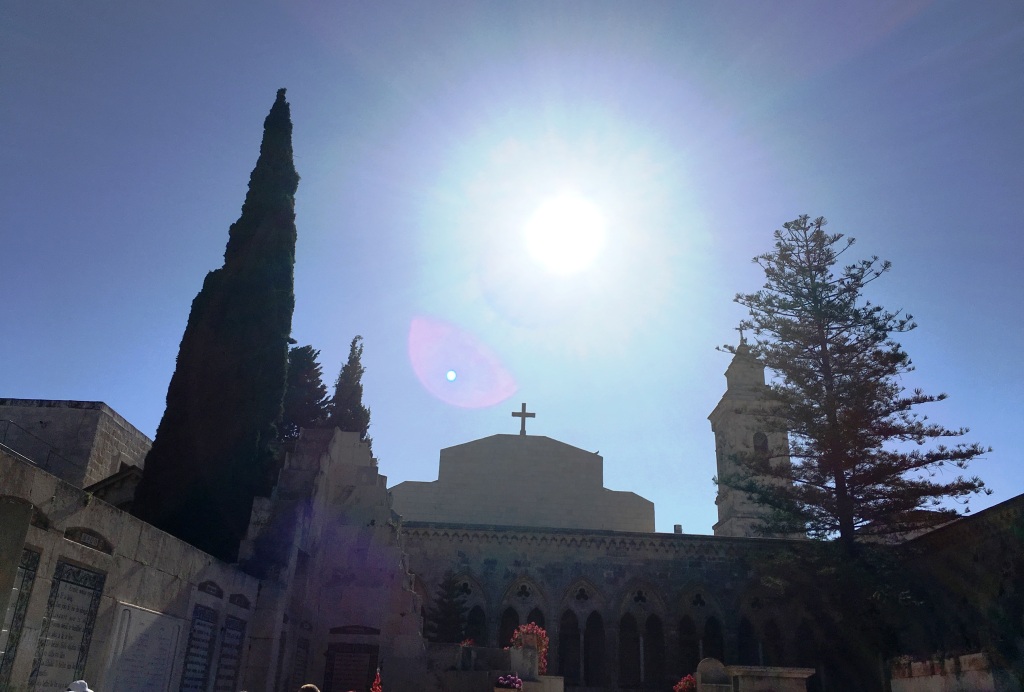
The Our Father Church outside Jerusalem where Jesus taught his disciples to pray the Our Father, 04 May 2019.
This is the third Sunday in a series of “things to do to gain eternal life” following that conversation by Jesus with a scholar of the law on his way to Jerusalem when he taught us to “love God and love others” by showing compassion to the suffering like the Good Samaritan. Last Sunday during his stopover at the home of Martha and Mary, he taught us that the more we are busy, the more we must pray; and the more we pray, the more we realize of the need to be active. This Sunday, Jesus deepens this lesson about prayer which is also the more essential – “the better part” – as he told Martha that we must do to gain eternal life.
For St. Luke, this episode of Jesus teaching his disciples the Our Father is more than the teaching of a prayer to recite but the attitude itself they must possess in praying.
Of the four evangelists, St. Luke is the one who always present to us Jesus at prayer like at this scene today. Unlike with St. Matthew’s version when Jesus taught the Our Father during his sermon on the mount so that his disciples would know what to pray for instead of multiplying words like the Pharisees and scribes at that time, St. Luke set this teaching in the context of the Lord at prayer to teach us how to pray.
He said to them, “When you pray, say: Father, hallowed be your name, your kingdom come. Give us each day our daily bread and forgive us our sins for we ourselves forgive everyone in debt to us, and do not subject us to the final test.”
Luke 11:2-4
Jesus came to make known to everyone God is our Father whose name we must always revere and never take in vain. By dying on the Cross, he revealed the glory of the Father who loves us so much that “he gave us his only Son so that we may not perish but gain eternal life”.
This is the first lesson of the Our Father. By teaching us the Lord’s Prayer, Jesus involves us in his own prayer to form our inner being to be like him in total obedience to the Father so that his kingdom may come. Remember the acronym ACTS in praying: “A” for adoration, “C” for confession of sins, “T” for thanksgiving, and “S” for supplications. So often, we only pray the “S” that we no longer merely ask but even demand from God so many things without even praising and thanking him for all his kindness, without realizing how we have turned out to be gods and the Lord our servant!
Wailing Wall of Jerusalem, May 2019.
“And I tell you, ask and you will receive; seek and you will find; knock and the door will be opened to you. For everyone who asks, receives; and the one who seeks, finds; and to the one who knocks, the door will be opened. What father among you would hand his son a snake when he asks for a fish? Or hand him a scorpion when he asks for an egg? If you then, are wicked, know how to give good gifts to your children, how much more will the Father in heaven give the Holy Spirit to those who ask him?”
Luke 11:9-13
Another unique feature of St. Luke’s version of the teaching of the Lord’s prayer is the parable that follows about an insistent neighbor asking for bread followed by a series of valuable sayings about prayer. Contrary to common interpretations, Jesus is not telling us to ask God for anything we want like money and gadgets. Prayer is essentially asking for God. It is God whom we must desire in prayer because when we have God, we have everything!
In St. Luke’s second book, the Acts of the Apostles, we find the Holy Spirit animating the early Church as a community as well as every individual. Every decision, every plan, and every prayer is always powered and guided by the Holy Spirit. When Jesus told his disciples to ask, to seek, and to knock, he was referring to always pray for the Holy Spirit for we really do not know how to pray. It is the Holy Spirit who enables us to speak rightly to God for things we need to tell him.
See how the two basic prayers we have, the Our Father and the Hail Mary are actually the words of God, not by men. The Our Father is by Jesus Christ himself that is why we call it the Lord’s prayer. The Hail Mary are the words of God through Archangel Gabriel when he greeted Mary to deliver the good news she would be the Mother of Christ. Even its second part are also the words of God when the Holy Spirit filled Elizabeth to praise Mary and the fruit of her womb, Jesus!
We need to ask for the Holy Spirit so that we can truly pray and enter that wonderful dialogue with God. When we pray like Jesus Christ in the Holy Spirit, we realize what God wants from us and we are able to respond properly as he gives us the necessary grace to accomplish them. Praying like Jesus is entering a dialogue with God, searching him and acting on his words.
Deacons prostrating before God in earnest prayer before their ordination.
That dialogue between God and Abraham at Mamre before the destruction of Sodom and Gomorrah in our first reading shows us that prayer helps us discern good and evil. Abraham did not bargain with God to save Sodom and Gomorrah for the sake of up to at least ten good people. In fact, only two good people remained there, Abraham’s nephew Lot and his wife who eventually perished after disobeying the angels’ instructions. What really matters in that episode is how Abraham recognized not only the good people but most of all, the prevailing evil at Sodom and Gomorrah.
Chapel of the Assumption Sabbath in Baguio, January 2019.
When we pray like Jesus, we also realize our giftedness of being saved from sin, of being “buried with him in baptism and brought to life along with him” (Col. 2:12,13) and thus becoming children of God. As children of the Father and brothers and sisters of Christ, prayer is where we enter into that deep relationship with God, learning his plans for us and how we can accomplish them by staying out of sin.
The example of Abraham and the teaching of Jesus show us that prayer is not a flight from the realities of this life and of this world. Far from being an escape, real prayer brings us closer to life, to following Christ our Savior for the glory of the Father by bringing his kingdom in this imperfect world marred by sins.
When we pray like Jesus, we get in touch with our true selves as well as with the many pains and hurts we share with others in this life journey, making us realize that we cannot do it alone. And more than the love and support we can get from our family and friends, there is God who loves us so much, giving himself to us to make it through eternal life. Have a blessed Sunday! Amen.
Thursday, Feast of St. James the Greater, 25 July 2019
2 Corinthians 4:7-15 >< )))*> <*((( >< Matthew 20:20-28
St. James the Greater. From Google.
Praise and glory to you, O God our loving Father! In sending us your Son Jesus Christ, you have shown us the path to you is being truly human, accepting our weaknesses and sinfulness by relying in your mercy and forgiveness.
Thank you for the gift of St. James the Greater, one of the Twelve Apostles who started out very much like us in the beginning as a sinner than a saint. He had shown us a wonderful path of growing in faith in our Lord Jesus Christ.
We always remember him as the brother of your beloved disciple, sons of Zebedee also known as “sons of thunder” for their quick temper like proposing to scorch a Samaritan town that have refused to allow you to pass through on your way to Jerusalem.
Together with his brother again but this time with their mother, they were so proud to support her request that they be seated at your left and your right in your Kingdom, claiming they could drink from your cup of suffering (Mt.20:20-28).
But, after witnessing your Transfiguration and your Agony in the Garden, everything changed in our beloved St. James the Greater.
Transfiguration by Raphael, From Google.
At the Transfiguration along with his brother and St. Peter, St. James the Greater witnessed your divine glory with the two greatest prophets of Israel, Moses and Elijah.
He must have not understood it so well at that time, including your command not to speak about the event until you rise from the dead.
But what a beautiful first-hand lesson about your divinity, O Lord, for St. James the Greater!
Agony in the Garden by El Greco. From Google.
Then, on the night before you were betrayed, he was again with the two privileged disciples to witness your Agony in the Garden.
This time, you have given St. James the Greater a first-hand lesson about your suffering and humiliation about to happen on the Cross.
Like in the Transfiguration, St. James the Greater may have not fully understood the meaning of the Agony in the Garden; but, it must have helped him discern the balance between your divine splendor and humiliation. Most of all, he had witnessed your humble obedience unto death to the Father.
These two distinct paths would finally merge into one after the Pentecost when St. James the Greater became the first bishop of Jerusalem.
And true to his bold claim when he was still young and ambitious, he became the first Apostle to suffer martyrdom by drinking your “cup of suffering”, Lord, when King Herod Agrippa had him killed with the sword (Acts 12:1-2).
St. James the Greater, so many people have found peace and solace, growth and maturity in faith in Christ in their pilgrimage to Compostela, Spain. Like them, help us to follow your path to Jesus Christ that is filled with so many difficulties and sufferings. Amen.
Monday, Wk. XVI, Yr. I, Feast of St. Mary Magdalene, 22 July 2019
2 Corinthians 5:14-17 >< }}}*> >< }}}*> John 20:1-2, 11-18
Jesus telling Mary Magdalene not to touch him in a painting at the Basilica of St. Francis of Assisi in Italy. Photo from Google.
What a beautiful way to start our week of work and studies today with the feast of St. Mary Magdalene, O Lord!
In St. Mary Magdalene we see, O Jesus, your infinite love and mercy and forgiveness no matter how dark is our past. In St. Mary Magdalene we also see, O Jesus, our new life and relationship with you especially when you called her by her name “Mary” on that Easter morning.
Open our hearts every morning, especially when we feel everything is lost, when everything is so dark to that we too may hear your sweet voice calling us by name.
One beautiful lesson we have learned from St. Mary Magdalene is the need to remain in you, Jesus. After being converted, Mary never left your side along with the other women who have come to follow you and help you in your needs.
On the Cross when your disciples have left you, St. Mary Magdalene remained at your foot along with your Mother and beloved disciple John.
On the first day of the week, it was also St. Mary Magdalene who remained faithful to you by coming to your tomb to bring spices and perfume; and, when she found it empty, she was the one who remained faithful to your teachings by informing St. Peter of the situation.
Most of all, during that dark morning at the empty tomb, it was St. Mary Magdalene who remained outside, remaining faithful to you, waiting in tears for developments as she asked everyone around in the hope of finding and retrieving your missing body.
The scene may be funny, Lord, but embarrassing and shameful to us your disciples who always leave you especially when the cross becomes too heavy and bloody! And when everything is dark and empty, unlike St. Mary Magdalene, we are nowhere to be found.
From Google.
Let us remain in you, Jesus, like St. Mary Magdalene especially when everybody else is leaving or had left you at the cross or the empty tomb.
Let us boldly proclaim not only in words but most especially in deeds like St. Mary Magdalene that we have seen you, that we are now a new creation in you. Amen.
The Lord Is My Chef Sunday Recipe for the Soul, Wk. XV-C, 14 July 2019
Deuteronomy 30:10-14 >< )))*> Colossians 1:15-20 >< )))*> Luke 10:25-37
From America Magazine via Google.
After teaching us about discipleship these past two Sundays, Jesus shifts his lessons to things “we must do” following a series of questions he encountered from people when he “resolutely determined to journey to Jerusalem” (Lk.9:51).
There was a scholar of the law who stood up to test Jesus and said, “Teacher, what must I do to inherit eternal life?” Jesus said to him, “What is written in the law? How do you read it?” He said in reply, You shall love the Lord, your God, with all your heart, with all your being, with all your strength, and with all your mind, and your neighbor as yourself. He replied to him, “You have answered correctly; do this and you will live.” But because he wished to justify himself, he said to Jesus, “And who is my neighbor?” Jesus replied, “A man fell victim to robbers as he went down from Jerusalem to Jericho.”
Luke 10:25-30
And thus Jesus answered the scholar of the law with the beautiful parable of the Good Samaritan that can only be found in St. Luke’s gospel. It has so endeared the world that hospitals and charities including laws and awards everywhere use the “Good Samaritan” title in recognition of the parable’s conviction that we are all neighbors.
Problem is, we have become so familiar with this parable that sometimes we think it teaches us nothing new. Like the Laws or the Ten Commandments, it has degenerated into becoming letters like a code imposed from the outside we simply follow. Moses tells us in the first reading how the Laws are “something very near to you, already in your mouths and in your hearts; you only have to carry it out” (Dt.30:14). Loving God and loving others is an interior and life principle innate within each of us.
This Sunday, Jesus is inviting us to set aside our thoughts about his parable of the Good Samaritan in order to see it in a deeper and personal perspective.
For most Christians especially Catholics, we always reach that stage in our lives when deep within us there is a longing for something deeper, for something more than what we have been used to. It is a very positive sign of spiritual growth. Like the scholar, we are no longer contented with the usual things we do like praying, Sunday Masses, and keeping the laws. At first we may not be able to verbalize or even identify what are the stirrings within us until we realize it is something more than this life we are having.
Like the scholar, we ask Jesus, “Teacher, what must I do to inherit eternal life?” (Lk.10:25). But, instead of probing deeper into our hearts, we tend to look outside for answers like the scholar asking, “who is my neighbor?”.
From Google.
Twenty years ago, the sci-fi series “The X-Files” was a hit worldwide with its tagline “the truth is out there” to refer to all kinds of conspiracy theories and paranormal activities by the US government. Of the same genre today is the Netflix series “Stranger Things” that also points us to something “out there” for answers to many mysteries happening to us.
The answer is never out there – it has always been inside us! Always.
From Google.
How strange that we keep on asking “who is my neighbor?”, searching for a theoretical definition of a neighbor we always think as somebody outside us. What we must be asking is, “am I a neighbor to others?”
Observe how Jesus narrated the parable where both the priest and the Levite “saw the victim and passed by the opposite side. But a Samaritan traveler who came upon him was moved with compassion at the sight. He approached the victim, poured oil and wine over his wounds and bandaged them. Then he lifted him up on his own animal, took him to an inn, and cared for him” (Lk.10:32-34).
That’s the strangest thing of all! Two Temple officials simply “saw” the victim and passed by while a Samaritan “saw” also but was moved with compassion. To be moved with compassion in Latin is misericordia, a “stirring or disturbing of the heart” which translates into mercy.
Here we find the Samaritan looking deep inside him that he saw in him the plight of the victim that he was moved with mercy to help him. And that is to be a neighbor, to treat somebody with mercy that transcends any color or creed or nationality. See the question of Jesus at the end of his parable, “Which of these three, in your opinion, was neighbor to the robbers’ victim?” The scholar answered, “The one who treated him with mercy” (Lk.10:36-37).
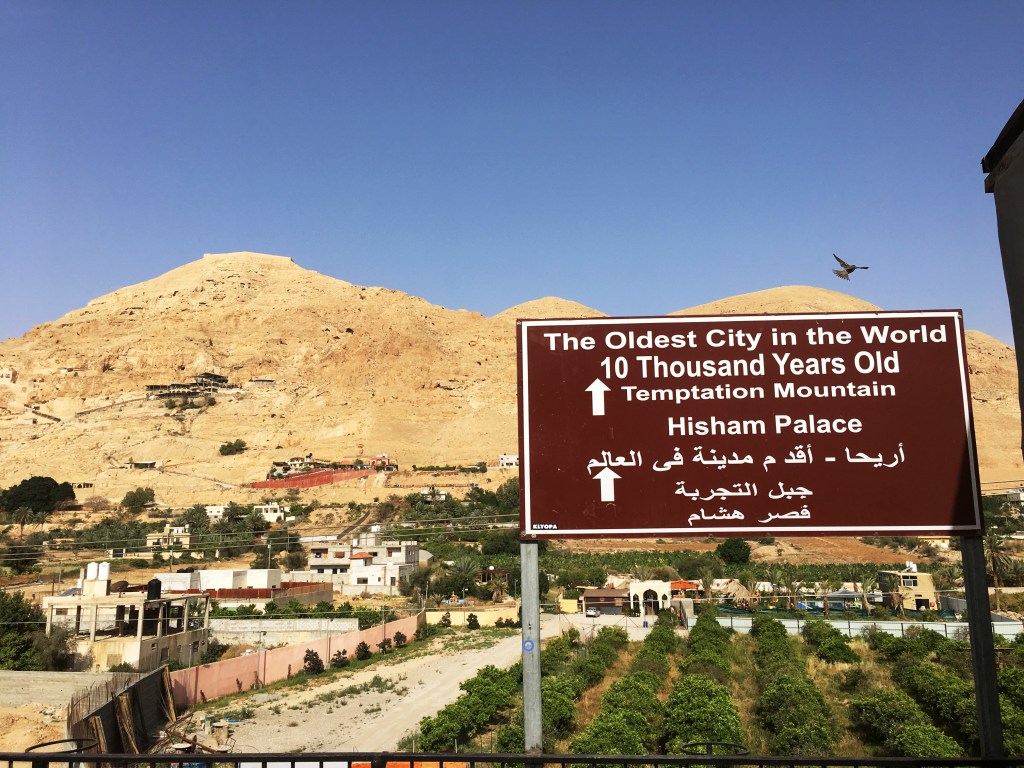
City of Jericho, the setting of the parable of the Good Samaritan. Photo by author, 06 May 2019.
My neighbor is the one with whom I identify with, with whom I am drawn near because of the mercy that moved me within to help in his or her sufferings. A neighbor is one who feels his or her own humanity that he or she is always moved with compassion with those who are in suffering and pain.
And the more we reflect on this parable, the more we see Jesus Christ is in fact the Good Samaritan himself. He is “the image of the invisible God, in him all things hold together” (Col. 1:15,17). It was Jesus who went down the road, becoming human like us in everything except sin, picking us up from our sinfulness and miseries, healing us of our wounds, and restoring us to life “through the blood of his cross” (Col. 1:20).
Let us heed his command this Sunday to “Go and do likewise” (Lk.10:37) as the Good Samaritan. Be a blessed neighbor to everyone! Amen.
Thursday, Wk. XIV, Yr. I, 11 July 2019, Feast of St. Benedict
Genesis 44:18-21, 23-29; 45:1-5 >< )))*> Matthew 10:7-15
CICM Retreat House in Taytay, Rizal. Photo by author September 2009.
Praise and glory to you, O God, our kind and merciful Father! You never fail to amaze us with your immense love and goodness to us, most especially whenever you write in straight crooked lines in our lives.
Nothing bad ever comes from you. But, if ever something that is not good happens to us, you always ensure it could lead to something beautiful and wonderful. Like with what happened to Joseph, the son of Jacob, who was sold by his brothers but later became an Egyptian official of the Pharaoh.
Our first reading today when Joseph revealed himself to his brothers in Egypt is one of the most moving drama scenes in the whole bible for me. It shows also the tremendous faith and love Joseph has for you and his brothers.
“Come closer to me,” he told his brothers. When they had done so, he said: “I am your brother Joseph, whom you once sold into Egypt. But now do not be distressed, and do not reproach yourselves for having sold me here. It was really for the sake of saving lives that God sent me here ahead of you.”
Genesis 45:4-5
Increase our faith in you, God, especially when things do not turn out according to our plans and wishes. Let us trust in you that despite our many failures and sins, you will never abandon us to be devoured by the beasts of the forests.
On this feast of St. Benedict, we borrow his prayer for seekers of faith that we may be worthy of our call as Apostles of Jesus sent to “proclaim the kingdom of heaven is at hand” (Mt.10:7).
Gracious and Holy Father,
give us the wisdom to discover You,
the intelligence to understand You,
the diligence to seek after You,
the patience to wait for You,
eyes to behold You,
a heart to meditate upon You,
and a life to proclaim You,
through the power of the Spirit of Jesus, our Lord. Amen.
Genesis 41:55-57; 42:5-7, 17-24 >< )))*> Matthew 10:1-7
Pyramids of Egypt. Photo by author, 09 May 2019.
Thank you very much, our loving Father, for making us all come together as family and friends, colleagues and acquaintances on many occasions you have planned in all eternity in your infinite wisdom.
Like the sons of Israel who have come to Egypt to buy food during a famine and the 12 Apostles summoned by your Son Jesus, our coming together for various reasons in different seasons were all caused by your divine will.
The sons of Israel did not know how their coming into Egypt would reunite them with their lost brother Joseph they have maltreated and sold a long time ago. The 12 Apostles never had an inkling at that time how they would be betrayed by one of their very own that they welcomed each other as disciples of Jesus.
In your time, God, you perfectly know when and where and how we would meet the many people we now have in our lives.
Give us the grace to always seek your holy will, your grand design and plan with the people who come to our lives. Let us take care of them as precious gifts of family and friends you give us, let us shower them with your love and attention while still around us. May we never take them for granted, value them always as they value us too as gifts coming from you.
Let us not take them into someone not meant to be in our lives.
We pray also for people without friends and family around them, for those in far and distant lands working away from their loved ones, for those languishing in jails especially the innocent one that they may soon be reunited with their family.
Most of all, our loving Father, may we always see your face on every person we shall meet this day. Amen.
With our fellow pilgrims at the Sphinx in Egypt, 09 May, 2019.
Photo by Lorenzo Atienza, Malolos Cathedral, 12 June 2019.
Please forgive me for my curiosity: lately I have noticed the sudden sprouting of many “breastfeeding stations” and “lactation sections” in many public places that I feel so tempted getting inside them just to see how the mothers would react.
One of the joys of prayer is how God would communicate with us even with the most crazy ideas we have like that thought of entering a breastfeeding station. I recalled this thought as I dwelt deeply into Isaiah’s prophecy in our first reading today presenting God like a mother comforting her children the Israelites who were exiled to Babylon.
It was one of the lowest points in the history of the Jewish people when they lost everything – family and friends, country and nation, and most of all, their Temple in Jerusalem that they felt they were forsaken by God. As exiles, they were slaves without any freedom at all.
Thus says the Lord: “Rejoice with Jerusalem and be glad because of her, all you who love her, exult, exult with her, all you who were mourning over her! Oh, that you may suck fully of the milk of her comfort, that you may nurse with delight at her abundant breasts! As nurslings, you shall be carried in her arms, and fondled in her lap; as a mother comforts her child, so will I comfort you; in Jerusalem you shall find your comfort.”
Isaiah 66:10-11, 12b-13
Sometimes, God allows us to experience several blows and beatings in life not because he punishes us or he takes delight in seeing us suffer; sometimes, we need to be like infants and children again to trust God more, to rely to his goodness. It is the surest way to remind us who we really are. That we are not god.
In our second reading, St. Paul bolstered this imagery of our being children of God by reminding us that the only bragging rights we have as disciples of Jesus is to be one with him in his Cross.
Brothers and sisters: May I never boast except in the cross of our Lord Jesus christ, through which the world has been crucified to me, and I to the world.
As children of the Father and disciples of Jesus, our mark of distinction is not found in our greatness, achievements and success but in our being weak, in our being wounded and bruised, always needing the comfort by God like a mother to her children. This is very clear with St. Paul not only in our second reading today but most especially in his second letter to the Corinthians:
“I will rather boast most gladly of my weaknesses, in order that the power of Christ may dwell in me. Therefore, I am content with weaknesses, insults, hardships, persecutions, and constraints, for the sake of Christ; for when I am weak, then I am strong.”
2 Corinthians 12:9-10
It is in our weakness when God is most manifested.
Try listening to anyone bragging about his or her achievements and talents: for a time, we get impressed, we admire them but in the long run, it becomes both convulsing and convoluting. But when we come to learn or hear the sacrifices and sufferings of people even those we do not personally know, we feel uplifted. We remember God and his goodness, his mercy and love.
Crucifix at the side wall of the chapel of St. John Evangelist at Cana, Galilee. Photo by author, 06 May 2019.
Only the disciples of Christ who join him in his Cross can be filled with the gift of peace, the only possession of every disciple. See how how when Jesus sent out the 72 other disciples, he asked them not to bring anything at all. The only thing they must have is the peace of Jesus Christ that they have to share with everyone they visit.
“Go on your way; behold, I am sending you like lambs among wolves. Carry no money bag, no sack, no sandals; and greet no one along the way. Into whatever house you enter, first say, ‘Peace to this household.'”
Luke 10:3-5
Remember that when Jesus visited his Apostles in the locked upper room on the evening of Easter Sunday, he also greeted them with “peace” or “shalom” which is God’s greatest gift to anyone. Shalom in Hebrew means having a good relationship with one’s self, with others, and with God. Peace is always borne out of love and only those willing to sacrifice, suffer and even die for someone are the ones who truly love.
Mt. St. Paul Retreat House, June 2017.
There can be no peace in our hearts when we are filled with pride and ego. We need to be like children again, relying solely in the powers of our parents.
Last Thursday we brought our niece to her doctor at UST Hospital. While waiting for my sister when she left to get the lab results, I saw my niece feeling sleepy. I asked her to sleep on my lap as I gently rubbed her shoulder until she fell asleep soundly and peacefully.
What an attitude of not being bothered by her sickness because she must have great trust in me her uncle, my sister her mom, and also her doctor!
When we embrace our crosses in life and rely solely in Christ, we can also experience peace within. That is when we can rejoice as Jesus assured us, “your names are written in heaven” (Lk. 10:20).
A blessed week ahead to everyone! Jesus loves you, entrust to him all your worries and woes. Amen.