Genesis 23:1-4, 19; 24:1-8, 62-67 >< )))*> Matthew 9:9-13
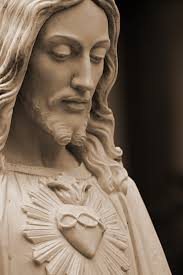
From Google.
O Most Sacred Heart of Jesus, thank you for this first Friday of the month of July. Like yesterday, it is another “picturesque speechless” in our readings today.
From the first reading, twice did Abraham told his senior servant never to take back his son Isaac to his land of origin in Ur no matter what happens.
“Never take my son back there for any reason,” Abraham told him. The Lord, the God of heaven, who took me from my father’s house and the land of my kin, and who confirmed by oath the promise he then made to me, ‘I will give this land to your descendants’ — he will send his messenger before you, and you will obtain a wife for my son there. If the woman is unwilling to follow you, you will be released from this oath. But never take my son back there!”
Genesis 24:6-8
Help us, O Lord, to never return to our old ways of sins and vices, of broken promises and emptiness in the world. Give us the strength to persevere to bloom where you have planted us. Let us trust in your wisdom. Like Matthew in your gospel today. Let us rise, leave everything behind to follow you.
As Jesus passed by, he saw a man named Matthew sitting at the customs post. He said to him, “Follow me.” And he got up and followed him.
Matthew 9:9
It is now the seventh month of 2019, Lord Jesus Christ. Time really flies so fast.
Help us in our struggles, in our efforts to follow you, to never go back to our old ways of sinful life.
Help us regain our moral compass in you. Help us stop our backslides. Most of all, help us in keeping our promises and commitments especially those made to you. Amen.
Going back in time to 300 BC to the ancient city of Petra in Jordan, 30 April 2019.
Jerusalem as seen from the Mount of Olives with a Jewish cemetery at the foreground facing its eastern wall where the Messiah is believed would pass through when he comes. It is the very route Jesus had taken more than 2000 years ago on Palm Sunday before his Passion, Death and Resurrection. Photo by author, 04 May 2019.
After all the solemnities we have celebrated since the closing of Easter Season last Pentecost Sunday, we now get into the very heart of the Ordinary Time of our liturgy with St. Luke as our guide. Feel the sobriety and hint of solemnity at the start of the second part of his gospel we have heard today which is about discipleship and facing death like Jesus.
When the days for Jesus’ being taken up were fulfilled, he resolutely determined to journey to Jerusalem.
Luke 9:51
I love the way St. Luke wrote this part about Jesus “resolutely determined to journey to Jerusalem.” In some translations, they have retained its literal equivalent from the original Greek text that says “Jesus set his face to Jerusalem”. For Jesus, Jerusalem is where he fulfills his mission from the Father by dying on the Cross. So, if we are going to be more literal with this opening sentence by St. Luke, it would be “Jesus set his face to death.”
In fact, I have been very hesitant to write about death as a topic for my homily this Sunday because Sundays are supposed to be joyful! And that is perhaps our problem with death: we always see it as something dark and negative. (Is it not?)
Today Jesus is teaching us to see death in his perspective as something beautiful and even glorious. St. Luke saw it and is now leading us in this new approach to death as he tells us the story when “Jesus resolutely determined to journey to Jerusalem.”
One thing that strikes me during sick visitations in my parish and in Metro Manila is how we see death as an escape or an ending. Patients and relatives alike always tell me to pray for death to end all sufferings and pains.
When “Jesus resolutely determined to journey to Jerusalem,” he was not sick, physically and emotionally. He was very well and able. When he was hanging on the Cross, he did not wish death to end his pains. On the contrary, he actually faced death head on. And this is one of the very important lessons Jesus had taught and shown us: facing death, even embracing death. Recall how during his Last Supper on Holy Thursday Jesus was never caught surprised by death. He was in total control of everything.
This is the reason why Jesus accomplished so much in just three years of his ministry because he was very aware of his coming death. In coming to terms with death, Jesus lived fully even if he died at 33 years old. The same is very true with some of our saints who have died young and have accomplished so much because they have all lived to the fullest that death did not surprise them at all in their works and mission.
The “sleeping Jesus” on a bench at the entrance to Capernaum. See the wounds on his feet, markings from his crucifixion. Photo by author, 02 May 2019.
One of the new attractions at Capernaum today when you come to visit the ruins of the synagogue Jesus used to visit there during his lifetime is a park where one finds his statue sleeping on a bench at the entrance across the Franciscans’ quarters. The statue is executed artistically and realistically that passersby would drop some coins for alms in a pot near the image! The sleeping Christ on a bench depicts exactly the second part of the gospel we have heard today: there is nothing certain in this life except Jesus Christ. The sooner we come to accept and embrace this reality vis-a-vis death, the better for us.
As they were proceeding on their journey someone said to him, “I will follow you wherever you go.” Jesus answered him, “Foxes have dens and birds of the sky have nest, but the Son of Man has nowhere to rest his head.”
Luke 9:57-58
Discipleship is coming to terms with death, accepting its reality so that we stop wasting our lives with bitterness and resentments to start living joyfully and meaningfully in Christ. I have heard countless of times how most patients including relatives and friends would bargain for more time, for more life because they felt they have not lived fully. As they come face to face with death during sickness or an accident, they beg even for a little time to live fully, proving that “in the end, it is not the years in your life that count but the life in your years.”
Facing death like Jesus Christ is having God as our top priority. Unlike the second and third people Jesus had invited to follow him and asked his permission “to first bury his dead father” and “to first say goodbye to his family.” Jesus is not teaching us to turn away from our family and loved ones; he wants us to always have God and eternal life as our top priorities in life. Like Elisha in the first reading who slaughtered his oxen and cooked them using the yoke and plow as firewood to show he was foregoing everything to follow Elijah as a prophet.
Every disciple is a nomad following Christ, a pilgrim and sojourner whose true home is in heaven with the Father; hence, the importance of thinking always of things of the above, of heaven and of eternal life. St. Ignatius of Loyola calls it the “principle and foundation” in life wherein we do the things that would lead us to salvation and avoid things that would bring us to eternal damnation.
Of course, such a vision about life is not only contrary to the values of the world but even a folly. See how the world tells us to “just do it” and to “obey your thirst” so that we can have easy and comfortable lives, enjoying everything to the fullest by ensuring our security with material wealth. On the other hand, discipleship in Christ as St. Paul reminds us in the second reading is allowing the Holy Spirit to direct our lives because it is the spiritual things that truly fulfill us. What a tragedy especially among affluent nations we hear reports of increasing number of people committing suicides, feeling empty and lost despite their material wealth?!
Jesus alone is our joy and security. In him, trials and sufferings become blessings because they make us stronger and better persons. Most of all, death is neither an end nor an escape in Jesus but a passage to life in the fullest. This is not a simplification of the complex reality of death but an assurance that Jesus had conquered it and had made it into a blessing that we can now discuss and reflect about it.
I know that speaking about death is easier said than done. It may even be Quixotic. But, death is a reality of life we have to face and deal with, even befriend little by little as we age. Reflecting about death is a kind of death itself and at the same time a grace from God who enabled us to face it even in our limited abilities. Let us put our complete faith in Christ, following him resolutely to Jerusalem as his disciples so that when death finally comes to us, we find Jesus by our side. A blessed week to you!Amen.
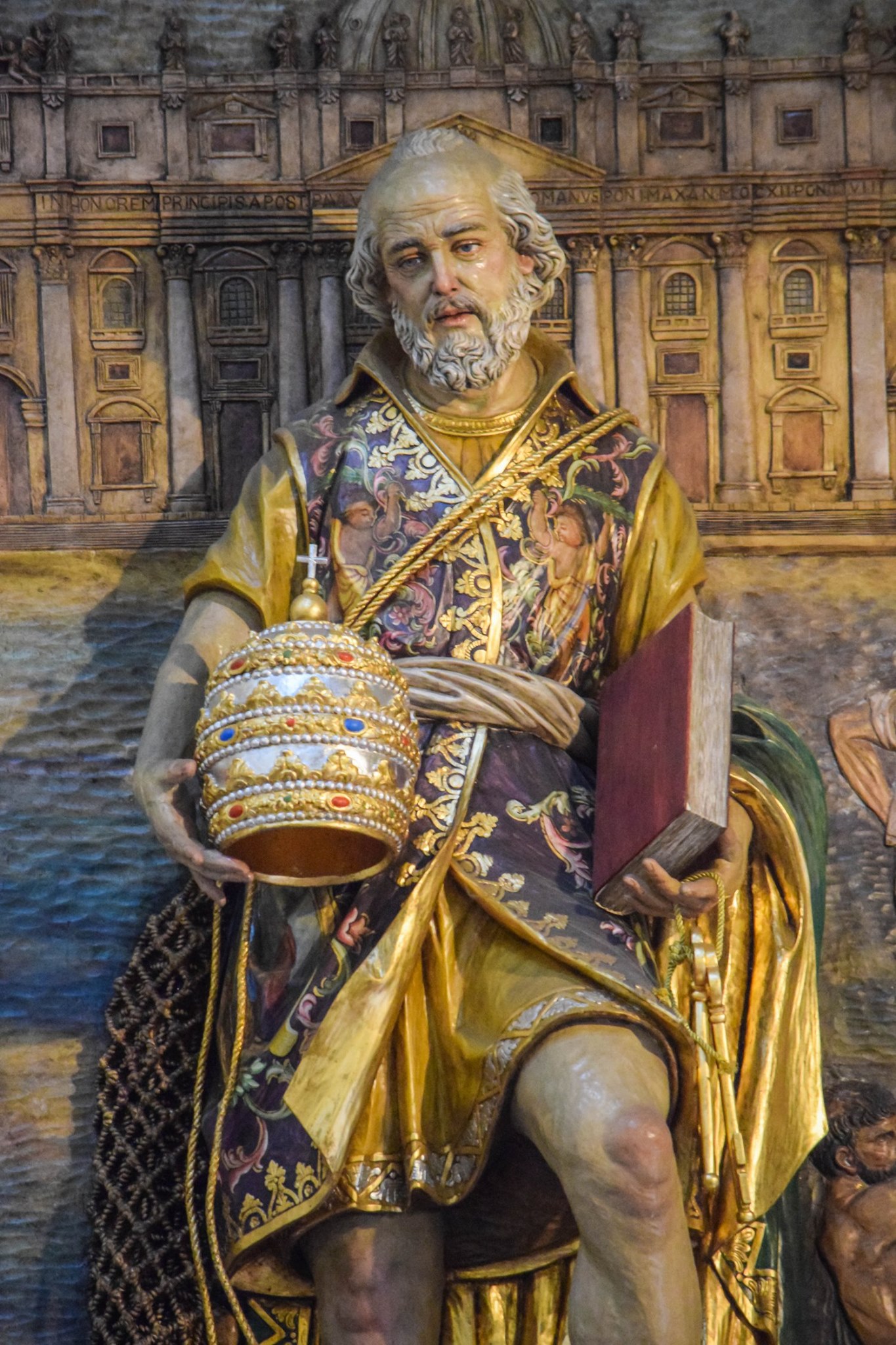
Statue of St. Peter at the left side of the entrance to the Minor Basilica of the Cathedral of the Immaculate Conception in Malolos City. Photo by Lorenzo Atienza, 12 June 2019.
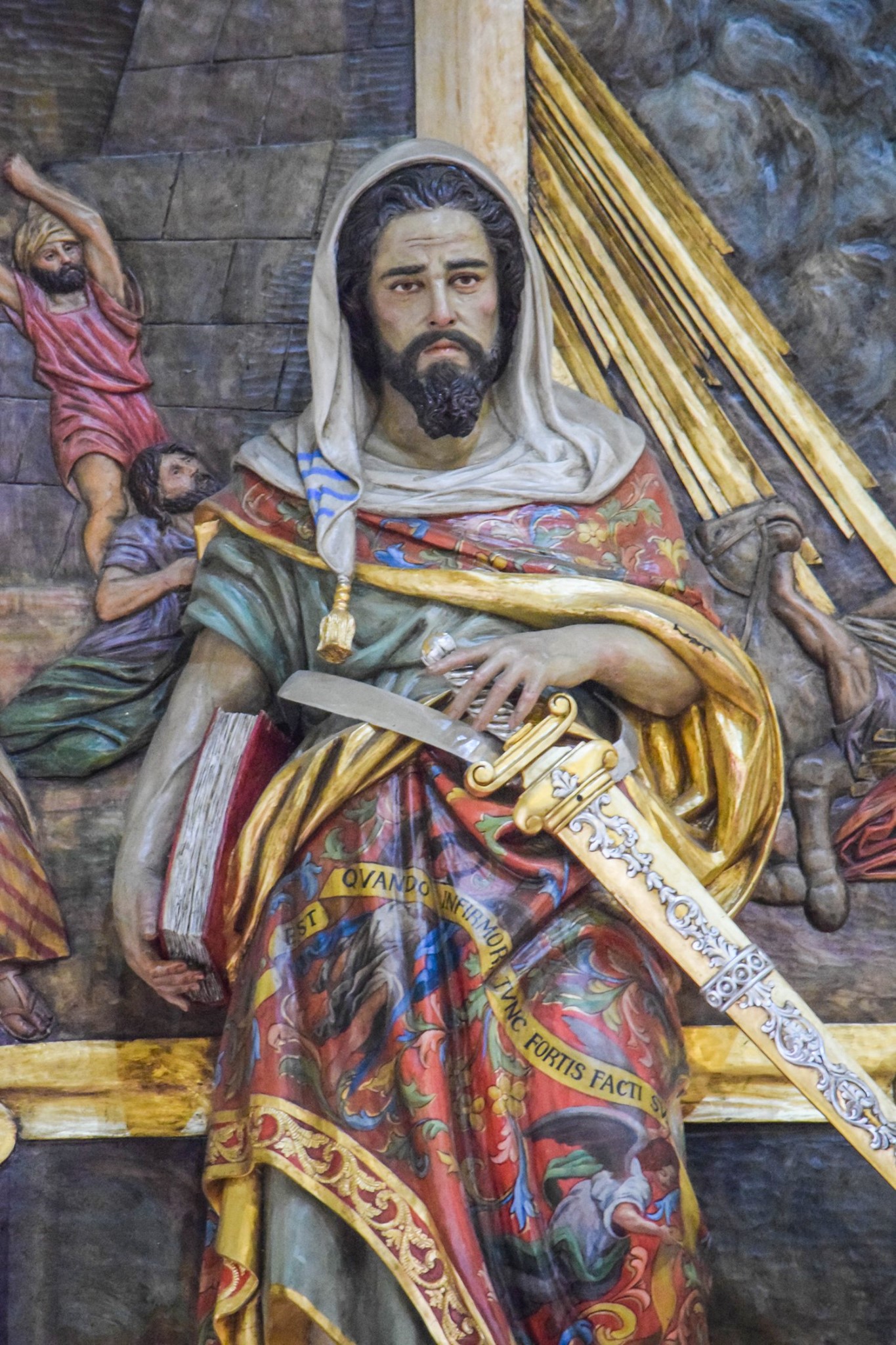
Thank you, Lord Jesus, for this Solemnity of your two leading Apostles St. Peter and St. Paul. Thank you in giving us the opportunity to confront ourselves anew of this very ironic problem we have in your Church: the difficulty of doing your work with our fellow disciples.
You know it so well, Jesus, of how often we wish to be left on our own than work with others because we have totally forgotten we are your stewards. We have forgotten how our very selves are an offering to you.
“I, Paul, am already being poured out like a libation, and the time of my departure is at hand. I have completed well; I have finished the race; I have kept the faith.”
2 Timothy 4:6-7
Most of the time, we are so concerned with our titles and ministry, programs and achievements and so many other things forgetting the most essential, YOU, “the Christ, the Son of the living God” (Mt. 16:16).
Give us the grace of wisdom and humility, Jesus, to be in communion with your fellow workers in the vineyard as well as with the sheep of your flock, like St. Peter and St. Paul who both transcended their differences, focusing only on YOU as our bond communion.
Teach us to be like St. Peter that despite his many flaws like impetuous generosity to the point of presumptuousness with moments of being hesitant, we may have his kind of solid loyalty to you Jesus. Most of all, like St. Peter, let us not resist the Holy Spirit who upsets our convictions to lead us where we do not want to go with you and for you.
Teach us also to be like St. Paul who was so bold and daring, always asserting his backgrounds as a Roman citizen and a former Pharisee, always insisting his being your Apostle and yet very conscious of his being fragile like a pot of clay or earthen vessel of your grace. Like St. Paul, give us the courage to resolutely go outside our comfort zone to proclaim your gospel to the nations amid the pains of being torn by our own people at home.
Prevail upon us, Lord Jesus, your servants that we may give you our faith and love to be your witnesses and mirrors of your living Church. Amen.
St. Paul’s statue at the right side entrance to the Minor Basilica of the Cathedral of the Immaculate Conception in Malolos City. Photo by Lorenzo Atienza, 12 June 2019.
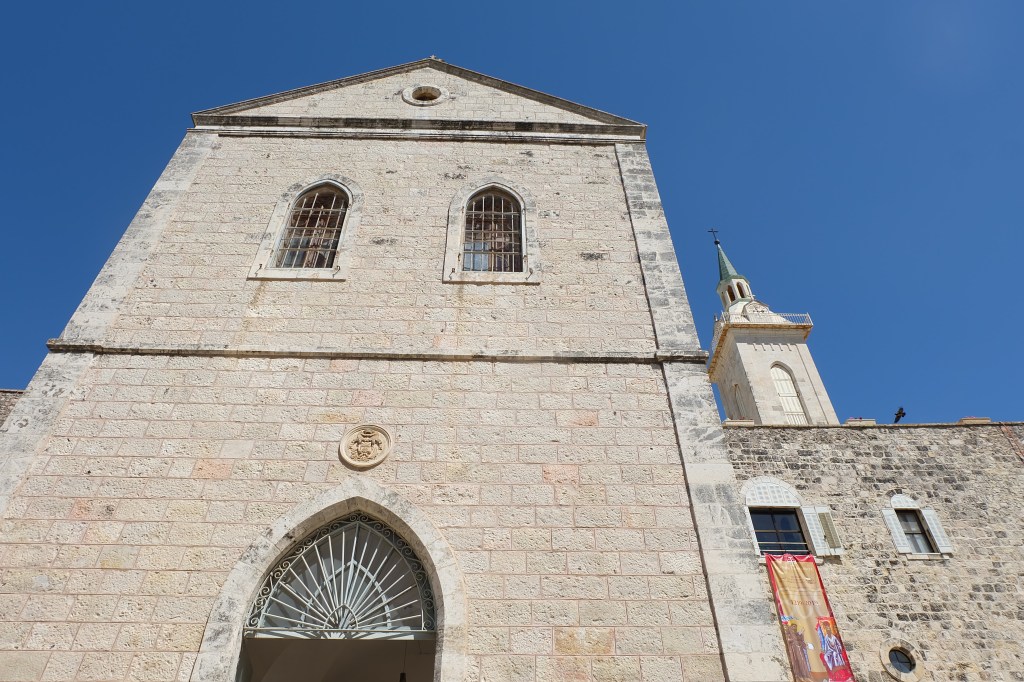
St. John the Baptist Church in Ein Karem, birthplace of St. John the Baptist. Photo by author, 05 May 2019.
Praise and glory to you, O God our almighty Father! Thank you very much for the gift of life, for the gift of being born into this world to see and experience your majesty. Indeed, it is always good to be alive, no matter what our condition or status in life may be.
Unfortunately, Lord, there are so many times in life that we fail to see life’s beauty because we have taken control over ourselves and everything, leaving no room for you to work in us, with us and through us. So many times, Lord, we wonder what we would be like what the neighbors and relatives of John the Baptist said when he was born.
All who heard this these things took them to heart, saying, “What, then, will this child be?” For surely the hand of the Lord was with him.
Luke 1:66
Perhaps, it will be best for us today to be silent as we celebrate John the Baptist’s birthday to let your hand be upon us too, O God, so we may ponder and pray where you are leading us.
It is the start of work and studies for another week. Some of us are getting tired of the routine, some of us could no longer find meaning and direction in life. And some of us are on the brink of giving up on our many plans and even with our very lives!
Let your hand be upon us, Lord, and lead us to your direction. Guide us with your Holy Spirit. Teach us to lay aside our plans and personal agenda to allow you to take us where you would want us to be. Give us the courage to take that plunge into the unknown, trusting you alone wherever you may be leading us.
So many times Lord, we are like John the Baptist’s father Zechariah who believe so much with ourselves that we forget to trust you.
And many times, too, we are like the relatives and neighbors of Elizabeth who always interfere with your plans, insisting on following traditions and patterns, preventing you from surprising us.
Keep us silent today, Lord, to hear you more, to follow you more wherever you are leading us. Amen.
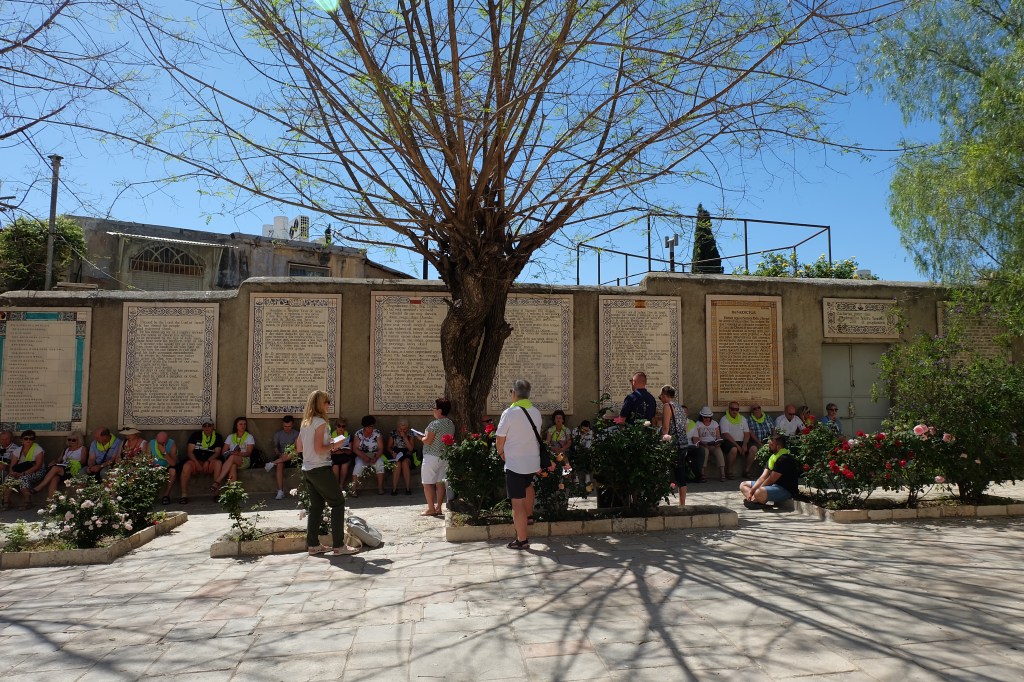
Pilgrims outside the Church of St. John the Baptist in Ein Karem waiting for their turn to enter his birthplace. What a beautiful sight of people still patiently waiting for God to lead them closer to him.
St. Paul’s “little foolishness” yesterday of taking some pride of himself was therapeutic, Lord, for us feeling low. After all, St. Teresa de Avila said “humility is walking in truth” and like St. Paul, we need to be proud sometimes to let people realize the talents you have blessed us with.
But today, Lord, we thank you anew for this beautiful though trying day. And once again, like St. Paul, we have realized that the only bragging rights you have given us is so opposite with the world’s:
Brothers and sisters: since many boast according to the flesh, I too will boast. To my shame I say that we were too weak! But what anyone dares to boast of (I am speaking in foolishness) I also dare. If I must boast, I will boast of the things that who my weakness.
2 Corinthians 11:18, 21,30
Lord, what really sets us apart from others, from what St. Paul calls as “super apostles”, are the wounds and hurts we bear in love for you and others. We are all the same in everything but anyone’s greatness can truly be found in his/her weakness as the world sees it: in taking all the beatings of this life, in being patient, in being forgiving, in being understanding, in being persevering.
Yes, Jesus, everybody talks about their achievements and what they have done, of how great they are. But those who truly love and serve you, those who follow you as Christ-ians, boast only of their weakness.
In our weakness, Jesus, we become your dwelling place, we become like you — our only treasure in this life!
Continue to bless, Lord, those who ” store up treasures in heaven”, those who truly love with sincerity in their hearts, those who sacrifice for others, those who suffer in the name of truth and justice. Let their light shine on in you. Amen.
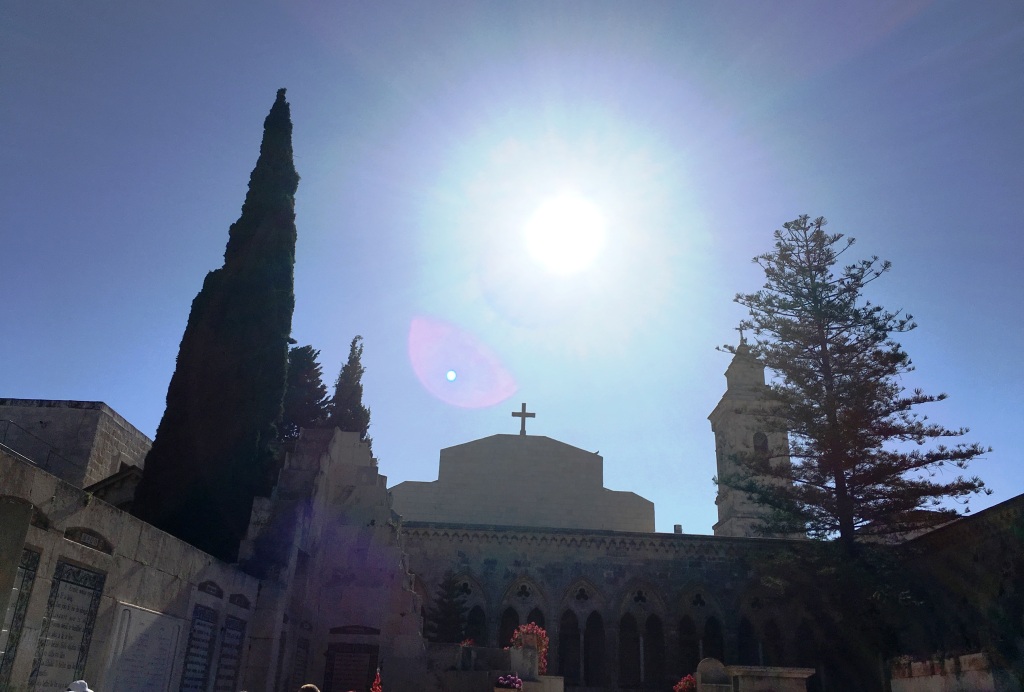
The Our Father Church outside Jerusalem where Jesus is believed to have taught his disciples the “Lord’s Prayer”. Photo by author, 05 May 2019.
For the second straight day, Lord, I could identify with St. Paul in his feelings deep within, the urge to brag something in your name!
Brothers and sisters: if only you would put up with a little foolishness from me! Please put up with me. For I think that I am not in any way inferior to these “super apostles.” Even if I am untrained in speaking, I am not so in knowledge; in every way we have made this plain to you in all things.
2 Corinthians 11:1, 5-6
You know it so well, Lord Jesus why I have been complaining a lot lately as I have told you yesterday: I feel so tired in life because I feel shortchanged. Not that I am asking anything in return but like St. Paul, it pains me so much when some people miss the love and dedication we pour upon our ministry.
Until now, Lord, we have those “super apostles” St. Paul called, preying on your sheep as false servants who seduce people like the snake only to feed on their egos and fatten their wallets.
They are everywhere, Lord. Not only among priests but also among other professionals.
It is so consoling to hear St. Paul today in our first reading of how we sometimes need to brag a little, to be proud of our efforts so the people may know and realize the sacrifices we make for them because, we love them.
We pray Jesus for all the silent workers, the silent servants who continue to lovingly serve you in others. Send them your proverbial “pat on the shoulder” to console them, O Lord, in their darkness and anguish. Let them shine in their true colors in you! Amen.
Santorini, Greece. Photo by Dra. Mai Dela Pena, 2017.
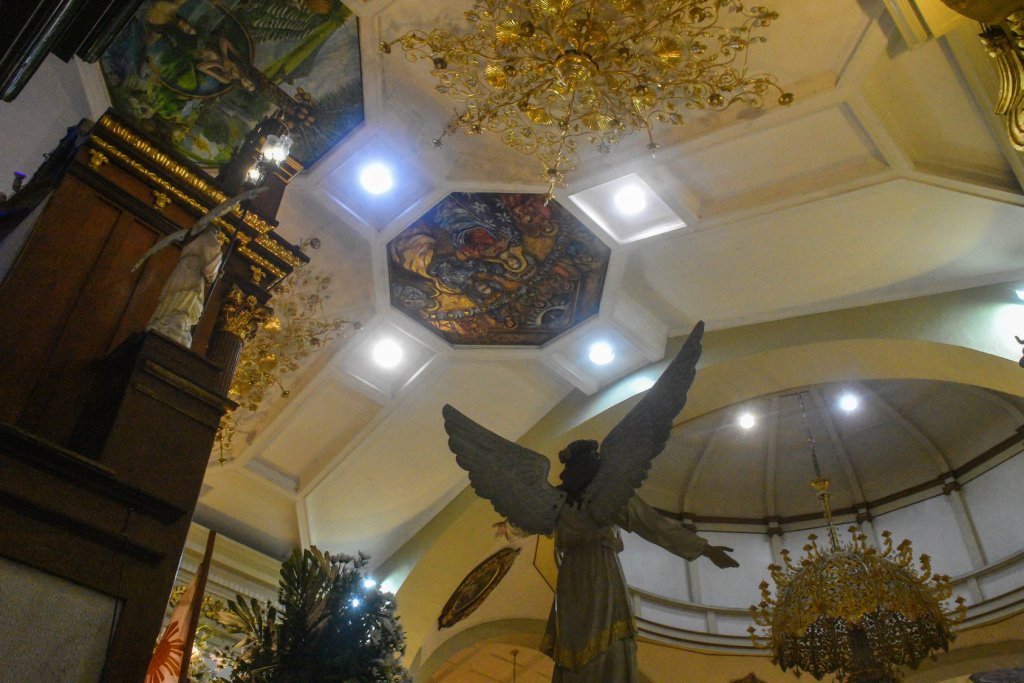
Ceiling of the altar of the Cathedral Basilica of the Immaculate Conception, Malolos City. Photo by Lorenzo Atienza, 12 June 2019.
How great and deeply spiritual is your servant St. Paul, Lord Jesus Christ! No problem is too ordinary for him as he resolves them in the light of the gospel. He shows us in so many instances like in our first reading today how the gospel sheds light on seemingly secular matters like sharing treasures.
Now as you excel in every respect, in faith, discourse, knowledge, all earnestness, and in the love we have for you, may you excel in this gracious act also. I say this not by way of command, but to test the genuineness of your love by your concern for others. For you know the gracious act of our Lord Jesus Christ, that for your sake he became poor although he was rich, so that by his poverty you might become rich.
2 Corinthians 8:7-9
Here in St. Paul is the answer to our perennial question to your gospel teaching of how can we “love our enemies and pray for those who persecute us”? (Mt.5:44)
First, dispose us always to prayer, to communing in you and with you. Detach us from this world once in a while in silence and hiddeness. Just be with you. Alone. Listening to you, feeling you.
Then, open our hearts and minds to your words. Enflesh your words in us, through us and with us.
Once we have been emtpied of ourselves and filled with your words and spirit, move us, guide us, O Lord, to your will and direction like St. Paul. Make us your instrument in doing charity for others.
Cleanse our hearts and our lips that we may worthily proclaim your gospel in words and in deeds. Amen.
Rev. Bp. Jesse Mercado of Paranaque blessing the people with the Gospel book during a Mass. Photo by Lorenzo Atienza.
The Lord Is My Chef Breakfast Recipe for the Soul, Wk. XI, Yr. I, 17 June 2019
2 Corinthians 6:1-10 >< )))*> >< )))*> Matthew 5:38-42
Ordination of our new deacons, 12 June 2019, Minor Basilica and Cathedral of the Immaculate Conception, Malolos City. Photo by Lorenzo Atienza.
Our feast is still a month and a half away but Lord Jesus Christ, I just feel like telling you today along with my brothers in ministry that we are happy to be your priests!
Thank you for the gift of vocation, thank you for the gift of three new deacons, and thank you for the gift of a new bishop!
St. Paul’s words in today’s first reading are so touching, reminding us of your great love for us to be your ministers of the word. But, they are also very challenging especially when there are some of us who have received your grace in vain, so attached with the trimmings and perks of your call, forgetting you Jesus, our Caller.
Forgive us in failing you, Lord, and help us find our way back to you.
Thank you for our faithful priests who lead and inspire us especially our fellow workers silently shepherding the flock, smelling like the sheep as Pope Francis had asked us to be, always avoiding the limelight now so glaring in the Church.
Thank you also for our old and sick priests, especially those who have aged gracefully, embracing retirement without much complaints and whines.
With St. Paul, we commend ourselves to you O Jesus “through much endurance, in afflictions, hardships, constraints” (2Cor.6:4) that many of us now evade or, deny.
It is a very interesting time to be your priests today, Lord, when people no longer believe us and your Church, when people doubt and malign us, and when the “faithful” are not so faithful at all, deserting us. Keep us to remain standing by your side at the Cross like the beloved disciple with Mary our Mother.
We are treated as deceivers and yet at truthful; as unrecognized and yet acknowledged; as dying and behold we live; as chastised and yet not put to death; as sorrowful yet always rejoicing; as poor yet enriching many, as having nothing and yet possessing all things.
2 Corinthians 6:8-10
Fill us with Holy Spirit, Jesus our Eternal Priest, so our minds and hearts may be enlightened to seek and follow and stand by your truth always. Amen.
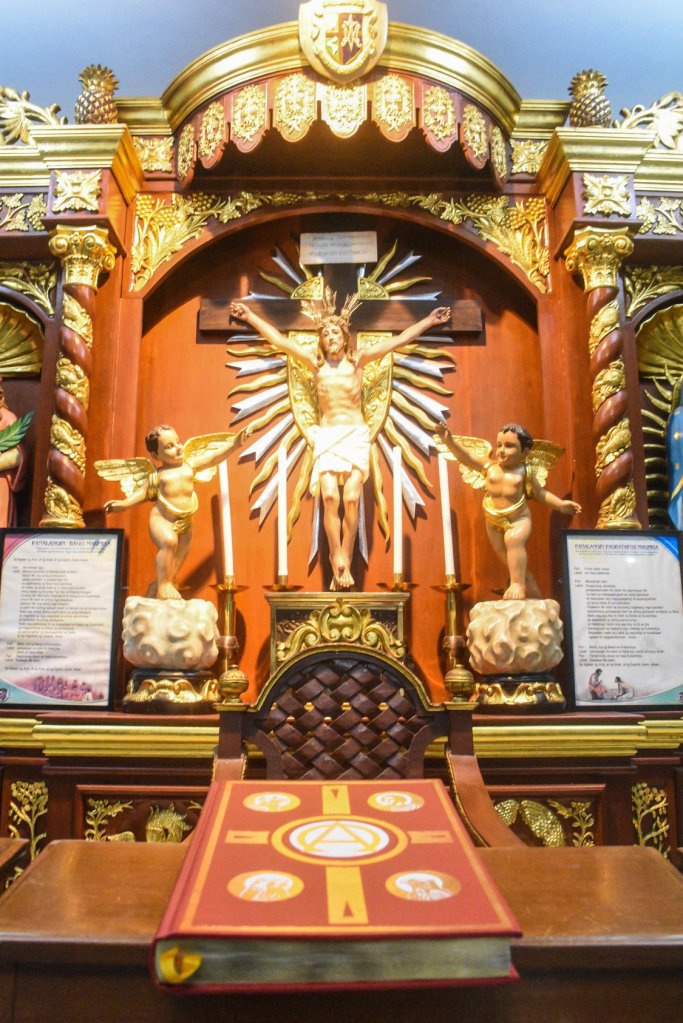
The Gospel Book on which every new deacon and priest professes his faith before the Bishop shortly before the Mass of his Ordination. Photo by Lorenzo Atienza.
Thank you very much Lord Jesus Christ for this Friday, for another weekend.
As the days moved on since Monday, we didn’t know how this week would move on for many of us: the pressures and stress at home, in the office and the school with all kinds of problems.
Some of us almost gave up life, Lord, because of sickness and loneliness, pains and sufferings, neglect and feelings of being misunderstood and unloved or unwelcomed.
But you were always there, Jesus, loving us, comforting us, assuring us of your presence and grace.
We hold this treasure in earthen vessels, that the surpassing power may be of God and not from us. We are afflicted in every way, but not constrained; perplexed, but not driven to despair; persecuted, but not abandoned, struck down, but not destroyed; always carrying about in the Body the dying of Jesus, so that the life of Jesus may also be manifested in our body.
2 Corinthians 4:7-10
Let us continue your work Jesus. There are still plenty of things to be done this day: so many loving and acts of kindness, a lot of caring and understanding, some forgiving and asking sorry over there, with a lot of smiles and hugs to share so that those in despair may realize life is so beautiful, that it is good to be alive, that there is beauty even in our dirt and brokenness.
Every Cross is a plus sign, O Lord: afflictions and darkness, suffering and pains in life are an addition, never a minus or a subtraction! Amen.
Dominican Hills, Baguio, January 2019. Photo by author.
The Lord Is My Chef Breakfast Recipe for the Soul, Wednesday, Wk. X, Yr. I, 12 June 2019
2Corinthians 3:4-11 >< )))*> >< )))*> Matthew 5:17-19
Detail of “Ordination of the Seven Deacons” by Fra Angelico, 1447-49, Cappella Niccolina, Palazzi Pontifici, Vatican. From Google.
My dearest Lord Jesus Christ, our Eternal High Priest: Like your Blessed Mother, my soul proclaims your greatness and my spirit rejoices in you O Lord on this great gift of ordination as deacon of our parishioner, Rev. Roel Aldwin and his two classmates, Rev. Howard and Rev. Laurence.
As his ordination day got nearer, the more I realized your goodness, your love and your mercy. So true are the words of St. Paul in our first reading today:
Brothers and sisters: such confidence we have through Christ toward God. Not that of ourselves we are qualified to take credit for anything as coming from us; rather, our qualification comes from God, who has indeed qualified us as ministers of a new covenant, not of letter but of spirit; for the letter brings death, but the Spirit gives life.
2 Corinthians 3:4-6
Thank you very much for new brothers in the ministry, for new co-workers in your vineyard, Lord. Indeed, you do not call the qualified but you do qualify your calls! As St. Paul had said, no one can lay claim for this great gift of being your “alter Christus” at the altar.
And so, I thank you for this rare gift of having a new deacon in my parish during my tenure. You know how much I have loved your parish amid the many difficulties and pains that continue up to this moment. I hope and pray that your people here would realize this immense gift of a deacon you have called from among them to serve your Church.
But what I like most Lord in your gift of the first deacon from our Parish is also your gift to me to be a better pastor to encourage Rev. RA to strive and persevere in his vocation with so much love and dedication. I am a sinner, Lord, and you know very well how I have discouraged with my words and actions some members of my flock. And despite all this, you have used me to guide our new deacon in his journey.
Soon, he shall find so many flaws among us priests in the ministry. Soon he shall find the many crosses and many crucifixions we shall go through. Soon he shall find that ultimately, no one else is to be followed except you alone, Jesus.
I pray that our new deacons may be the signs of your fulfillment of the Laws of love and mercy. Keep them faithful and obedient to your commandments, Lord, that they may be your indwelling, your presence in this world slowly plunging into darkness and coldness, like what you described as “a sheep without a shepherd”.
I pray for our new deacons to love you more, Jesus our Caller – and not your call so that as they serve in your name, it is you whom they proclaim, it is you whom they make known above all.
Jesus our High Priest, let us your priests and deacons decrease so that you may increase. Amen.