Colors and shades of life

Quiet Storm by Fr. Nicanor F. Lalog II, 03 April 2019

From Google.

A follower is protesting the title of my Lenten blogs called “40 Shades of Lent”. She, or he, wrote us that “Our Roman Catholic Church is pure and sacred to be associated with a title of a pornographic movie.”  Our follower also suggested to us to “Please inform your Bishop and Priests before posting these titles on social media.”

Our follower is absolutely right that the title of my lenten reflections is indeed from E.L. James’ novel published in 2011 and later adapted into a movie in 2015. I have never read it nor seen any of its movie adaptations that were both a hit and a trending topic in 2016. At that time, I thought of having a series of reflections for Lent distinct from my regular Sunday homilies I have called “The Lord Is My Chef Sunday Recipe” since 2006. I thought that if everybody was talking about “50 Shades of Grey”, why not ride on the strong recall of the brand by having my “40 Shades of Lent” where people can find the many colors and meanings of our sacred season?! After all, Lent’s motif of the color violet comes in many shades and hues, too!

That’s it, pancit! In no way does the title “40 Shades of Lent” becomes erotic or, as our follower described, pornographic simply because of its similarity with the book or movie title “50 Shades of Grey”. But her, or his, contention has opened for us a springboard for discussion regarding the way we deal with modern media if you can bear with me.

From Google.

We live in a “mass-mediated culture” where every baby is now born with a mouse. If Jesus were with us today, maybe He would have directed us priests to “feed my geeks” instead of telling us to “feed my sheep”. Since the time of the great St. John Paul II to Pope Francis today, the Holy Fathers have all recognized this reality, asking us to find ways in proclaiming the Gospel among the young people without losing our Christian identity.

“The question confronting the Church today is not any longer whether the man in the street can grasp a religious message, but how to employ the communications media so as to let him have the full impact of the gospel message.”

St. Pope John Paul II , “Religion in the Mass Media” (Message, 1989 World Communication Day

The need for an equilibrium in our approach with media.

The two most media savvy Popes, St. John Paul II and Pope Francis have both noted in their speeches that young people today practically live in the world of media; hence, the need to reach out to them. Problem with us in the Church, both among the clergy and the laity, is when we respond in both extremes when some end up succumbing to the world of media while there are those at the other end rejecting it altogether or in some forms. What we need is some degree of equilibrium wherein we try to keep technology and media in their proper places. See the many instances when priests embrace media and technology so much that churches lose the sense of sacred with giant video screens all over with a barrage of tarpaulins in all sizes that make one wonder if it is a house of worship or videoke bar. On the other hand, there are those who reject media and technology, stepping back in history like in a parish in Poland recently where priests and the faithful burned some books including the Harry Potter series they deemed as sacrilegious and have evil forces.

It is difficult to achieve such equilibrium or balance in our dealing and use of modern media in the ministry for as long as we remain in our Pharisaical stage, of associating almost everything in the world and of the world as evil and sinful especially books and music. The gospel accounts teem with many instances when the Pharisees and scribes questioned Jesus eating and drinking with tax collectors and known sinners of His time. How sad that until now we still don’t get what He had said during that time.

Nothing that enters one from outside can defile that person; but the things that come out from within are what defile.

Mark 7:15

From Google.

Equilibrium is first achieved in the constant examination of our hearts so we can respond properly to the spirit of modernity not easily reconcilable with the demands of the Gospel of Jesus Christ. Attaining that equilibrium calls for a return to the contemplative spirit where we try to maintain our spirit of silence and prayer amid the constant changes in thoughts and beliefs including values often due to the growing efficiency of technology. Let me share with you the very words of a communication expert to conclude this piece that I hope may enlighten us to see the various shades of colors, including shadows and lights that surround us in this modern world today.

The contemplative spirit is not easily acquired, but without it people find it hard to discern the valuable from the worthless, or the enduring from the transitory. Contemplation puts us in touch with reality in a world in which a host of communication technologies work to sustain a multitude of illusions and images: a media world. The contemplative spirit helps us to see and hear beyond and through the sights and sounds we take for granted. The contemplative spirit is an attitude of mind and heart that enables us to focus on the essential, important things. It refuses to be hurried into premature rejection or acceptance of technology. If we Christians allow it to inform our use of communication technologies we shall learn to be realistic, but always hopeful, able to love and reverence our culture even as we strive, with God’s help, to transform it.

James McDonnell, “Communicating the Gospel in a Technological Age: Rediscovering the Contemplative Spirit”.
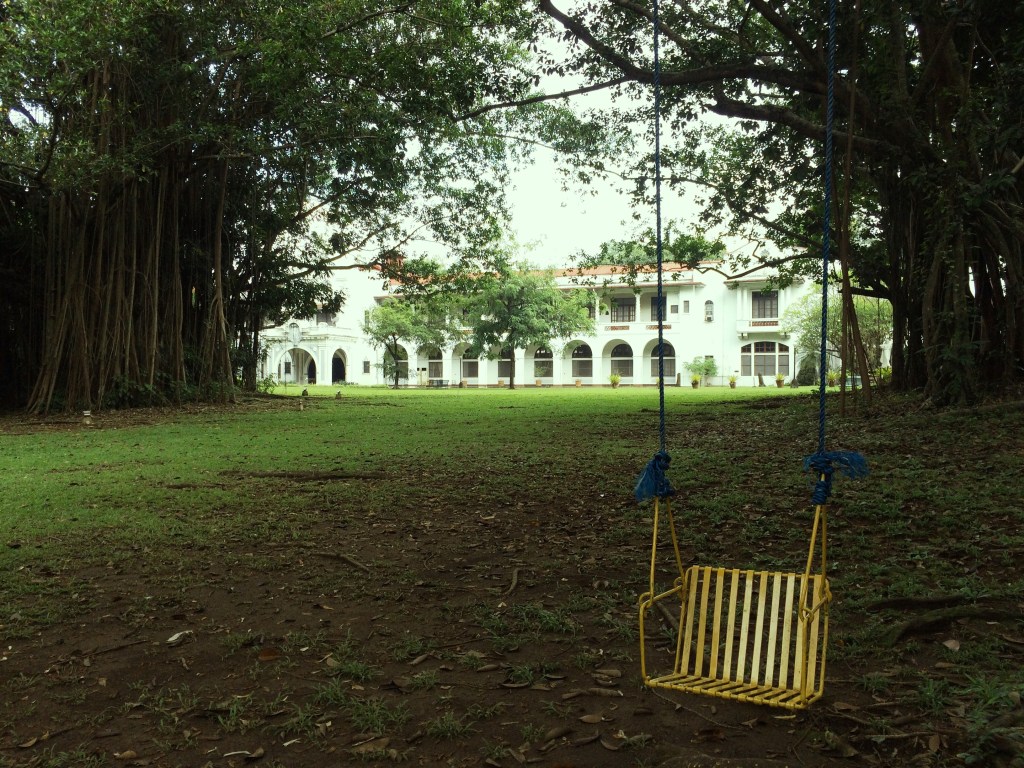
Sacred Heart Novitiate, Novaliches. Photo by author, July 2018.

We always have something to give

The Lord Is My Chef Breakfast Recipe for the Soul
Tuesday, 05 March 2019, Week VIII, Year I
Sirach 35:1-12///Mark 10:28-31

Sunrise at Lake of Galilee, the Holy Land.  Photo by the author, April 2017.

Lord Jesus Christ, you know very well our favorite expression in Filipino “walang wala ako” whenever we do not feel like helping somebody in need especially if it is money.

We always say it to show how poor we are, that we literally have nothing at all. And you know as we also know very well that it is not true at all.

Forgive us in professing that absolute lie for if ever we possess no wealth at all when our hands are totally empty of anything, we still have those hands to share and reach out to anyone in need.

Help us heed Ben Sirach’s admonition,

Appear not before the Lord empty handed, for all that you offer is a fulfillment the precepts… Give to the Most High as he has given you, generously, according to your means.  For the Lord is one who always repays and he will give back to you sevenfold.” 

(Sir. 35:4, 9-10)

Let us not be like Simon Peter who sometimes feel bragging about our sacrifices and offerings for everything we have is not ours but all yours.

Amen.

From Google.


Friends always talk straight from their hearts

The Lord Is My Chef Quiet Storm, 01 March 2019

I have been dreaming of former classmates lately. Last Tuesday night I dreamt of a classmate in high school seminary now a priest but have not seen in months. Later that day I met another classmate, told him of my dream, and inquired about him. Unfortunately, he has not seen him too for so long though he presumed he must be doing well in the ministry.

Thursday morning upon waking up, I was thinking hard for the possible meaning of another dream I had the night before about my two seatmates in elementary school. Two dreams in a row about three good, old friends very much still alive but have not seen for so long. And how ironic that until now, I have not reached out to them personally or through the many social media platforms available except for a Facebook post that Thursday morning for a possible explanation about my two dreams!

That is the great irony – or, tragedy of our time when we have all modern means of communications that include extensive road networks and yet we could not even get in touch with those people dear to us. See the simplicity of Jesus Christ in calling us his friends: on the night he was betrayed during supper, he told his disciples, “You are my friends if you do what I command you (i.e., love one another). I have called you friends, because I have told you everything I have heard from my Father” (Jn.15:14,15).

Jesus does not need to dial numbers, text SMS, compose emails, or send invitations in Facebook to become friends with us. Jesus simply reveals to us in the most personal manner everything the Father wants to tell us and right away, we are already friends! Of course, it would be difficult to enumerate everything that the Father had told Jesus to relay to us but the greatest of these is the fact that God loves us very, very much. Period.

That is the greatest thing Jesus had achieved in his coming to us by bringing God closest to us by speaking straight to us by himself of his love, his mercy, his forgiveness, and his plans for us. That is one of the great joys of friendship when we talk straight, speak our hearts out freely to our friends without any fears of being rejected or misunderstood. There is always that sense of respect for the other person as a subject to be loved and cherished, not an object to be possessed and used like tools and gadgets.

In our mass-mediated culture, expressing our true feelings to our friends have become more complicated as we become less personal in our relationships. How I hate it when some people would always invite me for breakfast or lunch in some expensive restaurants or hotels only to ask some special favors after the meal that I feel like throwing out the food I have ingested! It is not social grace to treat people to fine dining or gift them with expensive or special things only to ask for some favors in the end. That is corruption or bribery. Simply put, it is lack of respect especially if done by people we regard as friends.

Going back to that Last Supper scene with Jesus Christ when he called us his friends, notice the word “friend”: there is only one letter that makes the difference to make it mean exactly the opposite, “fiend”. It is the letter “r” that stands for respect, from two Latin terms that literally mean “to look again”. To respect is to look again at another human as a person with equal dignity as yourself. Respect is the starting point of love that cannot exist in any situation where there is inequality or feelings of superiority over another person.

Our words coming from our hearts are some of the most wonderful things that create true and lasting friendships. The rest are the actions expressed when these words run out.

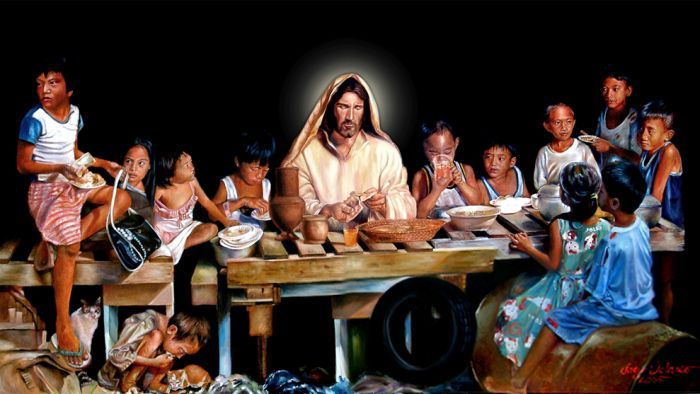
“Hapag ng Pag-Asa” by the late Joey Velasco.  From Google.

Lead Us Back to You, O Lord, Like in EDSA 1986

edsaMary
God was the true spirit of EDSA 1986; may we find our way back to Him again in our modern EDSA.  Photo from Google.

The Lord Is My Chef Breakfast Recipe for the Soul
Monday, 25 February 2019, Week VII, Year I
Sirach 1:1-8///Mark 9:14-29

O God our Father, today I praise and thank you for the 33rd anniversary of the People Power Revolution that happened at EDSA.

I am proud O Lord of that historic moment in our history because I was there with my sister.

But I also feel so sad today, O Lord, because we have wasted your gift at EDSA.  I feel betrayed by many of our leaders there who have left us.  I feel betrayed by many of the other veterans of that bloodless coup who have left our cause.

EDSA 86 was our moment of Exodus from our own Egypt but due to our many idolatrous ways, here we are as a nation still wandering in the wilderness when EDSA has become the symbol of everything wrong in us.

Help us to return to you again as our Lord and only Master.

Let us turn back to you for more wisdom to finally set our course right on track as a nation, giving priority to the value of every person and of human life.

God our Father, sometimes I really can’t figure out anymore what went wrong with EDSA because I know I also have a part in its failure.

I still do believe in the ideals of EDSA and most especially in you, the God of history.

Yes, like that father of an epileptic, “I do believe, help me in my unbelief!” (Mk.9:24)
Amen.  Fr. Nicanor F. Lalog II, Parokya ng San Juan Apostol at Ebanghelista, Gov. F. Halili Ave., Bagbaguin, Sta. Maria, Bulacan.

edsa1
EDSA today, the image of everything wrong with us.  Photo from Inquirer.net via Google.

Our Seat, Our Stand?

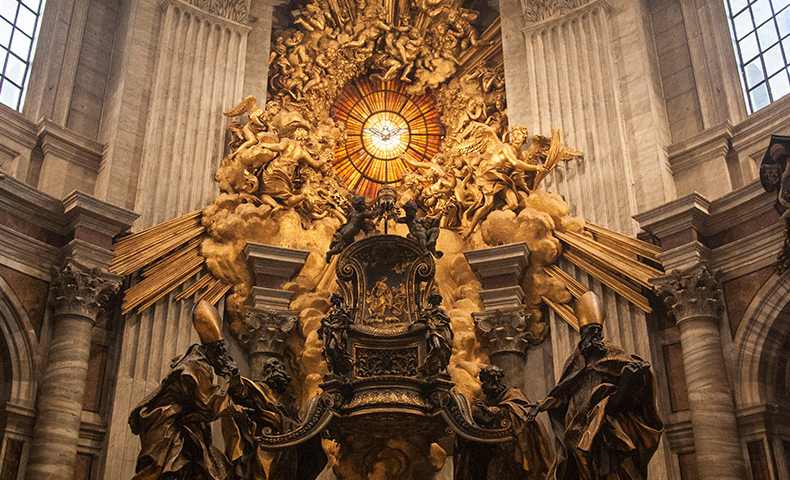
SOD-0222-ChairofSaintPeter-790x480
The Chair of St. Peter at the high altar of the Basilica of St. Peter at the Vatican flanked below by the two teachers of the East, St. John Chrysostom and St. Athanasius with the two Latin Fathers of the Church St. Ambrose and St. Augustine.  All four saints showed us how love stands on faith; that,  without both love and faith, everything falls apart in the Church.  Photo from Bing.

The Lord Is My Chef Breakfast Recipe for the Soul
Friday, Feast of the Chair of St. Peter, 22 February 2019
1Peter 5:1-4///Matthew 16:13-19

             Glory and praise to you, O Lord Jesus Christ as we celebrate today a most unique feast, the Chair of St. Peter!

             It is so unique O Lord especially in this age when the world is so concerned with seating arrangement whether at home, in school, in offices, in buses… everywhere seats matter these days because every seat is about position, rank, power and convenience.

             And we have forgotten that more important than our seating position is where we stand.

             On this Feast of the Chair of St. Peter, remind us Lord especially your priests of that beautiful example you have shown at the Last Supper when you left your seat to wash the feet of the Apostles.

             How sad and shameful, O Lord, when we your priests fail to realize that the throne of the Eucharist is not a seat of power or prestige but a seat of loving service to everyone.

             So true were the words of St. Ignatius of Antioch in his Letter to the Romans in the year 110 that the Primacy of Rome is the Primacy of Love because primacy in faith is always primacy in love, two things we can never separate.

             May we your priests heed the call of St. Peter, the designated “owner” of that Chair, that we “Tend the flock of God in your midst, overseeing not by constraint but willingly, as God would have it, not for  shameful profit but eagerly.  Do not lord it over those assigned to you, but be examples to the flock” (1Pt.5:2-3) Amen.  Fr. Nicanor F. Lalog II, Parokya ng San Juan Apostol at Ebanghelista, Gov. F. Halili Ave., Bagbaguin, Sta. Maria, Bulacan. 

Living As God’s Children

49234257_542308659606249_5909495384316575744_n
The Lord Is My Chef Sunday Recipe, 20 January 2019
Feast of the Sto. Nino, Week II, Year C
Isaiah 9:1-6///Ephesians 1:3-6, 15-18///Luke 2:41-52

            Sometimes when we look at our religious celebrations we get the impression that we as a people seem to be very ritualistic and even fanatics.  But, on deeper examinations, we find in these feasts the expressions of our deep faith nurtured through our history and culture as a nation by God’s invisible hand.  A perfect example is today’s Feast of the Sto. Nino celebrated every third Sunday of January that is proper only to our country in recognition of the important role played by the image of the Child Jesus in our Christianization almost 500 years ago.  All the readings and prayers of today’s Mass are taken from Christmas Season even if we are already in the Second Sunday of Ordinary Time because the Sto. Nino is an extension of Christmas.  Recall also that two weeks ago right after the Epiphany of the Lord we have celebrated the Traslacion in Quiapo featuring the adult Jesus Christ carrying the Cross more known as the Black Nazarene.  They are the two most popular Christ devotions in our country that every region and province, town and barrio up to the smallest sitio has its own version of celebrating Traslacion and/or Sto. Nino.  In both devotions we find the finest examples of our vibrant faith in Jesus Christ who became like us in everything except sin in order to save us, heal us, and bring us closer with one another as one big family with God as our Father.  And in both devotions too, Christ calls us to continue living into our adulthood as God’s little children like Him the Sto. Nino and the Black Nazarene.

            After three days of searching, Mary and Joseph found the 12 year-old child Jesus at the Temple and he said to them, “Why were you looking for me?  Did you not know that I must be in my Father’s house?”  But they did not understand what he said to them.  He went down with them and came to Nazareth, and was obedient to them; and his mother kept all these things in her heart.  And Jesus advanced in wisdom and age and favor before God and man (Lk. 2:51-52). 

           From His childhood into His adulthood, Jesus remained a child of His heavenly Father and of His parents Mary and Joseph.  In this scene on His finding at the temple, we again see the centrality of Christ’s teaching of remaining like a child in order to belong to the kingdom of heaven.  And it was not only Him who showed it in this short account by St. Luke but also Mary and Joseph who “both did not understand” what Jesus had told them but still took care of Him very well as “He advanced in wisdom and age and favor before God and man.”  Here we find the importance of love in remaining children of God as shown by the deep love among the members of the Holy Family that is rooted in the Father’s love.  Notice how in this age of so much advancement in technologies that we have become more technical than personal, love has also suffered so greatly.  It is not only abused and misused but most of all, misunderstood.  Love has become a commodity that people think could be had simply and instantly like anything in a store or a vending machine, forgetting that love is more than a feeling but a decision we must keep.  Most of all, love is a choice we make by choosing what is most painful and most difficult because true love is found only on the Cross of Christ.

            This is what I am telling you at the beginning, the seemingly funny or weird flow of our celebrations after Christmas:  Traslacion and then Sto. Nino that are both anchored on love of God that did not merely happen in Christ’s birth and coming but most of all in His suffering and death on the Cross.  Love is often symbolized by the heart but its total meaning can only be found in the great sign of the Cross where we can find the perfect expression of Christian “childlikeness” and Christian maturity.  Recall how Jesus on the Cross remained a child of the Father to whom He entrusted His total self while at the same time remained faithful to His mission, resolutely going to Jerusalem to face His fate as a matured adult.  That is love when we can be tender and docile to our beloved and at the same time stand our ground to keep our promise, no matter what or how painful it could be.  It is a love until the end that is always willing to share and give, never thinking of anything in return.

              To be able to love like a child and remain loving as a matured adult like Jesus Christ, we need to always live in the present moment.  God revealed Himself to Moses as “I AM WHO AM” while in the gospels particularly in John’s, we find Jesus always declaring the great “I AM” as the Resurrection and life, the way, the truth and the life, as well as the good shepherd and the true vine.  God is love because He is always in the here and now, the present, not in the past and not in the future.  See how a child always has a time to take time as it comes, one day at a time, so calmly without advance planning and thinking or greedy hoarding of time.  Unlike us adults, we need planners and schedules to follow, finding or making time like a sausage to be sliced into portions to be eaten at a desired time.  Kids always live in the fullness of time like a cup of milk or water that has everything that for them, any time is a time to sleep, a time to eat, a time to play.  And that is why they love all the time!  We adults are so pressured and stressed that even in loving others and especially God, we always bargain with time as if it can be done.  We love to postpone time because we are not yet ready, even refusing to move on as we dwell with our painful past.  Remember the warning of Jesus that nobody knows the time when He shall come that we must always be on guard and ready for that time by always loving God and others all the time.  Recall our quotation last week that says, “For people who rush, time is fast; for people who wait, time is slow; but, for people who love, time is not.”  A child of God lives in the present because he knows, like Jesus Christ, every moment is the fullness of time we must receive with gratitude because in every present moment we have everything.  This is totally different from the young people’s concept of “YOLO” that is actually about living in the future now being advanced without realizing the beautiful present moment.

             To be a child of God like the Senor Sto. Nino is to walk in the “great light” of Christ, our “Wonder-counselor, God-hero, Father-forever, and Prince of Peace” (Is.9:1,5) who calls us to love every moment of our lives by living in the present.  May Jesus “enlighten the eyes of our hearts that we may know what is the hope that belongs to his call, what are the riches of glory in his inheritance among the holy ones” (Eph.1:18).  AMEN.  Fr. Nicanor F. Lalog II, Parokya ng San Juan Apostol at Ebanghelista, Gov. F. Halili Ave., Bagbaguin, Sta. Maria, Bulacan.

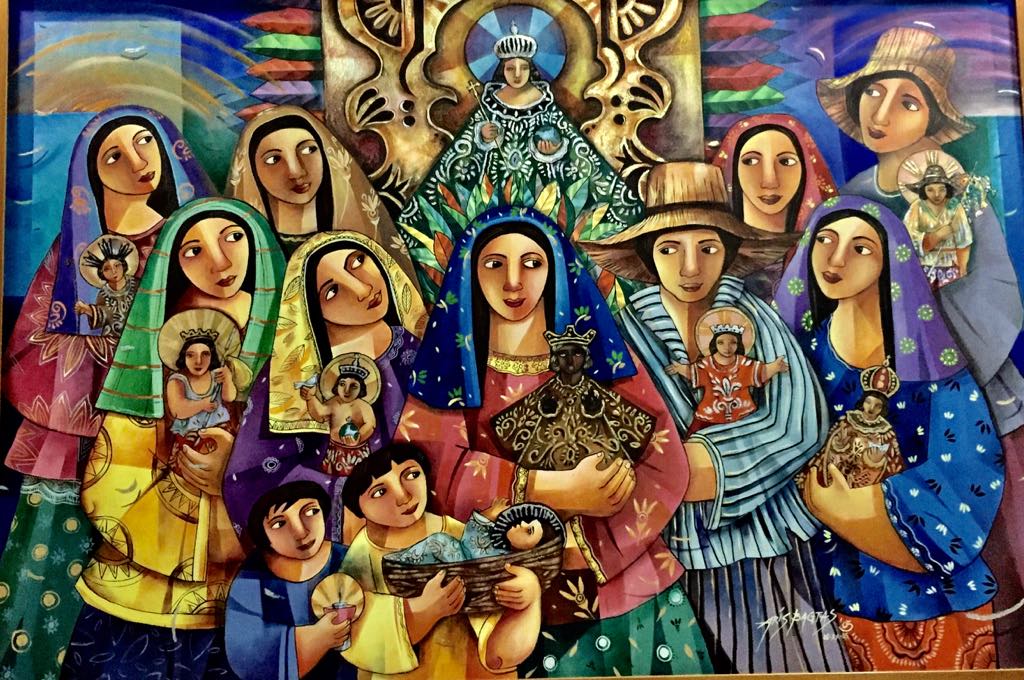
*Photo is a painting of Sto. Nino devotees by Bulakenyo artist Aris Bagtas.  Used with permission.

Of Blessings And Curses

balaamcatacomb
Quiet Storm by Fr. Nicanor F. Lalog II, 08 November 2018

            Events and news reports during the recent long weekend reminded me of the story in the Old Testament of a pagan prophet named Balaam who was commissioned to curse the Israelites while encamped at the plains of Moab, ready to enter the Promised Land 40 years after their Exodus from Egypt.  It is a story filled with humorous twists and turns that instead of cursing the Israelites, Balaam blessed them and even prophesied the coming to them of the Savior Jesus Christ.  It is a funny story like the movie “Shrek” with a talking donkey.

             When Balaam was riding his ass (pun intended) on his way to Moab to curse the Israelites, an angel of the Lord with a sword drawn stationed himself on the road to hinder him from proceeding. He did not see the angel but his ass saw the angel that she turned into the field.  Balaam beat his ass to bring her back on the road.  As they passed through a narrow lane between vineyards with a stone wall on each side, the ass saw the angel of the Lord again blocking their way that she shrank against the wall and squeezed Balaam’s leg onto it.  Again, Balaam did not see the angel that he beat his ass for backing out.  Upon reaching a passage so narrow without any space to move either to the right or the left, the ass again saw the angel of the Lord blocking their road.  The ass cowered under Balaam and in his anger, beat her again with his stick.  God opened the mouth of the ass to speak, asking Balaam why he would always beat her despite her services to him?!  It was during his conversation with his ass that God opened the eyes of Balaam to see His angel and get His message to bless the Israelites (cf. Num. 22:20-35).
           Is Baguio City a modern Moab with its new law prohibiting “cursing, cussing, expressing insults or the use of foul language to express anger or any other extreme emotion in establishments frequented by students, from pre-school to college level”?

I have always loved and admired Baguio City in its efforts to keep its morals intact despite the growing lamentable practice of many Filipinos these days of spending Holy Week vacationing there instead of praying in their homes and parishes.  It is perhaps the only city with a law calling on all people to pause during the Angelus.  And now, it is the only city too that prohibits the use of foul language.  Members of its city council have noted in their Anti-Profanity Ordinance how the habit of cursing has “already penetrated schools and educational system, business establishments and society as a whole, that even the very fabric of morals and human decency has deteriorated to such a degree that we have to prevent it before the damage would become irreparable.”  It defined profanity as “blasphemous or obscene language vulgar or irreverent speech or action; expletive oath, swearing, cursing, or obscene expression usually of surprise or anger.”

             Baguio City is deteriorating fast and though this Anti-Profanity Ordinance does not address anything at all in improving environmental conditions there, it shows us that unless we first cleanse whatever is within us, these are reflected with the problems around us.  “Ex abudantia cordis” is the Lord’s reminder to us all, “from the fullness of the heart the mouth speaks” (Matt. 12:34).  Though the ordinance is not really clear in its scope and purpose expressed only in three pages of paper, it is a good reminder that whatever is evil and bad would always be evil and bad, with or without any written law.  To curse or speak ill of anybody, wishing evil or harm to someone is always bad.  And despite the claims by the defenders of the President that saying bad words does not make anyone entirely bad, recent events have shown exactly the opposite of their claims, that anyone speaking of good things does not make him or her good at all.

             On Halloween day which the benighted souls have insisted on celebrating the pagan way by dressing as ghosts, actor and former tourism official Cesar Montano’s selfie with a naked woman at the background went viral and spawned many spoofs.  How I wish I have the vocabulary of Nabokov but I could not find the proper English words to describe those videos that are salaula, baboy, and kadiri!  And of course not to forget during the long weekend is the President’s usual dose of follies of the highest level when he spewed his usual profanities against the Church and the All Saints’ and All Souls’ Day celebrations, a day after calling on the nation to “emulate our saints, pray for the eternal repose of souls and deepen our engagement with our communities as we work for real and lasting change.”  Not contented with the foul language, the President even declared himself a saint.

             Blessing is from the Latin term benedicere that literally means “to speak or say good things.”  To wish somebody “God bless you” in the midst of a malicious situation, in a life far from being a blessed one or simply just because as in “wala lang” is not only a profanity but also a blasphemy. Of course, priests who are supposed to be channels of God’s blessings commit the highest level of profanity and blasphemy if they lead lives of sin and corruption, abusing not only children and women but the entire people of God, including God Himself.  This is what the anti-profanity law of Baguio is missing, skipping that portion on who should not use obscene language.  The evil of foul language is similar with pornography:  it is always immoral regardless of age because it is a lack of respect to the dignity of persons.

Why-Was-God-Mad-at-Balaam--JM2

              The story of Balaam and of his ass reminds us that we are all a blessing to everyone.  Listen to what the donkey told Balaam:  “What have I done to you that you should beat me these three times?  Am I not you’re your own beast, and have you not ridden upon me until now?  Have I been in the habit of treating you this way before?” (Num.22: 28, 30)   How ironic that the dumbest creature in the universe was the one to remind Balaam and us that we should never treat badly and speak ill of anyone because we are all a blessing to everyone.  Most of all, the talking donkey of Balaam reminds us how blessings can turn into a curse someday and curses could eventually be a blessing too.  It has happened so many times in history, not only to nations and corporations but even in the Church that is still rocked by sexual scandals committed long time ago.  The early Christians have depicted the story of Balaam and his ass in their early arts like in the Roman catacombs (photo above) and in some churches in Europe to show how God works in mysterious ways, especially with the power of our words to bless, or to curse. Be a blessing!

*Photos from Google.

Our Hallowed Hiddenness

RaffySunset1
Quiet Storm by LordMyChef, 31 October 2018:

            Whether you choose to celebrate today’s Halloween in its truest, Christian sense that is sacred or in the more popular pagan manner that is scary, today’s feast that literally means All Hallowed (Holy) Eve reminds us of things that are not seen, always hidden.  Hiddenness is a sacred presence where each one of us is all by one’s self focused on God who is the root of our being and existence no matter how one may call Him.  In one of his writings which I could no longer recall despite the help of Google, St. John Paull II explained that God created man first to be alone with Him.  And that is how it has always been even if people get married for eventually in the end, we die alone with God.

             This gift of hiddenness within each one of us is manifested in our desire to once in a while be still, to go to the mountains or anywhere for a retreat or introspection, for “me” time to rediscover and “find” one’s self anew.  Hiddenness is the passageway to the great gifts of silence and stillness that everyone needs to maintain balance in this highly competitive world filled with so much noise where everybody is talking, even cars, ATM’s, and elevators.  How funny that we complain of not having enough time for ourselves but we never cease to stop talking and listening.  And not only that:  we have allowed everything about us not only heard but even seen on cameras.  First came the Sony Walkman almost 40 years ago that became the ancestor of every gadget that have invaded our hiddenness; now, we have camera everywhere, shooting and recording everything that nothing is hidden anymore in us and from us.  We have stripped ourselves of the innate mystery of being human, of the beauty and gift of personhood that some have tried to reveal using the camera but failed because we are beyond seeing and appreciation.

             While it is true that cameras are essential in keeping our surroundings safe and secured that it is referred to as “big brother”, again we find here another case of abusing technology to the detriment of our humanity.  As I have told you here last week (Respect In Digital Age), we need to put technology at its right place, particularly the camera that robs us of that essential thing we call respect.  But the greatest threat and danger posed on us by the camera is how we have allowed it to invade our hiddenness with almost everybody wanting to be on camera without realizing it often backfires, sometimes painfully.

            The camera is a projector, trying to show in a bigger picture deeper realities notably the plain truth.  Here lies our quiet storm when we are so eager to project everything and everyone including our very selves on the camera when we do not realize nor examine what we are really showing.  The great paradox is that the camera does not lie that always seem to show what is negative than what is positive in us.  Keep in mind the TV is called “idiot box”because those inside the television presuppose everybody watching them is an idiot when in fact, they are more idiots.  Watching television – news or entertainment – can reveal who are superficial and those with substance.  Sometimes TV can be deceiving that we take some people and things appearing on the screen as good and credible without us realizing these are “presentations” that are manipulated to produce a desired effect called the hypodermic theory.  This explains the popularity of YouTube as people prefer “raw footages” that show people and events “as it happened.”  Even movie directors are adapting to this style to show action “as it is” to give the film a more realistic feel that contribute to the blurring of lines between reality and virtual reality.

            We need to regain our hallowed hiddenness if we wish to grow and mature truly as persons – emotionally, psychologically and spiritually.  With the camera always around us even in the church, sad to say, everybody and everything has become so ordinary and cheap.  Even God has to keep His hiddenness simply because that is how He had created everything.  See the beautiful speech of God before Job that can transport you to the sublime beauty of nature and creation.  The beloved apostle also tells us of the hiddenness of Jesus Christ who “In the beginning was the word.” (Jn.1:1)  All four evangelists likewise have no records of the “hidden years” of Jesus before the age of 30 except for Matthew and Luke who gave us little glimpses of the birth and childhood of the Lord.  These are all meant to teach us of the value of hiddenness, of being rooted always in our being and with God.  Appearances in life are very fleeting and for more impact, we have to spend more time in hiddenness as revealed to us by Christ, the saints, artists and other great men and women of the world who came to be known and popular only after upon death.  So many times we have also experienced in the funeral of our relatives and friends that we discover their hidden goodness and kindness from stories of those condoling with us.

            This November 1 and 2 as we remember all those who have left us in this world, let us keep its sacred origins:  All Saints Day for those souls already in heaven and All Souls’ Day for those who have departed but still being purified or staying at the purgatory.  Both dates invite us to hide also in some prayer, remembering God and our loved ones whom we shall surely follow someday without any camera at all.  Like them in hiddenness from us, let us be focused more on God than on self and things that pass.  Here is the late Fr. Henri Nouwen on hiddenness:

“In our society we are inclined to avoid hiddenness. We want to be seen and acknowledged. We want to be useful to others and influence the course of events. But as we become visible and popular, we quickly grow dependent on people and their responses and easily lose touch with God, the true source of our being. Hiddenness is the place of purification. In hiddenness we find our true selves.”

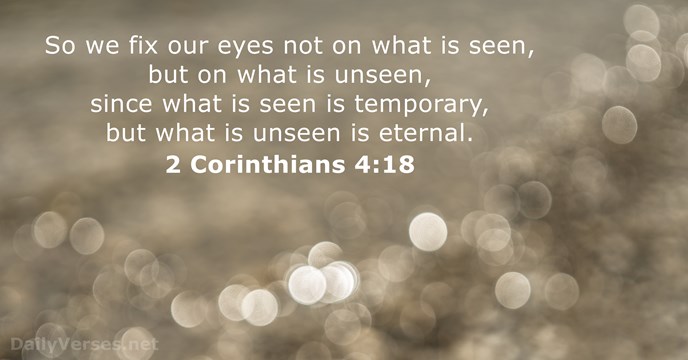
2-corinthians-4-18-2

*Photo by Mr. Raffy Tima of GMA-7 News, sunset on a flight to Dubai, October 2018.  Used with permission.  Bible verse from Google.

Respect In Digital Age

cellphoneabuse
Quiet Storm by LordMyChef, 24 October 2018:

             The word “respect” is from the Latin terms “re” and “specere” that literally mean “to look again” from which came the words “spectacular” and“spectacles”.  Hence, to respect a person, a place, and a thing means to look at them twice or thrice and see their dignity.  On the other hand, disrespecting a person, a place, and a thing means refusing to recognize their worth because we only see ourselves and their differences.  For us to be respectful, we need to look again and again at persons, things, and places so we could see and give them the respect they deserve, even when we are apart or when nobody is looking at us.

             And here lies our “quiet storm”:  respect is becoming rare with the coming of the ubiquitous camera phone.  We no longer look at everyone and everything as persons and humans because all of our seeing and looking are now “mediated” by technology.  We look at people not as subjects but objects caught on our camera screens, to be kept in memory cards than in our hearts to be cherished.  We do not look at people anymore but simply “shoot” them to collect them into our “albums” or “folders” than engage them in conversations, exchanges that excite our souls and being.  We no longer see each other eye to eye, person to person, but cellphone to cellphone or iPad to iPad.

            Many people have become so accustomed these days to be consumed with their phones and other gadgets in the middle of meals, meetings, and conversations totally unmindful – and disrespectful – of the other persons they are with.  We have become more fixed with machines that eventually we manipulate people as if they have buttons and touchscreens.  See the folly of most weddings these days, of how phones and cameras shatter the solemnity and intimacy of the occasion, stealing the attention from the bride!  Is it lack of common sense or respect, or both, that many guests seem to forget they were invited to personally witness and share in the joy of the new couple and not to take their pictures?

             This loss of respect due to abuse of technology extends to our relationships with God, sadly fostered by many priests enslaved by gadgets.  Remember how during the Mass presided by Pope Francis at the Manila Cathedral in 2015 when priests were seen on TV taking selfies and groufies from the start to the end of the solemn celebration!  And it happens so often when clerics gather among themselves, unmindful (some ignorant) of the Pope’s repeated warning against priests taking pictures during the Mass.  How can the people be expected to respect God especially during the Mass or respect sacred spaces like the church when the priests are preoccupied with mundane things like taking pictures or checking cellphones during liturgical celebrations?  And so, respect is further lost right within the sphere of the sacred and holy, in the church when during celebration of the Sacraments, people are more concerned adjusting their gadgets than praying.  Every celebration of the sacrament is a moment and experience of grace, of encountering God and His holiness among His people.

            But the most disturbing area where there is massive erosion of respect due to abuse of digital technology is with how we regard the dying and the dead.

            Recently I went to anoint a dying parishioner.  His room was dimly lit and I could hardly read the prayers for the dying until a flood of white light in my direction came.  Suddenly, it went off and when I looked back to request for the light again, it turned out to be coming from the camera phone of the dying patient’s only daughter who was “recording” my anointing of his dying father. It was a surreal experience that got me thinking after the rites if it was just a case of “generation gap” or a lack of respect and concern for persons?  That experience held me for some time, especially when I recalled how I skipped breakfast to run to the side of the dying man, praying hard for his peaceful death with his neighbors while… his only daughter was busy filming his dying moments???  Every week I visit the sick in my parish, in the hospitals and in their homes where there is only one same scene:  a deafening silence broken by intermittent cries or sobs of family members gathered around a dying loved one.  Not until that sick call last Monday morning that was filmed and uploaded when the patient died later that evening.

            And this situation gets worse during funerals where it seems to have become “normal” to have groufies – with all smiles – beside the dead.  Are we not supposed to be mourning when we go to sympathize with the bereaved family?  Where have all the respect, decency, and decorum or taste and common sense gone during funerals and wakes?  TV news is more respectful in keeping its unwritten code to never show the deceased as a sign of respect.  The only time this was skipped was during the wake of Ninoy Aquino in 1983 after his mother Dona Aurora allowed him shown on newspapers and television.  And that was an extraordinary situation that eventually earned Ninoy tremendous respect.

               There is a need to put technology in its proper use, especially in the Church and in our spiritual endeavors to keep our sense of respect, both for the living and the dead.  The Book of Ecclesiastes reminds us that “there is a time for everything, a time to weep, and a time to laugh; a time to mourn and a time to dance.”(Eccl.3:1,4)  Technology is a gift from God and Vatican II rightly noted in its document on social communications that “The Church recognizes that these media, if properly utilized, can be of great service to mankind, since they greatly contribute to men’s entertainment and instruction as well as to the spread and support of the Kingdom of God. The Church recognizes, too, that men can employ these media contrary to the plan of the Creator and to their own loss.” (Inter Mirifica #2)  Let us limit technology in our interpersonal relationships so we can start looking into each other anew as persons to experience our humanity and rediscover our dignity and, along with it, the nobility of respect.  (Photos from Google.)

ecclesiastes_3_1_to_everything_there_is_a_season_tile-r69ed8933065b4516be26b283ea023804_agtbm_8byvr_307