Our Sabbath faith

Lord My Chef Sunday Recipe for the Soul, 12 October 2025
Twenty-Eighth Sunday in Ordinary Time, Cycle C
2 Kings 5:14-17 ><}}}}*> 2 Timothy 2:8-13 ><}}}}*> Luke 17:11-19
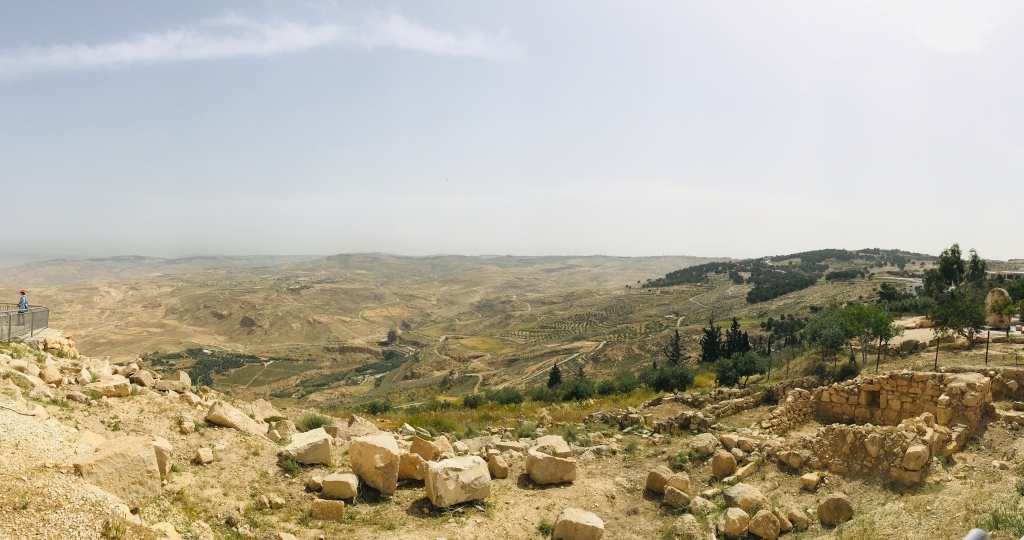
Photo by author, view of Israel from Mt. Nebo, Jordan, May 2019.

Our gospel setting this Sunday strikes a deep lasting impression on anyone who had been on a Holy Land pilgrimage: of those vast expanse of desert in Israel where dusty roads have been replaced by modern concrete or asphalted roads.

Perhaps the feelings remain the same today and during the time of Jesus when he and the Twelve were near the border between Samaria and Galilee, several figures who turned out to be ten lepers appeared at a distance, waving their hands to the Lord. It must have been a surprising sight, then and now, of being found in the desert. Imagine the desperation in their voices of those ten lepers, “Jesus, Master! Have pity on us!” (Lk.17:13).

Jesus right away told them to go show themselves to the priests, and as they went, they were healed. But only one—a Samaritan—returned to thank Jesus who wondered aloud: “Ten were cleansed, were they not? Where are the the other nine? Has none but this foreigner returned to give thanks to God?” Then he said to him, “Stand up and go; your faith has saved you” (Lk.17:17-19).

“The Healing of Ten Lepers” painting by James Tissot en.wikipedia.org

Last Sunday we reflected that faith is primarily a relationship with God; hence, its powers or efficacy will work only when aligned with God and his Holy Will. We will never know how strong we have grown in faith until we get into tests and trials. That is why, the need for us to imitate the Twelve in praying to Jesus, “Increase our faith” (Lk.17:5).

We grow best in faith when we worship God with our fellow believers in the celebration of the Holy Mass especially on Sundays which is our Sabbath. More than a day of rest, Sabbath is a day of restoration to God, with others and most of all, with one’s self. It is a return to Eden, a dress rehearsal of our entry into heaven to dwell in God’s presence eternally.

This is where lies the beauty and significance of this healing of ten lepers – they were not only restored to health but restored in God, to their families, and to their community and fellow believers.

Photo by author, Jerusalem, May 2017.

Those ten lepers have never known any rest at all since getting afflicted with the disease for they were cut off from homes, worship, and community. That is why they could not get near Jesus as they have to keep their distance from everyone according to their laws in order to prevent infecting others and spreading the disease. Likewise, it was the very reason that anyone healed of leprosy or any serious sickness must first present themselves to the priests who have the sole authority to declare one has been healed and therefore may be allowed to reintegrate with their family and community or society in general. Being declared as healed of sickness like leprosy at that time meant the restoration of one’s rights to worship in the temple or synagogue especially on Sabbath.

When Jesus healed them, he restored more than just their bodies and physical health. In sending them to the priests, Jesus invited them into the wholeness of what the Sabbath really is like peace, inclusion, and dignity. 

Or, salvation in short.

Sad to say, only one realized this when he returned to thank Jesus. The healed Samaritan leper knew and felt a deeper healing had taken place within him that he responded with heartfelt gratitude to God in Jesus. There was a deepening of his faith in Jesus when he decided to return to thank the Lord that also expressed his desire to enter into a relationship with Jesus.

Photo by author, Sacred Heart Novitiate, Novaliches, QC, 20 March 2025.

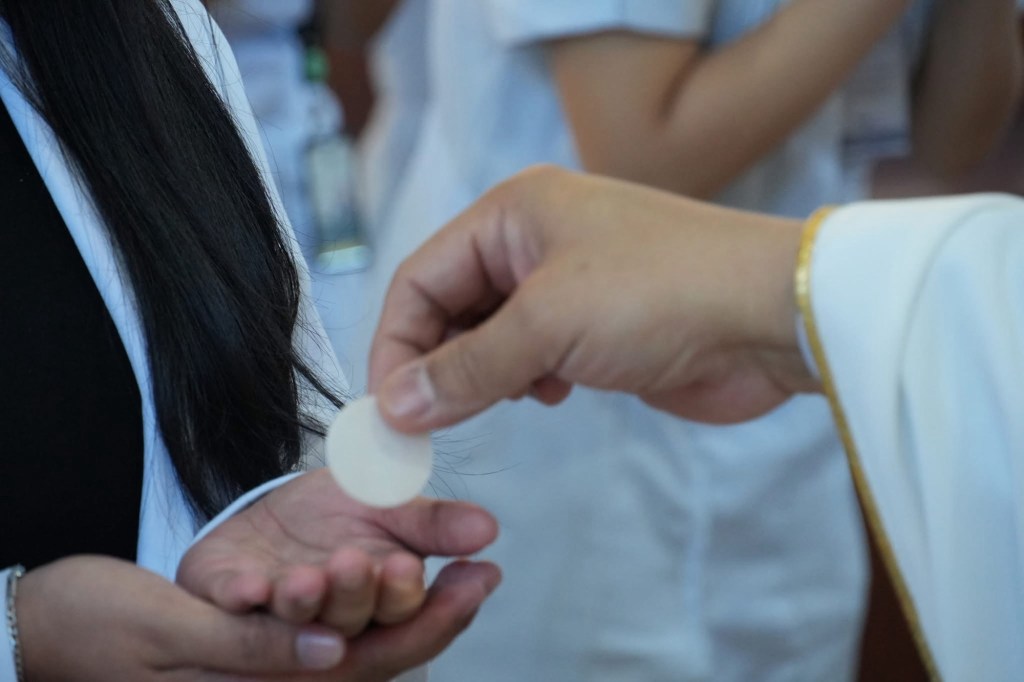
Whenever we thank people for their kindness no matter how little that may be, it is more than acknowledging the other person but most of all, of expressing our links with them as well as our desire to be one with them, especially with God who showers us with good things daily. That is why the Mass is also called Eucharist – from the Greek eucharistia meaning “thanksgiving”. After his skin was cleansed of leprosy in the first reading, Naaman the Syrian Army General declared before the Prophet Elisha that he would worship the Lord alone as he returned to his home with two mule-loads of Israeli soil.

Sorry to say but whenever we refuse to celebrate the Mass on Sundays, it means that we are one of those nine ungrateful lepers healed by Jesus! Don’t you feel being called like the Samaritan to return and give thanks to Jesus for the many blessings you have received this Sunday?

See how in this age of faith in a mass-mediated culture that we have become so impersonal, trusting more our gadgets and all those apps like Siri and Waze as if we have already lost faith in the human person. And God.

Photo by Mr. Nicko Timbol, Chapel of the Angel of Peace, OLFU-RISE, Valenzuela City, 03 October 2025.

We spend practically our entire days in front of all kinds of screens than with the face of a human person. Again, this sadly extends to the way we worship with many still stuck in the pandemic mode of online Masses not realizing the important and irreplaceable aspect of personal encounter of Jesus in the actual Mass with other believers.

God remains God even if we do not go to Mass every Sunday. It is us who are losing greatly whenever we skip Sunday Masses, our Sabbath. God specifically made his third commandment to “Remember to keep holy the sabbath day” because Sabbath reminds us that life itself is holy in the first place, a sharing in the life of God. What a tremendous blessing still that even if we forget God or disregard God every Sunday, Paul reminds us today of the beautiful truth and reality that “If we have died with Jesus we shall also live with him; if we persevere we shall also reign with him. But if we deny him he will deny us. If we are unfaithful he remains faithful, for he cannot deny himself” (2Tim.2:11-13).

Can you imagine that? If we are unfaithful to Jesus, he remains faithful?

Every Sunday, Jesus tells us to “Stand up and go; your faith has saved you” despite, in spite of our many sins and absences from the Sunday Masses in the past because he wants us to experience the deeper wholeness that comes with faith and gratitude as experienced by that Samaritan leper he had healed. As we continue to journey with Jesus toward Jerusalem facing many trials and sufferings along the way, he calls us to come to him in the Sunday Mass to deepen our faith by resting in his presence.

Is there a space in your life at this stage that you feel like one of those lepers, longing for healing and restoration? In the silence of this Sabbath day in our Sunday Mass, speak to Jesus especially after receiving him Body and Blood in the Holy Communion. Amen. Have a blessed week ahead! Fr. Nicanor F. Lalog II, Our Lady of Fatima University, Valenzuela City (lordmychef@gmail.com).
Our Lady of Fatima University-Valenzuela, June 2025.

Christmas is God at home with us; are we at home with God?

The Lord Is My Chef Sunday Recipe for the Soul by Fr. Nicanor F. Lalog II
Feast of the Holy Family, Cycle C, 29 December 2024
1 Samuel 1:20-22, 24-28 ><)))*> 1 John 3:1-2, 21-24 ><)))*> Luke 2:41-52
Photo by author of a depiction of the Holy Family near the main door of St. Joseph the Worker Parish in Pacdal, Baguio City, 28 December 2024.

You must have heard of the classic song “A House Is Not A Home” composed by the great tandem of Burt Bacharach and Hal David recorded by Dionne Warwick in 1964 for a movie of the same title. It went back to charts in 1981 when the late Luther Vandross covered it in his first album.

It is a very lovely ballad of a love lost, teaching us that indeed, “a house is made of walls and beams while a home is made of love and dreams”.

A chair is still a chair
Even when there's no one sitting there
But a chair is not a house
And a house is not a home
When there's no one there to hold you tight
And no one there you can kiss good night

A room is still a room
Even when there's nothing there but gloom
But a room is not a house
And a house is not a home
When the two of us are far apart
And one of us has a broken heart

But, in the Hebrew language and Jewish thought, the word “house” in itself connotes relationships. There are no distinctions between a house and a home for them that is why we find Jesus claiming the temple as His Father’s house.

Pope Francis opening the Jubiliee Door at St. Peter’s in Rome to launch the start of the Jubilee Year of 2025. Photo by Maurix/Gamma-Rapho via Getty Images.

In fact, the first letter of the Hebrew word for God (Yahweh) is actually shaped as a door or a house. That is why there is the blessing of church doors in dioceses today worldwide following the blessing and opening of the Jubilee Door at St. Peter’s in the Vatican by Pope Francis last Christmas Eve to launch the Jubilee Year. The Jubilee Door signifies our passing through, an entering into a relationship with God.

In John’s gospel we find Jesus as an adult using the word “house” twice when He cleansed the temple, telling everyone to “stop making my Father’s house a marketplace” (Jn.2:16) and at their last supper when He assured the disciples, “In my Father’s house there are many dwelling places or rooms” (Jn.14:2).

The only other occasion Jesus used the word “house” to mean the same thing as John was when He was found by His parents in the temple as we heard today on this Feast of the Holy Family.

Each year Jesus’ parents went to Jerusalem for the feast of Passover, and when he was twelve years old, they went up according to festival custom. After they had completed its days, as they were returning, the boy Jesus remained behind in Jerusalem, but his parents did not know it. After three days they found him in the temple… When his parents saw him, they were astonished, and his mother said to him, “Son, why have you done this to us? Your father and I have been looking for you with great anxiety?” And he said to them, “Why were you looking for me? Did you not know that I must be in my Father’s house?” But they did not understand what he said to them (Luke 2:41-43, 46, 48-50).

“The Finding of the Savior at the Temple” painting by William Holman Hunt (1860) from en.wikipedia.org.

We find in the story of the finding of Child Jesus in the temple that even at a very young age, Jesus had always been clear with His oneness in God by always referring to the temple as His “Father’s house”.

As we have reflected in December 19 in Luke’s first Christmas story, the annunciation of John’s birth to his father Zechariah while incensing at the temple in Jerusalem during a major Jewish feast that Christmas begins in the church where we gather to praise and worship God as a community. See how this Sunday after Christmas our many empty pews in the church. How sad that many Catholics after Christmas have totally disregarded the Sunday Mass, going to all the vacation spots here and abroad with many of them having no qualms at all that this is the “day of the Lord”, a Sunday obligation.

Again, here is Luke in his artistic narration of Christmas into Christ’s adolescence insisting on us the importance of communal worship and prayer. Not surprising that of the four evangelists, Luke is the one who presented Jesus always at prayer as an expression of His oneness or communion in the Father and he wants us hearers of his gospel account to cultivate that same communion with God in Jesus, with Jesus, and through Jesus.

Christmas is essentially Jesus Christ becoming human so that God may be “at home” with us humans as John beautifully wrote in his prologue we heard last Christmas Day, “And the Word became flesh and made his dwelling among us” (Jn.1:14).

But, are we at home with God in Jesus?

Photo by author, the small entrance door leading to the Church of the Nativity in Bethlehem where one needs to bow low literally and figuratively to enter Christ’s birthplace.

On this Feast of the Holy Family, our gospel reminds us this Sunday of how even Mary and Joseph had trouble with their adolescent son Jesus like most parents these days, a kind of family conflict so familiar with many people everywhere.

What a lovely scene today this Christmas season amid widespread reports of child kidnappings and so many children caught in the middle of many conflicts among adults like wars in many parts of the world and worst, right inside every family, right in their house, or homes where there are no relationships at all.

Luke was a physician who understood very well the anguish and sufferings of many people, especially parents during his time that continue to these days. In narrating to us this sad episode of his Christmas stories when Jesus was lost but eventually found in the temple, Luke is assuring us that despite all the darkness and troubles that engulf many families today, we have a very loving, personal God in Christ always with us.

Photo by author, picture taken from the inside of the Church of the Nativity in Bethlehem of its small entrance door.

Mary and Joseph did not understand what Jesus meant that He must be at His Father’s house but it did not deter them from exploring its meaning so that only Mary with John and two other women remained with Christ at the foot of the Cross on that Good Friday.

How lovely that Mary and those others at the foot of the Cross were the ones truly “at home” with the Lord, in the Lord! The same thing speaks so true with Joseph who in his silence was so “at home” with God in Jesus, whether awake or asleep. He kept that relationship with God alive through Mary and those others around him especially Jesus.

As an adult approaching His pasch, Jesus assured His disciples including us today of having a dwelling place or room in His Father’s house in heaven – that, despite our many sins, God would never cut off His ties with us in Jesus, with Jesus! That is how God loved us so much as the author of the Letter to the Hebrews reminds us “God is greater than our hearts and knows everything” (1Jn.3:20).

Like Hanna the mother of the child Samuel, let us start cultivating this relationship with God even while still very young. It does not really matter if we destroy and cut it so often; what matters is we keep on trying to let it grow anew for it is and would never ever get lost again. Thanks to Christmas!

That is why I personally insist in my homilies and writings that we keep greeting everyone with a Merry Christmas until January 12, the Feast of the Baptism of the Lord that closes the Christmas season. It is still Christmas after all!

Photo by author, Chapel of the Angel of Peace, RISE Tower, Our Lady of Fatma University, Valenzuela City, Christmas 2024.

Like Mary and Joseph, let us keep coming back to God symbolized by Jerusalem and its temple now replaced with our churches. Let us go back to prayer and to Sunday Masses to find Jesus again present in the signs and symbols of the liturgy and most of all, in everyone present celebrating His coming.

Let us continue the story of Christmas with our relationships with God through others, of our being at home with the Father in Jesus Christ who “advanced in wisdom and age and favor before God and man” (Lk.2:52) after this episode which closed Luke’s Christmas account.

Let us be at home with God and with one another in Jesus, with Jesus, and through Jesus. May you continue to have blessed Christmas Season. Amen.

Advent is the joy of our union in the Lord

The Lord Is My Chef Sunday Recipe for the Soul by Fr. Nicanor F. Lalog II
Third Sunday in Advent (Gaudete Sunday), Cycle C, 15 December 2024
Zephaniah 3:14-18 ><}}}}*> Philippians 4:4-7 ><}}}}*> Luke 3:10-18
Photo by author, Gaudete Sunday, Advent 2018.

Our altars are bursting in shades of pink this third Sunday in Advent known as Gaudete Sunday from the entrance antiphon in Latin of today’s Mass meaning “Rejoice in the Lord”.

To rejoice means to intensify joy which is a world apart from “happiness” many have mistaken as synonym for joy and rejoicing. Happiness is fleeting and superficial, dependent on the outside “stimulus” that makes us happy while joy comes from within one’s heart.

Joy is that feeling of certainty that no matter what happens to us, God would never forsake us, leading us to serenity and peace. That is why one can still rejoice and be joyful even in pain and sufferings like the elderly, the sick, or those struck with tragedy and failures. We can only rejoice when we have that deep faith in God, filled with hope that even if things get worst, our final salvation is in Jesus Christ who had come, would come again, and continues to come to us.

Photo by author, Advent 2021, BED Chapel, Our Lady of Fatima University, Valenzuela City.

Joy and salvation always come together as expressed by the Prophet Zephaniah in the first reading today which is fulfilled in Jesus Christ who renewed us all in the love of God our Father.

Shout for joy, O daughter Zion! Sing joyfully, O Israel! Be glad and exult with all your heart, O daughter Jerusalem! The Lord has removed the judgment against you, as he turned away your enemies… The Lord, your God, is in your midst, a mighty savior; he will rejoice over you with gladness, and renew you in his love (Zephaniah 3:14-15, 17).

True rejoicing can only happen in Jesus our Savior as St. Paul insisted in our second reading today, “Brothers and sisters: Rejoice in the Lord always. I shall say it again: rejoice!” (Phil. 4:4).

In His sermon on the mount about the beatitudes, Jesus taught us that true blessedness that leads to joy is not in having everything but in being empty and poor for God, being free from the trappings of this material world. Just ask those above 50 years old today: we have less of material things when growing up but we have so much fun so unlike these days of so many gadgets and things when suicides and mental cases are on the rise. People may be happy today but not joyful.

With our Campus Ministry members after our Advent Recollection, 12 December 2024, Chapel of the Angel of Peace, RISE Tower, Our Lady of Fatima University, Valenzuela City.

At His Last Supper as well as after Easter in His appearances to His disciples, Jesus assured us of joy and peace if we remain in Him by keeping His commandments especially the celebration of the Eucharist until He comes again. But, in a recent Christmas party I attended, a parlor game surprised me when the host asked participants to “bring him” the first thing we look for upon waking up when everybody rushed to him bringing their cellphones!

I thought the answer were eye glasses which I first look for upon waking up to check the time. As a result, I made an informal survey when I took the elevator and during our Mass at the university when I asked the students, “what is the first thing you look for upon waking up?”

And, cellphone again was their unanimous answer which I find very alarming. Is the cellphone the new god of our modern time, replacing not only Jesus but even ourselves! It has slowly robbed us of our true joy, often caused many of our sorrows and breakdown of relationships.

We rejoice because of Jesus Christ and in our union in Him, we become one with others in whom we experience joy and rejoicing too.

Photo by Mr. Jim Marpa, 2018.

Now we go to another dimension of joy and rejoicing – its personal and relational aspect. Have you experienced there are times we find it difficult to rejoice with others having fun or enjoying something while on the other hand, we are easily moved to sympathize with anyone crying or feeling api and forlorn even if we do not know them?

Is it not ironic we easily unite with strangers in sadness but not in joy? I think that perhaps, God designed us to sympathize with anyone in pain because there is a thread that connects and binds us together in times of sorrow. It is a lot different with rejoicing which presupposes a relationship, a sort of oneness to experience the others’ joy. Joy is never solitary unlike sadness that is often kept inside by the person. Joy to be really joyful has to be made known. That is why we can easily share in the joy of others when we know them. We turn sarcastic even jealous when we find others we do not know rejoicing simply because we are not part of them nor of their joys.

Photo by author, Gaudete Sunday, Advent 2019.

Rejoicing is not about what we or anyone can do but all about relationships as Luke shows us in his account on John’s baptism at Jordan that is so upbeat that we too could feel the rejoicing of the people in John’s coming and preaching that some of them thought John was the Messiah. The people felt a deep sense of belonging, of relating and knowing that they asked John what they must do to continue rejoicing!

The crowds asked John the Baptist, “What should we do?” Even tax collectors came to be baptized and they said to him, “Teacher, what should we do?” Soldiers also asked him, “And what is it that we should do?” Now the people were filled with expectation, nd all were asking in their hearts whether John might be the Christ… Exhorting them in many other ways, he preached good news to the people (Luke 3:10, 12, 14, 15, 18).

In telling us how John answered the queries of the people on what they must do to experience the coming of the Messiah, Luke teaches us that God is not asking great things from us but only simple acts of charity and mercy for one another like being kind and loving because we are already related in Him in the first place. Hence, we all can rejoice in Christ!

Here is our common misconception that if we do what is good and right, then we shall be filled with joy. Wrong. We are already filled with joy and we just have to intensify that into rejoicing because we are already God’s beloved children in baptism. When we live out our status as beloved children of God in Christ, everything follows.

Don’t you feel rejoicing just before communion, praying, “Lord, I am not worthy to receive you under my roof but only say the word and I shall be healed”?

Imagine that immense love of God in Christ for us when nobody among us even the priest officiating the Mass is worthy to receive Jesus and yet, He came and made it a reality because He loves us so much! All we have to do is be sorry for our sins, reform our lives, apologize to those we have wronged, forgive those who have sinned against us… it is God who does everything for us in Jesus Christ. We do only so little but sadly, we could not even do the little things so well like coming on time for the Mass every Sunday, much less be silent to pray and listen to Jesus coming to us in Holy Communion because we are so busy conversing with those beside us or checking our cellphones.

This third Sunday in Advent, Jesus invites us to imitate John the Baptist His precursor who “preached good news to the people” with his warm and joyful presence. Spread the joy of Jesus by being kind and warm to others especially those in pain, those alone, those who are lost. After all, we are all one in Christ who is our joy and salvation. Amen.

Photo by author, Gaudete Sunday, Advent 2019.

Mga pamahiin at kaalaman turo sa atin ng paglalamay sa patay

Lawiswis ng Salita ni P. Nicanor F. Lalog II, Ika-01 ng Nobyembre 2024
Larawan kuha ng may-akda, Sacred Heart Novitiate, Novaliches, QC, 20 Marso 2024.

Salamuch sa mainit na pagtanggap sa ating nakaraang lathalaing nagpapaliwanag sa ilang mga pamahiin sa paglalamay sa patay.

Sa ating pagsisikap na tuntunin pinagmulan ng mga pamahiin sa paglalamay, nakita rin natin ang kapangyarihan ng mga kaisipan ng tao na mahubog ang kamalayan at kaugalian ng karamihan sa pamamagitan ng mga ito.

Ang nakakatuwa po, mayroon namang praktikal na dahilan sa likod ng maraming pamahiin katulad po ng maraming nagtatanong, bakit daw masamang magwalis kapag mayroong patay?

Larawan kuha ni Fr. Pop dela Cruz, San Miguel, Bulacan, 2022.

Sa mga katulad kong promdi o laki sa probinsiya inabutan ko pa mga kapitbahay naming nakatira sa kubo at mga sinaunang tirahan na mayroong bubong na pawid at silong sa ilalim. Tablang kahoy ang mga sahig kung mayroong kaya at masinsing kinayas na mga kawayan kung hindi naman nakakaangat sa buhay. Ang silong palagi ay lupa din, mataas lang ng kaunti sa kalsada. Bihira naka-tiles noon. Kaya, masama ring ipanhik ng bahay ang tsinelas o bakya o sapatos kasi marumi mga ito.

Masama o bawal magwalis kapag mayroong lamay sa patay kasi nakakahiya sa mga panauhin na nakikiramay – mag-aalikabok sa buong paligid! Liliparin mga lupa at buhangin kasama na mga mikrobyo.

Marumi, sa madaling salita. Kaya ang utos ng matatanda, pulutin mga kalat gaya ng balat ng kendi o butong-pakwan. Noong mamatay Daddy ko, hindi ko matandaan kung tinupad namin pamahiing ito pero hindi ko malimutan paano nilinis ng mga kapit-bahay aming bahay nang ihatid na namin sa huling hantungan aking ama. Bagaman bawal magwalis noong lamay, asahan mo naman puspusang paglilinis ng mga kapit-bahay at kaanak pagkalibing ng inyong patay.

Kapag ako po ay tinatanong kung “naniniwala” sa pamahiin, “hindi” po ang aking sagot kasi iisa lang aking pinaniniwalaan, ang Diyos nating mapagmahal. Tandaan turo ni San Pablo noon sa marami niyang mga sulat, hindi mga ritual at kaugalian nagliligtas sa atin kungdi tanging si Kristo Jesus lamang.


Bakit lamay o "wake" 
ang pagbabantay sa patay?


Nakakatawa at marahil mahirap paniwalaan sagot sa tanong na iyan. Ang paglalamay ay hindi pagtulog sa gabi dahil sa mga gawain at gampanin kinakailangang tuparin. Wake ang Inggles nito na ibig sabihin ay “gising” tulad ng awake.

Naglalamay ang mga tao noong unang panahon lalo na sa Europa kapag mayroong namamatay upang matiyak na talagang namatay na nga kanilang pinaglalamayan. Inihihiga ang hinihinalang namatay sa mesa habang mga naglalamay ay nagkakainan at nag-iinuman upang hindi antukin; higit sa lahat, baka sakaling magising at matauhan hinihinalang patay sa kanilang ingay.

Alalahaning wala pang mga duktor noon na maaring magdeklarang pumanaw na ngang tunay ang isang tao; kaya, hindi malayo na may pagkakataong ang mga inaakalang namatay ay nag-comatose lamang. Kapag hindi pa rin nagising sa ingay ng kainan at inuman ng mga naglamay ang patay pagsapit ng bukang-liwayway, ipinapalagay nila noon na tunay na ngang patay iyon at saka pa lamang pag-uusapan ang libing.

Nang maglaon sa paglaganap ng Kristiyanidad, ang lamay na dati ay kainan at inuman, naging panahon ng pagdarasal ngunit hindi rin nawala mga kainan at inuman sa mga lamayan upang huwag antukin. At higit sa lahat, para maraming makiramay na ibig sabihin, mabuting tao namatay.


Mga salita at kaalaman
natutunan dahil sa mga patay...

Heto ngayon ang magandang kuwento mula sa kasaysayan kung paanong napagyaman ng mga tradisyon sa paglalamay ng namatay ang ating mga wika maging kaisipan. Kitang-kita ito sa kulturang banyaga tulad ng mga Inggles.

Nagtataka maraming archaeologists sa ilang mga takip ng kabaong sa Inglatera ay mayroong kalmot ng kuko ng daliri. At maraming bahid ng dugo.

Napag-alaman sa pagsasaliksik na may mga pagkakataong nalilibing mga yumao noon na hindi pa naman talagang patay! Kaya, kapag sila ay nagkamalay o natauhan habang nakalibing, pinagtutulak nila ang takip ng kabaong hanggang sa pagkakalmutin upang makalabas hanggang sa tuluyang mamatay na nga sa libingan.

Kaya naisipan ng mga tao noon na magtalaga ng bantay sa sementeryo lalo na mula alas-diyes ng gabi hanggang pagsikat ng araw na siyang pinagmulan ng katagang graveyard shift – literal na pagtatanod sa sementeryo o “graveyard” upang abangan sakaling mabuhay ang nalibing.

Larawan kuha ng may-akda, libingan ng mga pari at hermanong Heswita sa Sacred Heart Novitiate, Novaliches, QC, ika-20 ng Marso 2024.

Ganito po ang siste: tinatalian ng pisi ang daliri o kamay ng bawat namamatay kapag inilibing. Nakadugtong ang taling ito sa isang kililing o bell sa tabi ng bantay ng sementeryo, yung nasa graveyard shift.

Nakaangat ng kaunti ang takip ng kanyang kabaong at hindi lubusang tinatabunan kanyang libingan upang sakaling magkamalay, tiyak magpipiglas ito sa loob ng kabaong para makalabas… tutunog ang kililing sa gitna ng dilim ng gabi para magising o matawag pansin ng bantay na agad sasaklolo upang hanguin ang buhay na nalibing.

Isipin ninyo eksena sa sementeryo sa kalagitnaan ng dilim ng gabi… at biglang mayroong kikililing? Sinong hindi matatakot sa taong nalibing na biglang nabuhay? Doon nagmula ang salitang dead ringer na ibig sabihin ay isang taong nakakatakot o kakila-kilabot. Ikaw ba namang magtrabao ng graveyard shift sa sementeryo at kalagitnaan ng gabi ay tumunog kililing… marahil magkakaroon ka rin ng tililing sa takot!

Kaugnay din nito, alam ba ninyo na mayroong nakatutuwang kuwento rin ang paglalagay ng lapida sa libingan ng ating mga yumao?

Balikan ang Bagong Tipan ng Banal na Kasulatan na nagsasaad ng isa sa mga pangunahin nating pinananampalatayanan: ang muling pagbabalik ni Jesus o Second Coming of Christ na tinuturing end of the world.

Takot na takot mga unang Kristiyano sa paniniwalang ito na baka wala pa ang Panginoon ay magsibangon kaagad mga naunang namatay sa kanila!

Ang kanilang solusyon, lagyan ng mabigat na batong panakip ang mga libingan tulad ng lapidang marmol upang hindi agad bumangon ang patay bago ang Second Coming of Christ o Parousia.

Isa iyan sa mga dahilan kung bakit sinesemento rin mga puntod at libingan: upang huwag unahan pagbabalik ni Jesus.

Larawan kuha ng may-akda, libingan ng mga pari at hermanong Heswita sa Sacred Heart Novitiate, Novaliches, QC, ika-20 ng Marso 2024.

Kahalagahan ng pagsisimba...
hanggang kamatayan...
bago ilibing.

Mula sa tahanan, dumako naman tayo ngayon sa loob ng simbahan para sa pagmimisa sa mga yumao. Pagmasdan po ninyong mabuti posisyon ng mga kabaong ng mga patay kapag minimisahan.

Kapag po layko ang namatay katulad ng karamihan sa inyo na hindi pari o relihiyoso… pagmasdan ang kanilang paa ay nakaturo sa dambana o altar habang ang ulunan ay nakaturo sa mga tao o nagsisimba.

Kuha ng may-akda, 2018.

Ito ay dahil sa huling sandali ng pagpasok ng sino mang binyagan sa simbahan, siya pa rin ay nagsisimba. Pansinin na nakaturo kayang mga paa sa altar at ulo naman sa pintuan dahil kapag siya ay ibinangon, nakaharap pa rin siya sa altar, nagsisimba, nagdarasal.

Kapag pari naman ang namatay, katulad ko (punta po kayo), ang aming mga paa ay nakaturo sa pintuan ng simbahan at ulo naroon sa direksiyon ng dambana.

Hanggang sa huling pagpasok naming pari sa simbahan bago ilibing, kami ay nagmimisa pa rin ang anyo: nakaharap sa mga tao kung ibabangon mula sa pagkaposisyon ng aming ulo nakaturo sa altar at mga paa sa pintuan.

Larawan kuha ng may akda ng pinakamahal at isa sa matandang sementeryo sa mundo; mga paa ay nakaposisyon sa silangang pintuan ng Jerusalem upang makaharap kaagad ang Mesiyas na inaasahang magdaraan doon kapag dumating. Ang totoo, doon nga dumaaan si Jesus pagpasok ng Jerusalem mahigit 2000 taon na nakalipas.

Salamuch muli sa inyong pagsubaybay sa ating pagninilay at pagpapaliwanag ng ilang mga pamahiin at paniniwala kaugnay ng mga namatay. Ang mahalaga sa lahat ng ito ay patuloy tayong mamuhay sa kabanalan at kabutihan na naka-ugat palagi sa Diyos sa buhay panalangin (prayer life) na ang rurok ay ang Banal na Misa.

Huwag na nating hintayin pa kung kailan patay na tayo ay siyang huling pasok din natin sa simbahan na hindi makasalita ni makarinig o makakita. Tandaan, ang pagsisimba tuwing Linggo ay dress rehearsal natin ng pagpasok sa langit!

Kaya ngayong todos los santos, unahing puntahan ang simbahan upang magsimba. Tiyak makakatagpo natin doon ang ating yumao sa piling ng Diyos, kesa sa sementeryo napuro patay at mga kalansay. Amen.

Larawan kuha ng may-akda, bukang-liwayway sa Camp John Hay, Baguio City, Nobyembre 2018.