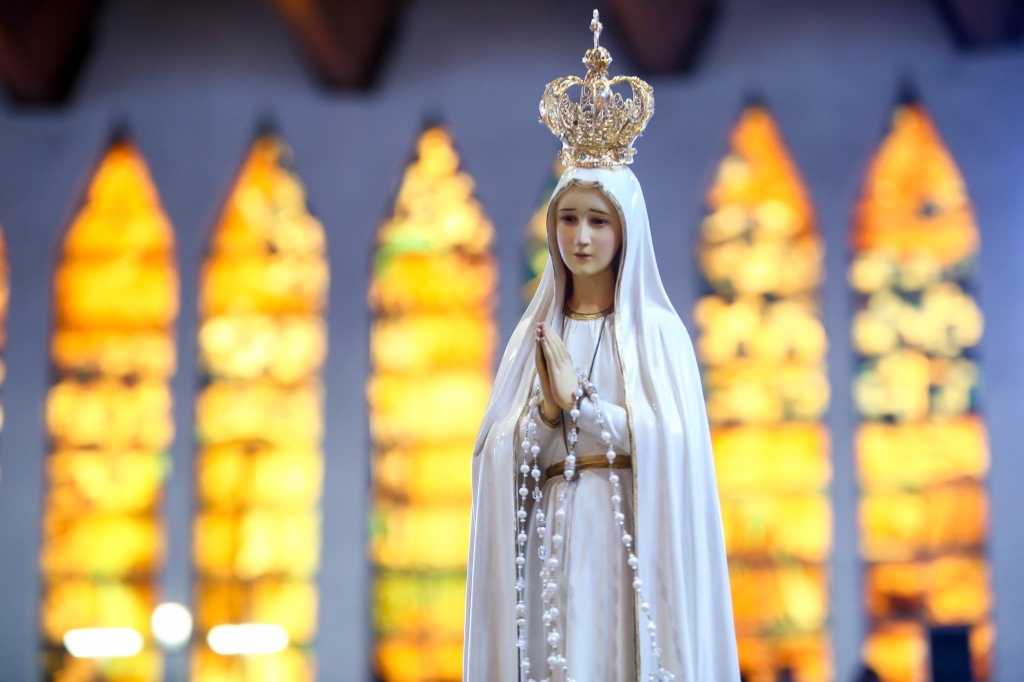
Advent is God’s tenderness & sweetness

The Lord Is My Chef Sunday Recipe for the Soul by Fr. Nicanor F. Lalog II
Fourth Sunday in Advent-C, Simbang Gabi-7, 22 December 2024
Micah 5:1-4 ><}}}}*> Hebrews 10:5-10 ><}}}}*> Luke 1:39-45
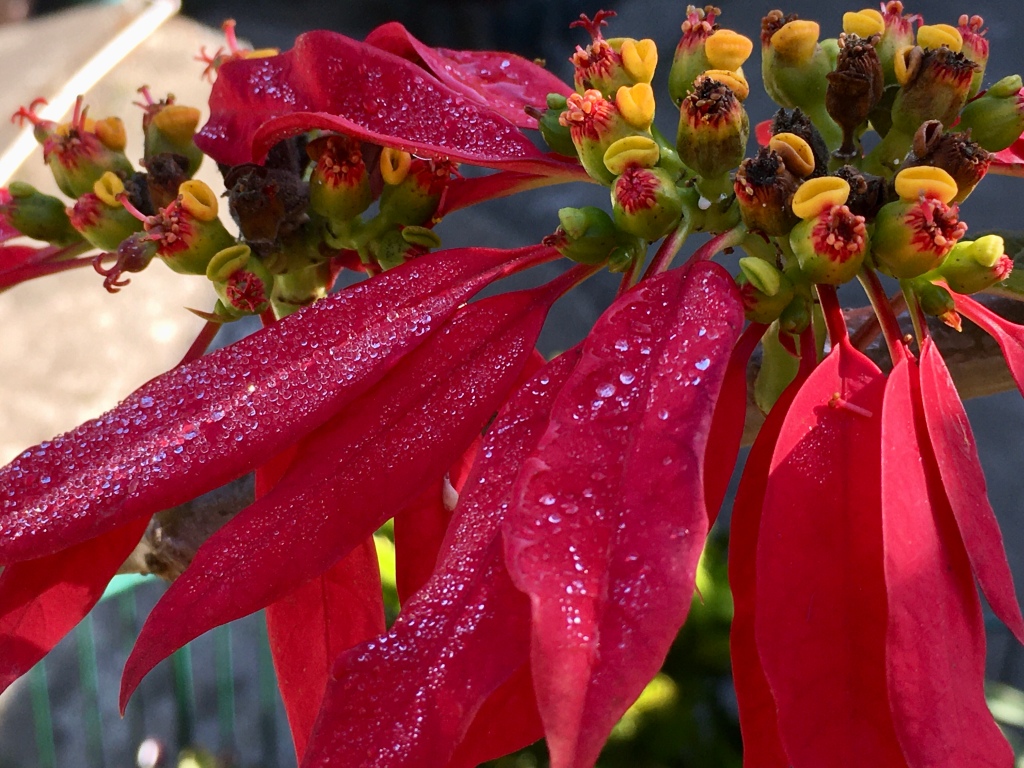
Photo by author, Baguio City, March 2020.

Christmas is a story of love, about the meeting of lovers with God as the Great Lover who gave us His only Son because of His immense love for us. But, this love is not the kind of love conveyed by the cheesy Christmas tunes “Pasko na Sinta Ko” and “Last Christmas”.

The word “lovers” may be too serious as a term for us to relate this with today’s gospel of the Visitation of Mary to her cousin Elizabeth though both women were so in love with God who clearly loved them so much with children in their womb bound to change the course of human history forever. They were also filled with love for each other as expression of their love for God. And when there is love, there is always tenderness and sweetness that all happen in the context of a visitation that we must first clarify.
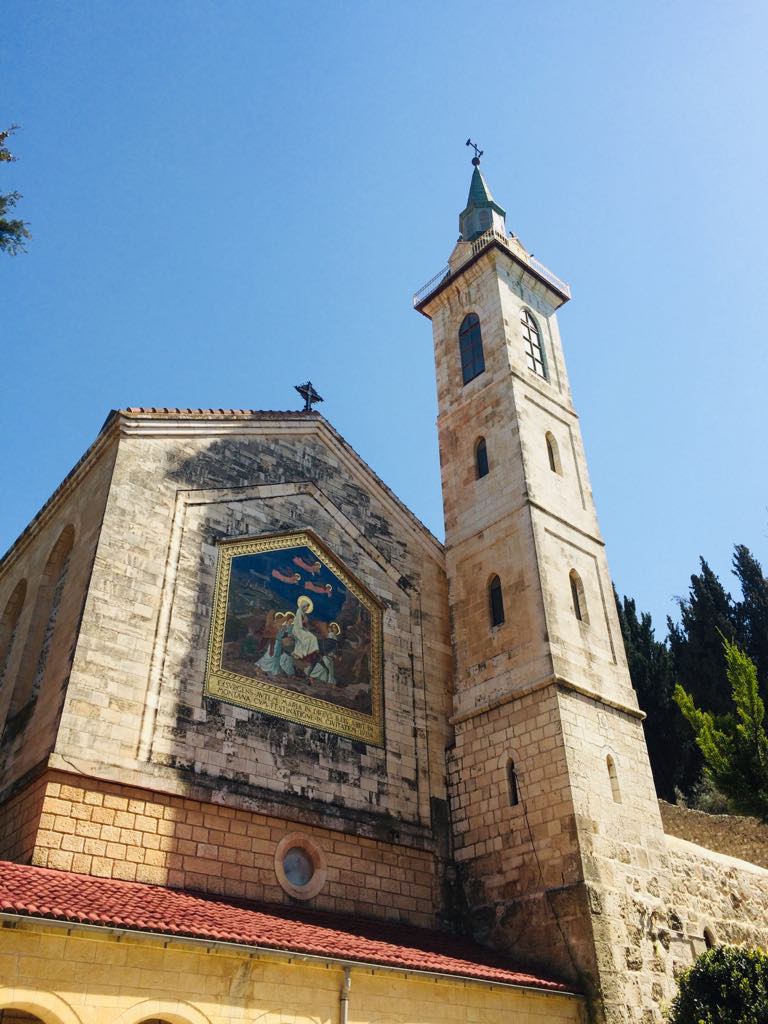
Photo by author, Church of Visitation, Israel, May 2017.

Visit and visitation may seem to be one and the same as both share the Latin root vidi, videre which is the verb “to see” as in video and visual. But, a visit is more casual and informal without intimacy because it is just “a passing by” or merely to see. It is more concerned with the place or the location and site and not the person to be visited. We say it clearly in Filipino as in “napadaan lang” when it just so happened you were passing by a place and even without any intentions, you tried seeing someone there. 

On the other hand, visitation is more commonly used in church language like when a bishop or priests come to see the parishioners in remote places; hence, a chapel is always called a visita where priests “visit” to celebrate Mass and check on the well-being of people living in areas far from the parish. Aside from being the venue for the celebration of Masses, the visita serves as classroom for catechism classes and other religious even social gatherings in remote barrios. Now as a chaplain in a University with a hospital, I do sick visitations every Sunday after our Mass to anoint and bring communion to our patients.

Thus, visitation connotes a deeper sense in meaning because there is an expression care and concern among people, a kind of love shared by the visitator/visitor and the one visited like Mary and Elizabeth. Visitation is more of entering into someone’s life or personhood as reported by Luke on Mary’s visitation to Elizabeth where Mary “entered the house of Zechariah and greeted Elizabeth” (Lk.1:40), implying communion or the sharing of a common experience.  In this case, the two women shared the great experience of being blessed with the presence of God in their wombs! 
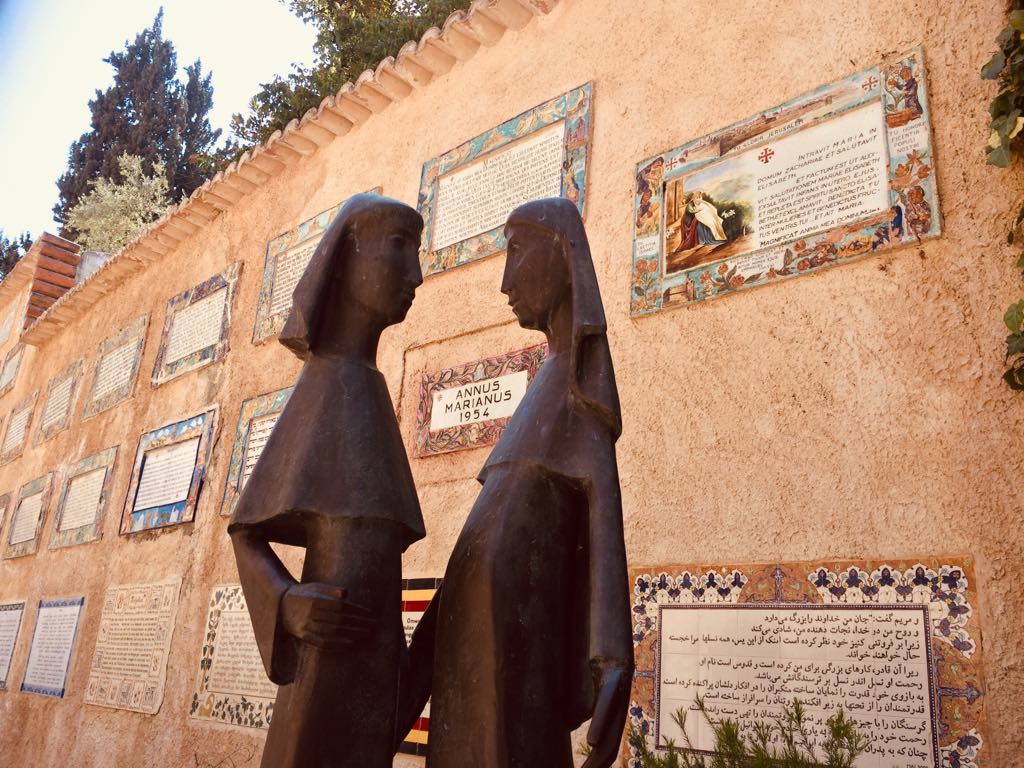
Photo by author, bronze statues of Mary and Elizabeth at the patio of the Church of Visitation, Israel, May 2017.

Visitation is a sharing or oneness in the joys and pains of those dear to us.  The word becomes more meaningful when we try to examine its Filipino equivalent –“pagdalaw” from the root word “dala” that can be something you bring or a verb to bring. 

When we come for a visitation, we dala or bring something like food or any gift. But most of all we bring our very selves like a gift of presence wherein we share our total selves with our time and talents, joys and sadness, and everything to those being visited that Mary did exactly in her visitation of Elizabeth where she brought with her the Lord Jesus Christ in her womb.

This fourth Sunday of Advent, we are invited to become like Mary in the visitation of others to bring Christmas and Jesus Himself to others by allowing our very body to be the “bringer” or taga-dala of Christ, the highest good we can bring as pasalubong in every visitation we make. Here again is another beautiful Filipino word, pasalubong that is literally the gift you bring when you visit somebody. It has a verb equivalent that is salubong or meeting/encounter. To salubong or meet another person, one has to leave one’s place, one has to leave behind one’s biases and mistrust to be empty to meet the other person.

How lovely and sweet if we can leave our negativities behind this Advent and Christmas so we can dala (bring) Jesus to family and friends and strangers to therefore salubong (meet) to experience God’s tenderness and sweetness in Jesus Christ.

Photo by author, Fourth Sunday of Advent 2022, Chapel of Basic Education, Our Lady of Fatima University, Valenzuela City.

Tenderness and sweetness in Filipino are often translated in just one word which is “malambing” from “lambing” that has no direct English translation except that it connotes a loving affection; however, both terms are more than just affections but stirrings from the heart that move us into action. 

Tenderness is very much like gentleness; the former is more focused while the latter is very general attitude. Tenderness is more than being soft and gentle but an awareness of the other person’s weaknesses, needs and vulnerabilities. A tender person is one who tries not to add more insult to one’s injuries or rub salt onto one’s wounds so to speak. A tender person is one who tries to soothe and calm a hurting person, trying to heal his/her wounds like God often portrayed in many instances in the bible in lovingly dealing with sinners filled with mercy. 

Like God, a person filled with tenderness is one who comes to comfort and heal the sick and those taking on a lot of beatings in life. When Jesus Christ came, He also personified this tenderness of God like when He was moved with pity and compassion for the sick, the widows, the women and the children and the voiceless in the society. Tenderness is coming to heal the wounds of those wounded and hurt, trying to “lullaby” the restless and sleepless. Mary visited Elizabeth because she also knew the many wounds of her cousin who for a long time bore no child, living in “disgrace before others” as she had claimed (Lk.1:25).

Photo from The Valenzuela Times, 02 July 2024.

Sweetness always goes with tenderness. It is the essence of God who is love. Anyone who loves is always sweet, something that comes naturally from within, bringing out good vibes.  It is never artificial like Splenda, always flowing freely and naturally that leaves a good taste and feeling to anyone. In the Hail Holy Queen, Mary is portrayed as “O clement, O loving, O sweet Virgin Mary” to show her sweetness as a mother. There are no pretensions and pompousness in being sweet, never needs much effort to exert in showing it for it comes out naturally and instantly.

Tenderness and sweetness are the most God-like qualities we all have but have buried deep into our innermost selves, refusing them to come out because of our refusal to love for fears of getting hurt and left behind or, even lost. When Mary heard Elizabeth’s condition, she simply followed her human and motherly instincts that are in fact so Godly – she went in haste to visit her. Tenderness and sweetness are the twin gifts of Christmas to humanity when God almighty became little and vulnerable like us so we can be great and powerful like Him in being able to love. 

Photo by author, Archdiocesan Shrine of Nuestra Señora De Guia, Ermita, Manila, 28 November 2024.

It is the final Sunday of Advent. In a few days it will be Christmas day and we still have enough time to empty our hearts of sins and bitterness to be filled with God’s love, sweetness and tenderness in Christ.

Let me leave you with my favorite quote from the novel “The Plague” by Albert Camus, “A loveless world is a dead world, and always there comes an hour when one is weary of prisons, of one’s work, and of devotion to duty, and all one craves for is a loved face, the warmth and wonder of a loving heart.” 

Let that love in you come out this Christmas and hereafter; simply be like the child Jesus and be surprised with His tremendous power to transform the world.  Amen. Have a blessed, sweet and tender Christ-filled week ahead!

Advent & Christmas are a love story

The Lord Is My Chef Daily Recipe for the Soul by Fr. Nicanor F. Lalog II
Simbang Gabi-6 Homily, 21 December 2024
Zephaniah 3:14-18 ><}}}*> + ><}}}*> + ><}}}*> Luke 1:39-45
From Clergy Coaching Network, posted on Facebook 13 December 2023.

Advent and Christmas are a story of love of God’s love for us all that “He gave us His only Son.”  No wonder, it is on this blessed Season when we share gifts, and most of all, our gift of self to others. 

My youngest sister Bing works as an area manager of a Jollibee franchise in Bulacan.  A few years ago before Christmas during our family conversations over dinner, she told us of a story shared by the Jollibee manager at NLEX.  According to her story, two nuns entered their store there with some Dumagats with their driver.  Right away, the store manager noticed how the two nuns were busy “calculating” the meal they have to take until settling for the cheapest, a rice meal of shanghai rolls.  Obviously, the religious sisters have limited budget which did not escape the intuition of the lady manager who offered to treat them to a ChickenJoy meal for free.  But the nuns felt shy and refused the manager’s offer, asking her not to be bothered at all until another woman with two kids in tow interrupted them, giving them ChickenJoy buckets with extra rice enough for the religious sisters and their companions!  The woman refused to be identified and simply said that she too had noticed the nuns trying to budget their limited money that she ordered right away the food.  For her part, the kind manager treated them instead for desserts to complete their meal. 

That’s when my sister said “talagang Pasko na nga” (it’s really Christmas).

From Facebook, 10 December 2024.

Since the start of Advent, we have been advocating that we also remember on those not feeling merry and bright this Christmas for various reasons like having family problems, financial woes, grieving for loved ones, dealing with mental issues or serious sickness of a loved one (see https://lordmychef.com/2024/12/13/advent-is-journeying-like-joseph-mary-to-bring-jesus-in-darkness/).

Yesterday in our reflection on the annunciation of the birth of Christ, we said of the need for us to enter in a dialogue with others to let Christmas happen. Dialogue is not just about improving relationships with others by thinking through issues and problems but more of a way of being with others, of being present with others to experience and feel their situations, exactly what Jesus did in being human like us in everything except sin.

At the annunciation of the Lord’s birth, Mary dialogued with Gabriel unlike Zechariah who was eventually silenced in order to be open to God. True dialogue as an incarnation like Jesus with God and with others can only happen when we are convinced of God’s love for us. Mary went in haste to visit Elizabeth because she felt God’s love in her that she wanted to share it with her cousin right away.

Mary set out in those days and travelled to the hill country in haste to a town of Judah, where she entered the house of Zechariah and greeted Elizabeth (Luke 1:39).

Photo by author, Church of the Visitation, the Holy Land, May 2017.

Try imagining that scene of Mary’s Visitation of Elizabeth. What did you feel? Did you feel some sense of tenderness, of being loved, of being touched by God?

While praying over this scene as I recalled my second pilgrimage to the Holy Land when we went to the Church of Visitation, I remembered my early years in the ministry when I always felt ashamed accepting invitations for dinners because I could not bring a gift.

Maybe part of our upbringing, I have always felt inadequate coming to another home bringing nothing. That is why I keep cards and stampitas in my desk along with some chocolates so that when I visit families, I could bring a little something for them. 

It was only in 2011 after being assigned to a parish of my own when I was able to let go of this feeling of inadequacy after a parishioner told me how they deeply appreciated priests visiting them at home, sharing in their meal because they felt so blessed. That is why most of us priests are fat – we always get invited to meals and gatherings that sometimes I wonder if people really love me when they “force” me to eat more of their cholesterol-laden food and sugary desserts they serve! 

It was during these home visitations especially of the sick and for simple meals I felt “rootedness” or oneness with people, of being “a member of each family yet belonging to none” as the famous French Dominican Fr. Lacordaire said a hundred years ago about priesthood.  The more I visit families, bidden or unbidden, the more I feel the joy of my priesthood because of the family and community that I belong to. That is when I realized too that celibacy is lived in a community both of priests and laity.

For 26 years in schools and the parish and now the hospital, the more I felt Jesus present in me as a priest as I live among brother priests and lay people. Tenderness and intimacy take on a new dimension that is spiritual in nature because I don’t just touch people but am also being touched by them.  Every time they thank me, I also thank them for blessing me with their warm welcome. It is like Mary and Elizabeth during the Visitation blessed abundantly by God and still sharing that same blessing with each other. 

Photo by author, bronze statues of Mary and Elizabeth at the patio of the Church of Visitation, May 2017.

That is the meaning and significance of the Visitation: inasmuch as Christ comes to us individually, He behooves us to share Him also with others to form a community. 

Mary visited Elizabeth not merely to help her out in her pregnancy nor to confirm what Gabriel had told her but simply because she was so convinced of God’s love that she wanted to share it with her cousin. 

Mary visited Elizabeth because she felt touched by God in the Annunciation and wanted so much her cousin to be touched also by the Lord!  And indeed when Luke wrote that “When Elizabeth heard Mary’s greeting, the infant leaped in her womb, and Elizabeth, filled with the Holy Spirit, cried out in a loud voice and said, ‘Most blessed are you among women, and blessed is the fruit of your womb'” (Lk.1:41-42).

Faith in Christ leads to love that moves us to bond with one another to form Christ’s body, a community of believers, a community of beloved, a community of lovers. 

After receiving Jesus, like Mary, we have to move to the Visitation and share Him with others.  To be able to do this, we must first be convinced that God loves us so much like what the Prophet Zephaniah said in the first reading and what Elizabeth told Mary in the Visitation, “Blessed are you who believed that what was spoken to you by the Lord would be fulfilled” (Lk.1:45).

There’s a saying, “If you have love in your heart, you have been blessed by God; if you have been loved, you have been touched by God.”

Let God touch somebody today with your visitation… believe and feel the love of Jesus! Amen.

Tenderness of God, sweetness of Mary

The Lord Is My Chef Daily Recipe for the Soul by Fr. Nicanor F. Lalog II
Friday, Feast of the Visitation of the Blessed Virgin Mary, 31 May 2024
Romans 12:9-16 ><]]]]'> + >>]]]]'> + >>>]]]]'> Luke 1:39-56
Photo by author, statues of Mary and Elizabeth at the Church of the Visitation in ein-Karem, the Holy Land, May 2017.

What a lovely way to end the month with this feast of the Blessed Virgin Mary’s Visitation of her cousin Elizabeth after starting off May on its very first day with another feast, St. Joseph the Worker that remind us of God’s coming to us in Jesus Christ.

Visit and visitation may seem to be one and the same, sharing the common Latin root word of the verb vide, videre “to see” from which came the word video.

But, a visit is more casual and informal without intimacy at all. We say it so well in Filipino, napadaan lang or just passing by which is more concerned with the place or location and site, not the person there. Napadaan lang ako kaya dinalaw na rin kita (I was just passing by and decided to see you). There was really no intention in seeing the other person there.

Photo by author, Church of the Visitation, Ein-Karem, Holy land, May 2017.

Visitation is more intentional. Mr. Webster described it as a more formal visit commonly used in church language like when bishop and priests come to see their parishioners. This explains why we refer to a chapel as a visita which is actually a small church in remote places that missionaries used to visit for the sacraments. Likewise, visitas became venues too for catechism classes and other religious even social gatherings in places far from the town itself where the parish is usually situated too.

Thus, visitation connotes a deeper meaning because there is an expression or implication at least of care and concern among the people, a kind of love shared by the visitor like Mary to the one visited, Elizabeth.

Visitation is more of entering into someone’s life and personhood as reported by Luke in Mary’s visitation of Elizabeth when “Mary entered the house of Zechariah and greeted Elizabeth” (Lk.1:40). There was a communion and sharing of their common experience of being blessed with the presence of God in their wombs.

Visitation is a sharing, a oneness in the joys and pains of those dear to us. The word becomes more meaningful when we examine its Filipino equivalent pagdalaw from the root word dala or something you bring like food or any gift when visiting relatives and friends. What you bring or dala is called pasalubong from the root salubong that literally means “meeting” or “encounter”. When the visitor and ones visited meet, they salubong.

Here it becomes more colorful and meaningful because more than the gifts we bring or dala in our visitations, we bring our very selves as a gift of presence. In every visitation, it is our very selves we gift, we share with those we visit, offering them our time and talent, joys and sadness and ears and heart to listen to their stories and absorb their woes and whatever they may have to unload upon us.

Photo by author, 2019.

That was what Mary did exactly in her visitation of Elizabeth with an extra gift, the most precious pasalubong to share with everyone, Jesus Christ in her womb, right in her very self and body!

We too are invited every day to be like Mary, a bringer or taga-dala of Jesus Christ to everyone we meet, the best pasalubong we can share with everyone. If we can only be like Mary in our dealings with others, trying to make every encounter a visitation that is a willful bringing and sharing of Christ with others, then we also bring with us God’s tenderness and mercy for this dark world that admires toughness and roughness.

How sad are those news of daily road rages happening almost everywhere, many times resulting in the loss of lives like the recent fatal shooting of a family driver in Makati.

Through the Blessed Mother’s humility and obedience before God, Christ came into the world to make us experience the Father’s tenderness in the many healings and miracles He performed. This tenderness of God in Jesus we saw too in Mary His Mother in the Visitation: Mary visited Elizabeth because she knew and felt her many wounds who for a long time bore no child, living in “disgrace before others” as she had claimed (Lk.1:25). A tender person like Jesus and Mary is one who comes to comfort and heal the wounds of those hurt in life, trying to lullaby the restless and sleepless, never adding insult to injuries.

Photo by author, Sacred Heart Novitiate, Novaliches, QC, 20 March 2024.

One last thing about the Visitation of Mary to her cousin Elizabeth. One of the best things we can experience from visitations and visits of family and friends like during wakes and funerals is that quality of sweetness.

Sweetness always goes with tenderness.  It is the essence of God who is love.  Anyone who loves is always sweet that always comes naturally from within, bringing out good vibes.  It is never artificial like Splenda, always flowing freely and naturally that leaves a good taste and feeling to anyone. 

In the Hail Holy Queen, Mary is portrayed as “O clement, O sweet Virgin Mary” to show her sweetness as a Mother. Recently I have seen some posts making a meme (?) of the Hail Holy Queen’s part that says “to you do we cry poor banished children of Eve”. I have not really dealt it with much attention because too often, there are a lot of generation gaps in many posts in social media; I really cannot relate much to the young perhaps due to my age. I just hope that post on the Hail Holy Queen is not derogatory. Back to our reflection…

Tenderness and sweetness are the most God-like qualities we all have but have unconsciously buried deep in our innermost selves, refusing them to surface because of our refusal to love for fears of getting hurt and left behind or lost. When Mary heard Elizabeth’s pregnancy, she simply followed her human and motherly instincts that in fact so Godly that she went in haste to hill country of Judah. How lovely!

Tomorrow it is already June, reminding us all we are halfway through the year. And it would be surprisingly quick that soon, it is already Christmas again! This feast of the Visitation reminds us of Mary’s great role in making Christmas a reality when God almighty became human, little and vulnerable like us to experience His sweetness and tenderness in Jesus Christ. Through Mary.

Let us pray:

God our loving Father,
thank for coming to us,
for staying with us,
not just visiting us;
help us imitate Your Son
Jesus Christ's Mother,
the Blessed Virgin Mary
whose "love is so sincere",
loving one another like Elizabeth
with "mutual affection,
showing honor,
fervent in spirit,
serving the Lord;
help us imitate Mary
to always rejoice in hope,
endure afflictions and
most of all, persevere in prayer"
(cf. Romans 12:9-12)
so we may always bring
Jesus Christ with everyone
we meet.
Amen.
From cbcpnews.net, 13 May 2022, at the Parish of the National Shrine of Our Lady of Fatima, Valenzuela City.

Blessed are the women

The Lord Is My Chef Daily Recipe for the Soul by Fr. Nicanor F. Lalog II
Thursday, Misa de Gallo VI, 21 December 2023
Zephaniah 3:14-18 <*{{{{>< + ><}}}}*> Luke 1:39-35
Photo by author, bronze statues of the Blessed Virgin Mary and St. Elizabeth, Church of the Visitation at Ein-Karem, Israel, April 2017.

For the third straight day since Tuesday until Saturday morning at the end of our Christmas novena, all our gospel readings will be from St. Luke, the only evangelist with the most “comprehensive coverage” of the first Christmas following his extensive research on Jesus Christ’s life and teachings (cf. Lk.1:1-4).

Hence, his gospel has the most stories and parables than the gospel accounts of Mark and Matthew. Most of all, St. Luke’s gospel account has two distinctive characteristics that showed Jesus always at prayer while at the same time gave special emphasis on women like the Blessed Virgin Mary. You must have noticed this by this time since Tuesday when we began listening to his infancy narrative.

Mary set out in those days and travelled to the hill country in haste to a town in Judah, where she entered the house of Zechariah and greeted Elizabeth.  When Elizabeth heard Mary’s greeting, the infant leaped in her womb, and Elizabeth, filled with the Holy Spirit, cried out in a loud voice and said, “Most blessed are you among women, and blessed is the fruit of your womb.”

Luke 1:39-42
Photo by author, mural on the apse of the Church of the Visitation at Ein-Karem illustrating the Visitation (left panel) and how the angel helped St. Elizabeth hid the infant St. John the Baptist after King Herod ordered the murder of all children aged two and below.

It is rare in the Bible to find two women presented positively together in a single scene. Very often especially in the Old Testament, there is always a sort of animosity among them due to the prevailing patriarchal points of view of the time. 

The only instance two women were presented together in good terms in the Old Testament is in the Book of Ruth that still hinted some sense of superiority of Naomi over her daughter-in-law Ruth who was like her a widow but childless.

Therefore, this scene of the Visitation only St. Luke has is a gem in itself as it speaks eloquently of the important place of women in God’s plan of salvation. It beautifully portrays to us the joy of two great women filled with God and humble before him, affirming and acknowledging the two great men in their wombs about to change the course of human history: Elizabeth with John the Baptist who would prepare the way of the Savior, Jesus Christ in the womb of Mary. 

Photo by Mr. Boy Cabrido, Our Lady of Mt. Carmel, QC, Misa de Gallo, 18 December 2023.

The story of the Visitation reminds us how God works mysteriously in everyone without exceptions by linking or interconnecting us with each other in Jesus Christ our great Mediator and Savior. How lovely to see in this instance how John and Jesus already performing their mission even while in the womb of their mothers, of bringing together people. What a wonderful illustration of women as God’s vessels and carriers!

In both Mary and Elizabeth, we now “shout for joy” as Zephaniah prophesied in the first reading at how God saved us when he “removed the judgment against you, he has turned away your enemies; the Lord, your God, is in your midst, a mighty savior, who will rejoice over you with gladness, and renew you in his love… so that no one may recount your disgrace” (Zep. 3:14,15,17, 18).

Do we truly share in this shout for joy for the women of the world, for the women among us? How sad that until now women continue to suffer from all kinds of abuses not only from men but even from their fellow women. 

Some spiritual writers say God is more like a woman because whatever was lacking in man, God put it in her. Perhaps that is why it is the woman who completes every man – including with us priests! But sadly, as we speak a lot about synodality in the Church these days, it is often among us priests with whom women are often taken for granted, and worst, abused.

One problem directly related today with how we regard women is the great number of people especially the youth trapped in the insidious effects of pornography due to prevalence of social media. At its core, the problem and evil with pornography is the failure of so many to recognize the lack of respect for women who are created equal with men in the image and likeness of God. 

St. Joseph showed us the other day that true holiness is expressed in the way we respect women. According to an article by Papal Preacher Cardinal Cantallamessa I have read two decades ago where he cited a Dominican biblical scholar who’s name I could not recall, “the way we treat and regard women is a reflection of our relationship with God”.

That is very true.

When I review my life, I have found God making so many ways to lead me into the priesthood through the many women I have met and known, and many of them have remained my “bestest” friends like the three former executives of GMA-7 News Department who asked me to guide them in their Holy Land pilgrimage in Easter 2017.

Photo by author, Church of the Visitation, Ein Karem, Israel, April 2017.

It was my second Holy Land pilgrimage but my first time to visit the beautiful Church of the Visitation in Ein Karem. 

Outside that lovely church are two bronze statues of Elizabeth and Mary conversing on how God had blessed them with sons under unique circumstances:  Elizabeth was too old and barren while Mary was too young, a virgin, not yet married with Joseph. 

What a beautiful reminder of God coming to us through women!

While there at Ein Karem, I prayed for all the women I have loved and have loved me before, all the women who have blessed me and have taken care so well of my vocation to the priesthood.  I thanked God for the women like Elizabeth who have blessed me in believing that what was spoken to me by the Lord would be fulfilled in the priesthood.  Blessed are the women who like Mary have helped me see the women’s perspectives that made my priesthood more complete especially in dealing with feminine issues.  The women who taught me how to respect differences, to feel the society’s bias against them, and most especially feel their deep pains when they shared with me their ordeals of abuse and rape.

Let me end this reflection with an unforgettable anecdote at the funeral Mass for the mother of our late Bishop Jose F. Oliveros in Quezon province about ten years ago when he recalled how his mother held his right hand while still a child, and taught to make the sign of the Cross.  On her deathbed, it became his turn, as a priest and a bishop, to hold his dying mother’s hands to make the sign of the Cross. 

Hail to all women and mothers in the world who bring life into this dying world with their joy and perseverance, artistry and simplicity, warmth and presence of God almighty. May this story of the Blessed Virgin Mary’s Visitation of St. Elizabeth teach us to always respect women for they are the carriers of God to us. Amen.

At the wailing wall of Jerusalem, April 2017.

Our God of surprises

The Lord Is My Chef Daily Recipe for the Soul by Fr. Nicanor F. Lalog II
Wednesday, Feast of the Visitation of the Blessed Virgin Mary, 31 May 2023
Romans 12:9-16   ><}}}}*> + ><}}}}*> + ><}}}}*>   Luke 1:39-56
Photo by author, sunrise at Anvaya Cove, Morong, Bataan, 19 May 2023.
Glory and praise to you,
God our loving Father 
who had come and comes
daily in Christ Jesus our Lord!
Just like in this Feast of the 
Visitation of the Blessed Virgin Mary,
you always surprise us dear God
like Elizabeth.
Every visitation is always
surprising, especially when 
you are the one coming,
O God.

When Elizabeth heard Mary’s greeting, the infant leaped in her womb, and Elizabeth, filled with the Holy Spirit, cried out in a loud voice and said, “Most blessed are you among women, and blessed is the fruit of your womb. And how does this happen to me that the mother of my Lord should come to me?”

Luke 1:41-43
Like Elizabeth,
we are so surprised
with your visitation in
Christ Jesus because
if ever there is anyone
who should be making 
the visit, it should be us -
or Elizabeth who should 
have visited Mary who was
pregnant with Jesus Christ.
What a beautiful anticipation
it was of Christ's mission through
his self-emptying or kenosis
when he said "The Son of Man
has come to serve and not to be
served" (see Mt.20:28, Mk. 10:45).
Keep us home,
keep us grounded in you,
Lord, like Elizabeth,
always ready to be
surprised with your visit,
to welcome your coming
in the Holy Spirit to shake us 
and examine our many beliefs,
traditions and conventions
that have prevented us from 
making Jesus more present among us
especially the poor and marginalized;
keep us home,
keep us rooted in you
like Elizabeth, Lord,
ready to be radical,
to go back to our roots
and rootedness so that only
what is most essential we must
keep - the person of
Jesus Christ himself
because many times,
we do not recognize your coming,
your visits as we are busy
"visiting" worldly concerns
than being focused in you
our Lord.
Come, Lord Jesus,
visit us like when you
visited Elizabeth and 
John through Mary your
Mother so we may imitate
her in bringing you to the
hungry and poor so that 
we may learn to practice
St. Paul's admonition,
"Let love be sincere:
hate what is evil, hold on
to what is good; love one
another with mutual affection;
anticipate one another in
showing honor" (Rom. 12:9-10).
Surprise us, Lord!
Amen.

More than a visit, Christmas is a visitation!

The Lord Is My Chef Simbang Gabi Recipe by Fr. Nicanor F. Lalog II
Wednesday in the Fourth Week of Advent, Sixth Day of Christmas Novena, 21 December 2022
Song of Song 2:8-14     ><))))*> + ><))))*> + ><))))*>     Luke 1:39-45
Photo by Mr. John Ryan Jacob, 20 December 2022.

Did you know that there is a funny story behind that lovely entrance hymn in all our Masses we have been singing since the start of the Advent Season rightly called Halina Jesus, Halina?

According to the story, when Jesus turned seven years old – that’s the seventh Christmas of the world! – the Blessed Mother decided to bake him a beautiful birthday cake. The child Jesus was busy playing with his cousins when his Mother asked him to buy some flour, eggs, butter, and sugar. Of course, the young Messiah obeyed her and went to the store to buy the ingredients for his birthday cake. But, as the Catholic Catechism of the Church attests that Jesus is truly human like us, he suddenly forgot the most important ingredient needed in his cake, the flour. He rushed back home and asked Mama Mary again what was he supposed to buy. This happened thrice that for the third time, Mary was exasperated, wrote it on a piece of paper, telling the child Jesus, “Harina, Jesus, harina!”

For our non-Filipino followers, harina is flour, very close to halina which is come as the song tells us.

Christmas is a story of people, real persons like you and me meeting, encountering God. So far since Sunday we have heard stories of encounters by Joseph, Zechariah and Mary with an angel.  Today, we hear the beautiful encounter between two women so blessed by God, two mothers whose sons would usher in a new beginning of life on earth. 

Mary set out in those days and travelled to the hill country in haste to a town of Judah, where she entered the house of Zechariah and greeted Elizabeth.  When Elizabeth heard Mary’s greeting, the infant leaped in her womb, and Elizabeth, filled with the Holy Spirit, cried out in a loud voice and said, “Most blessed are you among women, and blessed is the fruit of your womb.  And how does this happen to me that the mother of my Lord should come to me?”

Luke 1:39-43

The Visitation of the Blessed Virgin Mary to her cousin Elizabeth is in itself a proclamation of the Good News of Jesus Christ that presents us with the beautiful personages of two women who are “beloved ones of God” as well as “lovers of God.” 

Both of them “believed” in the promised salvation from God through their mysterious maternity, Mary being a virgin while Elizabeth in her being old and barren. 

They both love God so much that they were gifted with exceptional vocations, Elizabeth bore the Precursor of the Lord Himself born by Mary. 

Most of all, both women waited patiently for the coming of the promised salvation in Christ Jesus.

Visit and visitation may seem to be one and the same in the sense that both have a common Latin root word, the verb to see or vidi, videre from which came the word video.  But, a visit is more casual and informal without intimacy because it is just “a passing by” or merely to see.  It is more concerned with the place or the location and site and not the person to be visited.   We say it clearly in Filipino as in “napadaan lang” when it just so happened you were passing by a place and even without any intentions, you tried seeing someone there. 

On the other hand, visitation is more commonly used in church language like when a bishop or priests come to see the parishioners in remote places.  This is the reason a chapel is more known as a visita in our country because that is where priests visit and check on the well-being of people living in areas very far from the parish usually at the town proper.  Aside from being the venue for the celebration of Masses, the visita serves as classroom for catechism classes and other religious even social gatherings in a particular place. 

Thus, visitation connotes a deeper sense in meaning because there is an expression of care and concern among people, a kind of love shared by the visitator/visitor and the one visited like Mary and Elizabeth. 

Visitation is more of entering into someone’s life or personhood as reported by Luke on Mary’s visitation to Elizabeth where Mary “entered the house of Zechariah and greeted Elizabeth” (Lk.1:40), implying communion or the sharing of a common experience.  In this case, the two women shared the great experience of being blessed with the presence of God in their wombs! 

Visitation, therefore, is a sharing or oneness in the joys and pains of those dear to us.  The word becomes more meaningful when we try to examine its Filipino equivalent which is “pagdalaw” from the root word “dala” that can be something you bring or a verb to bring.  When we come for a visitation, we dala or bring something like food or any gift.  But most of all we bring our very selves like a gift of presence wherein we share our total selves with our time and talents, joys and sadness, and everything to those being visited.  And that is what Mary did exactly in her visitation of Elizabeth where she brought with her the Lord Jesus Christ in her womb, becoming the first monstrance of the Lord as well as His first tabernacle. 

Today we are invited to become like Mary in the visitation of others to bring Christmas and Jesus Himself to others by allowing our very selves, our body, to be the “bringer” or taga-dala of Christ.  The Lord Himself is the highest good we can bring as pasalubong in every visitation we make.  And if we can only be like Mary in our visitations and dealings with one another sharing Jesus Christ, then we also bring with us God’s tenderness and sweetness to others. 

That is why we have to rush, we have to go in haste like Mary for we have the best good of all – Jesus Christ – to share for everyone!

Come, Lord Jesus Christ!
Come in haste like your Mother Mary
so we may also have a visitation of
persons we have forgotten,
we have taken for granted
all these years!
Come into my heart, Jesus,
and let me see my connections
and links with everyone in you!
We do not need so many presents to give,
just our presence is more than enough
for others to experience your coming
especially on this Christmas.
Amen.