Christmas is God at home with us; are we at home with God?

The Lord Is My Chef Sunday Recipe for the Soul by Fr. Nicanor F. Lalog II
Feast of the Holy Family, Cycle C, 29 December 2024
1 Samuel 1:20-22, 24-28 ><)))*> 1 John 3:1-2, 21-24 ><)))*> Luke 2:41-52
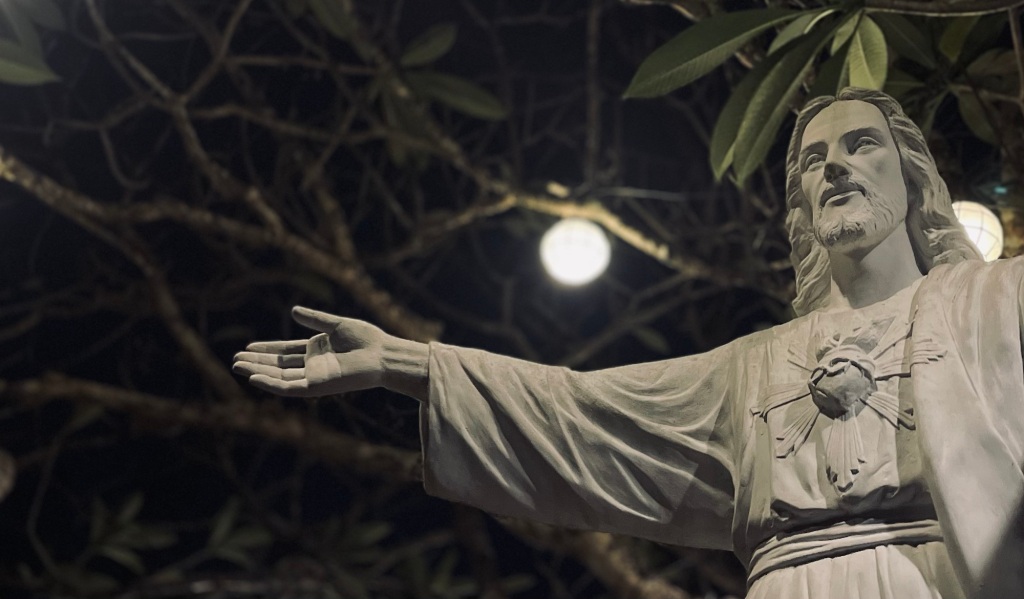
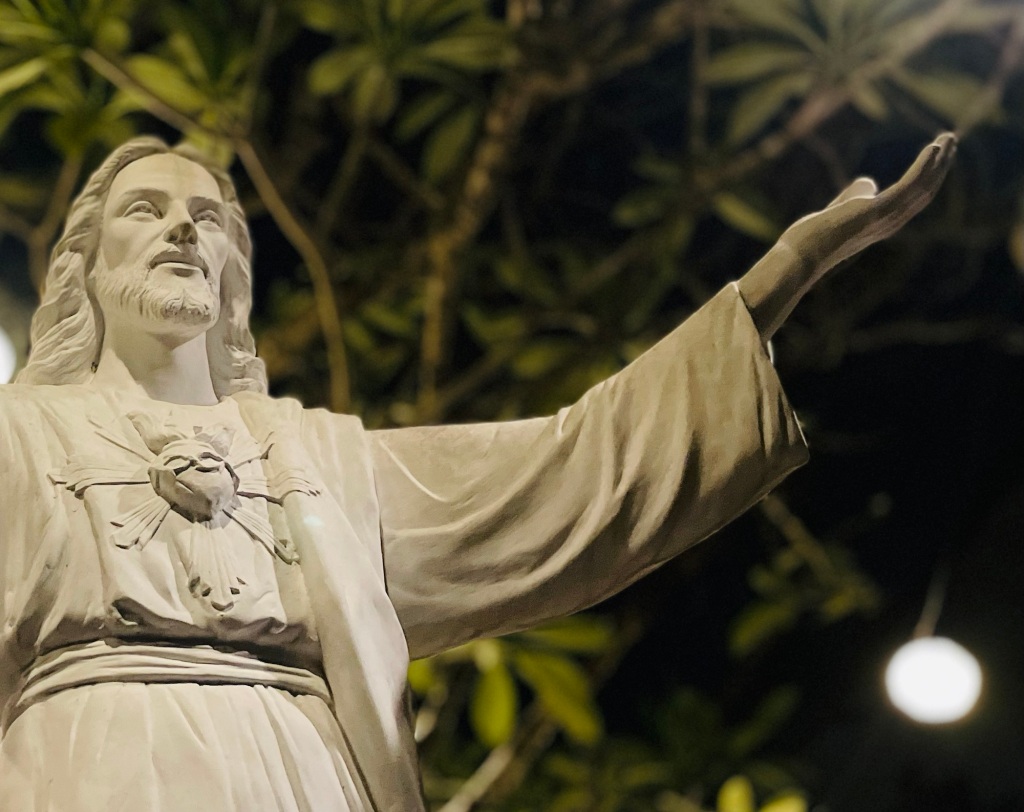
Photo by author of a depiction of the Holy Family near the main door of St. Joseph the Worker Parish in Pacdal, Baguio City, 28 December 2024.

You must have heard of the classic song “A House Is Not A Home” composed by the great tandem of Burt Bacharach and Hal David recorded by Dionne Warwick in 1964 for a movie of the same title. It went back to charts in 1981 when the late Luther Vandross covered it in his first album.

It is a very lovely ballad of a love lost, teaching us that indeed, “a house is made of walls and beams while a home is made of love and dreams”.

A chair is still a chair
Even when there's no one sitting there
But a chair is not a house
And a house is not a home
When there's no one there to hold you tight
And no one there you can kiss good night

A room is still a room
Even when there's nothing there but gloom
But a room is not a house
And a house is not a home
When the two of us are far apart
And one of us has a broken heart

But, in the Hebrew language and Jewish thought, the word “house” in itself connotes relationships. There are no distinctions between a house and a home for them that is why we find Jesus claiming the temple as His Father’s house.

Pope Francis opening the Jubiliee Door at St. Peter’s in Rome to launch the start of the Jubilee Year of 2025. Photo by Maurix/Gamma-Rapho via Getty Images.

In fact, the first letter of the Hebrew word for God (Yahweh) is actually shaped as a door or a house. That is why there is the blessing of church doors in dioceses today worldwide following the blessing and opening of the Jubilee Door at St. Peter’s in the Vatican by Pope Francis last Christmas Eve to launch the Jubilee Year. The Jubilee Door signifies our passing through, an entering into a relationship with God.

In John’s gospel we find Jesus as an adult using the word “house” twice when He cleansed the temple, telling everyone to “stop making my Father’s house a marketplace” (Jn.2:16) and at their last supper when He assured the disciples, “In my Father’s house there are many dwelling places or rooms” (Jn.14:2).

The only other occasion Jesus used the word “house” to mean the same thing as John was when He was found by His parents in the temple as we heard today on this Feast of the Holy Family.

Each year Jesus’ parents went to Jerusalem for the feast of Passover, and when he was twelve years old, they went up according to festival custom. After they had completed its days, as they were returning, the boy Jesus remained behind in Jerusalem, but his parents did not know it. After three days they found him in the temple… When his parents saw him, they were astonished, and his mother said to him, “Son, why have you done this to us? Your father and I have been looking for you with great anxiety?” And he said to them, “Why were you looking for me? Did you not know that I must be in my Father’s house?” But they did not understand what he said to them (Luke 2:41-43, 46, 48-50).

“The Finding of the Savior at the Temple” painting by William Holman Hunt (1860) from en.wikipedia.org.

We find in the story of the finding of Child Jesus in the temple that even at a very young age, Jesus had always been clear with His oneness in God by always referring to the temple as His “Father’s house”.

As we have reflected in December 19 in Luke’s first Christmas story, the annunciation of John’s birth to his father Zechariah while incensing at the temple in Jerusalem during a major Jewish feast that Christmas begins in the church where we gather to praise and worship God as a community. See how this Sunday after Christmas our many empty pews in the church. How sad that many Catholics after Christmas have totally disregarded the Sunday Mass, going to all the vacation spots here and abroad with many of them having no qualms at all that this is the “day of the Lord”, a Sunday obligation.

Again, here is Luke in his artistic narration of Christmas into Christ’s adolescence insisting on us the importance of communal worship and prayer. Not surprising that of the four evangelists, Luke is the one who presented Jesus always at prayer as an expression of His oneness or communion in the Father and he wants us hearers of his gospel account to cultivate that same communion with God in Jesus, with Jesus, and through Jesus.

Christmas is essentially Jesus Christ becoming human so that God may be “at home” with us humans as John beautifully wrote in his prologue we heard last Christmas Day, “And the Word became flesh and made his dwelling among us” (Jn.1:14).

But, are we at home with God in Jesus?

Photo by author, the small entrance door leading to the Church of the Nativity in Bethlehem where one needs to bow low literally and figuratively to enter Christ’s birthplace.

On this Feast of the Holy Family, our gospel reminds us this Sunday of how even Mary and Joseph had trouble with their adolescent son Jesus like most parents these days, a kind of family conflict so familiar with many people everywhere.

What a lovely scene today this Christmas season amid widespread reports of child kidnappings and so many children caught in the middle of many conflicts among adults like wars in many parts of the world and worst, right inside every family, right in their house, or homes where there are no relationships at all.

Luke was a physician who understood very well the anguish and sufferings of many people, especially parents during his time that continue to these days. In narrating to us this sad episode of his Christmas stories when Jesus was lost but eventually found in the temple, Luke is assuring us that despite all the darkness and troubles that engulf many families today, we have a very loving, personal God in Christ always with us.

Photo by author, picture taken from the inside of the Church of the Nativity in Bethlehem of its small entrance door.

Mary and Joseph did not understand what Jesus meant that He must be at His Father’s house but it did not deter them from exploring its meaning so that only Mary with John and two other women remained with Christ at the foot of the Cross on that Good Friday.

How lovely that Mary and those others at the foot of the Cross were the ones truly “at home” with the Lord, in the Lord! The same thing speaks so true with Joseph who in his silence was so “at home” with God in Jesus, whether awake or asleep. He kept that relationship with God alive through Mary and those others around him especially Jesus.

As an adult approaching His pasch, Jesus assured His disciples including us today of having a dwelling place or room in His Father’s house in heaven – that, despite our many sins, God would never cut off His ties with us in Jesus, with Jesus! That is how God loved us so much as the author of the Letter to the Hebrews reminds us “God is greater than our hearts and knows everything” (1Jn.3:20).

Like Hanna the mother of the child Samuel, let us start cultivating this relationship with God even while still very young. It does not really matter if we destroy and cut it so often; what matters is we keep on trying to let it grow anew for it is and would never ever get lost again. Thanks to Christmas!

That is why I personally insist in my homilies and writings that we keep greeting everyone with a Merry Christmas until January 12, the Feast of the Baptism of the Lord that closes the Christmas season. It is still Christmas after all!

Photo by author, Chapel of the Angel of Peace, RISE Tower, Our Lady of Fatma University, Valenzuela City, Christmas 2024.

Like Mary and Joseph, let us keep coming back to God symbolized by Jerusalem and its temple now replaced with our churches. Let us go back to prayer and to Sunday Masses to find Jesus again present in the signs and symbols of the liturgy and most of all, in everyone present celebrating His coming.

Let us continue the story of Christmas with our relationships with God through others, of our being at home with the Father in Jesus Christ who “advanced in wisdom and age and favor before God and man” (Lk.2:52) after this episode which closed Luke’s Christmas account.

Let us be at home with God and with one another in Jesus, with Jesus, and through Jesus. May you continue to have blessed Christmas Season. Amen.

Why are you here?

The Lord Is My Chef Daily Recipe for the Soul by Fr. Nicanor F. Lalog II
Friday in the Tenth Week of Ordinary Time, Year II, 14 June 2024
1 Kings 19:9, 11-16 <*((((>< + ><))))*> Matthew 5:27-32
Photo by Mr. Vigie Ongleo, Sagada, Mt. Province, 2014.
O God, dear Father,
how I have loved so much
ever since today's story
of Elijah fleeing from death
at the hands of Jezebel's army;
so many times I have felt like Elijah,
so tired, fed up fighting,
hoping for death when the going
gets tough and rough;
and so many times too,
You have never forsaken me,
Father like Elijah,
asking me many times
that question,
"Why are you here?"
(1 Kings 19:9, 13).
Very often, I get confused, Father,
if I am that zealous for You 
like Elijah or just me so insistent 
with what I believe,
with what I know,
with what I hold so dear
in You and for You;
many times I do not know
if I am still doing your will
especially when it is so difficult,
so uncomfortable and,
yes, I have asked You many times
why not just make me
an ordinary man,
instead of being your prophet....
Photo by Mr. Vigie Ongleo, Sagada, Mt. Province, 2014.
But your question remains,
Lord, that I rarely face nor
answer squarely:
"Why are you here?"

You know me so well,
Lord: like Simon Peter in
Capernaum after your discourse
on the bread of life,
my favorite response to You is
"Master, to whom shall we go?
You have the words of eternal life.
We have come to believe and
are convinced that you are the
Holy One of God" (John 6:68-69).
But most of all,
I am here because like the
psalmist,
"I long to see your face,
O Lord" (Psalm 27:7-8);
and for me to see your face
means to love more
until it hurts me;
to see your face, Lord,
is to be still and silent
amid the noise of this world
for you are always there in our
midst among the weak
and voiceless,
among those in the margins
and underneath the heaps
of scraps and garbage;
to see your face, O Lord,
is to remember always
it is your work,
not mine that I must
accomplish.

Why am I here, Lord?
Because You told me so.
Thank you so much
in bringing me here this far,
no matter what
for as long I feel
getting closer
with You.
In that case,
I shall always be here
for You!
Amen.
Photo by Mr. Vigie Ongleo, Sagada, Mt. Province, 2014.

Love in every turn

The Lord Is My Chef Easter Recipe by Fr. Nicanor F. Lalog II
Sixth Sunday in the Easter Season, Cycle B, 05 May 2024
Acts 10:25-26, 34-35, 44-48 ><}}}*> 1 John 4:7-10 ><}}}*> John 15:9-17
Photo by author, Sacred Heart Novitiate, Novaliches, QC, 22 March 2023.

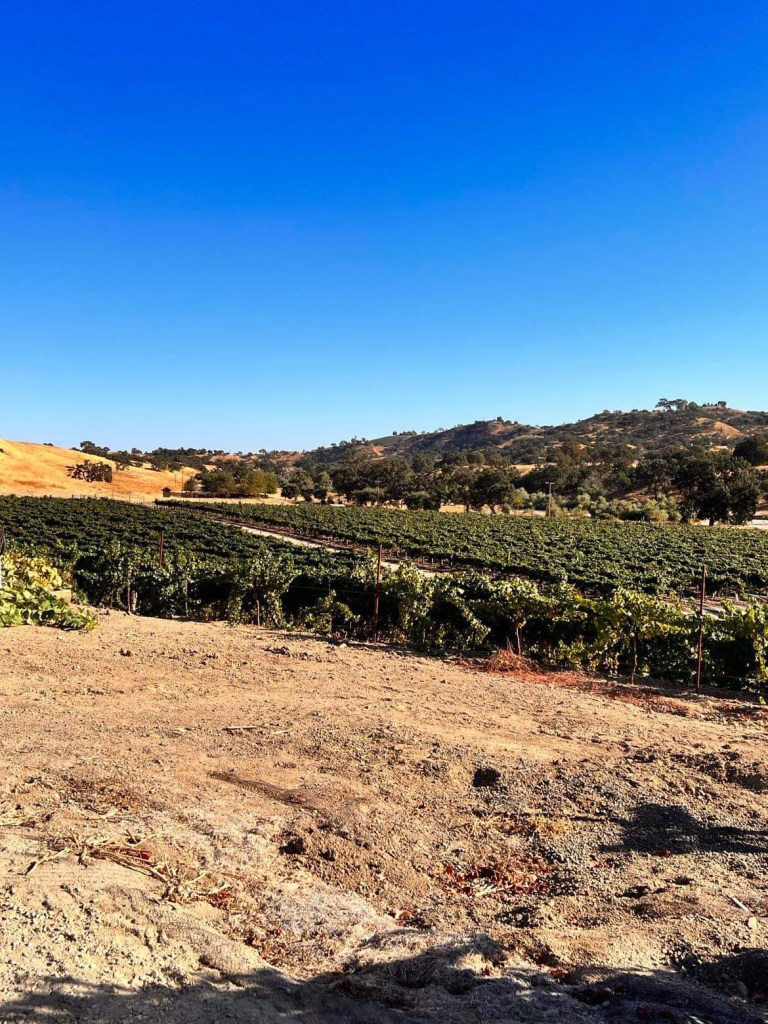
Imagine that beautiful imagery of Jesus last Sunday, of Him saying “I am the true vine… you are the branches” calling us to remain in Him to be fruitful (Jn.15:1, 5, 8). What a lovely sight to behold are the vines, climbing and winding up or creeping on the ground with its vast network of leaves and stems, tiny tendrils and shoots, flowers and fruits.

Jesus identified Himself with the vine to show us the immensity and profundity of His love for us as this plant species sprawls widely with its strong roots and stem system extending to its branches that reach out to its flowers and clusters of fruits like grapes. It is as if in every turn of the vine, there is so much life, full of love like God who is both Life and Love Himself.

Photo by Dra. Carol Reyes-Santos, MD at Napa Valley in California, September 2023.

And that is the essence of Jesus as He had explained during their Last Supper, showing its meaning on Good Friday when He died on the Cross, summarizing everything on Easter when He rose again and appeared later to His disciples.

It is love, love, and still, love in every turn just like the vine.

In being the true vine, we find God’s immense love for us expressed in His Son Jesus Christ who now tells us clearly to love one another shortly before He showed and proved that love for us on Good Friday at the Cross.

Jesus said to his disciples: “As the Father loves me, so I also love you. Remain in my love. This is my commandment: love one another as I love you. This I command you: love one another.”

John 15:9, 12, 17

See how Jesus speaks of and lives in love in every turn in this gospel scene this Sunday which is a continuation of His discourse last week during their Last Supper. Nine times Jesus used the word “love” in nine verses.

He began his discourse by laying down the foundation of this love which is the Father’s love in verse 9: it is in “remaining” in His love that we truly have joy which is more than happiness but firm assurance that no matter what happens to us even in the worst situations including death as Jesus went through, there is always God loving us to the end and beyond.

After that, Jesus twice mentioned love as His commandment to us. Actually, Christ’s command to love one another seems pretty simple, and easy if you say so; but, what He added makes it so difficult – “love one another as I love you.”

That part “as I love you” is the challenge of Jesus to each one of us every day because He loved even unto death, literally and figuratively speaking. We do not need to die literally as martyrs but even dying figuratively speaking is already so difficult when we have to make many sacrifices, when we have to love somebody else more than our very selves!

Loving one another like Christ is more than to “feeling good” because…

  • To love like Jesus is to forget ourselves, to think less of our own good and comfort like a mother despite her being sick would still rise early to prepare her family to school and work or a dad going abroad in order to have food, clothing and shelter for his family.
  • Loving like Christ is giving up our wants and needs, including our dreams sometimes like the many Ate and Kuya who remain single in order to send their younger siblings to school until they graduate and be able to stand on their own.
  • To love like Jesus is to die in our own POV (point-of-view) and other long held beliefs in order to find Christ in everyone especially those different from us or from those who hurt us.

Loving one another like Jesus Christ is choosing the Father above all every day.

Admittedly, to love like Jesus is very difficult indeed but, the good news this Sunday is that it is doable as the beloved disciple explains in the second reading, “In this is love: not that we have loved God, but that he loved us and sent his Son as expiation for our sins” (1Jn.4:10).

And the best part of this Sunday’s gospel is when Jesus declared twice He loves us, “As the Father loves me, so I also love you… This is my commandment: love one another as I love you” (Jn. 15:9,12).

Wow! Everyone knows so well the deep joy one feels in hearing someone say “I love you”. For as long as it is the true kind of love, these words of “I love you” are not only transformative but also performative because they are powerful, filled with the powers of God that can change us, heal us and inspire us.

The words “I love you” are the nicest and most life-changing things one can always hear but unfortunately we rarely say these words to others because we are afraid of running out of love. The truth is, the more love we give, the more we share love in words and in deeds like Jesus, the more we are filled with His love but by those around us too!

Never say nor claim we cannot love like Christ because we are humans like that cheesy Filipino love song of yore, sapagkat ako’y tao lamang. That ability to love like Jesus is already here in our hearts, in our being, in us because He had lavishly loved us first so that we too can love. Every day Jesus repeats those words of the Last Supper whenever we wake up, telling us, “I love you”.

It was the same experience Peter and later the household of Cornelius have experienced in our first reading when the Holy Spirit came down upon them to fill them with the love of God that prompted Peter to realize earlier how “In truth, I see that God shows no partiality” (Acts 10:34), meaning, God loves everyone lavishly regardless of color, gender, and creed. The problem is with us when we love only those “like us”; hence, the need to remain in Christ to be able to find Him in everyone.

Let us immerse ourselves into that amazing reality that we are personally loved by Jesus as we pray:

Dearest Jesus:
let me remain in Your love
so I may learn to forget myself,
set aside my plans and agenda
so that I may love like You
by keeping Your commandments,
laying down my life for others,
echoing Your very words of
"I love you"
to those who hardly know You
because they have
never felt being loved
as they suffer alone in
diseases, poverty, and injustice;
let me bask in Your love, Lord
to lead others back to You
in my loving service and kindness
especially those who have lost faith
in You and humanity.
Amen.
Photo by Natalie Bond on Pexels.com

“So Far Away” by Carole King (1971)

The Lord Is My Chef Sunday Music by Fr. Nicanor F. Lalog II, 28 April 2024
Photo by author, somewhere in Bgy. Kaysuyo, Alfonso, Cavite, 27 April 2024.

It is a “frying Sunday” as heat index rose to over 40 degrees today and there’s no stopping at temperature rising in this final week of April. And so, we offer you this Sunday one of the coolest music we have grown up with courtesy of Ms. Carole King.

From her beautiful Tapestry album released in 1971, we find So Far Away perfectly expressing the essence of Jesus Christ’s call for us to remain in him, our true vine:

To remain is more than physical like to stay. A branch remaining, staying intact with the vine but had turned yellow and dried up is clearly not one with the vine. We can be inside the church but be detached with everyone and the celebration. We may be staying or residing in the same address and home but our heart and very self may be so far away from our siblings or parents, or from your wife or husband.

Remaining implies something more than physical presence. To remain is to have a relationship, a bonding that is deep and intimate. To remain is to be of one heart as GMA7 claims to be a kapuso which is more important than being a kapamilya or a kapatid. There is no sense of being a family (kapamilya) when there is no love in the family or at the other hand, a sibling (kapatid) is nothing if the brother or sister is your enemy. We remain with God and everyone when our hearts are attuned or inclined to God and with others in love which is the fruit of the vine, Jesus Christ.

https://lordmychef.com/2024/04/27/remaining-in-christ-2/

So Far Away is a gospel in itself about love which is about oneness. Even if we are apart – temporarily or eternally – for as long as we have that communion and bonding of our hearts, that love will always be truly felt. Perhaps, one reason for the saying “absence makes the heart grow fonder” when lovers are apart. Remaining and presence are more than physical but a bonding of the hearts that Ms. King beautifully sings to us in her classic So Far Away:

So far away
Doesn’t anybody stay in one place anymore?
It would be so fine to see your face at my door
Doesn’t help to know you’re just time away
Long ago, I reached for you and there you stood
Holding you again could only do me good
How I wish I could, but you’re so far away

One more song about movin’ along the highway
Can’t say much of anything that’s new
If I could only work this life out my way
I’d rather spend it bein’ close to you

In this age of modern communications, how ironic that we are brought closer with those so far from us by distance but have caused us too to be distant from those nearest to us. The Risen Jesus Christ tells us this Sunday that being close, remaining in love happens even without seeing the other person for as long as our heart is attuned with the one we love. What really happens is that for as long we keep that love in our hearts, even if our beloved is gone or far from us, the more we experience his/her presence in their absence.

Let Ms. Carole King bring back those loving moments we had.

From Youtube.com.

Remaining in Christ

The Lord Is My Chef Easter Recipe for the Soul by Fr. Nicanor F. Lalog II
Fifth Sunday in the Easter Season, Cycle B, 28 April 2024
Acts 9:26-31 ><}}}}*> 1 John 3:18-24 ><}}}}*> John 15:1-8
Photo by picjumbo.com on Pexels.com

From the Good Shepherd last Sunday, Jesus today declares himself as the “true vine”. Notice that qualifier true vine similar with last Sunday’s good shepherd because Jesus “lays down his life for the sheep” (Jn. 10:11, 17, 18); so we ask, was there an untrue vine?

Yes. Jesus was referring to Israel, God’s vineyard lavished with all his care but produced wild grapes as portrayed in Isaiah’s “Vineyard Song” that he vowed to take it away and plant a new vine fulfilled in Christ (Is. 5:1-7). Jesus as the true vine is an expression of his Incarnation, of how God in Jesus Christ became human like us in everything except sin so that we in turn would become like him, holy and divine. This can only be when keep that union intact by remaining in Christ.

Jesus said to his disciples: “I am the true vine, and my Father is the vine grower. He takes away every branch in me that does not bear fruit, and every one that does he prunes so that it bears more fruit. You are already pruned because of the word that I spoke to you. Remain in me, as I remain in you. Just as a branch cannot bear fruit on its own unless it remains on the vine, so neither can you unless you remain in me.

John 15:1-4
Photo by MART PRODUCTION on Pexels.com

Our scene is now at the Last Supper, after the washing of the feet of the disciples. Judas had already left and Jesus began his series of discourses capped with his high priestly prayer after which they proceeded to Gethsemane for his betrayal and arrest.

Imagine the solemnity of the scene, of how Jesus had shown the Twelve the meaning of his being the good shepherd laying down his life by taking the bread and wine as his Body and Blood given to everyone. All these will have its fullness on Good Friday at the Cross while it would take some time after Easter and Pentecost when the disciples will finally grasp and understand its meanings.

We are not just going back to a past event, to what Jesus had done. In declaring himself as the true vine, Jesus reveals to us himself truly God and Risen from the dead, telling us how we can share in the joy and mystery of his Resurrection. And that is by remaining in Jesus first above all, “Remain in me, as I remain in you. Just as a branch cannot bear fruit on its own unless it remains on the vine, so neither can you unless you remain in me.”

Photo by Dra. Carol Reyes-Santos, MD at Napa Valley, California, 2023.

See how in eight verses, Jesus used the word “remain” eight times because it is not enough Jesus is the true vine in whom we are blessed and become fruitful; we must remain in him too.

There is no doubt of Jesus remaining in us which is what his being a true vine is all about; unlike Israel in the Old Testament that produced wild grapes, Jesus can no longer be uprooted because he is God himself who had become one in us. But, are we one in him and with him?

To remain is more than physical like to stay. A branch remaining, staying intact with the vine but had turned yellow and dried up is clearly not one with the vine. We can be inside the church but be detached with everyone and the celebration. We may be staying or residing in the same address and home but our heart and very self may be so far away from our siblings or parents, or from your wife or husband.

Remaining implies something more than physical presence. To remain is to have a relationship, a bonding that is deep and intimate. To remain is to be of one heart as GMA7 claims to be a kapuso which is more important than being a kapamilya or a kapatid. There is no sense of being a family (kapamilya) when there is no love in the family or at the other hand, a sibling (kapatid) is nothing if the brother or sister is your enemy. We remain with God and everyone when our hearts are attuned or inclined to God and with others in love which is the fruit of the vine, Jesus Christ.

We can only bear much fruit, be more loving, if we remain in Jesus Christ. It is an imperative, therefore in this life that we remain in Christ for without him, separated him, we can do nothing. Fruit and love are always together as shown in the institution narrative and on Good Friday.

Being fruitful is more than being successful that is often seen and measured in material things. Being fruitful, being more loving is spiritual in nature, can never be measured with what we have but what have we given. Most of all, being fruitful is depending, relying more in Jesus Christ than in one’s self. That is why remaining in Christ is a prerequisite to be fruitful.

We remain in Jesus in prayer when he said, “If you remain in me and my words remain in you, ask for whatever you want and it will be done for you” (Jn. 15:7). But, prayer here as in most parts of the gospel does not mean asking God for anything; to remain in Jesus in prayer is to ask for God himself. It is only in having God we can truly love and experience joy and peace within despite the many trials and pains we go through in life.

In the first reading we have heard how Paul, still known as Saul arrived in Jerusalem and “tried to join the disciples, but they were all afraid of him, not believing that he was a disciple” (Acts 9:26). It must have been so difficult for Saul as well as for the early Christians too to welcome him! Saul must have a hard time convincing them he had really changed, that he had been converted in Christ while he must also understand the feelings of the Christians whom he persecuted before.

Photo by Dra. Carol Reyes-Santos,MD, at Napa Valley, California, 2023.

Let us keep in mind too that Saul’s conversion did not necessarily mean an end of their persecution; in fact, persecutions would turn more fierce later but it was during that time when the church grew so fast and wide too! That was because they remained in Christ who caused their efforts to bear much fruits no one expected.

Look back into our lives and see how when we remained in Christ and problems never stopped but that is when we are more fruitful, more fulfilled in life. Like our responsorial psalm this Sunday, “we praise the Lord in the midst of the assembly” to thank God from our hearts for all the blessings he bestows us like inner growth and maturity, feeling fruitful not just successful. Indeed, as the beloved disciple rightly noted in our second reading today, “God is greater than our hearts and knows everything” (1 Jn. 3:20).

This Sunday, Jesus is telling us “I am the true vine” to show us how God’s life is now in us through Christ and how our life is in God still through Christ. Let us remain in Jesus as he continues to reveal to us who he really is, our Lord and God, so we can share in the many joys and mysteries of his Resurrection. Let us pray:

Lord Jesus Christ,
let me remain in You;
let me stay in You
when things are so difficult
and let me still remain in You
when life is so beautiful;
let me be near and close
to You as You are in me,
speaking Your words,
doing Your will;
in my remaining in You,
may I be fruitful by bringing
others closer to You so that
in the end, we all remain
one in You.
Amen.