“Bagong Taon, Bagong Panahon”

Lawiswis ng Salita ni P. Nicanor F. Lalog II
Ika-01 ng Enero 2019


IMG_2434

Maraming pong salamat
Mga ginigiliw kong tagatangkilik
Nitong dati kong panaginip
Maisatula aking mga tilamsik ng pag-iisip.

Madalas tuwing bagong taon
Sa pagharap natin sa mga paghamon
Lagi nating tugon ay new year’s resolution
Na kalauna’y mga pangakong nababaon.

Hindi tayo makakasulong taun-taon
Kung parati mayroon tayong mga rason
Alibi at mga dahilan para bigyang katwiran
Iba’t ibang sitwasyon kaya tayo hindi makaahon.


49548159_10157026686917996_7763111631847948288_n

Bagong taon, bagong panahon
Bawat pagkakataon ay isang paghamon
Ng pagpapakatotoo sa ating pagkatao
Kung ibig nating lumago, iwanan nakaraan,
Mamuhay sa kasalukuyan, pag-aralan mga dating kamalian;
Mga sugat nating kinasaktan, huwag nang takpan
Bagkus pahanginan sa kasalukuyan upang tuluyang gumaling
Para ating maibaling mga paningin sa mga dapat gawin at ayusin.

Bagong taon, bagong panahon
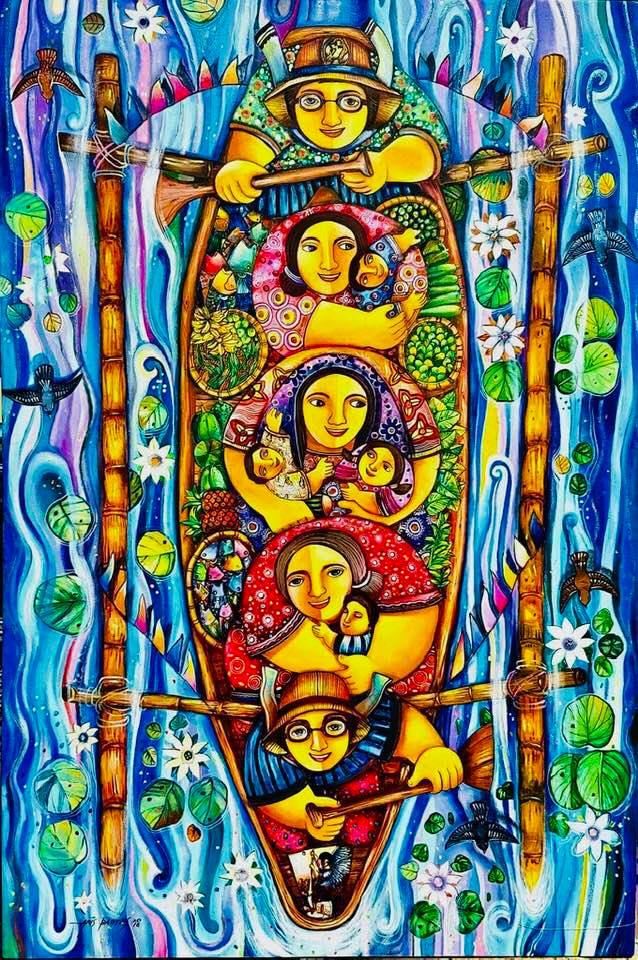
Pumalaot sa mga dakong di nasusubukan o napupuntahan
Magsagwan kung kinakailangan
Sa gitna nitong ilog ng buhay na walang katiyakan
Maliban sa tahakin landas ng kabutihan at kababaan
Tulad ng pananalangin sa awa at habag ng Maykapal;
Hindi magtatagal lahat ng ating pagpapagal
Sa ati’y dadatal mga dasal nating inuusal.
*Larawan ay obra ng Bulakenyong pintor na si Aris Bagtas; pinili ko ang larawang ito upang maipakita ang pakikibaka ng may tuwa sa bagong taon ng 2019.  Ginamit ng may kapahintulutan.

“Kaya May Araw ng Pasko”

Lawiswis ng Salita ni P. Nicanor F. Lalog II
Ika-26 ng Disyembre 2018
IMG_2434


Ilang araw bago sumapit araw ng Pasko
Nakaramdam ako ng magkahalo na pagkahapo at lungkot
Dahil sa masalimuot at nakakainis na ilang tao at sitwasyon
Sinabayan pa ng maghapong pag-ulan, Biyernes hanggang Lunes.


Pilit kong nilabanan mga hindi magandang nararamdaman
Dinagdagan pahinga at tulog, higit sa lahat ang pagdulog sa Panginoon
Upang ilahad sa Kanya lahat ng aking tanong
Na banayad naman Niyang sinagot tila baga sa pag-ambon.


Hindi ba nang isinilang Siya noon, napakagulo din ng panahon?
Noon pa man hanggang sa ngayon,
May mga tao pakiramdam o paniwala na sila ang Kristo –
Tagapagligtas ng mga tao pero kung umasta, diktador at emperador?
bethlehemchristmascitystar
Kunwari’y malasakit sa mga tao ginagawa, 
pero “ego” nila ang walang pagsasawa;
Lahat ng kanilang ginagawa kunwa’y para sa madla
At marami ang natututwa na di alintana pagwasak ng buhay
Pagsira ng pagbubuklod bilang bayan, simbahan, at tahanan.


Kay sarap paglimi-limihin itong Panginoong Hesus natin
Likas na dakila at makapangyarihan, piniling maging maliit
Upang itong tao na likas na maliit at laging nagpipilit magmalaki
Mabatid na ang pinakamakapangyarihang puwersa
Ay ang pag-ibig na naroon lamang sa kababaang-loob at kahinaan.


Ito ang dahilan kaya mayroong araw ng Pasko:
Upang lagi nating maalala na ang Diyos ay naparito dahil nga sa gulo,
Isinilang ang Kristo sa gitna ng kadiliman dahil gayon ang mundo.
Ibinalot sa lampin at inihiga sa sabsaban
Dahil noon pa man hanggang ngayon, Siya ay tinatanggihan ng karamihan.


Kung ating titingnan lamang mga kaguluhan
At iba pang mga kalabisan sa mundo at buhay natin
Minsan man lamang isang araw maalala natin tuwing Pasko
Ang Diyos ay naparito upang samahan tayo sa lahat ng ito
At kung Siya patutuluyin at pananatilihin sa ating piling
Tiyak ang ibayong biyaya at pagpapala dahil laging Pasko sa atin!
(Mga larawan mula sa Google.)
BethlehemToday

“Ang Tuwa at Galak ng Pasko”

Lawiswis ng Salita ni P. Nicanor F. Lalog II
Ika-25 ng Disyembre 2018
IMG_2434
Tiyak at totoo naman ang kasabihan ng lahat
Na Pasko ang pinakamasayang panahon sa buong sangtaon
Dahil sa kapanganakan ng ating Panginoon
Bagama’t hindi naman siyang tuon ng mga pagdiriwang sa ngayon.
Tayo raw mga Filipino ang may pinakamasayang Pasko 
Dahil tayo rin ang pinakamahabang magdiwang nito
Ngunit wala naman sa mga ito kahulugan at diwa ng Pasko
Lalo na kung kasiyahan at hindi katuwaan ang usapan.
Kasiyaha’y kapag mga ngiti ay hanggang labi lamang
Kaya ito ay pansamantala at hindi pangmatagalan o palagian;
Ngunit kung mayroong kagalakan, yaring puso ang nakangiti
Maski sa gitna ng dalamhati at pighati.
Ang ganitong uri ng tuwa ay maari lamang nating mahabi
Kung  ating pinipili sa puso natin maghari at manatili
Itong si Hesu-Kristo na paulit-ulit na sumilang muli
Upang mga kadiliman at kasalanan sa budhi ay mapawi
Maging lubos ang kagalakan na matatagpuan lamang
Sa Diyos Anak na nagkatawang-tao tulad nating hamak
Upang katulad niya tayo’y makapagmahal din ng tunay at wagas.
Ang tuwa at galak ng kapaskuhan ay malayang pagpapasiya o desisyon
Ng sino man na handang magbigay ng silid at puwang sa puso at kalooban
Upang si Kristo ay muling sumilang, maghari at punan ating mga kakulangan
Na akala nati’y matatagpuan sa mga kayamanan at kagamitan
Kungdi sa ugnayan ng pagmamahalan na siyang diwa ng kapaskuhan
Nang unang dumating si Hesus doon sa sabsaban
Upang tayo ay samahan sa landas ng kabutihan at kabanalan.
48046351_342853482932872_3835136835885989888_n (1)
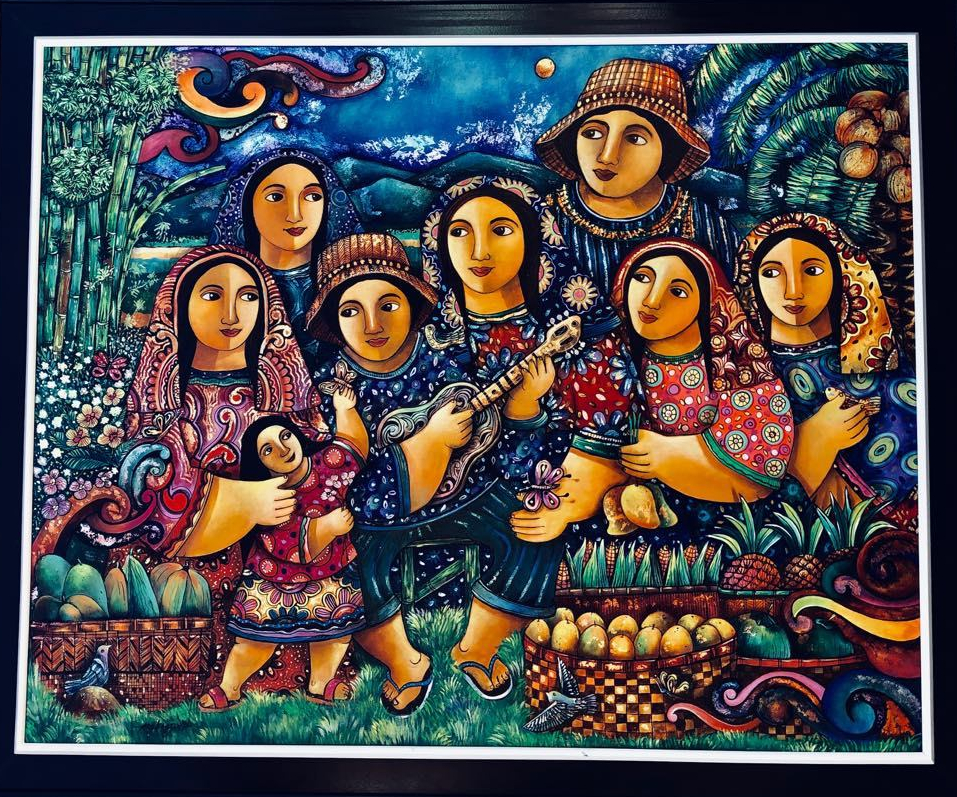
Ang larawan ay isang obra ni G. Aris Bagtas, “Musika ng Liwanag at Gabay” (4×5 ft., 2012 acrylic painting) na tumatalakay sa mabuting samahan ng pamilya at magkakamag-anak.  Araw-araw ang Pasko kung nasa puso palagi ng bawat isa ang pagmamahal at samahan ng pamilya at mga kamag-anakan.

Our Origin and Mission in Jesus Christ

48184542_1236165199867720_9017446140471148544_n
The Lord Is My Chef Simbang Gabi Recipe-2
17 December 2018
Genesis 49:2, 8-10///Matthew 1:1-17

            Surely today after our Simbang Gabi, all attention would be on the Miss Universe Beauty Pageant with everybody rooting for our bet, memorizing the names and answers of almost every candidate from all over the world.  I have never seen any episode of Miss Universe or any beauty pageant in my entire life but from what I have read and heard, our intense interests with beauty contests is our way of coping with the harsh realities in our nation of crooks and corrupt officials that we try to identify with the beautiful and glamorous.  As you examine every candidate later on TV, try remembering our reflection on this second Simbang Gabi which is also about names and origins and mission.

            Today we begin the second phase of Advent when our liturgy shifts its focus to the first coming of Jesus more than 2000 years ago in Bethlehem.  The Church’s official countdown for Christmas Day actually starts today December 17 until the 24th when all our readings look back to the events leading to Christ’s birth.  Every year on this date we hear the beginning of the gospel of Matthew about the genealogy of Jesus Christ where we are presented with names of our Lord’s ancestors that mostly sound funny and even weird.  Yesterday we have reflected that the joy of Advent and Christmas is the Person of Jesus Christ found among every person.  Today, we deepen this reflection on the Person of Jesus Christ through His genealogy that reveals to us His origin and mission which we also share with Him.

            It is interesting to recall that when Jesus faced Pilate during His trial, the Roman governor asked Him “Where are you from?” (cf. Jn.18:38).  It was also the same question that all four evangelists tried to answer later in writing their respective gospel account of the Christ.  For Matthew and John, it is the most essential question needed to be answered right away that they both opened their gospel accounts by presenting the origins of Jesus Christ.  We shall reflect on John’s version about the origins of Jesus on Christmas; today we focus on Matthew’s genealogy which is very Jewish in flavor and context considering his own background and audience made up largely of Jewish converts to Christianity.  Right away, Matthew traced the genealogy of Jesus to the two prominent figures of Israel by solemnly declaring at the beginning of his gospel, “The book of the genealogy of Jesus Christ, the son of David, the son of Abraham” (Mt.1:1).

           For Matthew, the story of the promise of God begins with Abraham who was called to journey from his homeland to the Promised Land.  More than a journey into another land, it was also a journey into the future by Abraham when all nations who would come from him shall come together to be blessed by the Lord.  Every Jew is aware of this promise by God to Abraham and Matthew is now reminding them how everything was fulfilled in the birth of Jesus as the Christ.  Pope Emeritus Benedict XVI explains in “Jesus of Nazareth, the Infancy Narratives”that “From the beginning of the genealogy, then, the focus is already on the end of the Gospel, when the risen Lord says to his disciples:  ‘Make disciples of all nations’ (Mt.28:19).  In the particular history revealed by the genealogy, this movement toward the whole is present from the beginning; the universality of Jesus’ mission is already contained within his origin” (page 5).

            Next to Abraham, Matthew structured much of the history of his genealogy around the figure of David, the greatest king of Israel to whom the promise of eternal kingdom had been given by God.  Fully aware of the significance of symbolisms in number among his people, Matthew structured the genealogy of Jesus into three sets of fourteen generations considering that the Hebrew letters of the name David add up to fourteen also:  “Thus the total number of generations from Abraham to David is fourteen generations; from David to the Babylonian exile, fourteen generations; from the Babylonian exile to the Christ, fourteen generations” (Mt.1:17).  Again, we listen to Pope Emeritus Benedict XVI,“this threefold division by Matthew shows that the genealogy of Jesus is in fact the Gospel of Christ the King wherein we can find the whole history looking onto Him whose throne is to endure forever (ibid., page 6).”   Here we find anew the fulfillment in Jesus of God’s promise to Abraham and to David.

            The third and surprising element in Matthew’s genealogy of Jesus is the inclusion of five women that is very novel at that time considering it was a male dominated world.  See that Matthew traced more of the male line of the Lord’s genealogy; he must be up to something in mentioning the five women as roots also of Jesus: Tamar, Rahab, Ruth, Bathsheeba the wife of Uriah, and then Mary His mother.  The first four women were considered sinners and right away we can see how Matthew had indicated in the genealogy the mission of Jesus as Savior of the world when He took upon Himself the sins of the four women including those of the world.  It was not chauvinism on the part of Matthew but simply employing a technique prevalent at that time; but, here he also presents to us another reality of aside from being sinners, all four women before Mary were also foreigners or gentiles who were looked down upon by the Jews at that time.  Through them, Christ’s mission to the Gentiles is also made manifest in His genealogy, proof that indeed the genealogy of Jesus is the whole Gospel in itself!

           But the biggest surprise of Matthew after putting four sinful, gentile women in the genealogy of Jesus is his manner of ending it with another woman though this time a Jewish one, Mary.  Note like in a song all throughout the genealogy, we find the pattern of father and son like in “Abraham was the father of Jacob” to indicate human paternity among the ancestors of Jesus.  Note how Matthew would devise a twist near the end by telling us “Jacob (was) the father of Joseph, the husband of Mary.  Of her was born Jesus who is called the Christ” (Mt.1:16).  The evangelist is very clear here with the Divine origin of Jesus Christ who did not come from Joseph or any human father.  Right after the genealogy, Matthew would narrate the circumstances surrounding the birth of Jesus Christ, stressing the fact that He was conceived in the womb of Mary by the Holy Spirit.  Very clear Matthew has no plans of minimizing the role of Joseph in Christ’s birth; on the contrary, the evangelist extolled Joseph’s role at the genealogy and following story of the Nativity that as the legal father of Jesus, Joseph makes Jesus legally from the Davidic line of succession as fulfillment of the promise to David by God.  Such is the mystery of the person of Jesus Christ that although His origins can be traced to humans, beginning with Abraham and David, He also came from above with God truly His Father which we profess in faith that He is true God and true Man.  In Jesus Christ through Mary, “human existence starts afresh so that we can now claim that our true genealogy is in our faith in Jesus who gives us our origin and mission from God (ibid.).”

           One of my spiritual fathers who has a tremendous impact in my life was the late American Jesuit Fr. Arthur Shea.  He was my spiritual director during our Ignatian 30-day retreat in Cebu more than 20 years ago.  His favorite expression was “man is a mystery.”  Indeed, every person is a mystery for we never know exactly everything about him or her, someone we must always respect because no matter what, he or she is a child of God above us.  The genealogy of Jesus Christ challenges us today to rise and hold on to that honor of being a beloved child of God that despite our sinful past, many weaknesses and failures, we can always start afresh like Mary putting an end to the cycle of sins and evil.  The genealogy of Jesus Christ reminds us that life is more about direction than destination.  Like Abraham, we are all wayfarers treading the path of Jesus who is the way, the truth and life with no clear indications of places to go except of directions to the future to be like Him.  Like David, God would always find a way to change our courses in life so we can follow His direction despite our grave sins.  Let us pray with Mary that we may let God set the direction of our lives so that we may bring Christ back into this world that has veered away from Him.AMEN.Fr.NicanorF.LalogII,Parokya ng San Juan Apostol at Ebanghelista, .Gov. F. Halili Ave., Bagbaguin, Sta. Maria, Bulacan.

*Photo is another painting on acrylic (48×96) by Bulakenyo artist Aris Bagtas called “Luklukan ng Karunungan” (Seat of Wisdom) displayed at the second floor of the Library of the Immaculate Conception Major Seminary at Guiguinto, Bulacan.  A lively and beautiful rendition by Aris of Mary teaching her Son Jesus Christ while at the background is Joseph looking at them.  Used with permission.

Advent Is The Joy of Persons

48363133_2022338281220522_1767266466916204544_n
The Lord Is My Chef Simbang Gabi Recipe-1
Advent-3, Year C, 16 December 2018
Zephaniah 3:14-18//Philippians 4:4-7//Luke 3:10-18

          Christmas is undeniably the most joyous season of the whole year.  And we all know the reason because it is the birth and coming of our Savior Jesus Christ.  Unfortunately in practice, we always forget Jesus Christ and we get focused on the gifts and decorations that delight our senses but leave us empty within.  When we forget Jesus Christ as the reason of the season, then we altogether forget the persons around us, forgetting that the greatest gift we can always receive is the gift of our personhood, the gift of another person we journey in life.  One rejoices because of a person.  Only persons can bring joy and only persons can rejoice.

          You must have seen the Christmas short film of Ayala Malls’ “Wishing Tree” where a Lola and her apo celebrate the Simbang Gabi at Greenbelt.  After Mass, the apo would hang his Christmas wish on the “wishing tree” aided by the security guard.  The Lola eventually had Alzheimer’s, had to stay home while her apo went alone to Simbang Gabi.  As usual, the apo who had grown up into a young man went to hang his Christmas wish but this time, instead of asking for toys, he simply wrote “Make Lola happy again.”  The security guard saw his wish and had a brilliant idea of gathering from the mall’s CCTV records the joyful memories of the Lola and her apo at Greenbelt through the years.  On Christmas Eve, the apo went to kiss and greet his sick Lola in her room where he found a Christmas card from Ayala malls.  Inside was a USB with footages of their happy days together at Greenbelt that lit up Lola’s face with joy as if she had suddenly recovered her memories that she rested her head on her apo’s arm.  How amazing that despite her dementia, Lola rejoiced again when she saw the gift of person in her apo, their gift of selves to each other that tells us only persons can bring joy to another person, not money or things or gadgets.

         This third Sunday of Advent which we also call “Gaudete Sunday” or “Rejoice Sunday”, we level up our rejoicing because our joy is not only coming from another person but from the Second Person of the Holy Trinity, the Son of God Jesus Christ!  Such was also the joy of Mary in singing her Magnificat upon experiencing the very person of  God in herself and in Elizabeth, “My soul magnifies the Lord” (Lk.1:46).  Every joy is magnified because of the person of Jesus Christ who revealed to us that our God is not merely an entity but a Person who relates with us and wants that relationship deepened as a true Father to us.  Last week, we reflected how we must create a room or a space within us to let Christ come to us and possess us.  Today, our readings remind us how God shows us Himself and His plans for us through other persons in Christ Jesus.  See how the people were filled with joy upon listening to the preaching by John the Baptizer in the wilderness of Jordan.  Everybody, including sinners like tax collectors and soldiers were asking him “what should we do?” because they felt the joy within of Christ’s coming.  And the good news is that through John, the people of that time including us today found that God is not really asking so much from us:  we simply have to live simple lives of sharing whatever we have, being fair and just with one another.

         To everyone in the crowd, John said, “Whoever has two cloaks should share with the person who has none.  And whoever has food should do likewise.  Tax collectors should stop collecting more than what is prescribed while soldier should stop the practice of extortion, do not falsely accuse anyone, and be satisfied with their wages.” (Lk.3:11, 13, 14)

          Let us rejoice because God is not asking great things from us to experience His coming in Jesus!  We do not have to withdraw to the mountains and wilderness to find Jesus Christ.  All He wants is our complete person with concrete acts of love and charity, mercy and kindness with every person around us who is our brother and sister in Him.  All God wants is our complete person wherein we are faithful and true to Him through others in whatever state of life we are into.  See how all the readings proclaimed during this Season of Advent teach us to realize that God has truly come among us in the person of Jesus Christ so that we can experience Him in our very personhood and among other persons, both in good times and in bad times, in joys and in tears.  Together we all celebrate life’s ups and downs with God Himself in Jesus through the persons who heed His call to love and to serve.  In becoming human like us, God the Son came to proclaim that the Kingdom of God is within us and that the Holy Spirit has been sent to support our relationships with other persons.  It is always a struggle to be a good person most especially among relatives and friends who are supposed to be the first to love and understand us but turn out to do the opposite.  So often, we forget the other person due to many fears within us like being unloved or rejected, going hungry or thirsty, of losing and getting lost.  The prophet Zephaniah tells us in the first reading to cast away all fears and be not discouraged by failures and hurts in life; rejoice because you are so loved by the Lord!  “The Lord, your God, is in your midst, a mighty savior; he will rejoice over you with gladness, and renew you in his love, he will sing joyfully because of you, as one sings at festival” (Zeph. 3:17).  St. Paul reiterates this call for rejoicing, telling us “Your kindness should be known to all.  The Lord is near.  Have no anxiety at all, but in everything, by prayer and petition, with thanksgiving, make your requests known to God.  Then the peace of God that surpasses all understanding will guard your hearts and minds in Christ Jesus” (Phil.4:5-7). 

         How sad, and how can we rejoice this Advent and Christmas in our country where Christmas is said to be the merriest and the longest when the president and his men especially in the police force rejoice in the death of drug dependents and criminals?  We condemn every act of violence especially to innocent victims but executing their perpetrators, eliminating addicts and criminals will never solve the problem.  How can we rejoice when very clearly justice favors the rich and powerful who can all go free or even be exempted from being arrested simply because of age?  How can we rejoice when telling lies and peddling fake news are the norms of the administration, maligning people and institutions?  The most tragic part of this attitudes of killing, telling lies and injustice in courts is the atmosphere they create among people to lose respect for another person, to fail to see the value of every person rooted in God.  Anyone who rejoices in the death of another person, in fake news and lies can never have true joy because deep inside, they are the most insecured and fearful persons of all who are so afraid to love and to forgive, to accept the truth that they have lost their own value of being a person.  They will never experience Christmas like Herod who ordered the murder of innocent children upon hearing the birth of another person truly greater than him, Jesus Christ.

         This joy of Advent and Christmas in the coming of Jesus Christ is found in the humility of our all-powerful, ever-present, and all-knowing God who chose to be another person among us, so weak and so small even begging us to receive Him.  Doubt no more, my dear reader that no matter what your sins are or your past may have been, whatever may be your state and condition in life today, God is here.  Have a room in your heart for Him, welcome Him for He does have plans for you.  He is also among other persons around you at this very moment, meet Him too among them.  Rejoice and give the person you love with a big, warm hug to feel God’s intense presence on this Rejoice Sunday. AMEN. Fr.NicanorF.LalogII,Parokya ng San Juan Apostol at Ebanghelista, .Gov. F. Halili Ave., Bagbaguin, Sta. Maria, Bulacan.

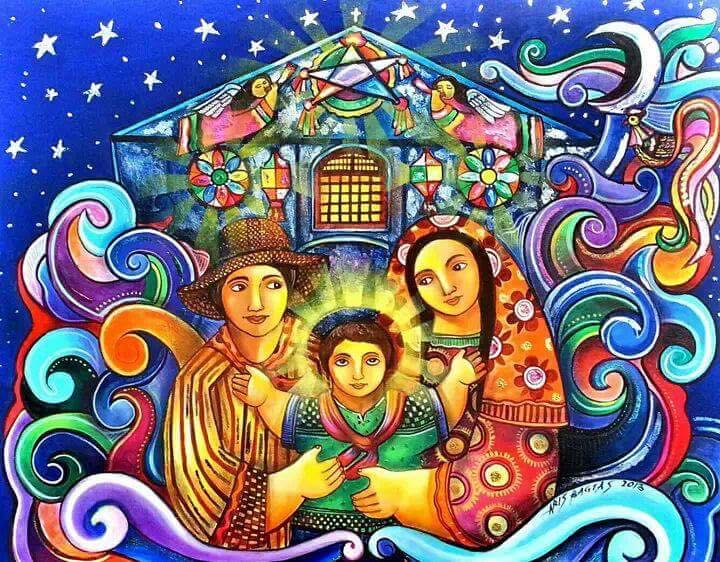
*Photo is a painting on acrylic canvas by Bulakenyo artist Aris Bagtas, “Triangulo ng Liwanag” exhibited in Washington DC in 2013.  Typical of paintings by Aris is the joy of the Filipino family where there is always the presence of love represented by his vibrant colors.  According to Aris, the relationship among the father, mother and child is everyone’s “triangle of love” in this colorful life we have.  Used with permission.

“Pangangahas ng Puso Kay Kristo”

Lawiswis ng Salita ni P. Nicanor F. Lalog II, Ika-04 ng Disyembre 2018
IMG_2434
Adbiyento… ang apat na Linggong paghahanda sa pagdating ni Kristo
Ngunit kung ating mapagtatanto, umalis ba talaga si Kristo
At dapat nating paghandaan pagbabalik Niyang totoo?
Hindi ba’t lagi naman Siyang naririto at tayo lang ang nalilito
Tuliro sa panahon ng Pasko na ika ng iba Christmas rush kuno
Minamadali ang Pasko pero naiiwan naman si Kristo.
Sa paglipas ng maghapon, ating bang naitatanong
Kung nasaan Siyang ating Panginoon,
Maliban lamang kung tayo’y sumusuong sa mabibigat na paghamon
Dahil mas paniwala tayo sa moderno at usong magugunaw na ang mundo
Habang pilit na sinisiksik sa ating mga isip ng teknolohiya at media
Na wala ng oras, wala na tayong tutuluyan pa kaya ang lahat ay madaliin at pagaanin.

Sa ating pagkahumaling sa ano mang magaling, lahat ay ating sinisikap agad tapusin
Panay naman ating daing na di natin kakayanin gayong lahat ay nalalampasan  din
Dahil taliwas sa diwa ng pagdating ni Kristong Panginoon natin
Pinapaalala ng Adbiyento na bagama’t magwawakas itong panahon natin
May sapat na oras at puwang si Kristo para sa atin
Upang tayo ay Kanyang makapiling, mapuspos ng Kanyang blessing.

Ngayong panahon ng Adbiyento, sana’y pangahasan nating
Suriing maigi yaring puso natin, alamin at timbangin totoong pinakamahalaga sa atin
Pangahasan na damhin at ranasin si Kristong nananatili sa puso at buhay natin
Dahil kung hindi natin ito gagawin ngayon din
Kailan ma’y hindi Siya darating
Kung wala Siyang puwang sa puso natin.

Advent1M

*Larawan ay kuha ng may-akda ng kanilang Advent wreathe sa Parokya ng San Juan Apostol at Ebanghelista, Gov. F. Halili Ave, Bagbaguin, Sta. Maria, Bulacan, ika-2 ng Disyembre 2018.

“Kabanalan sa Pagbibilang”

Lawiswis ng Salita ni P. Nicanor F. Lalog II, ika-27 ng Nobyembre 2018

IMG_2434 

Isang bagay na palagi kong natatandaan
Pangaral ng aking mga magulang
“Huwag kayong magbibilangan,
Iwasan ang pananaghilian, walang lamangan.”
Kaya’t ako ay nasanay bilang panganay
Na gawin na lamang ang lahat ng bagay
Nang hindi naghihintay kung may daramay
Kayanin ang lahat kung di ko naman ikamamatay.
Minsan sa aking pagninilay
Sumaging bigla sa aking malay
Bakit nga ba ang hilig nating magbilangan ng maraming bagay
Pati Pasko ay laging inaabangan ng hindi nalalaman ang kahulugan?
Napakadaling bilangin mga bagay tulad ng
Oras ng maghapon o buwan ng isang taon
Isama mo na rin mga palatandaan ng panahon
Na tila baga lahat ay pwedeng maikahaon.
Ngunit mayroon ba tayong pagkakataon
Matuon sa mga taong nakapaligid sa atin
Upang sila’y bilangin at kilalanin
Mga kabutihan nila sa atin?
Sila ang lagi nating kapiling at nagmamahal sa atin
Nagmamalasakit ngunit di natin pinapansin
Dahil mas natutuwa tayong bilangin mga ipon at pera natin
Pati na sasakyan, damit at pagkaing nakapaligid sa atin.
Palagi tayong nagbibilang ano mayroon o kulang at wala sa atin
Nang di napapansin ano na ba naibahagi natin lalo na sa mga nangangailangan din.
Itong pagbibilang ay gawaing mayroong kabanalan
Kung ang titingnan ay mga kapwa na dapat mahalin, di mga bagay na ibig maangkin.
Kung ating tutuusin, maski ang Diyos na lumikha sa atin
Tiniyak kahalagahan natin nang tayo’y likhain
Bakas Niya’y iniwan sa mukha natin
At pati nga mga buhok natin sabi Niya’y bilang na rin!
RaffySubic
Larawan ay kuha ni G. Raffy Tima ng GMA-7News sa Subic, ika-17 ng Nobyembre 2018.  Ginamit ng may kapahintulutan niya.

Ano Nga Ba ang Inaabangan sa Pasko?

Lawiswis ng Salita ni P. Nicanor F. Lalog II, Ika-20 ng Nobyembre 2018
IMG_2434
 
Minsa’y nagmisa ako sa aming mababang paaralan
At sa aking panimula aking nausisa mga bata
Kung ilang araw na nga lang ba ang Pasko?
Nag-uunahan, nakangiti na tila baga bumabati
At kasali sa laban o bawi, buong galak nilang sinabi
“41 days before Christmas!”
Ako’y nagulat, kanila pala’ng inaabangan
Araw ng Pasko kaya’t bilang nila kung ilang araw na lang
Habang ako nama’y nagulantang sa gayong katotohanan.
Bakit nga ba tayo sabik sa araw ng Pasko?
Ano nga ba ating inaabangan
Palagi tayong mayroong countdown?
Kung ang Pasko ay isang petsa nga lang,
Bakit hindi na lang tayo magbilangan
Bagong Taon pa lamang?
Madalas sa ating karanasan
Tayo ma’y natitigilan kinagabihan ng Pasko
Lalo na’t nagkaubusan ng pagkai’t mga pamaskong pinaghandaan.
Ito nga lang ba ang dahilan at kahulugan ng Kapaskuhan?
Lahat ng kaabalahanan at kapaguran sa paghihintay
Di malaman kung napasaan?
Kung ating pagninilayan diwa ng Pasko
Araw-araw itong maipagdiriwang kung sa puso natin sumisilang
Itong si Hesus at hindi sa sabsaban.
Higit sa petsa ng Kanyang kapanganakan
Ang Pasko ay isang kaganapan nang makialam
Sa ating kaguluhan ang Diyos na walang hanggan;
Kanyang pinunan, ating kakulangan
Binigyang saysay buhay nating walang kabuluhan
Upang tayong sinilang sa kasalanan, magkaroon ng kabanalan.
Mamuhay tayo’ng lagi sa Kanyang kapanatilihan
Upang ngayon pa lamang ay maranasan hatid Niyang kagalakan
Kesa ito’y abangan at malibang sa pagbibilang ng petsa at buwan.
BelenJohnHay2
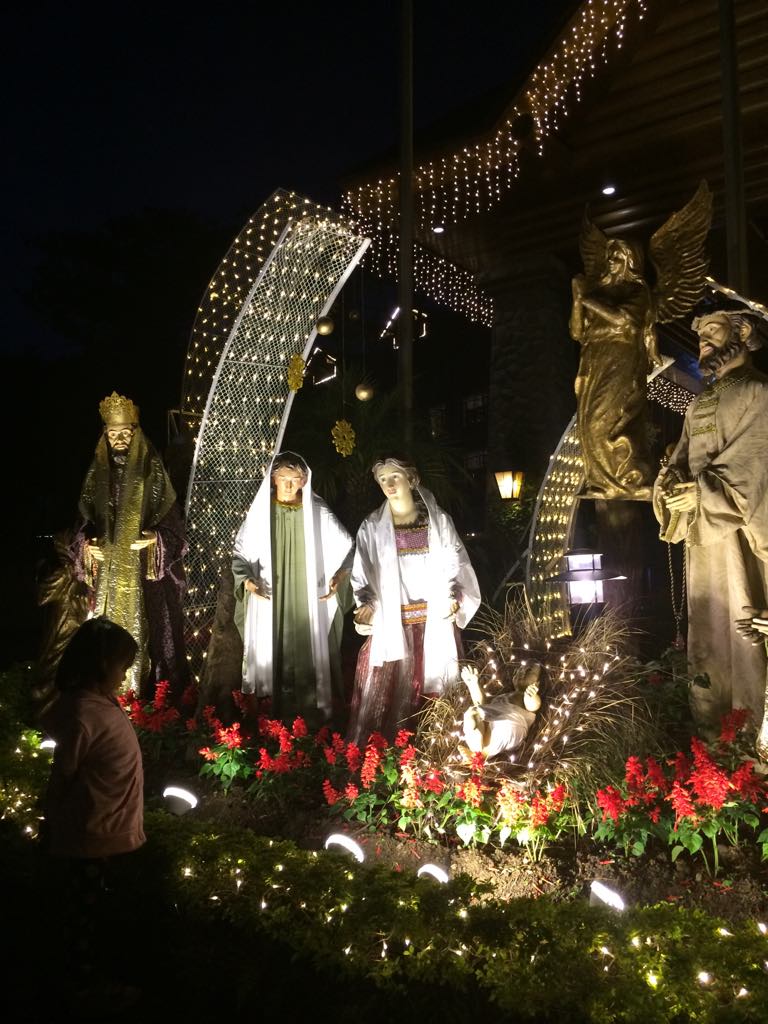
Larawan ay kuha ng may-akda, Belen ng Manor House sa Camp John Hay, Baguio, Nobyembre 2017.

Ano iyong ibibigay sakaling hingian ka ni Hesus ng ano man?

Lawiswis ng Salita ni P. Nicanor F. Lalog II, ika-13 ng Nobyembre 2018

IMG_2434

Ito ay isang tula batay sa kathang nakatutuwa
Ng makata sa ibang bansa:
            Minsan daw, saysay ni Rabindaranath Tagore,
            Nakita ng isang pulubi pagdaan ng gintong karwahe.
            Nagalak ang pobre dahil makikita niya ang mahal na hari
            Ngunit laking gulat niya nang sa kanya nanghingi
            Itong hari nag ani, “Ano’ng maibibigay mo sa akin?”

Naguluhan ang pulubi at walang nasabi
Bigo at inis sa nangyari, isang butil na trigong inani
Tanging iniabot sa nanghihingi na hari.

Umalis ang karwahe, sumapit ang gabi, at umuwi ang pulubi
Laking gulat at panghihinayang di magkali sa kanyang sarili
Dangan kasi isang diyamante napasali sa marami niyang butil na nahingi.
           
               “Ano’ng dami sana ng mga diyamante ko ngayon
               Kung ako sana’y galante sa hari ng gintong karwaheng iyon!
               Ganito palang kahihinatnan kung pinagsapalaran ko’ng ibigay 
               Noon sa haring iyon mga trigo na aanhin ko pa ngayon?”

Ito kasi ang sitwasyon kapag tayo ay mayroon,
Palaging nanghihingi ating Panginoon
Hindi upang Siya ay magkaroon kungdi upang sa gayon
Ano man tayo mayroon, huwag tayo dito magumon
At gawing bagong pinapanginoon.

Kung ika’y hihingan ni Hesus ng ano man ngayon
Huwag mo Siyang pagdadamutan at baka ika’y manghinayang
Sa pagkakataon na Kanyang palitan iyong iniingatan na wala namang kabuluhan.
Iyong pakatandaan sa pagsasapalaran kay Hesus na tunay na mayaman
Di ka Niya pababayaan ng higit na mainam at makabuluhang kayamanan.
tagore 

*Larawan mula sa Google.

Of Blessings And Curses

balaamcatacomb
Quiet Storm by Fr. Nicanor F. Lalog II, 08 November 2018

            Events and news reports during the recent long weekend reminded me of the story in the Old Testament of a pagan prophet named Balaam who was commissioned to curse the Israelites while encamped at the plains of Moab, ready to enter the Promised Land 40 years after their Exodus from Egypt.  It is a story filled with humorous twists and turns that instead of cursing the Israelites, Balaam blessed them and even prophesied the coming to them of the Savior Jesus Christ.  It is a funny story like the movie “Shrek” with a talking donkey.

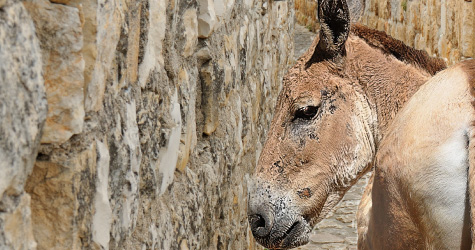
             When Balaam was riding his ass (pun intended) on his way to Moab to curse the Israelites, an angel of the Lord with a sword drawn stationed himself on the road to hinder him from proceeding. He did not see the angel but his ass saw the angel that she turned into the field.  Balaam beat his ass to bring her back on the road.  As they passed through a narrow lane between vineyards with a stone wall on each side, the ass saw the angel of the Lord again blocking their way that she shrank against the wall and squeezed Balaam’s leg onto it.  Again, Balaam did not see the angel that he beat his ass for backing out.  Upon reaching a passage so narrow without any space to move either to the right or the left, the ass again saw the angel of the Lord blocking their road.  The ass cowered under Balaam and in his anger, beat her again with his stick.  God opened the mouth of the ass to speak, asking Balaam why he would always beat her despite her services to him?!  It was during his conversation with his ass that God opened the eyes of Balaam to see His angel and get His message to bless the Israelites (cf. Num. 22:20-35).
           Is Baguio City a modern Moab with its new law prohibiting “cursing, cussing, expressing insults or the use of foul language to express anger or any other extreme emotion in establishments frequented by students, from pre-school to college level”?

I have always loved and admired Baguio City in its efforts to keep its morals intact despite the growing lamentable practice of many Filipinos these days of spending Holy Week vacationing there instead of praying in their homes and parishes.  It is perhaps the only city with a law calling on all people to pause during the Angelus.  And now, it is the only city too that prohibits the use of foul language.  Members of its city council have noted in their Anti-Profanity Ordinance how the habit of cursing has “already penetrated schools and educational system, business establishments and society as a whole, that even the very fabric of morals and human decency has deteriorated to such a degree that we have to prevent it before the damage would become irreparable.”  It defined profanity as “blasphemous or obscene language vulgar or irreverent speech or action; expletive oath, swearing, cursing, or obscene expression usually of surprise or anger.”

             Baguio City is deteriorating fast and though this Anti-Profanity Ordinance does not address anything at all in improving environmental conditions there, it shows us that unless we first cleanse whatever is within us, these are reflected with the problems around us.  “Ex abudantia cordis” is the Lord’s reminder to us all, “from the fullness of the heart the mouth speaks” (Matt. 12:34).  Though the ordinance is not really clear in its scope and purpose expressed only in three pages of paper, it is a good reminder that whatever is evil and bad would always be evil and bad, with or without any written law.  To curse or speak ill of anybody, wishing evil or harm to someone is always bad.  And despite the claims by the defenders of the President that saying bad words does not make anyone entirely bad, recent events have shown exactly the opposite of their claims, that anyone speaking of good things does not make him or her good at all.

             On Halloween day which the benighted souls have insisted on celebrating the pagan way by dressing as ghosts, actor and former tourism official Cesar Montano’s selfie with a naked woman at the background went viral and spawned many spoofs.  How I wish I have the vocabulary of Nabokov but I could not find the proper English words to describe those videos that are salaula, baboy, and kadiri!  And of course not to forget during the long weekend is the President’s usual dose of follies of the highest level when he spewed his usual profanities against the Church and the All Saints’ and All Souls’ Day celebrations, a day after calling on the nation to “emulate our saints, pray for the eternal repose of souls and deepen our engagement with our communities as we work for real and lasting change.”  Not contented with the foul language, the President even declared himself a saint.

             Blessing is from the Latin term benedicere that literally means “to speak or say good things.”  To wish somebody “God bless you” in the midst of a malicious situation, in a life far from being a blessed one or simply just because as in “wala lang” is not only a profanity but also a blasphemy. Of course, priests who are supposed to be channels of God’s blessings commit the highest level of profanity and blasphemy if they lead lives of sin and corruption, abusing not only children and women but the entire people of God, including God Himself.  This is what the anti-profanity law of Baguio is missing, skipping that portion on who should not use obscene language.  The evil of foul language is similar with pornography:  it is always immoral regardless of age because it is a lack of respect to the dignity of persons.

Why-Was-God-Mad-at-Balaam--JM2

              The story of Balaam and of his ass reminds us that we are all a blessing to everyone.  Listen to what the donkey told Balaam:  “What have I done to you that you should beat me these three times?  Am I not you’re your own beast, and have you not ridden upon me until now?  Have I been in the habit of treating you this way before?” (Num.22: 28, 30)   How ironic that the dumbest creature in the universe was the one to remind Balaam and us that we should never treat badly and speak ill of anyone because we are all a blessing to everyone.  Most of all, the talking donkey of Balaam reminds us how blessings can turn into a curse someday and curses could eventually be a blessing too.  It has happened so many times in history, not only to nations and corporations but even in the Church that is still rocked by sexual scandals committed long time ago.  The early Christians have depicted the story of Balaam and his ass in their early arts like in the Roman catacombs (photo above) and in some churches in Europe to show how God works in mysterious ways, especially with the power of our words to bless, or to curse. Be a blessing!

*Photos from Google.