Blessed be God forever!

The Lord Is My Chef Simbang Gabi Recipe, 24 December 2019

2 Samuel 7:1-5, 8-12, 14, 16 ><)))*> <*(((>< Luke 1:67-79

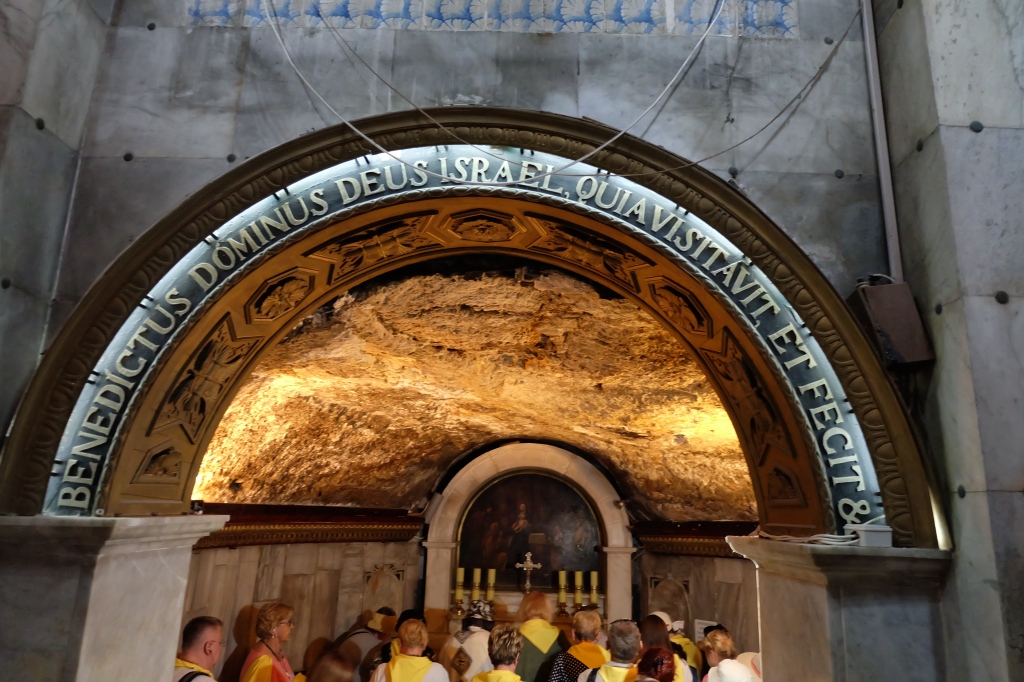
Marker on the Church where St. John the Baptist is believed to have been born in Ein Karem, Jerusalem. Photo by author, May 2019.

At last!

These are most likely the two words we must be saying today on this ninth day of our Simbang Gabi.

Finally, we have completed the nine day novena to the birth of our Savior Jesus Christ for tonight will be Christmas.

But, more than being the last day of our novena, today is also the beginning of better days ahead for us all starting with Christmas!

From this day on, let us imitate Zechariah in his new found faith, hope and love in God expressed in his song of praise and thanksgiving after recovering his sense of hearing and speaking after nine months of forced silence.

“Blessed be the Lord, the God of Israel, for he has come to his people and set them free. He has raised up for us a mighty Savior, born of the house of his servant David.”

Luke 1:68-69

Sunrise at the Lake of Galilee, the Holy Land. Photo by author, May 2019.

Three canticles of praise, three prayers of faith

Popularly known as the Benedictus from its Latin opening verse “Blessed be God”, this is the second of the three canticles St. Luke tells us Zechariah had sang after naming his son “John”.

The other two songs are the Magnificat by Mary during her Visitation of Elizabeth and the third is the Nunc Dimittis by Simeon upon seeing the child Jesus during his presentation at the Temple of Jerusalem.

These canticles or songs make up the beautiful Christmas story by St. Luke who put them onto the mouths of Mary, Zechariah, and Simeon to signify their being filled with the Holy Spirit in experiencing the coming of Jesus Christ: Mary sang “my soul proclaims the greatness of the Lord” during the Visitation in response to the praises by Elizabeth (Lk.1:46-55) while Simeon the prophet prayed to God to “let him go in peace” – to die – after seeing the coming of the Savior (Lk.2:29-32).

These eventually became part of the prayers of the Church (Liturgy of the Hours) we priests and religious are obliged to pray day in, day out:

  1. Benedictus in the morning to show how willing are we to face the new day by making our Savior Jesus Christ present in our lives like St. John the Baptizer, his precursor;
  2. Magnificat in the evening to praise and thank God in working his salvation in us through Jesus Christ;
  3. Nunc Dimittis at night before bedtime to signify our readiness to die and finally be one with God in Jesus Christ.

They are our “spiritual vitamins” that fill us with the Holy Spirit to strengthen and deepen our relationship with the Father in Jesus Christ which every Christian may pray too to experience and be one with God daily.
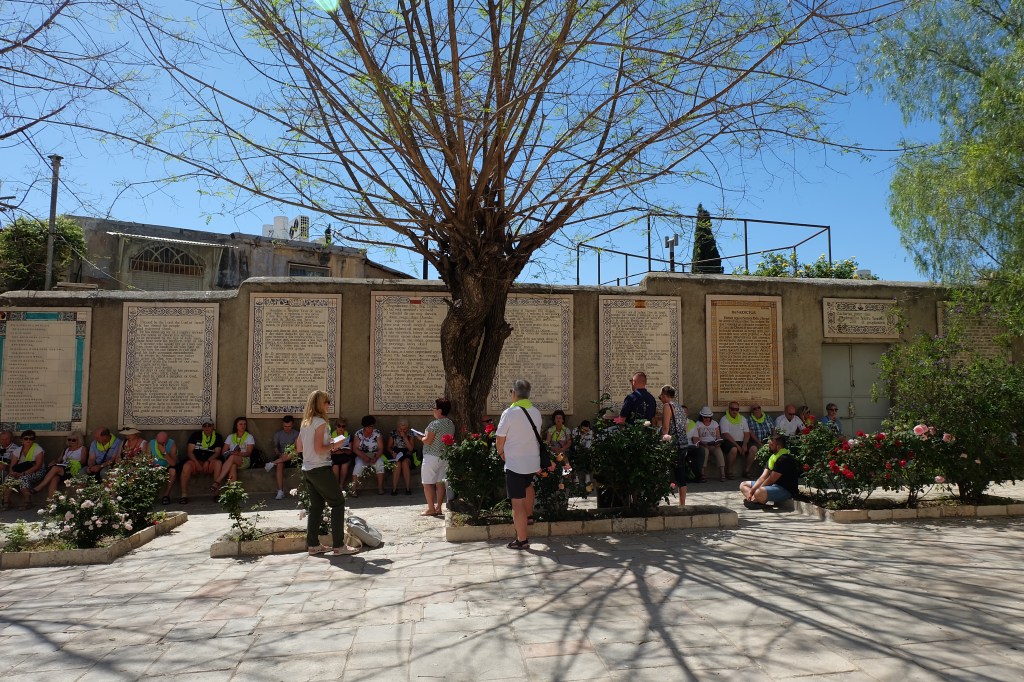
Pilgrims waiting outside the Church of St. John the Baptist in Ein Karem, Jerusalem. On the walls are the translation into different languages of the world, including Filipino, of Zechariah’s Benedictus. Photo by author, May 2019.

Why God is blessed according to Zechariah

The Benedictus signifies Zechariah’s coming to full circle after nine months of forced silence after doubting the angel’s message that he and Elizabeth would finally have a son.

Our sacristy, Advent 2019.

In singing the Benedictus, Zechariah did not only recover his power of speech but most of all showed the fruits of his nine months of silence and prayer preparing for the birth of his son John as well as, ultimately, for Christ’s coming (his song indicates it).

Finally, Zechariah has been healed of his pains and hurts that prevented him in experiencing God, in believing in his powers again, giving him more reasons to hope and be joyful.

This is the reason we also have the Advent Season when we try to dispose ourselves more to Christ’s coming to us not only at Christmas but everyday in our lives.

Zechariah mentions three powerful verbs why he praised God: for he has come to his people, set them free, and has raised up a mighty Savior.

God has come to us

Zechariah first experienced God coming to him when the angel announced to him John’s birth while incensing at the temple during the Day of Atonement. Unfortunately, he was “absent” at God’s “presence” that he questioned how Elizabeth would bear a child.

Everything now changes not only because he had seen his own son but he himself experienced God’s coming in his life.

Sometimes, our pains and hurts, frustrations and disappointments, defeats and failures blind us, numb us that we cannot see, we cannot experience God coming to us in every brand new day he gives us, through the people we meet with their smiles and greetings, with our family and friends who have have stayed with us in good times and bad.

Every morning we wake up to reminds us God has come to us. Rise and meet him in joy, entrust the new day to him, and ask for the grace to remain in him!

God has set us free

Every time God comes, there is always freedom – freedom from evil and sin, freedom from the past and all its pains and hurts, freedom from guilt feelings, freedom everything that prevents us from being truly free to be our own, good sel, to be free and faithful to love and forgive others too.

Carmelite Monastery, Guiguinto, Bulacan. Photo by author, November 2019.

Literally speaking, Zechariah felt free again to speak and express himself fully. But more than that is the experience to go and live fully in God.

We can never experience Christmas if we cannot assert this freedom Christ had won for us when he died on the Cross. Forget all those “hugot” lines and move forward with life.

The name of God is “I AM” because he is always in the PRESENT, never in the past nor in the future.

That is why each new day is a gift, a present from God who as set us free from yesterday’s mistakes and failures and sins.

Go and be free for God!

God has raised up for us a mighty Savior

Christmas is not a date but an event, a person we experience in Jesus Christ who is a dialogue himself according to Pope Emeritus Benedict XVI. Jesus is always communing with us, inviting us to be one in him in his love.

In his Benedictus, Zechariah is also professing the saving work of God in Jesus Christ who became human like us in everything except sin. God is so blessed because of his great love for us, he chose to enter, or intervene into human history to bring us into eternal life by faith in Christ Jesus.

To raise up is a strong term also indicating the Paschal mystery Christ will go through, the ultimate communion of God into our own lowliness of suffering and death to bring us into the glorious victory of his resurrection.

Every morning, every day we are reminded by Zechariah of the words of the angel Gabriel to Mary regarding the birth of John: nothing is impossible with God.

And Zechariah had experienced this first hand when his barren and old wife Elizabeth conceived their child John.

May we have a renewed faith, hope and love in God at the closing of our Simbang Gabi this year. Like David in the first reading, rest be assured of God’s plan for each of us. Let us be patient to wait and prepare always for his coming like Zechariah even in his old age. Amen.

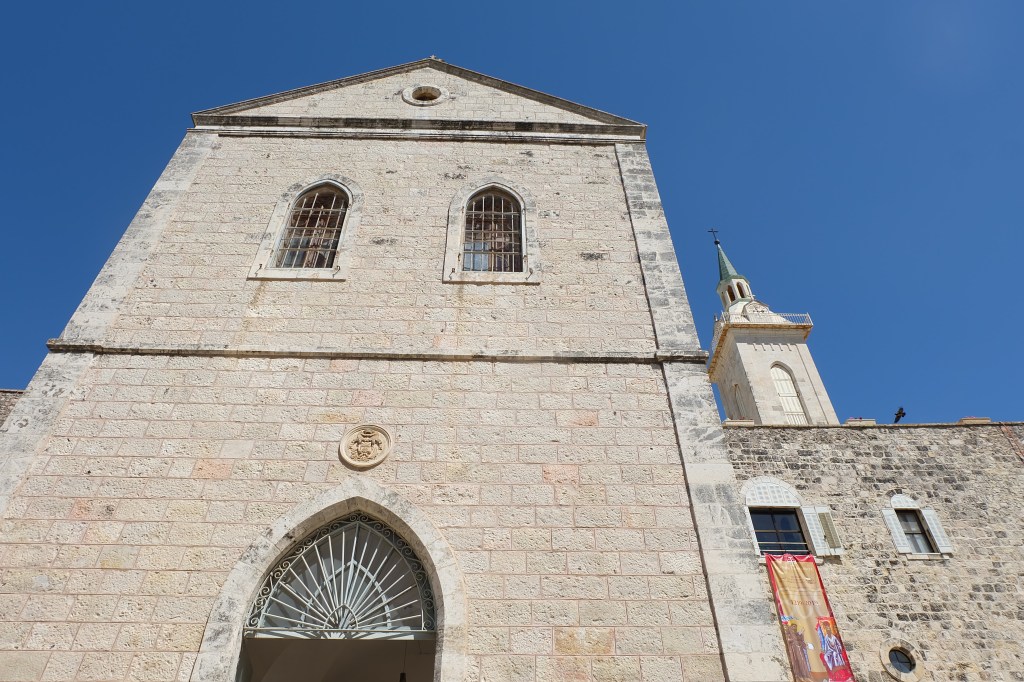
Birthplace of St. John the Baptist at Ein Karen, Jerusalem. Photo by author, May 2019.

God is gracious

The Lord Is My Chef Simbang Gabi Recipe, 23 December 2019

Malachi 3:1-4, 23-24 ><)))*> ><)))*> ><)))*> Luke 1:57-66

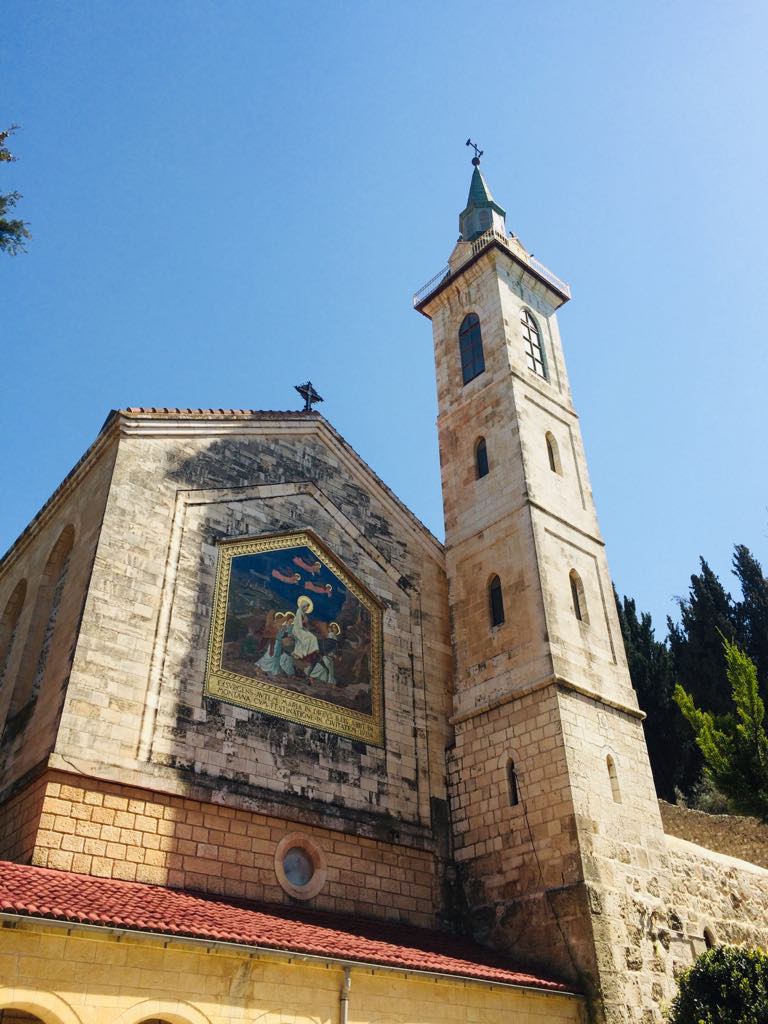
Facade of the Church of St. John the Baptist in Eim Karen where the precursor of the Lord was born. Not to be confused with Church of the Visitation at its other side in the same town. Photo by author, May 2019

Two days before Christmas, St. Luke brings us back to the continuation of his first story about Christmas: the birth of John the Baptizer.

When the time arrived for Elizabeth to have her child she gave birth to a son. Her neighbors and relatives heard that the Lord had shown his great mercy toward her, and they rejoiced with her. When they came on the eighth day to circumcise the child, they were going to call him Zechariah after his father, but his mother said in reply, “No. He will be called John.” But they answered her, “There is no one among your relatives who has this name.” So they made signs, asking his father what he wished him to be called. He asked for a tablet and wrote, “John is his name,” and all were amazed. Immediately his mouth was opened, his tongue freed, and he spoke blessing God.

Luke 1:57-64
Site where St. John the Baptist is believed to have been born. Photo by author, May 2019.

Where is God leading me?

Christmas is almost here. And it is not yet too late in these last two days of Advent that we try some “last ditch efforts” to spiritually prepare ourselves for this joyous season by asking just one question following the story of John’s birth:

“Where is God leading me?”

See the artistry of St. Luke, at how he began his Christmas story with the annunciation of the birth of John to his father Zechariah while incensing the Holy of Holies of the Temple in Jerusalem.

He doubted the good news and he was silenced by the angel until John was born.

Today, after three days, or nine months to be exact, St. Luke brings him back into the scene set free from his punishment. Zechariah was able to speak again when he concurred with his wife’s desire to name their child John by writing it on a tablet.

The name John in Hebrew is Jehohan which means “God is gracious” or “graciousness of God”.

Advent and Christmas are a story of how each one of us is a John, a graciousness of God, of us people so blessed by God to fulfill his promise of salvation in Jesus Christ.

But do we realize the many blessings we have from God?

The other night I saw an interesting post on Facebook from one of my former students in high school. It was from a woman sharing her experience while waiting in line at an ATM that has now gone viral.

She claimed that at first, she felt so bad at what was taking three people so long at the ATM to withdraw their cash. But when she got nearer, she overheard their conversations.

It turned out the three were given a bonus of Php 2000.00 each by their boss.

And they were extremely happy, so thankful, telling each other how they would prepare spaghetti and fruit salad on Christmas eve!

And the woman who posted the photo realized how those simple folks were so thankful for Php 2000.00 bonus when she and others like her who get more than that amount still complain?!

Very nice reflection!

Advent gives us four weeks to remember God’s graciousness to us this past year. The bountiful blessings we have had which we take for granted. Worst, we even complain with!

Altar of the Church of St. John the Baptist, Israel. When we came there last May, it was being closed for major restorations expected to last for years.

Whenever we see and count our blessings, do we ever thank God and ask him too where he is leading us to?

Zechariah was already old, had a great chance of incensing the Holy of Holies at their most important feast, doubted God’s grace but eventually still received it after nine months of silence.

By his action, Zechariah had shown how he had grown in faith during those nine months of “forced silence”, of how he had start to believe again in God, hope again, and practically live life anew!

Tremendous graces in just nine months being silent. Imagine that.

And we can have more grace today until tomorrow being silent, reflecting, praying as we count one by one the many blessings we have received this year.

Call it ageing gracefully, a grace in itself wherein as we grow old, we continue to find direction in life, we continue to find God leading us to him, for a specific mission to fulfill.

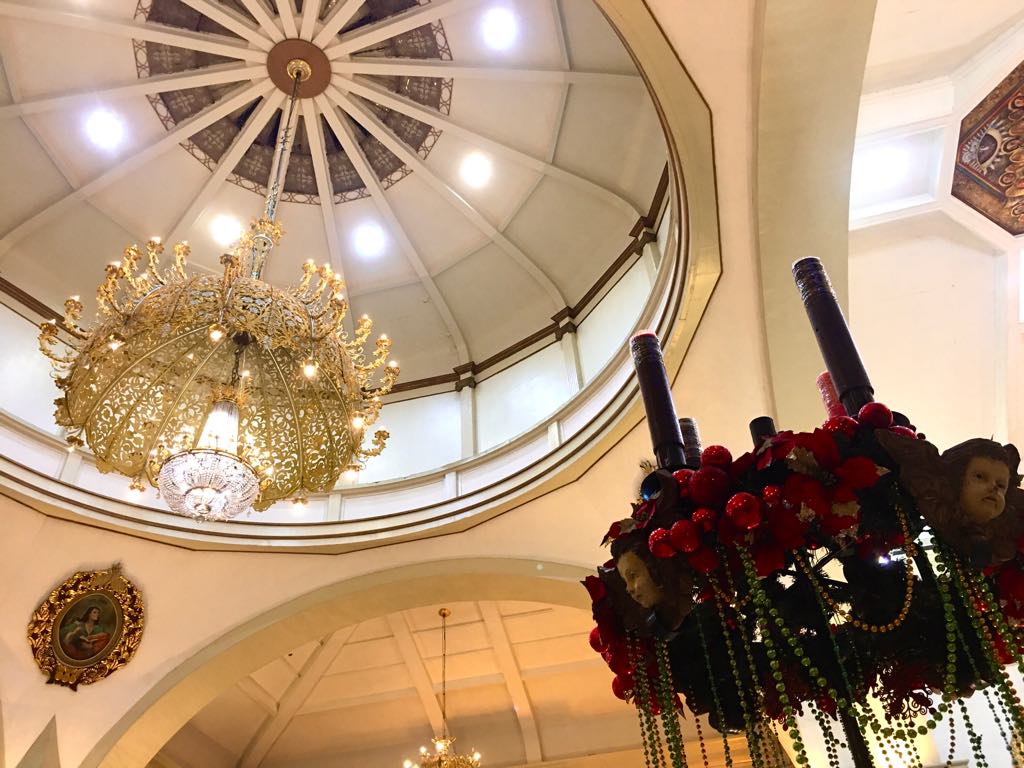
Dome of the Church of St. John the Baptist in Israel. Photo by author, May 2019.

Yesterday we have reflected that we are like St. Joseph entrusted with a special mission from God. That God “needs” us to bring Jesus, to care and protect Jesus here in the world. Each of us has a special part or role to play in God’s Divine plan in Jesus Christ.

Never lose hope in life. No matter what is our situation in life, God continues to work in us, working for us, inviting us to work with him.

It is interesting to know that the name Zechariah means “God remembers” while Elizabeth means “God has promised or vowed”.

If their names are brought together, we can see the complete picture why St. Luke started his Christmas story with Zechariah, Elizabeth, and John and not with Jospeh or Mary right away: they all mean “God is gracious because he remembers his promise always”!

May we always trust God and ask him where he is leading each of us this Christmas no matter what is our status in life. Amen.

Advent is finding our mission anew

The Lord Is My Chef Sunday Recipe, Advent IV-A, 22 December 2019

Isaiah 7:10-14 ><}}}*> Romans 1:1-7 ><}}}*> Matthew 1:18-24

Dome of the Malolos Cathedral Basilica, Advent 2019. Photo by author.

We are now at the Fourth Sunday of Advent, the final week of preparations for Christmas happening in about three days. And we go back to the gospel of Matthew to reflect anew on the annunciation of Christ’s birth to Joseph.

This is how the birth of Jesus Christ came about. When his mother Mary was betrothed to Joseph, but before they lived together, she was found with child through the Holy Spirit. Joseph her husband, since he was a righteous man, yet unwilling to expose her to shame, decided to divorce her quietly. Such was his intention when, behold, the angel of the Lord appeared to him in a dream and said, “Joseph, son of David, do not be afraid to take Mary your wife into your home. For it is through the Holy Spirit that this child has been conceived in her. She will bear a son and you are name him Jesus, because he will save his people from their sins.” When Joseph awoke, he did as the angel of the Lord had commanded him and took his wife into his home.

Matthew 1:18-21,24

As we look toward the coming Christmas Day, the story of the annunciation to Joseph invites us to examine ourselves, to look inside and look back through the years what have we done to bring Jesus Christ into the world like him.

Though Advent celebrates God’s fidelity and constancy in fulfilling his plan of salvation for us through Jesus Christ, this coming involves a human setting among us in the present time to realize its fulfillment.

Dream of St. Joseph (oil on canvas) by Spanish painter Francisco Goya via Google.

St. Joseph’s mission, our mission too

When the angel appeared to Joseph in his dream, it was not so much to explain to him about Mary’s virginal conception but to reveal to him his mission. Very clearly, Mary’s conception of Jesus is absolutely extraordinary, a mystery directly from God himself.

And that is how it is with life: there are certain things we simply have to let ourselves be wrapped by mystery than to unravel or explain it.

Like the Blessed Virgin Mary whom he loves so much, Joseph believed in God, agreeing to what was asked of him that upon waking up, he obediently did everything the angel had instructed him.

Joseph’s acceptance of Mary and of his role in giving name to Jesus brings to an end the genealogy of “Jesus Christ, son of David, son of Abraham” because in the Jewish society, it is the father who bears much weight in recognizing one’s child.

Here we find the crucial and critical importance of Joseph’s mission in giving name to Jesus, in taking Mary as wife: it is through his “fatherhood” that Christ comes into the world as a person, and most of all, as fulfillment of God’s promise made to Abraham and David.

Last Tuesday we have reflected how through Jesus Christ’s coming we now trace our genealogy and roots with God in faith. As children of our loving Father, we too are now entrusted with the same mission like Joseph to bring Jesus Christ into the world in our own time and history.

Altar of the Chapel of St. Joseph beside the Basilica of the Annunciation in Nazareth. Below the chapel are the ancient ruins of the home and shop of St. Joseph where he took care of Mary and Jesus. Photo by author May 2017.

Called to obedient faith

Salvation history continues and it is our duty to find our proper place in God’s plan like Joseph. The story of Christmas continues to our time that is why we have this Advent Season of preparation.

God has not diminished that great honor and privilege given to Joseph then and to us now of having an irreplaceable role in bringing Jesus into the world but this time, not through dream or voice of an angel. God continues to call us like Joseph to bring his plan of salvation in Jesus into fulfillment through our obedient faith through the Sacred Scriptures, the Church in her teachings and most of all, through the many situations and people we encounter in life.

We have to believe and accept this reality that “God needs us”, that the “baby Jesus” wants us to care for him, to give him a name so that “his glory would be eventually revealed for mankind to see the saving power of God” (communion antiphon of Christmas Eve).

St. Paul beautifully tells us in the second reading a very basic profession of faith affirming Jesus Christ as the Son of God descended from David through Joseph according to the flesh (Rom.1:1-4).

Through Jesus, we are called to “bring about obedience of faith” to spread this “good news to all Gentiles” or peoples of the world that they may honor and worship the Lord.

And the good news is this: despite or many flaws and weaknesses, all he needs is our complete faith and surrender to him like St. Joseph. It is Jesus Christ who shall provide us with the strength to fulfill this mission just like what he did to St. Joseph.

From Aleteia, 18 December 2019.

Hail to the fathers and men too

Last December 17 as the whole Church was proclaiming the gospel from Matthew on the genealogy of Jesus Christ, Pope Francis celebrated his 83rd birthday when he was presented with a unique Nativity scene called “Let Mum Rest” with St. Joseph taking care of the infant Jesus while Mary slept.

It went viral, and again, another unique imagery of the beloved St. Joseph courtesy of Pope Francis, a devotee of the Lord’s foster father. When he came to visit the Philippines in 2015, he narrated how he would pray to the sleeping St. Joseph and it became viral in the country.

And now this new image of St. Jospeh babysitting.

It is a very timely image at this time when there is a crisis in fatherhood, when many fathers have to make the difficult choice of leaving their families behind to work in distant places, often foreign countries just to earn decent living.

A crisis when fathers forget caring and loving their families because of the many demands of a high cost of living that along the way, they fall into many traps that sometimes make them forget their vows of marriage.

We need to pray hard for fathers and men. They too are blessed by God like St. Joseph.

We need to pray hard for fathers and men to help them remain upright like St. Joseph.

When Jesus began his ministry, he taught us the “Our Father” to show us that God is like a father because life comes from him. It is from the father that we receive the seeds of life with that genetic code called “DNA”. This is the reason why it is the father who gives name to the child at baptism like St. Joseph to Jesus.

Secondly, Jesus called God “our Father” because he is the one who protects and keeps life from dangers. He must have experienced this from St. Joseph who brought them to Egypt when Herod ordered the massacre of Holy Innocents after the visit by the Magi in Bethlehem. Fathers are often strict with children because he wants to ensure their safety.

Most of all, Jesus called God “our Father” because he is the one who brings back life to those who have lost it like the merciful father to his prodigal son (Lk.15).

How many times did our father saved us from scolding and punishment by our mother, from the simple misdemeanors to grave offenses like going wayward in life? It is often the father, ironically, despite his being strict and disciplinarian, who also has the softest heart for the prodigal child.

May St. Joseph help us men to be man enough to be faithful to God and loved ones to make everyone feel the love and mercy of the Father in heaven as revealed to us by Jesus Christ. Amen.

Blessed are the women!

The Lord Is My Chef Simbang Gabi Recipe, 21 December 2019

Zephaniah 3:14-18 ><)))*> ><)))*> ><)))*> Luke 1:39-45

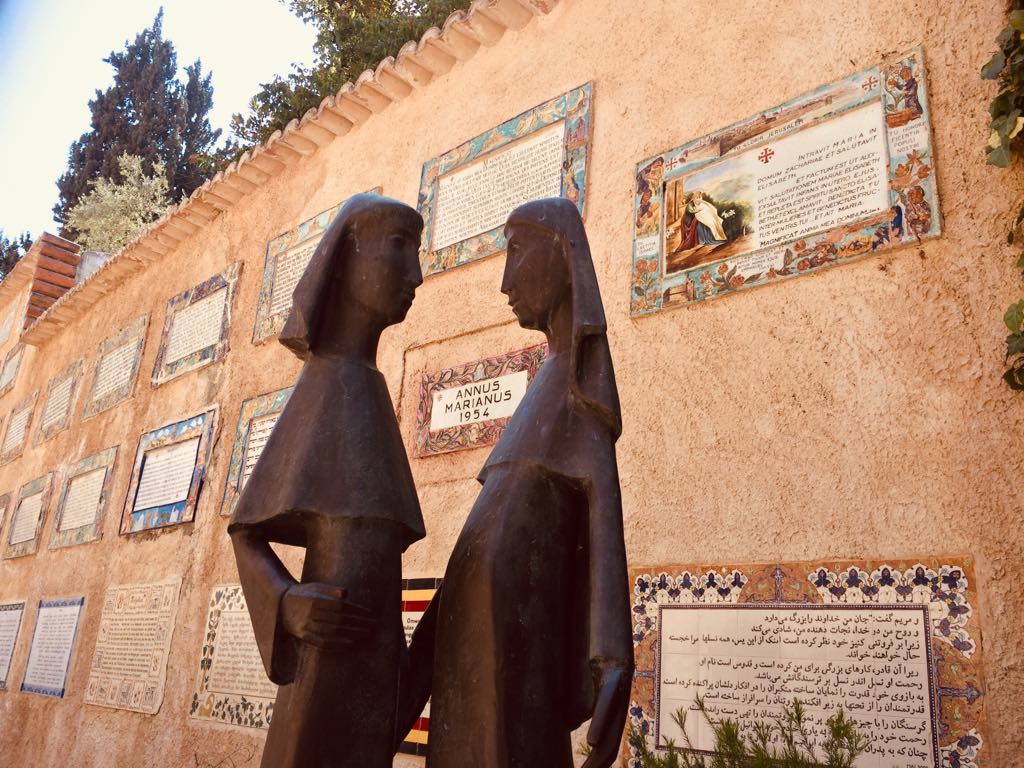
Bronze statues of Mary and Elizabeth fronting the Church of the Visitation in Judah; inscriptions on the wall are Mary’s “Magnificat” in different languages including Filipino. Photo by author May 2017.

For most Filipinos, being “blessed” (mapalad) and “lucky” (suwerte) are often used interchangeably because they both mean the same which is being fortunate. And most of the time, we mean blessedness as being endowed with wealth and material things.

Anyone with a stable job or a flourishing career or a growing business with at least a car and a house and lot is always considered as blessed. If you go big time or have made it to the top, then you are most blessed!

Parents who have put all their children through college, especially in expensive and exclusive Catholic schools and universities are also considered blessed in our culture that puts a high premium on education.

For most of us Filipinos, being blessed means to be financially stable and secured with some degrees of fame and accomplishments.

But our gospel today says nothing about these things as being blessed. Fact is, nowhere do we find in the Bible, especially in the gospel accounts where Jesus tells us that financial viability is a blessing. On the contrary, his teachings teem with a lot of moral aspersions against reliance and worship of money and material wealth.

True blessedness is having faith in God, believing that his words would be fulfilled!

Church of the Visitation, the Holy Land. Photo by author May 2017.

Mary set out in those days and traveled to the hill country in haste to a town of Judah, where she entered the house of Zechariah and greeted Elizabeth. When Elizabeth heard Mary’s greeting, the infant leaped in her womb, and Elizabeth, filled with the Holy Spirit, cried out in a loud voice and said, “Most blessed are you among women, and blessed is the fruit of your womb. And how does this happen to me, that the mother of my Lord should come to me? Blessed are you who believed that what was spoken to you by the Lord would be fulfilled.”

Luke 1:39-43, 45

Conversations between women

The Bible rarely records conversations exclusively between women. And even less frequent in the Bible is a conversation between two pregnant women that makes St. Luke’s account of the Visitation unique in itself.

For St. Luke, this encounter and exchange is significant because here are two women who bore a child in the most miraculous manner. Observe that St. Luke never used the word “pregnant” to describe the two women but simply told us that it is obviously the situation of both Elizabeth and Mary.

Exegetes explain St. Luke may have never used the term “pregnant” to emphasize to his readers God’s powerful grace on the two women in bearing a child: Elizabeth in her old age and barrenness and Mary in her youth and virginity.

What is most remarkable here is the way the two women were so “absorbed” in their conversation that one can imagine the “holy ground” they were standing so filled with Divine presence with the Holy Spirit hovering above them as two great souls met to honor God!

Even now if you go on a pilgrimage to the Church of the Visitation in Ein Karem, you can still experience that serenity and joy both women must have experienced on that hallowed ground.

Left painting on the dome is the Visitation while the other at the right is a depiction of how the angel saved St. John the Baptizer with St. Elizabeth from the murder of Holy Innocents ordered by Herod after learning the birth of Jesus Christ. Photo by author, May 2017.

True Blessedness

St. Luke tells us a lot of stories about “blessings” in his gospel account like here at the Visitation.

The most significant of these story of blessings is found in Luke 11:27-28 when Jesus was preaching, “a woman from the crowd called out and said to him, ‘Blessed is the womb that carried you and the breasts at which you nursed.’ He replied, ‘Rather, blessed are those who hear the word of God and observe it.'”

And that “blessed one who hears the word of God and observes it” is none other than his own Mother, the Blessed Virgin Mary, the first and par excellence “Doer-of-the-Word” for St. Luke!

Here at the Visitation, Elizabeth became the first human person, a woman, to call Mary “blessed” – the first of many disciples from future generations who will address the Blessed Mother in this manner as proclaimed by Mary herself in her Magnificat, “from now on will all ages call me blessed” (Lk.1:48).

Mary blessedness is primarily due to her faith and trust in God’s word spoken to her by the angel Gabriel. Unlike Zechariah, Mary right away submitted herself to the will of God by asking “how can this be”, indicating her deep faith.

Mary’s faith makes her a model disciple whom we must all imitate in following and believing Jesus Christ our Savior.

Likewise, Elizabeth can also be considered as a model disciple to us all because she believed and recognized the coming of the Christ by calling Mary “the mother of my Lord” (Lk.1:43). And again, holds the distinction as the first person and woman in St. Luke’s gospel to call Jesus “Lord”.

Here we find again the story of the Visitation that true blessedness and holiness is to be filled with God like St. Joseph the other day.

The Immaculate Conception at the Cathedral Basilica in Malolos City. Photo by author, December 2019.

In praise of the women of the world, man’s part-ner

Another beautiful trait of St. Luke’s gospel account is it emphasis on the important roles of women not only in the spread of the Gospel but most especially in the world. He is the first champion of women’s rights, next only to Jesus Christ.

In narrating to us this brief story of the Visitation, we rediscover the beauty and blessedness of womanhood – and that is the celebration of Messianic age. Mary and Elizabeth are great women because of their faith, we now celebrate Advent and Christmas.

They both brought Jesus Christ into the world, something that women always do until now, especially mothers who faithfully teach and form their children to become good and faithful Christians.

Both women are a testament to Isaiah’s portrayal of God as a woman who is like faithful mother:

“Can a mother forget her infant, be without tenderness for the child of her womb? Even should she forget, I will never forget you.”

Isaiah 49:15

Christmas is a beautiful reminder to us all of the very noble and important role of women in the world that unfortunately many of us, especially men, have continually refused to accept or ignored since the Fall of Adam and Eve.

In Genesis, we find God declaring “let us make man a suitable partner.”

And he created the woman, a part-ner of man, taken from one of his ribs because she is equal in dignity with him, created in the image and likeness of God. In fact, she is the most beautiful of his creation, being the last and most perfect!

During his recent concert in the country, U2’s Bono praised the women and human rights activists in the country, dedicating to them their song “Beautiful Day”.

“Human rights drown out human wrongs, that’s a beautiful day. When sisters around the world go to school with their brothers, that’s a beautiful day. When journalists don’t have to worry about what they write, that’s a beautiful day. When women of the world unite to rewrite history as herstory, that is a beautiful day.”

Bono from news reports

Because of Mary and Elizabeth, we now have that beautiful day of the year, Christmas that led to the most beautiful day of all, Easter.

In a fitting rejoinder to our gospel today, another woman the other day gave us a beautiful day to celebrate justice and democracy in the country when Quezon City RTC Judge Jocelyn Solis-Reyes convicted Datu Andal Ampatuan Jr. and other members of his influential clan for the murder of 57 people in the Maguindanao massacre that happened ten years ago.

Throughout history, we have seen that it has always been the women who make it happen for us all to have a beautiful day because they are the ones who bring life, who nurture life, who deepen life.

Let us make each day more beautiful by loving and caring always especially for those special women in our lives who have shown us the beauty and meaning of life, beginning with our own mother. Amen.

Photo by Mr. Jim Marpa, 2019.

Transforming presence of God

The Lord Is My Chef Simbang Gabi Recipe, 20 December 2019

Isaiah 7:10-14 ><)))*> ><)))*> ><)))*> Luke 1:26-38

Manor House, Camp John Hay, December 2017. Photo by author.

One reason Christmas is the most favorite time of the year is its colors. From houses to malls and almost every building, one can find a spectacular display of different colors and lights that brighten everyone.

But everything changes when one enters the church.

Advent is so different. Color is violet near the deep blue shade to signify the importance of conversion and penance that lead into transformation while the colors of the world found in malls are about money and material things.

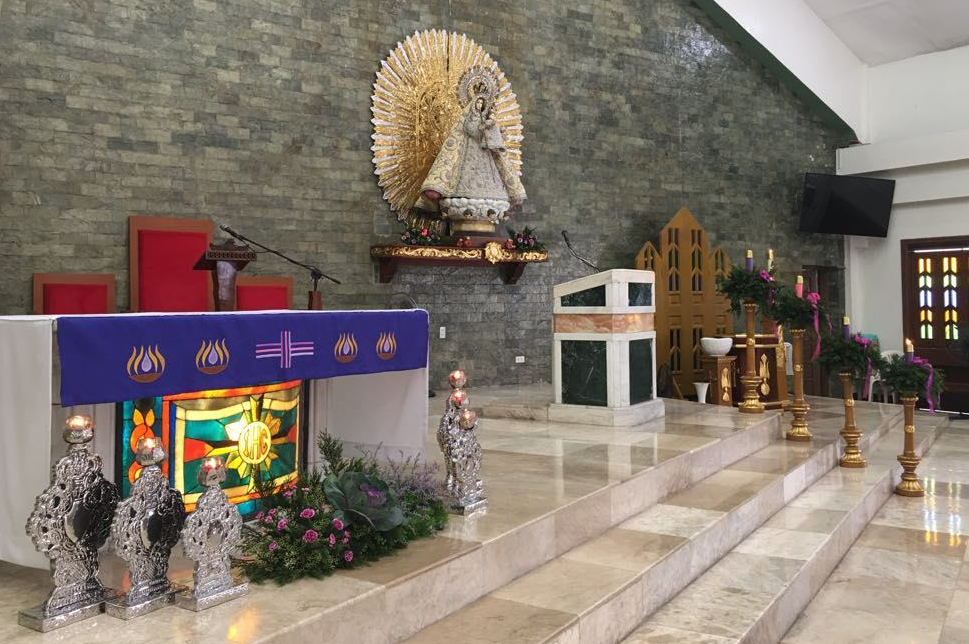
Our parish sanctuary area, Advent 2019.

God takes initiative

We have seen yesterday in St. Luke’s first Christmas story how God entered through human activities and history for the coming of Jesus Christ by first announcing the birth of his precursor, St. John the Baptizer.

But today, in his second Christmas story which is the Annunciation of the birth of Jesus to the Blessed Virgin Mary, St. Lukes shows us how God is now acting on his own. Of course, God always takes the initiatives in life being the “prime mover”.

But in announcing the birth of Jesus, God went “out of his way” so to speak to bring us this tremendous grace of Christmas as he would always do in many instances in our lives.

In the sixth month, the angel Gabriel was sent from God to a town of Galilee called Nazareth, to a virgin betrothed to man named Joseph, of the house of David, and the virgin’s name was Mary. And coming to her, he said, “Hail, full of grace! The Lord is with yo.” But she was greatly troubled at what was said and pondered what sort of greeting this might be. Then the angel said to her, “Do not be afraid, Mary, for you have found favor with God. Behold, you will conceive in your womb and and bear a son, and you shall name him Jesus .”

Luke 1:26-31
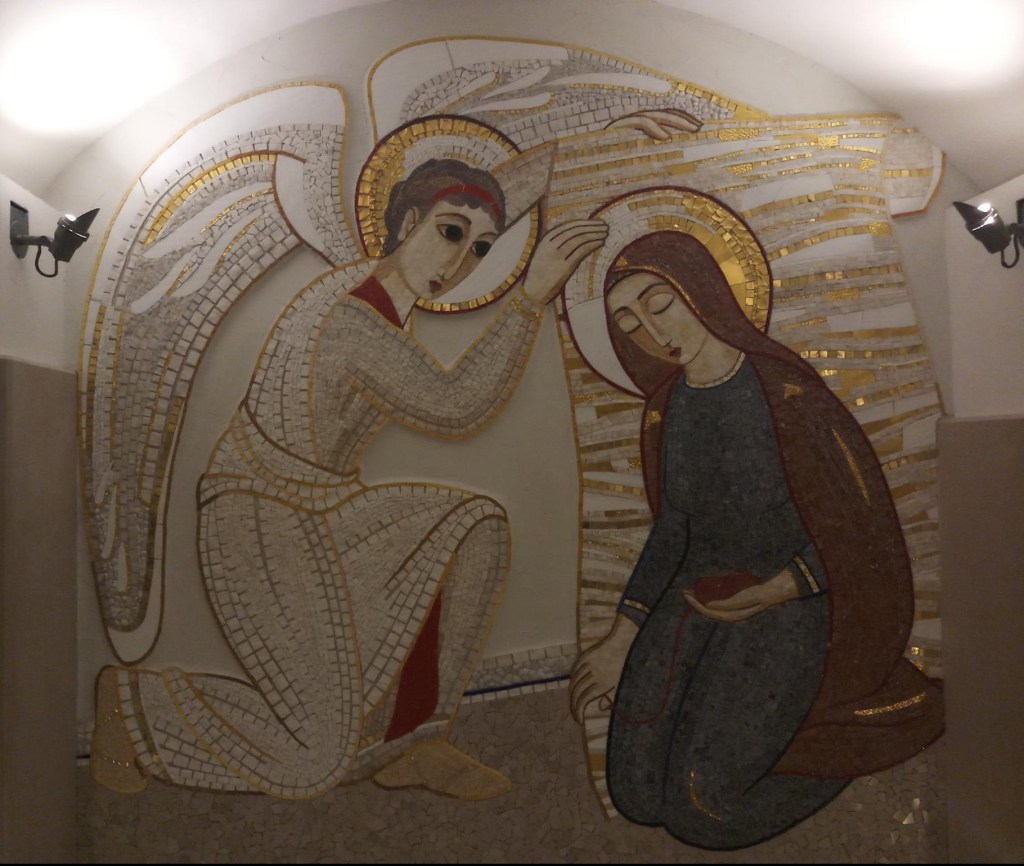
Mosaic of the Annunciation to Mary at the Shrine of St. Padre Pio at Rotondo, Italy. Photo by Arch. Philip Santiago, 2018.

So different from yesterday’s story of the annunciation of the birth of John the Baptizer to Zechariah, let us see how God took the initiative in the annunciation in the birth of Jesus to Mary.

  1. Zechariah was a priest while Mary was a commoner. It was natural for God to work through his ministers but in choosing Mary an ordinary woman was something else not because of any special quality she had but simply because God is good. The angel clearly told this to Mary, “you have found favor with God”. God does not call the qualified but he qualifies the call!
  2. God used the setting of the Temple of Jerusalem in yesterday’s account because that is where he is supposed to dwell but today, everything happened in a very simple house in Nazareth, the only place of significance and importance in the New Testament never mentioned in the Old Testament. It was a place looked down upon by many like St. Bartholomew asking Philip, “can anyone good come from Nazareth?”
  3. There was a major feast going on, the Yom Kippur, with a lot of people present when Zechariah was informed of the birth of John; Mary was alone in her house when the angel came to announce to her the birth of Jesus on the six months after going to Zechariah.

Intense Presence of God and of Mary

Usually, as we have seen yesterday in the annunciation of the birth of John, God always acted in silence and hiddenness. He blends and flows with world history as well as with our own personal histories.

But, there are times even in our own experiences when God really pulls something extraordinary, a miracle to bless us, to save us.

That was the case in the Annunciation to Mary. God “freely acted on his own” for the good news to happen, regardless of whoever was the king of Judea or emperor of Rome. He set the stage and everything for the fulfillment of his plan of salvation for us.

And the very good thing here is we find a perfect congruence or an equilibrium wherein, God was intensely present and so was Mary.

In the annunciation of John’s birth, God was very much present answering the prayers of his parents but Zechariah was miserably absent, doubting the good news!

Mary said, “Behold, I am the handmaid of the Lord. May it be done to me according to your word.” Then the angel departed from her.

Luke 1:38

God is always coming to us in many instances and persons who come to our lives. Are we present to him?

Notice how she entered into a dialogue with the angel Gabriel in explaining how things would happen. She was so open and so absorbed too as if the Holy Spirit must have had a perfect landing on her that she became pregnant with Jesus!

It sounds funny but that was how it happened because tomorrow, we would hear St. Luke telling us how Mary hurriedly went off to see her cousin Elizabeth, meaning there was a transforming change that occurred in Mary right away!

And that is how God truly works – if we can be truly open like Mary with God’s intense presence, we can experience overnight conversion and transformation that we have heard experienced by many unbelievers, sinners, addicts of all kinds. All they could say was there was a very brief moment when they felt God so intensely present and boom! everything changed for the best.

Mary believed

Mary was not only open to God but most of all, she has always believed in him. See how St. Luke tells us after the Annunciation, “then the angel departed from her”, never to come again to inform her of special messages from God unlike St. Joseph.

After the Annunciation, Mary was left on her own in the sense that all she had was her firm faith in God through Jesus Christ her Son.

Mary believed in everything that was spoken to her! It was all she had up to the foot of the Cross when Christ died, when she waited with the apostles in Jerusalem for the Pentecost and in all her other apparitions later. She has always believed in Jesus her Son.

Today, we complain a lot of people no longer believing in God, leaving the Church, refusing to pray and celebrate the sacraments.

Perhaps it is about time for us to ask our very selves too, especially us your priests and pastors as well as the parents: do we truly believe what we are doing, what we are practicing as Catholics?

It is always easy to say we believe in God like King Ahaz in the first reading who refused to ask God for signs that Israel would be delivered from the advancing Babylonians.

It was merely a “show” because Ahaz had already entered into alliance with small kingdoms to fight the Babylonian invaders. He had never believed God or his Prophet Isaiah; hence, Israel was conquered and crushed as a nation, thrown into exile in Babylon for a long time.

A Filipino painting of the Annunciation to Mary on a wall facing the Basilica of the Annunciation in Nazareth. Photo by author May 2017.

God’s power and his intense presence can only work in proportion with the faith we have. This is what Jesus had told the apostles when they asked him to “increase their faith”: “If you have the faith the size of a mustard seed, you would say to the mulberry tree, ‘Be uprooted and panted in the sea,’ and it would obey you” (Lk.17:5-6).

In another instance, the apostles failed to cast away the demon possessing the son of a certain man. After Jesus had driven away the evil spirit, his apostles came to him in private to ask, “Why could we not cast it out? And Jesus said to them, ‘Because of your little faith'” (Mt.17:19).

Like Mary, let us believe wholly to God by giving our whole selves to him. Let us create a room in ourselves for God so he can be present in us and transform us like Mary. Amen.

Holy presence in hiddenness

The Lord Is My Chef Simbang Gabi Recipe, 19 December 2019

Judges 13:2-7, 24-25 ><)))*> ><)))*> ><)))*> Luke 1:15-25

The Walls of Jerusalem, May 2019. Photo by the author.

From St. Matthew, we now move to the Christmas story by St. Luke that starts in the temple of Jerusalem. And surprisingly, not precisely with Jesus or his parents.

In the days of Herod, King of Judea, there was a priest named Zechariah of the priestly division of Abijah; his wife was from the daughters of Aaron, and her name was Elizabeth. Both were righteous in the eyes of God, observing all the commandments and ordinances of the Lord blamelessly. But they had no child, because Elizabeth was barren and both were advanced in years. Once when he was serving as priest in his division’s turn before God, according to the practice of the priestly service, he was chosen by lot to enter the sanctuary of the Lord to burn incense. Then, when the whole assembly of the people was praying outside at the hour of the incense offering, the angel of the Lord appeared to him, standing at the right of the altar of incense.

Luke 1:5-11

We know what happened, of how Zechariah doubted the good news announced to him about the birth of his son John the Baptizer.

Many times in our lives, especially in this age of too much communications in the social media where everything is exposed, we hardly notice the best and nicest things in life happening in silence, mostly in hiddenness.

And the saddest part of this present reality is that it is God whom we miss in this “overexposures” we have in social media because he always comes to us hidden in the most ordinary and simple things in life.

Yesterday St. Joseph taught us the need to value silence and stillness in the Lord as an important lesson in facing life’s many adversarial situations.

Today we hear Zechariah forcibly silenced to experience the Lord’s power and grace, his very presence in fact.

An inside section of the remaining Walls of Jerusalem. Photo by author, May 2019.

God’s presence hidden in our time and space

Advent is the season that reminds us that God comes to us always hidden in our very time and space. Unless we know how to be silent and simple, we shall never experience the Divine presence that has covered the whole world ever since.

Of the four evangelists, St. Luke is the only one who claims to have “investigated everything accurately” about the life and teachings of Jesus Christ (Lk.1:3). That is why he has the most stories and details about Christmas.

For St. Luke, Christmas begins with the coming of St. John the Baptizer, Jesus Christ’s precursor. In a very unique manner, he tells us how God’s presence came through a husband and wife yearning so much to have a child of their own, Zechariah and Elizabeth, both belonging to the upper crust of the Jewish society having descended from the priestly families.

In fact, Zechariah was a priest who was so blessed that Day of Atonement known as the Yom Kippur of the Jews that happens around September 18-24. (That is how we come to celebrate Christmas on December 25: Elizabeth conceived John in September, giving birth to him in June 24; tomorrow, we shall hear in the Annunciation to Mary that Elizabeth was six months pregnant which falls on March 24. Simple math, we arrive at December 25 as Christ’s birthdate.)

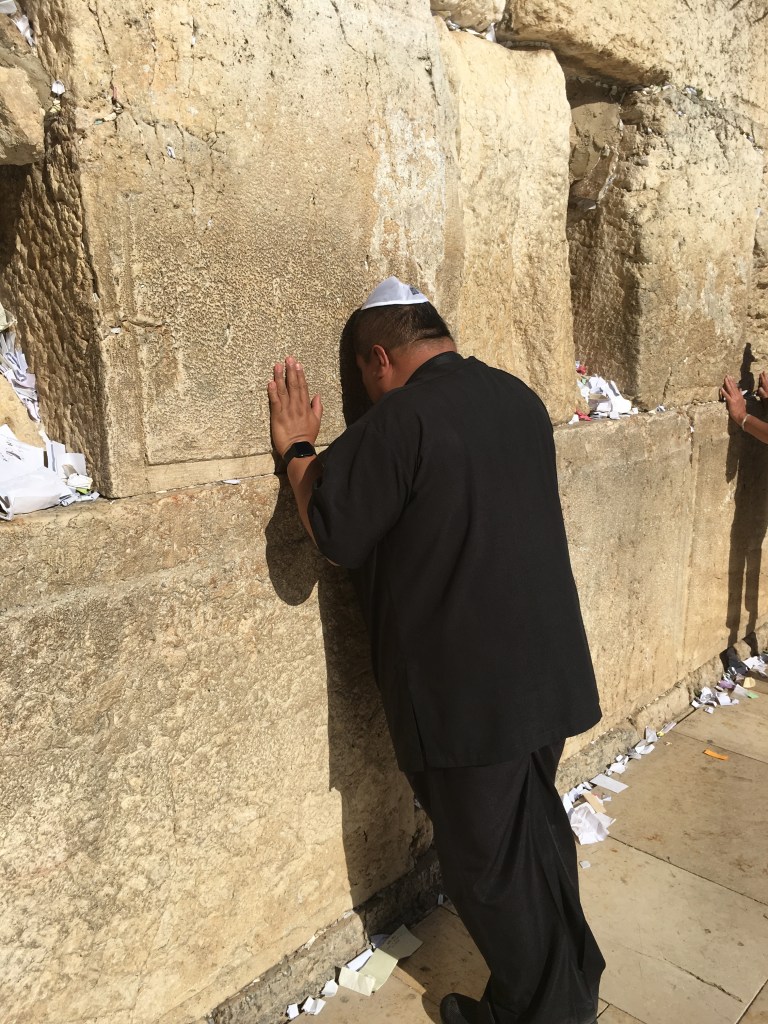
Praying at the Wall, May 2019.

During the Yom Kippur, priests drew lots on who would incense the Holy of Holies where the “Ark of the Covenant” was kept containing the stone tablets of God’s commandments given to Moses. It was the closest thing they have as signs of God’s presence among them. Hence, until now they venerate and pray at the “wailing Wall” of Jerusalem because that is supposed to be the only remaining structure of their temple destroyed in 70 AD closest to that part of the Holy of Holies.

It was so rare at that time to be assigned to incense the Holy of Holies because there were so many priests drawing lots and only one would be chosen for the rite that happens about twice daily for the whole week. It was a tremendous blessing indeed to be chosen to incense the Holy of Holies.

Here we find St. Luke setting the stage of his Christmas story to remind us all that God comes right into our time and space, in our history, in our here and now.

See his descriptions:

  1. It happened in a specific time during during “the days of Herod, King of Judea”, when Zechariah was “chosen by lot to enter the sanctuary of the Lord to burn incense” while people were outside praying and waiting.
  2. It happened in a specific place, the temple of Jerusalem.
  3. Most of all, it happened to real people, “Zechariah of the priestly division of Abijah; his wife Elizabeth was from the daughters of Aaron.”
A view from the Walls of Jerusalem of the Jewish section; dome is the Moslem section, Mount of Olives at the background. Photo by author, May 2017.

The Presence of God, the Absence of Man

When we are deeply hurt and disappointed, we are usually less rational. Worst, although we try to keep our faith alive, that is also when we doubt God, refusing to recognize his presence among us, and even right in us.

In this story of the annunciation of the birth of John the Baptizer, we find God giving Zechariah the tremendous grace to approach his Divine presence by having the rare opportunity to incense the Holy of Holies.

Most of all, at their most important feast when priests gather in the temple to pray for the people and for their personal intentions, God sent Zechariah the angel Gabriel to personally tell him his and Elizabeth’s prayers have been heard and granted!

But what happened? Zechariah doubted, even questioned God!

“How shall I know this? For I am an old man, and my wife is advanced in years.”

Luke 1:18

That’s the problem with us: God is always present but we are always absent that we never meet him. And every time he comes to visit us, we are so busy with so many other things.

If we cannot see and experience God in the most ordinary things and events in our lives, nothing would be enough to convince us of his love and mercy, of his presence and power.

That is why Zechariah was silenced by the angel, who, by the way, is already the presence of God yet Zechariah doubted.

This remaining week before Christmas, let us try to have some silence, or better, let us create a space for silence and solitude to experience God’s loving presence among us, in us.

It is only in silence where we can truly learn how to trust and be intimate with God and with our loved ones because it is only in silence where we can dare to open our selves to God and to others.

Let “the spirit of the Lord stir” you like Samson in the first reading (Jgs.13:25) this Christmas by creating silent moments with Jesus. Amen.

IQ, EQ, and AQ

The Lord Is My Chef Simbang Gabi Recipe, 18 December 2019

Jeremiah 23:5-8 ><)))*> ><)))*> ><)))*> Matthew 1:18-24

Mosaic at the Chapel of St. Jerome, underneath the Basilica of the Nativity in Bethlehem where St. Jerome lived while studying and translating the Bible into Latin. It is believed to be the place where St. Joseph received in a dream the message of the angel for him to take Mary as his wife. Photo by the author, May 2017.

First, we were told for a very long time the importance of IQ or “Intelligence Quotient” for anyone’s success in life.

Then came the EQ or “Emotional Quotient” this past decade that experts claim has more impact in determining one’s success in life than the IQ.

Now, scientists are claiming that more important than the IQ and the EQ is “AQ” or “Adversarial Quotient”, our ability to respond to various adversarial situations in life.

According to the proponents of AQ, the better we are able to deal with life’s troublesome situations like handling crises involving our many forms of relationships, the better we are equipped in having a more fuller life.

Dream of St. Joseph (Oil on canvas) by Francisco Goya. From Google.

Today we hear the story of St. Joseph facing an extremely adversarial situation when Mary who was betrothed to him was found pregnant with a baby not his!

This is how the birth of Jesus Christ came about. When his mother Mary was betrothed to Joseph, but before they lived together, she was found with child through the Holy Spirit. Joseph her husband, since he was a righteous man, yet unwilling to expose her to shame, decided to divorce her quietly. Such was his intention when, behold, the angel of the Lord appeared to him in a dream and said, “Joseph, son of David, do not be afraid to take Mary your wife into your home. For it is through the Holy Spirit that this child has been conceived in her.”

Matthew 1:18-20

IQ + EQ + AQ = HQ

St. Matthew describes St. Joseph a “righteous man” or, in Jewish thought, a holy man, a saint who lives his life according to the word of God. Also known as a zaddik in Hebrew, a righteous man delights in the Torah (Law), entrusting everything to God.

According to the Book of Psalms’ first chapter, a righteous man or a zaddik is like a tree planted near a river bank that symbolizes God’s words, growing into maturity with good fruits because he is filled with God, putting into practice the Sacred Scriptures and the Laws.

That is precisely what holiness is all about: being filled with God, not being sinless!

Though holiness means being perfect and whole as its Greek origin tells us, holiness as preached by Jesus Christ is an ongoing process when he commanded us to “be perfect as your heavenly Father is perfect” (Mt.5:48).

Holiness does not happen overnight; it takes time and a lot of cultivation on our part.

(One rule of thumb, though, that we must keep in mind: if you think or feel you are holy, definitely you are not. Saints do not know they are saints.)

IQ, EQ, and now AQ are in a sense, scientific expressions of holiness, of being filled with God to become better persons.

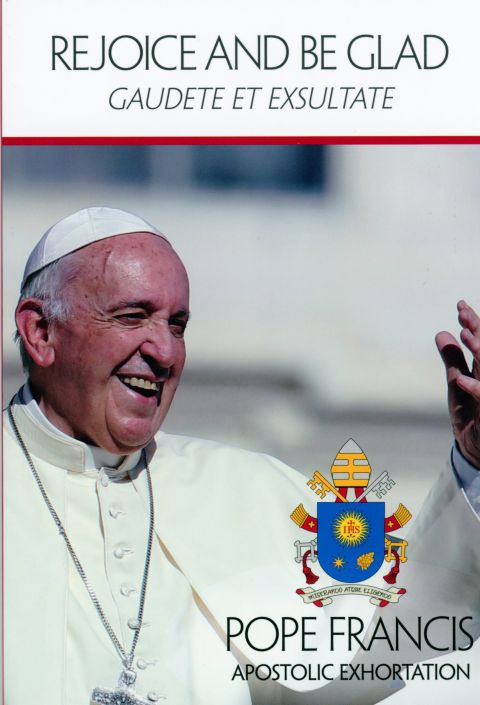
During the Solemnity of St. Joseph last year, Pope Francis issued “Gaudete et Exsultate” to reiterate Vatican II’s universal call to holiness by proposing practical ways in our modern time on how to be holy based on the beatitudes of Jesus Christ.

The Lord asks everything of us, and in return he offers us true life, the happiness for which we were created. He wants us to be saints and not to settle for a bland and mediocre existence. The call to holiness is present in various ways from the very first pages of the Bible. We see it expressed in the Lord’s words to Abraham: “Walk before me, and be blameless” (Gen 17:1).

Gaudete et Exsultate, 1

Very interesting in our Simbang Gabi is how the Pope mentions Abraham, the very beginning of Jesus Christ’s genealogy, as a model of holiness now being expressed in our gospel by the last person in that genealogy, St. Joseph!

St. Joseph bridged faith and practice

St. Joseph is exactly that kind of Jewish zaddik who lived in constant dialogue with God in praying the Scriptures, concretely living it minus the legalisms of the Pharisees and scribes of his time.

For him, the Torah was a good news meant to make life better, not bitter by applying it to daily living which is to love by preserving life.

In dealing with his extremely adversarial situation, St. Joseph did the most important step we have totally disregarded these days: silently pray to God for guidance and grace.

As a man, one can just imagine the many thoughts running through St. Joseph’s mind and heart when the woman he loves so much is found with a baby not his.

Sunrise at Atok, Benguet. Photo by Ms. Jo Villafuerte, September 2019.

His decision to silently leave Mary was due to his great love for her, not in disregarding the letters of the Law that declares that any woman betrothed to a man who bears a child not his must be stoned to death.

Read again St. Matthew’s account we have quoted above and you will feel the solemnity of the scene, of “how the birth of Jesus Christ came about” according to St. Matthew.

There was no sense of agitation or any other negative vibes, purely positive.

Very clear, St. Joseph’s holiness was not merely due to his bloodline or genealogy but his decision to bridge his faith and religion with his life and daily practice.

St. Joseph must be so purely absorbed in prayer that even at his sleep, there was his continuing communing with God that when he woke up, “he did as the angel of the Lord had commanded him and took his wife into his home. He had no relations with her until she bore a son, and he named him Jesus” (Mt.1:24-25).

Finding holiness in adversarial situations

Almost every month we find in social media so many videos and reports of road rage and people freaking out everywhere.

Sometimes I think that with the presence of too many CCTV’s and prevalence of smart phones around, people should be more well behaved, more kind. But the exact opposite is happening!

Life has become one big, giant TV show with everybody grandstanding, artificially creating their own limelight of fame that usually turns into five minutes of shame and notoriety.

Everybody wants to be on TV or Youtube but unknown to many, television screens tend to bring out the worst in us.

Whenever I would see people with their smartphones taking pictures, “talking alone” and doing all those crazy scenes, I fear how most of us have drifted away from our real gounding in life, God.

The story of St. Joseph reminds us of the need to resolve every issues in our lives by going back to our roots and grounding, God. And this happens by being deeply in touch with life and its realities! He was truly grounded and knew what could happen to Mary.

The more we experience life in each other, the more we experience God.

And the more we look at God, the more we see others.

Such was the holiness of St. Joseph that in bridging his faith with his daily life, the deeper his love for God and Mary grew! In looking up to God, the more he saw Mary and so Jesus Christ came too!

Photo from Forbes.com via FB, June 2019.

This is the problem of our time: we keep on looking outside, somewhere else to find meaning and life, answers to our many questions.

We just have to look inside our hearts where God truly dwells like St. Joseph.

His being “whole” as a righteous man is the reason why he could sleep soundly in the midst of many crises in life as he completely trusted God. Indeed, St. Joseph’s silence is his most remarkable sign of holiness that even in his sleep, he is filled with God.

There are four instances in the gospel of St. Matthew when the angel spoke to St. Joseph to deliver messages from God. He can sleep soundly because he never dilly-dallied with important decisions in life like secretly divorcing Mary.

We cannot sleep not because we have big problems but because we refuse to make decisions about them.

The word crisis is from the Greek krisis that means “requiring decision”; hence, critical situations require decisions.

St. Joseph was decisive because he was always grounded in God, discerning always his holy will.

Photo by GMA News editor Ms. JJ Jimeno of a man losing his head in prayer at the UP Diliman Parish, June 2019.

In the first reading we heard the prophecy of the coming Christ who shall be called “the Lord our justice” (Jer.22:6). Again, in Jewish thought, justice is not merely giving what is due but also means holiness.

The coming Christ is the Holy One of God, one who would completely entrust himself to the Father on the Cross. Very much like his foster father, St. Joseph who trusted God completely.

Sleeping and dying are essentially the same in the closing of our eyes when we entrust ourselves to God completely without knowing what will happen next, if we would still wake up or, in the case of death, really rise again.

Christmas happens, Jesus comes to us when like St. Joseph we abandon everything to God, especially our “adversarial situations” and go to sleep to be ready and prepared for new, unexpected, and even incredible things in this life. Sleep tight, and be surprised by the Lord! Amen.

Pope Francis, Gaudete et Exsultate, paragraph 32.

What is in a name?

The Lord Is My Chef Simbang Gabi Recipe, 17 December 2019

Genesis 49:2.8-10 ><)))*> ><)))*> ><)))*> Matthew 1:1-17

Parokya ng Banal na Mag-Anak, Violeta Village, Guiguinto, Bulacan. Photo by Arch. Philip Santiago.

Today we shift our focus in our Advent preparations to the first coming of Jesus Christ when he was born in Bethlehem more than 2000 years ago. Strictly speaking, the Christmas countdown officially starts only today especially with our very long but beautiful gospel from Matthew.

Maybe you are wondering what’s good with our gospel today when it is all about names that mostly sound very funny.

Importance of names: origin and mission

In ancient time, giving name to children was a very serious matter among peoples, especially the Jews.

For them, a name indicates two very important things about a person: one’s origin and mission in life, something parents of today have entirely forgotten, even ignorant because they are more concerned with fad and being unique in naming their children that always end up as a joke as it is always bizarre and weird.

And their poor kid suffers for the rest of his/her life like that man named “Fantastic”. All his life he felt so sad being called Fantastic that he told his wife when he dies, never put his name on his tombstone.

Eventually Mr. Fantastic died and the wife kept her promise not to put his name on his marker. But she felt the need to honor her beloved husband who was so good and honest that in lieu of his name, she asked a tribute written to honor him.

It said, “Here lies a very gentle and loving husband and father who never looked at other women except his wife.”

Every time passersby see and read that tribute, they would always exclaim “Fantastic!”

From Google.

Going back to the importance of giving names….

Corporations are more serious than parents in choosing names and trademarks to their products and services. Every trademark and brand always evokes deeper meanings than just being a product or entity that some of them have entered the vocabulary of many languages like Google, Xerox, and Frigidaire.

And the sad thing about this is how many babies are now being named to follow things and products than the other way around, giving more value to things than human beings!

The book of the genealogy of Jesus Christ, the son of David, the son of Abraham. Abraham became the father of Isaac, Isaac the father of Jacob, Jacob the father of Judah and his brothers.

Matthew 1:1-2
Detail of the ceiling of Parokya ng Banal na Mag-anak after the front or main door: the genealogy of Jesus Christ that starts with Abraham. Great concept by the Parish Priest, Fr. Ed Rodriguez. Photo by Arch. Philip Santiago.

Genealogy of Jesus as direction of Matthew’s Gospel

St. Matthew opens his gospel account with the genealogy of Jesus to settle right at the very start the question about the origin and mission of Jesus Christ.

Here we find the artistry and genius of St. Matthew, some 2000 years ahead of the late Stephen Covey’s third habit of highly effective people: “begin with an end in mind.”

By starting his genealogy with Abraham and David, St. Matthew gives us the whole gospel message in a glance because they are the two key figures in the beginning and realization of God’s promise to send Jesus Christ who would save us all.

Let us just focus on Abraham which means “he who is the father of many.”

It was to him that the story of God’s promise began after the dispersal of mankind following the collapse of the Tower of Babel.

From then on, Abraham points to what is ahead in God’s divine plan, not only for himself but also for the whole mankind for it is through him that blessings come to all. His journey from his birthplace of Ur into Canaan is symbolic of his journey from the present into the future, walking in faith following the Lord’s path and divine plan.

In Abraham we find God starting anew the history of mankind after the Fall that leads up to Jesus Christ who came to lead us all back into the Father.

With Abraham as the main header of Christ’s genealogy, we find not only the beginning but also the end of St. Matthew’s gospel which is the universality of God’s plan of salvation with Jesus telling his disciples to make disciples of all nations (Mt.28:19).

Detail of the ceiling near the sanctuary of Parokya ng Banal na Mag-Anak, the culmination of the genealogy of Jesus. Photo by Arch. Philip Santiago.

Imitating Abraham into our time

Last December 10 was a very important date for me and my parish: it was the ordination date of our first priest.

While waiting for the start of the Mass at the front door (which is actually the back of the Cathedral or any church), I just prayed in silence thinking about my role in the ordination of Fr. RA Valmadrid.

While I marveled at the beautiful renovations of our Cathedral, my sight was slowly moved towards the altar.

It was like an “Abraham experience” in Matthew’s genealogy for me: a wayfarer on a journey into the future, towards God, walking in faith.

In a quick glance, I kind of saw the future glory of every faithful coming to the altar to receive Jesus Christ in the sacraments especially the Holy Eucharist.

I just felt the beauty of entering the Cathedral, or any church which is more than stepping into a building but more of entering God himself, our point of origin and final destination.

Do we realize this tremendous blessing and grace of being baptized, of being a child of God, not only given with a name but most of all, of being counted into the family of God our Father?

In the first reading we have heard Jacob calling his 12 sons. What is so striking here is the blessing Jacob had bestowed upon Judah, instead of Joseph who was the best of all his sons, the holiest and most intelligent.

Like Abraham and Judah, or anyone in the genealogy of Jesus Christ, we can find our own selves too not as the vida or contravida but simply being called to be God’s instrument in fulfilling his plan in sending his Son Jesus Christ.

Truth is, God always comes in the most unexpected situations and peoples most of the time.

In Christ Jesus through our Baptism and faith, we find our genealogy – our origin and mission – as children of God.

If you want to get a feel of this reality, try reading aloud, very slowly, the genealogy of Jesus Christ. At the end, include your self, mention your name, your mother and father. Then close your eyes and let your life flash back in silence.

In the silence of your heart, do you find God coming more to you than you to God?

So amazing, is it not? We are all part of Christ’s genealogy. Let’s bring him forth into the world in our life of faithful witnessing like Abraham. Amen.

Malolos Cathedral. Photo by author.

Advent is joyful, patient waiting

The Lord Is My Chef Sunday Recipe for the Soul

Third Sunday of Advent or Gaudete Sunday, 15 December 2019

Isaiah 35:1-6, 10 ><}}}*> James 5:7-10 ><}}}*> Matthew 11:2-11

Malolos Cathedral, 10 December 2019. Photo by author.

For most people, our title is something odd and weird, perhaps even an oxymoron, for how can waiting be joyful and patient?

Many people hate to wait. Waiting for them is a waste of time because they believe it is an activity that is empty, full of risks of leading to nothing and disappointments. That is why they make all kinds of excuses in having all the devices and gadgets they need to busy themselves with while they are – after all – still “waiting”!

This Season of Advent is the most opportune time to rediscover the beauty and joy of patient waiting, especially this Third Sunday known as “Gaudete Sunday” from the Latin gaudere, to rejoice.

Advent teaches us that waiting is both joyful and patient; that it is more than an activity but a being that is always indicative of having something leading to fullness!

Our Parish altar, Gaudete 2019.

Patience is waiting that leads to fulfillment.

Pink is our motif this Third Sunday of Advent to signify joy in waiting for the Lord’s Second Coming. Waiting is an experience in itself filled with joy – if we really know how to wait patiently.

Patience is from the Latin word patior, to suffer. Its Greek origin is hupomone that suggests continuance and submission that literally means “submissive waiting”.

Both in its Latin and Greek origins, patience is a condition or a being of willing to wait because it knows there is something coming. It is never empty: you patiently wait because you already have something, you are holding onto something already. We wait in line whether in the grocery or at the doctor’s clinic because we know we would be attended to later. We wait precisely because we have something – almost – but not yet.

In this sense, patient waiting is more than an activity but more of a being and a condition that leads us to trust and faith, then into hope, and eventually into fullness.

Impatient people cannot wait because they do not see beyond the present condition. Their perceptions are very limited that they have to satisfy their wants immediately, just like our culture of instants these days or the so-called IGG for “Instant Gratification Generation”.

The desert and the parched land will exult; the steppe will rejoice and bloom. They will bloom with abundant flowers, and rejoice with joyful song. Strengthen the hands that are feeble, make firm the knees that are weak, say to those whose hearts are frightened: Be strong, fear not! Here is your God, he comes with vindication; with divine recompense he comes to save you. Then will the eyes of the blind will be opened, the ears of the deaf be cleared; then will the lame leap like a stag, then the tongue of the dumb will sing

Isaiah 35:1-2, 3-6
An oasis in the Dead Sea desert, May 2017. Photo by author.

Intimacy: the joy of patient waiting

There are three key personalities in Advent: Isaiah, John the Baptist, and the Blessed Virgin Mary. Isaiah saw the coming of the Christ from a very distant past while John pointed everyone that the awaited one has already come. Mary, on the other hand, celebrated Advent because she brought forth Jesus in her womb.

Today we are joined by Isaiah and John the Baptist to complete our joy of patient waiting that Christ in fact is already with us though not yet…

In our first reading we have seen the imagery of the desert like last Sunday in John’s preaching. The desert evokes the feeling of nothingness and emptiness like waiting itself as most people think.

But, in the bible since the time of Abraham, the desert is the favorite place where God would always meet with people. It was always in the desert where the prophets and the people waited and experienced God.

Wild flowers in the desert of Jordan, May 2019.

So you see, my dear reader and follower, the desert is more than a place but also the intimacy of God with his people and later with his Son Jesus Christ who would always go to the desert or deserted place to pray like in the Transfiguration, or when he prayed and fasted for 40 days and nights before being tempted by the devil after his baptism by John at Jordan. It was also in the desert where Jesus did many of his memorable conversations that led to conversions like at Jacob’s well where he met a Samaritan woman one hot afternoon.

Examine your lives, dear reader and follower: it is always in the desert of our lives, in its bareness and desolation, when we are empty and thirsty when we truly experienced God closest.

Isaiah spoke of this prophecy when the Israelites were at their lowest point of misery and defeat as exiles in a pagan country with no freedom, no temple, even no God.

When we are full of material things, full of ourselves, when everything is going so perfectly well in life, that is when we are ironically shallow and superficial. What really deepened us in life are those desert moments of tribulations and trials because that is when we have found and rediscovered true intimacy – with God and with our loved ones!

Patient waiting is a desert full of joy because that is where we experience intimacy and fullness, the tension of the already here but not yet, not only with God but also with one another.

Here we find St. James imagery of the farmer as finest example of patient waiting, of trusting in God that what we have sown would grow and be fruitful. Despite our culture of instants, there are so many things that cannot be rushed, when we have to patiently wait in time like intimacy.

How do we recognize our true friends? They are the ones who always stand by our side especially when we our down and out, the ones who accompany us in our patient waiting when we are in the middle of a storm, or in the desert, desolate.

Malolos Cathedral Dome, December 2019. Photo by author.

Proceeding in joy in the presence of the Lord

One problem with waiting is when we are superseded by our so many expectations that may also be unrealistic. We hate waiting, we stop hoping because we feel disappointed and frustrated because we do not get what we really expect from our waiting.

The problem is with us, not with waiting itself. So often we await things instead of persons. To wait in joy with patience demands openness for the one who is coming not on what is coming.

True waiting is always about persons, not things. Waiting is beautiful and joyful because you are not alone in waiting, there is always another person waiting for you, waiting with you. And when we finally meet with the one we are waiting, then we have presence!

This is why the synonym for gift is also present, from presence.

Every waiting is directed to another person who also awaits the other person. When we focus our waiting on things than persons, then we miss everything in our waiting which is the presence of the other person.

This is the meaning of the response of Jesus to the emissaries of John.

Camp John Hay “Belen”, December 2017.

When John the Baptist heard in prison of the works of the Christ, he sent his disciples to Jesus with this question, “Are you the one who is to come, or should we look for another?” Jesus said to them in reply, “Go and tell John what you hear and see: the blind regain their sight, the lame walk, lepers are cleansed, the deaf hear, the dead are raised, and the poor have good news proclaimed to them.”

Matthew 11:2-5

Jesus was telling the emissaries of John that the one they have been waiting had come, already present among the people especially the sick and the poor. God had come in the midst of his people, healing them, consoling them, uplifting them.

This Third Sunday of Advent, Jesus is asking us like the crowds: what are we looking for, what are we waiting for? Set aside or totally forget all your expectations, open yourself, open your heart, open your eyes to see and experience the presence of the Christ who had come, who will come again, and always comes among us.

Indeed, we are so blessed because despite our being sinful, of being the least in the kingdom of heaven, we have Jesus coming to us day in, day out. Share his coming, share his healing, share his joy! Amen.

The priest is always a radical

Quiet Storm by Fr. Nicanor F. Lalog II, 10 December 2019

Homily for the First Mass of Rev. Fr. Roel Aldwin C. Valmadrid, First Priest from our Parish of St. John Evangelist, Bagbaguin, Santa Maria, Bulacan

In my 21 years of priesthood, I have found so many descriptions and interpretations of being a priest. But there is only one priesthood we all share — the Priesthood of Jesus Christ.

And that is why, every priest has to be a radical like Jesus.

From the Latin word radix which means “roots”, a radical is someone who is always rooted, grounded in being as we say in philosophy.

A priest is a radical because he always has to be rooted in Jesus Christ, our Eternal Priest. He alone is our model and everything in our lives and ministry. Everything and everyone must be seen in relation with Jesus Christ.

I am the true vine… I am the vine, you are the branches.

John 15:1, 5

It is the Caller, Not the Call

Since last year when I was invited to be a guest spiritual director of our School of Theology, I have realized how seminarians and eventually priests give more importance to the vocation or call to the priesthood than to Jesus Christ himself, the Caller.

When we priests and seminarians are focused on the call, we get so many excuses in life: we have every justification for everything like in acquiring material goods and gadgets, indulging in so many luxuries and lifestyles for the rich and famous simply because we are priests.

See how some seminarians and priests alike, despite the many immoralities in life, they cling to the vocation but never to Jesus.

Worst, when we are more focused with our call than with Jesus the Caller, that is when we see more of ourselves that soon enough we play gods and we start making our vocation an excuse for everything, even flaunting them in social media.

Call it triumphalism, exaggeration of devotions when in fact it is the start of a cult around the person of the priest. That is when we start having our own interpretations of everything, starting from Jesus Christ, on the liturgy, morality, scriptures and everything!

Sad and tragic. Most of all, a grave scandal of our time.

When we focus more on our Caller Jesus Christ, then we start praying and discerning.

That’s when everything gets clearer because when we examine things in the light of Christ, we become sensitive of others and sensible as well.

When we see Jesus more than our priesthood, that is when we see more of Christ among others, especially the poor and marginalized.

Yes, when we priests look at Jesus more, the better we see him in others that we get inspired to do more, to serve more with love and kindness.

“I Am”

We have learned in our studies of the scriptures that Jesus Christ’s declarations of “I AM” in all gospel accounts mean a lot, especially in the fourth gospel by our beloved Patron, Saint John the Evangelist. It is indicative in itself of Jesus being the Christ, the awaited Messiah.

Keep that in mind, keep that in your heart, Fr. RA: that “I AM” is Jesus Christ, not you.

A priest is always a radical because every day we have to go back to this very root of our being, Jesus. Without him our Caller, there is no call. No Jesus Christ, no priesthood.

Twice did Jesus declare this I AM: at the opening verse where he used the adjective I AM the true vine then at the fifth verse when he said I am the vine, you are the branches.

Most important part here is the I AM to show how Jesus has let himself planted on earth, never to be uprooted like that story of the vine producing sour grapes in the Book of Isaiah.

His I AM here is the very mystery of his incarnation mentioned by our Patron Saint, John the Evangelist at his prologue to his gospel account. Like what St. Paul had written to the Romans we always read in the Evening Prayer I of each week, “God’s gift and call are permanent and irrevocable.”

Jesus called us to the priesthood, he will never recall that. That is why we are celebrating tonight despite your many sins and heavy warnings in the seminary. He called you Fr. RA and he kept that.

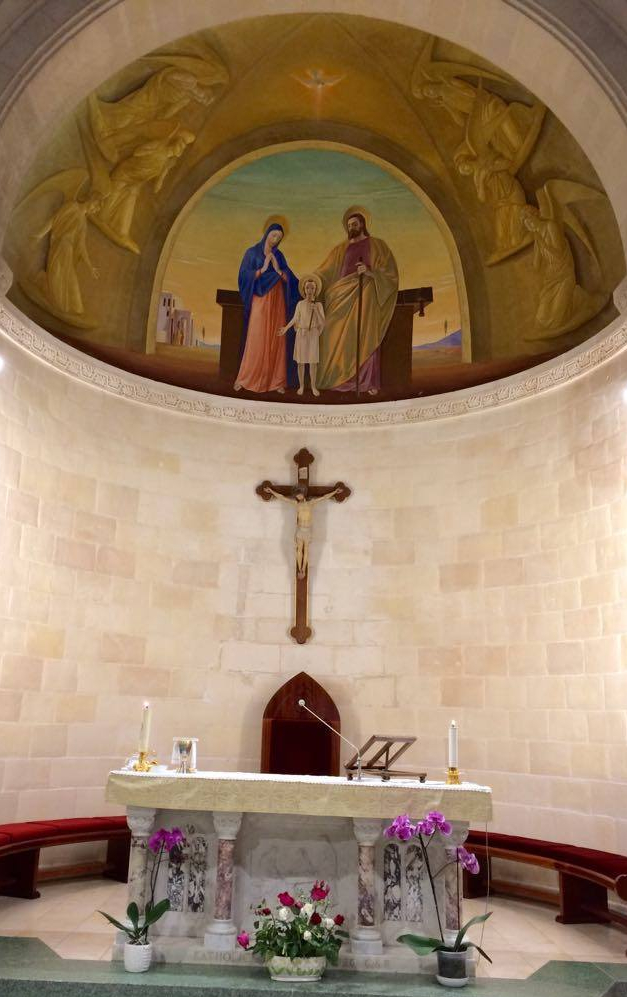
Chapel of the Holy Family, Jesuit Novitiate and Retreat House, Novaliches, 2017.

Now you are priest, Fr. RA, let Jesus dwell in you as you keep grounded in him too.

Have an altar in your room, Father. Keep the TV set outside your bedroom. Upon waking up even if your bladder is full, kneel before your altar, say the Morning Offering, be with Jesus, hear him tell you every morning “I AM the true vine, you are the branches.”

People always ask me what is the most difficult in being a priest?

It is not really being celibate. In fact later in life, ask your married friends, it is a great blessing to be celibate!

Since my first year in the priesthood, I have always been telling people since then until now that the most difficult in being a priest is we have to pray every day. I mean, real prayer where we strip ourselves naked before Jesus. No ifs, no buts. Just our plain, ugly self before him.

It is difficult to pray every day because it means being true to one’s self that requires a lot of discipline and courage.

Bp. Dennis Villarojo ordaining Fr. RA, 10 December 2019, Malolos Cathedral.

Most of all, it is difficult to pray because that is surrendering one’s self to God. It is like being ordained every day when we keep on saying, “yes, Lord…yes Lord.”

Whatever is the fruit of our prayer, that is what we share in our homilies and talks to people.

That is when we come into the most difficult part of our prayer life as priests: when we preach, then people measure us, even judge us. They ask if we “walk our talk”.

When a priest does not preach anymore, when a priest avoids celebrating Mass, pray for that priest. Most likely he is no longer praying. He is already separating himself from the vine, forgetting the Caller.

Remember St. Augustine who told his deacon in De Catechizandis de Rudibus, “the catechist is the lesson himself”. In the same manner, the priest is the homily himself.

It is prayer where we grow deeper in our faith as priests. And people would right away notice this if we believe in God, if we believe in the Mother Church, if we believe in the sacraments we celebrate.

When we experience Jesus our true vine, it is always Jesus whom people would see and feel in us his priests.

“Remain in Me so you will bear fruit”

Our prayer life as priests keeps us one with Jesus our Caller and our true vine. In our gospel today, Jesus repeated the word “remain” about nine times, the most of any word in our gospel this evening.

Remaining in Jesus as a priest is imitating our Patron Saint John the Beloved, the only one who remained and stayed by our Lord’s side at his crucifixion.

To remain in Jesus is stay with him at the Cross.

Notice how Jesus reminded us that as branches, the Father has to prune us always. Pruning means sufferings. Pruning means carrying the cross daily.

Ten years ago I was invited to give a recollection to our students at the Theology Deaprtment with the topic, “The Cross as the Cost of Discipleship”.

People praying for Fr. RA after Holy Communion, 10 December 2019. Chinggoy Futol Photography.

I accepted the invitation to correct their topic because it is absolutely wrong: the Cross is not and should never be considered as a cost of discipleship. When you talk about costs, then you think of rewards and profits. Then it becomes a business. No longer a vocation.

The Cross is the life of a priest because that is the life of our Caller, Jesus Christ!

Remain in Jesus, bear all pains and hurts. Kneel always before his Cross and look at him to realize that before our sufferings came, Jesus was there first to suffer and die for you, Father!

Part of that Cross comes from those nearest to us priests, our family and brother priests!

Every day, especially Sunday, you celebrate life and death, health and sickness with people you hardly know, some of them even hurt you and malign you when you can not even be with your parents, sisters and nieces and nephews.

Worst, there are times it is your brother priests are the ones who would hurt you too!

Rejoice when you are being pruned, when you suffer, Father. Remember the beatitudes, “Blessed are you when people persecute you and malign you.”

Photo by Chinggoy Futol.


Be good and kind to your brother priests, Father RA.

Do not fight back if they hurt you.

Love your parish priest. Help him always in his Masses. Volunteer to him especially when you see the slightest of him catching colds!

When a priest is kind to his brother priest, that priest is surely a good priest, a kind priest.

By being good to fellow priests, you keep them remain in Jesus our true vine too.

And you become fruitful.

Being fruitful is different from being successful.

Sometimes, our failures are the very joys of our Lord Jesus Christ because that is when we are nearest to him.

To be fruitful is to rely more in the powers of God. Relying more on our powers is success.

And there is only one fruit Jesus wants from us: love.

Photo by Neil Jumaquio Adriano.

See how after Jesus declared himself as the vine and we are his branches, that is when he would speak eloquently about love, his commandment.

“I have told you this so that my joy might be in you and your joy might be complete. ?This is my commandment: love one another as I love you. No one has greater love than this, to lay one’s life for one’s friends.”

John 15:11-13
The new priest with his family. Chinggoy Futol Photography.

Love like Jesus Christ, Father RA.

Be a radical priest, not as a subversive but always go back to our very root, Jesus Christ.

Better, restore Jesus Christ.

Next year, I will be moving to another parish, Father RA.

When you are broken, when somebody maligns you again, you are most welcomed wherever I may be transferred and together, with our aching gouts, we shall kneel to before Jesus our vine, our root, our Caller. Amen.