Advent is patient transformation to joy

Lord My Chef Sunday Recipe for the Soul by Fr. Nicanor F. Lalog II
Third Sunday in Advent-A (Gaudete Sunday), 14 December 2025
Isaiah 35:1-6, 10 ><}}}}*> James 5:7-10 ><}}}}*> Matthew 11:2-11
Photo by author, December 2019.

Our churches are bursting in hues of pink this Third Sunday of Advent rejoicing not only in the fast approaching Christmas but most especially in the Lord’s Second Coming already happening in our midst.

Like John the Baptist in today’s gospel who was imprisoned at the time, we could feel in our own waiting for Jesus his saving presence in the many good things happening within us and around us.

When John the Baptist heard in prison of the works of the Christ, he sent his disciples to Jesus with the question, “Are you the one who is to come, or should we look for another?” Jesus said to them in reply, “Go and tell John what you hear and see: the blind regain their sight, the lame walk, lepers are cleansed, the deaf hear, the dead are raised, and the poor have the good news proclaimed to them” (Matthew 11:2-5).
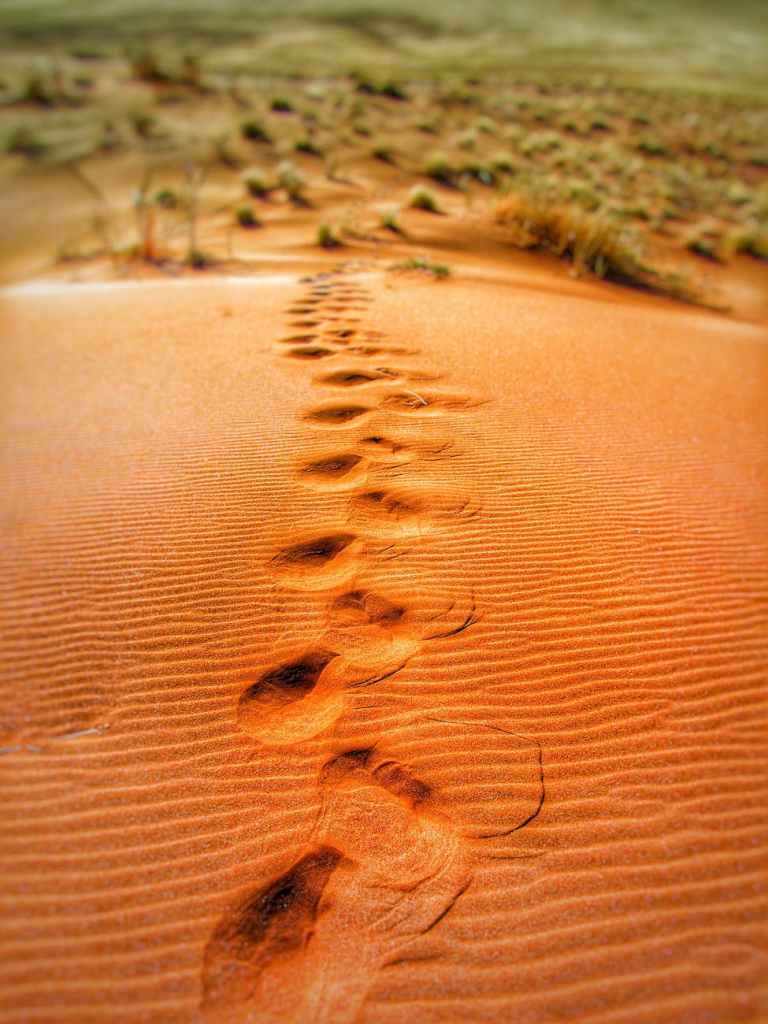
Photo by shy sol on Pexels.com

Remember our reflection last Sunday of John’s preaching in the desert of Jordan signifying our own desert where amid the dryness and emptiness Jesus comes to us, Jesus is most present with us and in us. That is because more than an imagery of nothingness and death, the desert signifies too our intimacy with God. Many times in life, God brings us or allows us to get lost in our own desert to experience his intimacy with us, his immense love for us because when we are sufficient and strong, we rarely feel him nor even desire him. But, when we are like in a desert with nothing, that is when we long for God, and most especially feel him present.

That is why every prophet in the Bible including our Lord Jesus Christ frequented the desert and wilderness to show their intimacy and communion with God. The desert is thus transformed into a greenery filled with life like what Isaiah prophesied in the first reading today:

The desert and the parched land will exult; the steppe will rejoice and bloom. They will bloom with abundant flowers, and rejoice with joyful song. The glory of Lebanon will be given them, the splendor of Carmel and Sharon; they will see the glory of the Lord, the splendor of our God… Then will the eyes of the blind be opened, the ears of the deaf be cleared; then will the lame leap like a stag, then the tongue of the dumb will sing (Isaiah 35:1-2, 5-6).
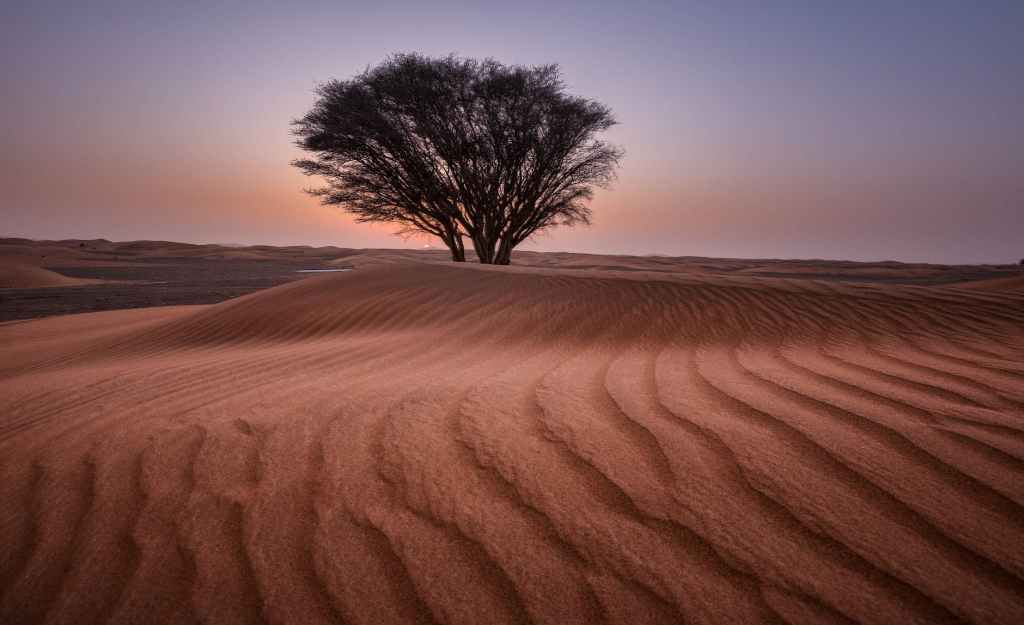
Photo by Walid Ahmad on Pexels.com

See now the transformations found in our readings: in the last two Sundays we heard Isaiah speaking of the dried and barren desert but today he spoke of its transformation into a lush and verdant stretch of land; in the gospel we find John still in the desert, firm and unchanging in his preaching though his situation had changed a lot.

Last Sunday John was freely proclaiming the coming of the Christ in the desert as he sternly warned the Pharisees and Sadducees of their judgment; this Sunday, John was still in the desert but imprisoned awaiting death when he reproached King Herod in taking his brother Philip’s wife Herodias. But despite that clear danger daily hanging on his head, John was not disturbed at all as he patiently awaited the coming of the Messiah that he sent emissaries to Jesus to ask if he is already the Christ.

Here we find something so human in John the Baptist, so much like us when we sort of doubt ourselves not because we lack faith but simply we just want to be sure of what we are hearing, what we have seen, of what God is really doing.

Photo by author, December 2021.

Let it be clear: like John, most often we doubt ourselves not really God when things happen not according to our plans or expectations. Inasmuch as life is a mystery, God is more mysterious! Most of the time, we cannot understand his ways because he moves so differently, even unpredictably from what we know and expect.

Perhaps, John had a different scenario in his mind about the arrival of the Messiah like in the Old Testament tradition of judgment day, of action-packed events punishing evil people. Recall how called the Pharisees and Sadducees “You brood of vipers…Even now the ax lies at the root of the trees. Therefore every tree that does not bear good fruit will be cut down and thrown into the fire (Mt.3:10). 

But something totally different was happening at that time as he heard while in prison – many people and their lives were being transformed. John realized something deeper than expected was going on in Judea and Galilee. And when his emissaries relayed to him the reply of Jesus, John realized that indeed the Christ he was proclaiming had arrived in Jesus. As a prophet well-versed with the scriptures, John found Jesus as the fulfillment of the prophecy by Isaiah when the blind can see, the lame can walk, dead are raised and the good news proclaimed to the poor.

It must have been a Nunc Dimittis experience of Simeon for John that soon enough, he died a martyr ahead of his Lord and Master Jesus Christ. John indeed prepared the way of the Lord in his birth and in his death, showing us the importance of patience in awaiting Christ and in experiencing the joy in his coming.

Be patient, brothers and sisters, until the coming of the Lord. See how the farmer waits for the precious fruit of the earth, being patient with it until it receives the early an the late rains. You too must be patient. Make your hearts firm, because the coming of the Lord is at hand (James 5:7-8).
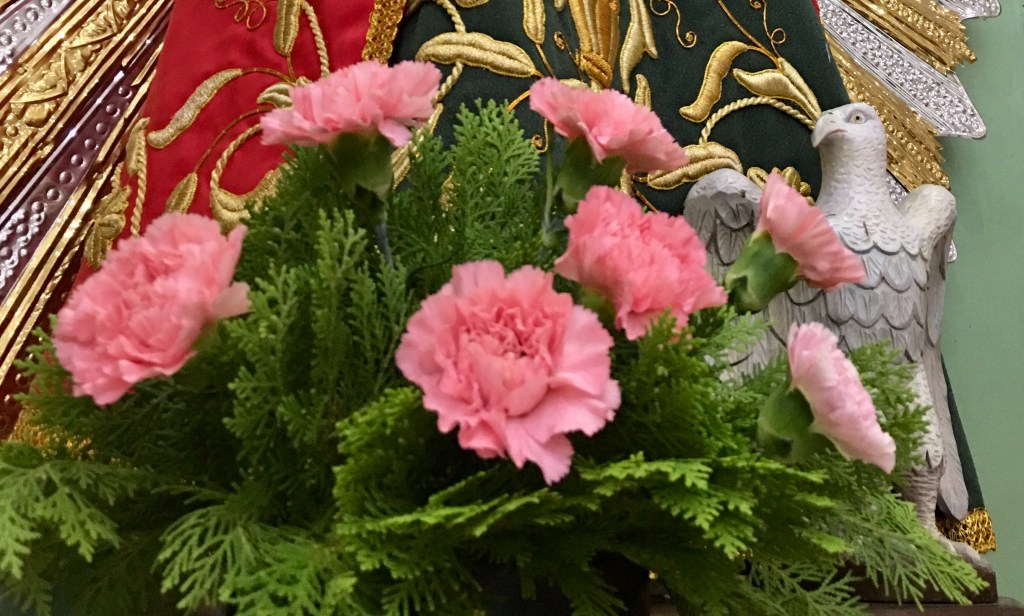
Photo by author, December 2020

Before the COVID pandemic, my brother and I used to rest at Camp John Hay in Baguio where he would buy in one of the shops there a line of local and organic perfumes. His favorite scent was called “Patience” but one time when we went there, it had ran out of stock that he said wryly, “maski ba naman pabango na patience, wala na rin?”

So true! Patience seems to have been almost extinct in this age of instants. Nobody wants to be patient anymore especially if one can have almost everything instantly. Even during the time of the early church, people have been impatient in life that St. James wrote them on the importance of patience in our journey of faith, in awaiting the Lord’s return.

From the Latin word patior that means to suffer, patience is a kind of suffering, of bearing the pain of waiting especially over a long period of time that we doubt if it is still worth the waiting at all. But we fail to “see” or realize as St. James pointed out like the farmer that waiting is never passive nor empty; there is always something wonderful happening that we do not see like the germination, growth and blooming of crops and plants. The more patient we are, the more suffering in waiting, the greater always the joy that comes when our waiting is finally fulfilled!

Advent teaches us this third Sunday that we need to be patient for waiting itself is a holy ground where we experience God’s coming and intimacy. Though patience tests our limits, it transforms us too!

Think of the stalactites and stalagmites in caves formed millions of years by drops of water. Or the great natural wonders of earth that took thousands of years of formation, transformation. Most of all, our very selves. Who we are and what we are today are long years of patient efforts to be healthy or successful or simply be alive. And that’s a great reason to rejoice.
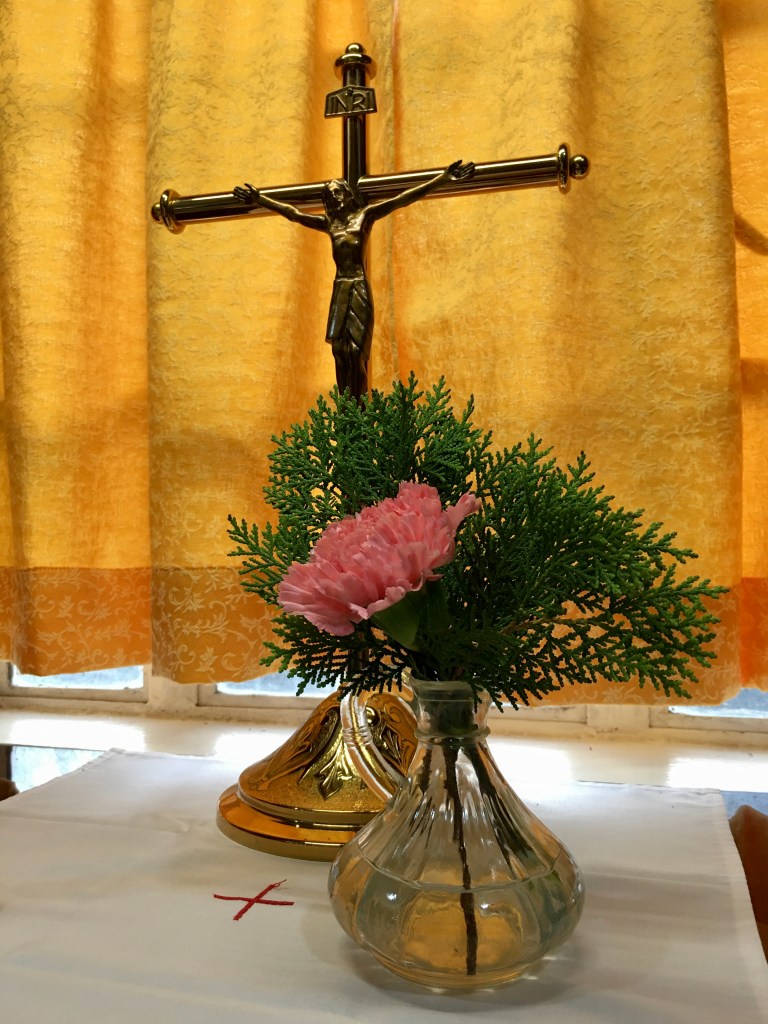
Photo by author, December 2020.

Patience is so difficult to practice like in our daily experiences of horrendous traffic everywhere but with patience, we arrive at our destination. Patience transforms us into better persons and disciples of Jesus, enabling us to rejoice no matter what is the situation we are into. It is in the midst of sufferings and waiting, of patience and impatience that Jesus calls us to experience his silent and steady presence resting upon us like the rains every farmer is so familiar with. Our joy is doubled, becoming a rejoicing when we practice patience in our endeavors, in life itself.

Let me end this reflection with a quotation I memorized as a child on the wall of our former family dentist’s office in Meycauayan, Bulacan that said:

Time is fast for people who rush;
time is slow for people who wait;
time is not for people who love.

The most loving persons are also the most patient ones. Always. And first among them is Jesus Christ who patiently awaits us to return to him so we can experience his joy. Amen. Have a joyful week ahead!

Advent is conversion in the desert

Lord My Chef Sunday Recipe for the Soul by Fr. Nicanor F. Lalog II
Second Sunday in Advent-A, 07 December 2025
Isaiah 11:1-10 ><}}}}*> Romans 15:4-9 ><}}}}*> Matthew 3:1-12
Photo by author, The Deesis Mosaic in the Hagia Sophia, Istanbul, Turkiye, 01 November 2025.

A few weeks before the Holy Father visited Turkiye recently, we were also in Istanbul and had the great chance of visiting the magnificent Hagia Sophia. And we wonder why Pope Leo XIV skipped the more historical and popular Hagia Sophia to visit instead the Blue Mosque just across.

The Hagia Sophia or “Holy Wisdom” was the largest church in the Eastern Roman Empire when Istanbul was called Constantinople until the Ottoman Turks conquered the city and converted the church into a mosque. More than a hundred years ago when Turkiye became a republic, the government made Hagia Sophia a museum until recently when it was reverted into a mosque again.

My initial feeling when I got inside Hagia Sophia was deep sadness. “Malaking panghihinayang” as in “sayang na sayang” in Filipino because it used to be ours but due to the Great Schism of 1054 when the Eastern Roman Church broke away from Rome, it fell into the hands of the Moslems who made it into a mosque, altering or hiding the many great works of art there that date back to the Byzantine era 1200 to 1400 years ago.

Photo by author, The Deesis Mosaic in the Hagia Sophia, Istanbul, Turkiye, 01 November 2025.

One of its many treasures you might be familiar found in history books and magazines is the “Deesis Mosaic” of Jesus flanked to his left by his Mother Mary and John the Baptist to his right.

From the Greek word “deesis” that means supplication or intercession, the mosaic features Mary and John beseeching Jesus to forgive mankind at his Second Coming. Though the three images have been badly deteriorated due to the elements passing through the window beside it, its beauty remains intact, especially the evocative faces of Mary, Jesus and John.

Seeing it personally, one could feel the pagsusumamo of John the Baptist and Mother Mary expressed in the softness of their face in earnestly asking Jesus to forgive mankind on the day of judgment. And it seems to be working so well as you could feel too the tender compassion of Jesus Christ’s look as he raised his right hand in a blessing position while holding with his other hand a thick book that is perhaps a Bible.

Detail of John the Baptist from the Deesis Mosaic in his abbreviated Greek name Ionnes Prodromos; photo by author, Istanbul, 01 November 2025.

The Deesis Mosaic is very Advent in character because it is about God’s mercy and forgiveness in Christ Jesus at his Second Coming at the end of time.

Here we find how early on in the ancient Church they have been preoccupied in this first aspect of Advent, the Second Coming of Christ at the end of time and of Advent’s essence – our conversion from sins. At the forefront of that call is the Lord’s Precursor, John the Baptist, that is why every second and third Sundays of Advent we hear in the gospel his ministry at Jordan.

John the Baptist appeared, preaching in the desert of Judea and saying, “Repent, for the kingdom of heaven is at hand!” It was of him that the prophet Isaiah had spoken when he said: A voice crying out in the desert, Prepare the way of the Lord, make straight his paths. … At that time Jerusalem, all Judea, and the whole region aroun d the Jordan were going out to him and were being baptized by him in the Jordan River as they acknowledged their sins (Matthew 3:1-3, 5-6).

John the Baptist remains relevant in preparing for the Lord’s coming, whether at the end of time or in preparation for our Christmas celebration. Like him, we are all called to be an Advent person, vigilantly preparing ourselves for Christ’s coming at the end of time that happens in every here and now, right in our own desert in this modern time.

Yes, we are like John the Baptist living in our own desert, a world we describe as a global village wired and connected by the internet yet so apart from each other. Instead of bringing us closer with one another, all these modern inventions have actually grown us more detached from one another like when eating in a fast food. It is so alienating especially for us seniors to be placing our orders on those tall electronic boards programmed for us to order more food and drinks not healthy at all.

Or, take those TNVS or Transport Network Vehicle Services like Grab. We no longer travel in the real sense as we just move to destinations with that desert feeling when inside a Grab car with the driver too far from us passengers in front, following instructions from apps while we at the back sit silently scrolling our phones or pounding a laptop. See also how driving has become going in the wilderness with the horrendous traffic where humans turn into monsters in road rage while machines and CCTVs monitor who’s violating traffic rules and who gets through the RFID.

Photo by author, Basic Education Department Chapel, Our Lady of Fatima University, Valenzuela City, December 2023.

This Second Sunday in Advent, John the Baptist invites us to be aware of the desert we are living into where we have become less personal, less human as we move away from God that we have lost our sense of sin, acting more on impulses without much thinking its effects and consequences.

We think more of ourselves than of God and others, overextending our rights insisting on our ways that actually destroy lives through abortions and gender manipulations. We no longer speak of what is true and good by simply following trends and what is convenient. No more feelings, no more compassion. No more others. No more God nor heaven and eternity.

“St. John the Baptist Preaching in the Wilderness” by German painter Anton Raphael Mengs (1728-1779) from commons.wikimedia.org.

We do not have to dress on camel’s hair nor eat locusts and wild honey like John but simply make a space within us for God and for others.

We would be gravely wrong to think John was only speaking to the people of his time especially to the Pharisees and Sadducees; Matthew wrote his gospel account at that time to nourish the faith of early Christians facing persecutions and many challenges in life like in our own time when it is so tempting to follow the evil ways of the world.

John continues to warn us today of the sure return of the Christ when everyone shall face judgment which is not something to be feared like a sword of Damocles hanging above our heads ready to strike us anytime. It is a call and a demand for concrete actions of conversion, of leaving our sinful ways to follow Christ’s path of holiness.

“Even now the ax lies at the root of the trees. Therefore every tree that does not bear good fruit will be cut down and thrown into the fire. I am baptizing you with water, for repentance, but the one who is coming after me is mightier than I. I am not worthy to carry his sandals. He will baptize you with the Holy Spirit and fire” (Matthew 3:10-11).

Advent assures us of Christ’s Second Coming when he shall purify and renew us to fulfill Isaiah’s prophecy in the first reading when “the wolf shall be a guest of the lamb, the leopard shall lie down with the kid… the calf and young lion shall browse together, with a little child to guide them… the cow and bear shall be neighbors, together their young shall rest, the lion shall eat hay like the ox… the baby shall play by the cobra’s den, and the child lay his hand on the adder’s lair”(Isaiah 11:6-8).

“Peaceable Kingdom”, a painting based on Is.11:1-10 by American Edward Hicks, a Quaker pastor (1780-1849) from wikimedia.org.

As we have reflected last Sunday, every coming of Jesus is a day of judgment but not a catastrophe. It becomes a disaster for those unprepared, living in sin. But for those like John the Baptist, striving to live the gospel amid the desert of this world, Christ’s coming is salvation and peace for Jesus is full of love and compassion and tenderness for his people.

Life is so difficult these days especially when we see our great disparities with the corrupt who simply steal our money and those we call “lumalaban ng patas sa buhay”. Imagine how in our country the world is like a desert, so hostile with the weak and the poor who have to wrestle with 500 pesos – if ever they have – to stretch it for a noche buena on Christmas Eve.

St. Paul reminds us in the second reading that in times like these, we look up to God and his Sacred Words, to keep hoping, trusting and believing in Christ’s coming already happening especially in the Sunday Eucharist. Let us gather together as one community, encouraging each other in Christ like John in Jordan while awaiting the Lord’s coming, rejoicing like the psalmist today who sang, “Justice shall flourish in his time, and fullness of peace forever” (Ps. 72:7). Amen. A blessed Second Week in Advent everyone!

Blessedness of desert

The Lord Is My Chef Daily Recipe for the Soul by Fr. Nicanor F. Lalog II
Monday in the Fourteenth Week of Ordinary Time, Year II, 08 July 2024
Hosea 2:16,17-18, 21-22 <*((((><< + >><))))*> Matthew 9:18-26
Photo by Walid Ahmad on Pexels.com

Thus says the Lord: I will allure her; I will lead her into the desert and speak to her heart… I will espouse you to me forever: I will espouse you in right and in justice, in love and in mercy; I will espouse you in fidelity, and you shall know the Lord (Hosea 2:16, 21-22).

Praise and glory to You,
God our loving Father!
Lead us back to You,
lead us back to the desert -
to that state of dryness,
of emptiness,
of nothingness
for us to find and
experience You again;
lead us to the desert,
Father, for us to feel
our heart again
that You are our first love
after all!
Forgive us, Father,
when life is in abundance
we are filled of our selves
we forget You and others;
when life is affluent,
we disregard what is right
and just, we become so greedy
with nothing enough;
when life is going on smoothly
without problems, we disregard
love and mercy as we see more
of things than persons as we veer
away from You,
sinking into infidelity,
not knowing You.
I do not ask for too much
pain and suffering;
just something enough to
knock our heads
like that father in the gospel
and woman suffering hemorrhages
for 12 years who both felt so
isolated from the rest
like in a desert
to realize there is only You
in Jesus Christ to restore us
back to life,
back to community,
back to our real selves
and back to You.
Amen.