The Lord Is My Chef Sunday Music, 01 September 2019
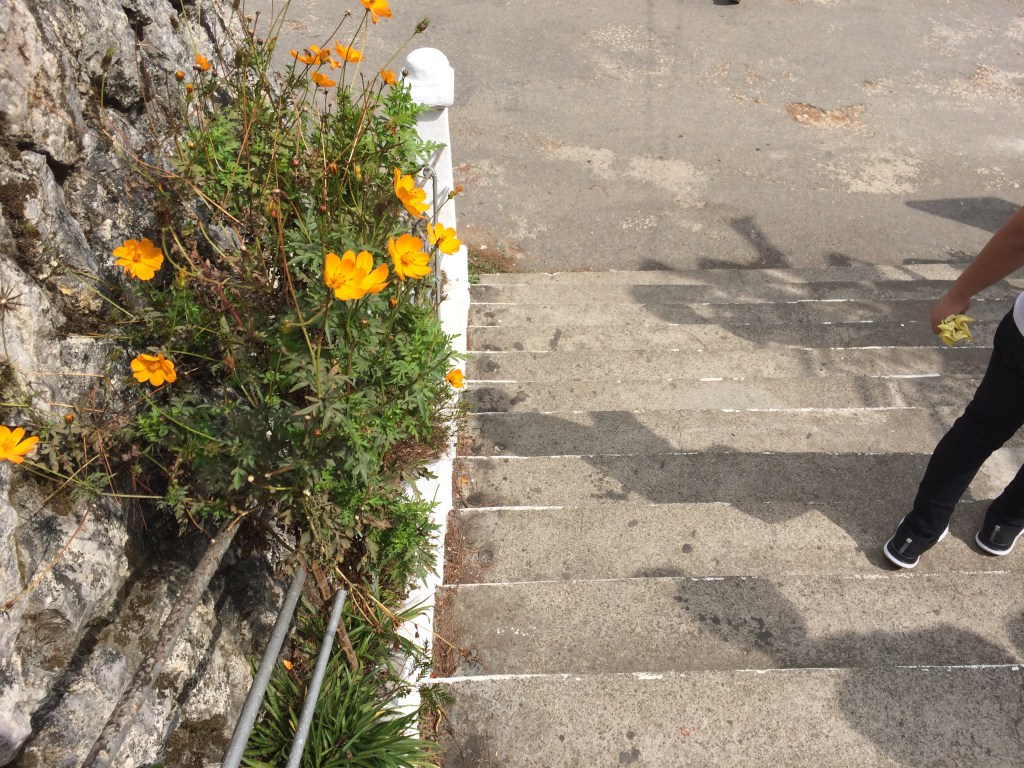
Showa Kinen National Park, Japan. Photo by Dra. Mai Dela Pena, 2016.
“For everyone who exalts himself will be humbled, but the one who humbles himself will be exalted.”
Luke 14:11
Our gospel this Sunday is very timely as our headlines lately with the case of a transgender insisting on using the female toilet. Immediately, politicians jumped into the controversy for the media mileage without really reflecting more on its nature.
And the sad part of it all is perfectly hit again by our gospel today: when people choose places of honour, the more the disadvantaged members of the society are pushed to the margins.
“Rather, when you hold a banquet, invite the poor, the crippled, the lame, the blind; blessed indeed will you be because of their inability to repay you. For you will be repaid at the resurrection of the righteous.”
Luke 14:13-14
It is for this reason we have chosen Cyndi Lauper’s 1986 hit “True Colors” written by Billy Steinberg and Tom Kelly. The song was covered by Phil Collins in 1998 with a more jazzy beat which I prefer than the original.
Since its release, True Colors has become the unofficial music of the gay community especially with its message of showing one’s true colors.
But here we find the beauty of music that is always an expression of love, of what is good and true. True Colors speak so well of the gospel today which is about building our relationships with God and with others that starts with self-acceptance.
Jesus assures us that we all have “assigned seats” here on earth and in heaven; we simply have to accept who we really are for that is when we grow, when his grace and mercy work. True Colors is not about insisting on gays’ rights or the use of female toilets. It is about the gospel truth of accepting who we really are.
When Jesus said those who exalt themselves shall be humbled and those who humble themselves shall be exalted means be who you are and be your best self. If you are a father or a mother, be the best father or mother. If you are a priest, be the holiest priest. If you are a docotor, be the best doctor. If you are a husband or a wife, a brother or a sister, be your best self. If you are a male, be man enough to be your true self. If you are a female, be the loveliest woman.
In the end, everything and each one of us will be falling into our right places. No need to alter our bodies and everything just to insist who we really are.
And when we have become our true selves and better selves, that is when we are able to give ourselves to others in loving service.
See, when we choose other seats than those assigned to us and become an “epal” like most politicians, that is when we lost touch with those really in need among us. That is when we forget about humility which is being truthful to our very selves. It is only in being truthful to our selves can we truly be free to love and serve others to start building on our true relationships as brothers and sisters in Christ.
Instead of going to anybody for our concerns and problems, it is always best to come to Jesus always. And that starts right in our hearts first where we find our true colors, our true value as persons so loved by God inspite and despite of everything.
While praying over today’s gospel during the week, I came across this photo of Ms. Rosa Parks in my Facebook feed saying something like, “Rosa Parks made a stand for her rights by refusing to give up her seat in a bus 60 years ago.”
I love the caption and the play of words of the photo that convey the same message of our Sunday gospel: it is not where we seat but where we stand that matters most.
On a sabbath, Jesus went to dine at the home of one of the leading Pharisees, and the people there were observing him carefully. He told a parable to those who had been invited, noticing how they were choosing the places of honor at the table.
Luke 14:1, 7
For the next three Sundays beginning today while Jesus resolutely decided to journey to Jerusalem, he will be teaching us with some “table talks” as he spoke about the heavenly banquets as expressions of God’s vast ocean of mercy where everyone is welcomed. But, more than lessons on table manners and etiquette, Jesus is also teaching us of finding our own places in his kingdom here on earth where everybody is welcomed just like in heaven.
Key to appreciating our gospel today is found in the first reading:
My child, conduct your affairs with humility, and you will be loved more than a giver of gifts. Humble yourself the more, the greater you are, and you will find favor with God.
Sirach 3:17-18
From Google.
Remember that very central in the teaching of Jesus is the need to be like a child when he would always remind us that “unless you become like a child, you will never inherit the kingdom of heaven.” Being like a child is being humble and obedient, being open to learning new things that are all necessary in building relationships that lead to communion with God and with others. Heaven is the perfect communion of God and everyone but it has to start here on earth among us.
Jesus lived at a time when society and people were so fragmented, just like now. Everybody feels being entitled to heaven and on earth, to every position and honor everywhere even in the church.
While at a sabbath dinner hosted by a Pharisee, Jesus took the occasion to teach the people of the need to be humble to be accepted anywhere. According to St. Teresa of Avila, humility is walking in truth. Humility is being real!
“For everyone who exalts himself will be humbled, but the one who humbles himself will be exalted.”
Luke 14:11
Photo by Jim Marpa, 2018.
Jesus is telling us that for his grace and mercy to truly work on us, we have to be really who we are. In this age when life has been replaced with lifestyle and people have usurped the power and authority of God as well as the natural order of things, everybody feels entitled to everything insisting on their rights forgetting their responsibilities. Homosexuality is not a sin; what is sinful are homosexual acts. The challenge is for the person to accept his/her true self as a beloved child of God doing his/her best to be the bestest person. No need to alter one’s body nor be somebody else he/she is not. Homosexuality is not about insisting on something just for the sake of insisting or making a statement for one’s self regardless of others like in the use of toilets. We have a Tagalog expression that perfectly captures the Lord’s lesson, “lumagay ka sa dapat mong kalagyan”. Loosely translated, it means simply be where you are supposed to be.
Last Wednesday we celebrated the memorial of St. Augustine, one of the most famous and colorful saints of the Church. His life is a gospel in itself, showing us that nobody is too late to change and be a better person. Most of all, nothing is too late for God. Like St. Augustine, we must first accept who we are, be humble for our weaknesses for it is only when we accept that we start to grow and everything follows like acceptance by others. How can we expect others to accept us if we cannot accept first our very selves? This is the most beautiful mark of humility of children that make them so irresistible to adults: they have no guile, all-natural and no plasticity or synthetic fronts to be loved and appreciated.
More than table manners and etiquette, Jesus is teaching us that if we can be humble and accept who we are, we can definitely find our place in the kingdom of God, here on earth and in heaven. God loves us so much he has a plan for each on of us if we play our roles wholeheartedly. We will never experience his mercy and grace unless we become humble.
Photo by Reuters, 2018.
“Rather, when you hold a banquet, invite the poor, the crippled, the lame, the blind; blessed indeed will you be because of their inability to repay you. For you will be repaid at the resurrection of the righteous.”
Luke 14:13-14
To further ensure the lesson of his parable about each of us having a place in his kingdom here on earth, Jesus reminds us too while in the context of his sabbath dinner that for us to be able to establish a more humane society, we have to guard against stereotypes of peoples that we tend to box them into categories.
Jesus is asking us to radically change our prevailing social mores, suggesting a very different value-system in the here-and-now kingdom of God. Far from the cries of the communists for a classless society, Jesus tells us to see the value of every person rather than focusing on the few powerful, wealthy, and influential people we always deal with in exchange of so many favors.
It is a patronage system so prevalent everywhere especially in politics and in our social relationships like the compradazo system of getting ninong and ninang who are rich and famous to get influence and other perks and rewards. It is so unfortunate that some clergymen are so guilty of this that the Church’s credibility has eroded so much for the mistakes and sins of a few.
In this manner of patronage system, the poor and the weak are always left out to the margins, forgotten and even disregarded. What kind of Christianity do we have when we are so concerned with Christmas carols and counting the days before Christmas and be oblivious to the plight of the farmers and fishermen?
Lorenzo Atienza, June 2019.
What Jesus is telling us today is that those who have less in life should have more of God because, truly in the end, they are the ones who shall be exalted!
In these parable and admonition by Jesus, St. Luke our guide these Sundays is not only giving us an advice on how to prepare for the end times but also on how to live according to the Lord’s vision of a just and humane society in our imperfect world.
We in the Church play a very vital role in bringing about this change by witnessing the gospel that often brings about a reversal of fortunes in the end.
The author of the Letter to the Hebrews reminds us that the ultimate goal of our Christian life is communion with God made possible by Christ’s offering of himself on the Cross. Do our Sunday Mass celebrations and Parish set-ups witness to the gospel values of a just and a humane city of God here on earth?
The Lord Is My Chef Sunday Recipe Week XXI-C, 25 August 2019
Isaiah 66:18-21 ><)))*> Hebrews 12:5-7, 11-13 ><)))*> Luke 13:22-30
The small door leading to the Church of Nativity in Bethlehem, symbolic of the need to be lowly, to bow to meet our Lord Jesus Christ who became human like us to save us. Photo by author, May 2019.
The Lord concludes his series of “shock preaching” today with a big bang by dousing us with a big disappointment…
Someone asked him, “Lord, will only a few people be saved?” He answered them, “Strive to enter through the narrow gate, for many, I tell you, will attempt to enter but will not be strong enough. After the master of the house has arisen and locked the door, then will you stand outside knocking and saying, ‘Lord, open the door for us.’ He will say to you in reply, ‘I do not know where you are from.'”
Luke 13:23-25
It is very disappointing that after joining Jesus as he resolutely determined to journey to Jerusalem these past four Sundays in taking into our hearts his many earth-shaking lessons about the “end” only to find out that we could end up being locked out of the door to heaven. More shocking than the lessons last week is the disturbing revelation today that we have to be strong enough to enter through the narrow gate to eternal life.
How strong? We really do not know. But, we have learned from the Old Testament of the need to patiently obey and faithfully keep the commandments of God while the gospels remind us clearly to deny ourselves and carry our crosses even up to the point of dying with Christ.
Very difficult, huh…? And here’s more! Striving hard to enter the “banquet hall of heaven” is keeping in mind the important lessons we have heard these past three Sundays: life does not consist of possessions but of what matters to God (Lk.12:15,21; Aug. 04); that we must always gird our loins to be ready for death that comes like a thief at night (Lk.12:35,39; Aug.11); and, most of all, we have to go through our own passion and death like Jesus to be filled with the fire of the Holy Spirit to bring the peace of Christ into world (Lk.12:49-51; Aug. 18).
It is useless to count how many would be saved for there is enough room for us all in heaven. Through the Prophet Isaiah in the first reading, God wants us all to be with him in heaven despite his knowledge of our sins by sending us his Son Jesus Christ!
Thus says the Lord: I know their works and their thoughts, and I come to gather nations of every language; they shall come and see my glory.
Isaiah 66:18
The small door to the Church of the Nativity from the inside.
See again in our gospel today an apparent contradiction in the teachings of our Lord like last Sunday with his bringing of fire and division among us. When Jesus refused to give that man a definitive answer to his question “if only a few people would be saved”, the Lord in fact revealed something deeper than the initial disappointment we have felt about the gate of heaven being narrow that would be closed when the time comes. Again, he mentions the Eucharist, our Sunday Mass as the wonderful opportunity to be strengthened in order to get inside the heavenly banquet.
“And people will come from the east and the west and from the north and the south and will recline at table in the kingdom of God. For behold, some are last who will be first, and some are first who will be last.”
Luke 13:29-30
It is during the Sunday Mass when the Lord gathers us all together after a very difficult and disappointing week to refresh us, to strengthen us for another week of hurdling more problems, more trials in life. This is why before receiving him, we say, “Lord I am not worthy that you should enter under my roof, but only say the word and my soul shall be healed.” The Father gave us his Son Jesus Christ so we may have that strength needed to enter the narrow gate to heaven by doing more loving service to others, being kind and forgiving, being honest and generous. Yes, these are easier said than done but doable in Christ.
What is so surprising in our many experiences are the many times when in our many disappointments Jesus comes to guide us to new doors, new routes and new openings that mysteriously lead to new life for us!
Grotto of our Lady of Lourdes, Baguio City, January 2019.
Brothers and sisters: You have forgotten the exhortation addressed to you as children: “My son, do not disdain the discipline of the Lord or lose heart when reproved by him; for whom the Lord loves, he disciplines; he scourges every son he acknowledges.” Endure your trials as “discipline”; God treats you as sons. For what “son” is there whom his father does not discipline?
Hebrews 12:5-7
That is the mystery of God’s universal plan of salvation for us: the path may be filled with so many hardships and obstacles, the gate may be so narrow and difficult to pass through but he has made it possible for us to make it through by sending us Jesus Christ our Lord in leading this way to the heavenly Jerusalem. Authentic faith always involves pains and sufferings. When we embrace death like Jesus Christ, we also ensure life.
In every setback in life, we only have two choices always: either to be better or bitter. Choose to be better and that can only be through the narrow door of Jesus Christ by letting go of our anger and hatred, resentment and bitterness to give way to joy and peace, love and forgiveness. That is when God begins to surprise us!
Tam-Awan, Baguio, January 2019.
The author of Amazing Grace, John Newton was once challenged by a man after he had delivered a homily about heaven. Remember that Newton, as he claimed in Amazing Grace, was a “wretch” being a former slave trader after being a slave himself.
Newton was asked by a man to give something that would surprise him when he gets to heaven.
The former wretch replied that there would be three great wonders in heaven: first, he would see many people he never expected to be there; second, he would not find many church-goers he expected to see there; and third – which is the biggest surprise of all – is to find himself there in heaven when he knows very well his sinfulness.
Yes, my dear brothers and sisters, we are all sinners, now feeling disappointed with so many things in life. Just strive to be good and better persons as we celebrate every Sunday the Lord’s Supper and he will do the rest. And be ready to be surprised even before going to heaven! Amen.
The Lord Is My Chef Sunday Recipe, Week XX-C, 18 August 2019
Jeremiah 38:4-6. 8-10 ><)))*> Hebrews 12:1-4 ><)))*> Luke 12:49-53
Batanes sunset after a storm, 2018. Photo by Mr. Raffy Tima of GMA-7 News.
Jesus continues with his “shock preaching” for the third consecutive Sunday today as “he resolutely determined to journey to Jerusalem” and face his death there.
And his preaching is getting more shocking.
Unlike the previous two Sundays, it was easier to see why Jesus had to shake us with his teachings as he wants us to seriously consider the reality of death that comes “like a thief at night” (Lk. 12:39, Aug. 11). Far from being morbid, Jesus is inviting us to be more concerned with things that last even after death because “life does not consist of possessions” (Lk. 12:15, Aug. 04).
This Sunday, Jesus gets bolder with his teaching of three provocative statements that challenge and motivate us in being like him who is “resolutely determined” in facing his passion and death by setting the world on fire, eagerly awaiting another baptism, and the most controversial, bringing division – not peace – among us his followers.
Jesus said to his disciples: “I have come to set the earth on fire, and how I wish it were already blazing! There is a baptism with which I must be baptised, and how great is my anguish until it is accomplished!”
Luke 12:49-50
Sunset in Athens, Greece by Dra. Mai B. Dela Pena, 2016.
These first two pronouncements by Jesus go together like our expression “baptism of fire” to mean an initiation into something very new and life-changing or, as we say these days, a “game changer”.
In St. Luke’s second book, the Acts of the Apostles, we find the Holy Spirit coming down as “tongues of fire” upon the Apostles and the Blessed Virgin Mary on Pentecost, filling them with wisdom and courage to proclaim the Good News of salvation by Jesus Christ. For St. Luke, this imagery of the Holy Spirit like fire is very important.
Fire gives heat, symbolising life itself. Without heat, we become cold and die.
Fire also means energy that can move and propel anything including people, covering great distances.
Most of all, fire purifies, removing impurities in so many things including persons.
Since June 30, we have been following Jesus as “he resolutely determined to journey to Jerusalem” (Lk. 9:51). This is the baptism Jesus is so eager, his Passion and Death on the Cross that leads to Easter. It is a path characterized by fire that emboldens us, purifies us, and most of all, illumines us of the more essential things in life!
From Google.
When we recall those trying moments in our lives, those many “baptisms of fire” we have gone through, there is always that sense of inner joy and gratitude in “passing over” through our little deaths that have made us stronger today. Whether we have triumphed or failed in those many baptisms of fire, what matters most is we went through it, deepening our faith that made us more determined in life.
And one very difficult lesson we have also learned in our little deaths is the painful reality of divisions among us.
“Do you think that I have come to establish peace on the earth? No, I tell you, but rather division.”
Luke 12:51
In this age when sound reasoning is being pushed aside in making decisions on many issues and conflicts confronting us by following what is merely popular as “trending” and “viral” measured in the most number of “likes” or “followers”, we find ourselves plunging into more darkness than ever. What used to be not normal has become normal today like obscenity and profanity. Life is reduced to mere lifestyle with everybody insisting on one’s rights in total disregard of one’s responsibilities that anyone may use whichever toilet is preferred. Death in its many masks has become a solution to many problems that has spawned more serious problems. And worst, in the midst of these discussions that disregard morality, proponents of the Godless ways are the ones invoking the name of God!
Jesus tells us in the fourth gospel that “the peace I give you is not like the peace the world gives” (Jn.14:27) which is often more of appeasing one another, of compromises that eventually fails. Peace is more than the absence of war but is appropriately called the effect of righteousness, of love and justice (Vatican II, Gaudium et Spes, #78). And always, that path to peace is the Cross of Christ.
Jesus wants us his disciples going through our little passion and deaths to illumine the world with the Holy Spirit as it is slowly being engulfed in the darkness of sin and evil. And he knows it is not an easy task. Like him, we have to grow in faith completely relying on the Father who vindicated him as he died on the Cross.
Brothers and sisters: Let us rid ourselves of every burden and sin that clings to us and persevere in running the race that lies before us while keeping our eyes fixed on Jesus, the leader and perfecter of faith. In you struggle against sin you have not yet resisted to the point of shedding blood.
Hebrews 12:1-2, 4
In 1945, the late Fr. Hans Urs Von Balthasar titled a chapter of his book “God is dangerous”, writing that
“He presents his victory over death as an example to be imitated, he draws us beyond our limits, into his adventure, which is inevitable fatal.”
“Heart of the World” (Ignatius Press, 1980)
Yes, God is dangerous — too hot to handle and too difficult to resist. We have all felt like Jeremiah bearing all the pains and sufferings because we have allowed ourselves to be “seduced and duped by God’s irresistible charm” (Jer. 20:7). And despite this harsh reality, we choose to remain standing at the foot of our Master’s Cross because it is there we can see everything more clearly, where we experience real peace.
Would you rather be in grave danger with God on your side or be safe for now with no one and nothing to hold on in the end?
One of the series I am following at Netflix is “Money Heist”. It is very suspenseful because unlike other crime series, its plot is unpredictable and spiced with amusing conversations. Like one episode when the lead character called Professor repeatedly mentioned to the Police Inspector during their first date of how he is not a “Basic Instinct” material, referring to Michael Douglas who starred in the movie with Sharon Stone. I felt the line anachronistic because the Professor is so young in the series to make a point reference to the 1992 erotic thriller. But it was a very good line expressing fully what the scene was all about, of a man and a woman following their basic instinct in having sex without really knowing each other so well, especially the Inspector who is a battered wife newly divorced from her husband – also a police officer- and in a relationship with her sister!
Now you see what I have been telling you… but, what I really wish to share with you is an archaic term related with “basic instinct” that Jesus used in the gospel today:
Jesus said to his disciples: “Gird your loins and light your lamps and be like servants who await their master’s return from a wedding, ready to open immediately when he comes and knocks. Blessed are those servants whom the master finds vigilant on his arrival. Amen, I say to you, he will gird himself, have the servants recline at table, and proceed to wait on them.”
Luke 12:35-37
From Google.
Loins refer to that part of our body between the lowest ribs and hipbones, the pelvic area where the genitals are also located. It is believed to be the source of erotic or procreative powers we refer to as “basic instinct” or simply guts as in gut feeling.
During the time of our Lord, men wore long clothes and they have to “gird their loins” in order to move freely when walking and working. Eventually, men ceased wearing long clothes with no need to gird their loins but still have to tighten their pants, sometimes with a belt, to move freely as well. And even if there were no more loins to gird, the expression continued to be used to mean being on guard, being ready for any emergency and situation like a military attack.
This is the whole point of the Lord’s teaching this Sunday: we have to be on guard and ready always for his coming. In fact, anything can happen instantly that could also be life-changing. Girding one’s loins, being on guard and ready for the Lord’s coming requires active faith on our part, an inclination towards God already present in us.
There are actually three parables in our gospel this Sunday but we are given the option to use only the one we have heard which is the second set. In this parable, Jesus used the imagery of being on guard like the “faithful servants waiting for their master’s arrival from a wedding feast” to indicate his coming in the Eucharistic celebrations. Every Mass is our dress rehearsal for our entrance into heaven but we always take it for granted, finding all the reasons and excuses to skip especially the Sunday Mass.
Altar table of the Church of Dominus Flevit (the Lord Wept) with the old Jerusalem at the background. Photo by author, April 2017.
The Mass is our expression of our readiness to enter heaven as we joyfully proclaim after every consecration of the bread and wine that “Christ will come again.” But, even those who regularly come for the Sunday Mass do not take it seriously, not truly present with “full and conscious participation” enunciated by Vatican II 50 years ago.
Notice how in the third parable Jesus mentioned “faithful and prudent stewards” (Lk.12:42) to emphasize the need for servants and ministers at the altar to be more prepared than anyone else for his coming. So true! How can the people pay attention to the scriptures being proclaimed if the lector’s voice is very soft or incomprehensible? How can the congregation thank God for speaking to them anew if the lector’s face and disposition are so gloomy and even horrific?
And this refers more to the priest as presider of the Mass! Much is expected from us priests not only by the congregation but also by the Lord himself! How can the people feel Christ’s coming in every Mass when the priest himself does not meet the Lord, when he is not prepared physically, mentally, emotionally and spiritually? What a shame when people complain that they hardly feel the Divine in every Eucharistic celebration! Always we find two extremes in many parishes where at one end are lethargic priests lacking the energy to lead their people into heaven during the Mass while at the other side are the showbiz priests so in love with themselves, with their voice and showmanship that the Eucharist has become a variety show.
Jesus reminds us in all his parables this Sunday that we priests and ministers at his altar of the Sacrifice of the Mass are his servants waiting for him, our Lord. We are never the focus but Jesus Christ alone! Let us not steal that honor from him.
Pyramids of Egypt, May 2019.
Speaking of stealing, Jesus added towards the end of his second parable on the need to gird one’s loins for his coming because it is like the coming of the thief at night. We must always be prepared because nobody knows when the thief strikes. And we find elucidations of this from the first and second readings we have earlier heard that speak about disposition for God.
From the Book of Wisdom, we are reminded how the liberation of the Israelites – their Exodus from Egypt – happened in the darkness of the night. Every celebration of the Mass is an active waiting for the Lord’s coming that also calls for an active faith wherein we are disposed or inclined towards God already with us. Such was the attitude of the Israelites leading to their Exodus from Egypt when Moses told them of God’s plan that every day, they were raring to go.
In the Letter to the Hebrews, the author beautifully expressed that “Faith is the realization of what is hoped for and evidence of things not seen” (Heb.11:1). He gives us Abraham as the perfect example of a truly faithful one to the Lord, always ready for his coming. In three instances, the author of the Letter to the Hebrews showed how Abraham had the perfect disposition of actively waiting for God’s fulfillment of his promises to him: journeying from Ur to the Promised Land he did not know where; being the father of nations as numerous as the stars of the sky when he and Sarah were still childless at their age of 90; and, in obediently offering Isaac to God.
Girding our loins, being on guard also means having the discipline of waiting for God. It is not enough to wait; we need discipline, we need to follow certain things to stay focused. As we have mentioned earlier, the loins is the region of our basic instinct. So many opportunities have been missed by many men and women simply because of small mistakes, of being caught off-guard in simple instances when everything snaps in an instant when they followed the lower basic instinct, forgetting the higher ideals.
Abraham girded his loins so well that he never wavered in his faith in God until his promises were fulfilled because he always had that disposition for him. This Sunday, Jesus is reminding us to be patient in waiting for him, to have the discipline to stay focused with him and our dreams and aspirations in life for he will fulfill them in his time. It is very important that like Abraham and the faithful servants in his parable, we are always present when he comes to seize his blessings! A blessed week ahead with you! Amen.
We were in Grade Six when the American progressive rock band Kansas released “Dust In the Wind” in 1978. Immediately upon hearing it on radio with its signature guitar plucking, everybody was talking about its spiritual meaning, especially its music that sounded so mystical.
According to its composer and band guitarist Kerry Livgren, the song was inspired by a line from the Book of Ecclesiastes which we have heard proclaimed in today’s Sunday Mass with some references also from Genesis 3:19 “…for dust thou art, and unto dust thou shall return.”
I have seen all things that are done under the sun, and behold, all is vanity and a chase after wind.
Ecclesiastes 1:14
Like the author of the Ecclesiastes who called himself Qoheleth, Dust in the Wind is no “kill joy” but a beautiful and timely reminder to us all that indeed, we are all dust in the wind, that we must seek things that truly last even after death.
And that is God alone.
What I like most in Dust in the Wind is its haunting melody that elicits a kind of fear that does not make you cower or tremble. It is a positive kind of fear that according to experts motivates man to further his knowledge and abilities. Like this fear of death that has enabled man to achieve so many breakthroughs in medicine and the sciences to cure and prevent many diseases that have greatly improved our quality of life. It was also the fear of death, of going hungry that enabled many explorers to discover many new lands and territories that now push advanced nations to explore the universe for future human colonies.
Sometimes in life, we have to be shocked and shaken because fear can be a good motivator for us to strive for the best. But more than a motivator, the fear of death can also be a path to holiness and communion in God as the Book of Ecclesiastes shows us: the more we realize our nothingness like dust in the wind, that everything is vanity, the more we also desire and hold on to God who is the only One permanent and absolutely good after death.
The French author and film director Georges Bernanos (Diary of a Country Priest) wrote in one of his novels that,
In a sense, you see, Fear is the daughter of God, redeemed on the night of Good Friday. It is not pretty to see— of course not!— sometimes mocked, sometimes cursed, renounced by everyone… And yet, do not deceive yourself: it is at the bedside of each agony, it intercedes for man.
Joy (La Joie)
May this music by Kansas remind us that only Jesus Christ can fulfill us. Not money or wealth, power or fame for “one’s life does not consist of possessions” (Lk. 12:15). May it also remind us of Christ’s parable of the rich man who died after storing treasures for himself, forgetting to be rich in what matters to God (cf. Lk.12:21).
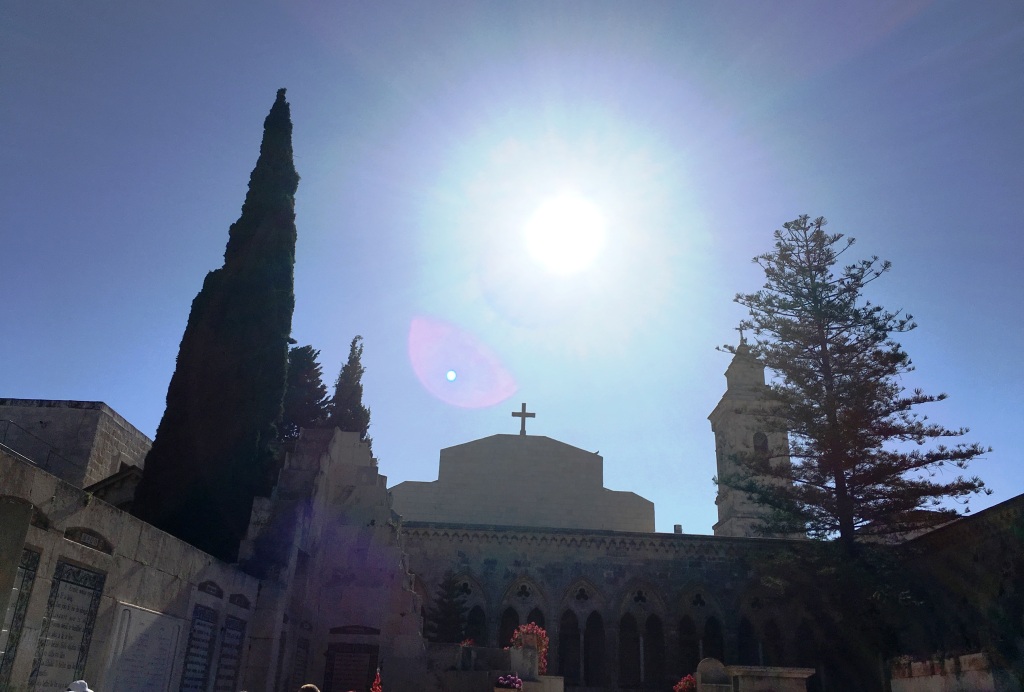
Outside Jerusalem is the Mount of Olives Jewish Cemetery. It is one of the world’s oldest, existing for over 3000 years. It is also one of the most expensive cemetery in the world for having the choicest spot to be buried in the planet as it faces the Eastern Gate of Jerusalem where the bible tells us the Messiah would be coming through. Hence, all tombs at the Mount of Olives Cemetery point to that direction so that all those buried there would be the first to rise again to life and welcome the Messiah when he comes.
Of course, we Christians believe Jesus is the Messiah or the Christ who in fact came through that Eastern Gate on Palm Sunday when he entered Jerusalem over 2000 years ago to offer his life for our salvation on Good Friday, resurrecting on Easter Sunday!
And while the Jews await the Messiah and we Christians affirm he has come in Jesus, our Moslem brothers and sisters sealed the Eastern Gate during the Middle Ages that since then, no one could pass through it except literally face a blank wall.
I love telling this amusing story to fellow pilgrims to the Holy Land but find it today as a beautiful springboard for reflection to balance our Sunday gospel that sounds like a “shock preaching” by Jesus Christ.
Someone in the crowd said to Jesus, “Teacher, tell my brother to share the inheritance with me.” He replied to him, “Friend, who appointed me as your judge and arbitrator?” Then he said to the crowd, “Take care to guard against all greed, for though one may be rich, one’s life does not consist of possessions.” Then he told them a parable… “Thus will it be for the one who stores up treasure for themselves but are not rich in what matters to God.”
Luke 12:13-16, 21
Beginning this Sunday until the next three weeks, we’ll hear Jesus Christ “shock preaching” us the plain truth we always forget or even disregard: that we all die and what really matters most in life are the good deeds we have done. All our cherished possessions, everything we have labored so hard in this life we shall leave behind when we die because as the Lord had said, “life does not consist of possessions”.
We have known this all along but we rarely realize its full impact until we come face to face with death due to an illness, retirement, or situations when we existentially feel we are mortals after all, contrary to what we have felt and held when we were younger.
So, why wait until it is too late? Start considering now in everything of what will remain after our death.
And if you find this shocking, see also how Jesus coldly refused the man’s plea for his intervention to have his share of inheritance that is rightly his: “Friend, who appointed me as your judge and arbitrator?” What had happened to his teachings last week about prayer, of God giving what is best for us like our sinful parents?
Here we find the value of Christ’s shock preaching: his response was not only directed to the man but to us all who always pray to him, asking him for so many things when we forget the more essential, God. As we have reflected last Sunday, we pray to have God because when we have him, we have everything! Jesus is redirecting our attention and focus on things that last even after our death, on “being rich in what matters to God.”
After my father had retired, he was diagnosed with glaucoma. While driving for him on our way home from the hospital, he told me how he had realized that God is not really so concerned about our temporal affairs like wealth. He claimed that everything he had prayed for was granted by God except only that one thing of being rich.
I totally agree with my Dad and that is why I do not pray for any material thing for myself since 1995 while a seminarian until now that I am a priest for 21 years. I do pray for the material well-being of my family, relatives and friends because when they are financially stable, I know they would take care of me and of my needs just like last week when a relative gave me a brand new laptop (a Mac, in fact). I do not pray for things because I am so convinced that whatever I need, God will give me. The only thing I pray for myself is that when I die, God brings me to heaven.
When we try to pray deeper, we also realize that in whatever problem we find ourselves confronted with especially with those pertaining to material things like money, cars, house, and gadgets, Jesus always responds in the same manner he did with that man who requested him on his way to Jerusalem. That is because Jesus came not to be a judge and arbitrator of our inheritance and assets. Jesus came for the salvation of our souls, for the fulfillment of our lives that can never be achieved with money and wealth or power and fame.
Jesus came for us, for you and me. Personally. He wants us to focus more on “what matters to God” like love and mercy, kindness and generosity with others which he lavishly gives us. When we are rich with these gifts that matter to God, we also find ourselves desiring less material things, being more fair and just in our dealing with others. No stealing, no cheating, no character assassination. When we have more of spiritual goods, we have more joy within, more peace and contentment. But when we have more of material goods, we feel more uneasy and most prone to sin.
Vanity of vanities, says Qoheleth, vanity of vanities. All things are vanity! For what profit comes to a man from all the toil and anxiety of heart with which he labored under the sun? All his days sorrow and grief is his occupation; even at night his mind is not at rest. This is also vanity.
Ecclesiastes 1:2; 2:22-23
Women pose for photos near a homeless man during the New York Fashion Week , October 2012. Photo by Reuters via The Economist Magazine.
Qoheleth is no “killjoy” but merely telling us that everything on earth vanishes like thin air. Only God lasts for all eternity. And that is also the whole point of St. Paul in the second reading.
Brothers and sisters: If you were raised with Christ, seek what is above, where Christ is seated at the right hand of God. Think of what is above, not of what is on earth. For you have died, and your life is hidden with Christ in God.
Colossians 3:1-3
Sometimes in life, we need to be shocked and shaken of the simple facts we take for granted like our relationships with God and with others. Here we find that fear can sometimes be good. In fact, it was our fear of death that led mankind to many medical and scientific breakthroughs in history that have made life today better and safer, and yes, easier. It was also this fear of death that had enabled man to discover new lands to inhabit and is now pushing us to explore the universe.
But most of all, this fear of death can also be holy and blessed too because when we become conscious of our own end in life, that is when we start living authentically in the hope of eternal life in God. A blessed Sunday to you! Amen.
The Lord Is My Chef Sunday Recipe, Wk. XVII-C, 28 July 2019
Genesis 18:20-32 >< }}}*> Colossians 2:12-14 >< }}}*> Luke 11:1-13
I have always loved this photo by Ms. Jaileen Jimeno or “JJ”, a former colleague at GMA-7 News. JJ told me how on the evening of May 28 she dropped by the Adoration Chapel of the UP Parish of the Holy Sacrifice for a very special intention when she was stunned by this sight of the “headless man” praying in one of the pews. Always a journalist, JJ took this shot with her camera phone and after praying, posted it on her FB with the caption, “losing one’s head in prayer.” I have not talked with her since then but perhaps, her special intention that evening must have been heard by God because her photo itself is essentially a prayer too!
This is what prayer is all about – losing one’s self in God.
Jesus was praying in a certain place, and when he had finished, one of his disciples said to him, “Lord, teach us to pray just as John taught his disciples.”
Luke 11:1
The Our Father Church outside Jerusalem where Jesus taught his disciples to pray the Our Father, 04 May 2019.
This is the third Sunday in a series of “things to do to gain eternal life” following that conversation by Jesus with a scholar of the law on his way to Jerusalem when he taught us to “love God and love others” by showing compassion to the suffering like the Good Samaritan. Last Sunday during his stopover at the home of Martha and Mary, he taught us that the more we are busy, the more we must pray; and the more we pray, the more we realize of the need to be active. This Sunday, Jesus deepens this lesson about prayer which is also the more essential – “the better part” – as he told Martha that we must do to gain eternal life.
For St. Luke, this episode of Jesus teaching his disciples the Our Father is more than the teaching of a prayer to recite but the attitude itself they must possess in praying.
Of the four evangelists, St. Luke is the one who always present to us Jesus at prayer like at this scene today. Unlike with St. Matthew’s version when Jesus taught the Our Father during his sermon on the mount so that his disciples would know what to pray for instead of multiplying words like the Pharisees and scribes at that time, St. Luke set this teaching in the context of the Lord at prayer to teach us how to pray.
He said to them, “When you pray, say: Father, hallowed be your name, your kingdom come. Give us each day our daily bread and forgive us our sins for we ourselves forgive everyone in debt to us, and do not subject us to the final test.”
Luke 11:2-4
Jesus came to make known to everyone God is our Father whose name we must always revere and never take in vain. By dying on the Cross, he revealed the glory of the Father who loves us so much that “he gave us his only Son so that we may not perish but gain eternal life”.
This is the first lesson of the Our Father. By teaching us the Lord’s Prayer, Jesus involves us in his own prayer to form our inner being to be like him in total obedience to the Father so that his kingdom may come. Remember the acronym ACTS in praying: “A” for adoration, “C” for confession of sins, “T” for thanksgiving, and “S” for supplications. So often, we only pray the “S” that we no longer merely ask but even demand from God so many things without even praising and thanking him for all his kindness, without realizing how we have turned out to be gods and the Lord our servant!
Wailing Wall of Jerusalem, May 2019.
“And I tell you, ask and you will receive; seek and you will find; knock and the door will be opened to you. For everyone who asks, receives; and the one who seeks, finds; and to the one who knocks, the door will be opened. What father among you would hand his son a snake when he asks for a fish? Or hand him a scorpion when he asks for an egg? If you then, are wicked, know how to give good gifts to your children, how much more will the Father in heaven give the Holy Spirit to those who ask him?”
Luke 11:9-13
Another unique feature of St. Luke’s version of the teaching of the Lord’s prayer is the parable that follows about an insistent neighbor asking for bread followed by a series of valuable sayings about prayer. Contrary to common interpretations, Jesus is not telling us to ask God for anything we want like money and gadgets. Prayer is essentially asking for God. It is God whom we must desire in prayer because when we have God, we have everything!
In St. Luke’s second book, the Acts of the Apostles, we find the Holy Spirit animating the early Church as a community as well as every individual. Every decision, every plan, and every prayer is always powered and guided by the Holy Spirit. When Jesus told his disciples to ask, to seek, and to knock, he was referring to always pray for the Holy Spirit for we really do not know how to pray. It is the Holy Spirit who enables us to speak rightly to God for things we need to tell him.
See how the two basic prayers we have, the Our Father and the Hail Mary are actually the words of God, not by men. The Our Father is by Jesus Christ himself that is why we call it the Lord’s prayer. The Hail Mary are the words of God through Archangel Gabriel when he greeted Mary to deliver the good news she would be the Mother of Christ. Even its second part are also the words of God when the Holy Spirit filled Elizabeth to praise Mary and the fruit of her womb, Jesus!
We need to ask for the Holy Spirit so that we can truly pray and enter that wonderful dialogue with God. When we pray like Jesus Christ in the Holy Spirit, we realize what God wants from us and we are able to respond properly as he gives us the necessary grace to accomplish them. Praying like Jesus is entering a dialogue with God, searching him and acting on his words.
Deacons prostrating before God in earnest prayer before their ordination.
That dialogue between God and Abraham at Mamre before the destruction of Sodom and Gomorrah in our first reading shows us that prayer helps us discern good and evil. Abraham did not bargain with God to save Sodom and Gomorrah for the sake of up to at least ten good people. In fact, only two good people remained there, Abraham’s nephew Lot and his wife who eventually perished after disobeying the angels’ instructions. What really matters in that episode is how Abraham recognized not only the good people but most of all, the prevailing evil at Sodom and Gomorrah.
Chapel of the Assumption Sabbath in Baguio, January 2019.
When we pray like Jesus, we also realize our giftedness of being saved from sin, of being “buried with him in baptism and brought to life along with him” (Col. 2:12,13) and thus becoming children of God. As children of the Father and brothers and sisters of Christ, prayer is where we enter into that deep relationship with God, learning his plans for us and how we can accomplish them by staying out of sin.
The example of Abraham and the teaching of Jesus show us that prayer is not a flight from the realities of this life and of this world. Far from being an escape, real prayer brings us closer to life, to following Christ our Savior for the glory of the Father by bringing his kingdom in this imperfect world marred by sins.
When we pray like Jesus, we get in touch with our true selves as well as with the many pains and hurts we share with others in this life journey, making us realize that we cannot do it alone. And more than the love and support we can get from our family and friends, there is God who loves us so much, giving himself to us to make it through eternal life. Have a blessed Sunday! Amen.
The Lord Is My Chef Sunday Recipe Wk. XVI-C, 21 July 2019
Genesis 18:1-10 >< }}}*> Colossians 1:24-28 >< }}}*> Luke 10:38-42
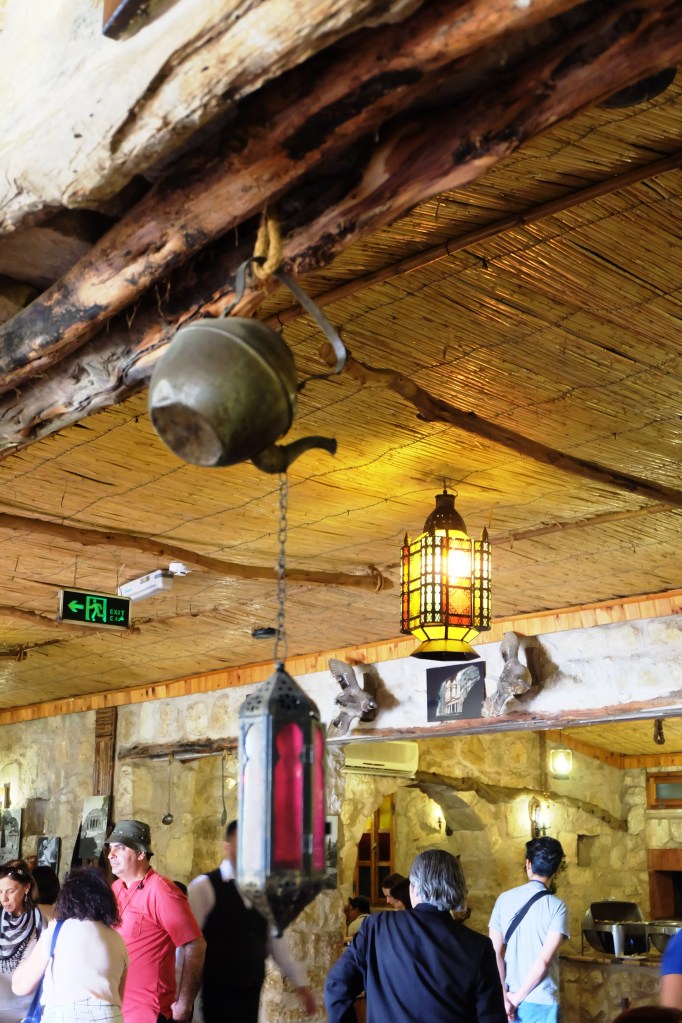
A restaurant in the desert of Meribah on the way to the ancient city of Petra in Jordan. Photo by author, 01 May 2019.
Jesus our Good Samaritan continues his “resolutely determined journey” to Jerusalem. On his way, “Jesus entered a village where a woman whose name was Martha welcomed him. She had a sister named Mary who sat beside the Lord at his feet listening to him speak” (Lk.10:38-39).
It is another story only St. Luke has like the parable of the Good Samaritan last Sunday. And like that parable, we have memorized this story so well that we think there is nothing new we can find regarding the attitudes of Martha and Mary in receiving Jesus. Worst of all is when we look at its simplistic interpretation that Jesus favored Mary’s contemplative spirit than Martha’s active characteristic.
Again, Jesus invites us today to suspend our beliefs about the story of Martha and Mary by going deep inside us to discover its true meaning as it tells us something about that inner question we shared last Sunday with the scholar who asked the Lord, “what must I do to inherit eternal life?” (Lk.10:25).
Kettle-lamp inside a restaurant in Meribah, Jordan.
Martha, burdened with much serving, came to him and said, “Lord, do you not care that my sister has left me by myself to do the serving? Tell her to help me.” The Lord said to her in reply, “Martha, Martha, you are anxious and worried about so many things. There is need of only one thing. Mary has chosen the better part and it will not be taken from her.”
Luke 10:40-42
Too often, the simplistic preaching we hear about this story is very unconvincing when some would argue the primacy of the “contemplative spirit” displayed by Mary over Martha’s zeal in hosting or “catering” for Jesus that is both necessary and valuable. Recall the many instances when Jesus also warmly accepted invitations by Pharisees and other sinners like Zacchaeus who also waited on him during meal. Two Sundays ago we heard how Jesus instructed the 72 disciples he had sent to “eat and drink whatever is offered to you” (Lk.10:7) when they are received as guests.
Very clearly, the lesson here is about hospitality that is more than staying at the feet of the Lord like Mary or getting busy at the kitchen like Martha. True hospitality in the Lord is welcoming him right in our hearts whether we are praying or doing something. Hospitality is from the Latin word “hospes” that means to welcome or to receive. In everything we do, whether in our actions and contemplation, it is Jesus who is our only focus and attention. We work in Jesus, through Jesus and with Jesus.
Jesus reproached Martha not for preparing their meal but for being “too anxious and upset” with so many things except him who had come to visit her and Mary. The gospels teem with so many instances where Jesus warned us his followers not to worry so much of the things of the world like food and clothing, money and other forms of security including how we shall defend ourselves against enemies when persecuted. Jesus has us all covered, so to speak.
The problem among so many of us priests and nuns these days is when we have become politicized than evangelized that we are so anxious and upset of so many things that we feel we are the savior of the world. The messianic complex plagues us in the Church where we have been so focused with our call, forgetting our Caller, Jesus Christ. Worst of all, we have stopped praying to Jesus especially in the Blessed Sacrament.
Last Sunday Jesus asked us to look more inside of us so that the more we see ourselves, the more we see him in others. Today, Jesus tells us that the more we become active, the more we must be contemplative looking to him within us. And when we are truly contemplative, we become more active in him with others! At its core is always that deep relationship, personal relationship with the Lord who always comes to visit us.
15th century icon of Abraham’s visitors at Mamre by Russian artist Andrei Rublev.
In the first reading we have heard Abraham welcoming his visitors believed to be the Blessed Trinity at his tent in Mamre. What a lovely story and a scene to behold where Abraham was like Martha busy preparing for the Lord his visitor. But unlike Martha, Abraham was never reproached because the Lord remained his focus in his waiting and hosting! It was during that visit at Mamre when God promised Abraham before leaving that his wife Sarai would bear a son the following year, fulfilling the earlier promise made to him that he would he would be the father of a great nation. If you have time to read further, Abraham’s wife came to be called Sarah from Sarai after the Lord heard her laughed upon hearing him spoke of their having a son the following year. It was Sarah who was reproached by God like Martha for not believing she would bear Abraham a son because she must be anxious and upset with so many other things like her age and being barren. There was no true hospitality in her too like Martha.
Back with Abraham at Mamre, the Lord revealed that true hospitality always leads to salvation, the fulfillment of the Divine promises. There in his tent where Abraham welcomed God wholeheartedly in himself, he received the good news of the birth of Isaac, the fulfillment of being the father of a great nation.
In Nazareth the same thing happened when Mary wholeheartedly welcomed the Angel Gabriel’s good news of the birth of Jesus, the Christ now in us according to St. Paul who is our “hope for glory” (Col.1:27).
In this simple story of Martha and Mary, St. Luke tells us something more than true hospitality, that whenever we receive somebody as a guest, when we reach out to help those in need like the Good Samaritan last Sunday, it is always Jesus whom we meet. Don’t be caught up with so many other things except Jesus because whenever he comes, he always has good news for us! A blessed week to everyone. Amen.
Welcome to our Parish of St. John Evangelist, Bagbaguin, Sta. Maria, Bulacan. Saturday Vigil mass at 5:30 PM and Sunday Masses at 7AM and 5:30PM. Don’t miss Jesus with his blessings and good news for you this Sunday!
Jesus is the Good Samaritan par excellence. Photo from America Magazine via Google.
It’s a beautiful, warm and sunny Sunday on this side of the earth, perfect for reflecting anew on the meaning of the parable of the Good Samaritan proclaimed in all churches today.
And of course, we do it with popular music.
For our Lord My Chef Sunday music today, we have a song from the OST of the 2005 Cameron Crow movie “Elizabethtown” starring Orlando Bloom and Kirsten Dunst.
Though it did not do good in the box office like the critically-acclaimed “Vanilla Sky” and “Almost Famous”, “Elizabethtown” speaks so well of Crowe’s reflections about that inner stirrings or movements within us all, of a longing for something more meaningful than just driving in the fast lane of life like “Jerry Maguirre”.
Written by Crowe with a help from his former wife who used to be a member of Heart, Nancy Wilson, our Lord My Chef Sunday Music “Same In Any Language” speaks a lot about being a neighbor to everyone, regardless of color and creed.
The song teaches us like the parable of the Good Samaritan that the question we should be asking is “am I a neighbor” to others especially to those in need than searching for “who is my neighbor”.
My neighbor is the one with whom I identify myself with, seeing with compassion and mercy when down in sufferings.
My neighbor is the one with whom I get down on the road to help and raise because I also feel his or her pains.
My neighbor is the one with whom I see Jesus Christ, the God who became human reaching out to me, asking me to care for him, to love him, teaching me the things to do so I may inherit eternal life.
Try listening to the laid back music of “Same In Any Language” that is refreshing with lyrics so simple yet very reflective. Better, try also watching “Elizabethtown”.
Have a blessed Sunday and a new week ahead of you!