Postscript to Father’s Day

Quiet Storm by Fr. Nicanor F. Lalog II, 19 June 2023
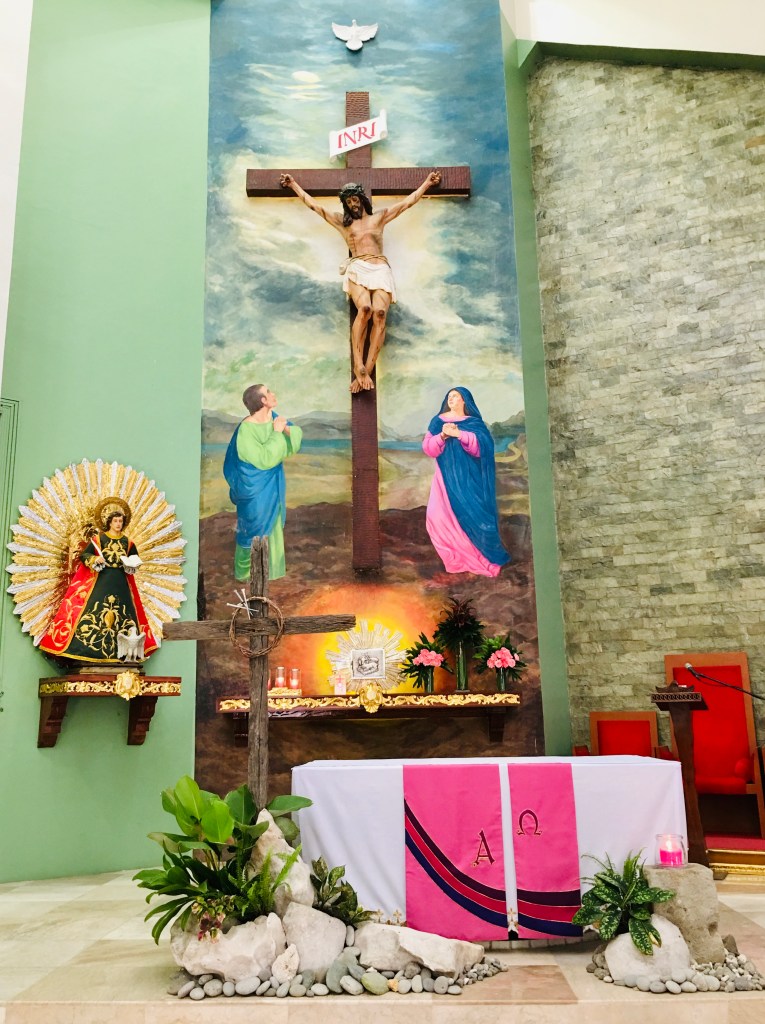
Photo by author, Sacred Heart Novitiate, Novaliches, Quezon City, 20 March 2023.

Forgive me for always having reservations in the celebration of Father’s Day as well as of Mother’s Day. I am not against these celebrations but often wary that being a secular observance, they often miss out the spiritual aspect of fatherhood (and motherhood) that are both gifts of God. In fact, the Ordo of the Mass, that little reference book we use in our daily celebrations of the liturgy, reminds us priests that Fathers’ Day celebration “should not diminish the primary focus of this Sunday as the celebration of the Paschal Mystery.”

Consider also the fact how religious celebrations like Christmas have been “corrupted” to mere commercialisms by our world so driven by consumerism and materialism; how much more a secular celebration like Father’s Day could end up that way too?

As we reel from yesterday’s celebrations with a lot of gifts, food and drinks to all the great dads, join me in reflecting on God as our Father which I have learned from one of my spiritual fathers, the late Msgr. Sabino S. Vengco Jr.

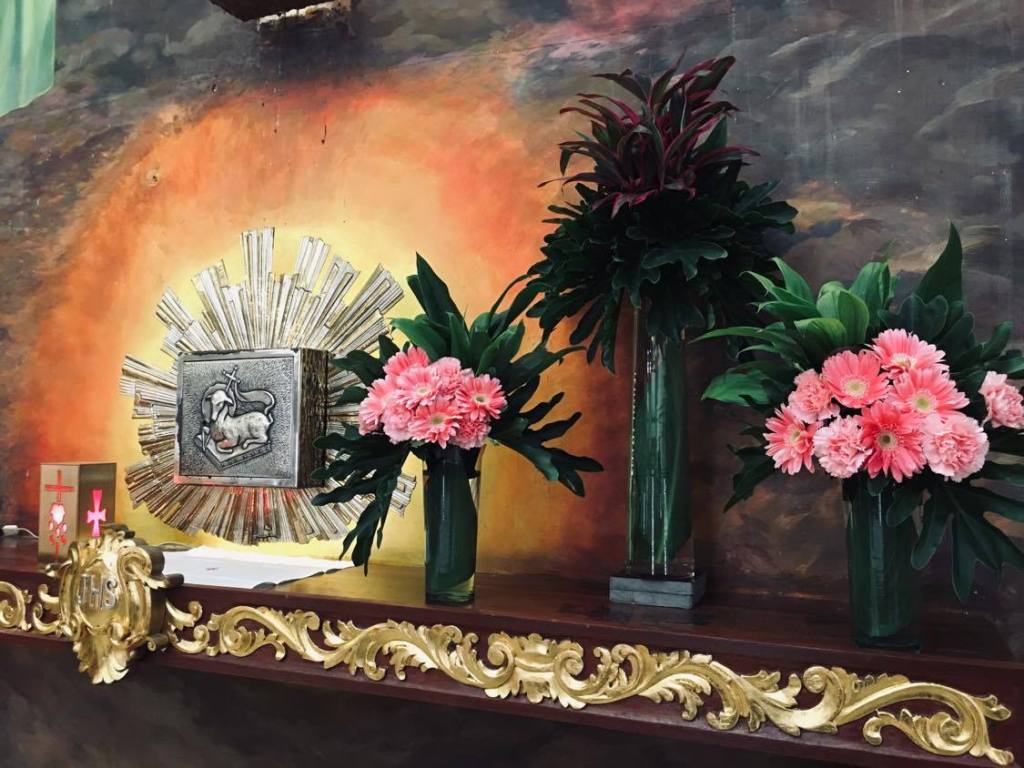
Photo by Arch. Philip Santiago, 2022.

God is our Father because he is the giver of life. This is the first meaning of fatherhood: the father is the source of life. Genetically speaking, even though we inherit equal genetic materials from our parents that make us who we are, researchers say that we “use” more of the DNA from our fathers. Maybe this is the reason why we have that expression in Filipino, “Anak ka ng tatay mo”. Recall how St. Joseph had to marry the Blessed Mother, Virgin Mary when he had to stand as the “foster father” of the Savior by giving him the name “Jesus”. Likewise, being from the house of David, his being the “foster father” of Jesus fulfilled God’s promise in the Old Testament that our Savior shall come from the lineage of King David.

Unknown to many including priests, the rite of Baptism states that in the administration of the sacrament to the infant, it is the father who gives the name to the child being baptized because that child came from him!

But Dads as giver of life is more than in the biological sense. A father inspires and motivates his children to become better and matured persons. As a giver of life, the father shows the best examples of leadership, wisdom and prudence in dealing with life’s many complexities. It is the father who opens the minds and hearts of the children to become better citizens of the nation, not as burdens of the society in the future.

Cheers to all the Dads who have stood by their sons and daughters, working hard not only to provide food and clothing to their children but most especially a brighter future for them with their good examples of being responsible and committed fathers.
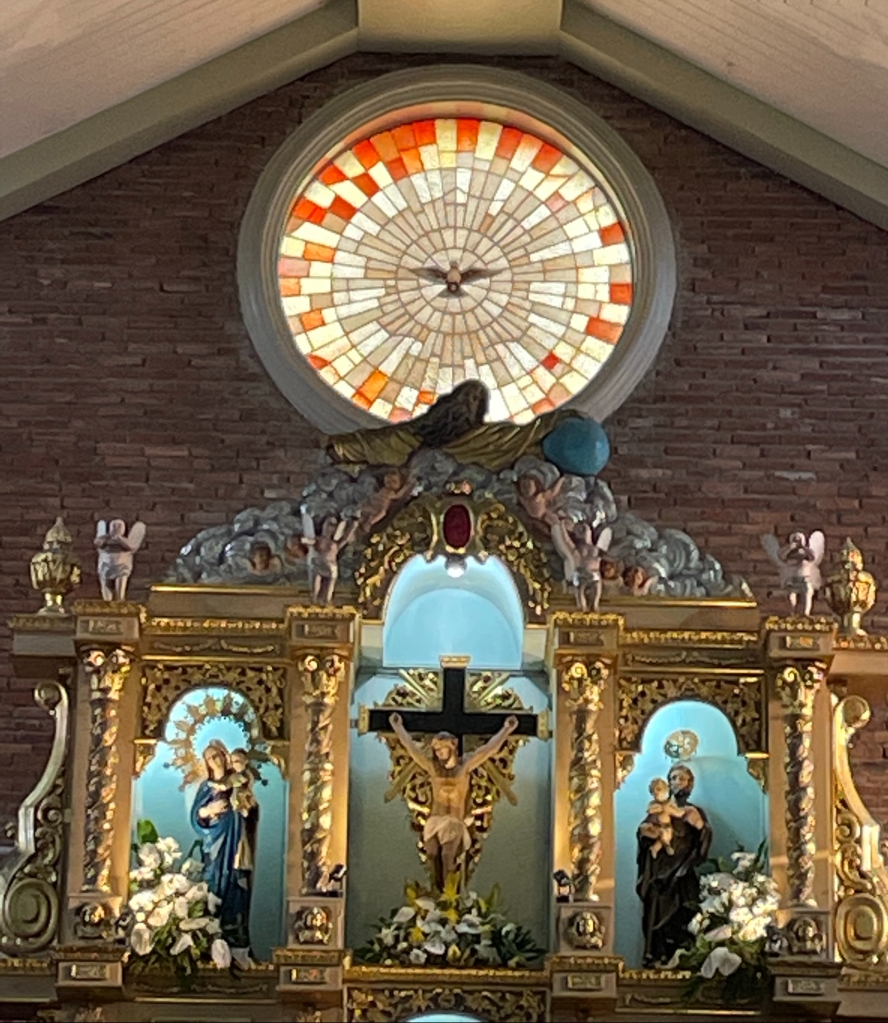
Photo by author, St. John the Baptist Parish, Calumpit, Bulacan, 2022.

God is our Father because he protects life. It is always easy to be a parent but not truly a father (or a mother). How sad these days many young men have become like rabbits, lacking the maturity of giving one’s self into marriage and commitments.

A father does not only give life but must also sustain and most of all, protect life. Having lived during those times of frequent brownouts, I have learned this sense of protecting from my dad who would always tell us to be still as he rose to get the flashlight or find the match and candles whenever lights suddenly went off in the middle of our dinner. I grew up with that certainty that dads are men of courage, the ones who would always go first into dangerous situations to protect the family like my dad. When the father is the first to be scared or to scream in the event of dangers, there is surely a big problem at home.

Moreover, I have also observed that though wives outlive their husbands as proof that the female species is stronger than us males, there is still something so noble about fathers as protectors of life and family. Dads are always the first to die because they are the first to go into the great unknown called eternal life in order to watch over us his family. So many times since my father died in year 2000, I have felt him by my side whenever I faced big problems and difficulties. Many times I talked to him in my prayers, asking him for clarifications when I have to make crucial decisions for the family or in my ministry. He would sometimes appear to me in dreams or would make “paramdam” as we call it in Filipino when he sends signs of his presence to convey something important. Even in eternal life, Fathers remain close to us to protect and keep us safe from harm. And perhaps, he goes ahead of us to prepare the welcome party when our turn to die comes.
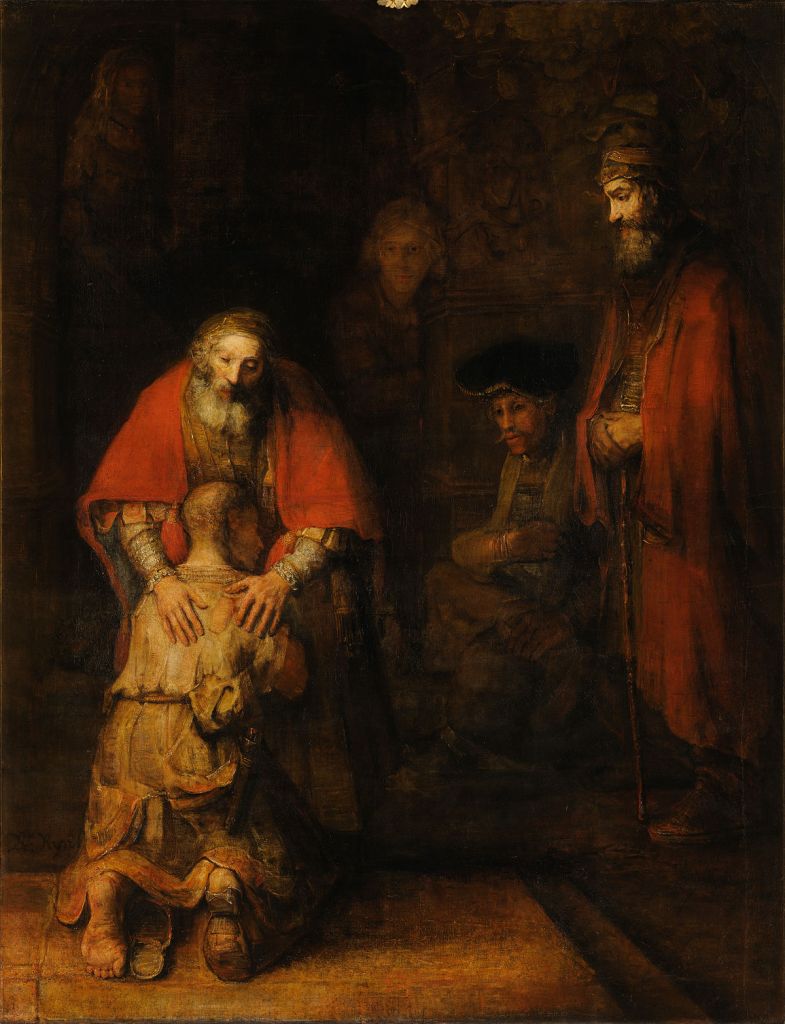
Rembrandt’s “The Return of the Prodigal Son” rom en.wikipedia.org.

God is our Father because he brings back life when we lose it. This is the most beautiful imagery of God being a Father like that loving father of the prodigal son in Luke’s gospel. That is the height of fatherhood when children even wife lost life to wrong decisions, to sins, or anything that completely alters our way of living, it is always the father who assures us of how life would go on or continue, of how he would do everything to give us back our lives.

Have you noticed how despite being considered as the authority figure at home with their being strict and firm, fathers are actually more easier to approach than mothers when it comes to serious problems? A lot often, we tell our dads first of our major mishaps or accidents or misadventures because they are more calm and serene, always thinking ahead of finding solutions. Unlike mothers who are hyper ones, tending to nag and voice out their feelings inside. When I was in the seminary, a classmate borrowed my new tennis racquet. Unfortunately, he lent it to other seminarians until it was left behind at the tennis court that was picked by some outsiders who used to enter our compound after our recreation time. As vacation time approached, I prayed hard and told my dad if he could give me 300 pesos (that was quite a fortune in the early 1980’s) so I could get a new tennis racquet lest my mom would discover it was lost and I would be scolded, even spanked!

Many times, I have heard from many young people how it was their father who literally saved them by forgiving them and even helping them pick up the pieces of their lives when they got involved into teenage pregnancies. It seems those stories of fathers disowning their children especially the daughter for being disgrasyada is more of an exception than a rule, perhaps true only in telenovelas and movies.

During my final years in my seminary formation until my ordination to the priesthood in 1998, every time I would come home I would look intently at my father’s hands and face, observing his many wrinkles, burned and sagging skin. Whenever I would look at his hands and face, I thought of those days and nights and years when my dad would take the jeep and bus to work so we could have good food and good education, those many sacrifices he had to make for us to have some of the simple pleasures in life, of his fidelity to my mom and to us all that we are his only beloved and nobody else.

That is why when he died on the eve of Father’s Day on that third Sunday of June, the 17th in the year 2000 that coincided with my mom’s birthday, I felt a great part of me had gone too. It was very difficult. The pain has always remained but somehow, in his death, I have continued to feel his fatherhood with the great love he had showered us while still alive. That is why, unlike others, I choose to remain silent on Fathers’ Day, praying and reflecting fatherhood, a most precious gift of God whom Jesus revealed to us is also a Father. God bless all the fathers of the world! Amen.

My dad at his dest at the Bureau of Forestry (later Forest Development), 1972.

“Alfie” by Cilla Black (1966)

The Lord Is My Chef Sunday Music, 27 March 2022
Alfie, poster, Michael Caine, 1966. (Photo by LMPC via Getty Images)

Sorry for being out for a long time with our Sunday music collection we try to relate with the Sunday gospel. But on this Fourth Sunday of Lent, we can’t let it past without coming up with our choice that perfectly matches the parable of the prodigal son – “Alfie” from the 1966 classic film of the same title.

Written by the formidable tandem of Burt Bacharach and Hal David, “Alfie” is the main character played by Michael Caine in the film about a young man who played on so many women and almost everyone without any regard for persons and relationships. Alfie is practically like the prodigal son in today’s gospel who also in the end realized the mess and waste of life he had done to himself and others (https://lordmychef.com/2022/03/26/the-joy-of-coming-home-in-the-father/).

I never had the chance to watch the classic film except the 2004 version that starred Jude Law but the song remains so touching and meaningful then and now in our generation. It is also said to be the favorite of Bacharach among his many great songs composed with David.

Learned about the song through the music of Dionne Warwick who had interpreted most of the works of Bacharach and David; but, it was only now that I have learned the original version by Ms. Cilla Black that was released in 1966. Funny that when the movie was released in the US, the producers had the young Cher recorded it too which became the version heard in the film.

The song had been covered by so many other artists with the latest by a Japanese named Fuji Kaze but, regardless of the artist singing Alfie, it is one song everyone of us can claim as ours with its sincerity and truth that come from the heart of someone truly on a Lenten journey of coming home to self, others, and God.

What's it all about, Alfie?
Is it just for the moment we live?
What's it all about when you sort it out, Alfie?
Are we meant to take more than we give?
Or are we meant to be kind?

And if only fools are kind, Alfie
Then I guess it is wise to be cruel
And if life belongs only to the strong, Alfie
What will you lend on an old golden rule?

As sure as I believe there's a heaven above, Alfie
I know there's something much more
Something even non-believers can believe in

I believe in love, Alfie
Without true love we just exist, Alfie
Until you find the love you've missed, you're nothing, Alfie

When you walk let your heart lead the way
And you'll find love any day, Alfie
Alfie

*We have no intentions of infringing into the copyrights of this music and its uploader except to share its beauty and listening pleasure.

From YouTube.

The joy of coming home in the Father

40 Shades of Lent by Fr. Nicanor F. Lalog II
Fourth Sunday in Lent-C a.k.a. "Laetare Sunday", 27 March 2022
Joshua 5:9, 10-12 ><}}}*> 2 Corinthians 5:17-21 ><}}}*> Luke 15:1-3, 11-32
Photo by Dr. Mylene A. Santos, MD, in Lourdes, France, 20 March 2022.

Life is a daily Lent, a coming home to the Father. As I have been telling you, the 40-days of Lent is a journey back home to God in Jesus Christ with each Sunday like a door leading us closer to Him. We rejoice this Fourth Sunday – Laetare Sunday – as we near God’s inner room, knowing Him more than ever as we experience His immense love and mercy for us like a Father welcoming his children to “enter” and celebrate home in Him.

But, are we really in the journey?

Or, are we just like the two selfish, self-centered brothers in the parable who took their father for granted by pursuing for their own very selves?

Tax collectors and sinners were all drawing near to listen to Jesus, but the Pharisees and scribes began to complain, saying, “This man welcomes sinners and eats with them.” So to them Jesus addressed this parable: “A man had two sons…”

Luke 15:1, 3, 11
Photo by author, Laetare Sunday 2019 in my former parish.

Acting like the sons…

Once again, we hear another story from Luke that is uniquely his. It is more known as the parable of the prodigal son when in fact the center of the story is the loving and merciful father giving everything including his very self to his two sons.

There are two preceding parables before this third one, that of the lost sheep and of the lost coin that are in chapter 15 of Luke’s gospel. See how Jesus developed into a rising crescendo his series of parables starting with a lost sheep, a lost coin, and finally, lost sons. The common thread running through the three parables was the great joy of the shepherd, woman and father upon having their lost ones again. Clearly, God is the shepherd, the woman, and the father looking for the lost sheep, lost coin and lost sons. And here lies the very essence of the parables, especially in this third one about the loving and merciful father: “the Pharisees and scribes who began to complain why Jesus welcomes sinners and eats with them.”

We are those Pharisees and scribes who doubt and refuse to believe, even run away from our loving God in the belief there must be somebody else there who could love us truly by giving us what we need.

Photo by author, Laetare Sunday 2019 in my former parish.

Exactly like the younger son in the parable who sees God merely as a provider, an ATM or a Western Union counter who gives the cash we need to buy things we believe would complete us without realizing God is our life, our identity and root of being. This we find at what prompted the younger son to return home (return home, not come home which happens only when home is a person, not a place nor thing).

When he had freely spent everything, a severe famine struck that country, and he found himself in dire need. So he hired himself out to one of the local citizens who sent him to his farm to tend the swine. And he longed to eat his fill of the pods on which the swine fed, but nobody gave him any. Coming to his senses he thought, “How many of my father’s hired workers have more than enough food to eat, but here am I, dying from hunger. I shall get up and go to my father and I shall say to him, “Father, I have sinned against heaven and against you. I no longer deserve to be called your son; treat me as you would treat one of your hired workers.”

Luke 15:14-19

Sometimes we are like the younger son who returns home just to preserve one’s self – to have a roof and to have food so as not to starve, never go hungry. It is the first temptation of the devil, teasing Jesus and us to turn stones into bread because man lives to eat! That is why we keep on asserting our own power so we can do everything because we have forgotten our being-ness in God. We hate having nothing, being empty and would rather fill our bellies with whatever we can stuff our mouth with that in the process even swallow our pride and dignity to have, to possess everything, even everybody except God.

Photo by author, Laetare Sunday 2019.

On the other hand, we are like the Pharisees and scribes “complaining why Jesus welcomes sinners and eats with them” so personified by the elder son who refused to enter their house to join the celebrations at the return of his prodigal brother because his manipulative schemes have been unmasked. For him, serving his father was just a show because he was only an actor, everything was a movie or a teleserye playing one’s roles in exchange of a fee and fame.

He said to his father in reply, “Look all these years I served you and not once did I disobey your orders; yet you never gave me even a young goat to feast with my friends. But when your son returns who swallowed up your property with prostitutes, for him you slaughter the fattened calf.”

Luke 15:29-30

Again, we find here some semblance of the second and third temptations to Jesus and to us by the devil: worship him and you will be popular and powerful! We all want having the best for us to be the very best among our peers and neighbors. We are willing to buy time, even buy people just to be known and popular. We would not mind being patient over a long period of time believing in the end, we could end up having all.

When we think of our needs to be secured and safe, popular and powerful, the first that comes to our minds and consciousness are things that money can buy, food that fill stomach, and drinks that refresh the body. Like the two brothers, they were all concerned with material and physical, nothing spiritual nor emotional or even mental. A life without any depth like Alfie played by Michael Caine with music by Burt Bacharach asking, “What’s it all about, Alfie? Is it just for the moment we live?”

That’s the tragedy of our lives, of being like the Pharisees and scribes personified by the two brothers who were so lost in their own selves, refusing to see beyond to find others and God, now and eternity, earth and heaven.

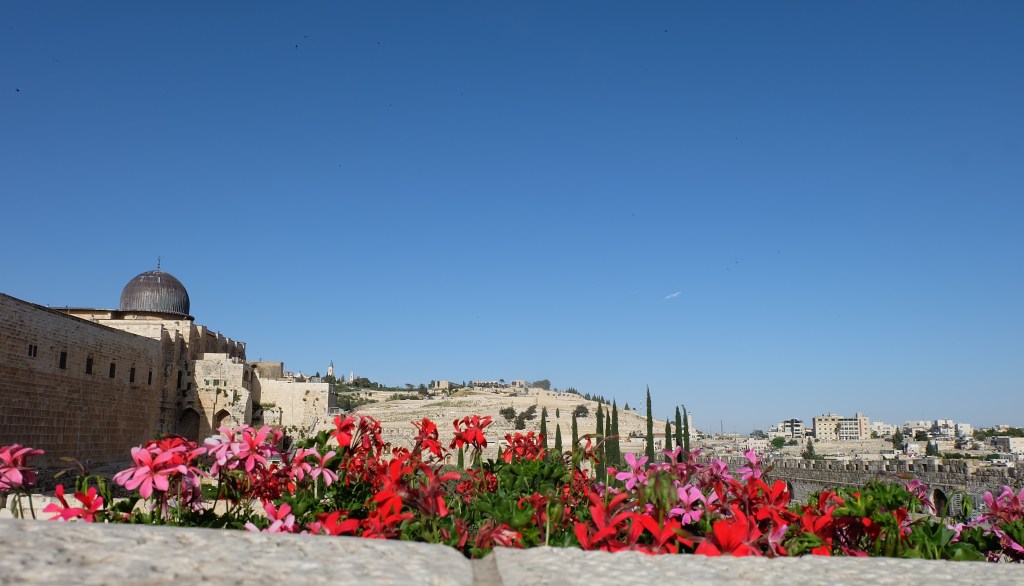
Photo by author, view from the Old Jerusalem, May 2019.

…becoming like the Father

This is the grace of this fourth Sunday, its greatest joy and cause for celebration: our being home in God, being whole again in Him after realizing and accepting our broken and sinful selves.

Make no mistake that it was us who have found God; no, it is the other way around.

God is the Father always awaiting for us that He sent Jesus Christ to lead us home again in Him. In this parable, the late Fr. Henri Nouwen rightly said Jesus is the “prodigal son” who left heaven not out of rebellion but because of obedience and submission to lead us all back to the Father, the only One who loves us truly, our very “first love” for He is the one who loves us first and still loves us no matter what.

Stop seeking for the world’s basic staples of food and wealth, fame and power because the most basic truth in this life is we are loved by God who is love Himself because He is life. See Luke’s sense of humor: the prodigal son wanted only food and shelter but the father gave him back his status as son with the ring, fine clothes and slippers, and feast while the elder son was longing for a mere young goat without realizing it has long been his for everything the father has was his too! Like us in many occasions in life, we fail to see how much we already have in God that we turn away from Him to settle for lesser things.

See our foolishness in desiring the world when it has always been ours if we remain in God. That is why we need to celebrate because finally we have found what is truly basic and valuable, God who gave us his Son Jesus Christ so we can find our way back home to Him and learn what is most valuable in life.

In this parable, Jesus is asking us to “level up” our existence, to rise above our very selves and be who we really are as beloved children of the Father who is merciful and rich in kindness.

Like in the first reading, no more manna for we have entered the Promised Land where we can have real food and real drink – Jesus Christ who sustains us to eternal life. Let us keep in mind and heart Paul’s reminder and call in the second reading that “Whoever is in Christ is a new creation… so, let us be reconciled in God” (2 Cor. 5:17, 20). Only those who are reconciled in God in Jesus can experience true joy… so, stop complaining and whining of others getting close with God. Join us and celebrate! Amen.

Have a joyuful week ahead.

Lent is understanding Sin

40 Shades of Lent, Sunday Week IV-C, 31 March 2019
Joshua 5:9,10-12///2Corinthians 5:17-21///Luke 15:1-3,11-32

Sin can be mysterious at times because it can also be a religious experience that leads us back to God and holiness. We have a saying that “every saint has a sinful past and every sinner can have a saintly future.” So many men and women who were so notorious in their lives have proven this so true like St. Paul and St. Augustine.

After reflecting on the call for conversion last Sunday, our gospel today tells us a lot about the nature of sin. Unless we understand what is sin and why we sin, then we get imprisoned by sin as we keep on committing it no matter how hard we try to be better persons. But once we understand even a little bit of it, its hows and whys, then we sin less often as we slowly break free from its bondage.

“A man had two sons, and the younger son said to his father, ‘Father, give me the share of your estate that should come to me.’ So the father divided the property between them.”

Luke 15:11-12

Sin is when we separate from the Father like the younger son when we ask for our “share of your estate that should come to me” referring to that part of this whole life only God can have in its fullness. We always have the idea that it must be so vast and huge that even just a part of it would be more than enough for us. We want to be on our own that we break away from Him, thinking wrongly that the share we have is more than enough for us without truly realizing how great and so vast is the Father’s estate which is life itself!

And so it happens, we break away from God and live on our own that sooner or later, our share dissipates until we lose everything.

This estate, this very life of God will never be gone like Him, will never diminish nor dissipate. We shall always have it, enjoy it for as long as we are with Him, our loving Father! This is also the point of the Father to the elder son when he refused to join their celebration when his younger brother returned. Life, love, kindness, family, everything that is good dissipates when held individually away from God. But when we share it with the Father through Christ, it is like the river that never runs dry.

When he had freely spent everything, a severe famine struck that country, and he found himself in dire need… And he longed to eat his fill of the pods on which the swine fed, but nobody gave him any.

Luke 15:14,16

Sin always gives us the sense of “freedom” like the young son who “freely spent everything”. There is always that wrong understanding of freedom as the ability to do everything and anything, feeling that everything in this life is ours alone. Freedom is first of all choosing what is truly good. To be free is to be loving, being a part of the whole and never separated from the whole. To be truly free is always to be one. This explains why when we are deep into sin and all alone, separated from others, we suddenly long to be one with others. The sense of belonging suddenly pops up within us because we find ourselves incomplete when in sin.


“My son, you are here with me always; everything I have is yours.”

Luke 15:31

Here lies the problem also with the elder son who has always been present with their father but had never been one with him, never belonging to him. He is guilty of “sin of omission” when he felt nothing seems to be wrong with him as he breaks no rules of their father – except their relationship and ties. The apostle James wrote in his letter that “a person is tempted when he is lured and enticed by own desire” (Jas.1:14). Sin is always the desire to be sufficiently alone, to be powerful, to be God! See how since the beginning, we have never outgrown that sin of Adam and Eve of becoming like God, of playing god.

My dear sisters and brothers, like Paul in our second reading today, let us be reconciled to God in Christ. To be reconciled is to be one, to belong, to become a part again of God. In the dryness and desolation of sin like the desert in the experience of Joshua and the Hebrew people, God continues to bless us with so many gifts, so many blessings. The two brothers in the parable are both sinners but loved by their father. And so are we.

More than avoiding sins, our gospel parable this Sunday invites us to love God more by seeking His will always. Yes, we have all been hurt by someone else’s sins and we have also caused pain on others with our sins. Let us focus more on this vast gift of life and love expressed in God’s mercy and forgiveness that no sin could ever diminish. And the good news is that it is all free and totally being given to us by Jesus Christ especially in our Sunday Eucharist. A blessed week to you!

*All images from Google.