Our sense of belonging

The Lord Is My Chef Breakfast Recipe for the Soul, Monday, Easter Week-IV, 04 May 2020

Acts of the Apostles 11:1-18 ><)))*> ooo+ooo <*(((>< John 10:11-18

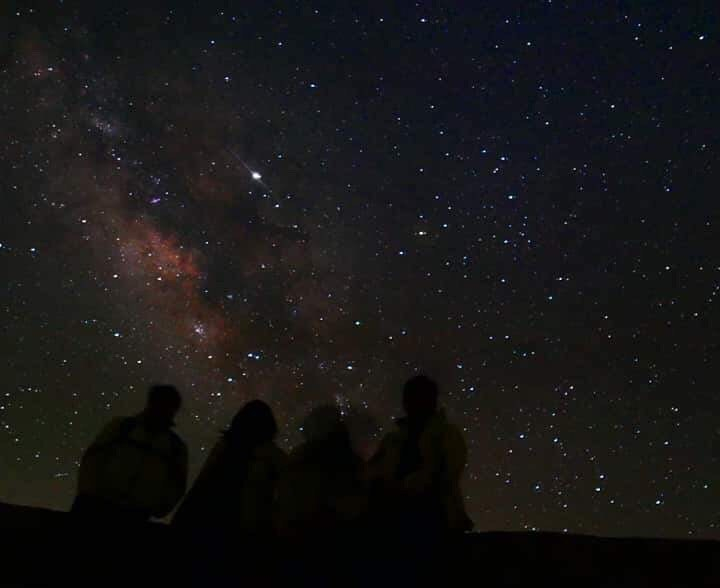
Photo by Mr. Jim Marpa, 2019.

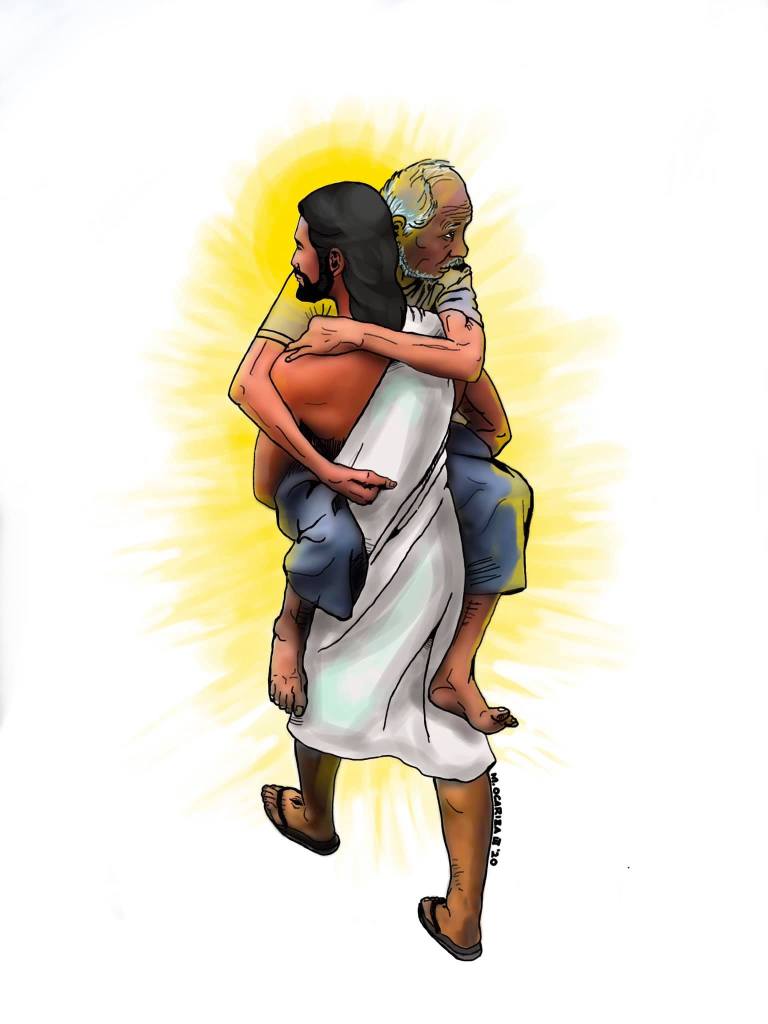
One good thing about this COVID-19, O Lord, is how it is teaching us today that we all belong to each other, that we all belong to you, our loving and merciful God.

How wonderful that in the midst of quarantine, the many brothers and sisters we have looked down or taken for granted for so long a time are finally telling us, showing us that in this life, we do not need boundaries or walls but bridges to link us all as one.

We belong to just one flock with one Shepherd, Jesus Christ.

In him alone can we rely and trust because he is the only one who is “the way and the truth and the life.”

Even him tells us in today’s gospel that there are still other sheep who do not belong to our fold of whom he must also look after and guide (Jn.10:16) because ultimately, we all go to one destination in life which is eternity in you, O God, our Father Almighty.

Help us realize like Peter in the first reading that the key is to be inclusive than exclusive. May we see that more than the many superficialities of our color, beliefs, and gender is your Son’s Easter gift of divinity you have shared with us.

May we focus more on our similarities than differences so that we may work and live harmoniously as one big community to never allow this calamity to befall us again. Amen.

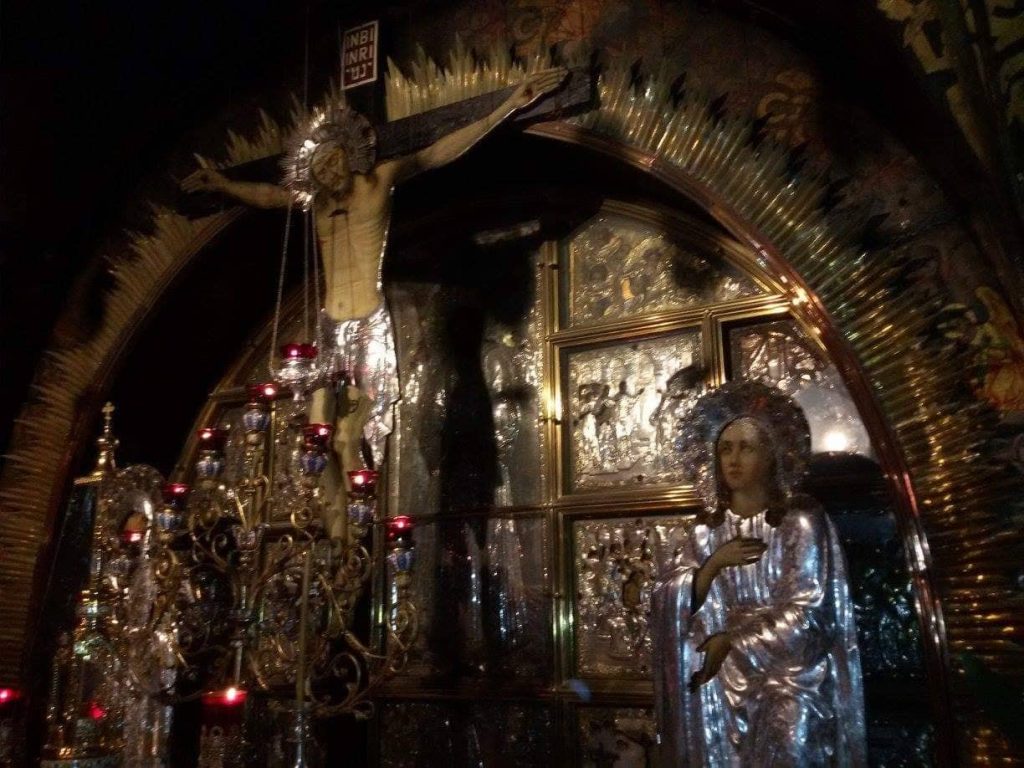
From Google.

Private time with Jesus

The Lord Is My Chef Breakfast Recipe for the Soul

Tuesday, Week 4, Year 2, 04 February 2020

2 Samuel 18:9-10, 15, 24-25, 30-19:3 ><)))*> <*(((>< Mark 5:21-43

Photo by author, Mt. St. Paul Spirituality Center, La Trinidad, Benguet, 03 February 2020.

Thank you very much, Lord Jesus Christ, for this gift of rest in you. Thank you for reminding us last Friday how you would always explain everything about your parables “in private” to your Twelve apostles (Mk.4:34).

Today I feel that if there is one thing you would really want to ask each one of us is to have some private, personal time with you.

We have always been so busy with so many things in life except with you, Lord.

Like that woman in today’s gospel afflicted with hemorrhages for 12 years seeking to touch even your clothes to be healed, many of us still feel so alone, even alienated in the midst of the crowds, of so many friends and followers in social media and of all kinds of BFF’s.

Many of us have forgotten that of all the bestest friends we can ever have in life is no one but you, Lord. And that’s the good news!

You are always here for us, Lord Jesus, always looking for us, searching us, wanting to enter into a personal relationship with us that is vibrant and alive.

Jesus, aware at once that power had gone out from him, turned around in the crowd and asked, “Who has touched my clothes?’ But his disciples said to him, “You see how the crowd is pressing upon you, and yet you asked, ‘Who has touched my clothes?'” And he looked around to see who had done it.

Mark 5:30-32
Photo by author, Mt. St. Paul Spirituality Center, La Trinidad, Benguet, 03 February 2020.

After meeting the woman you have healed, people came to inform Jairus that his sick daughter had died, that he should no longer bother you. But, you assured Jairus that his daughter was asleep and has not died, asking him to just have faith in you. Again, you asked him for some private time with you:

Then Jesus put them all out. He took along the child’s father and mother and those who were with him (Peter, James, and John) and entered the room where the child was.

Mark 5:40

Give us O Lord Jesus the grace to make that precious moment to spend time with you in private to experience your healing and loving presence.

May we always keep in mind that in the beginning when God created the first man, it has always been your desire that we be alone with you, first of all. Amen.

Keep the fire burning

The Lord Is My Chef breakfast Recipe for the Soul
Thursday, Week XIII, Year I, 04 July 2019
Genesis 22:1-19 >< }}}*> >< }}}*> Matthew 9:1-8
Waiting for the Mass to start, ready to light the candles. Photo by Lorenzo Atienza, 12 June 2019.

Our loving Father, your words today are so picturesque that I feel so speechless before you with the meanings they convey.

In the first reading when you tested Abraham to offer to you his son Isaac, he at once obeyed you without any question at all so that the following morning, he left for Moriah with his son, two servants, and some wood for the burnt offering.

On the third day, Abraham got sight of the place from afar. Then he said to his servants, “Both of you stay here with the donkey, while the boy and I go on over yonder. We will worship and then come back to you.” Thereupon, Abraham took the wood for the burn offering and laid it on his son Isaac’s shoulders, while he himself carried the fire and the knife.

Genesis 22:4-6

I really wonder O Lord what was in the mind of Abraham? Did he ever doubt you or at least entertain some other thoughts about your mood, of why you made him wait for so long to have a son then suddenly you would ask for him to be offered?

How great indeed is Abraham’s faith in you, O God! He was so composed in speaking to his servants and most especially to his son Isaac on whose shoulders he laid the wood for burnt offering. Not a hint did Abraham spill of your actual command that could have made Isaac fled in fear!

But what I like most is when Abraham carried the fire and the knife. Beautiful images of faith in you God: Abraham kept the warmth and illumination of his faith within him symbolized by the fire he carried and his generosity in offering Isaac symbolized by his knife.

I love that scene, Lord as I ask myself if I could truly offer you like Abraham who or what is most dearest to me?

That scene in the wilderness is complemented by Matthew’s story in the gospel that shows us how Jesus, like Abraham, continued to travel and reach out to you his Father to bring your mercy upon your people.

Jesus entered a boat, made the crossing, and came into his own town. And there people brought to him a paralytic lying on a stretcher. When Jesus saw their faith, he said to the paralytic, “Courage, child, your sins are forgiven.”

Matthew 9:1-2

Jesus himself is the fire of love who purified our hearts, our desires and most especially, our evil thoughts like some of the scribes there who accused him of blasphemy.

So many times Lord Jesus, we cannot keep the fire of faith burning within us that we keep on harboring evil thoughts in our minds, casting doubts not only on you but most especially with those around us. Like Abraham, teach us to be silent in your love. And like Jesus, teach us how to enter into our brothers and sisters that we may spare them of our evil thoughts. Teach us to speak words of wisdom and power of God to heal those sick among us, most especially us with our many anxieties and mistrust of others.

Teach us to be pure like Abraham in our faith in you and most especially, in our trust in your great mercy. Like Jesus, teach us to keep on crossing the street, of reaching out to others especially those trying so hard to find you.

Let us keep the fire of your faith, hope, and love burning within us, sharing it with others to find the fulfillment of your promises to us all. Amen.

“The Nearness of You” by Rod Stewart (2002)

The Lord Is My Chef Sunday Music, Ascension Sunday, 02 June 2019
Pilgrims on top of Mt. Sinai, Egypt. Photo by Atty. Grace Polaris Rivas-Beron, 07 May 2019.

Today is the Solemnity of the Ascension of Jesus Christ, the beginning of a new level of “nearness of God” with us.

And that explains the reason for our music this Sunday, “The Nearness of You” composed way back in 1938 by Hoagy Carmichael with lyrics by Ned Washington. The song debuted in 194o and since then has delighted many hearts and souls with its lovely melody and music interpreted by so many artists in every generation.

I have chosen Rod Stewart’s version taken from his 2002 album It Had to be You: The Great American Songbook because the song fits him so well. Yes, Rod is a rocker but he had matured so well that after all the noise, he has grown deeper in his art that his unique voice suddenly had acquired a depth coming not only from the heart but even from the soul. I won’t be surprised at all if one day Rod Stewart would be talking about some sort of spirituality and holiness.

Now back to our Sunday celebration of the Ascension of Jesus Christ…

15th century Greek icon of the Ascension of Jesus. From Google.

In the gospel today, St. Luke tells us that after Jesus had ascended into heave, the disciples “returned to Jerusalem filled with great joy.”

That is totally strange because whenever someone leaves, the general feeling is always sadness like when we have to change residence or old neighbors move out, when loved ones have to go abroad to work or worst, when a beloved dies. They all bring sadness.

Where did that great joy among the disciples of Jesus come from after the Lord had ascended into heaven?

From their hearts! The key to understanding and appreciating the Ascension of Jesus into heaven is not in looking up the skies or looking down on the ground where he stood. It is in looking deep into our hearts.

Anything that remains in our head or in our mind is always open to doubts. When that truth we believe in sinks into our hearts, then we get the conviction that it is really true. And that is when we experience great joy within: It is in the heart where we come to conviction that leads us into living authentically no matter how painful that truth may be. That is why there are saints and heroes – including lovers – willing to die for their beliefs because they are so convinced with the truth in their hearts.

From Google.

At the Ascension, the disciples had the conviction that Jesus is truly alive, that his going to heaven is more of coming to a new level of existence and relating with them, something no longer bounded by time and space, something always so near and so personal.

It is the same feeling we have with those we love. Even if they are not physically present with us, we feel their nearness because we love.

There lies the beauty and timelessness of the song “The Nearness of You”: nothing beats the love that brings us so close, so near with one another. Unless we have that deep conviction and love for a person, we will never rise up – or ascend – to higher level of relationship that is so near, so close.

 It's not the pale moon that excites me
That thrills and delights me, oh no
It's just the nearness of you

It isn't your sweet conversation
That brings this sensation, oh no
It's just the nearness of you

When you're in my arms
And I feel you so close to me
All my wildest dreams come true

If you can say these words to a beloved, imagine when you level this up to Jesus Christ? That would definitely be a new level of nearness with him and with others.

Look into your heart, believe, and be convinced.

Knowing is Intimacy

The Lord Is My Chef Sunday Recipe, Palm Sunday of the Lord’s Passion, Year C, 14 April 2019
Isaiah 50:4-7///Philippians 2:6-11///Luke 22:1-49
Photo from Bing.com.

Today we begin the Holy Week with two celebrations merged into one, Palm Sunday of the Lord’s Passion. The Palm Sunday is a tradition started by the early Christians in Jerusalem in the fourth century while in Rome during the 12th century, the Pope proclaimed the long gospel account of the Lord’s Passion on this Sunday to signal the start of Holy Week. Almost 2000 years later in reforming the liturgy, Vatican II merged these two traditions into one to usher in our holiest days of the year.

Like in the four Sundays of Lent except last week, St. Luke guides us today in reflecting the Lord’s Passion with emphasis on the Cross with its call to conversion. For St. Luke, the cross is the object of discipleship in Christ. Join me in reflecting on the last three words our evangelist had recorded when Jesus was crucified.

First word:

When they came to the place called the Skull, they crucified him and the criminals there, one on his right, the other to his left. Then Jesus said, “Father, forgive them, they know not what they do.”

Luke 23:33-34
Mosaic of the Crucifixion at the crypt of the Manila Cathedral. Photo by Arch. Philip Santiago, October of the Jubilee of Mercy 2016.

This is very striking. Immediately upon his crucifixion, Jesus prayed for the forgiveness of his enemies! It is a total adherence to his preaching during his sermon on the plain, “love your enemies, do good to those who hate you, bless those who curse you, pray for those who mistreat you” (Lk. 6:27-28, Seventh Week Ordinary Time, 24 February 2019). Here we find the immense love and mercy of Jesus — no hatred, no calls for revenge or threats like “karma” against those who crucified him. He simply begged for their forgiveness because “they know not what they do.”

In Jewish thought, to know means more than an intellectual knowledge for it implies relationship. Knowing somebody for them is more than knowing one’s name but having ties with the person. And to know something is always to see things in this perspective, always in relation with a person. Had they known Jesus is the Christ, they would have not crucified him! Exactly the preaching of St. Peter at the healing of a lame man after Pentecost at the temple when he told them they have “acted in ignorance” in “killing the Author of life whom God raised from the dead” (Acts 3:15). St. Luke also notes in his Acts of the Apostles how the crowd upon hearing St. Peter’s preaching were moved or “cut to the heart” (2:37) that many were baptized on that day. Recall also how at the arrival of the wise men from the East searching for the child Jesus: the scholars of Jerusalem “knew” from the books how the Christ would be born in Behtlehem yet he was found by the pagan magis! Even the most learned man in the New Testament, St. Paul admits how ignorant he had been in persecuting and blaspheming Jesus before (1Tim.1:13) experiencing God’s loving mercy.

In the bible we always see this combination of knowing and ignorance at the same time to indicate that more than factual and cerebral knowledge, there is that deeper knowing of relating and of loving. If we really know somebody, the more we love, the lesser we sin. St. Thomas Aquinas used to say that the more we know and become intelligent, the more we realize the truth, the more we must become good and holy. That is why saints are the most intelligent people that they were able to do what is good and what is right.

In this age of Google and Wikipedia , Jesus is challenging us that if we truly know so much that we have become smart and more intelligent, then, how much do we really love and care for others?

Photo from Google.

Second word:

Then he said, “Jesus, remember me when you come into your kingdom.” He replied to him, “Amen, I say to you, today you shall be with me in Paradise.”

Luke 23:42-43

The Venerable Archbishop Fulton Sheen used to claim that Dimas was indeed a great thief who was able to steal or snatch Paradise from Jesus just before dying on the Cross. It may be funny but very true. But more than “stealing” his salvation from the Lord, Dimas had displayed on the cross what we have discussed earlier about the combination of knowing and ignorance. I would say Dimas is perhaps the “most learned thief” of all time who truly knew what is most essential in life which is to know Jesus. The moment he called out to him “Jesus”, Dimas expressed his knowing Jesus, of belonging to Jesus. As we have reflected earlier, to know is to relate. Anyone who truly relates must first believe in order to love dearly. Dimas believed in Jesus that he called out to him while hanging on the Cross.

Today, Jesus is reminding us that the door to Paradise is him alone. And we begin to enter Paradise the moment we entrust our total self to Jesus like Dimas who came to know Christ at the Cross, and then believed him and loved him. If we really know, do we believe?

Altar of the Church of the Holy Sepulchre over the exact site where Jesus was crucified outside Jerusalem. Photo by Arch. Philip Santiago, October 2017.

Third word:

Jesus cried out in a loud voice, “Father, into your hands I commend my spirit,” and when he had said this he breathed his last.

Luke 23:46

One of St. Luke’s unique feature is always presenting to us Jesus at prayer. Especially here at his crucifixion. See how his first words were prayer of forgiveness for his persecutors. Now at his death, St. Luke presents Jesus again at prayer, reciting Psalm 31:5, “Father, into your hands I commend my spirit.”

Here we find the whole picture of Jesus Christ’s life which is a prayer and his prayer is his very life. From the very start, Jesus has always been one with the Father which is the essence of every prayer called communion. And that is the important aspect of his being our Savior: everything he said and did was everything the Father had told and asked him. There is that perfect communion of the Father and the Son in the Holy Spirit so that in his death, Jesus offered his total self with us to God. Everyone and everything is thus sanctified anew in Christ. This became possible only with his kenosis, his self-emptying eloquently expressed to the Philippians by St. Paul in our second reading.

On the Cross, everything in the life of Jesus Christ came to a full circle, God’s whole picture emerged. Now more than ever, we have become closest to God in love. In his dying on the Cross, Jesus made known to us God, brought him closest to us so we can relate and be intimate with him more than ever. In his becoming human like us by bearing all the pains and sufferings expressed in the first reading from Isaiah, God proved to us his love in Jesus. Most of all, he enabled us too to be capable of knowing and loving like Jesus Christ by being intimate with him always. This is why these days are called Holy Week when we are filled with God so we experience him anew and have him more than ever in our hearts, in our very selves. Amen.

When Being Near Is Not Enough

Yehliu1
Photo I have taken at the Yehliu Geopark, Taiwan of a unique rock formation depicting intimacy. (29 January 2019)

The Lord Is My Chef Breakfast Recipe for the Soul
Tuesday, 05 February 2019, Week IV, Year I
Hebrews 12:1-4///Mark 5:21-43

            Everyday O Jesus I pray to be near you like Jairus falling at your feet, begging for something or someone so dear to me.  Or like that woman afflicted with hemorrhages for twelve years, hoping to be close to you, contented in just touching your cloak (Mk.5:22, 27).

            But being near you O Jesus is not enough for you.  You desire us to be intimate with you, to be one in you not simply be with you.

            Every time I touch you, I get near you, you always look for me, asking me to step forward like what you did to that woman because you want more than a mere encounter but a relationship, face to face, heart to heart.  Every time I beg you to walk with me in darkness and dangers, you always demand complete faith and trust in you like Jairus when things get worst, insisting that I dismiss what I know, disregard my plans, and ignore what others say so I can rise up and be alive and free to be myself.


           O Jesus, help me to trust you more, to believe you more.  How foolish I am, O Jesus, when so often you ask simple things from me like looking at you, staying with you, remaining in you to always remember that “in my struggle against sin I have not yet resisted to the point of shedding blood” (Heb. 12:4) like you.  Amen.  Fr. Nicanor F. Lalog II, Parokya ng San Juan Apostol at Ebanghelista, Gov. F. Halili Ave., Bagbaguin, Sta. Maria, Bulacan. 

intimacyNouwen