Lawiswis ng Salita ni P. Nicanor F. Lalog II, Ika-14 ng Mayo 2020
Larawan kuha ni G. Jim Marpa, 2019.
Madalas nating isipin
mapalad o pinagpala
ang taong walang tiisin
buhay ay sagana at magaan
walang pinapasang hirap at sakit
nabibili lahat ng magustuhan:
malaking tirahan, magarang sasakyan
hindi kinakailangan may pinag-aralan
basta't mayaman
wala tayong pakialam
saan nagmula kanyang kaban
na tila di nauubusan kahit baon sa utang.
Huwag nating lilimutin
ang tunay na pagpapala
wala doon sa kayang bilhin
anoman ibigin, pagkain o inumin
o doon sa matatamo sa pagsisikap natin:
kapangyarihan at pangalan, maski pangangatawan.
Ang tunay na pagpapala
nagmumula lamang sa Diyos
hindi materyal kungdi espiritwal
kaya nang mangaral si Jesus sa burol
lahat ay nagimbal dahil kanyang pinangaral
salungat sa takbo at hangad ng sanlibutan.
Larawan kuha ni G. Jim Marpa, 2019
Mapapalad kayong mga aba,
mga nahahapis at mapagkumbaba;
mapapalad din kayong mga mahabagin,
mga nagmimithing makatupad sa kalooban ng Diyos,
lalo na mga gumagawa ng pagkakasundo
at mayroong malilinis na puso.
Mapalad din mga pinag-uusig
at inaalimura,
pinagwiwikaan ng kasinungalingan
alang-alang sa Panginoong Hesus
na di lang minsan tiniyak ang tunay na mapalad
ay yaong nakikinig, tumatalima sa salita ng Diyos.
At sino ang unang tumanggap,
tumalima sa Salitang naging Tao
kungdi si Maria na Ina ng Kristo
na bukod na pinagpala sa babaeng lahat!
Alalahanin matapos niyang tanggapin
bilin ng anghel ng pagsilang niya sa Emanuel
nagmadali siyang dalawin si Elizabeth
nakatatandang pinsang nagdadalantao rin;
pagkarinig sa kanyang tinig
kinasihan ng Espiritung Banal at ang nausal
"mapalad ka sapagkat nananalig kang matutupad
ang mga ipinasabi sa iyo ng Panginoon."
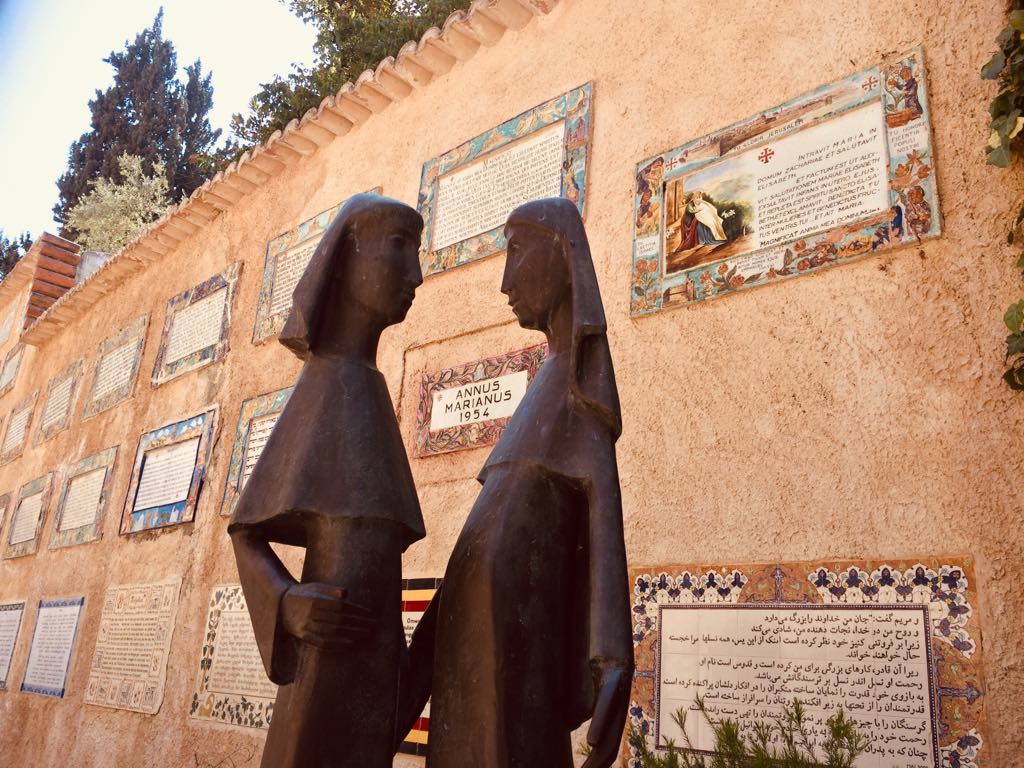
Larawan kuha ng may-akda, Simbahan ng Visitation sa Israel, Mayo 2017.
Ngayong panahon ng pandemya
hindi pa ba natin nakikita
walang saysay at kahulugan
mga inakala nating pagpapala
gaya ng kayamanan at kapangyarihan
o maging kalusugan?
Sa lahat ng panahon na sadyang walang katiyakan
wala tayong ibang kaseguruhan, maaring sandigan
kungdi ang Panginoong Diyos lamang!
Kaya kung ikaw ay magdarasal
laging hilingin tanging pagpapala sa Maykapal
pananalig at paniniwala salita niya di naglalaho parang bula.
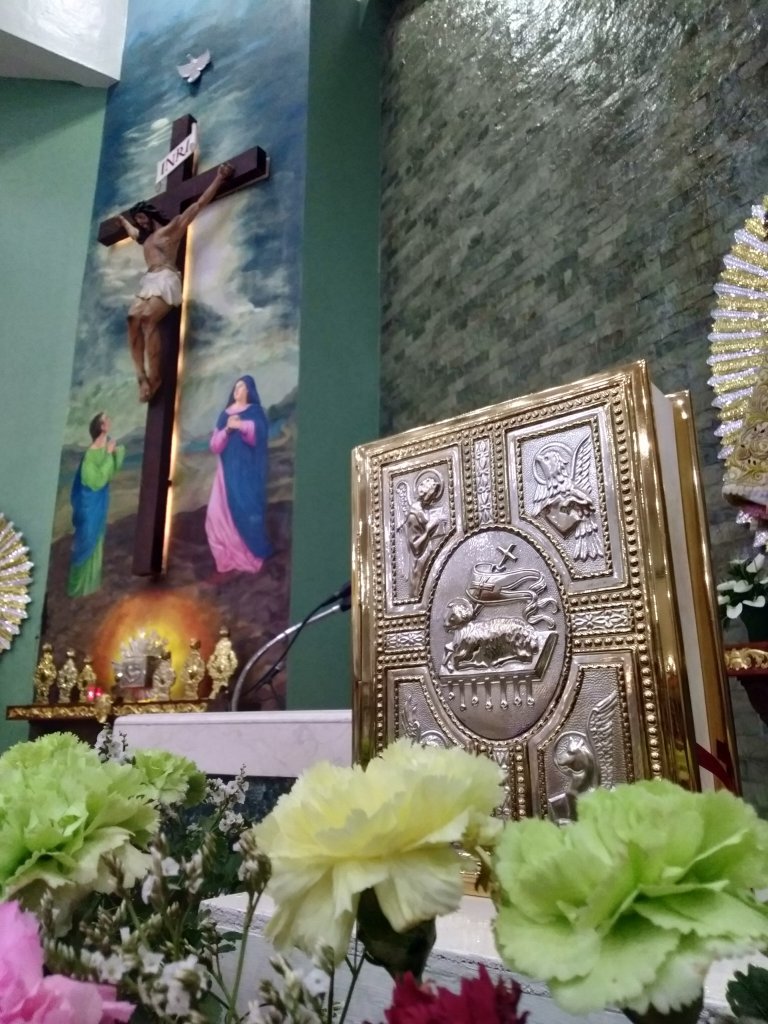
Larawang kuha ng may-akda, Linggo ng Bibliya, 26 Enero 2020.
The Lord Is My Chef Breakfast Recipe for the Soul, Memorial of Our Lady of Fatima, 13 May 2020
Acts of the Apostles 1:12-14 <*(((>< 000+000 ><)))*> Luke 1:39-47
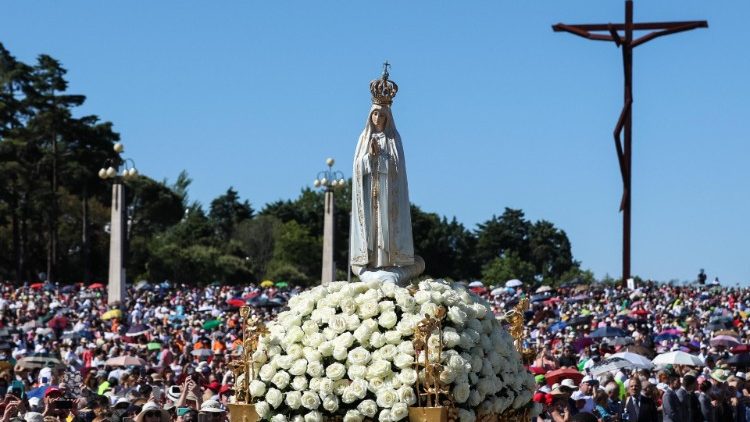
Our Lady of Fatima procession at the Fatima Shrine in Portugal, 2017. Photo from vaticannews.va.
O God our Father, today we come to you on this most trying time in modern history at the heels of the COVID-19 pandemic that has disrupted our lives – for better and for worse – to ask for your mercy and healing.
As we celebrate the Memorial of Our Lady of Fatima who had appeared in Portugal 103 years ago today, we are reminded by the Blessed Mother of your Son Jesus Christ that true blessedness is not being wealthy and powerful, of being well and strong but above all of believing in you, our God Almighty.
When Elizabeth heard Mary’s greeting, the infant leaped in her womb, and Elizabeth, filled with the Holy Spirit, cried out in a loud voice and said, “Most blessed are you among women, and blessed is the fruit of your womb… Blessed are you who believed that what was spoken to you by the Lord would be fulfilled.”
Luke 1:41-42, 45
COVID-19 has shown us that in this life, true blessedness is not found in money and things, nor in popularity and influence or other things that have become the benchmark of everything that is good in this life.
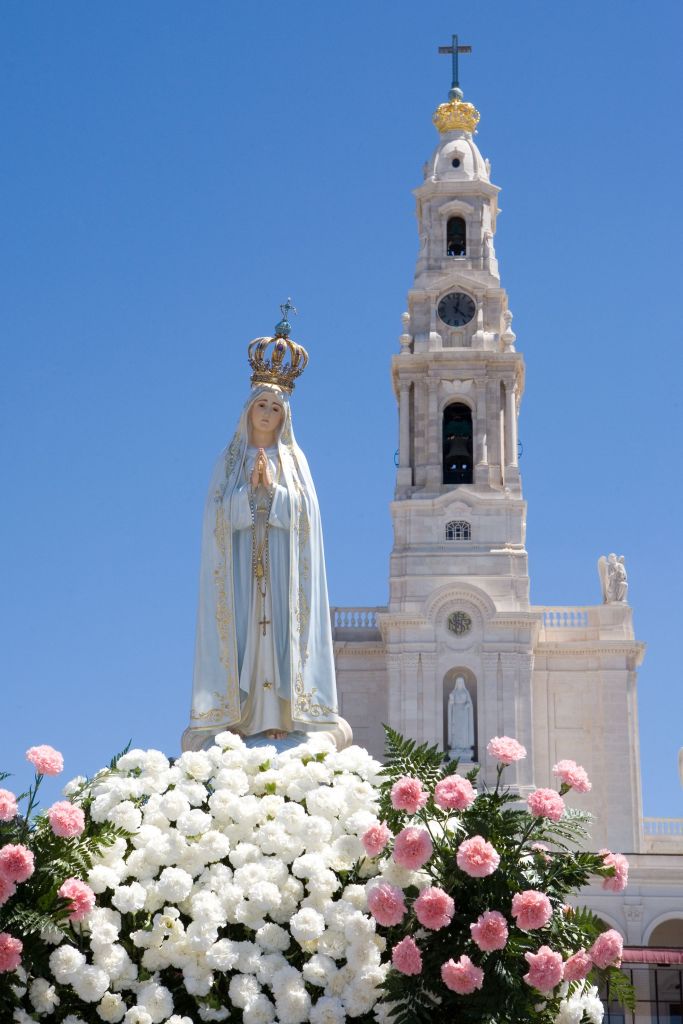
Our lady of Fatima Shrine in Fatima, Portugal. Photo from Pinterest.
In less than six months, the corona virus had shown us what the Lady of Fatima has always been telling us since 1917: to go back to you, God our Father through your Son Jesus Christ in the Holy Eucharist and Sacrament of Reconciliation.
Thank you in giving us all a Mother in the Blessed Virgin Mary who is the perfect image and model of discipleship in Christ:
-Mary was the first to believe in Jesus by receiving him in her womb;
-Mary was the first to share the Incarnate Word by visiting her cousin Elizabeth while six months pregnant with his precursor John;
– Mary was the first to believe in the saving work of Jesus when she interceded at a wedding in Cana;
Mary was the first to believe in the Resurrection that she remained standing at the foot of the Cross; and,
Mary was the first to believe in the coming of the Holy Spirit that she accompanied the Apostles praying at Jerusalem on Pentecost day.
Like Mary, may we grow deeper in our faith, believe more in you than believe in the world or with our very selves.
Like Mary, may we bring unity to our family and community, church and nation, so we may help strengthening the faith of one another, in believing in you by submitting ourselves to your holy will.
Teach us, Lord, to be simple and humble so we may believe more in you. Amen.
Quiet Storm by Fr. Nicanor F. Lalog II, 08 November 2018
Events and news reports during the recent long weekend reminded me of the story in the Old Testament of a pagan prophet named Balaam who was commissioned to curse the Israelites while encamped at the plains of Moab, ready to enter the Promised Land 40 years after their Exodus from Egypt. It is a story filled with humorous twists and turns that instead of cursing the Israelites, Balaam blessed them and even prophesied the coming to them of the Savior Jesus Christ. It is a funny story like the movie “Shrek” with a talking donkey.
When Balaam was riding his ass (pun intended) on his way to Moab to curse the Israelites, an angel of the Lord with a sword drawn stationed himself on the road to hinder him from proceeding. He did not see the angel but his ass saw the angel that she turned into the field. Balaam beat his ass to bring her back on the road. As they passed through a narrow lane between vineyards with a stone wall on each side, the ass saw the angel of the Lord again blocking their way that she shrank against the wall and squeezed Balaam’s leg onto it. Again, Balaam did not see the angel that he beat his ass for backing out. Upon reaching a passage so narrow without any space to move either to the right or the left, the ass again saw the angel of the Lord blocking their road. The ass cowered under Balaam and in his anger, beat her again with his stick. God opened the mouth of the ass to speak, asking Balaam why he would always beat her despite her services to him?! It was during his conversation with his ass that God opened the eyes of Balaam to see His angel and get His message to bless the Israelites (cf. Num. 22:20-35).
Is Baguio City a modern Moab with its new law prohibiting “cursing, cussing, expressing insults or the use of foul language to express anger or any other extreme emotion in establishments frequented by students, from pre-school to college level”?
I have always loved and admired Baguio City in its efforts to keep its morals intact despite the growing lamentable practice of many Filipinos these days of spending Holy Week vacationing there instead of praying in their homes and parishes. It is perhaps the only city with a law calling on all people to pause during the Angelus. And now, it is the only city too that prohibits the use of foul language. Members of its city council have noted in their Anti-Profanity Ordinance how the habit of cursing has “already penetrated schools and educational system, business establishments and society as a whole, that even the very fabric of morals and human decency has deteriorated to such a degree that we have to prevent it before the damage would become irreparable.” It defined profanity as “blasphemous or obscene language vulgar or irreverent speech or action; expletive oath, swearing, cursing, or obscene expression usually of surprise or anger.”
Baguio City is deteriorating fast and though this Anti-Profanity Ordinance does not address anything at all in improving environmental conditions there, it shows us that unless we first cleanse whatever is within us, these are reflected with the problems around us. “Ex abudantia cordis” is the Lord’s reminder to us all, “from the fullness of the heart the mouth speaks” (Matt. 12:34). Though the ordinance is not really clear in its scope and purpose expressed only in three pages of paper, it is a good reminder that whatever is evil and bad would always be evil and bad, with or without any written law. To curse or speak ill of anybody, wishing evil or harm to someone is always bad. And despite the claims by the defenders of the President that saying bad words does not make anyone entirely bad, recent events have shown exactly the opposite of their claims, that anyone speaking of good things does not make him or her good at all.
On Halloween day which the benighted souls have insisted on celebrating the pagan way by dressing as ghosts, actor and former tourism official Cesar Montano’s selfie with a naked woman at the background went viral and spawned many spoofs. How I wish I have the vocabulary of Nabokov but I could not find the proper English words to describe those videos that are salaula, baboy, and kadiri! And of course not to forget during the long weekend is the President’s usual dose of follies of the highest level when he spewed his usual profanities against the Church and the All Saints’ and All Souls’ Day celebrations, a day after calling on the nation to “emulate our saints, pray for the eternal repose of souls and deepen our engagement with our communities as we work for real and lasting change.” Not contented with the foul language, the President even declared himself a saint.
Blessing is from the Latin term benedicere that literally means “to speak or say good things.” To wish somebody “God bless you” in the midst of a malicious situation, in a life far from being a blessed one or simply just because as in “wala lang” is not only a profanity but also a blasphemy. Of course, priests who are supposed to be channels of God’s blessings commit the highest level of profanity and blasphemy if they lead lives of sin and corruption, abusing not only children and women but the entire people of God, including God Himself. This is what the anti-profanity law of Baguio is missing, skipping that portion on who should not use obscene language. The evil of foul language is similar with pornography: it is always immoral regardless of age because it is a lack of respect to the dignity of persons.
The story of Balaam and of his ass reminds us that we are all a blessing to everyone. Listen to what the donkey told Balaam: “What have I done to you that you should beat me these three times? Am I not you’re your own beast, and have you not ridden upon me until now? Have I been in the habit of treating you this way before?” (Num.22: 28, 30) How ironic that the dumbest creature in the universe was the one to remind Balaam and us that we should never treat badly and speak ill of anyone because we are all a blessing to everyone. Most of all, the talking donkey of Balaam reminds us how blessings can turn into a curse someday and curses could eventually be a blessing too. It has happened so many times in history, not only to nations and corporations but even in the Church that is still rocked by sexual scandals committed long time ago. The early Christians have depicted the story of Balaam and his ass in their early arts like in the Roman catacombs (photo above) and in some churches in Europe to show how God works in mysterious ways, especially with the power of our words to bless, or to curse. Be a blessing!




 lordmychef.com