Tuesday, Easter Week IV, 14 May 2019, Feast of St. Matthias the Apostle
Acts 1:15-17, 20-26///John 15:9-17
From Google.
Today we are celebrating O Lord Jesus Christ the feast of St. Matthias, the one chosen by your eleven Apostles to replace your betrayer Judas Iscariot. We do not know so much about him except that he was also a witness to all your “earthly events remaining faithful to you until the end” (Acts 1:21-22).
However, from his unique role of replacing Judas Iscariot to complete your 12 Apostles after Easter, St. Matthias teaches us today that we never run out of good men and women in the Church as well as in the society who can always replace the many traitors among us.
There will always be many Judas Iscariots everywhere who betray you, O Lord, and us with their selfishness.
Teach us, Jesus, to truly love you in the most concrete manner like St. Matthias who counterbalanced the traitorous Judas Iscariot found among many of us. Teach us to discern your will in finding the Matthias among us who will continue your work to offset the many evils done by your betrayers in the Church, in the society and in the family.
Forgive us, O Lord, that despite the chance to choose more St. Matthias among us in our recent elections, it seems many of us still prefer to bring back or keep the many Judas Iscariots.
Help us to be your witnesses in this world now plunged into so much darkness where lies and superficiality have become a way of life. Amen.
Icon of the election of St. Matthias. From Google.
There is something very unique among us that binds us Filipinos as one whenever we go abroad aside from being “maganda” as the people of Jordan, Israel and Egypt described us in a recent pilgrimage. Whenever we are in a foreign country, we Filipinos have that inner recognition that we are kababayan, something like what Jesus tells us in the gospel today.
“My sheep hear my voice; I know them, and they follow me. I give them eternal life, and they shall never perish. No one can take them out of my hand.”
John 10:27-28
This Sunday, we start a shift in our gospel readings: there would be no more stories of the appearances of Jesus after Easter until his Ascension with passages taken from St. John to deepen in us the meaning of Christ’s Resurrection.
Observe, my dear readers, the four verbs we have in our very short gospel today: hear my voice, know them, follow me, and give them eternal life. Right away we notice the inner recognition of Jesus Christ and his followers us, his sheep. See the flow of the first three verbs in our Lord’s declaration: my sheep hear my voice, I know them, and they follow me. It is quite odd in the sense that the sheep follow the voice because the shepherd knows them when it should be the other way around: my sheep know me, they hear my voice and they follow me.
Remember the inner recognition we talked about the other Sunday, that feeling of “a basta!” when deep inside us we are so certain of somebody or something? This is an example of that experience we have going abroad when we meet a kababayan: by just looking at each other, we already know we are Filipinos as if they first knew us, then we hear them, and follow them. It is something we also have deep within us with Jesus our Lord and God.
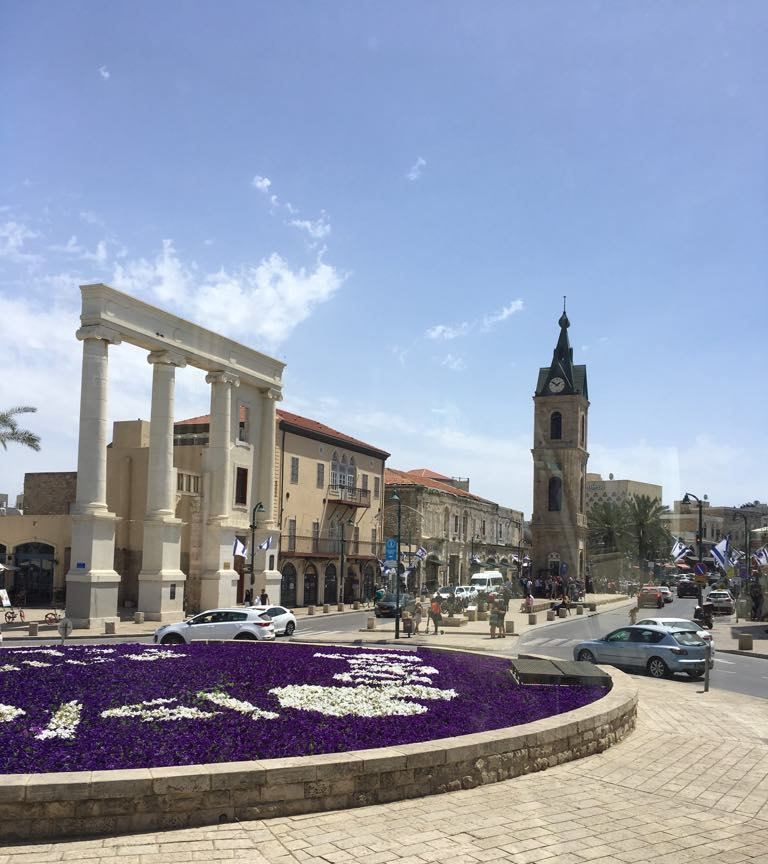
The lovely district of Jaffa Tel Aviv where you meet many Filipinos too. Photo by author, 03 May 2019.
These four verbs of hearing, knowing, following, and giving express relationship and ties that bind us together as a people and nation. To hear and to follow imply communion; anyone who hears and follows somebody recognizes the speaker’s authority and voice, entrusting one’s self to his or her guidance like in the family where we hear and follow our parents as we celebrate Mothers’ day today. Hearing and following lead to a kind of attachment as children to the parents or a disciple to a master. The parents, especially the mother knows her children very well that she always thinks the best for them, doing her best to give them a better and secured future. On our return flight yesterday from Bahrain, we chanced upon many Filipina OFW mothers returning home with their children – some are still infants, others are little children or young kids. They are the mothers who sacrifice so much so their children and family can have a better future.
Going back to Jesus Christ our Good Shepherd, we level up the meaning and application of those four verbs, especially the knowing and giving that pertain to Jesus Christ.
More than our communion and unity in Christ as his disciples, we ought to hear and follow him because only Jesus knows us so well. Only Jesus knows our deepest pains and hurts, our deepest longings and desires. Most of all, only Jesus loves us so much despite of his knowing of how sinful we are that he calls by name like Mary Magdalene on that Easter morning or Simon Peter at the shore of Lake Tiberias after asking him thrice if he loves him to assure his forgiveness of denying him thrice on Holy Thursday.
Most of all, we ought to hear and follow Jesus because only he can give us eternal life for he is life himself (Jn.11:25)! It was only Jesus who had walked with us in every valley of darkness, never abandoning us, and most of all, passed over through every pain and suffering, even death so that we may share in the glory of his new life. Only Jesus can bring back our shattered lives when we squander this gift of life like the prodigal son. It is only Jesus who would never judge us or put us into shame in our sinfulness to give us a chance to sin no more like the woman caught committing adultery. Only Jesus can promise us heaven because it is only him who had joined us in our sinfulness without committing sin by dying on the cross like Dimas the repentant thief.
These, my friends, are the inner unity that bind us together in Christ Jesus our Good Shepherd of which John the beloved was given a glimpse in the second reading. This also shows us how salvation for everyone, not only for Jews or any particular group, has always been in God’s plan from the beginning that he sent us his only Son Jesus Christ. May we all hear and follow his voice always, especially through our dear mothers. Amen.
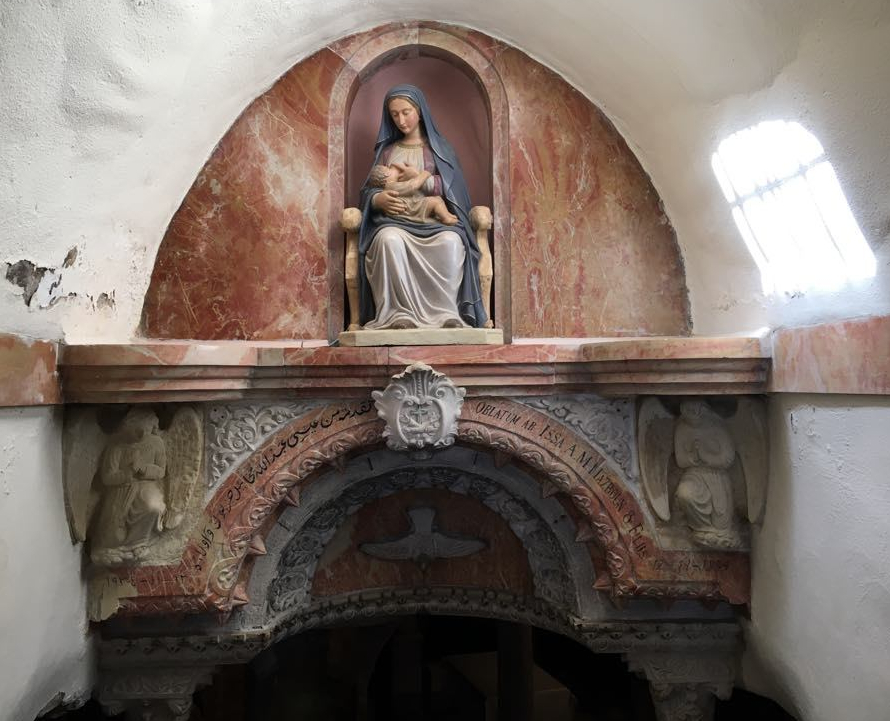
Entrance to the miraculous “Milk Grotto” chapel of the Franciscans beside the Church of the Nativity in Bethlehem. Photo by the author, 05 May 2019.
The Lord Is My Chef Sunday Recipe, Easter Week III-C, 05 May 2019
Of all the great things one can truly experience in a Holy Land pilgrimage, it is the gift of “internal recognition” of the Risen Jesus Christ that must be most touching, most wonderful because it always brings peace and joy within.
Like the beloved disciple in our gospel this Sunday, it is when we recognize Jesus internally that we “softly exclaim” deep within “It is the Lord!” (Jn.21:7).
It is the ordinary moment that happens so sudden during prayer, in the Mass, or simply being at a holy site or seeing a beautiful sight when tears suddenly roll in our eyes, something cold or warm envelops you, or your hair rising because you remember and feel the Lord coming to you. According to our guide here, the 153 large fish caught by the apostles in that third appearance of the Risen Lord at Tiberias is significant: 153 in the Hebrew alphabet means “I Am GOD.”
And that’s what we feel not only in a pilgrimage but in ordinary life when we remember God filling you like a net with large fish like in Tiberias. In an instant even very fleeting, we realize we have been so blessed even if we have sinned and failed to recognize Jesus by the shore.
Here at the Holy Land, whether it is your first or second or third pilgrimage, there is always something new to discover, to realize, to experience, and to see. It is like that experience at the shore of Tiberias when Jesus appeared for the third time to his apostles after Easter where he awaits you for breakfast, with “a charcoal fire with fish on it and bread” (Jn.21:9). Here it is beyond doubt our God is a God of surprises.
Yesterday we had our Mass at the Chapel of Flagellation at 130pm at the Via Dolorosa. Immediately after that, we had via crucis or station of the cross. By 330pm we were already inside the Holy Sepulchre Church climbing towards Golgotha, the Crucifixion site. Exactly while lining up, the church was closed and we were told there would be no veneration because the Patriarch was coming for incensing the whole church.
Everything stopped and I felt a bit sad for my group. But lo and behold! What a beautiful experience not only to witness an Orthodox ceremony! While resting outside the only Roman Catholic chapel, I asked the Franciscan if we can pray inside. He asked me to wait and after 20 minutes, he let us in. I celebrated Mass there in 2005 with 14 other priests and two bishops from the Philippines. I could not recall the name of the chapel so I asked the Franciscan. He told me it is the chapel of the Easter meeting of Jesus and his Mother – the Salubong or Encounter we celebrate early morning of Easter Sunday. It was a new discovery for me!
In the gospels, Jesus first met Mary Magdalene but according to St. Ignatius of Loyola in his Spiritual Exercises, it was Mary his mother whom the Risen Lord first met because she was the first to try believe Jesus is the Christ! Most of all, Mary is the first to truly love Jesus most. And that is why we have the Salubong.
Today in the gospel Jesus asked Simon thrice, “do you love me more than this?”
It is the same question Jesus is asking us this Sunday. We have to first love him in order to follow him. We have to first love him in order to meet and see him, even with our imperfect love like Simon Peter.
You are loved and you are prayed for always. Have a blessed Sunday and week ahead! Amen.
The Lord Is My Chef Breakfast Recipe for the Soul, Friday, 03 May 2019 Feast of Sts. Philip and James, Apostles
Praise and glory to you O Lord Jesus Christ for this first Friday in your Holy Land!
Yesterday we visited and prayed at the various sites of your ministry around the shores of the beautiful Lake of Galilee.
Here you called your first Apostles and later nearby the others who followed you like Philip and James whose feast we celebrate today.
Like us, they were seeking direction in life. That, they found in you alone, Lord Jesus – something we are rediscovering in a wonderful way these days during our pilgrimage.
So many times due to many concerns in life, we forget you are the Gospel – the Good News – who saved us all (1Cor.15:1).
So many times we forget like Philip that you and the Father are one, that whoever had seen you has seen the Father too (Jn.14:9).
Lord Jesus Christ, visiting “mensaChristi“, your table where you had breakfast with your apostles after Easter, we realized the most important thing of all of being a Christian – to be in love with your first and above all Lord!
Let us love you more deeply Lord Jesus as you well know how weak we are. Amen.
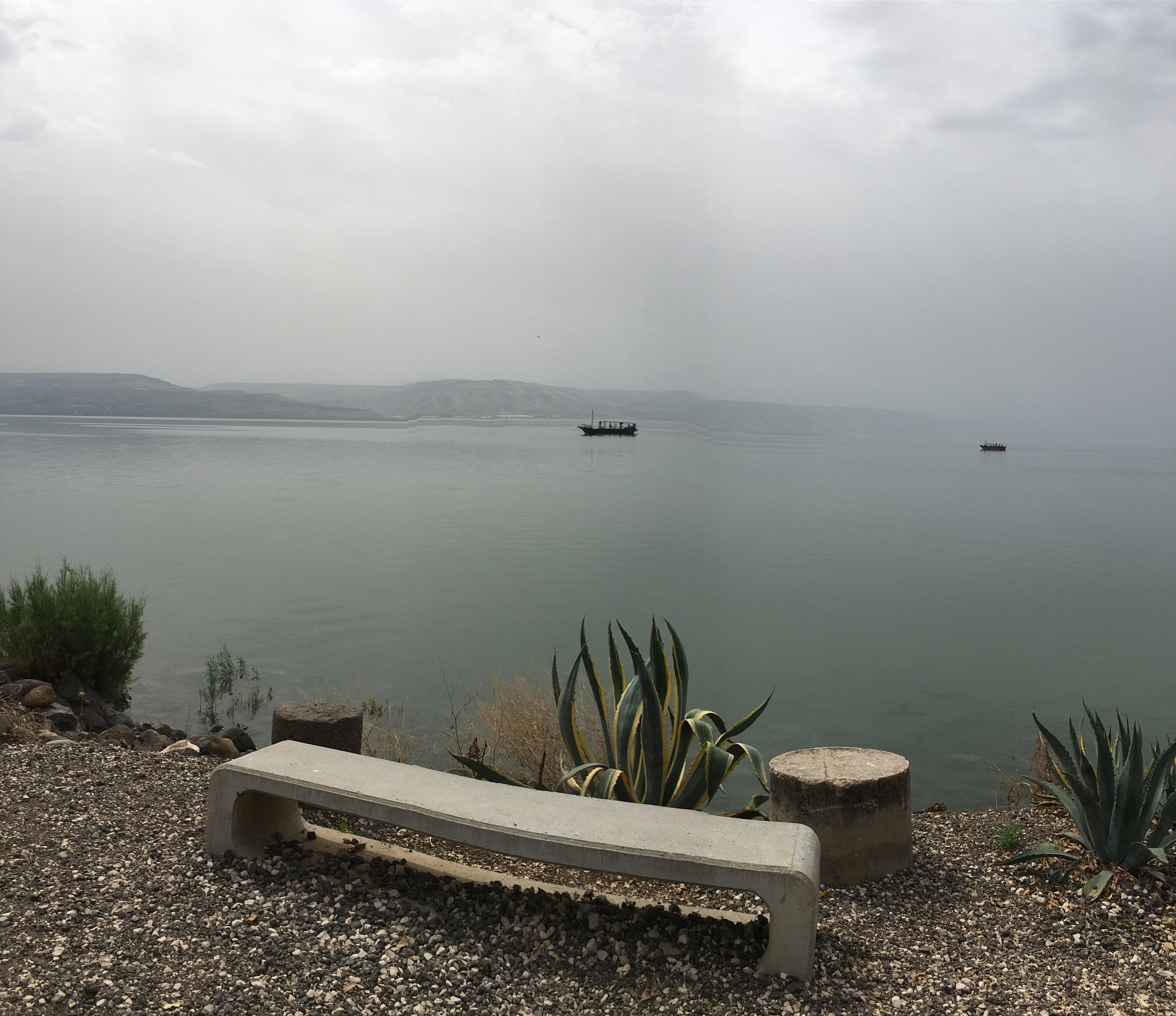
Photos by the author: above is the shore at the back of Capernaum where Jesus preached and last photo is back of church near shore where the Lord asked Simon thrice, “Do you love me?”.
The Lord Is My Chef Breakfast Recipe
Feast of St. Joseph the Worker
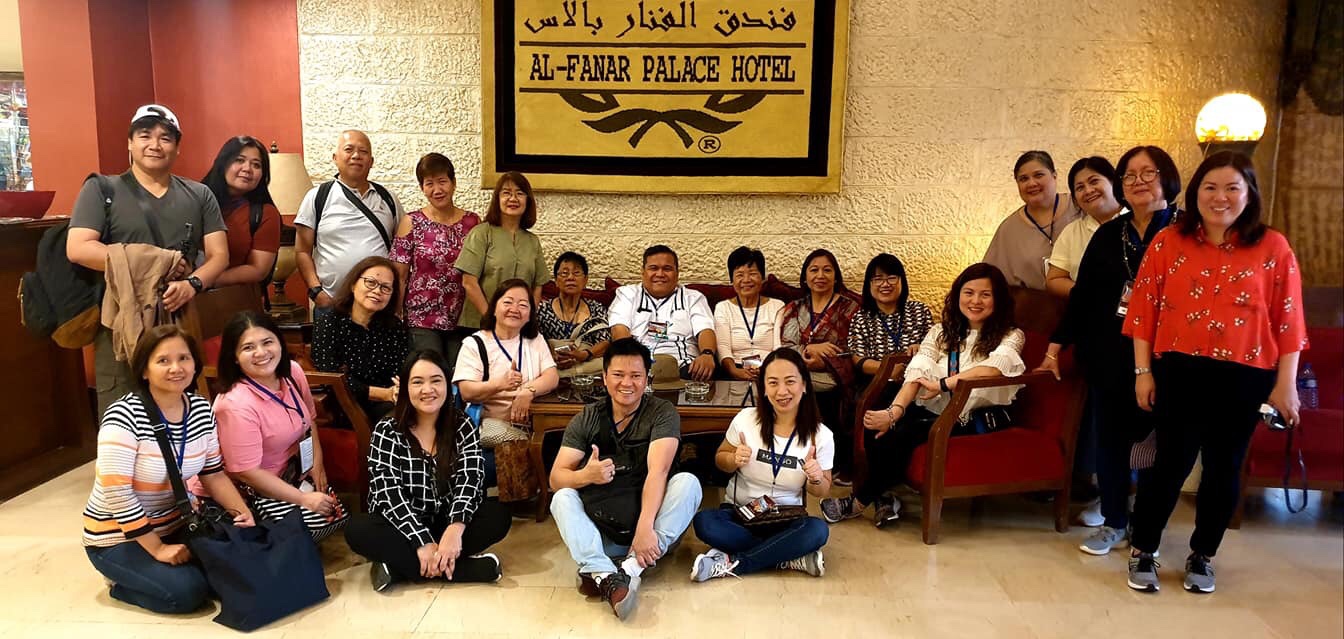
01 May 2019 in Amman, Jordan
Dearest God our loving Father:
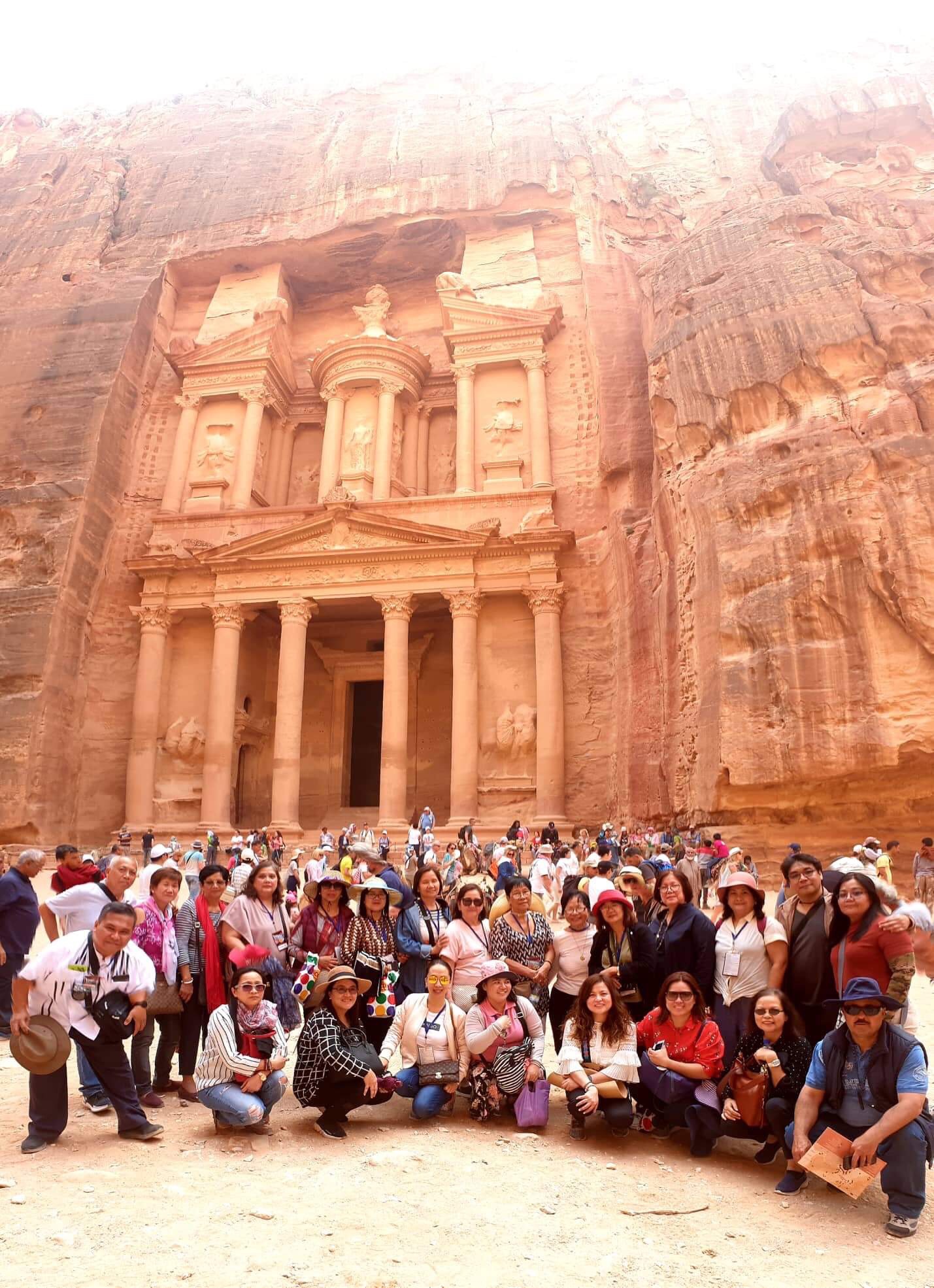
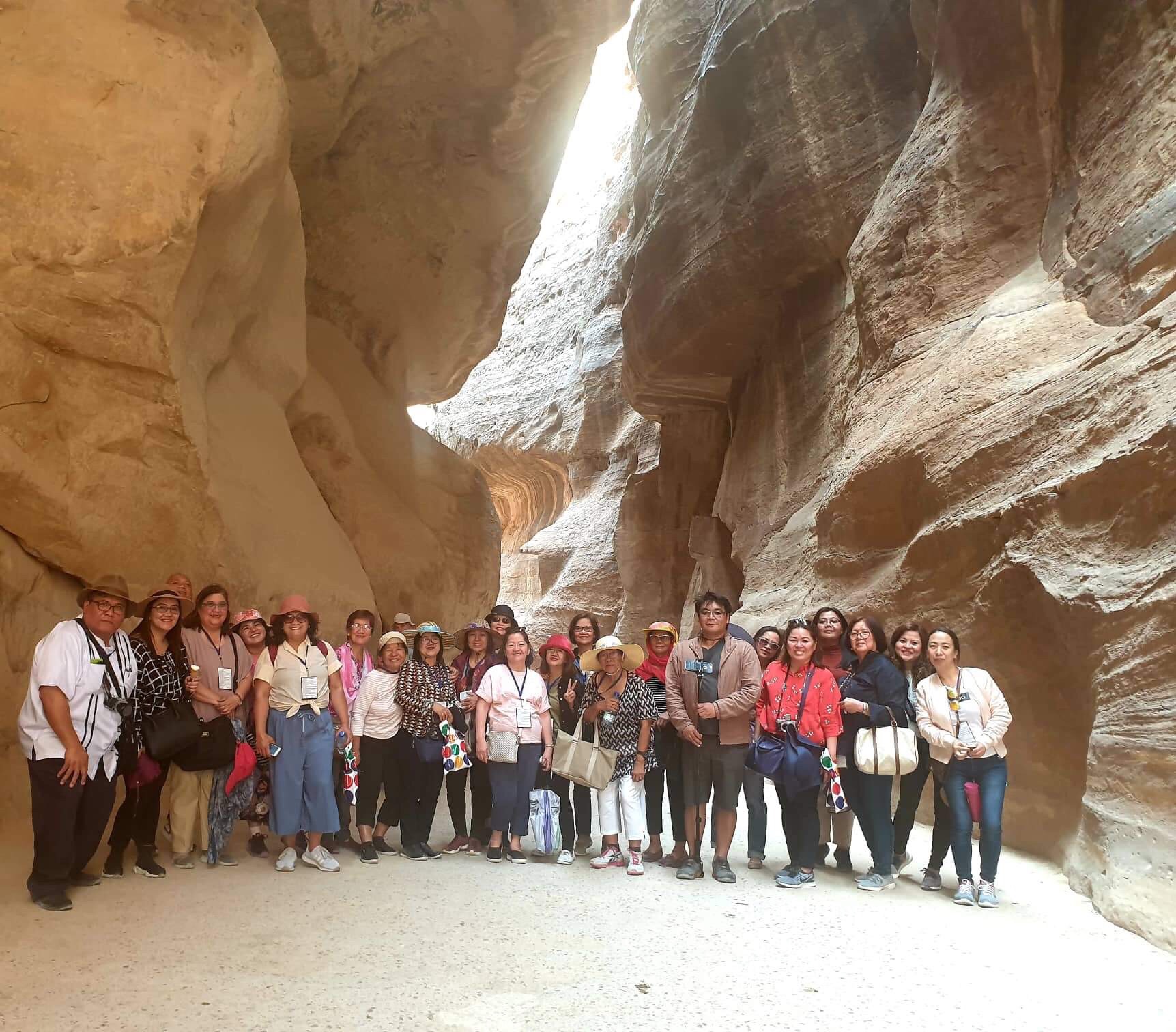
Thank you very much for the wonderful experience yesterday at Petra. Thank you in giving us a glimpse of your majesty, of the spectacular work of your hands.
Thank you for taking care of us here in Jordan. Continue to guide us, keep us and protect us as we head for your Holy Land.
So nice of you that as we celebrate today the Feast of St. Joseph the Worker, we head for his native town of Bethlehem in two days. And his workshop in Nazareth.
Cleanse us and purify our hearts that everything we say and do may be all out of love.
You called us into this pilgrimage.
Like the ancient people of Petra, though they did not know you or recognized you, they believed in eternal life with their great burial sites.
Like them, may we do things always in love, “the bond of perfection” (Col.3:19).
May “the peace of Jesus Christ control our hearts, the peace into which we were called in one Body. And be thankful” (Col.3:15). Amen.
Tuesday, Easter Week II, 30 April 2019, Amman, Jordan
We are all pilgrims on this earth, Lord God Almighty.
May we be like the early followers of Christ, “one heart and mind” in you. Let us keep in our hearts and minds that everything here on earth is yours to be shared with one another.
Let us seek more of the things of the above like Nicodemus.
Let us follow your directions in Christ through the Holy Spirit like the wind that blows.
Bind us all your children – fellow pilgrims -that we may care for this beautiful planet earth as we walk home to you O God our Father. Amen.
Photos on our way to Petra this morning via the King’s Highway or the ancient desert way.
We Filipinos have an expression that best captures the faith of Easter experience, something very close with the universal expression “aha!”. It is what I call as the “a basta!” experience.
From the Spanish word “basta” which means “enough” like what St. Teresa of Avila said in her poem, “Solo Dios basta” (Only God is enough/suffices), our “a basta!” expression is often used to insist on something to be accepted as true. Its closest English equivalent is “that’s it” to show that the issue at hand is settled because I have confessed it so.
On this octave of Easter which means eternity (because there are only seven days in a week but if you count the days since Easter, this Sunday is the eighth, an octave), the beloved disciple reminds us that Jesus said other things not recorded in his book; and most likely, he had had other appearances too not recorded simply because they are impossible to do. According to John, these were all written so we may all believe Jesus is the Christ and have eternal life in him. Moreover, there is no need for him to go into so many details about the appearances of Jesus after his Resurrection because what really matters most is the intensity of his presence. It is from that intensity of his presence we derive that “a basta!” experience of him. To be open to accept such intense moments of Christ’s presence leads us to deeper faith in him and eventually, to a relationship with him and in a community.
Thomas meets the Risen Jesus. From Google.
Now a week later his disciples were again inside and Thomas was with them. Jesus came, although the doors were locked, and stood in their midst and said, “Peace be with you.” Then he said to Thomas, “Put your finger here and see my hands, and bring your hand and put it into my side, and do not be unbelieving, but believe.” Thomas answered and said to him, “My Lord and my God!”
John 20:26-
“Do not be unbelieving, but believe.”
Last Sunday we have reflected how the Easter stories are always set in darkness like in the early morning, at sunset, and in the evening: the joy of Easter always comes bursting in the darkness of our lives, when we are down and suffering, sick or feeling lost, and fearful. It is during those dark moments of our lives when Jesus silently comes to us even in locked doors and windows. Problem is the moment Jesus comes to us, that is when we doubt him like Thomas! We could not believe Jesus is really alive though deep inside us, we do believe if only there could be be something within us that could give that final big push for us to say “a basta!”.
A week after his first appearance to his disciples at night, Jesus appeared anew today despite locked doors, darkness, and shadows of doubts within Thomas. When Jesus told him to “do not be unbelieving, but believe” , the Lord was not reproaching him but actually exhorting him to believe. And that is likewise addressed to us today: believe!
To believe is first to accept the gift of faith from God who opens himself to us, inviting us to a relationship with him. To believe in God is to meet him who always comes to meet us, to be with us. To believe in God is most of all to enter into a relationship with him so that that more we believe, the more we “see” him, the more we experience him. Most of the time we learn and get so many proofs of the existence of Jesus Christ in our prayers, studies, and experiences. Through time, we also grow in our personal conviction and acknowledgment of the Risen Lord, surpassing all proofs and logic until eventually even if we can enumerate our many reasons for believing, in the end, we admit that not even one of them is the very reason for our faith in Jesus Christ. And that is when we give that burst of “a basta!” – – – Jesus is alive! Then we learn to confess like Thomas, “My Lord and my God.”
From Google.
The Resurrection of Jesus is both historical and beyond history that made so much impact in human life, affecting us in the most personal manner. Sometimes we really wonder like the Apostle Jude Thaddeus who asked the Lord during the Last Supper why he would only manifest to them and not to everyone (Jn.14:22) so as to cast out all doubts and set the record straight that there is God indeed. When we examine our life journey, we find there is really no need for Jesus to appear at all for everyone to believe his existence, that he had risen from the dead, that there is God.
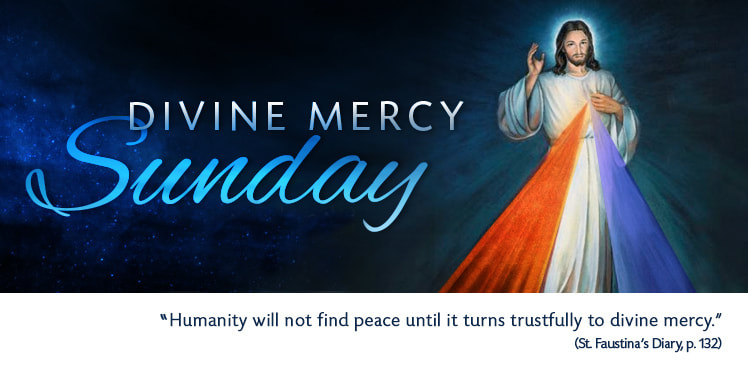
The Easter stories show us how God works silently in our midst, always slowly and surely, gradually through history and in our personal life. It is not really his appearances that matter but the intensity of his presence felt only in silence when we learn to trust more and believe more. How wonderful that on this eight day of Easter we also celebrate Divine Mercy Sunday that invites us to trust more than ever Jesus Christ our salvation. May we entrust ourselves to Jesus anew like Thomas, touching his wounds, confessing “My Lord and my God” or “Jesus, King of Mercy, I trust in You.” Amen.
While praying your words today O Lord Jesus Christ, I remembered your servant Pope Emeritus Benedict XVI who explained the great importance of professing “I believe in God”.
It is a fundamental affirmation, seemingly simple in its essence, but it opens on to the infinite world of the relationship with the Lord and with his mystery. Believing in God entails adherence to him, the acceptance of his word and joyful obedience to his revelation… The ability to say one believes in God is therefore both a gift — God reveals himself, he comes to meet us — and a commitment, it is divine grace and human responsibility in an experience of conversation with God who… speaks to us, so that, in faith and with faith, we are able to enter into communion with him.
General Audience, 23 January 2013
Since then until now, believing in you Jesus to have risen from the dead, to be from God the Father has always been a problem because we have always refused to accept your opening to us. We always want to manipulate everything, especially God.
The problem with believing is we have refused to live by God, always leaving him behind because we feel he is outdated, old-fashioned and too conservative for our modern thoughts and perceptions of how life should be lived.
The problem with believing God then and now is we have stopped recognizing God as the foundation of our lives that like the chief priests and elders in the Acts of the Apostles, we would rather be blind from the glaring truth of your loving presence before us. Like the Apostles too during Easter, we have refused to believe others in proclaiming your rising from the dead because of many reasons and one of these is the hardness of our hearts.
Lord Jesus Christ, take away our stony hearts and give us with a natural heart that beats with firm faith in you, fervent hope and unceasing charity and love. Amen.
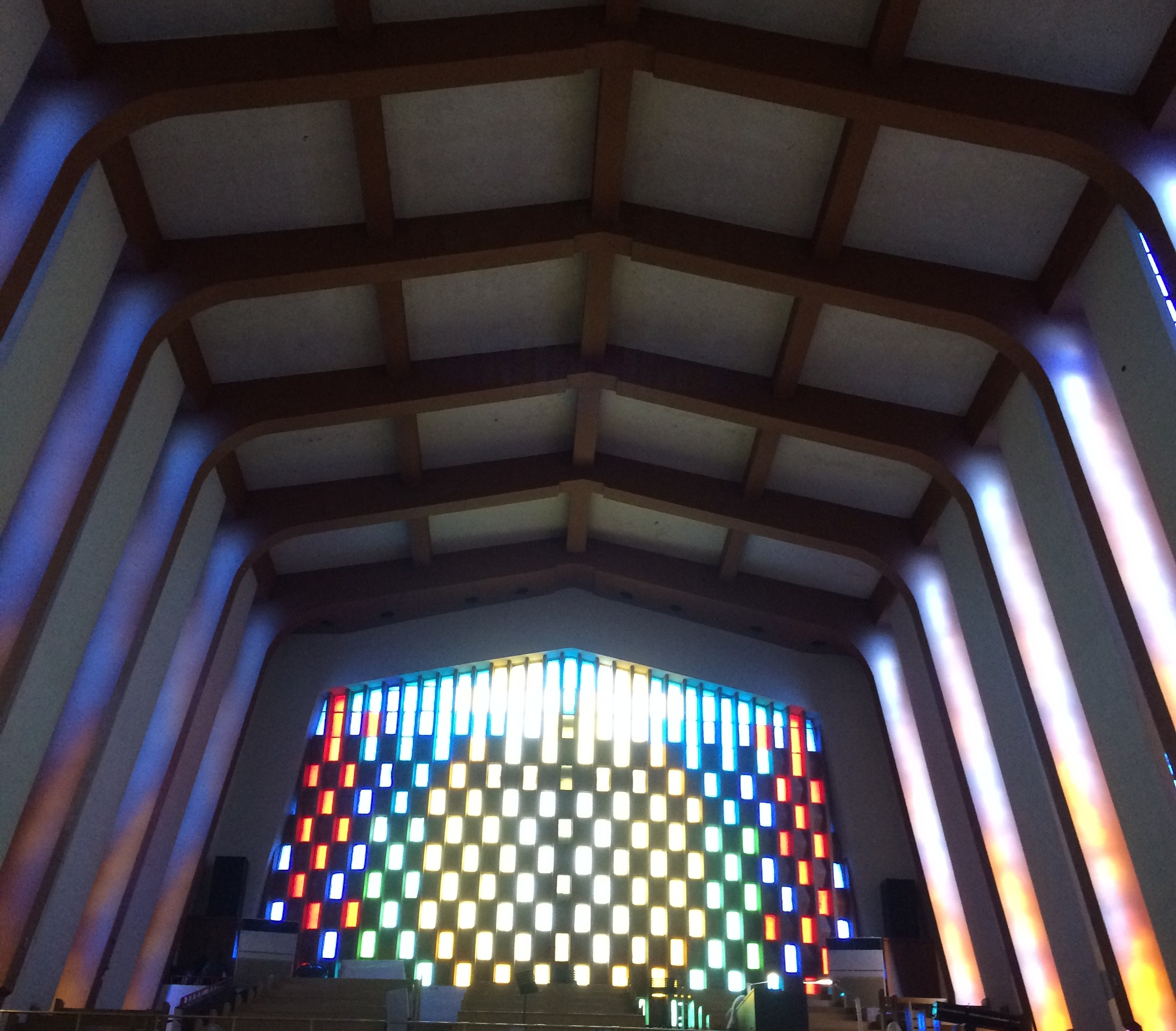
Choir loft of Parish Church of the Holy Family in Taipeh. Photo by author, January 2019.
The Lord Is My Chef Breakfast Recipe for the Soul, Friday of Easter Octave, 26 April 2019
Acts 4:1-12///John 21:1-14
From Google.
Today O Lord I wish to offer to you my favorite morning prayer hymn we sing during Ordinary Time called “We plough the fields and scatter” (Wir Pflugen):
All good gifts around us
Are sent from heav'n above,
Then thank the Lord,
O thank the Lord for all his love.
You are “the author of life” indeed Lord Jesus Christ because all good gifts around us can only come from you!
When your Apostles were arrested and questioned by the priests and elders of Jerusalem “by what power or by what name” did they heal the crippled man since birth, Peter boldly answered them it was “in your name, Lord Jesus Christ!” (Acts 4:7-10)
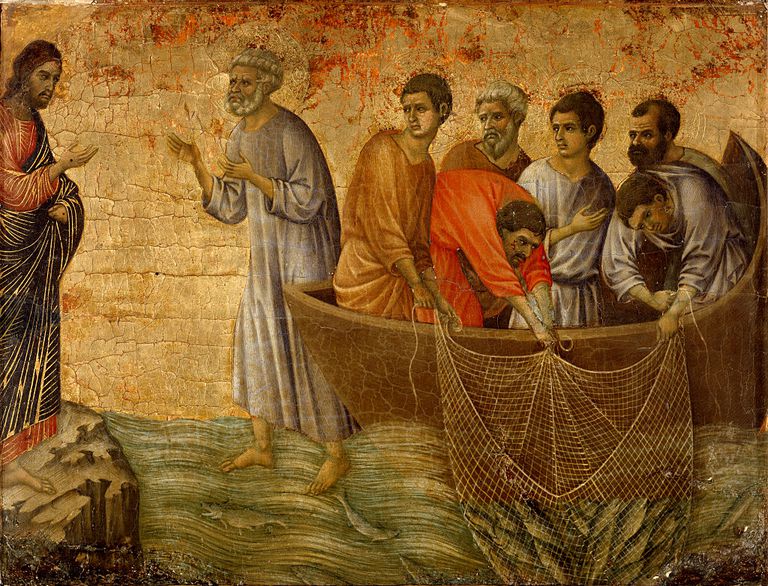
When your Apostles caught so much fish after following your instruction to cast their net over the right side of the boat without really knowing it was you who gave the instruction from the shore, it was the beloved disciple who right away recognized you, “It is the Lord.” (Jn.21:7)
Lord Jesus, teach us to be humble always, to recognize YOU alone as the source of every good thing in life. So many times Lord, we always grab the honor in doing many great things in this life that we unconsciously divert people away from you and more closer to us.
O Lord…we priests are very notorious in doing that, grabbing all the credits for everything that is achieved as if we are the gods! Forgive us Lord. And let us proclaim always your goodness and your greatness. Amen.
“The Apparition at Tiberias after Easter” by Italian painter Duccio di Buoninsegna (1255-1318). Photo from Google.
The Lord Is My Chef Breakfast Recipe, Thursday, Easter Octave, 25 April 2019
Acts 3:11-26///Luke 24:35-48
From Google.
Today O dear Jesus Christ, St. Peter called you as “the author of life” in our first reading — a very beautiful and unique way of describing you who had resurrected from death.
From you alone, Lord, comes life indeed. Most of all, only you can restore and bring back life in case we lose it for you are indeed the author of life. St. Mark the Evangelist whose feast we celebrate today perfectly said it at the start of his gospel account:
The beginning of the gospel of Jesus Christ (the Son of God).
Mark 1:1
You O Lord Jesus is the good news yourself because you are life, the author of life. Whoever believes in you, accepts you has life, regains life.
Sometimes we are like your disciples in our gospel today who doubted you when you suddenly appeared to them in their room. Sometimes we are overwhelmed with your presence. And most of the time, we think you might be a ghost or an imagination.
But the moment we try to feel you and experience your saving power, then we realize how scary it can be sometimes to believe you than to believe in ghosts because you are REAL, ghosts are not.
Help us to be like St. Mark the Evangelist who wrote the first gospel ever written now bearing his name and symbol of a lion. May we have the courage to write with our very lives your good news of salvation whose only author is you alone. Amen.
The beautiful west facade of St. Mark’s Cathedral Basilica in Venice, Italy with a statue of its patron atop with a winged lion with a bible below him as symbols. Photo from Bing.com.














 lordmychef.com