Lord My Chef Daily Recipe for the Soul by Fr. Nicanor F. Lalog II
Thursday, First Week in Ordinary Time, Year II, 15 January 2026
1 Samuel 4:1-11     <*((((><  +  ><))))*>     Mark 1:40-43
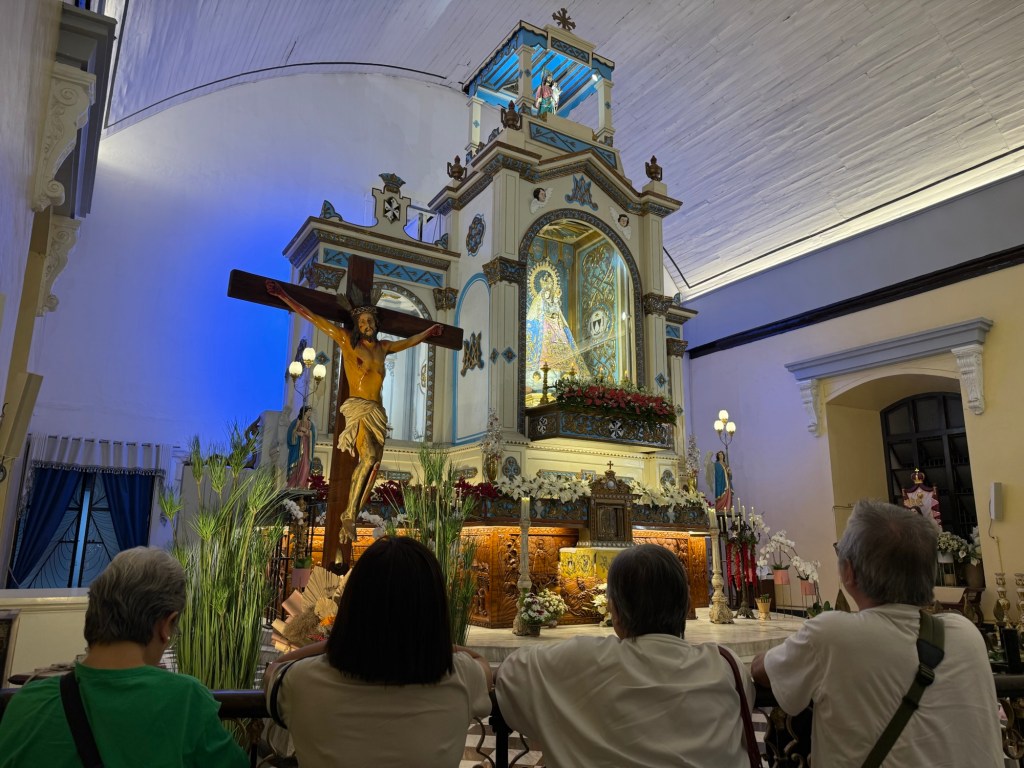
Photo by author, Basilica of Our Lady of Manaoag, 09 January 2026.
Your words since Monday
at the start of Ordinary Time
are so amazing and lovely,
O God our Father;
I love, O Lord,
the contrasts presented
between the first reading
and the gospel just like today
that is so unique
with the striking differences
in approaching you,
dear God.
The Philistines fought and Israel was defeated; every man fled to his own tent. It was a disastrous defeat, in which Israel lost thirty thousand foot soldiers. The ark of God was captured, and Eli’s two sons, Hophni and Phinehas, were among the dead (1 Samuel 4:10-11).
A leper came to him (Jesus) and kneeling down begged him and said, “If you wish, you can make me clean.” Moved with pity, he stretched out his hand, touched the leper, and said to him, “I do will it. Be made clean.” The leprosy left him immediately, and he was made clean (Mark 1:40-42).
Until now,
many of us are still like
those Israelites who brought
the Ark of the Covenant
to the battlefront as if it were an
"anting-anting" in fighting the Philistines
who overwhelmingly defeated them;
the recent Traslacion
that many still continue to defend
is something we ought to rectify
or recalibrate by deepening our
faith to put order and solemnity
in a supposed to be religious
activity; show us the way
in witnessing to others the proper
approach to you, Lord,
is like that leper full of trust
and surrender to your will,
not in insisting our personal
desires and "panata"
that in the process we forget
to imitate your Son Jesus in
being loving and charitable.
Amen.
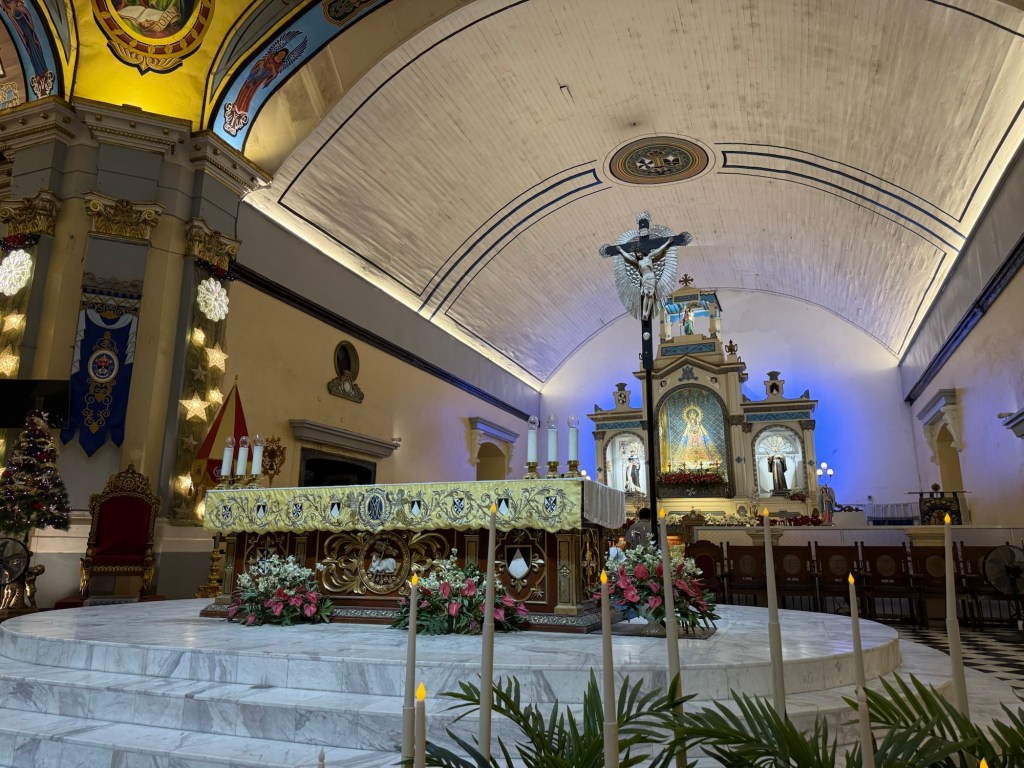
Photo by author, Basilica of Our Lady of Manaoag, 09 January 2026.
The Lord Is My Chef Daily Recipe for the Soul by Fr. Nicanor F. Lalog II
Wednesday, Week I in Ordinary Time, Year I, 15 January 2025
Hebrews 4:12-16     ><))))*> + ><))))*> + ><))))*>     Mark 2:13-17
Photo by author, Northern Blossom Farm, Atok, Benguet, 27 December 2024.
therefore, he (Jesus) had to become like his brothers and sisters in every way, that he might be a merciful and faithful priest before God to expiate the sins of the people. Because he himself was tested through what he suffered, he is able to help those who are being tested (Hebrews 2:17-18).
How lovely are your words today,
dearest Jesus!
They are so true!
While others are still wondering,
asking "what if God is one of us",
we have always believed
and have experienced
God truly one of us,
among us,
and within us
in you,
Jesus Christ.
How sad that many of us humans
are more inclined to believe
in things and persons bigger than
than ourselves,
not realizing our greatness
in being small that even you,
O Son of God,
chose to be like us,
little and vulnerable
so that we can be like you,
divine and eternal.
Teach us to see more of your
person, of your being one of us,
dearest Jesus,
for us to experience your
authority and power;
like Simon and Andrew,
teach us to have that intimacy
with you Lord that,
"immediately" they told you about
Simon's mother-in-law being sick;
most of all, let me be one with
my own brothers and sisters
like you, Jesus,
"approaching them,
grasping them,
and helping them
rise up when they are
down"
(Mark 1:31)
Amen.
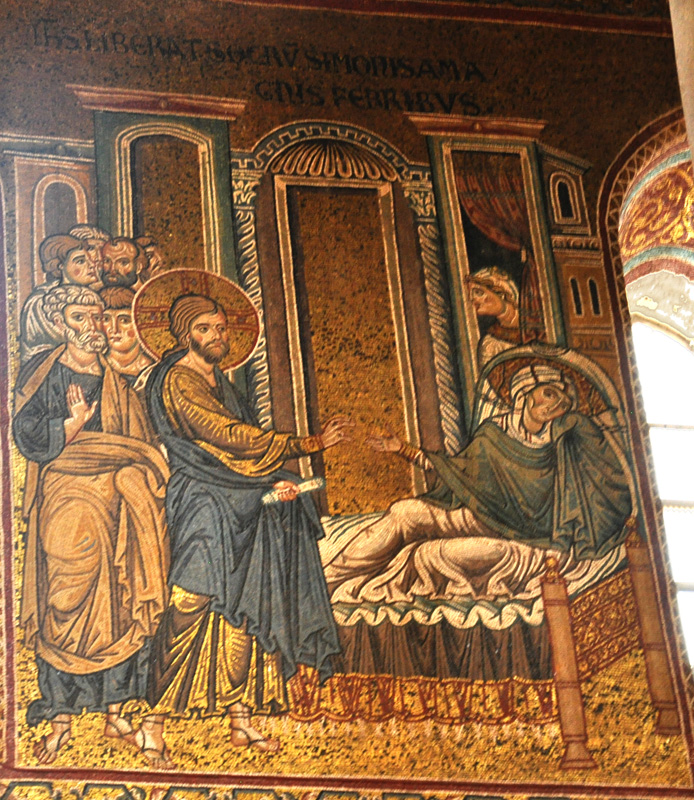
Jesus Heals Peter’s Mother-in-Law, a mosaic in the Cathedral of the Assumption, Monreale, Sicily, from christianiconography.info.
The Lord Is My Chef Sunday Recipe for the Soul by Fr. Nicanor F. Lalog II
Eighteenth Sunday in the Ordinary Time, Cycle B, 04 August 2024
Exodus 16:2-4, 12-15 ><}}}}*> Ephesians 4:17, 20-24 ><}}}}*> John 6:24-35
Photo by author, Lake of Galilee, the Holy Land, May 2017.
We are now back in Capernaum where Jesus used to frequently teach in its synagogue during His ministry.
Remember last Sunday how Jesus fled from the crowd when He felt them wanting to take and make Him a king upon seeing His miraculous feeding of over five thousand people from five loaves of bread and two pieces of fish with a lot of leftovers. The people looked for Him and found Him in Capernaum, the setting of all of our gospel scenes these four Sundays of August.
There at Capernaum was a beautiful exchange in the conversation between Jesus and the people that eventually led to the Bread of Life discourse of the Lord in this sixth chapter of John’s gospel. Remember too that for John, the miracles Jesus performed were signs that pointed to Him as the Christ. Hence, this important reminder to the crowd who have sought Him that day as well as to us living in these interesting times today:
“Do not work for food that perishes but for the food that endures for eternalnlife, which the Son of Man will give you. For on him the Father, God, has set his seal.” So they said to him, “What can we do to accomplish the works of God?” Jesus answered and said to them, “This is the work of God, that you believe in the one he sent” (John 6:27-29).
Photo by author, tourists and pilgrims alike at the ruins of the Capernaum synagogue, May 2017.
“Do not work for food that perishes but for the food that endures for eternal life, which the Son of Man will give you.”
Jesus knows very well the importance of work for us humans, of how hard we have to work to earn our daily bread, to buy and pay for things so needed in life. But, these earthly food we are all busy working for can sustain us only for a life timeas we very well know that we surely die one day.
There is another food that is more essential that “endures for eternal life” we can only receive from Jesus Himself – His words and His Body and Blood in the Holy Eucharist which is the “summit of Christian life.”
Of course, we have to work for this food because it does not come on its own. We must receive and welcome this food as a gift of Jesus Christ whom the Father has sent. We have to work and exert efforts to pray and listen to God’s words, to wake up early and prepare ourselves for the Sunday Mass and other devotions we have. Hence, the second question of the crowd to Jesus:
“What can we do to accomplish to the works of God?”
Photo by Mr. Boy Cabrido, Quiapo Fiesta 2024.
Very striking here is their eagerness to know what they can do to have that food that “endures for eternal life.”
Are we not the same with our desire to really know things about religion and spirituality or just anything we heard to be so good?
It sounded so much like that same zeal displayed by a young man who approached Jesus and asked, “Good teacher, what must I do to inherit eternal life?” (Mk.10:17). Nothing is wrong with this attitude of openness to God but, the problem is when we expect the work to be given to us is something like a shortcut or easy access in having that “food that endures for eternal life” like that young man. Sometimes, we ask self-serving questions about faith and religion not only for the benefits we can have but also for fame like that young man who proudly declared to Jesus he had followed all commandments since childhood; but, when the Lord told him to go and sell his properties to give it to the poor and come follow him, his face fell and left sad. This eventually would become the scene in Capernaum as we shall see in the coming Sundays.
For now, let us reflect on Christ’s answer to the crowd’s question.
“This is the work of God of God, that you believe in the one he sent.”
Photo by author, Mass in Capernaum, May 2017.
This will be the start of the revelation of the true motives of the crowd who have come looking for Jesus. Last Sunday, we reflected how they have followed Jesus because of the many signs they have seen from Him like healing of the sick and raising to life the dead daughter of Jairus.
Slowly we see this Sunday the conceit and pride in their hearts, and perhaps within us too! Jesus is neither proposing new works to accomplish and fulfill in God’s name nor alter or change the commandments given through Moses. As the Christ or Anointed of God, Jesus is demanding complete faith in Him!
It was a most unique and unprecedented demand by Christ from the people then and now, asking us all to have total commitment in Him whom we believe. Whatever we want to do or do not want to do depends entirely in our imitation of Jesus Christ.
Like last Sunday, it is the very person of Jesus Christ that is being stressed here that unfortunately, even the closest disciples Philip and Andrew failed to “see” when they saw more of the problem with the crowd and the scarcity of bread and fish they have. They did not see Jesus despite their having witnessed and experienced His many miracles like us today.
Instead of being humble, the crowd asked Jesus for signs He can do so they would believe Him, even challenged Him with the works by Moses in the desert in feeding their ancestors with manna in their wandering. Like in resisting the temptations of the devil in the wilderness, Jesus declared the basic truth people often forget: the manna fed to the people was not the work by Moses alone but entirely and truly by God the Father in heaven!
This is something we must always remember: the work we have in this life is not ours but God’s so that in everything we do and say, it is God who is proclaimed and made known for He alone can fulfill us in Jesus who said today in closing our gospel scene, “I am the bread of life, whoever comes to me will never hunger, and whoever believes in me will never thirst” (Jn.6:34).
Jesus is the bread from heaven sent down to us by God, prefigured by the manna in the first reading we have heard, the food who brings us to fulfillment in God expressed during the Last Supper that was confirmed the following Good Friday at His Crucifixion.
Life is a call from God for us to do our part in His work through Jesus Christ. We need to collaborate with Him, in Him and through Him as He had declared at the Last Supper to “do this in memory of me.” That is why it is so sad and deplorable how the people behind the opening show of the Paris Olympics made a mockery of the Lord’s Supper. (Even if we shall accept their explanations it wasn’t about the Last Supper, it was still a show so ugly and tasteless, an affront to any person.)
What is most undeniable is the pride of the people behind the Paris Olympics including their defenders who insist until now how everything is clearly about “what can we do” like the proud crowd with Jesus in Capernaum.
What was supposed to show the wonderful contributions and achievements of France to the world in terms of culture and intellectual advancements have all crumbled into a disgraceful display of what is now wrong in France and even the Western world. They have exaggerated the relative truths they hold on to exaggerate themselves. In their claims of being inclusive, they have become exclusive and divisive, so far from the “sign” of the Olympics. Very sad but still, may you all have a blessed week ahead. It is a Sunday, go celebrate Mass with your family and loved ones. Let us pray:
God our loving Father,
thank you in giving us Jesus Christ
your Son as our bread from heaven;
remind us always not about
what we can do or must do
for we just do your work
here on earth but to simply
remember and keep in mind
we are your children in Christ,
to "stop living in the futility of our minds
by putting away our old self
of corrupted and deceitful desires
renewed in the spirit of our minds,
to put on our new self in Christ",
created male and female
"in your way in righteousness
and holiness of truth"
(Ephesians 4:17, 22-24)
Amen.
The Lord Is My Chef Sunday Recipe for the Soul by Fr. Nicanor F. Lalog II
Sixth Sunday in Ordinary Time, Cycle B, 11 February 2024
Leviticus 13:1-2, 44-46 ><}}}}*> 1 Corinthian 10:31-11:1 ><}}}}*> Mark 1:40-45
Photo by Ms. Analyn Dela Torre in Caypombo, Santa Maria, Bulacan, 04 February 2024.
We have seen these past two Sundays Jesus Christ’s personal manner of relating with everyone. It had always been Jesus coming, touching, and speaking directly to the man possessed with unclean spirit at the synagogue in Capernaum on a sabbath and later the sick mother-in-law of Simon Peter at home.
Jesus has always been coming to everyone – to us – in the most personal manner. And he would always ensure all “barriers are down” around him so that we too can approach him like in our gospel this Sunday when a leper came to him for healing.
A leper came to Jesus and kneeling down begged him and said, “If you wish, you can make me clean.” Moved with pity, he stretched out his hand, touched him, and said to him, “I do will it. Be made clean.” The leprosy left him immediately, and he was made clean.
Mark 1:40-42
From vaticannews.va
For the third consecutive Sunday, Mark tells us another healing by Jesus at the start of his ministry in Galilee. This is the last in the series but this is so unique because it was the sick who approached Jesus.
Most of all, that sick was afflicted with leprosy, the worst disease considered at that time when people believed (until now) that any sickness and handicap was a punishment from God for sins committed. Leprosy was the worst because it reminded them of the boils God inflicted on the Egyptians when the pharaoh refused to let them go home to their Promised Land with Moses as leader.
More than the ugly sight of the disease, leprosy became the perfect metaphor for sin and punishment. That is why God himself in the first reading personally issued the health guidelines for anyone with leprosy and similar diseases of the skin. Though God’s prescriptions were more of hygienic purposes, these took on a deeper spiritual meaning for the Israelites especially when lepers have to be separated from the community that it seemed for them, it was indeed a punishment for a grave sin.
Jesus radically changed that perception in this healing of the leper who had approached him.
A leper came to Jesus...
From wikipedia.commons.
Inasmuch as Jesus comes to us everyday as we have seen these past two Sundays, Jesus assures us today that we can always come to him like that leper.
See how this scene was unimaginable because lepers were given strict orders at that time to never approach anyone while people were supposed to drive them away. Where were the four disciples supposed to be following Jesus? And, wasn’t anyone there to restrain that leper from getting close to Jesus?
It seemed Jesus was by himself when the leper approached him as Mark never bothered to tell us of any witnesses at all nor the exact time and location of this incident because this scene happens everyday in our lives. The fact that the leper was able to get near Jesus who welcomed him warmly that day is actually the good news today - Jesus wants us to leave our comfort zones to join him in the middle of the street of his journeys!
Jesus comes to us in the most personal way everyday. And the good news is, nothing can keep us away from Jesus, even our sins which leprosy signified in this story. All barriers are down when Jesus comes and calls us to approach him. No restrictions nor appointments needed to see Jesus who simply wants us to get closest with him like when he “indignantly” told the disciples to let the children come to him (Feast of Sto. Niño, Jan. 21, 2024, Mk. 10:14).
What prevents you or keeps you away from approaching Jesus who passes by everyday?
"I do will it. Be made clean."
Painting by James Tissot (1836-1902) of “Healing of Lepers of Capernaum” from catholic-resources.org.
In his healings these past two Sundays, recall how Mark presented them to us who seemed detached or far from Jesus like spectators watching, astonished and amazed with his authority as the Son of God, all-powerful and beyond us.
This Sunday, Mark shatters all those feelings within us, telling us to dismiss all those thoughts of Jesus being hard to reach when a leper came to Jesus and kneeling down begged him and said, “If you wish, you can make me clean.” Moved with pity, he stretched out his hand, touched him, and said to him, “I do will it. Be made clean.”
Imagine Jesus and you as the leper in this beautiful scene, experiencing the power of his words and hands together!
The words, “I do will it. Be made clean” shows us again the authority of Jesus in his words being sufficient to effect healing like when the Roman centurion declared to him, “only say the word and my servant will be healed” (Mt. 8:8/Lk. 7:7) or when he told the unclean spirit in the man in a synagogue, “Quiet! Come out of him!” (Mk. 1:25).
What is most unique in this Sunday healing is how Jesus felt deep inside that strong love for the leper -for each of us today – that he was filled with compassion to be “Moved with pity”. It was more than an emotion or a feeling within. To be moved with pity is to have one’s heart stirred or disturbed – the literal meaning of the Latin misericordia or mercy. See now the progression from the heart of Jesus, in his compassion and mercy, he stretched out his hand, touched him, and said to him, “I do will it. Be made clean.”
So beautiful! And that happens everyday if we approach Jesus no matter how dark our sins are, no matter how sad we may be or even devastated. Come to your worst like that leper and Jesus will gladly welcome you, heal you, forgive you because he loves you so much!
Photo by Ms. Analyn Dela Torre in Caypombo, Santa Maria, Bulacan, 04 February 2024.
"Be imitators of me, as I am of Christ."
(1 Corinthians 11:1)
Oh, how easy it is to approach Jesus for sinners and weak people like us but is there anyone like Jesus who puts all barriers down to be approachable through our parents and siblings, teachers and friends, and priests to express what’s deepest in our hearts?
Is there still a St. Paul among us who can humbly declare, “Be imitators of me, as I am an imitator of Christ” who welcomes modern lepers getting near for love and affection, even company?
St. Paul may seem to be boasting to us modern people these days but if we try to understand the context of our second reading, we realize the great apostle was simply being humbly honest and true. The Christians at Corinth never saw Jesus like St. Paul. They needed a model to imitate Christ which St. Paul ably provided them with. After all, St. Paul had truly conformed himself to the crucified Christ (Gal. 2:19) as attested by the early Christians.
And while it is true we are all called to imitate Jesus, we priests are expected to be more like the Crucified Christ – approachable especially by the sick and the poor. How sad when we priests are more seen with the rich and powerful, in all their lavish parties but never or rarely with the poor. The same is true with church workers and volunteers when those at the margins find them difficult to approach. Something is gravely wrong with us if people find us priests and lay Christians difficult to approach because, clearly, we are not imitators of Christ. Have a blessed week ahead as we approach Jesus this Ash Wednesday for the 40-day journey towards Easter. Amen.






 lordmychef.com