Love is Being a Food for Others

people-at-table-with-food
The Lord Is My Chef Breakfast Recipe for the Soul
Tuesday after Epiphany of the Lord, 08 January 2019
1 John 4:7-10///Mark 6:34-44

            “In this is love:  not that we have loved God, but that he loved us and sent his Son as expiation for our sins” (1 Jn. 4:10).

             Today as we move on to new directions and new beginnings this 2019 on this first full week of work and school – when we claim to be back to “normal” in life – you remind us also Lord Jesus Christ of the nature of love:  that everything is because of you because “God is love.”

            As we return to the usual grind of life, teach us always Lord to feel with the people like you when you were moved with pity upon seeing the vast crowd following you.  Most of all, teach us Lord that love is being a food myself for others to receive, to share with.  Yes, this is precisely what you meant when you told your disciples in the wilderness to “give the crowd some food yourselves” (Mk.6:37).  Whenever we share food and drinks to others, when we offer them to partake of our meals, we actually share ourselves with them.  That is the meaning of your sacred meal, the Eucharist.  And that is why such meal is also called agape, the highest form of love when nothing is expected in return.

             Give us the grace O Lord this New Year to be more loving, more caring with others by giving more of ourselves to others. AMEN. Fr.Nicanor F. Lalog II, Parokya ng San Juan Apostol at Ebanghelista, Gov. F. Halili Ave., Bagbaguin, Sta. Maria, Bulacan.

*Photos from Google.

lovequotesfoodcooking3


Back to Normal is Back to You, Lord

49343012_2024145807682044_4537657116004974592_n
The Lord Is My Chef Breakfast Recipe for the Soul
Monday after the Epiphany of the Lord, 07 January 2019
1 John 3:22-4:6///Matthew 4:12-17, 23-25

            Almost everybody is feeling heavy today, Lord Jesus Christ:  students, workers, employees are complaining Christmas break is over, it is back to normal.  Many are so wary of today’s traffic and other woes when everything returns to normal.

           And what is normal for us Lord?  The daily grind of waking up early, working for a living, pursuing our goals, keeping up with our obligations and responsibilities in life.  It is as if we have not met you this Christmas which is after all, just a break from our normal, ordinary routine.

          Give us the grace of integration Lord.  Give us the grace to “test the spirits to see whether they belong to God because many false prophets have gone out into the world” (1 Jn. 4:1).  Fill us with your Holy Spirit Lord to always live with the spirit of truth, the spirit of life.

            Make us realize Lord that going back to normal is our life being with you, leaving our comfort zone of Nazareth to retreat to “Capernaum by the sea, in the region of Zebulun and Napthali” (Mt. 4:13).  Going back to normal is staying in Galilee, the province where you did most of your preaching and miracles, where you first proclaimed the coming of the Kingdom of heaven, where your first lesson is to repent.

             There will always be trials and tribulations in our lives like in the arrest of John the Baptist (Mt.4:12) but let us remain in you, following you, believing in you, always cleansing ourselves of our impurities and imperfections so that you may dwell in us to make your kingdom come here on earth as it is in heaven.  AMEN.  Fr.Nicanor F. Lalog II, Parokya ng San Juan Apostol at Ebanghelista, Gov. F. Halili Ave., Bagbaguin, Sta. Maria, Bulacan.

*Photo of a painting by Bulakenyo artist Aris Bagtas of the Blessed Virgin Mary with the sufferings of the people in her mind, perhaps a normal slice in her daily life with Jesus.  Used with permission.

Christmas is Reclaiming Our Being Children

Quiet Storm by Fr. Nicanor F. Lalog II, 28 December 2018

            Christmas is always regarded as for children, of being like children.  What a joy to always remember that God the Almighty chose to become human like us – who likes to always pretend being like Him and powerful – that the path to true greatness and power is in becoming small like an infant, being like a child.  The late Cardinal Hans Urs von Balthasar claims in his last book shortly before he died in 1988 that the central mystery of Christianity is our “transformation from world-wise, self-sufficient ‘adults’ into abiding children of the Father of Jesus by the grace of the Holy Spirit.  All else in the Gospel, from the Incarnation of the Lord to His hidden and public lives, His miracles and preaching, His Passion, Death and Resurrection has been for this, of becoming like a child” (Unless You Become Like This Child, Ignatius Press, 1991).

             This probably explains why we adults as we mature and age, we mellow:  we realize that we cannot simply control everything.  That it is always best to act than to react in almost every situation in life.  The gospel tells us today how King Herod reacted furiously after realizing the Magis have tricked him that he ordered the murder of every male child in Bethlehem below the age of two for fears of the “newborn king of Israel.”  Herod lived in constant fears of being deposed in power that he also had three of his sons as well as some of his ten wives killed after suspecting them of trying to overthrow him.  It is crazy but very true!  We may not be like Herod with the way we react and deal with our many fears but have the same effects: death of friendships, death of love, death of everything, the end of life and adventure.

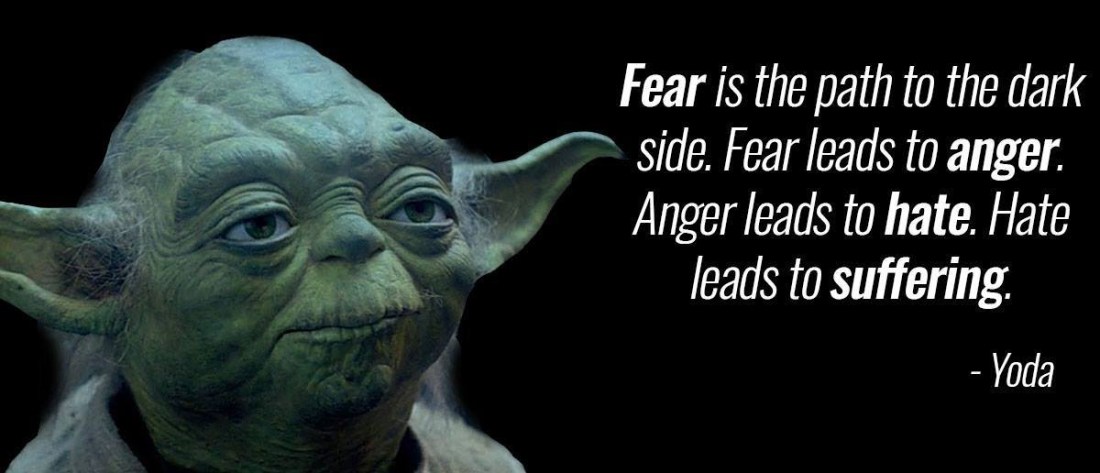
             Fear is not totally negative; it has its good effects that have actually led mankind to every great progress in life like the discovery of new lands and territories, new medicines, new inventions and other things.  Fear becomes a liability when it prevents us to trust more like little children.  Kids and young people are often “positively” fearless because they trust so much that nobody would hurt them or that nobody would forsake them.  As we age, our fears increase because our trust decreases:  we fear so many things because we are afraid of losing the little we have, we are afraid of getting hurt, we are afraid of starting all over again.  That’s the irony of life:  we start fearing almost nothing that we grow so fast but as we age, we begin to fear everything that we stop growing and stop living.  Christmas is a beautiful reminder to be children again like God the Son Jesus Christ who entrusted Himself to us, to care Him, to love Him, to protect Him, to keep Him.  Let us reclaim that childhood again by casting away our fears so we can truly love faithfully and freely!

yoda-quote-path-to-the-darkside

Christ Comes in Silence

MaiAthens
The Lord Is My Chef Simbang Gabi Recipe-4
19 December 2018
Judges 13:2-7, 24-25///Luke 1:5-25

            Going to funeral wakes can sometimes be humorous especially when people ask me all kinds of questions that sometimes I wonder if I look like the Google page.  One of the FAQ’s I always get is what is the most difficult part in the life of us priests?  Many would always burst into laughter when I tell them that it is when our back gets itchy and we have no one to scratch it, telling them about the saying “ang hapdi matitiis pero ang kati ay hindi” (pains are bearable but not itch).  This is very true that is why I keep three back scratchers made of wooden carved arm with a hand from Baguio in my room, one in the TV area, the second at my study desk and another at my bedside.  But lately I have found another big problem of living alone as a priest when I never knew I had no voice until I celebrate the Mass in the morning!  And how would I know that I do not have voice when I have nobody to talk to in my room or rectory when I wake up early morning except God who is always in silence?  Sometimes it could be embarrassing and even funny but overall, it is no big deal with me.  In fact, being silently alone in my parish is the most wonderful blessing I cherish so much in my priesthood.

            But going back to our voice, it is one of our most valued possessions as priests or even of anyone.  No wonder, the word “voice” itself connotes power in our language usage for to lose one’s voice is also to lose power and ability to lead.  Without the voice, anyone’s ability to communicate is drastically impaired as you could no longer communicate effectively to express your thoughts and your feelings, you could no longer give advice and counsel to others on many things or teach anyone.  In short, to lose one’s voice means never to be heard again.  Today in our gospel we heard the first story by Luke about Christmas, the annunciation of the birth of John the Baptizer to his father Zechariah while he was serving as a priest at the Jerusalem Temple during its most important feast.  An angel appeared to him to announce how God have heard his prayer and of his wife Elizabeth for a child but instead of being filled with joy with the good news from heaven, Zechariah doubted God.

            Then Zechariah said to the angel, “How shall I know this?  For I am an old man, and my wife is advanced in years.”  And the angel said to him in reply, “I am Gabriel, who stands before God.  I was sent to speak to you and to announce to you this good news.  But now you will be speechless and unable to talk until the day these things take place, because you did not believe my words, which will be fulfilled at their proper time.” (Lk.1:18-20)

            One of the rare commodities in the world today is perhaps silence.  Everybody is talking, even cars and elevators and other machines.  When we examine the bible and even our lives, we see that every communication by God is always preceded by silence.  Before God created everything, Genesis tells us that there was silence first.  The beloved disciple John opens his gospel by saying “In the beginning was the word” to show everything with God was in silence.  Jesus Himself was born in the silence of the night at Bethlehem while the gospel accounts tell us nothing much about His childhood except when He was lost and found three days later at the Temple of Jerusalem.  After that finding at the Temple, what we have are the hidden years of Christ when nothing is heard about Him or from Him for 30 years.  And during His brief ministry of about three years, Jesus used to withdraw to the mountains or wilderness to pray in silence.  Such is the importance of silence not only for our spiritual growth and maturity in Christ but according to experts, also for our total well being as persons.

           In starting his Christmas story with Zechariah being forced by the angel to go into silence, Luke is teaching us the essential value of silence in preparing for Christmas.  Luke described Zechariah and his wife Elizabeth coming from families of priests who must be used to speaking, to giving talks, explaining things to many people.  It seems that with his advanced age, Zechariah must be of a significant stature among his peers.  But now, he had been forced into silence by God so that he may have more time to examine things going on inside and in his life, more time for reflection and even for renewal.  His wife Elizabeth appears to be more properly disposed in receiving the good news about the birth of John with her attitude of silence when she went into seclusion for five months saying, “So has the Lord done for me at a time when he has seen fit to take away my disgrace before others” (Lk.1:24-25).  Similarly like her in the Old Testament was the wife of Manoah who remained silent when a man of God told her she would bear a son to be called Samson, “I did not ask him where he came from” (Jgs.3: 6).

             Advent is the presence of God but sometimes when we are overburdened with so many things like anxieties and problems in life, frustrations and disappointments, sickness and death in the family, we become unaware of His divine presence even if we continue to pray and do our religious duties and devotions.  Too often we lack the conscious awareness of God in our lives that we take Him for granted, considering Him more as a given than a presence and a reality.  Like Zechariah who happens to be a priest who must be more attuned and rooted in God, we hardly notice His coming or even doubt Him and His powers.  God is never put off by our questions but what “irritates” Him is when we question Him, when we doubt Him, when we ask about His character.  That is a lack of faith in Him, a lack of trust, and lack of personal relationship and constant dialogue with Him like what St. Joseph had in our reflections yesterday.  Remember, St. Joseph is the most silent person in the Bible.

          Like the stories of pregnancies we have been hearing these past days, Advent is a call for us to moments of “gestational silence” that is deeper than losing one’s voice or being quiet.  Gestational silence, or pregnant silence if you wish which is what gestation is all about, is withdrawing into ourselves not to escape but to finally face and listen more intently to the rumblings and sounds within us and around us, to listen more intently to God who is our only true voice in life.  Like Zechariah in the gospel today, we could be so tired already of doing everything, banging our heads on the wall to solve everything, to answer everything.  Let us force ourselves in these remaining days before Christmas to go into gestational silence to open ourselves to God speaking to us anew with His other other possibilities and new perspectives for us.  After all, it is only God who is our only true voice in this life in Christ. AMEN. Fr.NicanorF.LalogII,Parokya ng San Juan Apostol at Ebanghelista, .Gov. F. Halili Ave., Bagbaguin, Sta. Maria, Bulacan.

*Photo by Dra. Mai B. Dela Pena, sunset in Athens, Greece, 2016.  Used with permission.

Holiness and Sinfulness

stjosephchurch
The Lord Is My Chef Simbang Gabi Recipe-3
18 December 2018
Jeremiah 23:5-8///Matthew 1:18-25

             One of my unforgettable experiences in my parish is when a husband and wife quarreled during the baptism of their child.  When I asked the father the name to be given to their son right before baptism, he gave another name and instantly, his wife hit him with her elbow and snapped, “who’s that baby again!?”

             In the rites of baptism, it is the father who is asked by the minister on the name to be given to the child.  It is the father who gives the name because he is the origin of life, the giver of life; hence, every child uses the father’s family name to show his paternity.  This is in essence the reason God asked Joseph “to be not afraid to take Mary as his wife” so he would be the legal father of Jesus Christ.  Though it is very clear in the account of Matthew yesterday and today that Jesus is truly the Son of God and not of any human, the evangelist shows us how through Joseph, Jesus belongs by law – legally – to the house of David as fulfillment of God’s promise.  At the same time, in giving name to Jesus, Joseph proves more than ever his holiness which is the meaning of his description as a “righteous” or “just” man.  This is how the birth of Jesus Christ came about.  When his mother Mary was betrothed to Joseph, but before they lived together, she was found with child through the Holy Spirit.  Joseph her husband, since he was a righteous man, yet unwilling to expose her to shame, decided to divorce her quietly (Mt.1:18-19).

             Holiness for the Jews or being righteous and just is primarily obedience to the Laws of God handed down through Moses.  However, during the time of Christ this perception became so limited to mere obedience to the letters of the law that even Jesus later on would try to correct.  His legal father, St. Joseph, in fact would exactly do that when he showed that holiness is a constant dialogue with God when one is nourished by His words like a tree planted near the streams of water, bearing fruits of love for God and for others.  This imagery is found in the Book of Psalms that says men who are just and righteous are those who “delight in the law of the Lord, like a tree planted near streams of water, that yields its fruit in season; its leaves never wither; whatever they do prospers” (Ps.1:2-3).  When St. Joseph decided to quietly divorce Mary after learning about her pregnancy, it was the height of his love for her as he was very willing to walk away and let her marry whoever fathered that child in her womb than subject her to public shame and humiliation as their laws prescribed.  In that aspect alone, we find St. Joseph very holy indeed!  But it did not stop there:  after being informed by the angel in a dream of the divine nature of Mary’s pregnancy, St. Joseph proved anew his holiness with his deep love for God by eventually taking Mary as his wife that paved the way for the first Christmas we now celebrate.  St. Joseph’s holiness shone brightly in this aspect when his love for Mary was never diminished but even deepened when his love for God moved him to take “his wife home.”  Here are the fine prints of St. Joseph’s holiness that in his love for God, he had to take Mary as his wife and in doing that, he eventually brought forth in a sense the birth of Jesus Christ.  Every time we love God, it always leads us to love others too.  It is when we live in love that Jesus Christ truly comes into our lives and Christmas happens always.

             But there is something bigger and better, lovelier and holier to unfold in St. Joseph’s role as legal father of Jesus Christ.  Notice how Matthew repeated the verb “to name” twice:  “She will bear a son and you are to name him Jesus, because he will save his people from their sins (Mt.1:21)” and “When Joseph awoke, he did as the angel had commanded him and took his wife into his home.  He had no relations with her until she bore a son, and named him Jesus (Mt.1:24-25).”   Giving of names in general connotes authority.  In Genesis, God gave man the authority to give names to the animals He had created.  Parents give names to their children as a sign of their authority.  Bullies in classrooms and anywhere always try to assert their authority by giving funny names to their victims while lovers always have unique names given to their beloved as terms of endearment.  In this respect, St. Joseph did not merely give up that authority of giving name but must have also realized within him the awesome reality of things about to unfold in the birth of Mary’s child who “will save his people from their sins” (Mt.1:21).

             Three weeks ago I read in the news how a popular American airlines apologized to a mother when their ground crew at the boarding gate laughed and insulted her daughter named “Abcde” which is pronounced as Ab-city.  I have baptized a baby in my parish with a similar name, “Wxyz”.  The parents never complained or filed charges against me when I questioned them for their choice of name for their son, warning them of negative repercussions in the future.  Giving of names is a very serious duty among the Jews (and it should be for everyone!) because a name always indicates the person’s mission.  In giving the child of Mary the name “Jesus” that means “God is my salvation”, St. Joseph must have realized not only the mission of Christ but most of all fully accepted it as one that the world needs so badly.  Recall that during the ministry of Jesus, religious leaders of His time always questioned His forgiving of sins because only God can forgive sins.  Problem with them like the Pharisees and the scribes, they have refused to recognize Jesus as the Christ, the Son of God sent to forgive sins.  Right from the start during his dream, St. Joseph was already aware of the mission of Jesus Christ which is to forgive sins.  And his obedience to the instruction of giving the name “Jesus” is indicative of his holiness because the first step to being holy is to admit our sinfulness, our need for forgiveness by God.  This is the problem of the world today, the lack of sense of sinfulness among most of us even among us priests as shown by the sex scandals.  The mark of true holiness is the humility to admit and accept one’s sinfulness and need for forgiveness.  When Pope Francis was interviewed for the first time for a magazine, he was asked how he would describe himself and his quick answer was, “I am a sinner.”
       Sin is a turning away from God, the absence and failure to love.  It is the opposite of holiness which is being filled with God.  Unless we realize that our sinfulness is the first and most important thing needed to be fixed within us, we will never move forward, we will never grow, and we will never experience Christ’s coming.  This is the very reason Christ was born, to forgive our sins so that we may return and go back to God who is our fundamental relationship in life.  No healing, no life in general will ever come and prosper when this relationship with God is out of order because of sins.  St. Joseph is a righteous or just man, a holy man, because in recognizing the need for the forgiveness of our sins, he cooperated with God in His plans by naming the child of Mary as “Jesus” and that is why we now celebrate Christmas.  God bless you!  AMEN. Fr.NicanorF.LalogII,Parokya ng San Juan Apostol at Ebanghelista, .Gov. F. Halili Ave., Bagbaguin, Sta. Maria, Bulacan.
*Photo by author, Church of St. Joseph at Nazareth, the Holy Land, April 2017.

Our Origin and Mission in Jesus Christ

48184542_1236165199867720_9017446140471148544_n
The Lord Is My Chef Simbang Gabi Recipe-2
17 December 2018
Genesis 49:2, 8-10///Matthew 1:1-17

            Surely today after our Simbang Gabi, all attention would be on the Miss Universe Beauty Pageant with everybody rooting for our bet, memorizing the names and answers of almost every candidate from all over the world.  I have never seen any episode of Miss Universe or any beauty pageant in my entire life but from what I have read and heard, our intense interests with beauty contests is our way of coping with the harsh realities in our nation of crooks and corrupt officials that we try to identify with the beautiful and glamorous.  As you examine every candidate later on TV, try remembering our reflection on this second Simbang Gabi which is also about names and origins and mission.

            Today we begin the second phase of Advent when our liturgy shifts its focus to the first coming of Jesus more than 2000 years ago in Bethlehem.  The Church’s official countdown for Christmas Day actually starts today December 17 until the 24th when all our readings look back to the events leading to Christ’s birth.  Every year on this date we hear the beginning of the gospel of Matthew about the genealogy of Jesus Christ where we are presented with names of our Lord’s ancestors that mostly sound funny and even weird.  Yesterday we have reflected that the joy of Advent and Christmas is the Person of Jesus Christ found among every person.  Today, we deepen this reflection on the Person of Jesus Christ through His genealogy that reveals to us His origin and mission which we also share with Him.

            It is interesting to recall that when Jesus faced Pilate during His trial, the Roman governor asked Him “Where are you from?” (cf. Jn.18:38).  It was also the same question that all four evangelists tried to answer later in writing their respective gospel account of the Christ.  For Matthew and John, it is the most essential question needed to be answered right away that they both opened their gospel accounts by presenting the origins of Jesus Christ.  We shall reflect on John’s version about the origins of Jesus on Christmas; today we focus on Matthew’s genealogy which is very Jewish in flavor and context considering his own background and audience made up largely of Jewish converts to Christianity.  Right away, Matthew traced the genealogy of Jesus to the two prominent figures of Israel by solemnly declaring at the beginning of his gospel, “The book of the genealogy of Jesus Christ, the son of David, the son of Abraham” (Mt.1:1).

           For Matthew, the story of the promise of God begins with Abraham who was called to journey from his homeland to the Promised Land.  More than a journey into another land, it was also a journey into the future by Abraham when all nations who would come from him shall come together to be blessed by the Lord.  Every Jew is aware of this promise by God to Abraham and Matthew is now reminding them how everything was fulfilled in the birth of Jesus as the Christ.  Pope Emeritus Benedict XVI explains in “Jesus of Nazareth, the Infancy Narratives”that “From the beginning of the genealogy, then, the focus is already on the end of the Gospel, when the risen Lord says to his disciples:  ‘Make disciples of all nations’ (Mt.28:19).  In the particular history revealed by the genealogy, this movement toward the whole is present from the beginning; the universality of Jesus’ mission is already contained within his origin” (page 5).

            Next to Abraham, Matthew structured much of the history of his genealogy around the figure of David, the greatest king of Israel to whom the promise of eternal kingdom had been given by God.  Fully aware of the significance of symbolisms in number among his people, Matthew structured the genealogy of Jesus into three sets of fourteen generations considering that the Hebrew letters of the name David add up to fourteen also:  “Thus the total number of generations from Abraham to David is fourteen generations; from David to the Babylonian exile, fourteen generations; from the Babylonian exile to the Christ, fourteen generations” (Mt.1:17).  Again, we listen to Pope Emeritus Benedict XVI,“this threefold division by Matthew shows that the genealogy of Jesus is in fact the Gospel of Christ the King wherein we can find the whole history looking onto Him whose throne is to endure forever (ibid., page 6).”   Here we find anew the fulfillment in Jesus of God’s promise to Abraham and to David.

            The third and surprising element in Matthew’s genealogy of Jesus is the inclusion of five women that is very novel at that time considering it was a male dominated world.  See that Matthew traced more of the male line of the Lord’s genealogy; he must be up to something in mentioning the five women as roots also of Jesus: Tamar, Rahab, Ruth, Bathsheeba the wife of Uriah, and then Mary His mother.  The first four women were considered sinners and right away we can see how Matthew had indicated in the genealogy the mission of Jesus as Savior of the world when He took upon Himself the sins of the four women including those of the world.  It was not chauvinism on the part of Matthew but simply employing a technique prevalent at that time; but, here he also presents to us another reality of aside from being sinners, all four women before Mary were also foreigners or gentiles who were looked down upon by the Jews at that time.  Through them, Christ’s mission to the Gentiles is also made manifest in His genealogy, proof that indeed the genealogy of Jesus is the whole Gospel in itself!

           But the biggest surprise of Matthew after putting four sinful, gentile women in the genealogy of Jesus is his manner of ending it with another woman though this time a Jewish one, Mary.  Note like in a song all throughout the genealogy, we find the pattern of father and son like in “Abraham was the father of Jacob” to indicate human paternity among the ancestors of Jesus.  Note how Matthew would devise a twist near the end by telling us “Jacob (was) the father of Joseph, the husband of Mary.  Of her was born Jesus who is called the Christ” (Mt.1:16).  The evangelist is very clear here with the Divine origin of Jesus Christ who did not come from Joseph or any human father.  Right after the genealogy, Matthew would narrate the circumstances surrounding the birth of Jesus Christ, stressing the fact that He was conceived in the womb of Mary by the Holy Spirit.  Very clear Matthew has no plans of minimizing the role of Joseph in Christ’s birth; on the contrary, the evangelist extolled Joseph’s role at the genealogy and following story of the Nativity that as the legal father of Jesus, Joseph makes Jesus legally from the Davidic line of succession as fulfillment of the promise to David by God.  Such is the mystery of the person of Jesus Christ that although His origins can be traced to humans, beginning with Abraham and David, He also came from above with God truly His Father which we profess in faith that He is true God and true Man.  In Jesus Christ through Mary, “human existence starts afresh so that we can now claim that our true genealogy is in our faith in Jesus who gives us our origin and mission from God (ibid.).”

           One of my spiritual fathers who has a tremendous impact in my life was the late American Jesuit Fr. Arthur Shea.  He was my spiritual director during our Ignatian 30-day retreat in Cebu more than 20 years ago.  His favorite expression was “man is a mystery.”  Indeed, every person is a mystery for we never know exactly everything about him or her, someone we must always respect because no matter what, he or she is a child of God above us.  The genealogy of Jesus Christ challenges us today to rise and hold on to that honor of being a beloved child of God that despite our sinful past, many weaknesses and failures, we can always start afresh like Mary putting an end to the cycle of sins and evil.  The genealogy of Jesus Christ reminds us that life is more about direction than destination.  Like Abraham, we are all wayfarers treading the path of Jesus who is the way, the truth and life with no clear indications of places to go except of directions to the future to be like Him.  Like David, God would always find a way to change our courses in life so we can follow His direction despite our grave sins.  Let us pray with Mary that we may let God set the direction of our lives so that we may bring Christ back into this world that has veered away from Him.AMEN.Fr.NicanorF.LalogII,Parokya ng San Juan Apostol at Ebanghelista, .Gov. F. Halili Ave., Bagbaguin, Sta. Maria, Bulacan.

*Photo is another painting on acrylic (48×96) by Bulakenyo artist Aris Bagtas called “Luklukan ng Karunungan” (Seat of Wisdom) displayed at the second floor of the Library of the Immaculate Conception Major Seminary at Guiguinto, Bulacan.  A lively and beautiful rendition by Aris of Mary teaching her Son Jesus Christ while at the background is Joseph looking at them.  Used with permission.

Advent is Walking and Dancing with God

quote-the-soul-that-walks-in-love-neither-tires-others-nor-grows-tired-john-of-the-cross-84-42-30
The Lord Is My Chef Breakfast Recipe-Prayer
Friday, 14 December 2018, Advent Week 2
Isaiah 48:17-19///Matthew 11:16-19

            Thank you once again, loving Father, for the gift of another great saint for today who was a great mystic who guided us in so many ways of knowing you, seeing you clearly, and following you closely.  What I like most with St. John of the Cross is your gift for him to perfectly blend poetry and prayer to express your highest truths:  “El alma que anda en amor, ni cansa ni se cansa.”  So beautiful!  “The soul that walks in love, neither tires nor is tired.”

             Let us walk in the love of your Son Jesus Christ to learn to follow “the way we should go” (Is. 48:17) so that like in today’s responsorial psalm, “we may have the light of life always.”

             Most of all, as we learn to walk your path O Lord, let us rise to join your dance as you complained in today’s gospel, “We played the flute for you, but you did not dance” (Mt.11:17).   Let us leave the sides to get in the middle of the floor and of the road, to walk and dance with you, celebrating life with your GUIDANCE, that is, God, U and I, DANCE for life.  AMEN.Fr. Nicanor F. Lalog II,Parokya ng San Juan Apostol at Ebanghelista, Gov. F. Halili Ave., Bagbaguin, Sta. Maria,Bulacan 3022.

Photos from Google.  I have included the poster of one of my all time favorite movies that expresses my prayer today.

ScentOfAWoman2

Advent is God’s Tender Moment with Us

violets
The Lord Is My Chef Breakfast Recipe-Prayer
Thursday, 13 December 2018, Advent Week 2
Isaiah 41:13-20///Matthew 11:11-15

            O my sweet loving Father in heaven…!  Your words today through the Prophet Isaiah made me sing one of my favorite love songs by Billy Joel, “Leave a Tender Moment Alone”:

Even though I’m in love
Sometimes I get so afraid
I’ll say something so wrong
Just to have something to say

I know the moment isn’t right
To tell the girl a comical line
To keep the conversation light
I guess I’m just frightened out of my mind

But if that’s how I feel
Then it’s the best feeling I’ve even known
It’s undeniably real

Leave a tender moment alone


              Of course, O sweet Lord my God!  I did get it:  you are trying to be extra sweet even so charming when you said “Fear not, I will help you.  Fear not, O worm Jacob, O maggot Israel; I will help you, says the Lord; your redeemer is the Holy One of Israel” (Is.41:14).  Yes, I get it when you called me a worm and a maggot, I do not feel insulted.  You have actually tickled my bones, loving Father as you try to make some“lambing” as we say in Bulacan for you are oozing with so much TLC (tender loving care) for me.  Like Billy Joel, you seem to say something so wrong just to have something to say because you love so much.  And most of all, because you are asking me for some tender moment alone.

             How true then are the words of your Son Jesus Christ that “among those born of women there has been none greater than John the Baptist; yet the least in the Kingdom of heaven is greater than he” (Mt.11:11) for we have seen you, and heard you loving Father in Him.  Above all, for we have been redeemed in Him!

             Let me experience your intense presence by letting go of everything within me in deep prayer and silence, in giving you those “tender moments alone” to experience your person with conviction.  AMEN.Fr. Nicanor F. Lalog II,Parokya ng San Juan Apostol at Ebanghelista, Gov. F. Halili Ave., Bagbaguin, Sta. Maria, Bulacan 3022.

*Photo by the author, violets, Parokya ng San Juan Apostol at Ebanghelista, Gov. F. Halili Ave., Bagbaguin, Sta. Maria, Bulacan, 12 December 2018.

Advent is Answering God’s Call

guadalupe1
The Lord Is My Chef Breakfast Recipe-Prayer
Wednesday, 12 December 2018, Feast of Our Lady of Guadalupe
Revelation 11:19; 12:1-6, 10///Luke 1:39-47

            Thank you very much, O loving Father, in giving us in this season of Advent the wonderful feasts of Mary and the saints who inspire us to always create a room for your Son Jesus Christ in our hearts.

            On this feast of Our Lady of Guadalupe, we remember your wondrous way of calling the Blessed Virgin Mary, her cousin Elizabeth, and St. Juan Diego for your specific mission.  All were “ordinary” people just like most of us.  Mary was a young maiden from an obscure town you have chosen to be the Mother of Jesus Christ while Elizabeth her cousin was already old and barren when you blessed her to conceive the Lord’s precursor, John the Baptizer.  Like these two women of simplicity and humility was St. Juan Diego, an Aztec Indian who became the visionary of Guadalupe.

               Like Elizabeth, I always ask myself and, you, O Lord my God, “how does this happen to me that you my Lord should come to visit and call me (Lk.1:43)?”  St. Juan Diego also asked the Blessed Mother to call somebody else for her mission but she replied, “My little son, there are many I could send.  But you are the one I have chosen.” 

               Loving Father, please bear with me if I always ask you with many whys, always unbelieving in my abilities to do your work and fulfill your mission.  Help me to keep following you, cover me with your mantle of grace and protection like the Blessed Mother as seen by John, “a woman clothed with the sun” (Rev.12:1) so that like her I may “to give birth to Christ” (Rev.12:2) to this  world deeply in sin, totally forgetting you.  Wrap me also like St. Juan Diego with your mantle of love and affection so that from my words and deeds would come the fragrant blooms of your kindness and charity in serving others.  AMEN.Fr. Nicanor F. Lalog II,Parokya ng San Juan Apostol at Ebanghelista, Gov. F. Halili Ave., Bagbaguin, Sta. Maria,Bulacan 3022.

*Photos from Google.

guadalupe2

Advent Is Time to Wake Up, to Rise and Walk in Christ

MarpaSunrise
The Lord Is My Chef Breakfast Recipe-Prayer
Monday, 10 December 2018, Advent Week 2
Isaiah 35:1-10///Luke 5:17-26

            As morning breaks on this first working day of the second week of Advent, I echo O Lord Jesus the joyful words of the people of your time,“We have seen incredible things today.” (Lk.5:26)

             It is so incredible Lord that in this season of Advent as I try to befriend my inner self in the spirit of prayer and silence, as I try to accept all of me, my worth and unworthiness, the more you are amazingly loving and kind to me.  I feel both like the paralyzed and those men in the gospel today who broke the roof of the house where you were staying so they could lower before you their sick friend.  And the first words that came from you were not about healing but forgiveness!  Most of all, you have forgiven the sick man after you have seen the faith of the friends who have taken apart the roof of your house.  What a way of creating a room for you, Lord Jesus! 

               Teach me to be daring like them in creating a space for you by taking apart the many sins and pretensions I use to cover myself.  Help me to take apart the various insecurities where I hide myself that prevent me from meeting you, from welcoming you into my life.  So many times, Jesus, you know how I just sleepwalk in my being a Christian when I think I am radically living as your disciple when in fact I am just dreaming, just sleeping.

            Teach me to abandon myself to you Lord, to relinquish all false securities that the world offers me.  Most of all, let me abandon those thoughts I have about you that are not so you at all, those ideas I have about God like the scribes and Pharisees who have usurped upon themselves the standards of what is holy and not, of what is right or wrong.  Let me start living in your pasch, unafraid of being vulnerable and weak so I can rise and walk again, freed from sins and infirmities.  AMEN.Fr. Nicanor F. Lalog II,Parokya ng San Juan Apostol at Ebanghelista, Gov. F. Halili Ave., Bagbaguin, Sta. Maria,Bulacan 3022.

*Photo by Jim Marpa, 2018.  Used with permission.

LMC