
Lord My Chef Sunday Recipe for the Soul by Fr. Nicanor F. Lalog II
Solemnity of the Most Holy Body & Blood of Christ-A, 07 May 2026
Deuteronomy 8:2-3, 3:14-16 ><}}}*> 1Corinthians 10:16-17 ><}}}*> John6:51-58
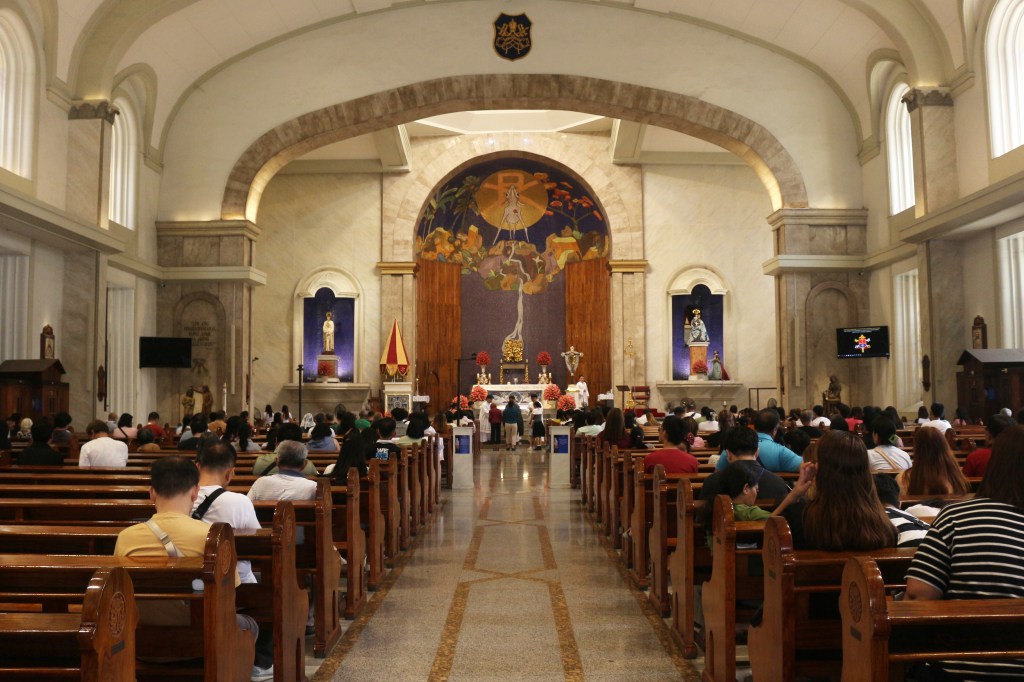
Of the many churches I have been to, the Sta. Cruz Church in Manila remains my favorite. Since childhood, I have always loved its beautiful apse of Byzantine glass mosaic of a sacrificial lamb symbolizing Jesus Christ whose blood flows like a river to the tabernacle amid a setting of mango, banana and fire trees.
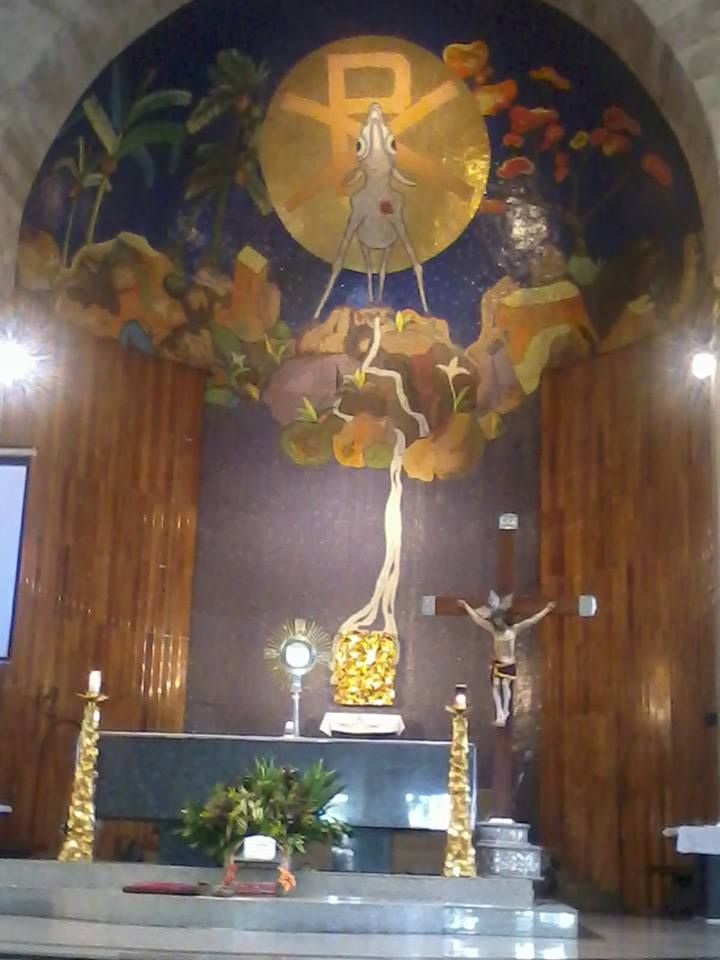
The mosaic gives that feeling of the divine presence that may be a contributing factor too in keeping the solemnity of the many successive Masses celebrated there daily.
After leaving the high school seminary in 1982 while in college at UST, I still went to Sta. Cruz church by taking the Love Bus to Escolta after which I would walk across the street to my dad’s barber for a haircut then lunch at Panciteria Ramon Lee. It remained my refuge whenever I found myself deep into sins and troubles, with problems and difficulties, feeling lost and empty especially later in life while working.
It had played a significant role in my vocation story and that is why I remembered it while reflecting this Sunday’s gospel on the Solemnity of the body and Blood of Christ.
More than a gift offered to us individually in the Eucharist, Jesus intends his Body and Blood “for the life of the world” like that sacrificial lamb depicted at the apse of the Sta. Cruz church.
Jesus said to the Jewish crowds: “I am the living bread that came down from heaven; whoever eats this bread will live forever; and the bread that I will give is my flesh for the life of the world” (John 6:51).
On this Solemnity of the Body and Blood of Christ, we are invited to reflect on the meaning of the Holy Eucharist in our lives where the mystery of God in Three Persons, the Blessed Trinity we celebrated last week is revealed and becomes most real.
Faith in God is faith in the Incarnation of Jesus Christ present to us in the Eucharist under the signs of bread and wine. But, what does it mean really for us especially in the light of today’s gospel where Jesus said “and the bread that I will give is my flesh for the life of the world.” How can our individual life contribute in giving the life of the world, Jesus Christ himself?
In his encyclical letter Ecclesia de Eucharistia issued in 2003, St. John Paul II beautifully expressed that if Jesus can transform the bread and wine into his Body and Blood in every Eucharistic celebration, then he can transform us into better persons too.
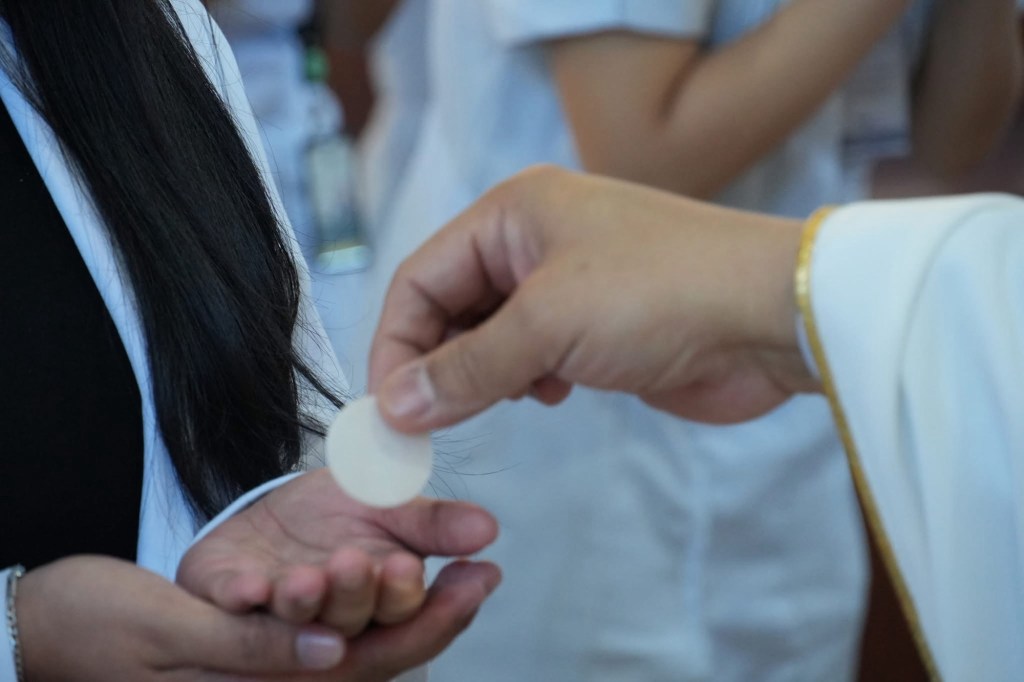
So true! That is why the bestest time to pray is right after receiving Holy Communion because that is when Jesus Christ, Body and Blood, is present in our own body – speak to him in your most natural way. If you want, complain to him. Magsumbong ka rin sa kanya. Pour your heart out to Jesus who is Body and Blood inside you.
However, make sure too that you listen intently to him. When we listen to Jesus, we then enter into a relationship with him as we make him part of our lives as we too become part of his very life. That is when we are filled with his life which we in turn share with others and thus, give life to the world.

In the first reading we heard Moses calling us to “remember” not only those forty years in the wilderness by the Israelites but our own journey in the many desert of this life.
The word “remember” is from the root word “member” which means “part” plus the prefix “re” meaning again; to re + member a person and an incident is to make them a part of the present moment again which is the very commandment of Jesus at the Last Supper, “do this is remembrance of me.”
Now look: every week we go through our many exodus like in the first reading. We remember them especially at the start of every week because life is a daily exodus, of coming out from sickness into health, of darkness into light, of slavery into freedom, of sin into grace, of death into life. Yes, our many desert experiences in life were painful but they were all moments of grace too because that is when we realized that we do not live by bread alone, by material things alone – that we need God.
Hence, the first step for us experience this life of Christ as life for the world is to go back to the church, go back to the Holy Mass. These online Masses must be stopped. COVID pandemic is long gone.
The Mass presupposes actual presence because Christ is truly present with us in every celebration. We must learn anew to desire Jesus more in the Eucharist especially on Sundays.
In the Mass, we re-member Jesus in our lives after a week of busy activities and work; as we make Jesus a part of our lives anew, we see also ourselves needing much needed rest and comfort too in Jesus! Inasmuch as we re-member Jesus into our lives, it is actually us being re-membered into Christ who is also our food and drink to nourish us in this daily exodus in life.
Notice how in verse 14 Moses reiterated his call to the people to “remember” but this time what he told them including us today is “do not forget the Lord”: every Mass as our exodus is a way of casting off the temptation to live one’s life without God.
When we come to celebrate the Mass, especially when we are well disposed and prepared, we realize that we are always poor before God who alone can satisfy all our longings and needs.
To forget this is the sure path to catastrophe as many of us would attest.
With God, life; without God, no life.
This we find so clear with the Corinthians during the time of St. Paul that is why he addressed them in the interrogative tone:
Brothers and sisters: The cup of blessing that we bless, is it not a participation in the blood of Christ? The bread that we break, is it not a participation in the body of Christ? Because the loaf of bread is one, we, though many, are one body, for we all partake of the one loaf (1 Corinthians 10:16-17).
The Corinthians at that time were already well aware of how the Eucharist make the Church whose head is Jesus Christ. Hence, the need for a communion or “participation” which is the word used in our translation. St. Paul was reminding them of what they knew in faith, that is, a Holy Communion in Christ which they must put into practice. This communion among the Corinthians would be put into risk when quarrels and divisions plagued their community later that prompted St. Paul to write them a second letter.
As part of the Mass, the Communion is when we receive the Body and Blood of Christ; but, in a deeper sense, Communion is unity in charity. It is Jesus Christ becoming human like us in everything except sin so that we can become holy and divine like him. This mysterious exchange of ourselves with Jesus, in Jesus, and through Jesus happens in the Eucharist where we are nourished and filled with the life of Christ whenever we receive the Holy Communion. May we share this life we have gained in Christ with others by witnessing his Gospel to give life to this sick and dying world – like that sacrificial lamb at the apse of my favorite church in Sta. Cruz. Amen. Have a blessed week ahead.
 lordmychef.com