
The Lord Is My Chef Daily Recipe for the Soul by Fr. Nicanor F. Lalog II
Friday, Memorial of St. Francis of Assisi, 04 October 2024
Job 38:1, 12-21; 40:3-5     <*{{{{><  +  ><}}}}*>     Luke 10:13-16

This is actually a rejoinder to our prayer earlier published today on the Memorial of St. Francis of Assisi. And how I love the first reading today, of God’s “speech” to Job’s lamentations that remind us all of the wonder and majesty of creation St. Francis of Assisi highly regarded in his life and teachings.
The Lord addressed Job out of the storm and said: “Have you ever in your lifetime commanded the morning and shown the dawn its place for taking hold of the ends of the earth, till the wicked are shaken from its surface? Have you entered into the sources of the sea, or walked about in the depths of the abyss? have the gates of death been shown to you, or have you seen the gates of darkness? Have you comprehended the breadth of the earth? Tell me, if you know all” (Job 38:1, 12-13, 16-18).
How interesting too these words written about 2700 years ago in the Middle East are echoed in our own time in theme song of the Disney movie Pocahontas, “The Color of the Wind”:
Have you ever heard the wolf cry to the blue corn moon
Or asked the grinning bobcat why he grinned?
Can you sing with all the voices of the mountain?
Can you paint with all the colors of the wind?
Can you paint with all the colors of the wind?

Like Job, who was a fictional character, Pocahontas went through a lot of great sufferings beyond explanations which is the aim of the authors of the Book of Job – to reflect on the mystery of human sufferings and misery amid a loving God.
It is easy to understand our sufferings in life when we are the ones who have caused them like making wrong choices and decisions or simply not exerting enough efforts to our endeavors or projects.
The most painful sufferings that are really bothersome are those we feel “undeserved” at all like getting a rare cancer and disease, being offended by someone close to us despite our being good to them, or like Pocahontas who was then living in peace and quiet until the English colonizers came to America who kidnapped and gang raped her.
I have never seen that Disney movie Pocahontas that is loosely based on the life of a native American Indian woman Pocahontas whose actual name was Matoaka; she was the daughter of the Chief of the Powhatan tribe in Chesapeake, Virginia during the early 1600’s.
According to historians, there was really no romance at all between Pocahontas and the British colonizer Captain John Smith as portrayed in the Disney movie. After getting pregnant from that gangrape, Pocahontas was forced to marry the English explorer John Rolfe as a condition for her release that only made her life filled with great sufferings and humiliations until her death.
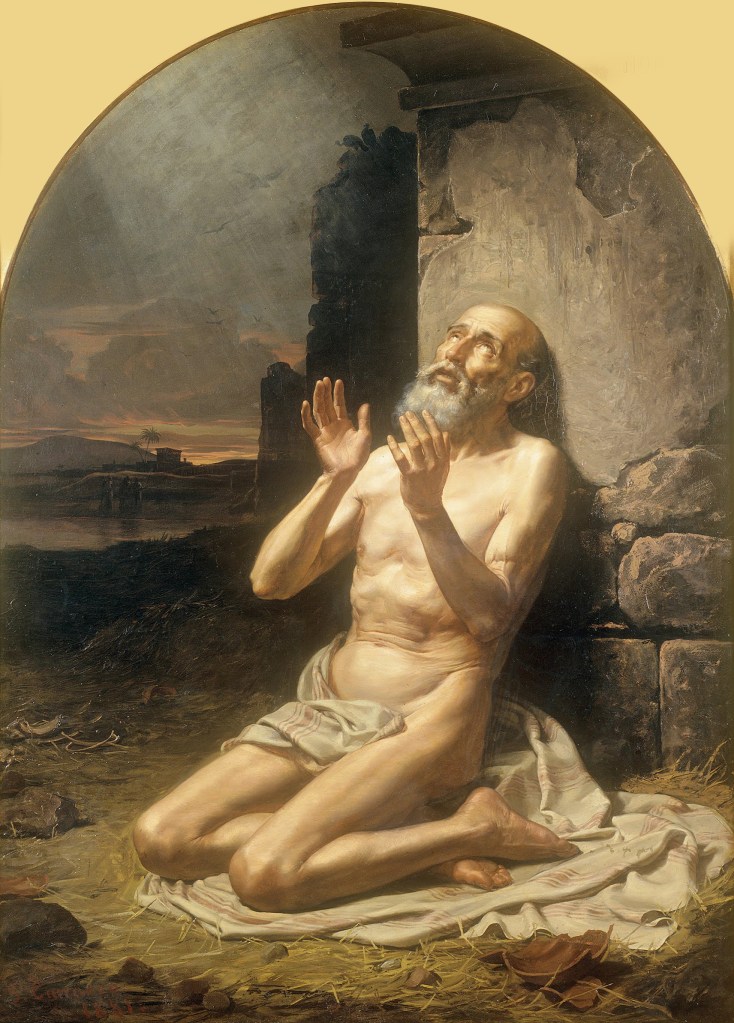
Though a work of fiction but a fruit of prayerful reflections about life’s realities unlike the Disney movie Pocahontas, Job suffered severely when he lost his children, properties and livestock in a single day. Worst of all, he was stricken with a rare disease and left to the care of a “nagging” wife and three friends who wanted him to curse God or admit his guilt for a sin for which God was punishing him.
But Job’s conscience was clear, remaining faithful to God throughout all his sufferings. His complaints and cries were actually a voicing out of his inner pains to God, an expression of his trust in Him, “But as for me, I know that my Vindicator lives, and that he will at last stand forth upon the dust… And from my flesh I shall see God; my inmost being is consumed with longing” (Job 19:25, 27).
Job like us today was not seeking any answer nor explanation at all for his sufferings; he cries to God like us because we believe only God can save us. We do not cry or air our pains to someone we do not trust or believe in; the same is true why we cry and complain to God!
God’s response to Job’s laments remind us today of the need for us to see the whole picture we are into in this vast universe, of how everyone and everything is interconnected in God through His own Son Jesus Christ.
Notice how the author structured the speech of God of seeming opposites in life: commanding the morning and being shown the dawn in verse 12; sources of the sea and depths of the abyss in verse 16; and, gates of death and gates of darkness in verse 17. Jewish thought at that time was so structured that they saw everything distinctly different like morning and dawn, sea and abyss, death and darkness. That explains why they were so strict with the letters of the law that they eventually forgot the primacy of the human person which Jesus tried to emphasized to them in His teachings and healings. Jesus came to show us how everything and everyone in this whole creation is linked together, interrelated in God through Him.
This He did when He died on the Cross.

It is sad that St. Francis of Assisi is often “romanticized” by many nature lovers even by some “new agers” for his love for nature and animals. More than sentimental reasons, St. Francis’ love and concern for nature and animals were all the result of his deep love and devotion to Jesus Christ crucified found daily in the celebration of the Holy Eucharist.
St. Francis realized and experienced the interconnectedness of everything and everyone in his own sufferings and pains in life he humbly embraced and accepted as we see in that verse we pray at every Station of the Cross he had composed:
V. We adore You, O Lord Jesus Christ, and we bless you. R. Because by Your holy Cross, You have redeemed the world.
For his love for the Cross and his own sufferings, Jesus blessed St. Francis with the stigmata, His five wounds at His crucifixion.
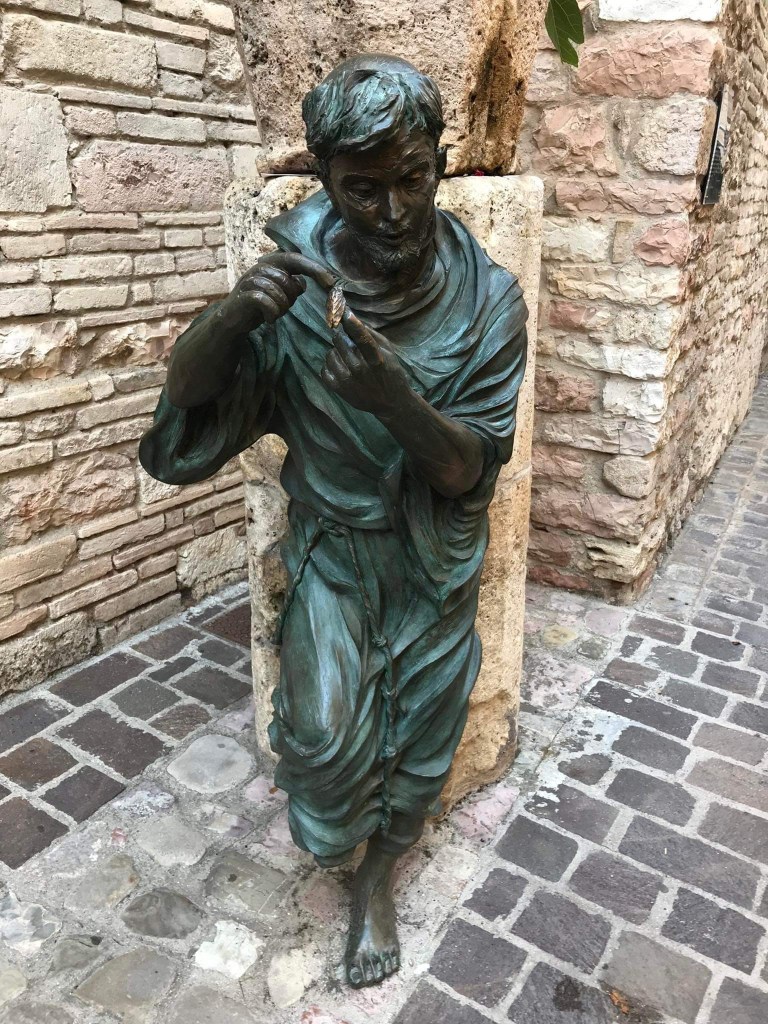
After receiving those wounds, St. Francis was blinded as he went through severe sufferings after going through well-intentioned surgeries that went so bad. He was in his 40’s at that time and despite his great sufferings, it was during that period when he produced so many great writings we all cherish until now, notably the Canticle of the Sun where we find his famous expressions “brother sun, sister moon, and cousin death” – the very same things God expressed to Job in that speech out of the storm in our first reading today that is echoed by Disney’s Pocahontas in the theme “The Color of the Wind”.
But unlike that Disney movie that sugarcoats life’s realities of sufferings and pains, both Job and St. Francis of Assisi remind us today that the more we embrace our pains and sufferings in life like them, the more we see life’s wholeness, our oneness in God and the rest of His creations when seen in the light of the Cross of Jesus Christ.
When we see this oneness and interconnectedness in life, that is when we actually grow and mature, become fruitful as we find fulfillment in life despite the difficulties and pains we go through. Have a blessed weekend everyone! Happy feast day too to our Franciscan brothers and sisters!
 lordmychef.com