It’s Pentecost Sunday, the coming of the Holy Spirit to the first disciples of Jesus Christ who were filled with fire and zeal in spreading the good news from Jerusalem to the whole world. But more than an event in the past, Pentecost is something the Church needs so badly these days to continue the work of Christ in the world that has become cold and without direction and fulfillment.
What we need in the Church that has become so rigid and lethargic in one end and pompous and glitzy at the other end is a “perennial Pentecost”, the daily coming of the Holy Spirit to enlighten us again in following and sharing Jesus with others in loving service. We need the Holy Spirit to convert us and go back to Christ in the Blessed Sacrament and the Holy Eucharist which is the sacrament of love.
From Google.
The Blackbyrds’ 1975 hit “Walking in Rhythm” captures the image of somebody filled with the Holy Spirit who is so full of love and life, joy and excitement. The smooth rhythm and blues jazzy beat of the song is so moving and uplifting. It is exactly what the Holy Spirit does when its fire burns and purifies us to realize that our true greatness as human is in being small, in our ability to share to become a part of a larger whole.
“Walking in Rhythm” tells of a man so in love and passionately driven to come home to meet his sweetheart after being away for some time. He is walking in rhythm because he knew he would be complete again when he becomes one with his beloved.
That is essentially the meaning of being a Christian, of being a member of the Church: we become whole with others in Christ. Jesus is our head and we are the body. Every body is important. How sad that whenever we gather every Sunday during the Mass, we are on our own! The priest delivers a boring homily he himself does not understand because he had not prayed nor prepared at all. The congregation are on their own, some asleep, others with thoughts wandering, while the young are either texting or plugged to their playlists. We have to dispose ourselves to the coming of the Holy Spirit always. It is Pentecost or nothing if we want to walk in rhythm, to be fill with life and joy.
From Google.
Like the lover in “Walking in Rhythm”, or the apostles at the Upper Room in Jerusalem during that Pentecost, we have to open ourselves to give a space within us for the Holy Spirit to work in us, to fill us with life and joy. Most of all, with love.
Walking in rhythm
Movin' in sound
Hummin' to the music
Trying to move on
I'm walking in rhythm
Singin' my song
Thinkin' about my baby
Tryin to get home....
The Lord Is My Chef Breakfast Recipe for the Soul, Tuesday, Easter VII, 04 June 2019
Acts 20:17-27 >< )))*> >< )))*> >< )))*> John 17:1-11
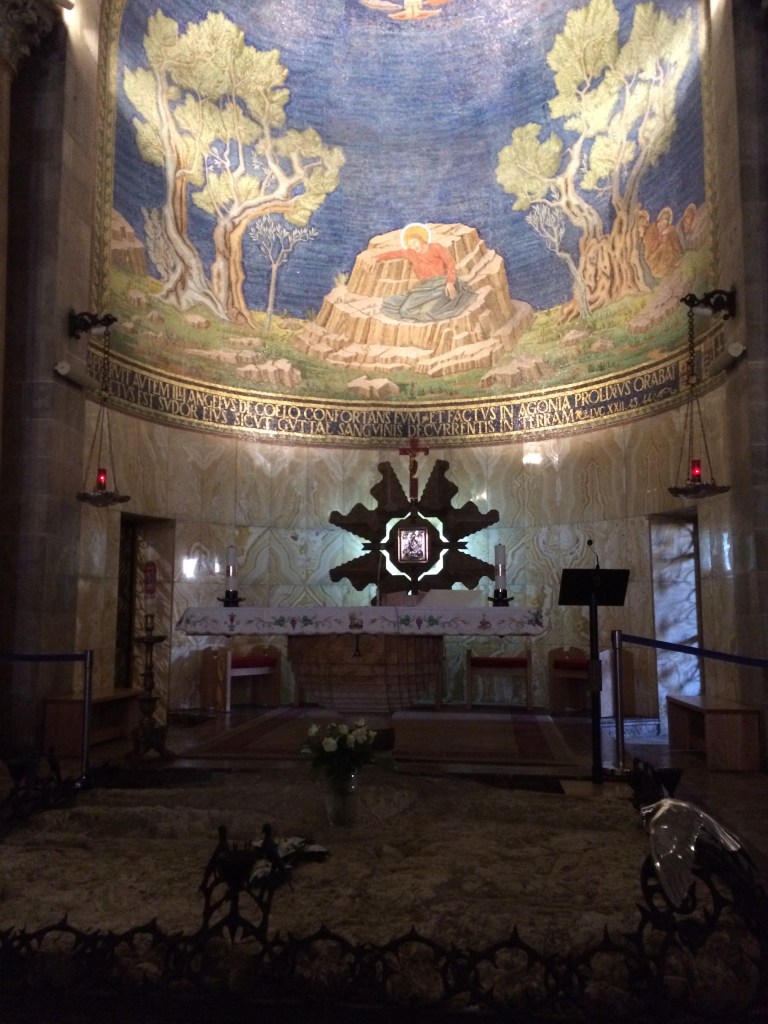
Altar of the Church of All Nations beside the Garden of Gethsemane in the Holy Land. Photo by author, April 2017.
I am hesitant in greeting you a good morning, Lord Jesus Christ. How I wish I could have even a fifth of your courage in facing death. All throughout your life here on earth, you faced death squarely. You were never caught by surprise.
Jesus raised his eyes to heaven and said, “Father, the hour has come.”
John 17:1
In the first reading, St. Paul also spoke about his coming death when he summoned the leaders of the church in Ephesus to a meeting in Miletus where he told them that after that meeting, they would never see his face again.
Every day, Lord, we face death every time we make choices and decisions. But rarely are we aware about death with the capital “D” except when we are in extreme danger or when diagnosed with the big “C”.
Last night as I prayed, I got focused about facing death. I am afraid, Lord even though I know that when it comes, I will not feel anything. The pain would be with those I would leave behind, with those who love me and care for me. Yet, I am still afraid.
And that is when you consoled me, making me realize that what is most terrifying with death is when we fail to live authentically. When we waste every opportunity to live fully because coming to terms with death is coming to terms with life too!
That is the reason why you – and the saints – were never afraid with death. That is part of the joy of Easter, of living authentically.
Help us, O Lord, to live truthfully, and fully in your love and mercy so that when our time comes, we have no regrets leaving this life on earth because while still here, we are already one with you in the Father (Jn.17:3).
We pray also for those who are terminally ill, undergoing surgery and other medical procedures today, for those languishing in jail especially those who are innocent, for those barely surviving the many trials of every day living trying to make ends meet. Comfort them, Lord Jesus with your healing presence. Amen.
A sculpture of Jesus’ Agony at the Garden below a window of the Church of All Nations beside the Garden of Gethsemane. Photo by author, April 2017.
Did our prayer help you?
Share us your thoughts and prayers too.
Follow our blog for your daily recipe for the soul.
God bless!
fr nick
The Lord Is My Chef Sunday Music, Ascension Sunday, 02 June 2019
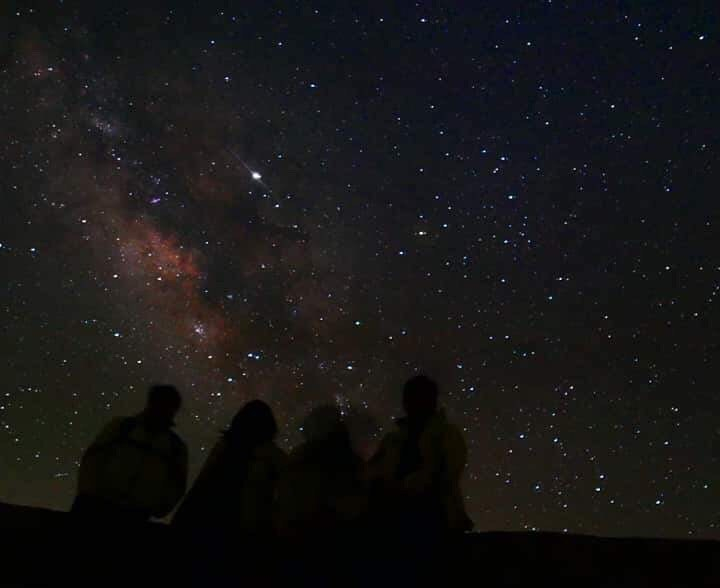
Pilgrims on top of Mt. Sinai, Egypt. Photo by Atty. Grace Polaris Rivas-Beron, 07 May 2019.
Today is the Solemnity of the Ascension of Jesus Christ, the beginning of a new level of “nearness of God” with us.
And that explains the reason for our music this Sunday, “The Nearness of You” composed way back in 1938 by Hoagy Carmichael with lyrics by Ned Washington. The song debuted in 194o and since then has delighted many hearts and souls with its lovely melody and music interpreted by so many artists in every generation.
I have chosen Rod Stewart’s version taken from his 2002 album It Had to be You: The Great American Songbook because the song fits him so well. Yes, Rod is a rocker but he had matured so well that after all the noise, he has grown deeper in his art that his unique voice suddenly had acquired a depth coming not only from the heart but even from the soul. I won’t be surprised at all if one day Rod Stewart would be talking about some sort of spirituality and holiness.
Now back to our Sunday celebration of the Ascension of Jesus Christ…
15th century Greek icon of the Ascension of Jesus. From Google.
In the gospel today, St. Luke tells us that after Jesus had ascended into heave, the disciples “returned to Jerusalem filled with great joy.”
That is totally strange because whenever someone leaves, the general feeling is always sadness like when we have to change residence or old neighbors move out, when loved ones have to go abroad to work or worst, when a beloved dies. They all bring sadness.
Where did that great joy among the disciples of Jesus come from after the Lord had ascended into heaven?
From their hearts! The key to understanding and appreciating the Ascension of Jesus into heaven is not in looking up the skies or looking down on the ground where he stood. It is in looking deep into our hearts.
Anything that remains in our head or in our mind is always open to doubts. When that truth we believe in sinks into our hearts, then we get the conviction that it is really true. And that is when we experience great joy within: It is in the heart where we come to conviction that leads us into living authentically no matter how painful that truth may be. That is why there are saints and heroes – including lovers – willing to die for their beliefs because they are so convinced with the truth in their hearts.
From Google.
At the Ascension, the disciples had the conviction that Jesus is truly alive, that his going to heaven is more of coming to a new level of existence and relating with them, something no longer bounded by time and space, something always so near and so personal.
It is the same feeling we have with those we love. Even if they are not physically present with us, we feel their nearness because we love.
There lies the beauty and timelessness of the song “The Nearness of You”: nothing beats the love that brings us so close, so near with one another. Unless we have that deep conviction and love for a person, we will never rise up – or ascend – to higher level of relationship that is so near, so close.
 It's not the pale moon that excites me
That thrills and delights me, oh no
It's just the nearness of you

It isn't your sweet conversation
That brings this sensation, oh no
It's just the nearness of you

When you're in my arms
And I feel you so close to me
All my wildest dreams come true
If you can say these words to a beloved, imagine when you level this up to Jesus Christ? That would definitely be a new level of nearness with him and with others.
The Chapel of the Ascension believed to be the site where Jesus stood before ascending into heaven while his disciples looked at. Photo by author, 04 May 2019.
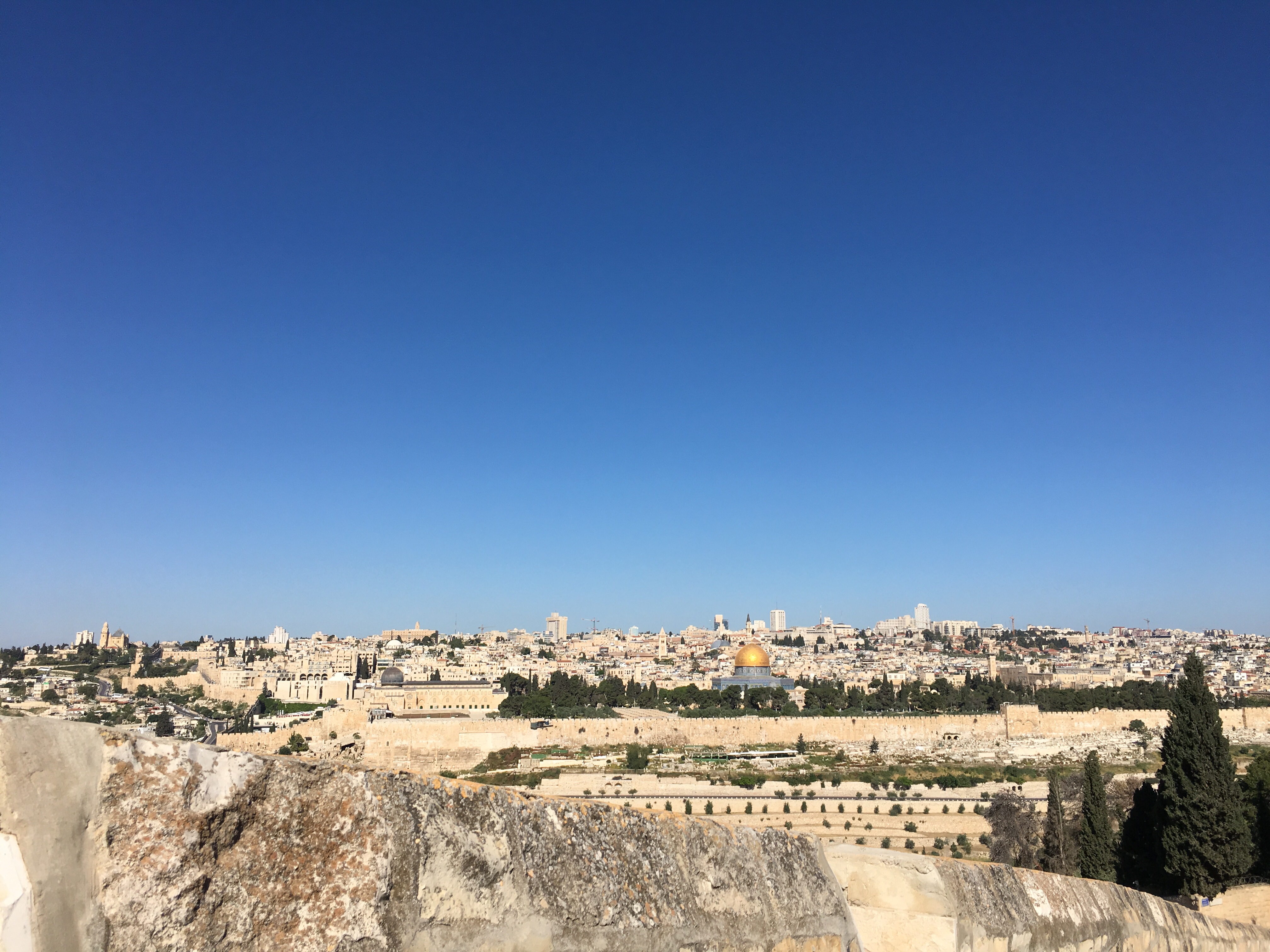
Outside the old city of Jerusalem on the Mount of Olives is the Chapel of the Ascension believed to be the site of Jesus Christ’s Ascension into heaven. Though the octagon-shaped structure is massive and very high, it is quite small inside with just one door for entrance and exit. Immediately upon entering that door on the floor is a framed slab of stone called the “Ascension Rock” venerated by pilgrims because that is where Jesus stood before going up to heaven.
The Ascension Rock. Photo by author, April 2017.
But personally, in the two occasions I have been there in 2017 and last month, my focus have always been more on the four windows of the chapel’s dome.
The rays of light coming through them have always evoked in me the beauty of Christ’s Ascension with a feeling that is so uplifting. The morning rays of the sun gently filling the room with light warms your heart as if angels are keeping you company like what we heard from the first reading during the Ascension of Jesus.
A window at the dome of the Chapel of the Ascension. Photo by author, April 2017.
As I prayed this week on the meaning of the Solemnity of the Ascension by recalling my two pilgrimages to the Holy Land in the light of our readings today, it is only now have I realized that the key to this feast is not found in looking up to the skies or looking down on where Jesus stood before going up to heaven.
It is in looking more into our hearts, looking deep inside us can we truly find the meaning of the Ascension of the Lord.
This feast is an invitation to get inside our hearts, not just into our minds and imagination to appreciate the words of Jesus Christ these past two Sundays about his “going and coming in a little while” (Jn.13:31, 33;14:25;16:16,20).
Remember how Jesus these past two weeks kept on speaking about his leaving and his coming at the same time? Of how we reflected last Sunday that in life, we do not really leave but simply come into new level of existence and new level of relating with God and with others?
Then he led them out as far as Bethany, raised his hands, and blessed them. As he blessed them he parted from them and was taken up to heaven. They did him homage and then returned to Jerusalem with great joy, and they were continually in the temple praising God.
Luke 24:50-53
Normally, it is sadness that we feel most in every leaving and departures: when kids leave home to pursue college somewhere, when a father or a mother leaves abroad to work over a long period of time, or a beloved dies. Though the cliche may be right sometimes that “parting is such a sweet, sweet sorrow”, the fact remains there is always sadness whenever we leave or somebody leaves us.
That is why St. Luke’s account of the Ascension is strange when he tells us that Christ’s disciples “then returned to Jerusalem with great joy” after the Ascension. St. Luke does not give any hint or a tinge of sadness among the disciples when Jesus left them to sit at the right hand of God almighty Father in heaven. And, the Holy Spirit has not come down yet. Where did the disciples get this great joy after Jesus had left?
Detail of a 15th century Greek Orthodox icon of the Ascension of Christ with Mary so calm while the apostles very animated, eager to proclaim the gospel. From Google.
We do not have the details at how this great shift happened that the disciples were filled with great joy after Ascension but, the Scriptures and the stories of the saints as well as those of some true heroes provide us with some answers and reasons.
According to St. Luke as well as the other evangelists, Jesus came to see his disciples for many days (40 according to Luke) after Easter. The Lord taught them with some more lessons preparing them for his coming Ascension. Most of all, Jesus made his disciples experienced his new mode of presence in his glorious body. He showed them his wounds and dined with them so often to convince them that he had really risen.
In all instances of his appearances, there was always joy among the disciples. Slowly, the disciples’ joy in knowing Jesus is risen deepened into great joy at the Ascension when this truth sank deeper into their hearts too that they have finally and truly accepted Jesus is alive!
When a truth or a reality stays only in our minds, that is always open to doubts. But, the moment that truth or reality we know is brought down to our hearts, that is only when we truly accept it as really true. And that is when we are filled with great joy because we are already convinced without any doubts of the truth or reality we have received.
Saints and heroes alike find great joy in their sufferings and death because of their convictions in their hearts that what they knew in their minds are very true. They lead “authentic” lives because what they knew in their minds was what they felt in their hearts that they eventually say and do. It is only in authentic living can we find great joy in living, no matter how painful or difficult it may be.
15th century Greek Orthodox icon of the Ascension. From Google.
And that is the great joy in the Ascension of Jesus Christ: the disciples, like us, start living authentically because we are deeply convinced that the Lord had not left us but had in fact launched a new level of nearness with us. His Ascension is the finality of the redemption he had won for us coming right into our hearts when we realize that Jesus did not simply die and rose again for a nameless mass of people. He did everything personally for each one of us.
This is what social media can never give us. Despite its great popularity, social media have left many of us still sad and even sick with various forms of mental illnesses. Everything that happens in the Net often remains up in our heads, rarely sinking into our hearts that still keep us apart despite our connections.
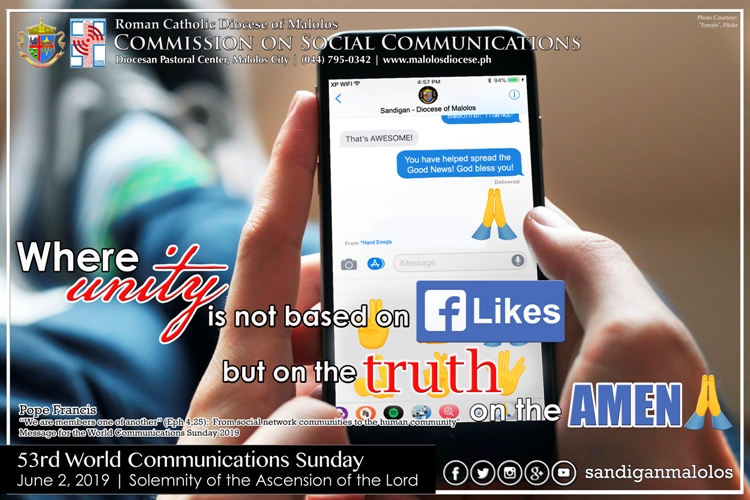
In his message for the 53rd World Communications Sunday we also celebrate today, Pope Francis invites us to connect deeper into the human community and not just in social network communities. The Holy Father stresses that interconnection must go down into personal encounters in the flesh, not just in virtual reality, calling for a shift from “likes” to “amen”.
Poster by Kendrick Ivan Panganiban.
How ironic that all these modern means of communications were invented to bring us all closer together but it seems the opposite is happening. We are growing apart and have become more impersonal than ever! We are all guilty of so often clicking the “like” button without having read the complete post or seen the photos of our relatives and friends. We rarely take time to “process” what we read and see on Facebook by people we call “friends” who often number to thousands. What an inauthentic way of living!
The Ascension of the Lord is a call to authentic living as it launched a new level of nearness of God with us and us with him and with one another. Unlike in the Old Testament as the author of the Letter to the Hebrews explained, Jesus did not enter a sanctuary made of human hands, referring to the old Temple worship that was never complete due to human imperfections. When Jesus came and went through his pasch, he brought God closest to us. We can rise up or ascend to his new level of relationship, new level of existence by rising up also from our infirmities and limitations in him who dwells in our hearts. A joyful month of June to you! Amen.
The Lord Is My Chef Breakfast Recipe for the Soul, Wednesday, Easter Wk. VI, 29 May 2019
Acts 17:15,22-18:1 >< }}}*> John 16:12-15 >< }}}*>
My dearest Lord Jesus: As I prayed last night, I cannot remove from my mind that beautiful sight of a man in a chapel, so absorbed in conversing with you, that he seemed to have lost his head in prayer.
Photo by JJ Jimeno of GMA News, UP Chapel, 27 May 2019.
Today our readings speak of the need to lose our selves in you.
St. Paul tried to win over the people of Athens at the Areopagus, proclaiming your Gospel without condemning or attacking their religion. He even cited their shrine “To An Unknown God” (Acts 17:23) as a step closer to discovering you and following you as the true God.
He never lost his cool even when people did not believe his teachings of your resurrection from the dead. He simply had himself lost to your will and left Athens to proceed to Corinth where you have prepared great things for his ministry.
Lord, so many times, we cannot let go of our heads, of our know-it-all-attitude in life that we cannot let go and let God.
Let us always remember your words during the Last Supper, “I have much more to tell you, but you cannot bear it now” (Jn.16:12).
Let us be patient, waiting for your Holy Spirit to come to us, to fill us with your wisdom, to remind us of your teachings and to guide us in doing your work.
Let us lose not only our heads but our very selves to you so we may do your work in the way you would want it be done. Amen.
Photo by the author, parish sacristy, 10 March 2019.
 Did our prayer touch you?
Share us your thoughts and prayers.
You are prayed for.
Follow our blog for you daily recipe for the soul.
God bless you!
fr nick
The Lord Is My Chef Sunday Recipe for the Soul, Easter Wk. V, Yr.C, 19 May 2019
Acts 14:21-27 ><)))> Revelations 21:1-5 ><)))> John 13:31-33, 34-35
Sunrise at Lake Tiberias, the Holy Land. Photo by author, 04 May 2019.
I was sleeping soundly along with other customers at our barbershop last Thursday noon when we were jolted by a boy about four years old who shrieked and threw on tantrums as he vehemently refused to have a haircut. It was a big scene and the poor young mother was at a loss how to pacify her son who kept yelling at her “I do not want to have a haircut!”
After a couple of minutes, everybody sighed with relief – except me – when the boy finally finally cooled off to sit on the barber’s chair for his haircut. I felt no relief first because the more I pitied the young mother who had to bribe her spoiled son with a cellphone to play computer games just to behave. And secondly, I was never able to get back to my siesta due to the sounds of the boy’s computer games.
As I looked in horror with the scene, I wondered if this is the new kind of love today when gadgets and things replace persons.
When Judas had left them, Jesus said, “I give you a new commandment: love one another. As I have loved you, so you also should love one another. This is how all will know that you are my disciples, if you have love for one another.”
John 13:31, 34-35
Boat ride at the Lake of Tiberias, 04 May 2019.
It is very true that love of neighbor is not a Christian innovation. Other great religions also have love as a fundamental principle.
The newness in Jesus’ new commandment to love lies deeply in his following sentence, “As I have loved you, so you should love one another.”
To love like Jesus Christ is more than doing a higher order kind of love or a more loving way of loving by following a stricter moral standard.
To love like Jesus is to love in union with the Father who is love himself!
This newness of his commandment to love is found deep in the preceding scene of the gospel when Jesus washed the feet of his disciples. In the fourth gospel, the washing of the feet is the meaning of love expressed in the Holy Eucharist that prefigured Good Friday’s crucifixion. In relating that scene, St. John used the word “clean” three times as Jesus declared to his disciples “you are clean” (Jn.13:10).
It was in the washing the feet when Jesus first clearly showed the most unique and loving way of God coming down to us to cleanse us of our sins. Purity is always a gift from God because we cannot make ourselves clean. And like in that washing of feet of his disciples, Jesus continues to purify us in every Mass we celebrate today. The more we are “purified” by Jesus in the Eucharist, the more we learn to be like him, to love like him unconditionally and most of all, to love in union with the Father who is love himself.
And there lies the newness of Christ’s new commandment of love, for us to love like Jesus in him and with him.
We will always be imperfect and sinful, always needing to be cleansed and purified to be fitting to God. In the same manner, human love is always imperfect like us. Most often, we love for reasons that are always wrong or sometimes love in seasons that soon go off season. There will always be people and situations when our arguments and reasons not to love are not only right and proper but also justified. But when we come to realize this gift of love from Jesus, of loving like him in union with the Father, we become his extension and channel of love. Love, then, becomes pure and doable, even easier and acceptable because first of all, we experience it in us.
Franciscan Monastery, Mt. Nebo, Jordan where God let Moses view the Promised Land to be given to the Israelites. The cross with serpent prefigured the salvation to come from Christ’s death: the Israelites complained against God who punished them by sending poisonous snakes that bit and killed them. The Israelites repented and God ordered Moses to make a copper snake image to mount it on a stick that whoever looked at it was healed of the snake bite and lived (Numbers 21:6). Photo by author 03 May 2019.
To love like Jesus is totally new because it is not really us who does the loving but Jesus himself in us and with us. It is a totally new kind of love because it is a love not based on norms or rules but on God himself. It is a totally new kind of love because we allow Jesus to act in us, making God truly present among us. Thus, we all become an Emmanuel like Jesus, God-is-with-us. What a great honor for us to be a presence of God in Jesus! That despite our sins and weaknesses, Jesus continues to cleanse us so he may dwell in us and work through us. When we obey his new commandment to love like him, then his words at the end of today’s gospel are indeed fulfilled, “This is how all will know that you are my disciples, if you love one another” (Jn.13: 35). It is a love so different from the world that sets us apart from others, enabling us to make a big difference in this world marred with sin and imperfections.
This remains the great challenge among us now in our time when Jesus said “My children, I will be with you only a little while longer” (Jn.13:33) when he gave this new commandment. It is the present time where we always have that tension of the here and the not yet oriented toward Jesus who has come, is coming now and will come in the end of time. This is why until now like during the time of the apostles, we have priests or presbyters appointed to care for the flock by leading them in a life of charity and unity in the Church. Every priest as well as every Christian is supposed to be a presence of Christ, loving like Jesus in union with the Father. How sad when we, priests and lay people alike, deny this kind of love of Jesus, destroying our unity in the Father as one family of believers and followers.
Let us not waste Christ’s gift of love so unique that unites us with the Father and with everyone. Let us strive harder that despite our sinfulness and many differences of beliefs and affiliations, through Christ’s gift of purity and love, we may little by little realize “a new heaven and a new earth” as John saw in his vision at Patmos. A blessed Sunday to everyone! Amen.
Tuesday, Easter Week IV, 14 May 2019, Feast of St. Matthias the Apostle
Acts 1:15-17, 20-26///John 15:9-17
From Google.
Today we are celebrating O Lord Jesus Christ the feast of St. Matthias, the one chosen by your eleven Apostles to replace your betrayer Judas Iscariot. We do not know so much about him except that he was also a witness to all your “earthly events remaining faithful to you until the end” (Acts 1:21-22).
However, from his unique role of replacing Judas Iscariot to complete your 12 Apostles after Easter, St. Matthias teaches us today that we never run out of good men and women in the Church as well as in the society who can always replace the many traitors among us.
There will always be many Judas Iscariots everywhere who betray you, O Lord, and us with their selfishness.
Teach us, Jesus, to truly love you in the most concrete manner like St. Matthias who counterbalanced the traitorous Judas Iscariot found among many of us. Teach us to discern your will in finding the Matthias among us who will continue your work to offset the many evils done by your betrayers in the Church, in the society and in the family.
Forgive us, O Lord, that despite the chance to choose more St. Matthias among us in our recent elections, it seems many of us still prefer to bring back or keep the many Judas Iscariots.
Help us to be your witnesses in this world now plunged into so much darkness where lies and superficiality have become a way of life. Amen.
Icon of the election of St. Matthias. From Google.
There is something very unique among us that binds us Filipinos as one whenever we go abroad aside from being “maganda” as the people of Jordan, Israel and Egypt described us in a recent pilgrimage. Whenever we are in a foreign country, we Filipinos have that inner recognition that we are kababayan, something like what Jesus tells us in the gospel today.
“My sheep hear my voice; I know them, and they follow me. I give them eternal life, and they shall never perish. No one can take them out of my hand.”
John 10:27-28
This Sunday, we start a shift in our gospel readings: there would be no more stories of the appearances of Jesus after Easter until his Ascension with passages taken from St. John to deepen in us the meaning of Christ’s Resurrection.
Observe, my dear readers, the four verbs we have in our very short gospel today: hear my voice, know them, follow me, and give them eternal life. Right away we notice the inner recognition of Jesus Christ and his followers us, his sheep. See the flow of the first three verbs in our Lord’s declaration: my sheep hear my voice, I know them, and they follow me. It is quite odd in the sense that the sheep follow the voice because the shepherd knows them when it should be the other way around: my sheep know me, they hear my voice and they follow me.
Remember the inner recognition we talked about the other Sunday, that feeling of “a basta!” when deep inside us we are so certain of somebody or something? This is an example of that experience we have going abroad when we meet a kababayan: by just looking at each other, we already know we are Filipinos as if they first knew us, then we hear them, and follow them. It is something we also have deep within us with Jesus our Lord and God.
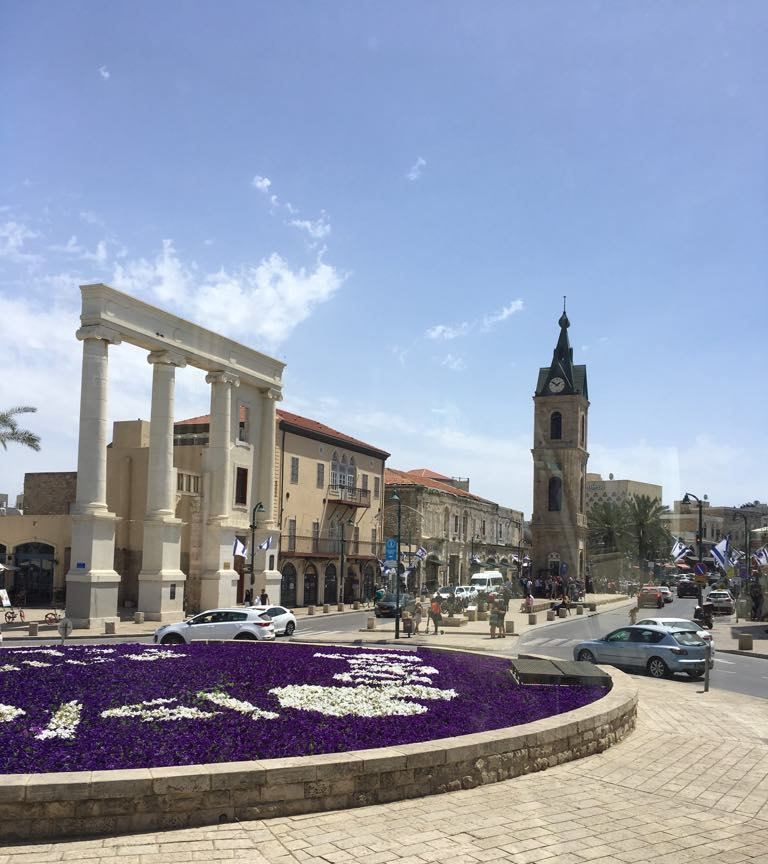
The lovely district of Jaffa Tel Aviv where you meet many Filipinos too. Photo by author, 03 May 2019.
These four verbs of hearing, knowing, following, and giving express relationship and ties that bind us together as a people and nation. To hear and to follow imply communion; anyone who hears and follows somebody recognizes the speaker’s authority and voice, entrusting one’s self to his or her guidance like in the family where we hear and follow our parents as we celebrate Mothers’ day today. Hearing and following lead to a kind of attachment as children to the parents or a disciple to a master. The parents, especially the mother knows her children very well that she always thinks the best for them, doing her best to give them a better and secured future. On our return flight yesterday from Bahrain, we chanced upon many Filipina OFW mothers returning home with their children – some are still infants, others are little children or young kids. They are the mothers who sacrifice so much so their children and family can have a better future.
Going back to Jesus Christ our Good Shepherd, we level up the meaning and application of those four verbs, especially the knowing and giving that pertain to Jesus Christ.
More than our communion and unity in Christ as his disciples, we ought to hear and follow him because only Jesus knows us so well. Only Jesus knows our deepest pains and hurts, our deepest longings and desires. Most of all, only Jesus loves us so much despite of his knowing of how sinful we are that he calls by name like Mary Magdalene on that Easter morning or Simon Peter at the shore of Lake Tiberias after asking him thrice if he loves him to assure his forgiveness of denying him thrice on Holy Thursday.
Most of all, we ought to hear and follow Jesus because only he can give us eternal life for he is life himself (Jn.11:25)! It was only Jesus who had walked with us in every valley of darkness, never abandoning us, and most of all, passed over through every pain and suffering, even death so that we may share in the glory of his new life. Only Jesus can bring back our shattered lives when we squander this gift of life like the prodigal son. It is only Jesus who would never judge us or put us into shame in our sinfulness to give us a chance to sin no more like the woman caught committing adultery. Only Jesus can promise us heaven because it is only him who had joined us in our sinfulness without committing sin by dying on the cross like Dimas the repentant thief.
These, my friends, are the inner unity that bind us together in Christ Jesus our Good Shepherd of which John the beloved was given a glimpse in the second reading. This also shows us how salvation for everyone, not only for Jews or any particular group, has always been in God’s plan from the beginning that he sent us his only Son Jesus Christ. May we all hear and follow his voice always, especially through our dear mothers. Amen.
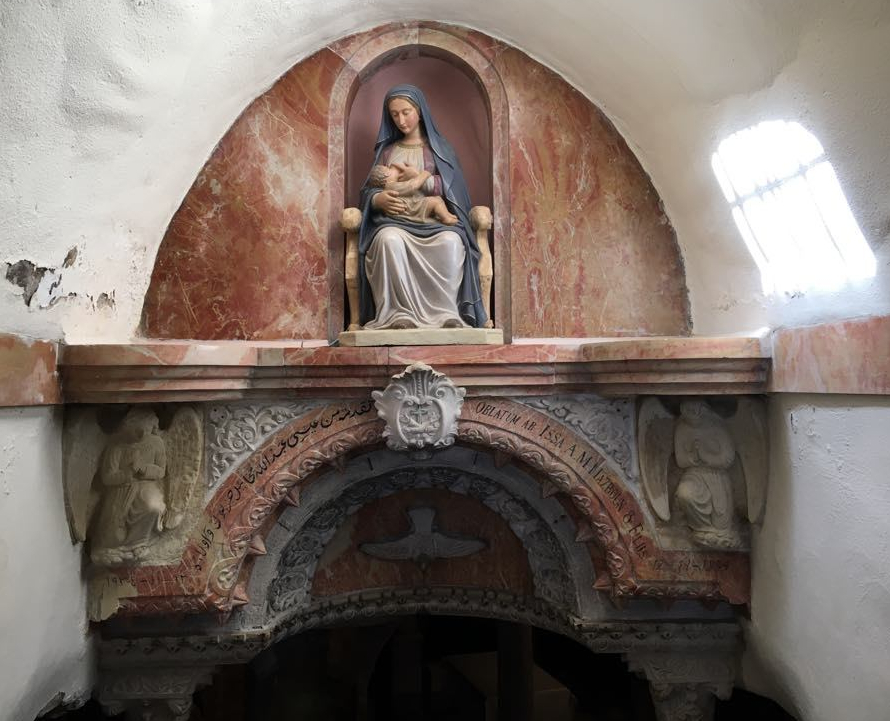
Entrance to the miraculous “Milk Grotto” chapel of the Franciscans beside the Church of the Nativity in Bethlehem. Photo by the author, 05 May 2019.
The Lord Is My Chef Sunday Recipe, Easter Week III-C, 05 May 2019
Of all the great things one can truly experience in a Holy Land pilgrimage, it is the gift of “internal recognition” of the Risen Jesus Christ that must be most touching, most wonderful because it always brings peace and joy within.
Like the beloved disciple in our gospel this Sunday, it is when we recognize Jesus internally that we “softly exclaim” deep within “It is the Lord!” (Jn.21:7).
It is the ordinary moment that happens so sudden during prayer, in the Mass, or simply being at a holy site or seeing a beautiful sight when tears suddenly roll in our eyes, something cold or warm envelops you, or your hair rising because you remember and feel the Lord coming to you. According to our guide here, the 153 large fish caught by the apostles in that third appearance of the Risen Lord at Tiberias is significant: 153 in the Hebrew alphabet means “I Am GOD.”
And that’s what we feel not only in a pilgrimage but in ordinary life when we remember God filling you like a net with large fish like in Tiberias. In an instant even very fleeting, we realize we have been so blessed even if we have sinned and failed to recognize Jesus by the shore.
Here at the Holy Land, whether it is your first or second or third pilgrimage, there is always something new to discover, to realize, to experience, and to see. It is like that experience at the shore of Tiberias when Jesus appeared for the third time to his apostles after Easter where he awaits you for breakfast, with “a charcoal fire with fish on it and bread” (Jn.21:9). Here it is beyond doubt our God is a God of surprises.
Yesterday we had our Mass at the Chapel of Flagellation at 130pm at the Via Dolorosa. Immediately after that, we had via crucis or station of the cross. By 330pm we were already inside the Holy Sepulchre Church climbing towards Golgotha, the Crucifixion site. Exactly while lining up, the church was closed and we were told there would be no veneration because the Patriarch was coming for incensing the whole church.
Everything stopped and I felt a bit sad for my group. But lo and behold! What a beautiful experience not only to witness an Orthodox ceremony! While resting outside the only Roman Catholic chapel, I asked the Franciscan if we can pray inside. He asked me to wait and after 20 minutes, he let us in. I celebrated Mass there in 2005 with 14 other priests and two bishops from the Philippines. I could not recall the name of the chapel so I asked the Franciscan. He told me it is the chapel of the Easter meeting of Jesus and his Mother – the Salubong or Encounter we celebrate early morning of Easter Sunday. It was a new discovery for me!
In the gospels, Jesus first met Mary Magdalene but according to St. Ignatius of Loyola in his Spiritual Exercises, it was Mary his mother whom the Risen Lord first met because she was the first to try believe Jesus is the Christ! Most of all, Mary is the first to truly love Jesus most. And that is why we have the Salubong.
Today in the gospel Jesus asked Simon thrice, “do you love me more than this?”
It is the same question Jesus is asking us this Sunday. We have to first love him in order to follow him. We have to first love him in order to meet and see him, even with our imperfect love like Simon Peter.
You are loved and you are prayed for always. Have a blessed Sunday and week ahead! Amen.
The Lord Is My Chef Breakfast Recipe for the Soul, Friday, 03 May 2019 Feast of Sts. Philip and James, Apostles
Praise and glory to you O Lord Jesus Christ for this first Friday in your Holy Land!
Yesterday we visited and prayed at the various sites of your ministry around the shores of the beautiful Lake of Galilee.
Here you called your first Apostles and later nearby the others who followed you like Philip and James whose feast we celebrate today.
Like us, they were seeking direction in life. That, they found in you alone, Lord Jesus – something we are rediscovering in a wonderful way these days during our pilgrimage.
So many times due to many concerns in life, we forget you are the Gospel – the Good News – who saved us all (1Cor.15:1).
So many times we forget like Philip that you and the Father are one, that whoever had seen you has seen the Father too (Jn.14:9).
Lord Jesus Christ, visiting “mensaChristi“, your table where you had breakfast with your apostles after Easter, we realized the most important thing of all of being a Christian – to be in love with your first and above all Lord!
Let us love you more deeply Lord Jesus as you well know how weak we are. Amen.
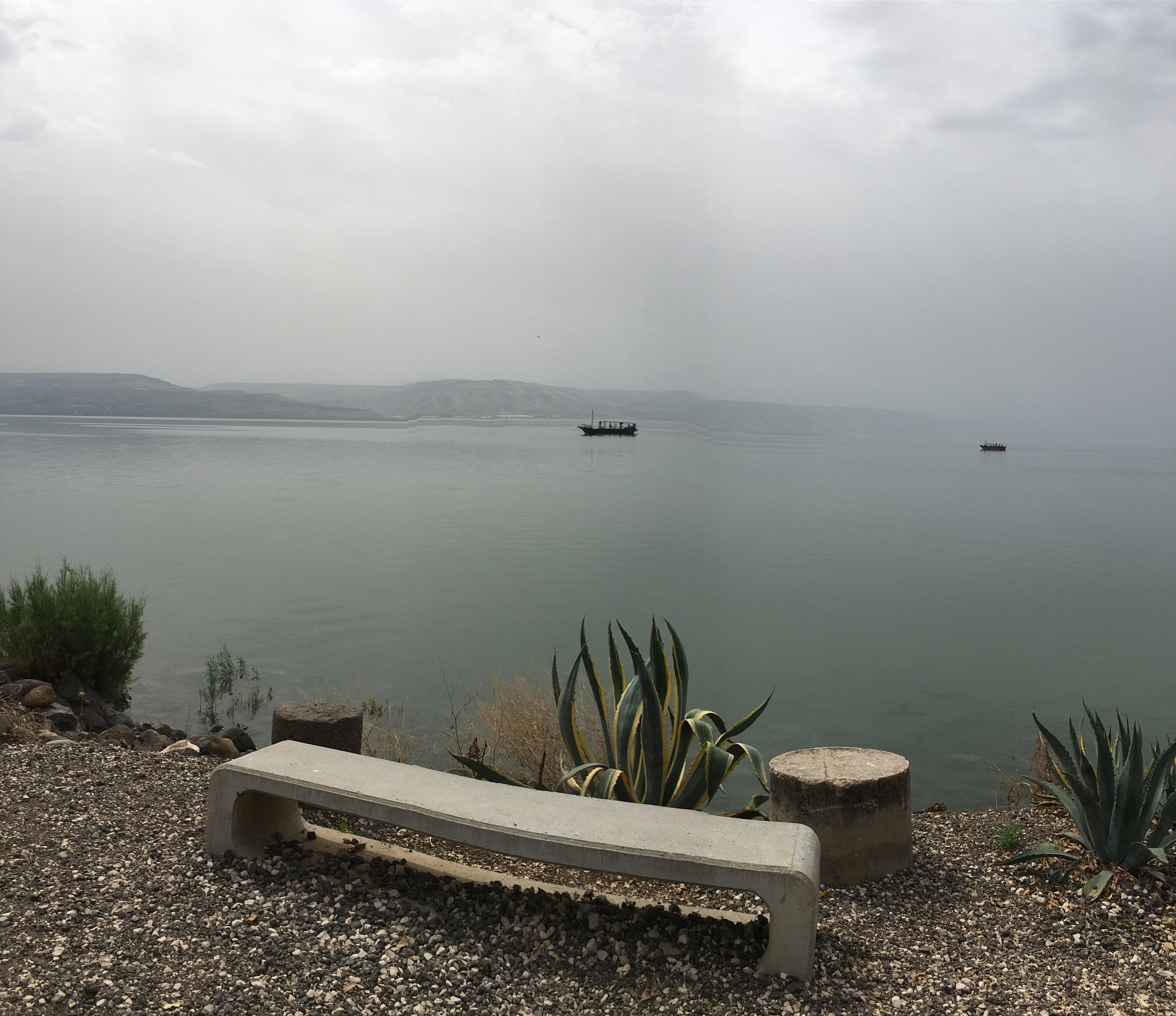
Photos by the author: above is the shore at the back of Capernaum where Jesus preached and last photo is back of church near shore where the Lord asked Simon thrice, “Do you love me?”.















 lordmychef.com