Our dangerous God

The Lord Is My Chef Sunday Recipe, Week XX-C, 18 August 2019

Jeremiah 38:4-6. 8-10 ><)))*> Hebrews 12:1-4 ><)))*> Luke 12:49-53

Batanes sunset after a storm, 2018. Photo by Mr. Raffy Tima of GMA-7 News.

Jesus continues with his “shock preaching” for the third consecutive Sunday today as “he resolutely determined to journey to Jerusalem” and face his death there.

And his preaching is getting more shocking.

Unlike the previous two Sundays, it was easier to see why Jesus had to shake us with his teachings as he wants us to seriously consider the reality of death that comes “like a thief at night” (Lk. 12:39, Aug. 11). Far from being morbid, Jesus is inviting us to be more concerned with things that last even after death because “life does not consist of possessions” (Lk. 12:15, Aug. 04).

This Sunday, Jesus gets bolder with his teaching of three provocative statements that challenge and motivate us in being like him who is “resolutely determined” in facing his passion and death by setting the world on fire, eagerly awaiting another baptism, and the most controversial, bringing division – not peace – among us his followers.

Jesus said to his disciples: “I have come to set the earth on fire, and how I wish it were already blazing! There is a baptism with which I must be baptised, and how great is my anguish until it is accomplished!”

Luke 12:49-50

Sunset in Athens, Greece by Dra. Mai B. Dela Pena, 2016.

These first two pronouncements by Jesus go together like our expression “baptism of fire” to mean an initiation into something very new and life-changing or, as we say these days, a “game changer”.

In St. Luke’s second book, the Acts of the Apostles, we find the Holy Spirit coming down as “tongues of fire” upon the Apostles and the Blessed Virgin Mary on Pentecost, filling them with wisdom and courage to proclaim the Good News of salvation by Jesus Christ. For St. Luke, this imagery of the Holy Spirit like fire is very important.

Fire gives heat, symbolising life itself. Without heat, we become cold and die.

Fire also means energy that can move and propel anything including people, covering great distances.

Most of all, fire purifies, removing impurities in so many things including persons.

Since June 30, we have been following Jesus as “he resolutely determined to journey to Jerusalem” (Lk. 9:51). This is the baptism Jesus is so eager, his Passion and Death on the Cross that leads to Easter. It is a path characterized by fire that emboldens us, purifies us, and most of all, illumines us of the more essential things in life!

From Google.

When we recall those trying moments in our lives, those many “baptisms of fire” we have gone through, there is always that sense of inner joy and gratitude in “passing over” through our little deaths that have made us stronger today. Whether we have triumphed or failed in those many baptisms of fire, what matters most is we went through it, deepening our faith that made us more determined in life.

And one very difficult lesson we have also learned in our little deaths is the painful reality of divisions among us.

“Do you think that I have come to establish peace on the earth? No, I tell you, but rather division.”

Luke 12:51

In this age when sound reasoning is being pushed aside in making decisions on many issues and conflicts confronting us by following what is merely popular as “trending” and “viral” measured in the most number of “likes” or “followers”, we find ourselves plunging into more darkness than ever. What used to be not normal has become normal today like obscenity and profanity. Life is reduced to mere lifestyle with everybody insisting on one’s rights in total disregard of one’s responsibilities that anyone may use whichever toilet is preferred. Death in its many masks has become a solution to many problems that has spawned more serious problems. And worst, in the midst of these discussions that disregard morality, proponents of the Godless ways are the ones invoking the name of God!

Jesus tells us in the fourth gospel that “the peace I give you is not like the peace the world gives” (Jn.14:27) which is often more of appeasing one another, of compromises that eventually fails. Peace is more than the absence of war but is appropriately called the effect of righteousness, of love and justice (Vatican II, Gaudium et Spes, #78). And always, that path to peace is the Cross of Christ.

Photo by Pixabay on Pexels.com

Jesus wants us his disciples going through our little passion and deaths to illumine the world with the Holy Spirit as it is slowly being engulfed in the darkness of sin and evil. And he knows it is not an easy task. Like him, we have to grow in faith completely relying on the Father who vindicated him as he died on the Cross.

Brothers and sisters: Let us rid ourselves of every burden and sin that clings to us and persevere in running the race that lies before us while keeping our eyes fixed on Jesus, the leader and perfecter of faith. In you struggle against sin you have not yet resisted to the point of shedding blood.

Hebrews 12:1-2, 4

In 1945, the late Fr. Hans Urs Von Balthasar titled a chapter of his book “God is dangerous”, writing that

“He presents his victory over death as an example to be imitated, he draws us beyond our limits, into his adventure, which is inevitable fatal.”

“Heart of the World” (Ignatius Press, 1980)

Yes, God is dangerous — too hot to handle and too difficult to resist. We have all felt like Jeremiah bearing all the pains and sufferings because we have allowed ourselves to be “seduced and duped by God’s irresistible charm” (Jer. 20:7). And despite this harsh reality, we choose to remain standing at the foot of our Master’s Cross because it is there we can see everything more clearly, where we experience real peace.

Would you rather be in grave danger with God on your side or be safe for now with no one and nothing to hold on in the end?

A blessed week ahead! Amen.

Girding loins and guarding self

The Lord Is My Chef Sunday Recipe for the Soul, Wk. XIX-C, 11 August 2019
Wisdom 18:6-9 >< }}}*> Hebrews 11:1-2, 8-19 >< }}}*> Luke 12:32-48
From Google.

One of the series I am following at Netflix is “Money Heist”. It is very suspenseful because unlike other crime series, its plot is unpredictable and spiced with amusing conversations. Like one episode when the lead character called Professor repeatedly mentioned to the Police Inspector during their first date of how he is not a “Basic Instinct” material, referring to Michael Douglas who starred in the movie with Sharon Stone. I felt the line anachronistic because the Professor is so young in the series to make a point reference to the 1992 erotic thriller. But it was a very good line expressing fully what the scene was all about, of a man and a woman following their basic instinct in having sex without really knowing each other so well, especially the Inspector who is a battered wife newly divorced from her husband – also a police officer- and in a relationship with her sister!

Now you see what I have been telling you… but, what I really wish to share with you is an archaic term related with “basic instinct” that Jesus used in the gospel today:

Jesus said to his disciples: “Gird your loins and light your lamps and be like servants who await their master’s return from a wedding, ready to open immediately when he comes and knocks. Blessed are those servants whom the master finds vigilant on his arrival. Amen, I say to you, he will gird himself, have the servants recline at table, and proceed to wait on them.”

Luke 12:35-37
From Google.

Loins refer to that part of our body between the lowest ribs and hipbones, the pelvic area where the genitals are also located. It is believed to be the source of erotic or procreative powers we refer to as “basic instinct” or simply guts as in gut feeling.

During the time of our Lord, men wore long clothes and they have to “gird their loins” in order to move freely when walking and working. Eventually, men ceased wearing long clothes with no need to gird their loins but still have to tighten their pants, sometimes with a belt, to move freely as well. And even if there were no more loins to gird, the expression continued to be used to mean being on guard, being ready for any emergency and situation like a military attack.

This is the whole point of the Lord’s teaching this Sunday: we have to be on guard and ready always for his coming. In fact, anything can happen instantly that could also be life-changing. Girding one’s loins, being on guard and ready for the Lord’s coming requires active faith on our part, an inclination towards God already present in us.

There are actually three parables in our gospel this Sunday but we are given the option to use only the one we have heard which is the second set. In this parable, Jesus used the imagery of being on guard like the “faithful servants waiting for their master’s arrival from a wedding feast” to indicate his coming in the Eucharistic celebrations. Every Mass is our dress rehearsal for our entrance into heaven but we always take it for granted, finding all the reasons and excuses to skip especially the Sunday Mass.

Altar table of the Church of Dominus Flevit (the Lord Wept) with the old Jerusalem at the background. Photo by author, April 2017.

The Mass is our expression of our readiness to enter heaven as we joyfully proclaim after every consecration of the bread and wine that “Christ will come again.” But, even those who regularly come for the Sunday Mass do not take it seriously, not truly present with “full and conscious participation” enunciated by Vatican II 50 years ago.

Notice how in the third parable Jesus mentioned “faithful and prudent stewards” (Lk.12:42) to emphasize the need for servants and ministers at the altar to be more prepared than anyone else for his coming. So true! How can the people pay attention to the scriptures being proclaimed if the lector’s voice is very soft or incomprehensible? How can the congregation thank God for speaking to them anew if the lector’s face and disposition are so gloomy and even horrific?

And this refers more to the priest as presider of the Mass! Much is expected from us priests not only by the congregation but also by the Lord himself! How can the people feel Christ’s coming in every Mass when the priest himself does not meet the Lord, when he is not prepared physically, mentally, emotionally and spiritually? What a shame when people complain that they hardly feel the Divine in every Eucharistic celebration! Always we find two extremes in many parishes where at one end are lethargic priests lacking the energy to lead their people into heaven during the Mass while at the other side are the showbiz priests so in love with themselves, with their voice and showmanship that the Eucharist has become a variety show.

Jesus reminds us in all his parables this Sunday that we priests and ministers at his altar of the Sacrifice of the Mass are his servants waiting for him, our Lord. We are never the focus but Jesus Christ alone! Let us not steal that honor from him.

Pyramids of Egypt, May 2019.

Speaking of stealing, Jesus added towards the end of his second parable on the need to gird one’s loins for his coming because it is like the coming of the thief at night. We must always be prepared because nobody knows when the thief strikes. And we find elucidations of this from the first and second readings we have earlier heard that speak about disposition for God.

From the Book of Wisdom, we are reminded how the liberation of the Israelites – their Exodus from Egypt – happened in the darkness of the night. Every celebration of the Mass is an active waiting for the Lord’s coming that also calls for an active faith wherein we are disposed or inclined towards God already with us. Such was the attitude of the Israelites leading to their Exodus from Egypt when Moses told them of God’s plan that every day, they were raring to go.

In the Letter to the Hebrews, the author beautifully expressed that “Faith is the realization of what is hoped for and evidence of things not seen” (Heb.11:1). He gives us Abraham as the perfect example of a truly faithful one to the Lord, always ready for his coming. In three instances, the author of the Letter to the Hebrews showed how Abraham had the perfect disposition of actively waiting for God’s fulfillment of his promises to him: journeying from Ur to the Promised Land he did not know where; being the father of nations as numerous as the stars of the sky when he and Sarah were still childless at their age of 90; and, in obediently offering Isaac to God.

Girding our loins, being on guard also means having the discipline of waiting for God. It is not enough to wait; we need discipline, we need to follow certain things to stay focused. As we have mentioned earlier, the loins is the region of our basic instinct. So many opportunities have been missed by many men and women simply because of small mistakes, of being caught off-guard in simple instances when everything snaps in an instant when they followed the lower basic instinct, forgetting the higher ideals.

Abraham girded his loins so well that he never wavered in his faith in God until his promises were fulfilled because he always had that disposition for him. This Sunday, Jesus is reminding us to be patient in waiting for him, to have the discipline to stay focused with him and our dreams and aspirations in life for he will fulfill them in his time. It is very important that like Abraham and the faithful servants in his parable, we are always present when he comes to seize his blessings! A blessed week ahead with you! Amen.

Shock preaching the plain truth

The Lord Is My Chef Sunday Recipe for the Soul, Wk. XVIII-C, 04 August 2019
Ecclesiastes 1:2; 2:21-23 >< }}}*> Colossians 3:1-5, 9-11 >< }}}*> Luke 12:13-21
Mount of Olives Jewish Cemetery

Outside Jerusalem is the Mount of Olives Jewish Cemetery. It is one of the world’s oldest, existing for over 3000 years. It is also one of the most expensive cemetery in the world for having the choicest spot to be buried in the planet as it faces the Eastern Gate of Jerusalem where the bible tells us the Messiah would be coming through. Hence, all tombs at the Mount of Olives Cemetery point to that direction so that all those buried there would be the first to rise again to life and welcome the Messiah when he comes.

Of course, we Christians believe Jesus is the Messiah or the Christ who in fact came through that Eastern Gate on Palm Sunday when he entered Jerusalem over 2000 years ago to offer his life for our salvation on Good Friday, resurrecting on Easter Sunday!

And while the Jews await the Messiah and we Christians affirm he has come in Jesus, our Moslem brothers and sisters sealed the Eastern Gate during the Middle Ages that since then, no one could pass through it except literally face a blank wall.

I love telling this amusing story to fellow pilgrims to the Holy Land but find it today as a beautiful springboard for reflection to balance our Sunday gospel that sounds like a “shock preaching” by Jesus Christ.

Someone in the crowd said to Jesus, “Teacher, tell my brother to share the inheritance with me.” He replied to him, “Friend, who appointed me as your judge and arbitrator?” Then he said to the crowd, “Take care to guard against all greed, for though one may be rich, one’s life does not consist of possessions.” Then he told them a parable… “Thus will it be for the one who stores up treasure for themselves but are not rich in what matters to God.”

Luke 12:13-16, 21

Beginning this Sunday until the next three weeks, we’ll hear Jesus Christ “shock preaching” us the plain truth we always forget or even disregard: that we all die and what really matters most in life are the good deeds we have done. All our cherished possessions, everything we have labored so hard in this life we shall leave behind when we die because as the Lord had said, “life does not consist of possessions”.

We have known this all along but we rarely realize its full impact until we come face to face with death due to an illness, retirement, or situations when we existentially feel we are mortals after all, contrary to what we have felt and held when we were younger.

So, why wait until it is too late? Start considering now in everything of what will remain after our death.

And if you find this shocking, see also how Jesus coldly refused the man’s plea for his intervention to have his share of inheritance that is rightly his: “Friend, who appointed me as your judge and arbitrator?” What had happened to his teachings last week about prayer, of God giving what is best for us like our sinful parents?

Here we find the value of Christ’s shock preaching: his response was not only directed to the man but to us all who always pray to him, asking him for so many things when we forget the more essential, God. As we have reflected last Sunday, we pray to have God because when we have him, we have everything! Jesus is redirecting our attention and focus on things that last even after our death, on “being rich in what matters to God.”

After my father had retired, he was diagnosed with glaucoma. While driving for him on our way home from the hospital, he told me how he had realized that God is not really so concerned about our temporal affairs like wealth. He claimed that everything he had prayed for was granted by God except only that one thing of being rich.

I totally agree with my Dad and that is why I do not pray for any material thing for myself since 1995 while a seminarian until now that I am a priest for 21 years. I do pray for the material well-being of my family, relatives and friends because when they are financially stable, I know they would take care of me and of my needs just like last week when a relative gave me a brand new laptop (a Mac, in fact). I do not pray for things because I am so convinced that whatever I need, God will give me. The only thing I pray for myself is that when I die, God brings me to heaven.

When we try to pray deeper, we also realize that in whatever problem we find ourselves confronted with especially with those pertaining to material things like money, cars, house, and gadgets, Jesus always responds in the same manner he did with that man who requested him on his way to Jerusalem. That is because Jesus came not to be a judge and arbitrator of our inheritance and assets. Jesus came for the salvation of our souls, for the fulfillment of our lives that can never be achieved with money and wealth or power and fame.

Jesus came for us, for you and me. Personally. He wants us to focus more on “what matters to God” like love and mercy, kindness and generosity with others which he lavishly gives us. When we are rich with these gifts that matter to God, we also find ourselves desiring less material things, being more fair and just in our dealing with others. No stealing, no cheating, no character assassination. When we have more of spiritual goods, we have more joy within, more peace and contentment. But when we have more of material goods, we feel more uneasy and most prone to sin.

Vanity of vanities, says Qoheleth, vanity of vanities. All things are vanity! For what profit comes to a man from all the toil and anxiety of heart with which he labored under the sun? All his days sorrow and grief is his occupation; even at night his mind is not at rest. This is also vanity.

Ecclesiastes 1:2; 2:22-23
Women pose for photos near a homeless man during the New York Fashion Week , October 2012. Photo by Reuters via The Economist Magazine.

Qoheleth is no “killjoy” but merely telling us that everything on earth vanishes like thin air. Only God lasts for all eternity. And that is also the whole point of St. Paul in the second reading.

Brothers and sisters: If you were raised with Christ, seek what is above, where Christ is seated at the right hand of God. Think of what is above, not of what is on earth. For you have died, and your life is hidden with Christ in God.

Colossians 3:1-3

Sometimes in life, we need to be shocked and shaken of the simple facts we take for granted like our relationships with God and with others. Here we find that fear can sometimes be good. In fact, it was our fear of death that led mankind to many medical and scientific breakthroughs in history that have made life today better and safer, and yes, easier. It was also this fear of death that had enabled man to discover new lands to inhabit and is now pushing us to explore the universe.

But most of all, this fear of death can also be holy and blessed too because when we become conscious of our own end in life, that is when we start living authentically in the hope of eternal life in God. A blessed Sunday to you! Amen.

Losing one’s self in prayer

The Lord Is My Chef Sunday Recipe, Wk. XVII-C, 28 July 2019
Genesis 18:20-32 >< }}}*> Colossians 2:12-14 >< }}}*> Luke 11:1-13

I have always loved this photo by Ms. Jaileen Jimeno or “JJ”, a former colleague at GMA-7 News. JJ told me how on the evening of May 28 she dropped by the Adoration Chapel of the UP Parish of the Holy Sacrifice for a very special intention when she was stunned by this sight of the “headless man” praying in one of the pews. Always a journalist, JJ took this shot with her camera phone and after praying, posted it on her FB with the caption, “losing one’s head in prayer.” I have not talked with her since then but perhaps, her special intention that evening must have been heard by God because her photo itself is essentially a prayer too!

This is what prayer is all about – losing one’s self in God.

Jesus was praying in a certain place, and when he had finished, one of his disciples said to him, “Lord, teach us to pray just as John taught his disciples.”

Luke 11:1
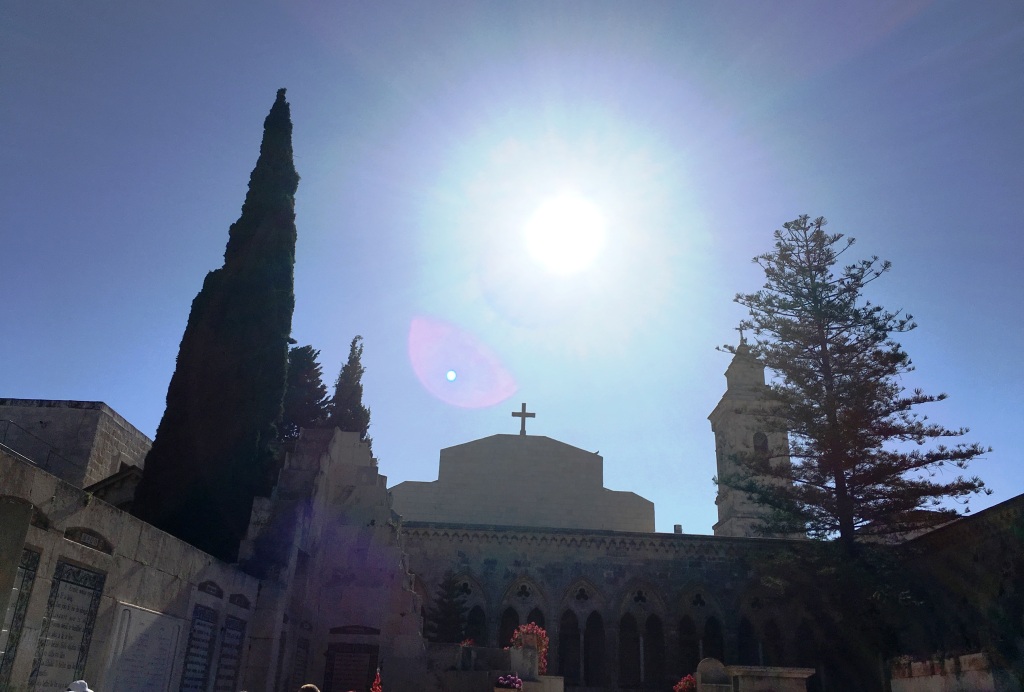
The Our Father Church outside Jerusalem where Jesus taught his disciples to pray the Our Father, 04 May 2019.

This is the third Sunday in a series of “things to do to gain eternal life” following that conversation by Jesus with a scholar of the law on his way to Jerusalem when he taught us to “love God and love others” by showing compassion to the suffering like the Good Samaritan. Last Sunday during his stopover at the home of Martha and Mary, he taught us that the more we are busy, the more we must pray; and the more we pray, the more we realize of the need to be active. This Sunday, Jesus deepens this lesson about prayer which is also the more essential – “the better part” – as he told Martha that we must do to gain eternal life.

For St. Luke, this episode of Jesus teaching his disciples the Our Father is more than the teaching of a prayer to recite but the attitude itself they must possess in praying.

Of the four evangelists, St. Luke is the one who always present to us Jesus at prayer like at this scene today. Unlike with St. Matthew’s version when Jesus taught the Our Father during his sermon on the mount so that his disciples would know what to pray for instead of multiplying words like the Pharisees and scribes at that time, St. Luke set this teaching in the context of the Lord at prayer to teach us how to pray.

He said to them, “When you pray, say: Father, hallowed be your name, your kingdom come. Give us each day our daily bread and forgive us our sins for we ourselves forgive everyone in debt to us, and do not subject us to the final test.”

Luke 11:2-4

Jesus came to make known to everyone God is our Father whose name we must always revere and never take in vain. By dying on the Cross, he revealed the glory of the Father who loves us so much that “he gave us his only Son so that we may not perish but gain eternal life”.

This is the first lesson of the Our Father. By teaching us the Lord’s Prayer, Jesus involves us in his own prayer to form our inner being to be like him in total obedience to the Father so that his kingdom may come. Remember the acronym ACTS in praying: “A” for adoration, “C” for confession of sins, “T” for thanksgiving, and “S” for supplications. So often, we only pray the “S” that we no longer merely ask but even demand from God so many things without even praising and thanking him for all his kindness, without realizing how we have turned out to be gods and the Lord our servant!

Wailing Wall of Jerusalem, May 2019.

“And I tell you, ask and you will receive; seek and you will find; knock and the door will be opened to you. For everyone who asks, receives; and the one who seeks, finds; and to the one who knocks, the door will be opened. What father among you would hand his son a snake when he asks for a fish? Or hand him a scorpion when he asks for an egg? If you then, are wicked, know how to give good gifts to your children, how much more will the Father in heaven give the Holy Spirit to those who ask him?”

Luke 11:9-13

Another unique feature of St. Luke’s version of the teaching of the Lord’s prayer is the parable that follows about an insistent neighbor asking for bread followed by a series of valuable sayings about prayer. Contrary to common interpretations, Jesus is not telling us to ask God for anything we want like money and gadgets. Prayer is essentially asking for God. It is God whom we must desire in prayer because when we have God, we have everything!

In St. Luke’s second book, the Acts of the Apostles, we find the Holy Spirit animating the early Church as a community as well as every individual. Every decision, every plan, and every prayer is always powered and guided by the Holy Spirit. When Jesus told his disciples to ask, to seek, and to knock, he was referring to always pray for the Holy Spirit for we really do not know how to pray. It is the Holy Spirit who enables us to speak rightly to God for things we need to tell him.

See how the two basic prayers we have, the Our Father and the Hail Mary are actually the words of God, not by men. The Our Father is by Jesus Christ himself that is why we call it the Lord’s prayer. The Hail Mary are the words of God through Archangel Gabriel when he greeted Mary to deliver the good news she would be the Mother of Christ. Even its second part are also the words of God when the Holy Spirit filled Elizabeth to praise Mary and the fruit of her womb, Jesus!

We need to ask for the Holy Spirit so that we can truly pray and enter that wonderful dialogue with God. When we pray like Jesus Christ in the Holy Spirit, we realize what God wants from us and we are able to respond properly as he gives us the necessary grace to accomplish them. Praying like Jesus is entering a dialogue with God, searching him and acting on his words.

Deacons prostrating before God in earnest prayer before their ordination.

That dialogue between God and Abraham at Mamre before the destruction of Sodom and Gomorrah in our first reading shows us that prayer helps us discern good and evil. Abraham did not bargain with God to save Sodom and Gomorrah for the sake of up to at least ten good people. In fact, only two good people remained there, Abraham’s nephew Lot and his wife who eventually perished after disobeying the angels’ instructions. What really matters in that episode is how Abraham recognized not only the good people but most of all, the prevailing evil at Sodom and Gomorrah.

Chapel of the Assumption Sabbath in Baguio, January 2019.

When we pray like Jesus, we also realize our giftedness of being saved from sin, of being “buried with him in baptism and brought to life along with him” (Col. 2:12,13) and thus becoming children of God. As children of the Father and brothers and sisters of Christ, prayer is where we enter into that deep relationship with God, learning his plans for us and how we can accomplish them by staying out of sin.

The example of Abraham and the teaching of Jesus show us that prayer is not a flight from the realities of this life and of this world. Far from being an escape, real prayer brings us closer to life, to following Christ our Savior for the glory of the Father by bringing his kingdom in this imperfect world marred by sins.

When we pray like Jesus, we get in touch with our true selves as well as with the many pains and hurts we share with others in this life journey, making us realize that we cannot do it alone. And more than the love and support we can get from our family and friends, there is God who loves us so much, giving himself to us to make it through eternal life. Have a blessed Sunday! Amen.

“A House Is Not A Home” by Dionne Warwick (1964)

Lord My Chef Sunday Music, 21 July 2019
Old experiment from my room while assigned at the Fatima Shrine in Valenzuela City, June 2010-2011.

Our Sunday gospel today speaks about true hospitality that leads to an encounter of Jesus Christ in our home and family.

Burt Bacharach’s “A House Is Not A Home” composed in 1964 for a movie of the same title easily came as our choice for this Sunday’s music.

Problem was choosing which of the many versions to feature in our blog today.

Though the different versions do matter a lot with slight variations in the lyrics, we decided in favor of the original recording by Ms. Dionne Warwick in 1964 that was the B-side of her top 40 single “You’ll Never Get To Heaven (If You Break My Heart)”.

Despite her excellent voice (a favorite of Bacharach), Warwick’s “A House Is Not A Home” did not fare well in the US charts. However, since its release in 1964 it has become a classic for its lovely tune and truthful lyrics.

A chair is still a chair, even when there’s no one sittin’ there
But a chair is not a house and a house is not a home
When there’s no one there to hold you tight
And no one there you can kiss goodnight….
A room is a still a room, even when there’s nothin’ there but gloom
But a room is not a house and a house is not a home
When the two of us are far apart
And one of us has a broken heart

Hospitality is from the Latin hospes that means to welcome. From this root came also the word hospital.

The story of Martha and Mary reminds us of the need to first welcome our family members so Jesus could dwell in our home. And this calls for love and respect for one another, for kindness and care.

How sad that right in our own family we could feel unwelcomed, or even hostaged which is from another Latin word hostis that means enemy.

This Sunday, experience Jesus and his good news of salvation in your family by breaking those barriers that prevent you from welcoming one another.

Have a “home sweet home” in Christ Jesus with a lot of love and kindness to one another in the family. God bless everyone!

True hospitality leads to salvation

The Lord Is My Chef Sunday Recipe Wk. XVI-C, 21 July 2019
Genesis 18:1-10 >< }}}*> Colossians 1:24-28 >< }}}*> Luke 10:38-42
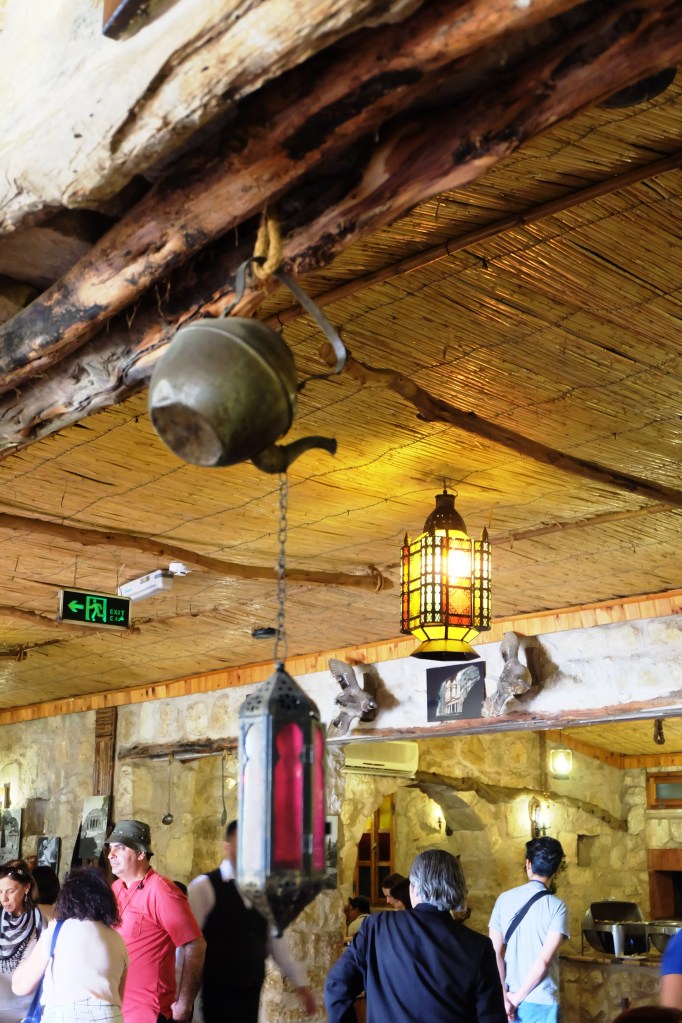
A restaurant in the desert of Meribah on the way to the ancient city of Petra in Jordan. Photo by author, 01 May 2019.

Jesus our Good Samaritan continues his “resolutely determined journey” to Jerusalem. On his way, “Jesus entered a village where a woman whose name was Martha welcomed him. She had a sister named Mary who sat beside the Lord at his feet listening to him speak” (Lk.10:38-39).

It is another story only St. Luke has like the parable of the Good Samaritan last Sunday. And like that parable, we have memorized this story so well that we think there is nothing new we can find regarding the attitudes of Martha and Mary in receiving Jesus. Worst of all is when we look at its simplistic interpretation that Jesus favored Mary’s contemplative spirit than Martha’s active characteristic.

Again, Jesus invites us today to suspend our beliefs about the story of Martha and Mary by going deep inside us to discover its true meaning as it tells us something about that inner question we shared last Sunday with the scholar who asked the Lord, “what must I do to inherit eternal life?” (Lk.10:25).

Kettle-lamp inside a restaurant in Meribah, Jordan.

Martha, burdened with much serving, came to him and said, “Lord, do you not care that my sister has left me by myself to do the serving? Tell her to help me.” The Lord said to her in reply, “Martha, Martha, you are anxious and worried about so many things. There is need of only one thing. Mary has chosen the better part and it will not be taken from her.”

Luke 10:40-42

Too often, the simplistic preaching we hear about this story is very unconvincing when some would argue the primacy of the “contemplative spirit” displayed by Mary over Martha’s zeal in hosting or “catering” for Jesus that is both necessary and valuable. Recall the many instances when Jesus also warmly accepted invitations by Pharisees and other sinners like Zacchaeus who also waited on him during meal. Two Sundays ago we heard how Jesus instructed the 72 disciples he had sent to “eat and drink whatever is offered to you” (Lk.10:7) when they are received as guests.

Very clearly, the lesson here is about hospitality that is more than staying at the feet of the Lord like Mary or getting busy at the kitchen like Martha. True hospitality in the Lord is welcoming him right in our hearts whether we are praying or doing something. Hospitality is from the Latin word “hospes” that means to welcome or to receive. In everything we do, whether in our actions and contemplation, it is Jesus who is our only focus and attention. We work in Jesus, through Jesus and with Jesus.

Jesus reproached Martha not for preparing their meal but for being “too anxious and upset” with so many things except him who had come to visit her and Mary. The gospels teem with so many instances where Jesus warned us his followers not to worry so much of the things of the world like food and clothing, money and other forms of security including how we shall defend ourselves against enemies when persecuted. Jesus has us all covered, so to speak.

The problem among so many of us priests and nuns these days is when we have become politicized than evangelized that we are so anxious and upset of so many things that we feel we are the savior of the world. The messianic complex plagues us in the Church where we have been so focused with our call, forgetting our Caller, Jesus Christ. Worst of all, we have stopped praying to Jesus especially in the Blessed Sacrament.

Last Sunday Jesus asked us to look more inside of us so that the more we see ourselves, the more we see him in others. Today, Jesus tells us that the more we become active, the more we must be contemplative looking to him within us. And when we are truly contemplative, we become more active in him with others! At its core is always that deep relationship, personal relationship with the Lord who always comes to visit us.

15th century icon of Abraham’s visitors at Mamre by Russian artist Andrei Rublev.

In the first reading we have heard Abraham welcoming his visitors believed to be the Blessed Trinity at his tent in Mamre. What a lovely story and a scene to behold where Abraham was like Martha busy preparing for the Lord his visitor. But unlike Martha, Abraham was never reproached because the Lord remained his focus in his waiting and hosting! It was during that visit at Mamre when God promised Abraham before leaving that his wife Sarai would bear a son the following year, fulfilling the earlier promise made to him that he would he would be the father of a great nation. If you have time to read further, Abraham’s wife came to be called Sarah from Sarai after the Lord heard her laughed upon hearing him spoke of their having a son the following year. It was Sarah who was reproached by God like Martha for not believing she would bear Abraham a son because she must be anxious and upset with so many other things like her age and being barren. There was no true hospitality in her too like Martha.

Back with Abraham at Mamre, the Lord revealed that true hospitality always leads to salvation, the fulfillment of the Divine promises. There in his tent where Abraham welcomed God wholeheartedly in himself, he received the good news of the birth of Isaac, the fulfillment of being the father of a great nation.

In Nazareth the same thing happened when Mary wholeheartedly welcomed the Angel Gabriel’s good news of the birth of Jesus, the Christ now in us according to St. Paul who is our “hope for glory” (Col.1:27).

In this simple story of Martha and Mary, St. Luke tells us something more than true hospitality, that whenever we receive somebody as a guest, when we reach out to help those in need like the Good Samaritan last Sunday, it is always Jesus whom we meet. Don’t be caught up with so many other things except Jesus because whenever he comes, he always has good news for us! A blessed week to everyone. Amen.

Welcome to our Parish of St. John Evangelist, Bagbaguin, Sta. Maria, Bulacan. Saturday Vigil mass at 5:30 PM and Sunday Masses at 7AM and 5:30PM. Don’t miss Jesus with his blessings and good news for you this Sunday!

The Good Samaritan, the X-Files and Stranger Things

The Lord Is My Chef Sunday Recipe for the Soul, Wk. XV-C, 14 July 2019
Deuteronomy 30:10-14 >< )))*> Colossians 1:15-20 >< )))*> Luke 10:25-37
From America Magazine via Google.

After teaching us about discipleship these past two Sundays, Jesus shifts his lessons to things “we must do” following a series of questions he encountered from people when he “resolutely determined to journey to Jerusalem” (Lk.9:51).

There was a scholar of the law who stood up to test Jesus and said, “Teacher, what must I do to inherit eternal life?” Jesus said to him, “What is written in the law? How do you read it?” He said in reply, You shall love the Lord, your God, with all your heart, with all your being, with all your strength, and with all your mind, and your neighbor as yourself. He replied to him, “You have answered correctly; do this and you will live.” But because he wished to justify himself, he said to Jesus, “And who is my neighbor?” Jesus replied, “A man fell victim to robbers as he went down from Jerusalem to Jericho.”

Luke 10:25-30

And thus Jesus answered the scholar of the law with the beautiful parable of the Good Samaritan that can only be found in St. Luke’s gospel. It has so endeared the world that hospitals and charities including laws and awards everywhere use the “Good Samaritan” title in recognition of the parable’s conviction that we are all neighbors.

Problem is, we have become so familiar with this parable that sometimes we think it teaches us nothing new. Like the Laws or the Ten Commandments, it has degenerated into becoming letters like a code imposed from the outside we simply follow. Moses tells us in the first reading how the Laws are “something very near to you, already in your mouths and in your hearts; you only have to carry it out” (Dt.30:14). Loving God and loving others is an interior and life principle innate within each of us.

This Sunday, Jesus is inviting us to set aside our thoughts about his parable of the Good Samaritan in order to see it in a deeper and personal perspective.

For most Christians especially Catholics, we always reach that stage in our lives when deep within us there is a longing for something deeper, for something more than what we have been used to. It is a very positive sign of spiritual growth. Like the scholar, we are no longer contented with the usual things we do like praying, Sunday Masses, and keeping the laws. At first we may not be able to verbalize or even identify what are the stirrings within us until we realize it is something more than this life we are having.

Like the scholar, we ask Jesus, “Teacher, what must I do to inherit eternal life?” (Lk.10:25). But, instead of probing deeper into our hearts, we tend to look outside for answers like the scholar asking, “who is my neighbor?”.

From Google.

Twenty years ago, the sci-fi series “The X-Files” was a hit worldwide with its tagline “the truth is out there” to refer to all kinds of conspiracy theories and paranormal activities by the US government. Of the same genre today is the Netflix series “Stranger Things” that also points us to something “out there” for answers to many mysteries happening to us.

The answer is never out there – it has always been inside us! Always.

From Google.

How strange that we keep on asking “who is my neighbor?”, searching for a theoretical definition of a neighbor we always think as somebody outside us. What we must be asking is, “am I a neighbor to others?”

Observe how Jesus narrated the parable where both the priest and the Levite “saw the victim and passed by the opposite side. But a Samaritan traveler who came upon him was moved with compassion at the sight. He approached the victim, poured oil and wine over his wounds and bandaged them. Then he lifted him up on his own animal, took him to an inn, and cared for him” (Lk.10:32-34).

That’s the strangest thing of all! Two Temple officials simply “saw” the victim and passed by while a Samaritan “saw” also but was moved with compassion. To be moved with compassion in Latin is misericordia, a “stirring or disturbing of the heart” which translates into mercy.

Here we find the Samaritan looking deep inside him that he saw in him the plight of the victim that he was moved with mercy to help him. And that is to be a neighbor, to treat somebody with mercy that transcends any color or creed or nationality. See the question of Jesus at the end of his parable, “Which of these three, in your opinion, was neighbor to the robbers’ victim?” The scholar answered, “The one who treated him with mercy” (Lk.10:36-37).

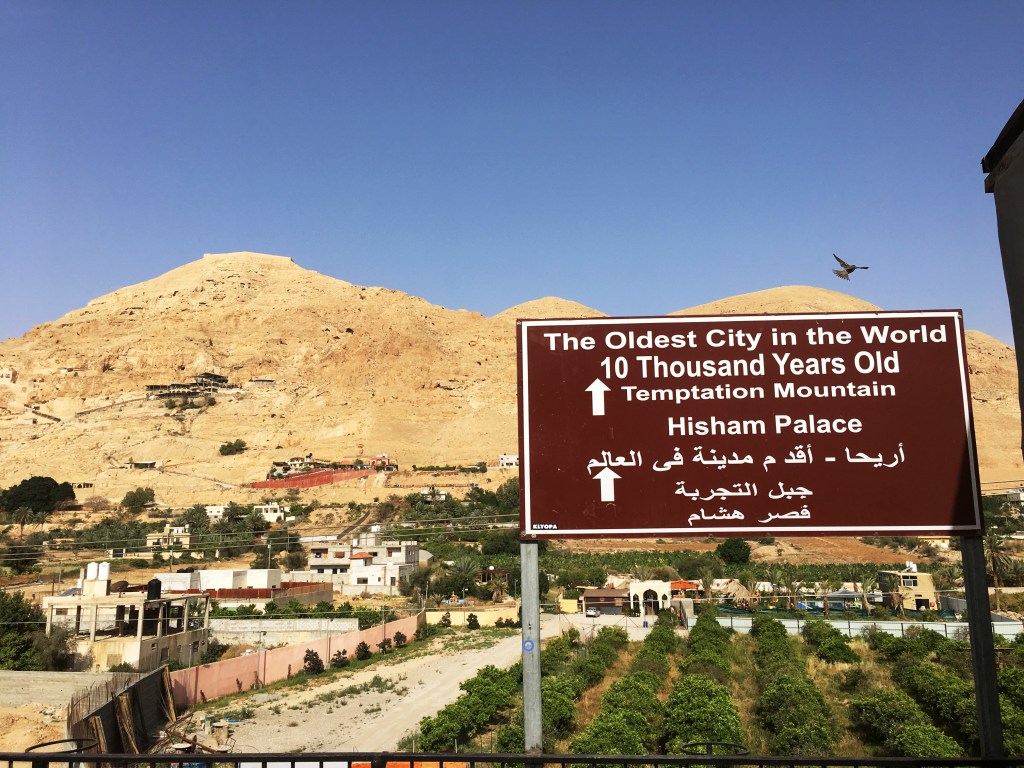
City of Jericho, the setting of the parable of the Good Samaritan. Photo by author, 06 May 2019.

My neighbor is the one with whom I identify with, with whom I am drawn near because of the mercy that moved me within to help in his or her sufferings. A neighbor is one who feels his or her own humanity that he or she is always moved with compassion with those who are in suffering and pain.

And the more we reflect on this parable, the more we see Jesus Christ is in fact the Good Samaritan himself. He is “the image of the invisible God, in him all things hold together” (Col. 1:15,17). It was Jesus who went down the road, becoming human like us in everything except sin, picking us up from our sinfulness and miseries, healing us of our wounds, and restoring us to life “through the blood of his cross” (Col. 1:20).

Let us heed his command this Sunday to “Go and do likewise” (Lk.10:37) as the Good Samaritan. Be a blessed neighbor to everyone! Amen.

“Warrior Is A Child” by Gary Valenciano (2000)

The Lord Is My Chef Sunday Music, 07 July 2019
Jesus Christ the Good Shepherd always taking care of us all his little sheep, especially the lost and wounded. Photo from Google.
Lately I’ve been winning battles left and right
But even winners can get wounded in the fight
People say that I’m amazing
I’m strong beyond my years
But they don’t see inside of me
I’m hiding all the tears

They don’t know that I come running home when I fall down.They don’t know who picks me up when no one is around
I drop my sword and cry for just a while
‘Coz deep inside this armor
The warrior is a child

Some of you must have sang the lyrics above from Gary Valenciano’s 2000 hit “Warrior Is A Child”, our Lord My Chef Music this 14th Sunday in Ordinary Time.

Gary’s song speaks so well of our reflections for today that the only bragging rights we have as disciples of Jesus Christ is to be one with him in his Cross, to be weak and wounded to manifest the power and greatness of God in us.

Almost everybody can identify with this song who seem to be so strong on the outside when in fact inside, we are all hurting in pain – a sick loved one, a broken relationship, a failure in an important exam, a lost family member.

That is discipleship in Christ for only those who truly love are willing to sacrifice and even offer their lives for their beloved. It is from this great love like Jesus Christ we his disciples are gifted with his peace, the only possession we are all allowed to have in order to share with others.

May we persevere in our struggles in life, may we keep on loving and forgiving in the name of Jesus Christ, continue to wage his war against evil and darkness for he is fighting with us, fighting for us.

Discipleship is embracing the Cross of Jesus Christ

The Lord Is My Chef Sunday Recipe for the Soul, Wk. XIV-C, 07 July 2019
Isaiah 66:10-14 >< }}}*> Galatians 6:14-18 >< }}}*> Luke 10:1-12, 17-20
Photo by Lorenzo Atienza, Malolos Cathedral, 12 June 2019.

Please forgive me for my curiosity: lately I have noticed the sudden sprouting of many “breastfeeding stations” and “lactation sections” in many public places that I feel so tempted getting inside them just to see how the mothers would react.

One of the joys of prayer is how God would communicate with us even with the most crazy ideas we have like that thought of entering a breastfeeding station. I recalled this thought as I dwelt deeply into Isaiah’s prophecy in our first reading today presenting God like a mother comforting her children the Israelites who were exiled to Babylon.

It was one of the lowest points in the history of the Jewish people when they lost everything – family and friends, country and nation, and most of all, their Temple in Jerusalem that they felt they were forsaken by God. As exiles, they were slaves without any freedom at all.

Thus says the Lord: “Rejoice with Jerusalem and be glad because of her, all you who love her, exult, exult with her, all you who were mourning over her! Oh, that you may suck fully of the milk of her comfort, that you may nurse with delight at her abundant breasts! As nurslings, you shall be carried in her arms, and fondled in her lap; as a mother comforts her child, so will I comfort you; in Jerusalem you shall find your comfort.”

Isaiah 66:10-11, 12b-13

Sometimes, God allows us to experience several blows and beatings in life not because he punishes us or he takes delight in seeing us suffer; sometimes, we need to be like infants and children again to trust God more, to rely to his goodness. It is the surest way to remind us who we really are. That we are not god.

In our second reading, St. Paul bolstered this imagery of our being children of God by reminding us that the only bragging rights we have as disciples of Jesus is to be one with him in his Cross.

Brothers and sisters: May I never boast except in the cross of our Lord Jesus christ, through which the world has been crucified to me, and I to the world.

Galatians 6:14
Photo by Pixabay on Pexels.com

As children of the Father and disciples of Jesus, our mark of distinction is not found in our greatness, achievements and success but in our being weak, in our being wounded and bruised, always needing the comfort by God like a mother to her children. This is very clear with St. Paul not only in our second reading today but most especially in his second letter to the Corinthians:

“I will rather boast most gladly of my weaknesses, in order that the power of Christ may dwell in me. Therefore, I am content with weaknesses, insults, hardships, persecutions, and constraints, for the sake of Christ; for when I am weak, then I am strong.”

2 Corinthians 12:9-10

It is in our weakness when God is most manifested.

Try listening to anyone bragging about his or her achievements and talents: for a time, we get impressed, we admire them but in the long run, it becomes both convulsing and convoluting. But when we come to learn or hear the sacrifices and sufferings of people even those we do not personally know, we feel uplifted. We remember God and his goodness, his mercy and love.

Crucifix at the side wall of the chapel of St. John Evangelist at Cana, Galilee. Photo by author, 06 May 2019.

Only the disciples of Christ who join him in his Cross can be filled with the gift of peace, the only possession of every disciple. See how how when Jesus sent out the 72 other disciples, he asked them not to bring anything at all. The only thing they must have is the peace of Jesus Christ that they have to share with everyone they visit.

“Go on your way; behold, I am sending you like lambs among wolves. Carry no money bag, no sack, no sandals; and greet no one along the way. Into whatever house you enter, first say, ‘Peace to this household.'”

Luke 10:3-5

Remember that when Jesus visited his Apostles in the locked upper room on the evening of Easter Sunday, he also greeted them with “peace” or “shalom” which is God’s greatest gift to anyone. Shalom in Hebrew means having a good relationship with one’s self, with others, and with God. Peace is always borne out of love and only those willing to sacrifice, suffer and even die for someone are the ones who truly love.

Mt. St. Paul Retreat House, June 2017.

There can be no peace in our hearts when we are filled with pride and ego. We need to be like children again, relying solely in the powers of our parents.

Last Thursday we brought our niece to her doctor at UST Hospital. While waiting for my sister when she left to get the lab results, I saw my niece feeling sleepy. I asked her to sleep on my lap as I gently rubbed her shoulder until she fell asleep soundly and peacefully.

What an attitude of not being bothered by her sickness because she must have great trust in me her uncle, my sister her mom, and also her doctor!

When we embrace our crosses in life and rely solely in Christ, we can also experience peace within. That is when we can rejoice as Jesus assured us, “your names are written in heaven” (Lk. 10:20).

A blessed week ahead to everyone! Jesus loves you, entrust to him all your worries and woes. Amen.

Husband and Wife, Icons of Christ

The Lord Is My Chef Recipe for Wedding of Matt Namuco and Marian Joson
29 June 2019, Minor Basilica of the Cathedral of Immaculate Conception, Malolos City,
Lovely bride is my former student from ICSM-Malolos, from elementary to high school.

Congratulations to you, my dearest Marian and Matt!

In God’s infinite wisdom, he had planned in all eternity that you get married on this date – not yesterday or last year, not tomorrow or next week or next month.

God willed that you get married today on the Solemnity of St. Peter and St. Paul, the two pillars of the Church established by our Lord Jesus Christ.

Like you, Marian and Matt, St. Peter and St. Paul are two people of opposite personalities, of different social and cultural backgrounds but were able to overcome these to work together for Jesus Christ. We celebrate their feast together because despite their many differences, they were united in their love for Jesus Christ. It was Christ who brought them together and kept them together so his Church would grow and be what it is today.

The same is true with you, Marian and Matt: Jesus Christ brought you together in spite of your many differences to be united in his love. Most of all, Marian and Matt, Jesus wants you to be his ICONS or images in the world today that has become individualistic.

Sacred Heart Novitiate, July 2018.

An icon or image of Jesus like St. Peter and St. Paul is to be one in the Lord. A man and woman get married to become disciples of Christ, to become one in Christ, to look like Christ. That is the meaning of the word sacrament, visible sign of the saving presence of Jesus in the world.

And that is why the gospel you have chosen for your wedding day is so perfect, the Sermon on the Mount where Jesus gave us his Beatitudes that are actually directions for discipleship. The Beatitudes show us the mystery of Christ himself, calling us into a communion in him to become his icons in the world that has been trying to negate him.

For your wedding, Marian and Matt, let us reflect on the sixth Beatitude of Jesus:

Blessed are the clean of heart, for they will see God.

Matthew 5:8

Remember the Little Prince where the fox told him that “What is essential is invisible to the eye; it is only with the heart one can truly see”?

We can only see God with our hearts. The intellect alone is never enough.

And so it is too with any person.

We can learn and know so many things about another person with our intellect but nothing will be enough for us to truly love him or her unless we let our hearts see the real him or her.

The heart is the wholeness of the person. Yesterday we celebrated the Solemnity of the Sacred Heart of Jesus. Sometimes, when we use our minds, we see the world as so dark and so evil. But, if we have hearts that can see, we will be more surprised that there are more goodness, more beauty in this world than what we hear and see in the news and around us.

Marian and Matt, always have a clean heart to see each one’s goodness and beauty.

Always go back to those early days when you first saw each other with your hearts. Aside from the kilig factor, you felt and realized something deeper with each other. The beloved disciple, St. John, wrote in our first reading, “No one has ever seen God. Yet, if we love one another, God remains in us, and his love is brought to perfection in us” (1 Jn. 4:11-12).

And that is how we see God and others: always with our hearts when we love.

Mt. St. Paul Retreat House in Baguio, June 2017.

To have a clean heart, Marian and Matt, is to enter into the mind of Jesus Christ and that is to embrace his Cross. Having a clean heart is becoming one with Jesus Christ, especially in his love and fidelity.

A clean heart is a loving heart that always gives life, other-centered, veritable and enduring. Always in communion with Jesus Christ who gave us the new commandment to love like him by being rooted in the Father.

The love of Christ is the fire that purifies and cleanses our hearts, unifying our intellect, will and emotion that enables us to see oneness in ourselves before God. We see not only the good and the bad sides in ourselves but also among those around us, especially those we love.

Look back at your many experiences, Marian and Matt. Look at your past lives, your struggles, your mistakes and sins. Despite all these, you have also seen and experienced God’s loving presence in you in spite of your many darkness and divisions within.

That is why you are so “blessed”, Marian and Matt, because today on your wedding day, you enter God himself and you are able to “see” him with your loving hearts despite your pains and hurt, failures and shortcomings.

Remember Marian and Matt, you are both not only one in a million but most of all, you are both once in a lifetime made by God for each other. Keep your hearts clean in Jesus Christ so you may always see God in each other. Amen.

All wedding photos by Mindstream Project headed by Patrick Paragoso.