Christ, the Sign of Contradiction

PhilipLourdes
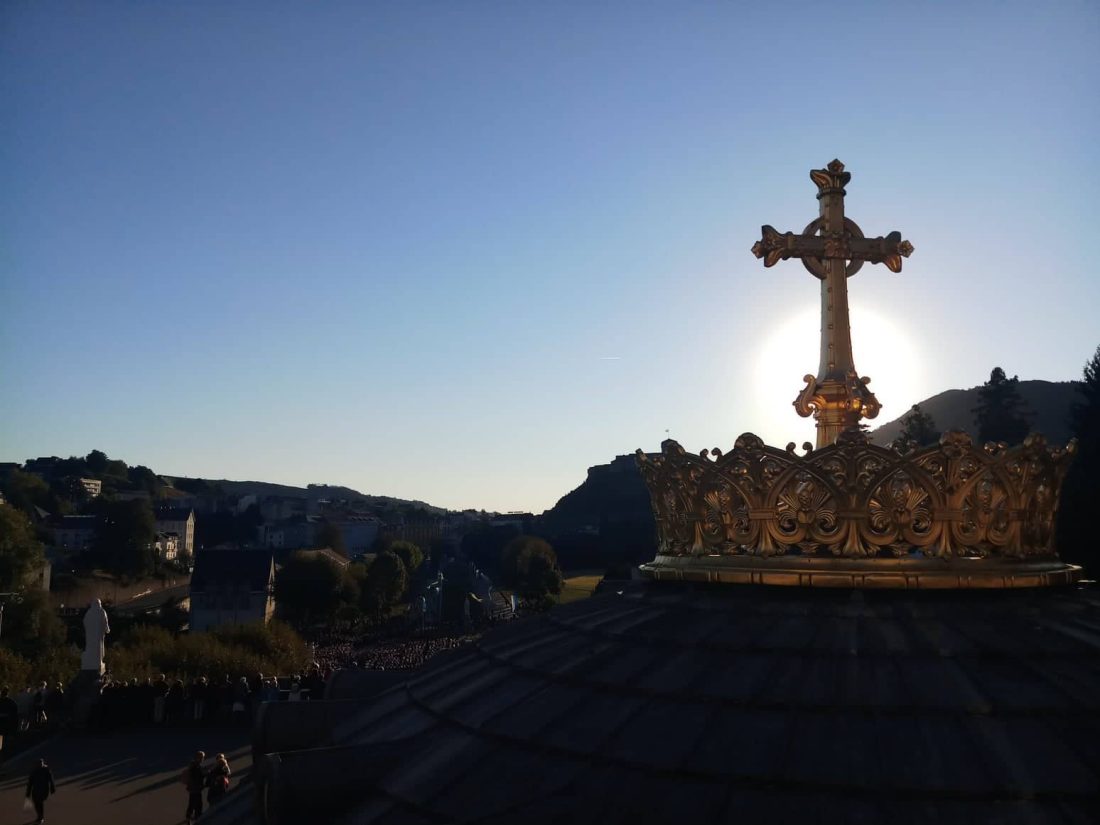
The Cross of Christ atop the church of our Lady of Lourdes in France. Photo by my former student Philip Santiago during his pilgrimage, September 2018.
The Lord Is My Chef Sunday Recipe
03 February 2019, Week IV, Year C
Jeremiah 1:4-5, 17-19///1Corinthians 12:31-13:3///Luke 4:21-30

            We had a rare weekend yesterday in the Feast of the Presentation of the Lord that wonderfully complemented our gospel on this Fourth Sunday in Ordinary Time.  Recall that last Sunday we were told how Jesus went home to Nazareth, entering the synagogue on a day of rest.  Everybody was amazed with His “gracious words” in proclaiming the word of God that we ended the gospel with a very positive note when Jesus declared “Today this Scripture passage is fulfilled in your hearing” (Lk.4:22).  Our gospel today repeated this line as its take off point to continue the story of Jesus at the synagogue but, this time Luke tells us of a twist from the very positive “all spoke highly of him” to their skeptical “Isn’t this the son of Joseph?” (Lk.4:22).  The mood deteriorated further after Jesus had spoken so that “the people at the synagogue were filled with fury.  They rose up, drove him out of the town, and led him to the brow of the hill on which their town had been built, to hurl him down headlong” (Lk.4:28-29)!

            What and how did this sudden turn of events happen?  Here we find the complementing Feast of the Presentation yesterday based on the infancy narratives of Christmas by St. Luke when Simeon told Mary the mother of Jesus, “Behold, this child is destined for the fall and rise of many in Israel, and to be a sign that will be contradicted – and you yourself a sword will pierce you – so that the thoughts of many hearts may be revealed” (Lk.2:34-35).  See how Jesus at the inauguration of His ministry at their Nazareth synagogue last week proclaiming the word of God would now start to be seen as a sign of contradiction among His people as prophesied by Simeon to His mother yesterday.  That would reach its highest point 33 years later in Jerusalem where He was presented to the Temple 40 days after Epiphany after resolutely going there to offer or present Himself to the Father on the Cross.  This explains why Jesus merely “passed through the midst of them and went away” when the people at the synagogue tried to hurl Him down headlong because His time of final offering had not yet come.  But very clearly here at the synagogue of Nazareth, Christ is indeed the sign of contradiction not only to His people but also to us in this generation when we would also speak highly of Jesus, shouting Amen with clapping of hands and suddenly hit people near us with harsh and nasty words or even brutal force.  Most of all, like the Lord, we too have experienced being a sign of contradiction when people would speak highly of us then suddenly or over time, turn against us and speak ill of us, betraying us like what Judas did to Jesus on Holy Thursday.

           My dear friends in Christ, it is our calling and our life too in living out the word of God through our life of witnessing His immense love in service and mercy for those in the margins.  Every time we gather for the Sunday Mass like when Jesus entered the synagogue of Nazareth on a day of rest, He invites us to follow Him to be a prophet by entering Him more than merely the church building.  Being a sign of contradiction like Jesus is our prophetic mission in Him.  So unlike what most people think, a prophet is not a fortune teller or a seer of the future.  As the spokesperson of God, a prophet is one who makes God’s word happen or fulfilled in every here and now.  Keep in mind that one feature of Luke’s gospel is the pre-eminence of “listening and doing” the word of God like when he reported how Jesus declared Isaiah’s prophecy fulfilled in their hearing that led into the sharp and sudden shifting in the reaction of people against the Lord, from approval to rejection.

            First of all, those reactions were most evidently from His claiming to be the Messiah referred to in Isaiah’s prophecy on whom the “Spirit of the Lord rests upon.”  He was the one who proclaimed the word and if we have truly immersed ourselves into this beautiful scene in the synagogue on that Sabbath day, we would really feel Jesus is in fact the one Isaiah is speaking of as being “anointed to bring glad tidings to the poor, liberty to captives, sight to the blind, freedom to those oppressed, and to usher in a year acceptable to the Lord” (Lk.4: 18-19).  Salvation decisively begins in Christ and through Christ whenever we enter Him in His words.  That “today” in Nazareth synagogue is also the today of our own time that continues to provoke astonishment among others when we try to be Christ’s witnesses of authentic love for others.  That is perhaps the sad reality of these days when it becomes big news when people do something genuinely good and beautiful like the woman who impulsively rented 20 hotel rooms in Chicago so the homeless could escape the deep freeze this week in the US Midwest; her deed snowballed into other strangers doing the same!  That is essentially the meaning of Paul’s lofty words on love being the greatest of all gifts because it makes God most present in our midst.  To truly love like Christ is essentially being a sign of contradiction in this world where the norm is selfishness and self-centeredness often masked in different in lofty terms and ideals bereft of any love at all.

           Along this line of self-centeredness we find Luke reminding us in this scene at the Nazareth synagogue of the persisting problem self-entitlement among people then and now when we prophetically live out our mission of making Christ present.  People always look down and frown upon those who try to be good and holy by striving to do what is right and just while the holier-than-thou sanctimoniously feel they are the only ones anointed to do such things because they are entitled.  They are the modern Gnostics according to Pope Francis in his latest encyclical about holiness in our modern time (Gaudete et Exsulatate)” who feel as the only ones gifted in knowing what is right or wrong, true and good as if they are God.  Like those people at the synagogue in Nazareth, they refused to accept Jesus of being more knowledgeable because He is the son of Joseph who was a carpenter.  Jesus would strike at the very core of their self- entitlement when He told them “Amen, I say to you, no prophet is accepted in his native place” (Lk.4:24), citing how Elijah and Elisha of the Old Testament days were both sent by God to help pagan peoples and not the Jews who have turned away from Him exactly like them.  That filled them with fury against Jesus, wanting to hurl Him down the hill headlong.  It is the same feeling those people around us experience like our relatives and friends who could not accept we are better than them that they start spreading all kinds of lies and nasty talks against us as they see their self-entitlement slowly eroding.  Such is our life as a prophet like Jeremiah, always going against the flow of the people, choosing Christ to be a sign of contradiction and give way to the fulfilment of God’s word among us.  Amen.  Fr. Nicanor F. Lalog II, Parokya ng San Juan Apostol at Ebanghelista, Gov. F. Halili Ave., Bagbaguin, Sta. Maria, Bulacan.

Vacation and Vocation: A Reflection on the Caller, the Call, and the One Called

20160518_221911
Quiet Storm by Fr. Nicanor F. Lalog II, 24 January 2019

            Vacation and vocation are two important realities for us priests.  In fact, the two are closely related because both are rooted in God.  Problems happen when we priests totally forget God both in our vacation and in our vocation.  And this has always been our problem because we have refused to go back, get closer and enter God Himself.

             Both vacation and vocation came from Latin:  the former is from the word “vacare” that means to be emptied or vacant while the latter has its roots in “vocare” which is to be called.  Every vacation is a sabbath, a resting in God who calls us to this priestly vocation.  This concept is beautifully expressed in our Filipino word “magpahinga” that literally means to be breathed on by God.  When we priests go on vacation, the more we are able to serve people better with joy because that is when we are filled with God.  Every vacation is a path leading us closer to God that is why priests are encouraged to go on sabbatical leaves, whether the usual weekly breaks or the yearly longer vacations.  This past week we have heard from the gospels in our daily Masses how the enemies of Jesus missed this important aspect of sabbath when they would always question His healings on days of rest, prompting Him to ask them, “Is it lawful to do good on the Sabbath rather than to do evil, to save life rather than destroy it?” (Mk.3:4).  God is always bigger than Sabbath because “Sabbath was made for man, not man for the Sabbath.  That is why the Son of Man is lord even of the Sabbath” (Mk.2:27-28).  Even laypeople have fallen into this trap of emphasizing sabbath more than God Himself that we make many excuses of not going to Sunday Masses because bonding with family and friends is more important.  Every year, less and less people are going to Church celebrations of the Holy Week and Easter because they would rather take the opportunity to go on vacation as they try hard to convince themselves that God would perfectly understand them anyway.

             This problem with vacation takes on its most unfortunate turn when we priests deal with our vocation.  In my 20 years in the priesthood with the last seven years spent in direct interactions with seminarians as teacher and spiritual director, I have found something so wrong now becoming a trend that is probably one of the reasons why we are plagued with all kinds of problematic priests in the Church.  It is a new kind of idolatry when we have come to worship and adore more our vocation and priesthood than God Himself.  We have forgotten the great distinction between the call and the Caller.  When the one being called, whether a priest or a seminarian, gets so focused with the call forgetting the Caller, problems arise and not too far from the scene are evil and sin.

            “Brothers and sisters:  Every high priest is taken from among men and made their representative before God, to offer gifts and sacrifices for sins.  No one takes this honor upon himself but only when called by God, just as Aaron was.  In the same way, it was not Christ who glorified himself in becoming high priest, but rather the one who said to him:  You are my son; this day I have begotten you” (Heb.5:1,4-5). 

            Priestly vocation is always a gift and a call from God to be closer and be one in Him and with Him in Christ.  Vocation is the call of God but not God.  The Caller is always above and distinct from the call.  The one being called is meant to end with the Caller and not with the call.  It is a terrible problem when a seminarian insists on being ordained as if it is a right simply because he is called even if the seminary fathers do not see him responding properly to his priestly calling.  It becomes a tragedy when priests insist with their own beliefs and perceptions of things as part of their responding to their vocation, forgetting or even totally disregarding Christ as well as the norms and teachings of the Church, His visible presence (sacrament) on earth.  The sex scandals that continue to rock and deeply hurt the Church stem from this erroneous perception by some priests who cling to their vocation, unmindful of the Caller we all need to imitate in holiness so we can also embrace children and uplift women like Him in love and respect.  See how some of our churches have become like birthday cakes, malls and even dance halls when pastors pretend to be bringing the people closer to God with all their pomp and pageantry when in fact are just massaging unconsciously their bloated egos.  When priests get busy more with church constructions, fund raising and other social events without any time for prayer to be with God and His flock, they worship the call, not the Caller.  The height of this idolatrous worship of the vocation by priests is when we make up so many alibis and excuses to justify our various preoccupations like luxurious living, vanities that include too much sports and body-building, vices in all forms like addiction with telenovelas, engaging in businesses, frequent travels that Pope Francis had branded as “scandal of the airports”and yes, even adopting children!

            I wrote this not to put down my brother priests and students in the seminary but to contribute in whatever way that we can grow closer with Jesus Christ who calls us to be one in Him.  I am also a sinner, “a worthless servant of the Lord who tries to do my duty” as His priest (Lk.17:10).  Lately in our daily Masses as well as this coming Sunday we shall hear in the gospel of how Jesus would enter their synagogue in Capernaum on a sabbath.  It is a very simple scene but filled with meanings, asking me whether I simply enter the church or do I enter God?  How sad that until now there are people like the Magi from the East asking “where is the newborn king of Israel?” while inside our churches that have merely become a building but never the Body of Christ because what we only have is the call, or maybe just the echo of that call without the Caller.

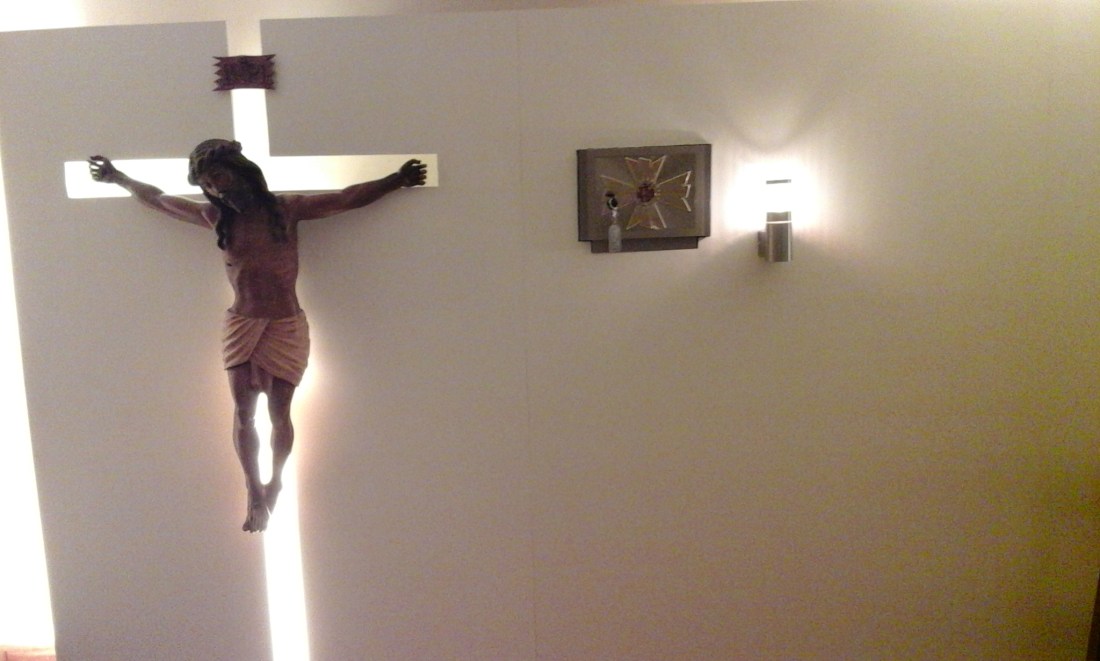
*Photo by the author, chapel of Holy Family, Sacred Heart Novitiate and Retreat House, Novaliches, Quezon City, June 2015.

Refresh Us, O God

domhill3 baguio2019
The Lord Is My Chef Breakfast Recipe for the Soul
Monday, 21 January 2019, Week II, Year I
Hebrews 5:1-9///Mark 2:18-22

            Loving Father, lately I was again hurting deep inside, feeling alone and forgotten, even taken for granted but, after praying and remembering the immense love of your Son Jesus for me, for us all, I felt so consoled because I am no longer alone.  I felt relieved and lighter at how your Son Jesus who is sinless bore all our sins by suffering and dying on the Cross to renew forever our relationship with you, opening for us a fount of constant joy and comfort within us.

             “In the days when he was in the Flesh, he offered prayers and supplications with loud cries and tears to the one who was able to save him from death, and he was heard because of his reverence.  Son though he was, he learned obedience from what he suffered; and when he was made perfect, he became the source of eternal salvation for all who obey him” (Heb.5:7-8).

            Remind us always to remember this great truth, of how you have made Christ your Son as our sole mediator, designating Him our eternal High Priest who offered for us the most perfect sacrifice for our salvation.  Make us your new piece of cloth, your new wineskin so others may experience your refreshing presence in the world today where many of us have become technical rather than personal, hiding in traditions and rituals long renewed in Jesus Christ, always asking “Why do the disciples of John and the disciples of the Pharisees fast, but your disciples do not fast?” (Mk.2:18).

              Give us the courage O Lord like St. Agnes to be firm in our faith, vibrant in our hope in your presence among us in Christ.  Refresh us in your abiding love so we may be renewed as a people, as disciples.  Amen. Fr. Nicanor F. Lalog II, Parokya ng San Juan Apostol at Ebanghelista, Gov. F. Halili Ave., Bagbaguin, Sta. Maria, Bulacan.

Photo above by the author, Dominican Hill, Baguio City, 18 January 2019.

St. Agnes image from Google.

6419be70a1916a6ae565d49240962744--girl-scouts-martyr

This 2019, Handle Life with Prayer

baptismjesus
The Lord Is My Chef Sunday Recipe
Feast of the Baptism of the Lord, 13 January 2019
Isaiah 40:1-5, 9-10///Titus 2:11-14; 3:4-7///Luke 3:15-16, 21-22

            Today is the last Sunday of the Christmas season that closes with the Feast of the Baptism of the Lord.  But that does not mean we stop celebrating the coming of Jesus Christ.  In fact, this feast of His baptism reminds us of the great importance of praying daily to celebrate His coming the whole year through.

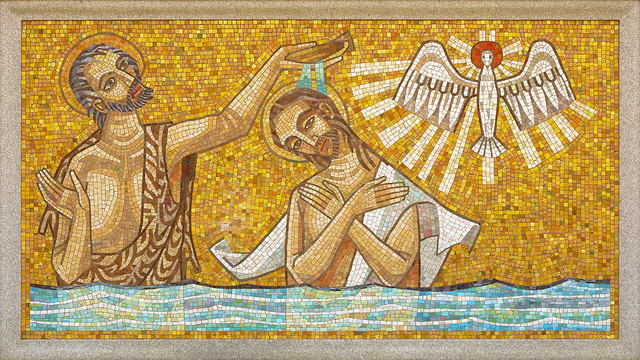
            The people were filled with expectation… After all the people had been baptized and Jesus had also been baptized and was praying, heaven was opened and the Holy Spirit descended upon him in bodily form like a dove.  And a voice came from heaven, “You are my beloved Son; with you I am well pleased” (Lk.3:15, 21-22).

            One thing we shall notice this year when St. Luke guides us in our gospel every Sunday is how he always presents Jesus Christ at prayer like here at His baptism.  Only St. Luke records this detail that Jesus was praying after His baptism when the “heaven was opened.”  That is the meaning of Christmas, the opening of heaven for us through Christ’s coming after it was closed when Adam and Eve were banished following their Fall.  See how St. Luke situated the Lord’s baptism like his Christmas story to show us that Jesus lived at a specific time and period in history, that He had really come!  “In the fifteenth year of the reign of Tiberius Caesar, when Pontius Pilate was governor of Judea, and Herod was tetrarch of Galilee, and his brother Philip tetrarch of the region of Iturea and Trachonitis, and Lysanias was tetrarch of Abilene, during the high priesthood of Annas and Caiaphas” (Lk.3:1-2).

            The same is very true today in our own time.  In this specific period when everything seems to be so dark and in disarray, when we are filled with expectation after a long period when God had seemed forgotten us, suddenly there comes a voice in the wilderness, not in the desert of Jordan but right here inside our hearts of new hope, new beginnings this 2019!  Jesus had opened heaven with His coming to us more than 2000 years ago and He continues to call us to come to Him, to be one with Him and be in Him.  He is here inside our hearts inviting us to open up with Him, to converse with Him, to speak to Him and to hear Him in the context of prayer.  This feast of the Baptism of the Lord reminds us of that invitation from God for us to open up to Him too because He is now more accessible to us than ever in Christ.  In becoming human like us in everything except in sin, Jesus brought God nearer to us that we can converse with Him to air our concerns and innermost feelings to Him.  Most of all, experience in prayer God’s great love for us when we listen to His voice and heed His calls to discover far more great things in this life than we have ever imagined!  Why waste this great grace in Him?

               Second reason why we need to handle life with prayer is because it purifies us, cleanses us like the waters of the river.  Jesus need not be baptized because He has no sins; but, He chose to be baptized by John to show His solidarity with us sinners.  This is the main point of the prophecy by Isaiah in the first reading as well as the letter of St. Paul to Titus:  Jesus is the mercy of the Father to us sinners who had come to expiate our sins by taking upon Himself – the sinless one – our sins.  It is very sad that fewer people are now praying in the real sense because many of us have lost that sense of sinfulness.  Everything has become relative especially morality as if everything is now acceptable and therefore, nothing is sinful.  When people refuse to see and accept their sinfulness, when they feel being sinless, then they start acting like God, even claiming to be the Messiah and stop praying altogether.  We pray because we are sinful, because we have failed in doing what is right and what is good.  We pray to be cleansed of our sinfulness so we can be with Jesus to follow and imitate Him.  Real prayer happens when we admit before God our sins to be purified in Him.

                   Most of all, we have to pray always because life is difficult.  After the scene of the baptism of Jesus at Jordan, the next chapter tells us about His temptation by the devil in the wilderness.  After the long Christmas vacation, almost everybody had gone back to “reality of life”, of work and studies, of constant struggles and sufferings as well as sacrifices.  Jesus came to the world to help us in this life, calling us to come to Him for His yoke is easy and His burden is light.  That is the beautiful symbolism of Jesus plunging into Jordan.  For the Jewish thought, bodies of water like the sea, the lake and the river are symbols of the nether world, of the powers of darkness and evil.  When Jesus plunged into Jordan River and when He walked on water, they both mean the power of Jesus over darkness and sins.  That is why we pray to be purified, to be cleansed from our sins.  Now, flowing river is symbolic of life in the Old Testament as attested by the Nile in Egypt, the Tigris-Euphrates in Babylonia, and the Jordan in Israel.  There is always the danger of losing one’s life in the river especially when it is swollen but at the same time, there is also the abundance of life from its waters that nourish plants and teem with marine life.  Jesus choosing to be baptized at Jordan River tells us His coming to us in our lives marked with many dangers as well as with opportunities.  In fact, right in His baptism at Jordan, Jesus was already giving us a hint at the inauguration of His ministry about His coming Passion, Death and Resurrection symbolized by the river.  We all know this too for sure that great opportunities await us this 2019 but we all know we can attain these all if we are willing to take the plunge and meet head on the many challenges that would entail sacrifices and pains on our part.  Life is very much like a river and the good news is Jesus is here with us to help us and assure us of being fruitful if we can open to God in prayer.

            Every morning when we wake up, the heavens open with the Father telling us that due to the oneness of Christ with us, we too are His beloved children with whom He is well pleased.  Noteworthy in this part how St. Luke inserted after Christ’s baptism his version of the genealogy of Jesus, starting it backwards to end up with Adam, “the son of God” (Lk.3:38).  Aside from showing us the humanity of Jesus, St. Luke fittingly closed his baptism account of reminding us how in the Lord we have become God’s children too.  And that is enough reason for us to always pray not only because God converses with us and we need to be purified of our sins but most of all because we are the children of the Father in Christ Jesus.  With that in our minds and in our hearts, 2019 looks so promising indeed!  AMEN.  Fr. Nicanor F. Lalog II, Parokya ng San Juan Apostol at Ebanghelista, Gov. F. Halili Ave., Bagbaguin, Sta. Maria, Bulacan.

*Photos from Google.

fultonsheen

Sustaining Our Vocation with Prayer

45967229_10156223358167758_8878715986685984768_n
The Lord Is My Chef Breakfast Recipe for the Soul
Thursday after Epiphany of the Lord, 10 January 2019
1 John 4:19-5:4///Luke 4:14-22

            Every nation on earth shall adore you, O God our loving Father because you are just and holy!

            Through your Son Jesus Christ, you call us everyday to be like you, holy.  And that is, to always love you through one another for“whoever loves God must also love his brother and sister” (1Jn.4:19).

            Holiness is being filled with you, O God, “the Spirit of the Lord is upon me” (Lk.4:18).  Holiness is perfecting our imperfect love by loving one another.  That is your only vocation, your only calling to us all:  to be holy like you.

            Help to us to sustain your call by always being close to you in prayer through Jesus who showed us that the “strength of the vocation lies in prayer” (Pope Francis in 2016).  Teach us to always come home to you like Jesus in the gospel today, to always immerse in your words.  Most of all, like Jesus Christ “the word who became flesh”, make us your true prophets who do not merely speak your words but fulfill them in every hearing, making them happen, realized and actualized in our witnessing in love.  AMEN. Fr. Nicanor F. Lalog II, Parokya ng San Juan Apostol at Ebanghelista, Gov. F. Halili Ave., Bagbaguin, Sta. Maria, Bulacan.

*Photo by Mr. Raffy Tima of GMA7 News during Yolanda coverage in Ormoc City, 2014.  Used with permission.