“Stuck In A Moment You Can’t Get Out” by U2 (2000)

The Lord Is My Chef Sunday Music, Lent Week 1-C, 10 March 2019

Every year on this first Sunday of Lent, we always hear the story of the tempting of Jesus by the devil in the wilderness. According to St. Luke, Jesus was “filled with the Holy Spirit” when He went to the desert to pray and fast for 40 days. He was able to resist the temptations of the devil because Jesus was filled with the Holy Spirit.

To be filled with the Holy Spirit means to be docile to the Holy Spirit. Being docile is not merely being obedient; from the Latin word docilitas, being docile literally means being “attentive”. Lent is the season that invites us to bring back the spirit of docility in our lives, that is, to be attentive to one’s self, to God and to others. How sad that in this world of advanced technologies, we have become more attentive with things and gadgets than with persons. Maybe if we are more attentive to our inner selves, to God and to others, we could have prevented the many disasters and problems we now have.

If we have been attentive to our self, to God and to others, we would not be “stuck in a moment we can’t get out” – the very same title of a cut from the U2’s 2000 album All That You Can’t Leave Behind. I have always loved that song – and that album which I feel is their second best after Joshua Tree – that I used it so many times in my talks and recollections with young people. According to Bono, it was written after his friend from another band committed suicide, of how he wished he had exerted more effort to prevent his friend from killing self, of being stuck in a moment you can’t get out.

The song perfectly suits our gospel today. Every time the devil tempts us, its aim is not merely for us to commit a sin. The devil’s ultimate goal in tempting us to sin is to destroy our lives, to get us stuck in a moment we can’t get out. The good news is that Jesus had shown us how we can get over every temptation by the devil. Moreover, He has filled us with the Holy Spirit so that like Him, we can be docile – attentive – to God, to others and to our self so that we avoid sins and avert destroying our lives.

 
You've got to get yourself together
You've got stuck in a moment
And now you can't get out of it
Don't say that later will be better
Now you're stuck in a moment
And you can't get out of it
Photo above from Bing.com; music video from Youtube.

Listening With Our Hearts

openheart
Image from Google:  Open ears, Open hearts, Open minds.

The Lord Is My Chef Breakfast Recipe for the Soul
Friday, 15 February 2019, Week V, Year I
Genesis 3:1-8///Mark 7:31-37

Our dearest God and loving Father, thank you very much for this month of February when we celebrate Valentine’s, the day of hearts. 

It must had been your Holy Spirit guiding us these days when we prayed the other day that we may look inside our hearts to see you and follow your holy will; yesterday as we celebrated Valentine’s, we prayed for the grace to see with our hearts.

Today we pray for the grace to listen with our hearts so we may not repeat the sin of Adam and Eve when they listened to the voice of the serpent who misled them into believing that the moment they eat the fruit of the tree of in the middle of the garden, “their eyes would be opened and they would be like gods who know what is good and what is evil” (Gen.3:5).

Give us the grace to separate ourselves from the crowd, from all the noise and different voices of the world, to listen with our hearts in silence with Jesus Christ like that deaf man brought to Him in Decapolis.

“Ephphatha!” (Mk.7:34)

Let our ears and our hearts be opened to you O Lord.

Let us be “deaf” sometimes to the cacophony of sounds in the world, competing for our attention, listening intently with our hearts to your tiny voice deep within us, telling us to love freely and truly by avoiding sins and doing only what is good.  Amen.  Fr. Nicanor F. Lalog II, Parokya ng San Juan Apostol at Ebanghelista, Gov. F. Halili Ave., Bagbaguin, Sta. Maria, Bulacan.

heart-reason

Holiness and Sinfulness

stjosephchurch
The Lord Is My Chef Simbang Gabi Recipe-3
18 December 2018
Jeremiah 23:5-8///Matthew 1:18-25

             One of my unforgettable experiences in my parish is when a husband and wife quarreled during the baptism of their child.  When I asked the father the name to be given to their son right before baptism, he gave another name and instantly, his wife hit him with her elbow and snapped, “who’s that baby again!?”

             In the rites of baptism, it is the father who is asked by the minister on the name to be given to the child.  It is the father who gives the name because he is the origin of life, the giver of life; hence, every child uses the father’s family name to show his paternity.  This is in essence the reason God asked Joseph “to be not afraid to take Mary as his wife” so he would be the legal father of Jesus Christ.  Though it is very clear in the account of Matthew yesterday and today that Jesus is truly the Son of God and not of any human, the evangelist shows us how through Joseph, Jesus belongs by law – legally – to the house of David as fulfillment of God’s promise.  At the same time, in giving name to Jesus, Joseph proves more than ever his holiness which is the meaning of his description as a “righteous” or “just” man.  This is how the birth of Jesus Christ came about.  When his mother Mary was betrothed to Joseph, but before they lived together, she was found with child through the Holy Spirit.  Joseph her husband, since he was a righteous man, yet unwilling to expose her to shame, decided to divorce her quietly (Mt.1:18-19).

             Holiness for the Jews or being righteous and just is primarily obedience to the Laws of God handed down through Moses.  However, during the time of Christ this perception became so limited to mere obedience to the letters of the law that even Jesus later on would try to correct.  His legal father, St. Joseph, in fact would exactly do that when he showed that holiness is a constant dialogue with God when one is nourished by His words like a tree planted near the streams of water, bearing fruits of love for God and for others.  This imagery is found in the Book of Psalms that says men who are just and righteous are those who “delight in the law of the Lord, like a tree planted near streams of water, that yields its fruit in season; its leaves never wither; whatever they do prospers” (Ps.1:2-3).  When St. Joseph decided to quietly divorce Mary after learning about her pregnancy, it was the height of his love for her as he was very willing to walk away and let her marry whoever fathered that child in her womb than subject her to public shame and humiliation as their laws prescribed.  In that aspect alone, we find St. Joseph very holy indeed!  But it did not stop there:  after being informed by the angel in a dream of the divine nature of Mary’s pregnancy, St. Joseph proved anew his holiness with his deep love for God by eventually taking Mary as his wife that paved the way for the first Christmas we now celebrate.  St. Joseph’s holiness shone brightly in this aspect when his love for Mary was never diminished but even deepened when his love for God moved him to take “his wife home.”  Here are the fine prints of St. Joseph’s holiness that in his love for God, he had to take Mary as his wife and in doing that, he eventually brought forth in a sense the birth of Jesus Christ.  Every time we love God, it always leads us to love others too.  It is when we live in love that Jesus Christ truly comes into our lives and Christmas happens always.

             But there is something bigger and better, lovelier and holier to unfold in St. Joseph’s role as legal father of Jesus Christ.  Notice how Matthew repeated the verb “to name” twice:  “She will bear a son and you are to name him Jesus, because he will save his people from their sins (Mt.1:21)” and “When Joseph awoke, he did as the angel had commanded him and took his wife into his home.  He had no relations with her until she bore a son, and named him Jesus (Mt.1:24-25).”   Giving of names in general connotes authority.  In Genesis, God gave man the authority to give names to the animals He had created.  Parents give names to their children as a sign of their authority.  Bullies in classrooms and anywhere always try to assert their authority by giving funny names to their victims while lovers always have unique names given to their beloved as terms of endearment.  In this respect, St. Joseph did not merely give up that authority of giving name but must have also realized within him the awesome reality of things about to unfold in the birth of Mary’s child who “will save his people from their sins” (Mt.1:21).

             Three weeks ago I read in the news how a popular American airlines apologized to a mother when their ground crew at the boarding gate laughed and insulted her daughter named “Abcde” which is pronounced as Ab-city.  I have baptized a baby in my parish with a similar name, “Wxyz”.  The parents never complained or filed charges against me when I questioned them for their choice of name for their son, warning them of negative repercussions in the future.  Giving of names is a very serious duty among the Jews (and it should be for everyone!) because a name always indicates the person’s mission.  In giving the child of Mary the name “Jesus” that means “God is my salvation”, St. Joseph must have realized not only the mission of Christ but most of all fully accepted it as one that the world needs so badly.  Recall that during the ministry of Jesus, religious leaders of His time always questioned His forgiving of sins because only God can forgive sins.  Problem with them like the Pharisees and the scribes, they have refused to recognize Jesus as the Christ, the Son of God sent to forgive sins.  Right from the start during his dream, St. Joseph was already aware of the mission of Jesus Christ which is to forgive sins.  And his obedience to the instruction of giving the name “Jesus” is indicative of his holiness because the first step to being holy is to admit our sinfulness, our need for forgiveness by God.  This is the problem of the world today, the lack of sense of sinfulness among most of us even among us priests as shown by the sex scandals.  The mark of true holiness is the humility to admit and accept one’s sinfulness and need for forgiveness.  When Pope Francis was interviewed for the first time for a magazine, he was asked how he would describe himself and his quick answer was, “I am a sinner.”
       Sin is a turning away from God, the absence and failure to love.  It is the opposite of holiness which is being filled with God.  Unless we realize that our sinfulness is the first and most important thing needed to be fixed within us, we will never move forward, we will never grow, and we will never experience Christ’s coming.  This is the very reason Christ was born, to forgive our sins so that we may return and go back to God who is our fundamental relationship in life.  No healing, no life in general will ever come and prosper when this relationship with God is out of order because of sins.  St. Joseph is a righteous or just man, a holy man, because in recognizing the need for the forgiveness of our sins, he cooperated with God in His plans by naming the child of Mary as “Jesus” and that is why we now celebrate Christmas.  God bless you!  AMEN. Fr.NicanorF.LalogII,Parokya ng San Juan Apostol at Ebanghelista, .Gov. F. Halili Ave., Bagbaguin, Sta. Maria, Bulacan.
*Photo by author, Church of St. Joseph at Nazareth, the Holy Land, April 2017.

Our Sins of Omission

MalagosMoss
The Lord Is My Chef Breakfast Recipe-Prayer
Monday, 20 August 2018, Week XX, Year II
Ezekiel 24:18-23///Matthew 19:16-22

            Our dearest Lord Jesus Christ:  of the many questions we have always asked you, perhaps the young man’s question in the gospel today is the one you have always wanted – and waited us to ask you:  “What do I still lack?”(Mt.19:20)

            Every day we pray, confessing our sins for what “I have done and what I have failed to do.”  It is always easier Lord to think of what I done wrong; but rarely do we really take time reflecting on what we have failed to do, our sins of omission.

            The young man in the gospel today must have been dealing with a lot of people, like us today especially in the social media but, we never ask ourselves if we fulfill the requirements of love in these interactions with others.  Many times, our dealings these days are mediated by technology, lacking sincerity and love.  Like the young man, it is easy to obey commandments even without much love to our own discomfort because it is not right.  But, we do not care to reflect more about it because we are so afraid to discover the sins we are not aware of!

            Give us the grace, Lord Jesus to identify our sins of omission so we can achieve greater self-knowledge of our selves for it is the surest way to truly love you and others.  Help us to learn from St. Bernard of Clairvaux whose we feast we celebrate today that “Love is a great thing so long as it continually returns to its fountainhead, flows back to its source, always drawing from there the water which constantly replenishes it.”(from the Office of Reading)

            This is what we really lack, Lord Jesus Christ:  the real good we must do of letting go of our selves, giving away our wealth and other valuables, setting aside our plans and agenda so we can follow you more closely daily.  Amen.Fr. Nicanor F. Lalog II, Parokya ng San Juan Apostol at Ebanghelista, Gov. F. Halili Ave., Bagbaguin, Sta. Maria,Bulacan 3022 .

*Photo by Fr. Nick F. Lalog II, moss at Malagos Garden, Davao City, 10 August 2018.

The Mystery of Sin

IgnacioAMDG
The Lord Is My Chef Breakfast Recipe-Prayer Tuesday
31 July 2018, Week-17/Year-2 Ordinary Time
Jeremiah 14:17-22///Matthew 13:36-43

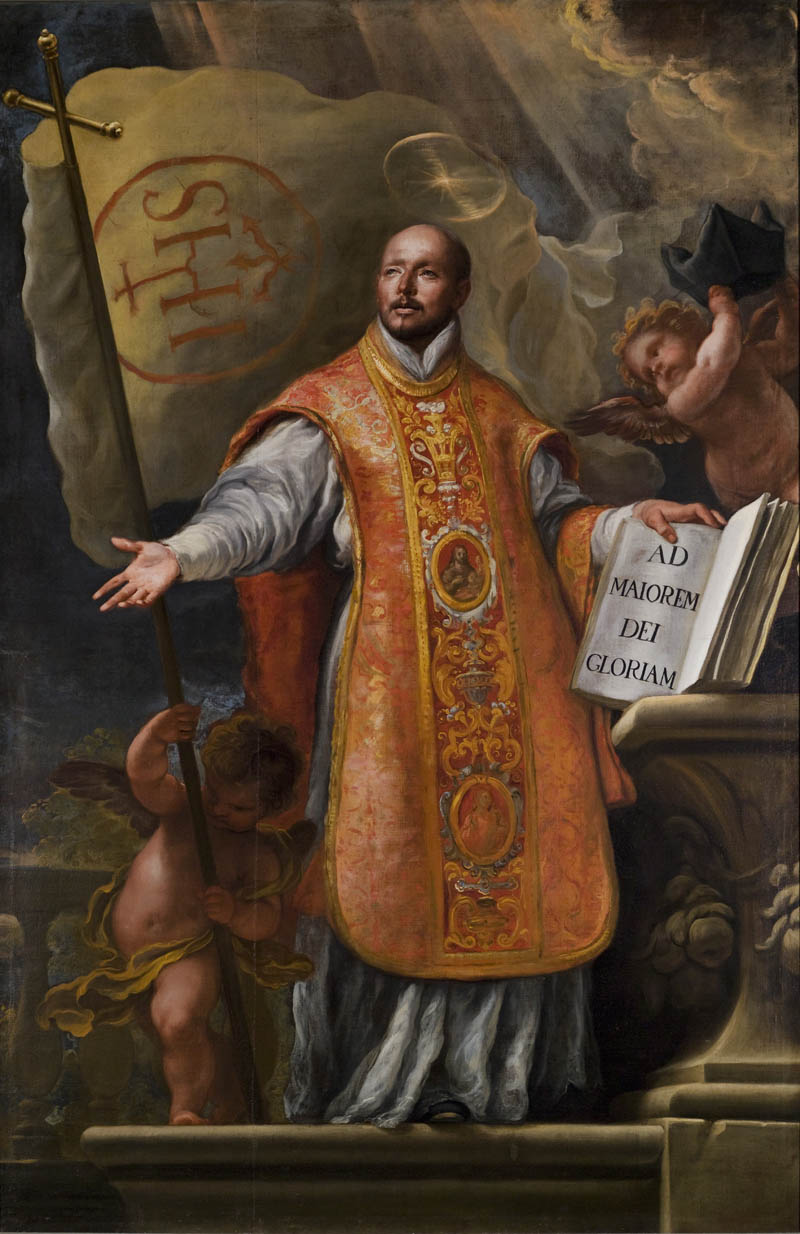
            Today I thank you Lord for your gift of St. Ignatius of Loyola whose feast we now celebrate.  His Spiritual Exercises has tremendously nourished me in experiencing your immense love for me.  This is particularly true even in my meditations concerning my sins.  Like the prophet Jeremiah, I have realized how this mystery of sin can also be a religious experience.  Every time I would meditate on my sins as recommended by St. Ignatius, I come to understand them more as turning away from you my Lord and Master, leading me into great sorrow of failing to love you.

             “Let my eyes stream with tears day and night, without rest over the great destruction which overwhelms the virgin daughter of my people, over her incurable wound.  If I walk out into the field, look! those slain by the sword, if I enter the city, look! those consumed by hunger.  Even the prophet and the priest forage in a land they know not.  Have you cast Judah off completely?  Is Zion loathsome to you?  Why have you struck us a blow that cannot be healed?  We wait for peace, to no avail; for a time of healing, but terror comes instead.  We recognize, O Lord, our wickedness, the guilt of our fathers; that we have sinned against you.” (Jer.14:17-20)

             But the greatest wonder of all is that even if I am deeply in sins like in the parable of the weeds among the wheat, you continue to unconditionally love me, Father, always giving me the chance to experience your love and mercy in Christ Jesus your Son so that I, in turn, may love and serve you, again, and again.  Amen.

             St. Ignatius of Loyola, pray for us!Fr. Nicanor F. Lalog II,Parokya ng San Juan Apostol at Ebanghelista, Gov. F. Halili Ave., Bagbaguin, Sta. Maria,Bulacan 3022 .
*Photo from Google.