Our living family tree

Lord My Chef Simbang Gabi Recipe for the Soul by Fr. Nicanor F. Lalog II
Wednesday, Simbang Gabi-II, 17 December 2025
Genesis 49:2, 8-10 <*[[[[>< + ><]]]]*> Matthew 1:1-17
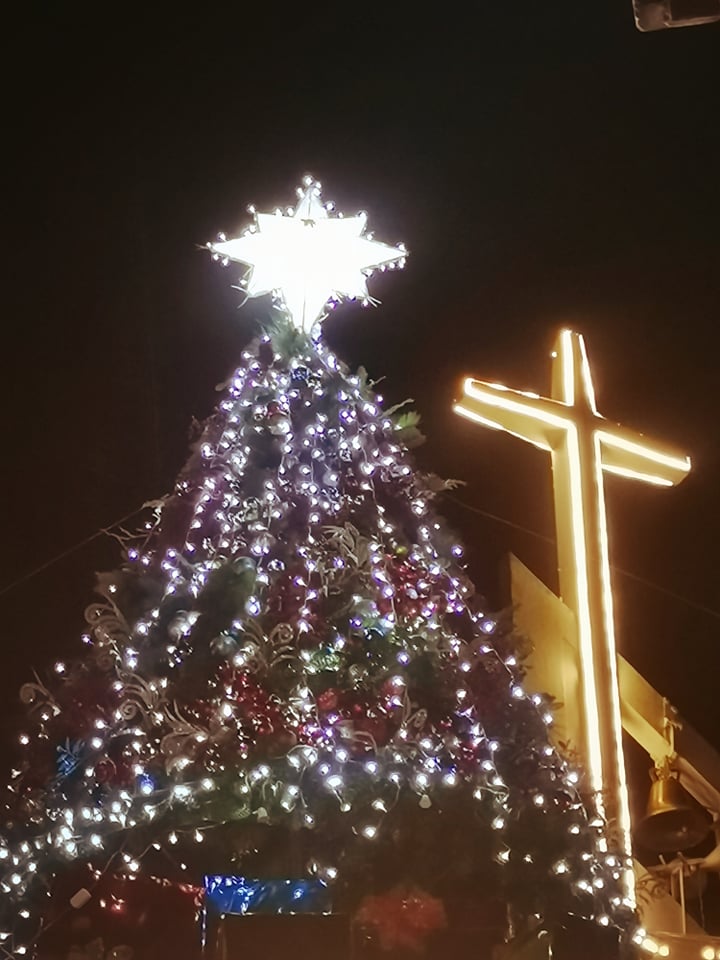
Photo by author, December 2023.

Next to the Belen and the Parol, the Christmas Tree stands out as the third leading sign of Christmas especially in our country. Though it was first introduced by the German Lutherans in the 16th century, we Catholics have adopted it too with the Vatican having a giant Christmas Tree every year lighted at St. Peter’s Square in Rome.

The Christmas Tree invites us to remember Jesus who was born in Bethlehem is the true Tree of Life, as it “depicted the tree of paradise and the Christmas light or candle which symbolized Christ, the Light of the world” (Book of Blessings, page 443). Remember also that since ancient time especially among the Anglo-Saxons, trees symbolize our relationships as family and kin that is why we have “family trees” that trace our roots.

And that is what a genealogy is all about.

Photo by author, December 2022.

Matthew along with John opened his gospel account with the origin of Jesus; both felt the need to present right away to their specific audience where the Christ came from. John traced it to eternity as the Word (Logos) while Matthew whose followers were mostly Jewish converts to Christianity presented Jesus as the fulfillment of God’s promise in the Old Testament through their two main personalities, Abraham and David.

The book of the genealogy of Jesus Christ, the son of David, the son of Abraham. Abraham became the father of Isaac, Isaac the father of Jacob, Jacob the father of Judah and his brothers. Judah became the father of Perez and Zerah, whose mother was Tamar (Matthew 1:1-3).

Every year we hear this gospel proclaimed on December 17 which is also the start of the second and final phase of Advent when all our readings and prayers direct our attention to the first Christmas that happened more than 2000 years ago.

For Matthew, it all started with God’s promises to Abraham, the father of all nations and to David, the greatest King of Israel whose royal lineage made the Christ a King, in fact the King of Kings. What is most interesting in Matthew’s genealogy is the fact that with each of those names that sound so funny for many of us today was a true person just like us – so human and so imperfect, even sinful except the Blessed Virgin Mary. Matthew did not sanitize nor photoshop the personalities in the Lord’s genealogy because that is the Good News: it is good to be human that is why the Son of God became one of us in everything as a human being except sin.

This year, I wish to reflect on just one person, Judah.

Jacob called his sons and said to them: “Assemble and listen, sons of Jacob, listen to Israel, your father. You, Judah, shall your brothers praise – your hand on the neck of your enemies; the sons of your father shall bow down to you. Judah, like a lion’s whelp, you have grown up on prey, my son… The scepter shall never depart from Judah, or the maqce from between his legs, while tribute is brought to him, and he receives the people’s homage” (Genesis 49:2, 8-9, 10).

This is the second Christmas me and my siblings are celebrating without both our parents. Our mother died May 2024. Though it was so heavy and difficult for us, everything moved so fast that year. So unlike this 2025.

Photo by author, December 2020.

We never get used to deaths in the family; the pain becomes most painful as we move through the years especially during Christmas as if our Belen would never be complete without a St. Joseph and a Mama Mary. Of course, Christmas and life itself is all about Jesus Christ but it is a different reality and story celebrating this most joyful season without parents. Especially for a priest like me. (No drama intended.)

That is why I felt so drawn in my prayers to Judah in Matthew’s genealogy as one of the great, great, great grandfather of Jesus Christ.

In the first reading, we have Jacob nearing death while they were all in Egypt courtesy of his eleventh son Joseph who rose to power after being sold there by his brothers. Though my mother never gave such speeches when she was nearing death, all her life she used to tell us similar things when we were growing up, of how after she and dad would be gone that I must look after my two sisters and only brother, that we would not quarrel and be loving one another always. I think such habilin as we say in Filipino is common among us Pinoys along with the usual passing on or entrusting of family and properties to the eldet, either the kuya or ate.

But that’s not the case in our first reading because Judah was not the eldest of Jacob’s children with her first wife Leah. Judah was their fourth son with three elder brothers – Reuben, Simeon and Levi with a sister named Dinah. Judah also had six half-brothers from their father’s concubines or later wives: Dan, Napthali, Gad, Asher, Joseph, and Benjamin.

Rembrandt’s 1660 painting of “Judah and Tamar” via en.wikimedia.org

Why was Judah the one anointed by Jacob to lead his family and not the elder sons as it is the norm among Jewish and even Filipino families?

This is where the story gets most interesting: Judah’s Kuya Reuben fell from grace because he had sex with their father’s concubine Bilha whose sons were Dan and Napthali while his Diko Simeon and Sangko Levi were disqualified from leading the family after their bloody revenge for the rape of their sister Dinah.

However, that does not mean Judah was clean and honorable at all!

Matthew told us in his genealogy of Jesus that Judah’s sons Perez and Zerah (twins) were born through Tamar who was actually the wife of Judah’s eldest son Er who died without having any son. As per Jewish tradition, Judah’s second son Onan married Tamar but refused to have a son with her that he “spilled his seed” to the ground – that is, he masturbated! It angered God that he took Onan (that is why masturbation is sinful and also known as “onanism” from Onan).

After losing his two sons because of Tamar, Judah refused to give his third and youngest son Shelah to marry her. So, Tamar devised the plan of pretending a prostitute, luring Judah into bed and have her pregnant with the twins Perez and Zerah. Read Genesis 38 for the full story!

Of Jacob’s sons, Joseph was the most eligible to lead and continue Jacob’s family lineage and not Judah had no credentials at all to speak of as a great man leading his brothers, eventually becoming the father of the Jewish nation from whose name came the word “Judaism”.

“Patriarch Judah”, a Russian Orthodox painting in 1654 from en.wikipedia.org.

Remember too that Judah was totally silent and timid unlike Reuben when his elder brothers planned of killing Joseph because of jealousy; it was him, however, who thought of selling Joseph into slavery to Egypt to make some money.

Judah’s only saving grace came after more than twenty years when Joseph was already a powerful man in Egypt demanded to have Jacob’s youngest son Benjamin as his slave in exchange for them to purchase foodstuff during the famine (Gen. 42). Judah pleaded for Benjamin’s life that Joseph finally revealed himself as their lost brother after he could no longer contain his tears and joy in being reunited with his brothers anew.

Despite all these shady past of Judah, God chose him to continue the family lineage of his father Jacob from whom the Messiah, Jesus came.

Like Judah, we are not the perfect son or daughter, brother or sister in the family.

Like Judah, we are not most qualified for being the favored one or anointed one in the family or in the organization. There is always somebody better than us.

But God’s works in mysterious ways, in ways so different from our own ways. As the saying goes, God does not call the qualified but qualifies his calls. Likewise, God writes straight in crooked lines.

The Simbang Gabi invites us not only to look forward to the birth of the Messiah; in these nine days of prayers and reflections, we also look back to our past to face and embrace, admit and own those shades of darkness in our lives.

Matthew’s genealogy reminds us today that this family tree of faith in Jesus extends down the generations and includes us today. Feel and experience, most of all, celebrate that joy of belonging to God’s living family tree where every branch, every member is loved and cared for. God believes in us that he entrusted to us his Son Jesus Christ. That’s Christmas – God becoming human, infant and weak like us, entrusting himself to our care and love and protection.

This Simbang Gabi, let us remember our family members and other persons who made us feel belonging in this living family tree of Jesus. Let us also pray for those lost family members and friends that Jesus wants us to draw near to his living family tree with our friendship and warmth, forgiveness and acceptance. As you light your Christmas tree tonight, do not forget to share the light and warmth of Jesus Christ, our Tree of Life. Amen. Have a blessed Wednesday!

From Facebook, December 2023.

Advent is God’s tenderness & sweetness

The Lord Is My Chef Sunday Recipe for the Soul by Fr. Nicanor F. Lalog II
Fourth Sunday in Advent-C, Simbang Gabi-7, 22 December 2024
Micah 5:1-4 ><}}}}*> Hebrews 10:5-10 ><}}}}*> Luke 1:39-45
Photo by author, Baguio City, March 2020.

Christmas is a story of love, about the meeting of lovers with God as the Great Lover who gave us His only Son because of His immense love for us. But, this love is not the kind of love conveyed by the cheesy Christmas tunes “Pasko na Sinta Ko” and “Last Christmas”.

The word “lovers” may be too serious as a term for us to relate this with today’s gospel of the Visitation of Mary to her cousin Elizabeth though both women were so in love with God who clearly loved them so much with children in their womb bound to change the course of human history forever. They were also filled with love for each other as expression of their love for God. And when there is love, there is always tenderness and sweetness that all happen in the context of a visitation that we must first clarify.

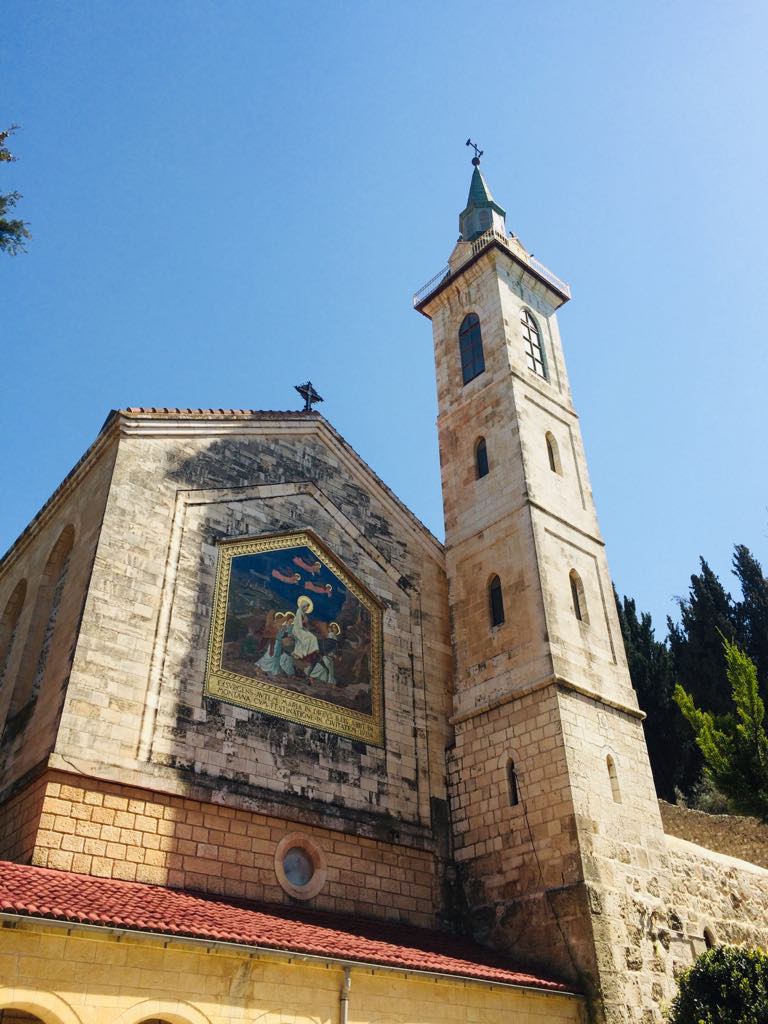
Photo by author, Church of Visitation, Israel, May 2017.

Visit and visitation may seem to be one and the same as both share the Latin root vidi, videre which is the verb “to see” as in video and visual. But, a visit is more casual and informal without intimacy because it is just “a passing by” or merely to see. It is more concerned with the place or the location and site and not the person to be visited. We say it clearly in Filipino as in “napadaan lang” when it just so happened you were passing by a place and even without any intentions, you tried seeing someone there. 

On the other hand, visitation is more commonly used in church language like when a bishop or priests come to see the parishioners in remote places; hence, a chapel is always called a visita where priests “visit” to celebrate Mass and check on the well-being of people living in areas far from the parish. Aside from being the venue for the celebration of Masses, the visita serves as classroom for catechism classes and other religious even social gatherings in remote barrios. Now as a chaplain in a University with a hospital, I do sick visitations every Sunday after our Mass to anoint and bring communion to our patients.

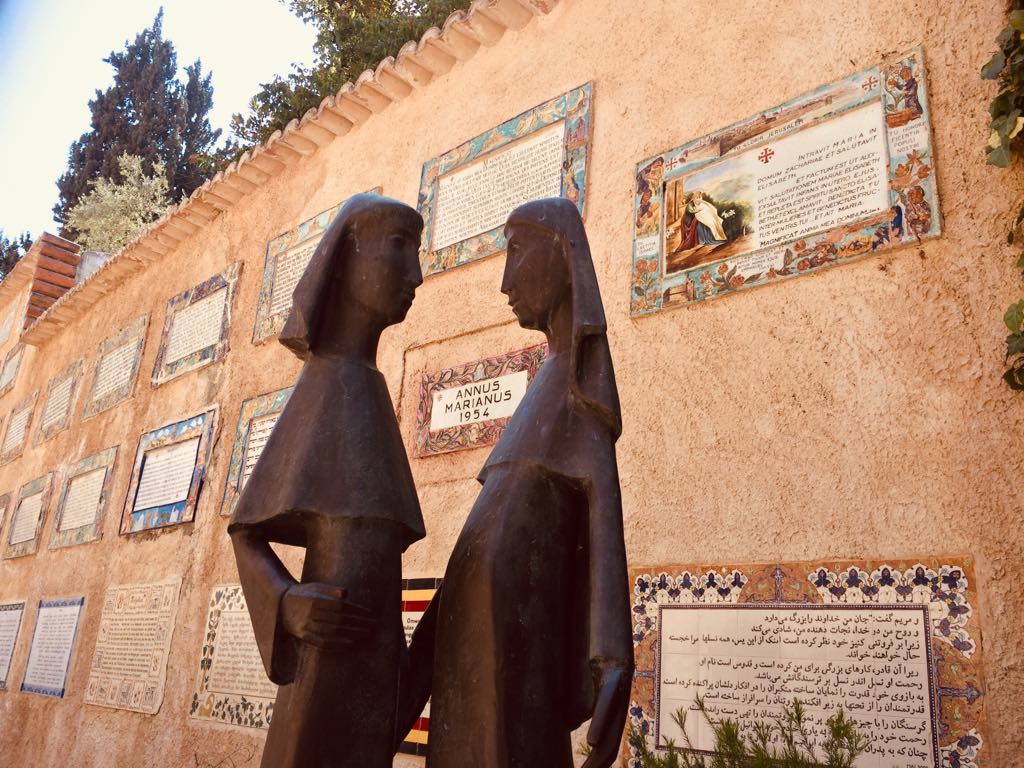
Thus, visitation connotes a deeper sense in meaning because there is an expression care and concern among people, a kind of love shared by the visitator/visitor and the one visited like Mary and Elizabeth. Visitation is more of entering into someone’s life or personhood as reported by Luke on Mary’s visitation to Elizabeth where Mary “entered the house of Zechariah and greeted Elizabeth” (Lk.1:40), implying communion or the sharing of a common experience.  In this case, the two women shared the great experience of being blessed with the presence of God in their wombs! 

Photo by author, bronze statues of Mary and Elizabeth at the patio of the Church of Visitation, Israel, May 2017.

Visitation is a sharing or oneness in the joys and pains of those dear to us.  The word becomes more meaningful when we try to examine its Filipino equivalent –“pagdalaw” from the root word “dala” that can be something you bring or a verb to bring. 

When we come for a visitation, we dala or bring something like food or any gift. But most of all we bring our very selves like a gift of presence wherein we share our total selves with our time and talents, joys and sadness, and everything to those being visited that Mary did exactly in her visitation of Elizabeth where she brought with her the Lord Jesus Christ in her womb.

This fourth Sunday of Advent, we are invited to become like Mary in the visitation of others to bring Christmas and Jesus Himself to others by allowing our very body to be the “bringer” or taga-dala of Christ, the highest good we can bring as pasalubong in every visitation we make. Here again is another beautiful Filipino word, pasalubong that is literally the gift you bring when you visit somebody. It has a verb equivalent that is salubong or meeting/encounter. To salubong or meet another person, one has to leave one’s place, one has to leave behind one’s biases and mistrust to be empty to meet the other person.

How lovely and sweet if we can leave our negativities behind this Advent and Christmas so we can dala (bring) Jesus to family and friends and strangers to therefore salubong (meet) to experience God’s tenderness and sweetness in Jesus Christ.

Photo by author, Fourth Sunday of Advent 2022, Chapel of Basic Education, Our Lady of Fatima University, Valenzuela City.

Tenderness and sweetness in Filipino are often translated in just one word which is “malambing” from “lambing” that has no direct English translation except that it connotes a loving affection; however, both terms are more than just affections but stirrings from the heart that move us into action. 

Tenderness is very much like gentleness; the former is more focused while the latter is very general attitude. Tenderness is more than being soft and gentle but an awareness of the other person’s weaknesses, needs and vulnerabilities. A tender person is one who tries not to add more insult to one’s injuries or rub salt onto one’s wounds so to speak. A tender person is one who tries to soothe and calm a hurting person, trying to heal his/her wounds like God often portrayed in many instances in the bible in lovingly dealing with sinners filled with mercy. 

Like God, a person filled with tenderness is one who comes to comfort and heal the sick and those taking on a lot of beatings in life. When Jesus Christ came, He also personified this tenderness of God like when He was moved with pity and compassion for the sick, the widows, the women and the children and the voiceless in the society. Tenderness is coming to heal the wounds of those wounded and hurt, trying to “lullaby” the restless and sleepless. Mary visited Elizabeth because she also knew the many wounds of her cousin who for a long time bore no child, living in “disgrace before others” as she had claimed (Lk.1:25).

Photo from The Valenzuela Times, 02 July 2024.

Sweetness always goes with tenderness. It is the essence of God who is love. Anyone who loves is always sweet, something that comes naturally from within, bringing out good vibes.  It is never artificial like Splenda, always flowing freely and naturally that leaves a good taste and feeling to anyone. In the Hail Holy Queen, Mary is portrayed as “O clement, O loving, O sweet Virgin Mary” to show her sweetness as a mother. There are no pretensions and pompousness in being sweet, never needs much effort to exert in showing it for it comes out naturally and instantly.

Tenderness and sweetness are the most God-like qualities we all have but have buried deep into our innermost selves, refusing them to come out because of our refusal to love for fears of getting hurt and left behind or, even lost. When Mary heard Elizabeth’s condition, she simply followed her human and motherly instincts that are in fact so Godly – she went in haste to visit her. Tenderness and sweetness are the twin gifts of Christmas to humanity when God almighty became little and vulnerable like us so we can be great and powerful like Him in being able to love. 

Photo by author, Archdiocesan Shrine of Nuestra Señora De Guia, Ermita, Manila, 28 November 2024.

It is the final Sunday of Advent. In a few days it will be Christmas day and we still have enough time to empty our hearts of sins and bitterness to be filled with God’s love, sweetness and tenderness in Christ.

Let me leave you with my favorite quote from the novel “The Plague” by Albert Camus, “A loveless world is a dead world, and always there comes an hour when one is weary of prisons, of one’s work, and of devotion to duty, and all one craves for is a loved face, the warmth and wonder of a loving heart.” 

Let that love in you come out this Christmas and hereafter; simply be like the child Jesus and be surprised with His tremendous power to transform the world.  Amen. Have a blessed, sweet and tender Christ-filled week ahead!

Praying to see Christ, the true light

The Lord Is My Chef Daily Recipe for the Soul by Fr. Nicanor F. Lalog II
Friday, Feast of the Presentation of the Lord, 02 February 2024
Malachi 3:1-4  ><}}}}*> + ><}}}}*> + ><}}}}*>  Luke 2:22-40
Presentation in the Temple painting by Fra Angelico from fineartamerica.com.
On this most joyous feast
of the Lord's Presentation in
the Temple, we pray, dear Father
for the same grace you gave
your servant Simeon to see each day
the coming of your Son Jesus Christ,
the true light of the world,
the only light to guide our lives.

Grant us the grace, O God,
to persevere in our prayer life
like Simeon and Anna who spent
much of their days at the temple,
praying and fasting that they became
attuned with your Holy Spirit.
How amazing that despite
the many couples coming to the temple
on that day, Simeon and Anna
recognized Jesus in the arms of Mary
with Joseph; many times in life,
we are so distracted with so many
other people we look up to,
we believe in so much
thinking them to be the light who will
guide us in this life;
there are times we look at new ideas
and novel thoughts and ways so bright
that we easily follow them as light
to dispel the many darkness in our life;
and there are times, O God, we simply lose
hope looking for your light,
waiting for your Son Jesus
that we leave your side to
make our own light
because of many distractions
like failures and disappointments
within us.

Let us be focused in Jesus
only like Simeon and Anna for he
surely comes each day amid the hustle
and bustle of life's daily grinds;
do not let us be discouraged
by the many difficulties and
trials that come our way daily
for Jesus comes when we least
expect him, in instances we never
expect like Mary and Joseph
despite having the Savior with them
still complied with the dictates of
the Law; most of all, Jesus came at
the old age of Simeon and Anna
when it was more easier to just
give up from waiting.

May we be able to pray every night
despite the darkness around us,
Simeon's Canticle:

“Now, Master, you may let your servant go in peace, according to your word, for my eyes have seen your salvation, which you have prepared in sight of all the peoples, a light for revelation to the Gentiles, and glory for your people Israel.”

Luke 2:29-32
Lord Jesus,
let us see you
so that we can make others
see you too in us
and through us.
Amen.
Photo by author, surise at Anvaya Cove, Morong, Bataan, 2023.

God’s Kingdom is for children

The Lord Is My Chef Sunday Recipe for the Soul by Fr. Nicanor F. Lalog II
Feast of the Sto. Niño, Cycle B, 21 January 2024
Isaiah 9:1-6 ><}}}*> Ephesians 1:3-6, 15-18 ><}}}*> Mark 10:13-16
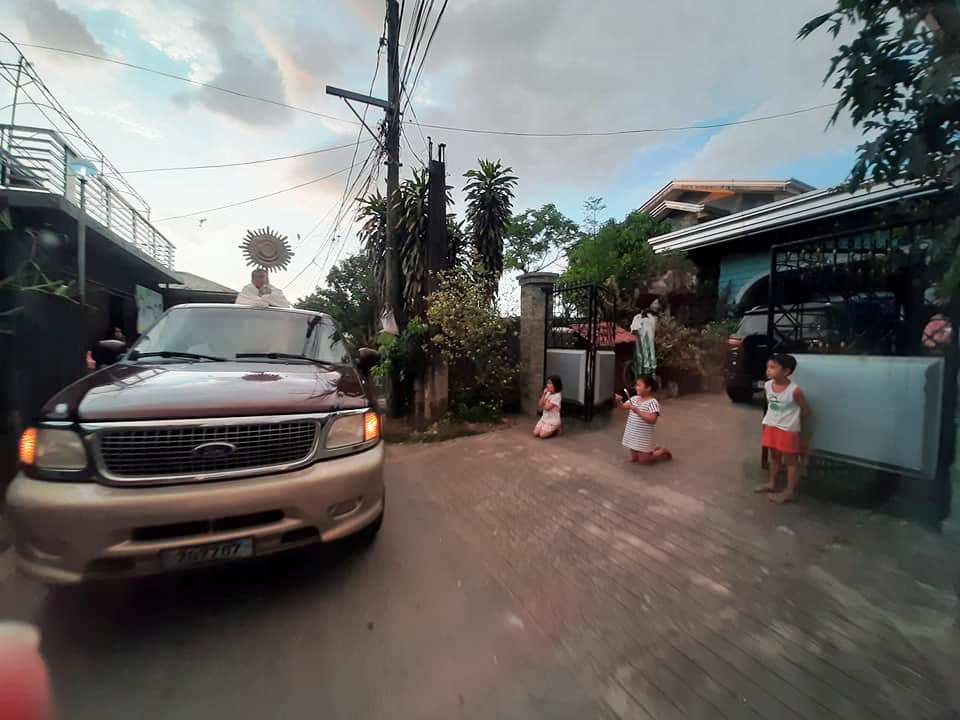
Photo by Ms. Anne Ramos, 22 March 2020 in Bagbaguin, Sta. Maria,Bulacan during our “libot” of the Blessed Sacrament at the start of the COVID-19 lockdown.

Our Lord Jesus Christ’s attitude to children is perfectly clear in our gospel this Sunday, “Let the children come to me; do not prevent them, for the kingdom of God belongs to such as these. Amen, I say to you, whoever does not accept the kingdom of God like a child will not enter it” (Mk 10:15).

Being like a child is actually the main teaching of Jesus Christ who came to us precisely as one. Right at his infancy like most babies these days, Jesus faced a lot of great risks of being harmed or even getting killed.

See how Jesus insisted in all his teachings on this need to become like a child, to go back to one’s beginnings in order to get into God’s kingdom which is actually him, his very person. Keep in mind that the kingdom of God is not a territorial domain but the very person of Jesus Christ himself. It is from this fact we realize that being a child as taught by Jesus is a mystery that can never be explained nor solved in our minds and mental faculties. This we find in that occasion when Nicodemus, a Pharisee, came to Jesus hiding in the darkness of the night to discuss the kingdom of God. When Jesus told him of the need to be born from above (or, be born again in earlier translations) which is to become like a child, he thought it to be in the literal manner.

Jesus chided Nicodemus by saying, “You are the teacher of Israel and you do not understand this?” (Jn. 3:9-10). It was not sarcasm nor an insult by Jesus but a clarification to everyone including us today that being a child to enter the kingdom of God is a mystery we have to embrace and experience and feel in the heart not deduced in the mind.

And this is exactly what the Feast of the Sto. Niño is all about that we celebrate every third Sunday in January.

The Vatican has given us this special celebration as an extension of the Christmas season in recognition of the great role played by the image of Sto. Niño Magellan gifted Queen Juana of Cebu in 1521.

After leaving our shores after Magellan was killed in Mactan, the Spaniards returned in 1565 under Miguel Lopez de Legazpi to claim our islands for the King of Spain. Upon their arrival in Cebu, they found the Sto. Niño enshrined in a house of worship prominently displayed as the main God of the natives along with their other idols and gods. Historians say the people of Cebu during those years between 1521 to 1565 have found the Sto. Niño as the most powerful and effective in granting their prayers for children (fertility), rains and bountiful harvests that rightly it was the Sto. Niño who actually conquered the Philippines that we have become the only Christian nation in this part of the world. In those 44 years after Magellan and his men left the Philippines, the Sto. Niño had remained and stayed with the natives keeping them safe and secured all those years until the Spaniards returned to be colonized through Legazpi.

What a beautiful imagery of the Sto. Niño staying behind with our forefathers conquering them not with swords nor force but with love and mercy, and youthfulness of the Child Jesus! 

Photo from https://santoninodecebubasilica.org/chronicles/viva-pit-senor-viva-senor-santo-nino/

Recall how last Sunday we have reflected the words stay and remain when Andrew asked Jesus where he was staying: to stay, to dwell mean more than its spatial nature as a place or location but also in a deeper sense, a communion. It is in dwelling in Jesus who is the kingdom of God that we belong, we become a part of that kingdom.

When Jesus spoke of “being born from above” to Nicodemus, he was not only referring to the Sacrament of Baptism but to the very fact how he as the Christ from the very start has always dwelled and remained in the Father. 

Three days after being found in the temple in Jerusalem when Jesus was 12 years old, he told Mary his Mother, “Why were you looking for me? Did you not know that I must be in my Father’s house?”(Lk.2:49). What a beautiful expression of that union in “being in my Father’s house” to show us this mystery of Jesus being like a child, the Son of God who has remained the Father’s beloved One into his adulthood because he had always been in union with the Father. Jesus is inseparable from the Father because he himself takes abode and dwelling in God.

“The Finding of the Savior at the Temple” painting by William Holman Hunt (1860) from en.wikipedia.org.

When Jesus was approaching his Passion and Death, he repeatedly told everyone how everything he had said and done were not his but his Father’s to indicate his communion and union in him. Ultimately there on the Cross, his final words expressed the same truth that he is the Son of God obedient unto death especially when he called out, “Father, into your hands I commend my spirit” (Lk.23:46).

Therefore, to accept and welcome a child in Jesus’ name is not just an act of charity nor of a simple finding of Jesus among children. It is ultimately being one, of remaining in the Father because Jesus also said “whoever welcomes such a child in my name, welcomes me” (Mt 18:5).

Photo by author, 2022.

That is why the kingdom of God is for those who are like children always one with God like Jesus.

To be a child is to remain in God, to always love expressed in kindness and care for others especially the weak, being forgiving and merciful and compassionate with those lost like the Father.

To be like a child is being a light who brightens the life of others just like a babies whose very sight and smiles can ease our pains and sorrows, giving us the much needed boost to forge on in life. We are filled with hope whenever we encounter or see infants because they remind us too of God dwelling in them, of a God who assures and ensures us with s bright future.

This the reason we have in our first reading that part of the Book of Isaiah we heard proclaimed on Christmas day to remind us that Jesus is the light born on the darkest night of the year to illumine our lives and the world darkened by sins and evil like wars, poverty, and diseases. We see light in being like a child because that is when we are one in the Father too in being like a child.

Let me cite again that beautiful movie Firefly where the main character, the child named Tonton loved his mother so much that he totally believed her stories that sent him into a journey to search for the magical island filled with fireflies. Tonton dwelled in his mother’s love that he eventually found the magical island with the many fireflies that in the process also brought light into the darkness within the three adults he befriended in the bus going to Bicol.

Many times in my ministry as chaplain in our hospital, I have seen the great powers within every child – of how a sick baby, a sick child could send his/her parents to summon all their faith in God to heal them, to save them. 

Listen to the stories of those who join the Traslacion every year in Quiapo: most of them had their panata borne out of answered prayers for their sick children. Every parent knows it so well how they have moved mountains and did the most extraordinary for the sake of their infants and children.

That is the mystery of the kingdom of God belonging to children when God gives us every spiritual blessing we need to achieve the impossible (second reading) to become like children by remaining in God as the only power and salvation in this life.

Be with a child, stay with a child and you shall find God’s kingdom.

Be like a child and you shall experience the kingdom of God! Amen. Have a blessed week ahead!

Photo by Mr. Jim Marpa, 2018.