Praying And Dying with Jesus

The Lord Is My Chef Good Friday Recipe, 19 April 2019
Isaiah 52:13-53:12//Hebrews 4:14-16;5:7-9//John 18:1-19:42
Crucifix at the Fatima Square in Portugal. Photo by Arch. Philip Santiago, October 2018.

The Evangelists tell us that Jesus died on the Cross on a Friday at about 3:00 PM. And they tell us too that our Lord died praying, exactly what most of the Seven Last Words have expressed.  But from the gospel we have heard this afternoon written by the beloved disciple John, we discover something very beautiful: Jesus was very calm and peaceful in his prayer unto death.

After this, aware that everything was now finished, in order that the Scripture might be fulfilled, Jesus said, “I thirst.”  There was a vessel filled with common wine.  So they put a sponge soaked in wine on a sprig of hyssop and put it up to his mouth.  When Jesus had taken the wine, he said, “It is finished.”  And bowing his head, he handed over the spirit.

John 19:28-30

When we are deep in suffering, in severe pain like Jesus on the cross, what do we usually pray? 

Most often, we pray that the terrible ordeal we are going through would finally end or be finished.  And sometimes, due to desperation, we even pray for death, of how we wish God would finally end our life to be free from all the problems and pains we are going through. And we feel death is the solution.

One of the things I have realized about death came from the 1990’s movie “House of Spirits” when the mother played by Meryl Streep told her daughter played by Winona Ryder that “you do not pray for death because death surely comes.” I always tell that to patients I visit who are in deep pain and suffering. I know it is easier than done. But when we reflect on the Crucifixion of Jesus Christ, we discover how he had made death an offering, a gift of self in love. Clearly we find here that his darkest hour is also his finest hour because of love.

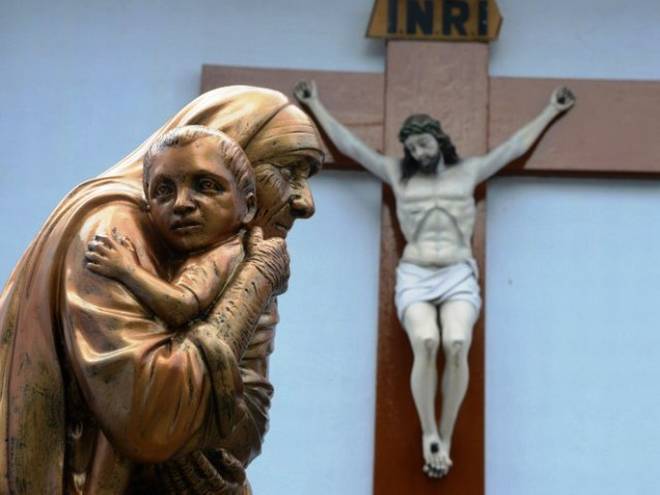
Chapel of the Holy Family, Sacred Heart Novitiate, Novaliches. Photo by author, 2016.

In the original Greek text of St. John, the word used to express Jesus Christ’s final prayer “It is finished” is “tetelestai” from the root word “telos” meaning the final end and direction.  It is not just an ending but a direction too. At the start of this year’s Lenten season, we have reflected that life is more about direction than destination. Direction leads to growth and maturity because it is about persons. Destination is just about place and location. 

From the very start, Jesus was clear with His mission, of how it would be accomplished.  He has always been sure of himself, of who he is.  Notice how St. John repeated many times in his account of the Last Supper how Jesus was “fully aware” of everything that was going to happen: he was so composed and serene that he even gave bread to his betrayer Judas Iscariot during their supper.  Last night we heard how Jesus knew everything was coming to end that he washed the feet of his disciples.

When his “hour” had come, Jesus was “fully aware of everything” that he was never left to the whims and powers of his enemies when he went through his Passion, calmly and courageously facing his death on the Cross. He always had the upper hand that he was able to pray “It is finished” because he was so sure of his Resurrection on Easter. In praying “It is finished,” Jesus consecrated not only himself but also all humanity to the Father so that we are able to bear and face death squarely like him.   
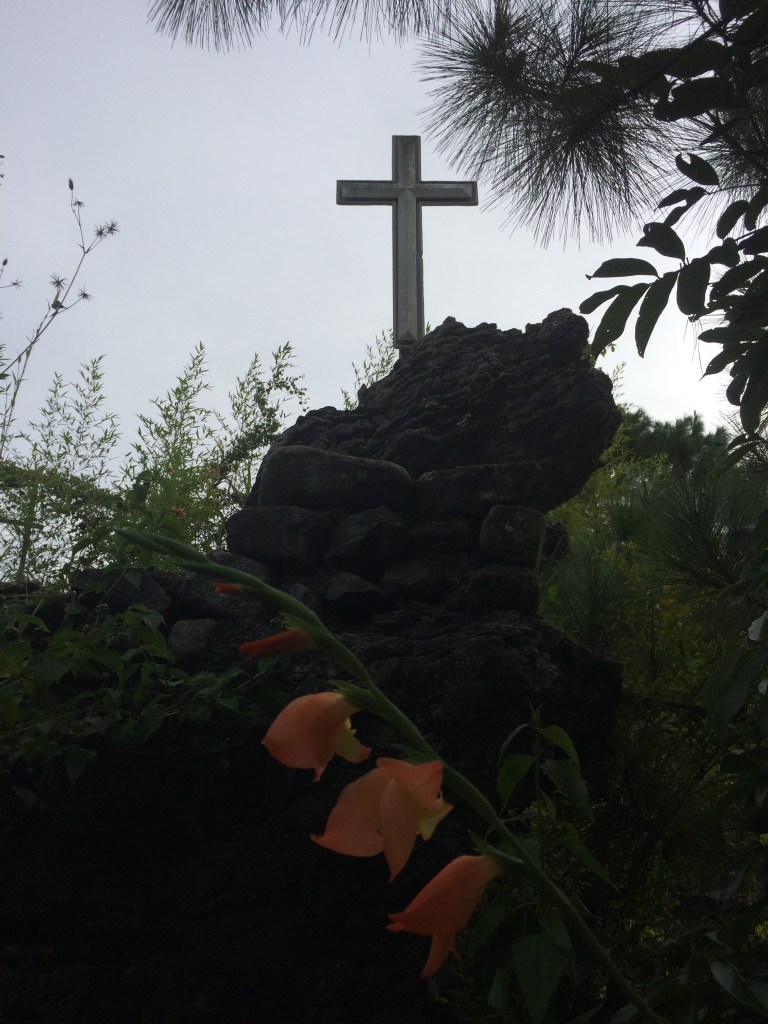
Mt. St. Paul Retreat House, Baguio. Photo by author, June 2017.

In the Mass after the consecration of the bread and wine into Christ’s Body and Blood, we proclaim “Christ has died; Christ is risen; Christ will come again.” We call it as “the mystery of our faith” because when we say “Christ has died,” we admit that truly, the Son of God went through all kinds of sufferings in life we all go through like betrayal, rejection, loneliness, sickness, hunger, thirst, and yes, even death.  And His sufferings continue as we suffer more in this world marred by evil and sins, making us cry, asking when would these end and be finished. And there lies the mystery of our faith on the Cross that led to Easter: when we look at Jesus Christ on His Cross, we see our own pains and agony as God’s pains and agony too.  Jesus joined us in our anguish and death so that we could experience all the more his immense love for us.  Without Jesus and his Cross, we would never be able to bear or even face the many deaths we go through daily.  May we recognize God’s immense love for us again this afternoon when we venerate the cross and see it as the merging point of human and Divine suffering.  Keep praying with Jesus who has the final say with death at Easter. Amen.

*This is an updated version of my Good Friday reflection last year.

Our life of leaving and loving

The Lord Is My Chef Recipe, Holy Thursday of the Lord’s Passion, 18 April 2019
Exodus 12:1-8, 11-14///1 Corinthians 11:23-26///John 13:1-15
Altar at the Carmelite Monastery in Israel with a unique Crucifix. Photo by Dra. Mai B. Dela Pena, 2011.

Today I am celebrating my 21st year in the priesthood. This is the first time our ordination anniversary falls on a Holy Thursday when we celebrate the institution of the two Sacraments most closely linked with us priests and the Church, Holy Eucharist and Holy Orders.

When we were ordained by Archbishop Rolando J. Tria-Tirona 21 years ago at the Malolos Cathedral, there were so many things going on in my mind and in my heart. But there was one thing that had remained very clear with me since that day: I am being ordained priest at the age of 33, the very same age Jesus was crucified on the Cross. From then on until now, I have kept in my heart that priesthood is suffering and dying on the Cross in Jesus and with Jesus centered on the Holy Sacrifice of the Mass.

Before the feast of Passover, Jesus knew that his hour had come to pass from this world to the Father. He loved his own in the world and he loved them to the end.

John 13:1

Of the four evangelists, it is only St. John who repeatedly mentions the expression “hour of Jesus” in his gospel account. For him, the very life of Jesus is a journey and preparation to his “hour” which is his crucifixion and death. The hour of Jesus is his passion. The word passion is from the Latin verb patior that means to undergo, to pass through, evoking some form of suffering and pain.

The hour of Jesus started in his Last Supper. It was a very long hour so to speak. And very dark. However, it was also the finest hour of Jesus when he poured out his immense love and mercy for us. Beginning at his supper when he washed the feet of the Apostles to his agony in the garden when he perspired with blood to his arrest reaching it darkest point in his crucifixion and death, the darkest hour of Jesus is also his finest hour when he was able to bear all sufferings and insults, including death because of love. Jesus showed us that in fact, love is the very process of passing over, of going beyond our means and capacity in order to transform and become better persons. That is why our darkest hour is also our finest hour when we are transformed in Jesus because precisely that is when we truly love. It is also for this reason that the Eucharist is called an agape which is the Greek word for the highest form of love that does not expect anything in return. That is the love of Jesus Christ. And supposed to be the love of us priests.

Jesus knew that his hour had come to pass from this world to the father. He loved his own in the world and he loved them to the end.

Jesus washes feet of Apostles. From Google.

Msgr. Epitacio Castro, one of our retired priests, has a favorite expression with his being a priest: “pinag-uubra lang ako ng Diyos”. True. God is just making do of us as priests because nobody is worthy of being one. We are the worst men around! We are also sinners like you, even more sinful than most of you. In the Eucharist, we priests experience that great love of Jesus Christ when he tries to make us fit as his priests, transforming us into men like him. It happens every time we are one with him in his hour of suffering and death. Priesthood is a life of leaving and loving, of passing over and transformation. The day we were ordained, our Last Supper began, our passion began because that is also our hour in Jesus Christ. Every time we celebrate the Holy Mass, we priests are reminded that our hour had come to pass, challenging us to love more. Pray for priests who no longer love the Eucharist; something is terribly wrong with them.

I am a sinner. But it is a tremendous grace of God through the Eucharist that I continue to leave and pass over, from sin to holiness and grace, from darkness to light, from selfishness to selflessness, from desperation to hope, from grief to joy. And all because of the power of love of God overflowing in the Eucharist. How can I resist to love and to forgive, to let go and move on, to be patient and to persevere when right in the Eucharist I could feel Jesus truly present, entrusting himself to me who is so untidy with sins and weaknesses? How could I not believe in him when Jesus is the first to believe in me despite my many self doubts? Every celebration of the Eucharist is an imitation of Christ when we priests go down to wash and kiss the feet of the people we serve whom we also hurt and hurt us too!

They say the darkest nights are the longest nights. Very true especially for us priests. Be patient with us when we forget so many things, when we change so often in our plans because every time there are celebrations, our hour goes over time too. Bear with us, pray for us when we sometimes become irritable even grouchy because aside from your many problems and burdens we help you carry, we have our own struggles and problems too. That hour of Jesus remains with us even after every Mass when you all go home to your own family while we priests are left alone in our parish thinking about the next celebrations. The hours are long and the nights are so dark and all we have is that flickering light of faith, hope, and love in Jesus in our hearts.

But, though the darkest nights are the longest nights, they also say that only the brave who dare walk the darkness can see the brightness of the stars above. Courage does not mean having no fear but the ability to face our fears. And, oh! We priests have many fears too, including the fears of rejection, of being misunderstood, of being boxed, and most of all, of failing. We are what you call as “warrior is a child” — “They don’t know that I come running home when I fall down. They don’t know who picks me up when no one is around. I drop my sword and cry for just a while, ‘Coz deep inside this armor, The warrior is a child.

In the Eucharist, we priests truly share in the priesthood of Jesus Christ because that is also when we feel transformed in his love, when we pass over with so much pains from the many experiences we have in our very selves and with others. Indeed, without the Eucharist, we are not priests! Every time I raise Christ’s Body and Blood, I pray that Jesus may make me whole in body, mind and heart, that he may wash me of all my sins, doubts and fears. Nobody else in the Mass perhaps, except us priests who truly feel the meaning of praying these words before receiving communion, “Lord I am not worthy that you should enter under my roof, but only say the word and my shall be healed.”

Maybe you have all seen the photos after the fire that razed the Notre Dame Cathedral in Paris this Holy Tuesday. Intact were the altar table with the huge cross beaming with light. What a beautiful reminder to us all, especially us priests, that in this life, our darkest hours are also our finest hours when we are one with Jesus Christ. No fire nor anything can ever destroy us because Jesus had overcome every evil even death for us. Every destruction and darkness are a prelude to the light and new creation of Easter Sunday that begins right here in the hour of the Eucharist of Jesus. Let us remain in Christ in love in passing over, in leaving behind the pains and hurts of the past with much love in our hearts to move on in this life. Amen.

Photo from Yahoo.news.

A prayer on “spy Wednesday”

The Lord Is My Chef Breakfast Recipe, Holy Wednesday, 17 April 2019
Isaiah 50:4-9///Matthew 26:14-25
Photo from Google.

Today O Lord Jesus Christ is “spy Wednesday” for tonight Judas will strike a deal with your enemies to betray you. Tonight is said to be the night of traitors, of betrayers.

O Lord, we hate being called traitors and betrayers, a Judas Iscariot. And yet, too often, it is true whenever we sin, whenever we turn away from you, when we exchange you for things and people we find more valuable than you.

One of the Twelve, who was called Judas Iscariot, went to the chief priests and said, “What are you willing to give me if I hand him over to you?” They paid him thirty pieces of silver, and from that time on he looked for an opportunity to hand him over.

Matthew 26:14-16

Please forgive us Jesus whenever we betray you. Most of all, we pray and seek your forgiveness and healing O Lord from this grave sin of betrayal for we do not only do it to you but to those most dearest to us, our family and friends whom we hurt whenever we hand them over to troubles and miseries, to grief and tears.

Help us Lord Jesus to enter into full communion with you, to be filled with your Holy Spirit so that we think and act like you in total obedience to the Father, giving no space in us for satan to trade you off for anything. Amen.

Who fills you?

The Lord Is My Chef Breakfast Recipe, Holy Tuesday, 16 April 2019
Isaiah 49:1-6///John 13:21-33, 36-38
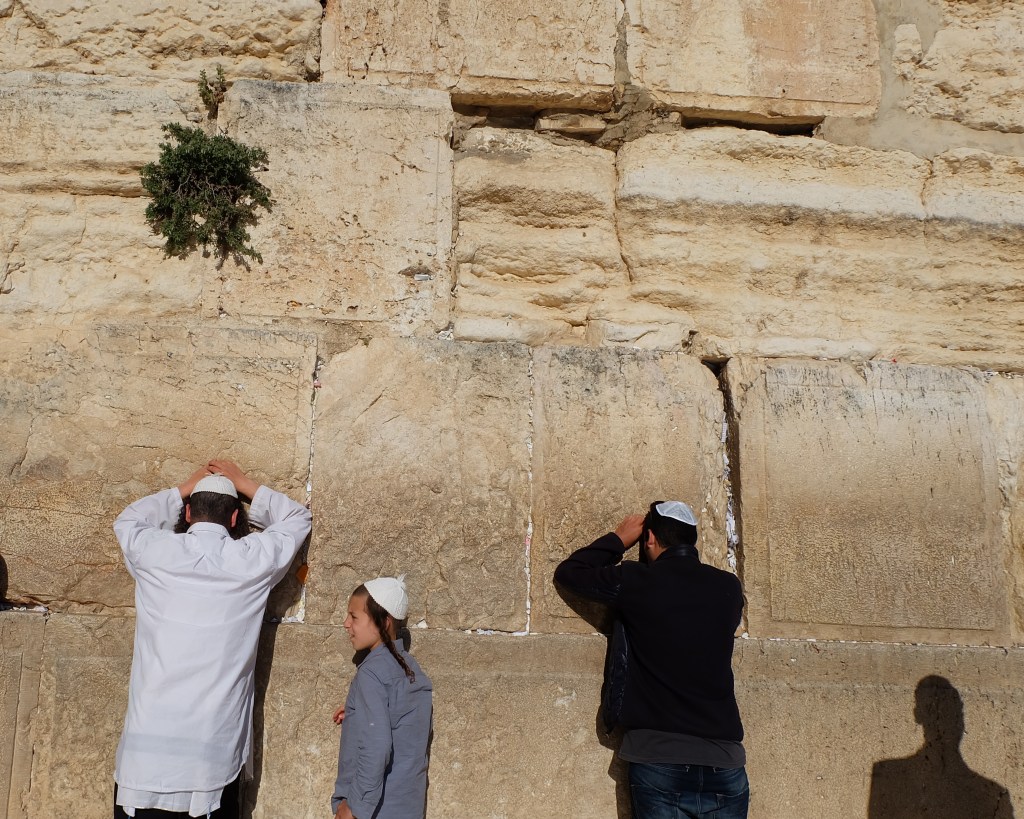
At the Wailing Wall of Jerusalem, April 2017. Photo by author.

As we come closer to your Paschal Triduum O Lord Jesus Christ, I try to probe deeper into myself to examine where are in you in my life? There were so many times I have not been faithful to you. There were so many times I wavered, almost gave up following you because nothing seemed to happen.

Who really fills me, you O Lord or the enemy?

So many times I have wallowed into so many complaints and excuses, always doubting if you are really with me, if you have truly called me. Like Peter, I just say so many things, asking you many questions without really understanding and knowing anything at all especially your very words. Worst, there are times I feel like Judas sharing in your sacred meal and yet betraying you when I sin because I have allowed evil to take over me.

Give me the grace to be like you as the faithful, suffering Servant of God so certain and so trusting of the Divine call and mission:

The Lord called me from birth, from my mother’s womb he gave me my name. He made me a sharp-edged sword and concealed me in the shadow of his arm. He made me a polished arrow, in his quiver he hid me. Though I thought I had toiled in vain, and for nothing, uselessly, spent my strength, yet my reward is with the Lord, my recompense is with my God.

Isaiah 49:1-2, 4

Lord Jesus Christ, reign in my heart, fill me with your humility, justice, and love. Amen.

Ang Krusipihiyo ni Sta. Mother Teresa

Lawiswis ng Salita ni P. Nicanor F. Lalog II, ika-16 ng Abril 2019
Ngayong Semana Santa aking naalala
Aking nabasa isang tunay na istorya
Tungkol kay Santa Mother Teresa
Noong nabubuhay pa siya sa Calcutta.
Minsan daw isang alaga nilang kulang-kulang
Sinidlang bigla ng galit na di maintindihan
Krusipihiyo sa dingding nabalingan ng pansin
Ibinato sa Santa nating taimtim nananalangin.
Walang nakapansin nang ito'y kanyang gawin
At nang ito'y pulutin ng butihing Mother natin
Nakita niyang bali-bali ngunit nakapako pa rin
Si Kristong Panginoon natin.
Larawan mula sa Google.
Kanyang pinagdikit-dikit bali-baling katawan
Na parang nabendahan tulad ng isang sugatan
Saka inutusan ng madreng maalam kanyang mga kasamahan
Kanyang tinuran sa kanila, mahigpit na tagubilin:
Isabit muli sa ating dingding nabaling Krusipihiyo natin
At inyo ring idikit kalapit yaring panalangin,
"Hayaan po ninyo Panginoon na paghilumin
Nitong aking mga kamay nawasak mong katawan."
Larawan ng mosaic sa kripta ng Katedral ng Maynila. Kuha ni Arch. Philip Santiago, Oktubre 2016.
Ito ang aral na lagi nating pakantandaan
Kaya minsan-minsan dapat nating pagnilayan
Paano nasugatan at patuloy nating sinasaktan
Ng ating mga kasalanan yaring Mahal na Katawan.
Sa naturang kuwento ng ating banal  
Kanyang dasal sana'y di lamang natin mausal
Katulad niya'y ating maisabuhay
Paano ating mga kamay makakaramay.
Mula sa Google.
Mga kamay ni Hesus sa krus katulad ay tulay 
Nag-uugnay, nagbibigay-buhay
Sa mga handang abutin Diyos at kapwa natin 
Sa pag-ibig na walang kapalit na hinihiling.
Mula Google.

Breaking the cycle of evil

The Lord Is My Chef Breakfast Recipe, Holy Monday, 15 April 2019
Isaiah 42:1-7///John 12:1-11
Dominican Hills, Baguio City, January 2019 by the author.

This Monday is supposed to be different from all the other Mondays of the year for it is supposed to be holy. It is a step to your Paschal Triduum, Lord Jesus Christ, that begins on Holy Thursday evening leading to the glory of your Easter Sunday.

Being holy, O Lord, is being filled with you, being like you, Isaiah’s “Suffering Servant”:

Here is my servant whom I uphold…upon whom I have put my Spirit; he shall bring forth justice to the nations, not crying out, not shouting, not making his voice heard in the street. A bruised reed he shall not break, and a smoldering wick he shall nto quench, until he establishes justice on the earth.

Isaiah 42:1-4

Yesterday I found a beautiful quotation from the Facebook page of the Franciscans that I strongly feel making it my prayer this Holy Monday. It is easier said than done, Lord, but it is doable with your grace.

From Be Like Francis/FB

Give us the courage and grace Lord Jesus this Holy Monday to break the cycle of evil in our midst, to act not like some of those people of your time who tried to plot not only against you but also against your friend Lazarus whom you have raised from the dead.

It is very difficult, and even crazy but it is your way as the Suffering Servant, our Christ who broke our cycle of hate and violence. Amen.

“Land of the Loving” by David Benoit feat. Diane Reeves (1986)

The Lord Is My Chef Sunday Music, 14 April 2019
Photo by Jim Marpa. Used with permission.

Today we begin the Holy Week.
And here is my piece of good news for you: you do not have to necessarily listen to religious music to reflect on the immense love and mercy of God for us expressed in the Passion, Death, and Resurrection of Jesus Christ.

Exactly twenty years ago today, St. John Paul II asserted in his “Letter to the Artists” that every artistic inspiration is always from the Great Artist himself, God. This is very true in music which always speaks about love.

For our LordMyChef Music on this Palm Sunday of the Lord’s Passion, I offer to you one of my favorite from David Benoit’s 1986 album “This Side Up” called “Land of the Loving” featuring the vocals of the great Diane Reeves. Of course, the song is about romantic love, of how a woman had found a love so true and sublime with a another person, with a man who must be so rare. Raise it to the highest level, it is no one else but Jesus Christ.

Photo from Google.
Deep in your eyes is a promise
Love can be ours if we want it
Starting tonight
Every dream I ever knew
Here in your arms
I’m believin’
Finally my life has
A meaning of its own
Here in the land of the loving
I am home

In today’s gospel, one can find the remarkable – even striking – character of Jesus who, after being crucified, prayed for his enemies, “Father, forgive them for they know not what they do.” No hatred nor revenge. But pure love and friendship. Sometimes, our sins become our religious experience for it is through its darkness that God makes us experience him or find him.

Photo from bing.com.
I was alone in the city
Searchin’ for someone to find me
Cold empty nights and a million strangers’ eyes
Here in your arms I’m beginning
To leave behind all the loneliness I knew
Here in the land of loving there is you.
In this simple room magic is made
Though the world seems unchanged
Leave the lights on I’m a bit afraid
This might be just a sweet dream.
Deep in the night love is growing
Though I had no way of knowing
That when I found you I found ev’rything I need
Here in your love I’ll be staying
Fin’lly my life won’t be living all alone
Here in the land of the loving I am home.

May Jesus find you, fill your heart with more peace and joy this Holy Week so you may rejoice in his Resurrection in Easter. Amen.

Sunset at San Juan, La Union. Photo by the author, January 2018.


Knowing is Intimacy

The Lord Is My Chef Sunday Recipe, Palm Sunday of the Lord’s Passion, Year C, 14 April 2019
Isaiah 50:4-7///Philippians 2:6-11///Luke 22:1-49
Photo from Bing.com.

Today we begin the Holy Week with two celebrations merged into one, Palm Sunday of the Lord’s Passion. The Palm Sunday is a tradition started by the early Christians in Jerusalem in the fourth century while in Rome during the 12th century, the Pope proclaimed the long gospel account of the Lord’s Passion on this Sunday to signal the start of Holy Week. Almost 2000 years later in reforming the liturgy, Vatican II merged these two traditions into one to usher in our holiest days of the year.

Like in the four Sundays of Lent except last week, St. Luke guides us today in reflecting the Lord’s Passion with emphasis on the Cross with its call to conversion. For St. Luke, the cross is the object of discipleship in Christ. Join me in reflecting on the last three words our evangelist had recorded when Jesus was crucified.

First word:

When they came to the place called the Skull, they crucified him and the criminals there, one on his right, the other to his left. Then Jesus said, “Father, forgive them, they know not what they do.”

Luke 23:33-34
Mosaic of the Crucifixion at the crypt of the Manila Cathedral. Photo by Arch. Philip Santiago, October of the Jubilee of Mercy 2016.

This is very striking. Immediately upon his crucifixion, Jesus prayed for the forgiveness of his enemies! It is a total adherence to his preaching during his sermon on the plain, “love your enemies, do good to those who hate you, bless those who curse you, pray for those who mistreat you” (Lk. 6:27-28, Seventh Week Ordinary Time, 24 February 2019). Here we find the immense love and mercy of Jesus — no hatred, no calls for revenge or threats like “karma” against those who crucified him. He simply begged for their forgiveness because “they know not what they do.”

In Jewish thought, to know means more than an intellectual knowledge for it implies relationship. Knowing somebody for them is more than knowing one’s name but having ties with the person. And to know something is always to see things in this perspective, always in relation with a person. Had they known Jesus is the Christ, they would have not crucified him! Exactly the preaching of St. Peter at the healing of a lame man after Pentecost at the temple when he told them they have “acted in ignorance” in “killing the Author of life whom God raised from the dead” (Acts 3:15). St. Luke also notes in his Acts of the Apostles how the crowd upon hearing St. Peter’s preaching were moved or “cut to the heart” (2:37) that many were baptized on that day. Recall also how at the arrival of the wise men from the East searching for the child Jesus: the scholars of Jerusalem “knew” from the books how the Christ would be born in Behtlehem yet he was found by the pagan magis! Even the most learned man in the New Testament, St. Paul admits how ignorant he had been in persecuting and blaspheming Jesus before (1Tim.1:13) experiencing God’s loving mercy.

In the bible we always see this combination of knowing and ignorance at the same time to indicate that more than factual and cerebral knowledge, there is that deeper knowing of relating and of loving. If we really know somebody, the more we love, the lesser we sin. St. Thomas Aquinas used to say that the more we know and become intelligent, the more we realize the truth, the more we must become good and holy. That is why saints are the most intelligent people that they were able to do what is good and what is right.

In this age of Google and Wikipedia , Jesus is challenging us that if we truly know so much that we have become smart and more intelligent, then, how much do we really love and care for others?

Photo from Google.

Second word:

Then he said, “Jesus, remember me when you come into your kingdom.” He replied to him, “Amen, I say to you, today you shall be with me in Paradise.”

Luke 23:42-43

The Venerable Archbishop Fulton Sheen used to claim that Dimas was indeed a great thief who was able to steal or snatch Paradise from Jesus just before dying on the Cross. It may be funny but very true. But more than “stealing” his salvation from the Lord, Dimas had displayed on the cross what we have discussed earlier about the combination of knowing and ignorance. I would say Dimas is perhaps the “most learned thief” of all time who truly knew what is most essential in life which is to know Jesus. The moment he called out to him “Jesus”, Dimas expressed his knowing Jesus, of belonging to Jesus. As we have reflected earlier, to know is to relate. Anyone who truly relates must first believe in order to love dearly. Dimas believed in Jesus that he called out to him while hanging on the Cross.

Today, Jesus is reminding us that the door to Paradise is him alone. And we begin to enter Paradise the moment we entrust our total self to Jesus like Dimas who came to know Christ at the Cross, and then believed him and loved him. If we really know, do we believe?

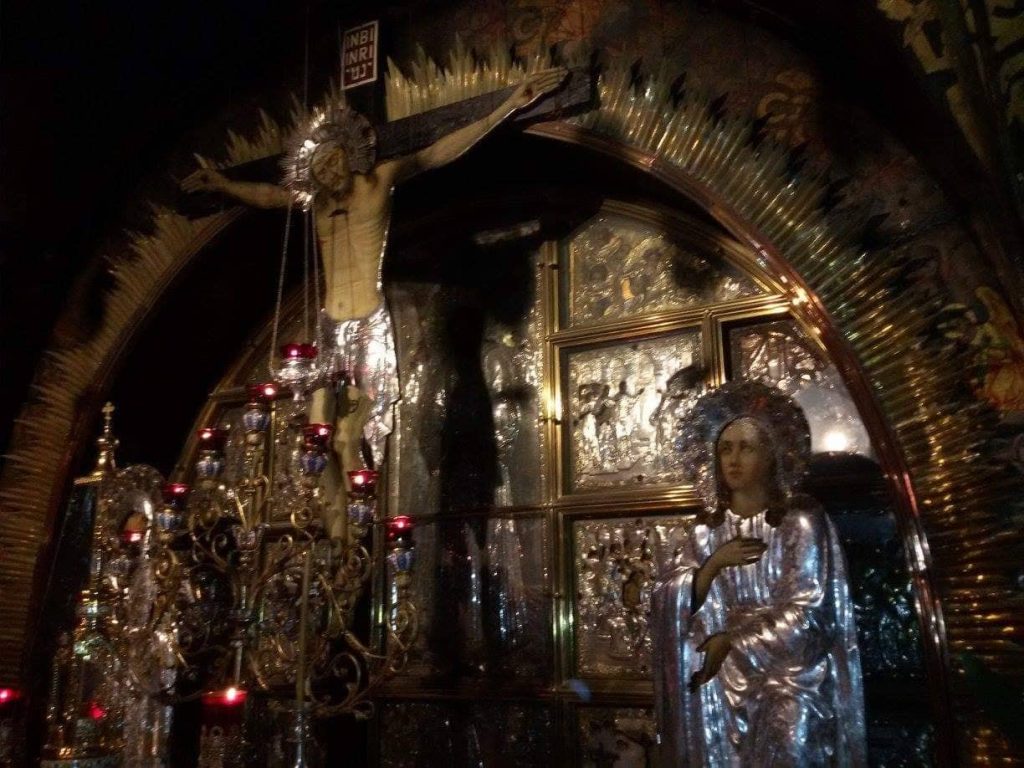
Altar of the Church of the Holy Sepulchre over the exact site where Jesus was crucified outside Jerusalem. Photo by Arch. Philip Santiago, October 2017.

Third word:

Jesus cried out in a loud voice, “Father, into your hands I commend my spirit,” and when he had said this he breathed his last.

Luke 23:46

One of St. Luke’s unique feature is always presenting to us Jesus at prayer. Especially here at his crucifixion. See how his first words were prayer of forgiveness for his persecutors. Now at his death, St. Luke presents Jesus again at prayer, reciting Psalm 31:5, “Father, into your hands I commend my spirit.”

Here we find the whole picture of Jesus Christ’s life which is a prayer and his prayer is his very life. From the very start, Jesus has always been one with the Father which is the essence of every prayer called communion. And that is the important aspect of his being our Savior: everything he said and did was everything the Father had told and asked him. There is that perfect communion of the Father and the Son in the Holy Spirit so that in his death, Jesus offered his total self with us to God. Everyone and everything is thus sanctified anew in Christ. This became possible only with his kenosis, his self-emptying eloquently expressed to the Philippians by St. Paul in our second reading.

On the Cross, everything in the life of Jesus Christ came to a full circle, God’s whole picture emerged. Now more than ever, we have become closest to God in love. In his dying on the Cross, Jesus made known to us God, brought him closest to us so we can relate and be intimate with him more than ever. In his becoming human like us by bearing all the pains and sufferings expressed in the first reading from Isaiah, God proved to us his love in Jesus. Most of all, he enabled us too to be capable of knowing and loving like Jesus Christ by being intimate with him always. This is why these days are called Holy Week when we are filled with God so we experience him anew and have him more than ever in our hearts, in our very selves. Amen.

Lent is home.

40 Shades of Lent, Saturday, Week-V, 13 April 2019
Ezekiel 37:21-28///John 11:45-56
From Google.

After forty days, we are finally home in you, God our Father. Finally. But, are we really home? Are we ready for the holiest of all your days, Lord, set to begin tonight with the Palm Sunday of your Passion?

Continue to cleanse our hearts and our souls, Lord.

Continue to guide us into your direction, not like some of the people of your time.

Many of the Jews who had come to Mary and seen what Jesus had done began to believe in him. But some of them went to the Pharisees and told them what Jesus had done.

John 11:45-46

Lead us home into the Father, Lord Jesus.

Fulfill in us Ezekiel’s prophecy:

My dwelling shall be with them; I will be their God, and they shall be my people. Thus the nations shall know that it is I, the Lord, who makes Israel holy, when my sanctuary shall be set up among them forever.

Thank you Lord for Lent, for the 40 days of journey. May each day be always a journey with you and in you always. Amen.

From Google.

Ang tunay na nasasaktan ng kasalanan

Lawiswis ng Salita ni P. Nicanor F. Lalog II, Ika-12 ng Abril 2019
Larawan mula sa Google.
Papatapos na ang Kuwaresma
Malapit na ang Semana Santa
Halina't magtika sa ating mga pagkakasala
Upang madama dakilang pag-ibig Niya.
Minsa'y aking nakita estatwa sa karosa
Paglalatigo sa haliging bato ni Hesu-Kristo;
Natigilan at nagmuni-muni ako
Pinagnilayan kaawa-awang larawan.
Ayon sa kuwento sa ebanghelyo
Ng minamahal na disipulo ni Kristo
Nagkakagulo mga tao kaya natakot si Pilato
Na palayain si Kristo sa mga bintang na di totoo.
Naramdaman ko sa pagninilay ko
Pagbabakasakali ni Pilato
Kung ipahampas niya sa haliging bato
Baka maawa mga tao kay Kristo.
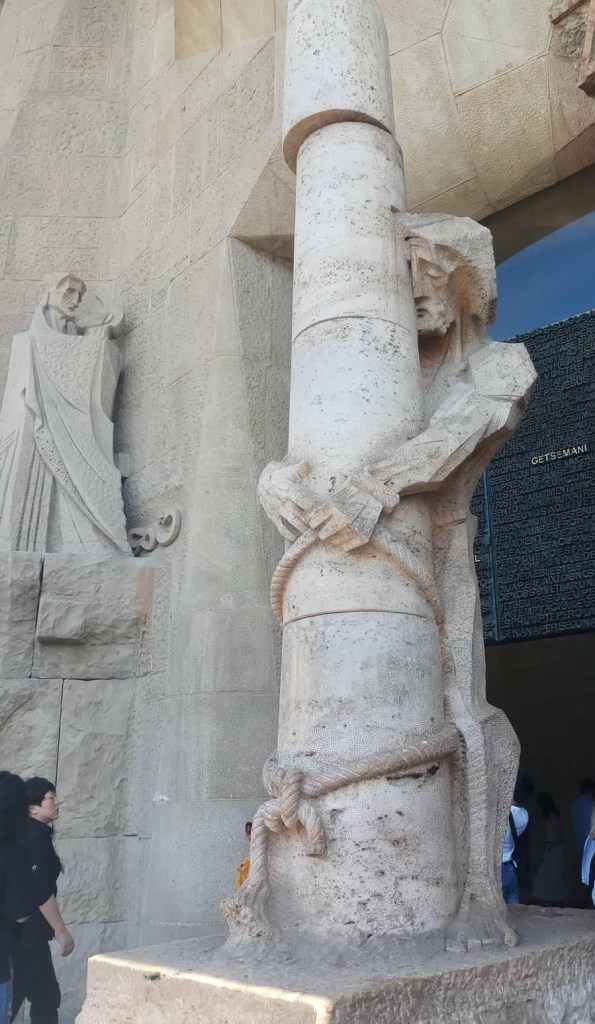
Simbahan ng Sagrada Familia, Barcelona, Espana. Kuha ni Arch. Philip Santiago, Oktubre 2018.

Nagkamali si Pilato, hindi nabago mga lilo
Kaya binabaran ko tagpong ito sa praetorio 
Sinikap kong sulyapan habang pinagninilayan
Sugatan niyang katawan labis pinagmalupitan.
Sa aking katahimikan at kalungkutan
Aking napakinggan kanyang tinuran:
"Masdan kagagawan tuwing katotohanan 
Ay hindi ninyo mapangatawanan."
Natigilan ako, totoo ba aking napakinggan
Muli sa aki'y tinuran ng Poong sugatan:
"Hindi naman ako talagang inyong sinasaktan
Sa ginagawa ninyong mga kasalanan."
Sa katahimikan nitong aking pagninilay
Ako nasaktan nang makita siyang duguan
Sa mga mata niyang malamlam aking ramdam
Kanyang habag at kaamuhan.
 Ginawa ni Pilato alalaong-baga
Sa kasabihan nating mga Filipino
Ay namangka sa dalawang ilog  
Kanyang pinagsabay mga bagay na magkahiwalay.
Hindi makapamili kung susundin ang budhi
Nahihirati sa kiliti ng ilang sandali
Hindi alintana mga sugat at hapdi
Lalo lamang tayo nasasawi.
Halina't magsuri ng maigi
Baka tayo ma'y ganyan ang gawi at ugali
Katotohanan at kabutihan hindi kayang panindigan
Inaasam kusang bubuti masamang kalagayan.
Ipahahampas mo ba muli si Kristo 
Sa haliging bato ng ating pagkalito?
Hahatol ka ba tulad ni Pilato
Na tiyak naman tayo ang talo?