
40 Shades of Lent by Fr. Nicanor F. Lalog II
Palm Sunday of the Lord's Passion, Cycle A, 29 March 2026
Isaiah 50:4-7  +++  Philippians 2:6-11  +++  Matthew 27:11-54

We begin today the Holy Week with Palm Sunday of the Lord’s Passion. Its long name is derived from the two celebrations that developed separately in Jerusalem and Rome during the first one thousand years of Christianity, one of the oldest in our liturgy.
As early as the fourth century, Christians in Jerusalem celebrated Palm Sunday at the city gate with a procession led by its bishop followed by people holding palms reenacting Christ’s entry into Jerusalem. Meanwhile in Rome, the Pope ushered the Holy Week with the proclamation of the long gospel account from the Lord’s Supper to his Passion, Death and Burial. Eventually in the 12th century, Jerusalem’s practice of a palm procession with the blessing of palms added by the French in year 800 reached Rome and was celebrated separately. After more than a 1600 years, it was only in Vatican II when the two celebrations from Jerusalem and Rome were merged into one that we now have its official designation as Palm Sunday of the Lord’s Passion.
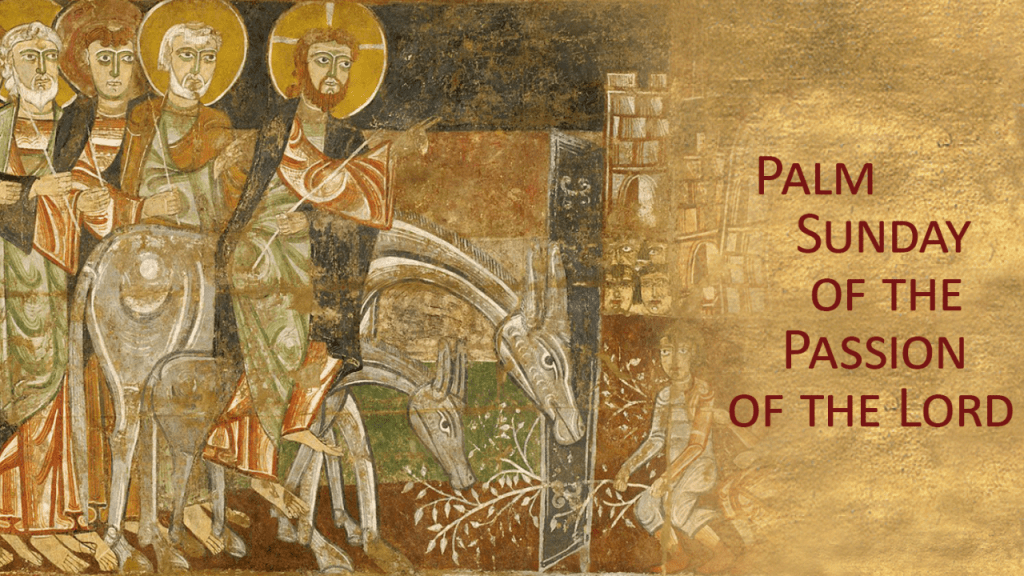
It is a beautiful story of how two distinct practices in Jerusalem and Rome, of two contrasting liturgies mirrored our different and unique journeys into the mystery of God in Jesus Christ’s Passion, Death, and Resurrection.
And I love that contrast because our life is filled too with many contrasts that make it so beautiful and meaningful.
Contrast is when we compare differences between two or more things in order to highlight distinctive features like light and shadows, or pains and joys that make us see life fullest. Contrasts many times are a grace from God when he works in disguise among us, within us, as he writes straight crooked lines in our lives that eventually lead us to him and be fulfilled.
All our readings today present us with many contrasts that enable us to find and welcome Jesus coming to us like that Sunday in Jerusalem in the midst of our pain and sufferings, joys and fears. Three things I wish to reflect this Sunday.
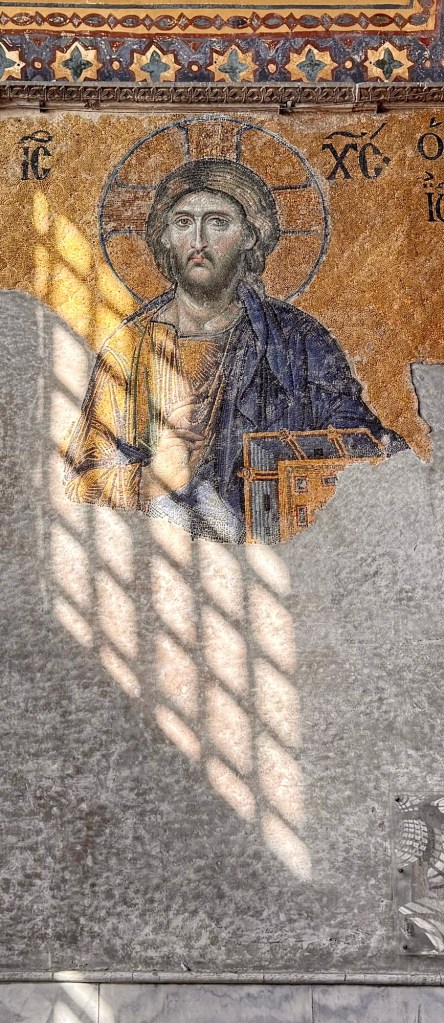
First contrast we find is the wisdom of God and the folly of man.
Read the longer version of the gospel from Matthew 26:14-27:66 and you find the many contrasts presented by the evangelist to highlight God’s wisdom in Jesus and man’s folly among the Jewish people led by their priests and elders, Pontius Pilate, and even with the prince of Apostles, Simon Peter!
At his trial before the Sanhedrin at the house of the high priest Caiaphas, Jesus was so comp-composed, silently listening to the many false accusations against him, and then shocked when he admitted amnd declared his being the Christ indeed (Mt.26:57-68)! And while all these were going inside the house of Caiaphas, outside was Peter denying Jesus thrice when asked of his being a disciple (vv.69-75)!
Again we see this glaring contrast of God’s wisdom in Christ and man’s folly in Pilate as Jesus remained silent during trial, answering briefly only when necessary that have put his enemies at the defensive posture (Mt.27:11-14). And how foolish they were in choosing to set free a known criminal in order to crucify the Christ (vv.21-26) which continues to these days in our own country as we keep on electing corrupt and inept people into office.
The most tragic of all is how some people while professing to be Christians are like those mob in Jerusalem still defending a known murderer now facing trial for crimes against humanity who had cursed God several times, made fun of women including those raped and under whose administration happened rampant and shameless corruption and decadence.
How sad that despite our supposed to be many advancements in science and technology that have completely altered our way of living and way of thinking, we have actually become more lost and empty than ever. Like Pilate and the Jewish people of that time with their elders, the more we assert our supposed to be superior knowledge on everything, the more we sink into emptiness and meaninglessness.
Let us not be blinded with our intelligence that have sent men to space and moon and shrunk the globe into a village but have made us grow more apart from each other; open our eyes and our hearts in Jesus Christ who is the truth because he is the only way in life.
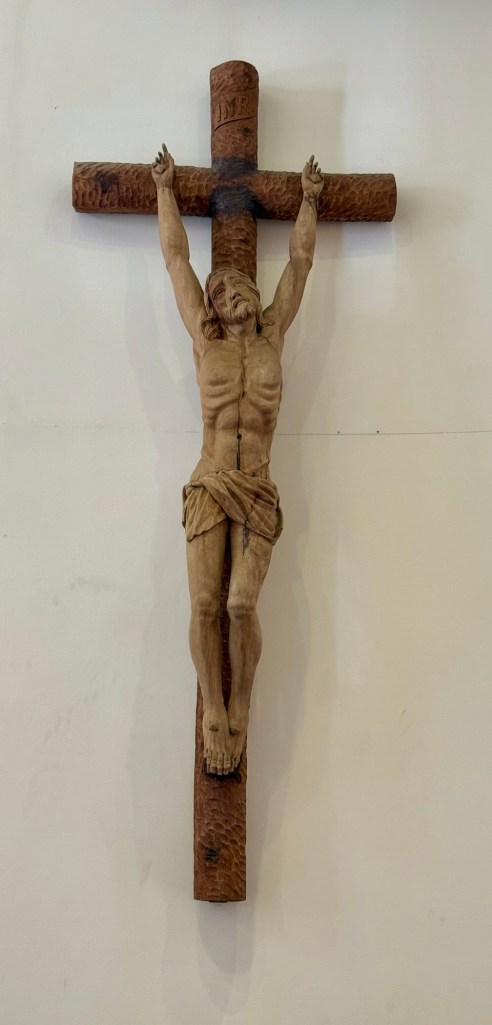
Second contrast we find is that true power is in weakness not in strength.
Everybody at the trial and crucifixion of Jesus were at their own kind of “power play” especially the soldiers with the Jewish leaders and their cabal of followers (Mt.27:27-44). Imagine the very act of stripping Jesus or anyone for that matter of clothes – it is the most brazen display of power over someone. Not contented with that, they mocked Jesus while unconsciously recognizing him truly as king with the sign placed above his head, “This is Jesus, the King of the Jews” (v.37). They would confirm this later at the death of Jesus when they declared “Truly, this was the Son of God!” (v.54).
At his trial and sentencing until his crucifixion, Jesus showed that true power lies in weakness and surrender as St. Paul eloquently expressed in the second reading today, “Christ Jesus, though he was in the form of God, did not regard equality with God something to be grasped. Rather he emptied himself” (Phil.2:6-7).
How sad the whole world is now plunged into a great disaster without any clear sight of an end in the war launched by the US and Israel against Iran. Who’s really winning? Despite the sophisticated and powerful weapons of the US and Israel, how come Iran still continues to launch many missile attacks against its neighbors and worst of all, control a supposed to be tiny strait that had sent fuel prices beyond reach of Tomahawk missiles!
Let’s look into our own lives, in those moments we “power tripped” against others: what happened? Have we really won over them or, are we now suffering its dire consequences, even paying the price of our too much pride and display of power and strength? Jesus shows us in his triumphal entry into Jerusalem until his Passion and Death, true power is in weakness and surrender. It is the only path to Easter because it is the path of life and love which we shall see next.
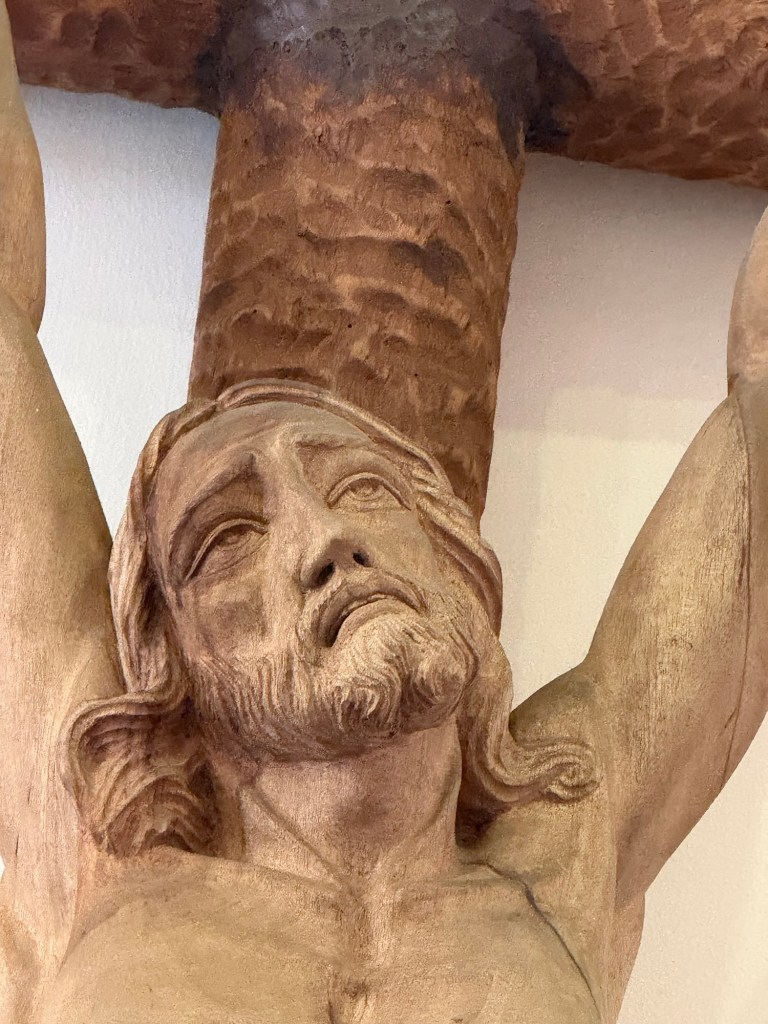
Third contrast we have seen in the passion of the Lord: life symbolized by blood is for love and caring, not for vengeance nor convenience. Not even a solution to a problem.
At the trial of Jesus, when Pilate felt at a loss that he could not set Christ free, he decided to wash his hands to free himself of any responsibility for his death: “I am innocent of this man’s blood. Look it to yourselves.” And the whole people said in reply, “His blood be upon us and upopn our children” (Mt.27:25-26).
It was the height of human arrogance and pride, of folly and insensitivity that sadly happens right in our homes, in our schools and offices, in the society and even in the church maybe.
Instead of using technology and the sciences for the care and preservation of human life symbolized by blood, these have actually objectified persons into things, from contraceptives to abortions, genetic manipulation and gender redefinition. We have become so impersonal that people are seen more in economic andn utilitarian terms especially infants and children as well as the sick and elderly, the most vulnerable ones among us. Worst, criminals and others labeled as misfits are disposed like things either through judicial or extrajudicial killings. So heartless.
See the contrast presented by Matthew in this aspect when at the Last Supper, Jesus “took a cup, gave thanks, and gave it to them saying, ‘Drink from it, all of you, for this is my blood of the covenant which will be shed on behalf of many for the forgiveness of sins'” (Mt.26:27-28).
Life is precious because it is vulnerable that is why God became human in Jesus Christ like us in everything except sin. Right after his birth, he faced the murderous threats of a king and now an adult, he offered himself freely to die on the Cross because he loved us so much so that we too may finally be able to love again like him as willed by God since the beginning.
Isaiah’s Song of the Suffering Servant in the first reading showed this contrast of Yahweh’s servant fulfilled in Christ Jesus of how he valued life so much, of bearing all pains and hurts because of love.
In his triumphal entry into Jerusalem up to his Passion and Death, Jesus showed us so many contrasts for us to see the bigger picture of life itself, of one another as brother and sister, of God who loves us so much. Take time to examine every contrast in life for God is surely in there, even sometimes in disguise. Amen. Have a blessed Holy Week ahead!

 lordmychef.com