
Lord My Chef Sunday Recipe for Soul by Fr. Nicanor F. Lalog II
Twenty-Eighth Sunday in Ordinary Time, Cycle A, 11 October 2026
Isaiah 25:6-10  ><}}}}*>  Philippians 4:12-14, 19-20  ><}}}}*>  Matthew 22:1-14
We are a nation always in all kinds of crises: financial crisis, water crisis, energy crisis, transportation crisis, moral crisis. We are practically a nation of crises because we never face every crisis that confronts us!
Crisis is from the Greek word krisis, a time for decision; every crisis calls for a decision to resolve the situation. And that’s the problem with us Filipinos: we either refuse to make a firm decision or waste an opportunity to decide properly that would have solved the many crises we continue to endure to this day like reelecting incompetent and corrupt public officials.
The Gospel accounts these past three weeks may be considered as “parables in times of crisis” because each calls us to decide and choose God: the parable of the two sons reminds us of harmony in what we believe, in what we think, what we say, and what we do; the parable of the wicked tenants tells us we are the Lord’s vineyard, everything is God’s including our very lives meant to be fruitful in Christ.
Today we hear the last installment of parables narrated by Jesus to the elders and chief priests of Jerusalem at the temple area, the parable of the wedding feast that clearly shows anew how God invites everyone to come to Him, to make that decision of choosing Him. There are many similarities in the three series of parables but this Sunday, Jesus injects a “mini-parable” towards the end during the wedding feast of his son:
“But when the king came in to meet the guests he saw a man there not dressed in a wedding garment. He said to him, ‘My friend, how is it that you came in here without a wedding garment?’ But he was reduced to silence. The king said to his attendants, ‘Bind his hands and feet, and cast him into the darkness outside, where there will be wailing and grinding of teeth.’ Many are invited, but few are chosen” (Mt.22:11-14).
I grew up in a generation when dressing properly and decently were deeply inculcated both at home and the school. It has always been considered in our time as a sign of maturity when we come properly attired in every occasion. Those days are now gone along with the expression “Sunday’s best”.
For some, it may seem to be so trivial but if we truly regard the Eucharist as the highest form of worship, of encountering God through the sacraments and one another, how come we could not even prepare our external appearances? Why can’t we give that proper importance to meeting the Lord and one another in the supposed to be holy occasion of the Mass?
What a tragedy that some priests lead the pack in this aspect of coming not properly, even shabbily dressed during the Mass, saying it is too hot to wear those vestments. Everyone is bragging that fallacy there is more beneath the clothing we wear of who we really are; that is not totally true because what we wear, how we look outside is indicative of what ‘s inside us, of who we are, of what we value, and what we believe in.
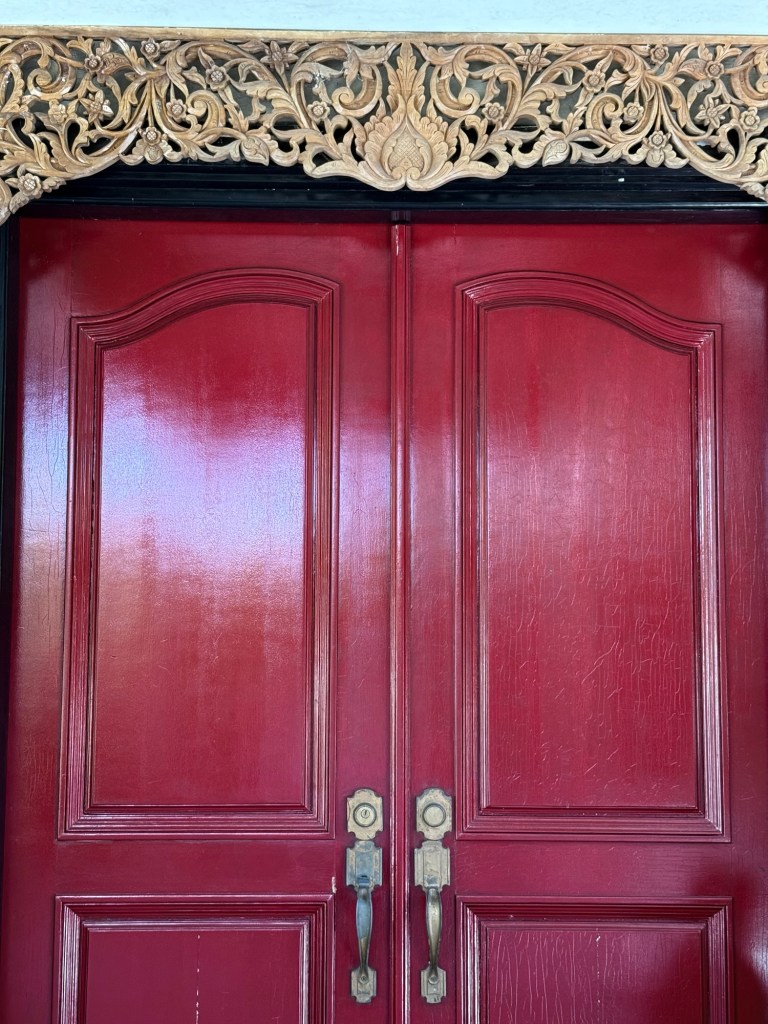
How we dress – not the clothes we wear – speaks of ourselves as the Lord’s parable this Sunday teaches because external appearances are indications of the internal realities.
If we push that further, if we seem to find it so difficult in dressing properly for the Mass, how much more difficult we could find it turning away from sins, in dressing our souls properly?
Jesus said in his parable the man was “reduced to silence” when confronted by the king; he could not speak a word because deep inside him he knew something was wrong, something was missing, that he should not be there at all! Maybe he is a Filipino who must have thought baka makalusot as we always reason out in life. Unfortunately, as we all learn later, there are no shortcuts in life: we either hit the mark or miss it.
Our Sunday Eucharist is a fulfillment of Isaiah’s prophecy calling on all peoples to come to the mountain of the Lord where He shall provide us with “rich food and choice wines, juicy, rich food and pure choice wines. On this mountain he will destroy the veil that veils all peoples, the web that is woven over all nations; he will destroy death forever. The Lord God will wipe away the tears from every face” (Is.25:6-8). Every Sunday Mass is an invitation to celebrate with the Lord this great feast of salvation, a foretaste of the coming heaven!
But, are we properly dressed for the occasion?
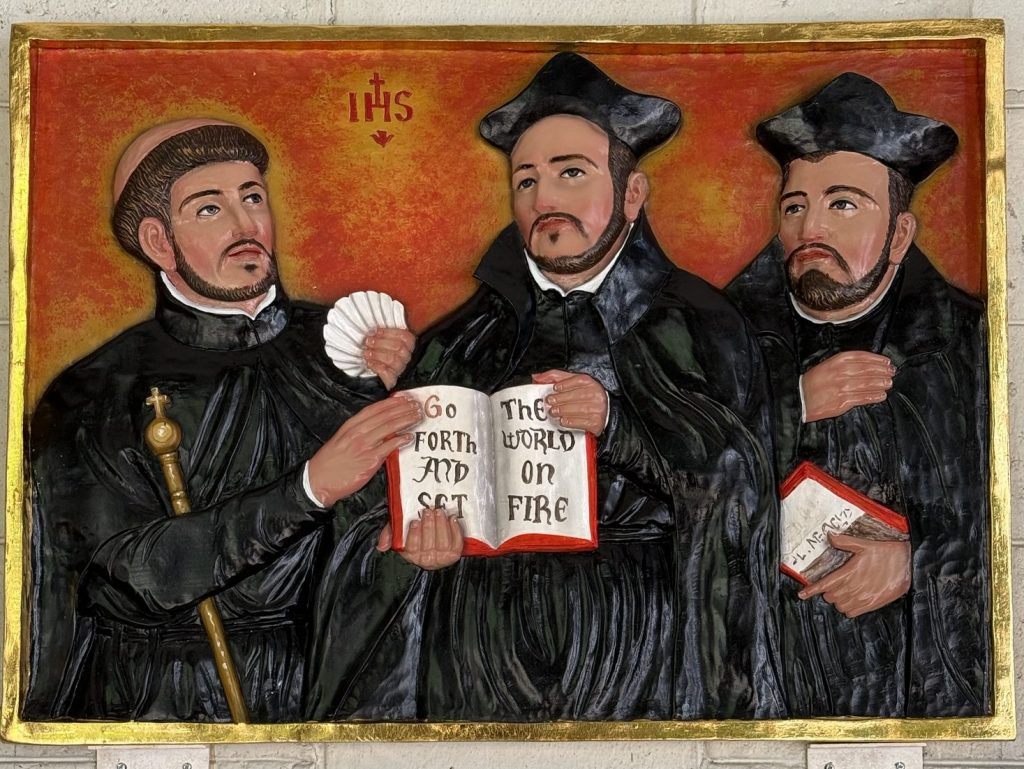
Related with being properly dressed is another similar English expression, of “wearing different hats” which means we must learn to adjust and adapt to the many circumstances in our lives where we take on multiple jobs and roles and responsibilities.
We find this present in our Filipino expressions of ilagay sa lugar ang pagkilos or matutong maki-bagay like when we have to professional especially with superiors in the office but remain friends when outside unwinding in a cafe or when parents act strictly as disciplinarians because they are the father or mother but sometimes as a friend or an Ate or Kuya to their children.
This is what St. Ignatius of Loyola expressed in his teaching of “positive indifference” where we choose to become poor than rich, sick than healthy that is not to be taken literally but of being open in imitating Jesus Christ’s simplicity. It is the attitude of contentment in life choosing Jesus above all like St. Paul in today’s second reading:
Brothers and sisters: I know how to live in humble circumstances. I know also how to live with abundance. In every circumstance and in all things I have learned the secret of being well fed and going hungry, of living in abundance and of being in need. I can do all things in him who strengthens me” (Philippians 4:12-13).
In this highly consumerist society, many of us sadly live in crises because of so much desires and wants for material things. We see everywhere the glaring realities of some living in super abundance of wealth while majority are in dire poverty.
Peace does not come from abundance of material goods anymore than a lack of such goods can deprive one of peace. The key is living with one’s circumstances especially when they cannot be changed and are beyond one’s control. That is learning to wear one’s hat and dressing properly in every situation.
Let us close this reflection by going back to the word crisis. According to my Chinese friends, crisis is represented by two characters in Chinese, indicating danger and opportunity. Like its Greek counterpart, crisis in Chinese calls for a decision too because of the dangers present; it is only in making that decision when one can experience the many opportunities life offers. Are you ready to make that decision of choosing Jesus, of putting on His clothes of love and kindness, mercy and forgiveness as He invites you in His banquet in this Sunday’s Mass?Amen. A blessed week ahead to everyone!


One thought on “Crisis & decision = life & salvation”