Candles to pray better

Quiet Storm by Fr. Nicanor F. Lalog II, 03 February 2026
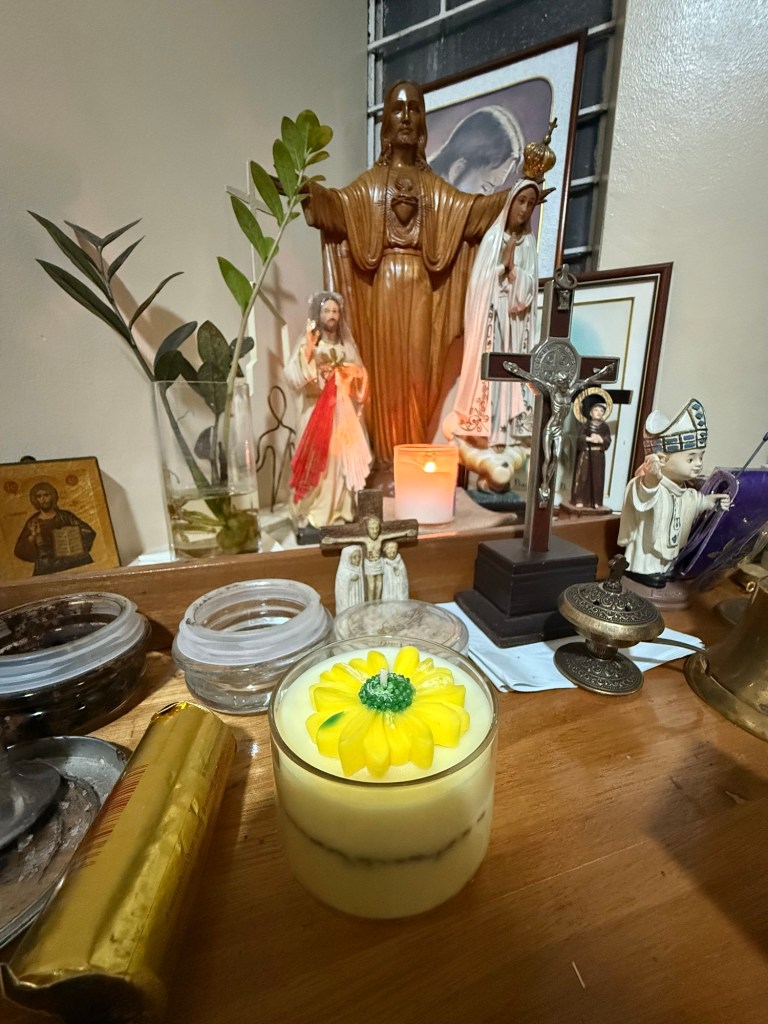
Photo by author, 31 January 2026.

One of the Christmas gifts I have received last year was a scented candle personally made by one of our nurses who accompanies me in visiting our patients on Sundays.

Though I had already thanked her when she handed me her gift last Christmas, I had to thank her again last Sunday because I had it unboxed only recently. Most of all, because I loved it so much as I light candles on my altar when praying.

Yesterday was the Feast of the Presentation of Jesus to the Temple (February 2) also known as the Feast of the Candlemass wherein candles were blessed outside the church after which the people led by the priest enters to begin the Mass in a procession with lighted candles. 

Candlemass is a beautiful celebration, especially when done properly by priests. Its origin dates back to more than 1500 years ago in France where it started when people incorporated the blessing of candles into the Feast of the Presentation then known with its Eastern title as “the Encounter” to refer to how Simeon with the Prophetess Anna met the child Jesus being offered by his parents Joseph and Mary to the temple 40 days after Christmas. 

According to St. Luke, Simeon sang the following upon meeting the child Jesus Christ.

“Now, Master, you may let your servant go in peace, according to your word, for my eyes have seen your salvation, which you have prepared in sight of all the peoples, a light for revelation to the Gentiles, and glory for your people Israel” (Luke 2:29-32).

In proclaiming Jesus Christ as the “light” of salvation for the nations, the early French Christians thought of having the blessing of candles and procession of lighted candles to signify Jesus as the only and true light of the world. Hence, it came to be known also as “Candlemass” or Candelaria in the Spanish-speaking countries.
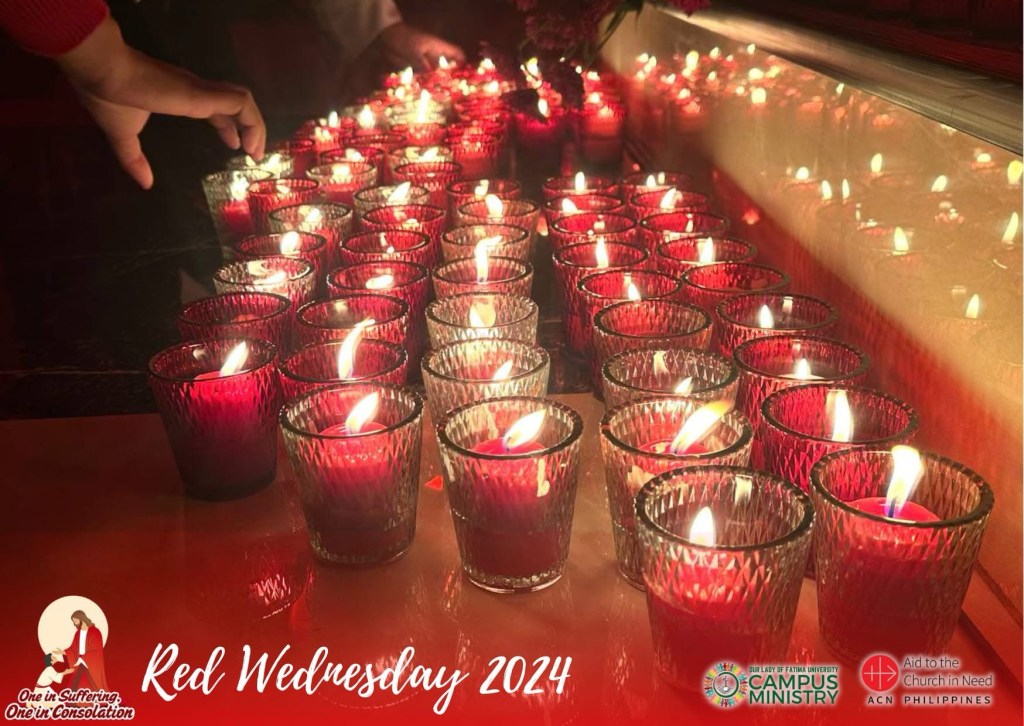
Although candles are no longer used as a major source of lighting in homes and other places, it is still used in almost all churches, monasteries and other houses of worship around the world, gaining a renewed popularity lately among the younger generation. It is a most welcomed development in our modern time as more and more people are rediscovering the need for spiritual growth of whatever label. And right in the midst of this is the candle as a tool for better prayer periods. 

Unfortunately, this beautiful tradition of the candles is dying in our country. How ironic that we who belong to the Third World have switched to electric vigil lamps and candles while those in the First World still use the traditional candles in their homes and churches. 
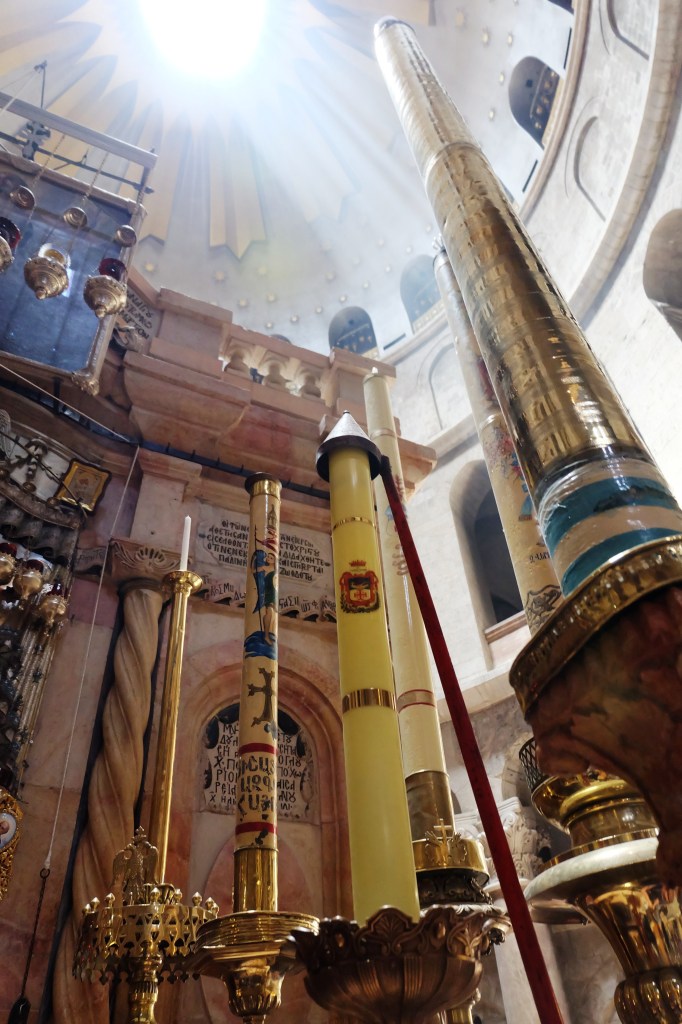
Photo by author, Jerusalem, April 2017.

How I envy churches in North America and Europe with their plethora of all kinds of candles used and sold even in the simplest churches and stores! During a Holy Land pilgrimage in the 2017 Easter Season, one of the things I appreciated and admired next to the pilgrim sites were the lovely and regal designs of paschal candles in the churches we visited that made me wonder why nobody makes them here in our predominantly Catholic country. 

Candles have always have a special place in the life of our faith and the Church since its early beginnings. From the Latin words  candere and candela that mean “to shine”, it evolved into the Middle and Old English words  candele and candel.

Aside from lighting the gatherings of the early Christians especially in the catacombs to evade arrests during the persecution, candles have always been used to signify Christ as the light of the world guiding our paths as Christians in every celebration, from Baptism to Weddings and Funerals.

Candles do not only make rooms shine but most especially the souls and the hearts of those who cultivate a prayer life. It has that unique warmth that can soothe and calm those who are agitated or worried with life’s many trials and challenges.

Every time we light a candle during prayer periods, our inner selves are made brighter as they evoke in us so much feelings of the Divine presence. Their little lights that flicker remind us of our feeble selves whose life could be easily snuffed out with a single blow. 

The scent of burning candle permeates our senses, calming us within, inviting us to leave all our worries in life as we lay our cards out in the open to God. A candles warmth can dissolve every hardness within us, purifying us within and becoming empty and open for God’s grace to work in us.

Photo by author, Mt. St. Paul Retreat House, La Trinidad, Benguet, January 2025.

In a sense, candles may be considered as a sacrament too which is defined as a visible sign with invisible power.  

The very act of lighting a candle is already the start of prayer, something like the making of the sign of the Cross. I strongly recommend for those who wish to aid their prayer periods with candles to use matches not lighters that are artificial. 

Lighting a candle for prayer especially in the morning can rouse our senses. The striking of the match with its sudden burst of light to kindle the candle is like an angel had suddenly come down to assure us that our prayer is heard by God, that God is with us at the very moment or at least reminds us we have turned into the mode of praying. 

The strong scent of the burning matchstick also adds flavor and aroma to the prayer period especially in the early morning when the whole world is still dark and everyone still asleep with you as the only one awake with God. 

Lighting a candle first thing first upon waking up can help us avoid from getting our cellphones or turning on the radio or the TV. A lighted candle can prevent us from being distracted by these modern gadgets that keep us away from God and from one another.

Lighting a candle during a prayer period in our room or home works like the candlelight dinner that sets us to a lovely communion with God our beloved. The slow burning of a candle reminds us even in our busiest morning that we are at prayer in the presence of God, that we need to slow down too in our lives, to be conscious of our selves, surroundings and time so we can set our sights to God alone like a beloved in a candlelight dinner date.

At night time, the sight of the candle burning in one’s room is most dramatic as we close the day. Actually, it is during night time that the Church prays the Canticle of Simeon. 

A painting of Simeon with the Child Jesus from the dailyprayerblog.blogspot.com

Imagine that scene at the temple when Simeon sang as he held the Child Jesus in his arms – of his readiness to die, to go in peace, after seeing Christ the light of salvation. In the darkness of the night punctuated only by a burning candle, we are able to examine our hearts of the many things we have done and failed to do the whole day. These become clearer in the light of the candle that penetrates our hearts and conscience, piercing and rending our souls to remove the darkness within us, exposing the festering anger or bitterness and sadness hiding inside, melting them away with its warmth so we may go to sleep clean and ready to continue with life – here or hereafter like Simeon.

One last note about candles as we end this reflection. 

Monks use a candle snuffer in extinguishing candles in their chapels and monasteries.  These are long metal instruments with tips like a bell that monks hover above a candle, slowly covering it until its light is snuffed out, hence, the name candle snuffer. 

My candle snuffer at the foreground of my altar.

If you want to be serious in praying better with lighted candles, you may buy those small candle snuffers for home use available at some candle shops in the malls. If there is no candle snuffer, one may use the cover of the candle to snuff out the light. What is important is that as we close our prayers with the lighted candle as companion, we don’t simply blow its light to abruptly end its glow. 

When blowing the candle used in prayer, do it slowly as if you are whispering. Do it with solemnity. 

Every candle used at prayer becomes blessed, demanding some sort of reverence as companions in our prayer life and journey. Of course, it would be good if you can have your candles blessed by the priest for use at home to ward off negative vibes but more important than that is we grow in our prayer life, we become like lighted candles who give light to others in Christ. Like our candles, we also become a prayer to God in our very selves. Amen.Have a blessed week.

Jesus our Light

Lord My Chef Sunday Recipe by Fr. Nicanor F. Lalog II
Third Sunday in Ordinary Time, Cycle A, 25 January 2026
Isaiah 8:23-9:3 ><}}}}*> 1 Corinthians 1:10-13.17 ><}}}}*> Matthew 4:12-23
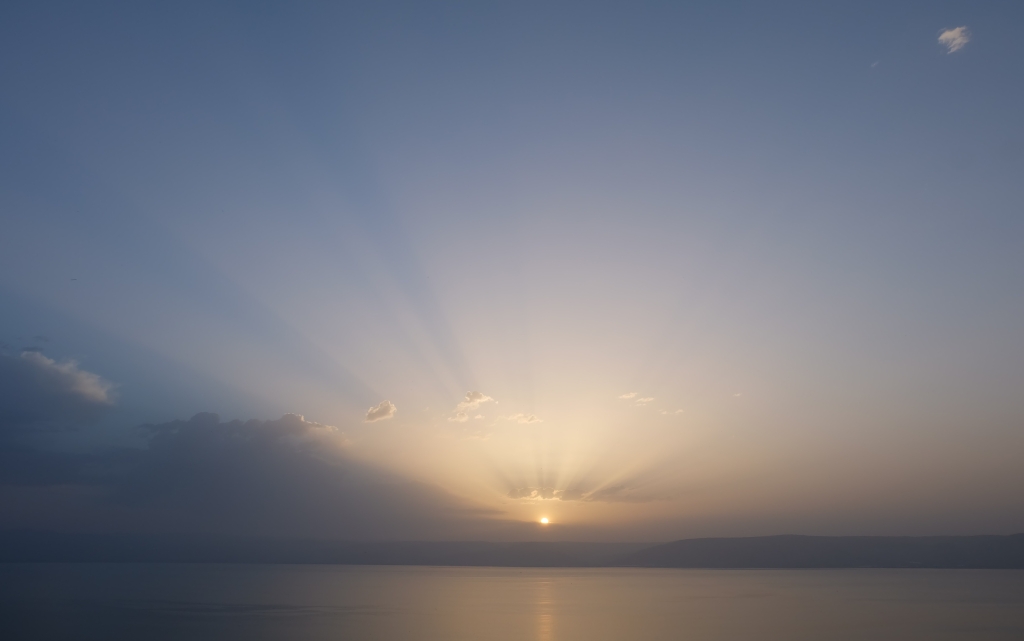
Photo by author, sunrise at the Lake of Galilee, the Holy Land, May 2019.

More than a month ago at the Midnight Mass of Christmas we have heard this Sunday’s first reading, that beautiful prophecy by Isaiah fulfilled in Jesus Christ’s coming.

First the Lord degraded the land of Zebulun and the land of Naphtali; but in the end he has glorified the seaward road, the land west of Jordan, the district of the Gentiles. Anguish has taken wing, dispelled is darkness: for there is no gloom where but now there was distress. The people who walked in darkness have seen a great light; upon those who dwelt in the land of gloom a light has shone (Isaiah 8:23-9:1).

When Jesus heard that John had been arrested, he withdrew to Galilee. He left Nazareth and went to live in Capernaum by the sea, in the region of Zebulun and Naphtali, that what had been said through Isaiah the prophet might be fulfilled… (Matthew 4:12-14).

As we move forward into Ordinary Time, we hear anew one of the most beautiful promises in the Old Testament of how the coming of the Christ is the “breaking of dawn of salvation” as Zechariah sang in his Benedictus after naming his son “John” when light bursts forth to dispel the darkness that had enveloped us for a long time.

Photo by author, sunrise at the Lake of Galilee, the Holy Land, May 2017.

Notice that it is those who live and walk in darkness literally and figuratively speaking are always the first to come forward into the light like the people in Galilee at that time, especially the towns of Zebulun and Naphtali who were actually names of Jacob’s two other sons. Their tribes settled in that area of Galilee that was at the border with other pagan countries always subjected to wars and conflicts with foreigners. Their lands were literally in the dark, never at peace as if forsaken.

Here lies the good news of this Sunday: after hearing the news of John’s arrest, Jesus launched his public ministry. Notice how plain and simple was Matthew’s narration, “When Jesus heard that John had been arrested” – it was another period of darkness for the people with rampant violence and injustice. However, it was not totally dark at all: see how Jesus withdrew to Galilee; Christ’s “withdrawing” to Galilee was not something negative but actually more of a positive development. Jesus chose to begin his ministry in that forsaken province of Galilee to show his love and concern for the people long forgotten. Remember how at that time that Jerusalem was the center of everything, something like an “imperial Manila” we call these days.

Here we find again that imagery of Jesus like in his birth that happened during the darkest night of the year that 30 years later, he chose to go to the darkest region of Israel to bring light of salvation to everyone. Jesus comes to us most in moment of darkness in our lives! When we are troubled by sins and problems, never lose that spark within for Christ had come, is coming and continues to come to us! Matthew mentioned this prophecy of Isaiah of the great light shining in the land of gloom not really for his readers then and now to remember what God had done in the past but to make us all aware always that God continues to send us his Son Jesus in these dark moments of our lives. In telling us how Jesus began his ministry by withdrawing to Galilee in the land of Zebulun and Naphtali, Matthew wants us to be aware of what God has done for us, of giving us Jesus, the true Light of the world right into the many darkness we are going through in life today.

More than the news overseas that we have heard like wars and the breaking apart of world peace and order with America suddenly flexing its muscles to remind everyone they are still great and powerful or the very frustrating corrupt lawmakers of the country, we are all in some form of being in the midst of darkness in our personal lives too like a sick loved one or a problematic brother or sister.

Photo by author, San Juan, La Union, 08 January 2026.

God has delivered us from slaveries of sin and selfishness in Christ’s coming and presence among us. Surely there would always be darkness and shadows in our lives this 2026 but Jesus is telling us today in his withdrawing to Galilee after hearing John’s arrest that we need to get out of our own darkness! There is no more darkness in Christ’s coming; it is us who have darkened our lives with our selfish interests like the quarrels and animosities against one another that St. Paul warned against in the second reading.

Every time we destroy our unity, our oneness, we plunge ourselves into darkness. Whenever we refuse to bow down, when we refuse to give way, when we refuse to forgive even forgo or let go of others inanities, we go back to darkness. Inasmuch as Jesus Christ is the great light who shone on the many darkness of our lives, he is calling us like the first four disciples to bring his light to others.

Was it really that easy for the brothers Simon and Andrew, especially brothers James and John to immediately leave behind their livelihood and father so easily for Jesus? Not really. Matthew need not go into details about their call and conversion because most likely, they went through the same stages we have gone through or going through right now as we pray and reflect about our life direction. Like us today, Simon and Andrew, James and John experienced burn out, searching for meaning in life that after listening to the words of Jesus, they felt and saw him as the light enlightening everything for them. They saw in Jesus their lives and very person getting clearer that they decided to follow him and become fishers of men.

How far are we willing to repent and be converted in the light of Christ to start anew living in the land of loving God, self, and others?

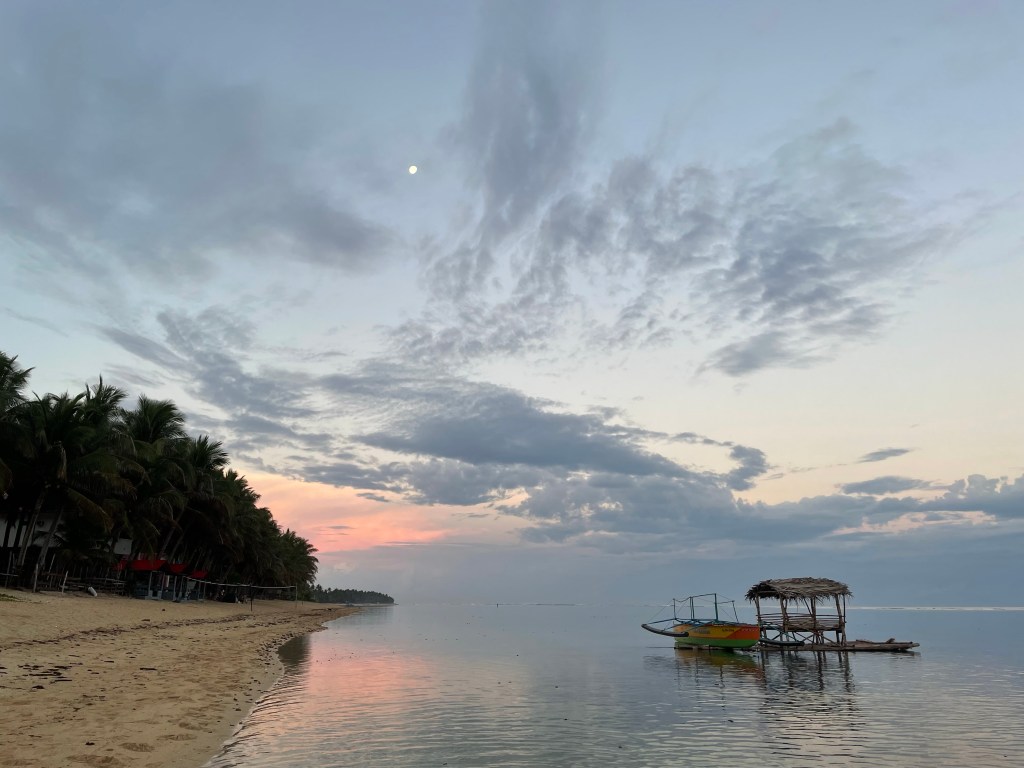
Photo by author, Bolinao, Pangasinan, 19 April 2022.

I have always loved sunrise. Though sunsets are more colorful and dramatic like a spectacular show called palabas in Filipino, sunrise is different: it is more of paloob, an inside movement that is subtle yet intense when light steals into shadows as the sun is gradually breaking open the darkness to reveal what is unseen.

That is why our Filipino term for sunrise is more evocative of its deeper meaning as pagbubukang liwayway which literally means breaking of dawn. Every morning person (madrugeño in Spanish) knows so well those feelings of being up before sunrise, of exactly catching the breaking of dawn that is always joyful and liberating with a certain kind of lightness and relief from deep within because another day is given us.

Maybe it is a carry over with my having worked for three years in the graveyard shift covering the police beat while still working at GMA News in the late 1980’s. But more recently, I feel that imagery of coming forward into the light resonates most after a good confession when we deeply realize God’s immense love, that God is not that really angry at all with us because of our sins, that there is a bright light to always look forward in this life amid all the darkness and shadows enveloping us.

Today is the National Bible Sunday. It is when we prayerfully read the Sacred Scriptures everyday that we see the light of Christ in our selves, in our lives. The more we pray the Scriptures, the more we are enlightened, the more we are filled with the light of Christ that enables us to see too his light on the face of those we meet daily. Let us step out of our darkness in life this Sunday and everyday to henceforth experience and share Christ. Amen. Have a blessed, enlightening week ahead!

Yes & No, Salt & Light

Lord My Chef Daily Recipe for the Soul by Fr. Nicanor F. Lalog II
Tuesday in the Tenth Week of Ordinary Time, Year I, 10 June 2025
2 Corinthians 1:18-22 <*[[[[>< + ><]]]]*> Matthew 5:13-16
Photo by Valeria Boltneva on Pexels.com
What a great way to resume
the Ordinary Time this Tuesday,
Lord Jesus Christ as your words
today invite us to examine
some of the most "ordinary" things
in life we take for granted.

Brothers and sisters: As God is faithful, our word to you is not “yes” and “no.” For the Son of God, Jesus Christ, who was proclaimed to you by us, Silvanus and Timothy and me, was not “yes” and “no,” but “yes” has been in him (2 Corinthians 1:18-19).

Many times in our answers
of yes or no we cannot even make
a clear stand in you, Jesus;
like Paul,
give us the strength and courage
to mean "yes" in you, Jesus;
let our "yes"
to your gospel,
to your love and justice,
to your kindness and forgiveness
be a resounding "Amen"
in Christ, without any reservations,
without ifs nor buts
but a firm "yes, Lord!"
Teach to become
the salt of the earth bringing out
the flavor and goodness
of every person like what salt
does to our food;
at the same time,
let your light shine in us,
Jesus, to bring out the light,
the beautiful colors of every person
around us with our witnessing
to you, Jesus.
Amen.
From The Fatima Tribune, Red Wednesday 2024.