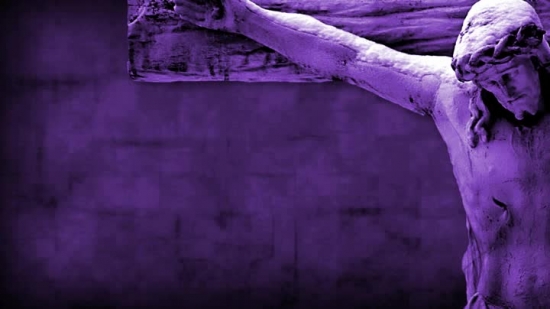
Life is Lent.

40 Shades Of Lent 
Thursday after Ash Wednesday, 07 March 2019
Deuteronomy 30:15-20///Luke 9:22-25

Dearest God:

Life is a mystery, life is Lent. Of course, we always choose life over death but in reality, you know it is not so: though our lips, our minds agree in the words of Moses, our hearts are so far from you.

“Today I have set before you life and prosperity, death and doom.  If you obey the commandments of the Lord, your God, which I enjoin on you today, loving him, and walking in his ways, and keeping his commandments, statutes and decrees, you will live and grow numerous, and the Lord, your God, will bless you in the land you are entering to occupy.”

(Deut.30:15-16)

Teach us, O God, through your Son Jesus Christ our Lord to rightly choose life by being responsible with this gift of life, of taking care of others by forgetting our very self; of bearing with all the pains of life by carrying our cross daily; and most of all, by following his direction, being present and one in him and with him in every persecution.

Life is a daily Lent when we lose ourselves in you to be renewed into a better person more like you, our true image and likeness. Amen.

Both photos from Google.

Advent is God Leading Us to New Directions in Life

48396795_474653906393673_4933836951066247168_n
The Lord Is My Chef Simbang Gabi Recipe-9
24 December 2018
2 Samuel 7:1-5, 8-12, 14, 16///Luke 1:67-79

            Finally!  It is the word of the day.

            Finally we have completed the nine-day novena of Christmas but that is not the true joy of our annual Simbang Gabi tradition.  What is most essential is in these nine days of rising early for the novena, we have rediscovered Jesus Christ in ourselves and among others while at the same time recommitted ourselves to Him again as our only fulfillment in life.  I hope that in the past nine days we have rediscovered and even brought back somehow to our lives our sense of the sacred that is now fast fading out in our very consumerist society.  Through the many religious symbolisms found in our liturgies and readings these Advent season, it is hoped that we have rediscovered God – as well as our sense of the sacred – who is the most meaningful and essential in life.  

            Finally today also, we find the only male character in St. Luke’s story of the coming of Christmas regaining his stature after being on the distaff side, Zechariah.  After disbelieving the good news of (finally) having a son through the angel Gabriel’s annunciation at the Temple when he was forced into silence by becoming mute and deaf, Zechariah was finally able to speak again after declaring his son shall be named John.  And his very first words after being silent for nine months were praises to God the Almighty like Mary during the Visitation.  Called theBenedictus, Zechariah affirmed and confirmed in himself first the reality and truth of God being present in our lives amid the many twists and turns in life, narrating His reality and fidelity to His promises from the time of the Patriarchs and the Prophets of Israel down to the birth of John who would prepare the Christ.  In effect, Zechariah had finally come into a full circle in singing the Benedictus:  like his wife Elizabeth and son still in her womb John, St. Luke tells us how Zechariah was also filled with the Holy Spirit at that instance on the naming of John when he prophesied, “Blessed be the Lord, the God of Israel” (Lk.1:68).

          Zechariah shows today the fruits of his “forced silence” that had deepened his priesthood that is very evident in the opening line of Benedictus, giving glory to God for His fidelity and mighty acts to save Israel.  It is very similar with some of the popular parts of the psalms that every Jew prays.  There are three important reasons that Zechariah tells us why God is blessed:  “for he has come to his people and set them free,  he has raised up for us a mighty Savior, born of the house of his servant David” (Lk.1:68-69).  What is amazing in the Benedictus is that the verbs are in the past tense, of the works of God being done in the past like visiting His people, setting them free or redeeming them by sending Jesus Christ.  Like the Magnificat, it is a looking back and a looking forward to more great things God has in store for us.  Zechariah is reminding how God has never stopped working wonders for us, speaking and acting through prophets so many years ago even before the coming of Christ who is the fulfillment of all His promises.

           We have mentioned how we priests and other religious and consecrated persons sing the Magnificat every evening; the Benedictus, on the other hand, is sung every morning prayers called lauds.  As we face a new day, like Zechariah at the birth of his son John, we look back and remember so that in the process we renew our faith and trust in God who never stops in working for our good.  We praise God and put our trust and confidence in Him for every new day, hoping He would continue to visit us, redeem us, and raise us up from the many challenges we are going to face. But most of all, we are reminded too by Zechariah at this time, on the eve of Christmas, to ponder in our hearts where the Lord is leading us to?  Zechariah had seen the hand of God in Israel’s history, in his own life, and could see it also present in the coming life of his son John.  It is very clear that God is our leader in life, the invisible hand who directs us.  When we come to think of it, Zechariah’s forced silence was a way for him to rediscover again his sense of God and his sense of the sacred.  So many times for us, including us priests that although we keep our prayers and devotions, they are devoid of God.  One of the things this generation is fast losing is that sense of the sacred when everything is not taken for granted and trivialized.  How I hate before the Metro Film Festival during Christmas when we as the only Christian nation in this part of the world celebrates the merriest and longest Christmas are feasting on movies about evil and horror movies.  At least these past few years, there have been marked improvements in our film industry with great movies coming out.  Last year I was able to see the adaptation of Nick Joaquin’s “Portrait of the Filipino as Artist” that was magnificent in its interpretation of the play.
 
          On these remaining hours of the day before Christmas, imitate Zechariah to get some silent moments with our self and with God to reflect on where is the Lord leading us to this Christmas?  What direction in life is He asking us to follow?  In the first reading we have heard God asking David to stop his plans of building a temple for Him.  There was nothing wrong with building a temple but it was not the plan of God for David but for his son Solomon.  The same thing with us:  no matter how good our plans are for God and for others, it is the direction God has for us?  We can never prepare the way of the Lord unless we first sub it to His plan and follow His directions.  A blessed Christmas to you! AMEN. Fr. Nicanor F. Lalog II, Parokya ng San Juan Apostol at Ebanghelista, Gov. F. Halili Ave., Bagbaguin, Sta. Maria, Bulacan.
*Photo by author, altar linen of our Parish Church.  May we follow God’s directions for our lives.

Discipleship Is About Direction, Not Destination

37051002_10216065813494448_8731131289668681728_n
The Lord Is My Chef Sunday Recipe, Week XV-B, 15 July 2018
Amos 7:12-15///Ephesians 1:3-14///Mark 6:7-13

             I have always thought that since life is a journey, then life must be about arriving at a certain destination.  This is very evident in early childhood when we keep on asking “are we there yet?”  Later in life, this question evolved into the expression of “having arrived” to mark the different milestones in our lives.  It has always been about destination that sometimes we wonder deep inside if we are in the “right place” at this particular time of our lives especially if you are near or past age 50.  The problem is not about our chosen vocation or profession or path in life; the issue is, as we fulfill our mission, we continue to discover many other aspects and facets of our life’s calling that sometimes nudge us with the existential question if we have really arrived or are we at the right place already?

             Our readings this Sunday offer us with consolation that life, after all, even if it is a journey, is not about destination but more of directions.  Or, preferably we shall say “directional” to indicate a deeper meaning of what God wants us to be.  This direction we can discover in whatever mission God sends us in this life:   Jesus summoned the Twelve and began to send them out two by two and gave them authority over unclean spirits.  He instructed them to take nothing for the journey but a walking stick – no food, no sack, no money in their belts.  They were, however, to wear sandals but not a second tunic.  So they went off and preached repentance.  The Twelve drove out many demons, and they anointed with oil many who were sick and cured them. (Mk.6:7-9,12-13)

             Our first point of reflection that life is more of a directional nature than a destination is the sending of Apostles “two by two.”  It is actually an old practice among Jews to send missionaries two by two so that there is always a companion to testify to the preaching of the other.  Notice how the evangelists enumerate the names of the Twelve also two by two.  This practice continues to this day but in a deeper sense of always having Jesus as our companion.  It is always best to have Jesus in this journey of life.  This is why we receive Holy Communion on Sundays so that Jesus may accompany us throughout the week.  The last sacrament that a dying person receives is not really Anointing of the Sick but Holy Communion for the Sick called  “Viaticum” that means “with Jesus along the way” of death to eternal life.

             In the second reading we find Paul speaking this companionship with the Lord when he mentioned three times the expression “In him” to emphasize that we do everything in Christ and never on our own.  Discipleship and life itself are directional, always in Christ.  No one can lay claim for himself or herself being a self-appointed missionary or prophet of God.  It is always the initiative of God like in the experience of Amos in our first reading.  If last week we heard how difficult it was for Jesus to be accepted in His own town as a prophet, today the story of Amos tells us the more difficult situation when a prophet like Amos from Judea was sent to their rival Northern Kingdom or Israel:  Amos answered Amaziah, “I was no prophet, nor have I belonged to a company of prophets.  I was a shepherd and a dresser of sycamore.  The Lord took me from following the flock, and said to me, ‘Go, prophesy to my people Israel.’”(Amos 7:14-15)

             Like us priests, or any volunteer in the Church, we were doing something else in life when the Lord called and sent us.  We cannot lay claim to this mission of shepherding for we never wanted this on our own considering its enormous difficulties.  It is not only an impossible job but even foolish if you say so!  But we do it because of Jesus who initiated the call to follow Him while we were busy doing something else like building a career, preparing for marriage or just enjoying life in whatever form.  We have no regrets in answering His call because we have found in Christ Jesus the person more worthy of our love and life.  Life and discipleship are directional because both are a call to a relationship with Jesus which the song “Day by Day” says so well, “Day by day Lord, three things I pray:  that I may know you more clearly, so that I may love you more dearly, and follow you more closely, day by day.”  We do not really know where the Lord would lead us for there is no precise destination to speak of but only a direction which is to be like Jesus, to stay with Jesus.

             Closely linked with this being with Jesus Christ is our task of being holy like Him.  Following Jesus Christ is the direction of fighting evil, the very first mission He entrusted the 12 according to Mark in our gospel today.  Authority over unclean spirits is the power to cast away the devil, the root of every illness in us and society.  That authority can only be claimed in holiness, when we are filled with God.  With the present situation we are into, we need to claim that authority more than ever as evil continues to destroy us, causing so much misery with deaths, divisions, and sickness it sows among us.  The CBCP have recognized this sad fact in our society with the recent diabolic and blasphemous statements and events going on.  The bishops have rightly reminded us that we do not fight evil with evil like vengeance but instead with prayer and fasting that purify us and give us strength to strive for holiness – the direction we all have to follow in whatever mission Jesus sends us to.  Even Pope Francis reminds us in his third encyclical “Gaudete et Exultate” that holiness remains as our sacred call in life today.

             Discipleship, like life in general is essentially directional.  It is not about destination.  It is useless to ask like children if “are we there yet?” because in this journey of life, we really do not know the place where we should be.  Or we would be.  But as we follow Jesus, we realize that what matters most is the inner direction within us He is leading us into to be able to fulfill His mission.  And that is being holy like Him, always avoiding and fighting evil and sins.  When we are holy like Jesus, then the more we realize that indeed, heaven is more than a place or destination.  It is a “Now here”, a presence within us because we abide in God, we are inclined in His direction.  A blessed week to you!Fr. Nicanor F. Lalog II, Parokya ni San Juan Apostol at Ebanghelista, Gov. F. Halili Ave., Bagbaguin, Sta. Maria, Bulacan 3022

Photo by the author, Sacred Heart Novitiate in Novaliches, 06 July 2018.