
Colors and shades of life

Quiet Storm by Fr. Nicanor F. Lalog II, 03 April 2019

From Google.

A follower is protesting the title of my Lenten blogs called “40 Shades of Lent”. She, or he, wrote us that “Our Roman Catholic Church is pure and sacred to be associated with a title of a pornographic movie.”  Our follower also suggested to us to “Please inform your Bishop and Priests before posting these titles on social media.”

Our follower is absolutely right that the title of my lenten reflections is indeed from E.L. James’ novel published in 2011 and later adapted into a movie in 2015. I have never read it nor seen any of its movie adaptations that were both a hit and a trending topic in 2016. At that time, I thought of having a series of reflections for Lent distinct from my regular Sunday homilies I have called “The Lord Is My Chef Sunday Recipe” since 2006. I thought that if everybody was talking about “50 Shades of Grey”, why not ride on the strong recall of the brand by having my “40 Shades of Lent” where people can find the many colors and meanings of our sacred season?! After all, Lent’s motif of the color violet comes in many shades and hues, too!

That’s it, pancit! In no way does the title “40 Shades of Lent” becomes erotic or, as our follower described, pornographic simply because of its similarity with the book or movie title “50 Shades of Grey”. But her, or his, contention has opened for us a springboard for discussion regarding the way we deal with modern media if you can bear with me.

From Google.

We live in a “mass-mediated culture” where every baby is now born with a mouse. If Jesus were with us today, maybe He would have directed us priests to “feed my geeks” instead of telling us to “feed my sheep”. Since the time of the great St. John Paul II to Pope Francis today, the Holy Fathers have all recognized this reality, asking us to find ways in proclaiming the Gospel among the young people without losing our Christian identity.

“The question confronting the Church today is not any longer whether the man in the street can grasp a religious message, but how to employ the communications media so as to let him have the full impact of the gospel message.”

St. Pope John Paul II , “Religion in the Mass Media” (Message, 1989 World Communication Day

The need for an equilibrium in our approach with media.

The two most media savvy Popes, St. John Paul II and Pope Francis have both noted in their speeches that young people today practically live in the world of media; hence, the need to reach out to them. Problem with us in the Church, both among the clergy and the laity, is when we respond in both extremes when some end up succumbing to the world of media while there are those at the other end rejecting it altogether or in some forms. What we need is some degree of equilibrium wherein we try to keep technology and media in their proper places. See the many instances when priests embrace media and technology so much that churches lose the sense of sacred with giant video screens all over with a barrage of tarpaulins in all sizes that make one wonder if it is a house of worship or videoke bar. On the other hand, there are those who reject media and technology, stepping back in history like in a parish in Poland recently where priests and the faithful burned some books including the Harry Potter series they deemed as sacrilegious and have evil forces.

It is difficult to achieve such equilibrium or balance in our dealing and use of modern media in the ministry for as long as we remain in our Pharisaical stage, of associating almost everything in the world and of the world as evil and sinful especially books and music. The gospel accounts teem with many instances when the Pharisees and scribes questioned Jesus eating and drinking with tax collectors and known sinners of His time. How sad that until now we still don’t get what He had said during that time.

Nothing that enters one from outside can defile that person; but the things that come out from within are what defile.

Mark 7:15
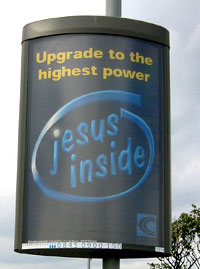
From Google.

Equilibrium is first achieved in the constant examination of our hearts so we can respond properly to the spirit of modernity not easily reconcilable with the demands of the Gospel of Jesus Christ. Attaining that equilibrium calls for a return to the contemplative spirit where we try to maintain our spirit of silence and prayer amid the constant changes in thoughts and beliefs including values often due to the growing efficiency of technology. Let me share with you the very words of a communication expert to conclude this piece that I hope may enlighten us to see the various shades of colors, including shadows and lights that surround us in this modern world today.

The contemplative spirit is not easily acquired, but without it people find it hard to discern the valuable from the worthless, or the enduring from the transitory. Contemplation puts us in touch with reality in a world in which a host of communication technologies work to sustain a multitude of illusions and images: a media world. The contemplative spirit helps us to see and hear beyond and through the sights and sounds we take for granted. The contemplative spirit is an attitude of mind and heart that enables us to focus on the essential, important things. It refuses to be hurried into premature rejection or acceptance of technology. If we Christians allow it to inform our use of communication technologies we shall learn to be realistic, but always hopeful, able to love and reverence our culture even as we strive, with God’s help, to transform it.

James McDonnell, “Communicating the Gospel in a Technological Age: Rediscovering the Contemplative Spirit”.
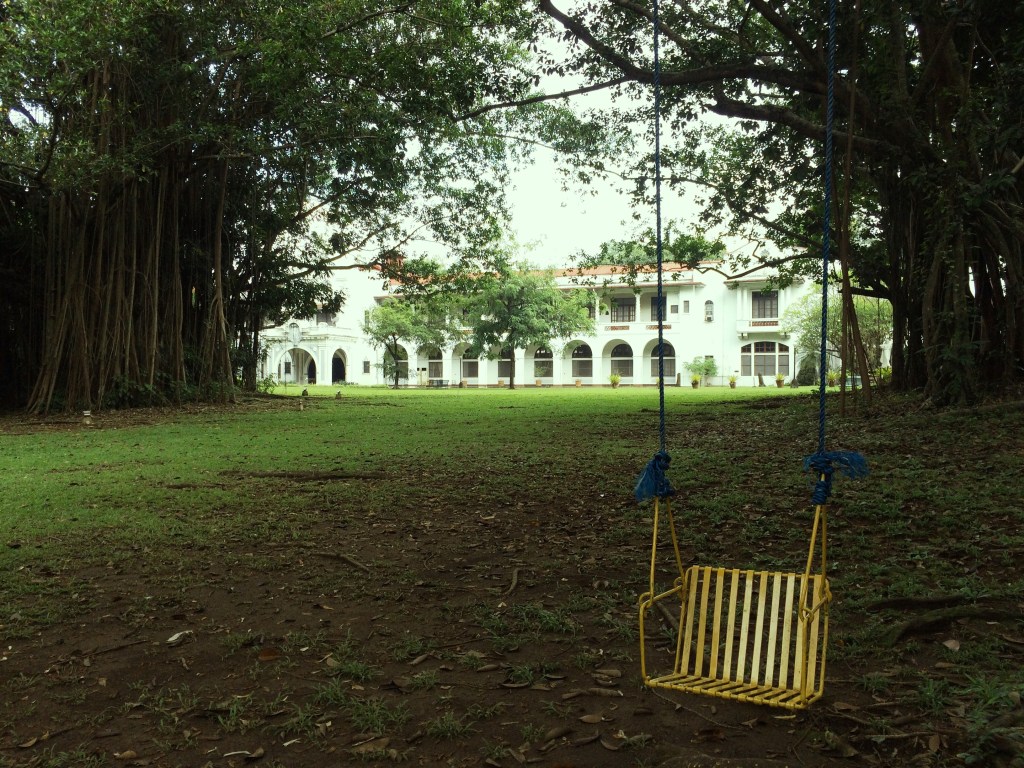
Sacred Heart Novitiate, Novaliches. Photo by author, July 2018.

Christ Comes in Silence

MaiAthens
The Lord Is My Chef Simbang Gabi Recipe-4
19 December 2018
Judges 13:2-7, 24-25///Luke 1:5-25

            Going to funeral wakes can sometimes be humorous especially when people ask me all kinds of questions that sometimes I wonder if I look like the Google page.  One of the FAQ’s I always get is what is the most difficult part in the life of us priests?  Many would always burst into laughter when I tell them that it is when our back gets itchy and we have no one to scratch it, telling them about the saying “ang hapdi matitiis pero ang kati ay hindi” (pains are bearable but not itch).  This is very true that is why I keep three back scratchers made of wooden carved arm with a hand from Baguio in my room, one in the TV area, the second at my study desk and another at my bedside.  But lately I have found another big problem of living alone as a priest when I never knew I had no voice until I celebrate the Mass in the morning!  And how would I know that I do not have voice when I have nobody to talk to in my room or rectory when I wake up early morning except God who is always in silence?  Sometimes it could be embarrassing and even funny but overall, it is no big deal with me.  In fact, being silently alone in my parish is the most wonderful blessing I cherish so much in my priesthood.

            But going back to our voice, it is one of our most valued possessions as priests or even of anyone.  No wonder, the word “voice” itself connotes power in our language usage for to lose one’s voice is also to lose power and ability to lead.  Without the voice, anyone’s ability to communicate is drastically impaired as you could no longer communicate effectively to express your thoughts and your feelings, you could no longer give advice and counsel to others on many things or teach anyone.  In short, to lose one’s voice means never to be heard again.  Today in our gospel we heard the first story by Luke about Christmas, the annunciation of the birth of John the Baptizer to his father Zechariah while he was serving as a priest at the Jerusalem Temple during its most important feast.  An angel appeared to him to announce how God have heard his prayer and of his wife Elizabeth for a child but instead of being filled with joy with the good news from heaven, Zechariah doubted God.

            Then Zechariah said to the angel, “How shall I know this?  For I am an old man, and my wife is advanced in years.”  And the angel said to him in reply, “I am Gabriel, who stands before God.  I was sent to speak to you and to announce to you this good news.  But now you will be speechless and unable to talk until the day these things take place, because you did not believe my words, which will be fulfilled at their proper time.” (Lk.1:18-20)

            One of the rare commodities in the world today is perhaps silence.  Everybody is talking, even cars and elevators and other machines.  When we examine the bible and even our lives, we see that every communication by God is always preceded by silence.  Before God created everything, Genesis tells us that there was silence first.  The beloved disciple John opens his gospel by saying “In the beginning was the word” to show everything with God was in silence.  Jesus Himself was born in the silence of the night at Bethlehem while the gospel accounts tell us nothing much about His childhood except when He was lost and found three days later at the Temple of Jerusalem.  After that finding at the Temple, what we have are the hidden years of Christ when nothing is heard about Him or from Him for 30 years.  And during His brief ministry of about three years, Jesus used to withdraw to the mountains or wilderness to pray in silence.  Such is the importance of silence not only for our spiritual growth and maturity in Christ but according to experts, also for our total well being as persons.

           In starting his Christmas story with Zechariah being forced by the angel to go into silence, Luke is teaching us the essential value of silence in preparing for Christmas.  Luke described Zechariah and his wife Elizabeth coming from families of priests who must be used to speaking, to giving talks, explaining things to many people.  It seems that with his advanced age, Zechariah must be of a significant stature among his peers.  But now, he had been forced into silence by God so that he may have more time to examine things going on inside and in his life, more time for reflection and even for renewal.  His wife Elizabeth appears to be more properly disposed in receiving the good news about the birth of John with her attitude of silence when she went into seclusion for five months saying, “So has the Lord done for me at a time when he has seen fit to take away my disgrace before others” (Lk.1:24-25).  Similarly like her in the Old Testament was the wife of Manoah who remained silent when a man of God told her she would bear a son to be called Samson, “I did not ask him where he came from” (Jgs.3: 6).

             Advent is the presence of God but sometimes when we are overburdened with so many things like anxieties and problems in life, frustrations and disappointments, sickness and death in the family, we become unaware of His divine presence even if we continue to pray and do our religious duties and devotions.  Too often we lack the conscious awareness of God in our lives that we take Him for granted, considering Him more as a given than a presence and a reality.  Like Zechariah who happens to be a priest who must be more attuned and rooted in God, we hardly notice His coming or even doubt Him and His powers.  God is never put off by our questions but what “irritates” Him is when we question Him, when we doubt Him, when we ask about His character.  That is a lack of faith in Him, a lack of trust, and lack of personal relationship and constant dialogue with Him like what St. Joseph had in our reflections yesterday.  Remember, St. Joseph is the most silent person in the Bible.

          Like the stories of pregnancies we have been hearing these past days, Advent is a call for us to moments of “gestational silence” that is deeper than losing one’s voice or being quiet.  Gestational silence, or pregnant silence if you wish which is what gestation is all about, is withdrawing into ourselves not to escape but to finally face and listen more intently to the rumblings and sounds within us and around us, to listen more intently to God who is our only true voice in life.  Like Zechariah in the gospel today, we could be so tired already of doing everything, banging our heads on the wall to solve everything, to answer everything.  Let us force ourselves in these remaining days before Christmas to go into gestational silence to open ourselves to God speaking to us anew with His other other possibilities and new perspectives for us.  After all, it is only God who is our only true voice in this life in Christ. AMEN. Fr.NicanorF.LalogII,Parokya ng San Juan Apostol at Ebanghelista, .Gov. F. Halili Ave., Bagbaguin, Sta. Maria, Bulacan.

*Photo by Dra. Mai B. Dela Pena, sunset in Athens, Greece, 2016.  Used with permission.