

Quiet Storm by Fr. Nicanor F. Lalog II, 04 November 2026
One of the frequently asked question (FAQ) people ask us priests during Undas is why only the name of their departed is mentioned or written for the Mass intentions and prayers for souls?
It is very amusing observing how they wonder of not having the need to write the complete names of their departed loved ones, wary their Mass intentions and prayers might go to somebody else.
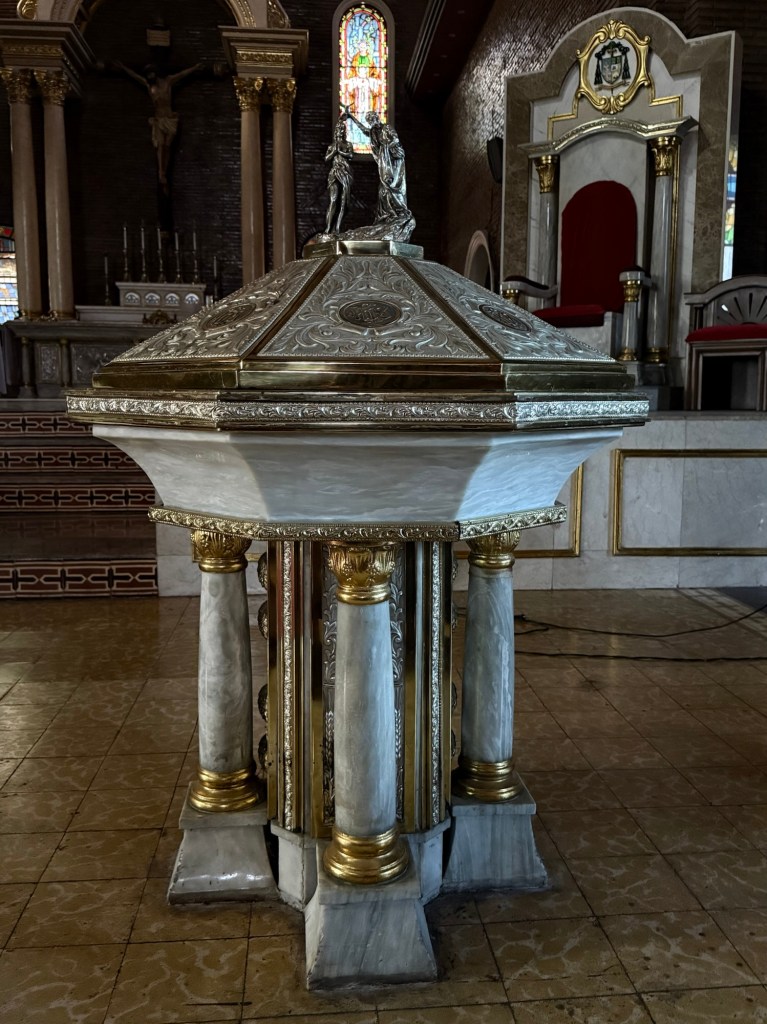
First of all, God knows in his infinite knowledge and wisdom our intentions for our departed loved ones. Most of all, when we were baptized, the priest did not mention our family names because as baptized Christians, we are God’s beloved children. Therefore, we only have one family in God whom we call “Our Father.”
In the Old Testament, there is one short verse I have loved so much since high school seminary taught to us by our teacher now Msgr. Narsing Sampana that has guided me in life especially when feeling so low and lost,
But now, thus says the Lord… “Fear not, for I have redeemed you; I have called you by name; you are mine… Because you are precious in my eyes and glorious, and because I love you…” (Isaiah 43:1, 4).
It is very sad how these days how parents think more of most unique names to give their children than check the calendar of saints or the Bible so that kids may have holy role models in growing up. For the Jews as we see in the Bible, names are not only for identification of the person; the name is also the mission of the person like Jesus that means “God saves” or John, “God is gracious”.
Names are most special because they express and deepen our relationships. We know very well that indeed, the most sweet thing to hear is our name being called because it is more than being recognized but most of all a sign of being valued and remembered.
But, names have deep spiritual meanings too as our invisible lines and connections with each other, whether in this life or eternal life. That’s because names have innate value. And power.

We not only feel good being called in our own name but we feel our heart is changed, like mellowed and gladdened specially when we call the name of someone dear to us, or simply we are nice with. That is why is very important when we pray for others, we also mention their names, making us grow closer with them.
I only realized this now I am old with longer lists of names to pray for. It was my mother who taught me that whenever I pray, I always mention the names so God would know whom to bless! We were still two siblings then living in Project 7 when Mommy taught us with these exact words for prayer right after we have put on our kulambo:
Thank you very much God for today:
Please bless my Daddy Will and Mommy Cory,
my sister Meg and I, Nick. Amen.
Later on came my second sister Bing-Bing came and she was added to our list of names to mention in prayer every night. When Bing was learning to speak and it was her turn to learn to pray, Mommy added another prayer just for her, “God, give me patatas” because she loved potatoes in nilaga, pochero, afritada including those little cubes in menudo!
My list of names to pray for grew as our family grew: our bunso also my only brother Willy Boie came in 1973 and in 1995 Meg married Dino my bayaw. They have four children – Katrina Andrea, Fabiola, Dymphna, and Thomas. Will also had a daughter whom I baptized in my first and only parish, Catherine Darla. All of them had nannies whom I prayed for too, just like Mommy’s caregivers until she died in 2024.
During our 30-day retreat in Cebu, our Jesuit guide Fr. Arthur Shea (+) told us that mentioning the names of those persons we pray for make our prayers truly personal, assuring us that something beautiful happens within us whenever we mention the names of people we pray for. That’s very true.
The most effective prayer is always those most personal when we specify the people with their names and the intentions we pray for. Even if they do not know us because prayers change and transform people, not situations; when people are transformed, relationships improve, peace and harmony happen among us. Mentioning the name of people we pray for is practical as it lessens the anger and negativities we have against any person. Most of all, it is difficult to pray for people we hate and thus, mentioning their names not only make our prayers effective but also affective.
The same is true with people we do not know at all but still pray for like the anonymous drivers who transport us, the vendors and bakers who provide us with all kinds of goods and others who provide us with the goods and services we need daily. When we pray for specific peoples like the the sick, the prisoners in jail especially the innocent ones, and yes, the corrupt government officials, we learn to think more of other people, to see more outside of ourselves and search for those in the margins and forgotten whom God loves so much.
When I was in first year theology in 1993, I was so overjoyed in the historic meeting in Oslo, Norway of Israeli PM Yitzhak Rabin (later assassinated) and the late PLO Chairman Yasser Arafat because I have been praying for peace in Israel since I re-entered the seminary. It convinced me that God answers prayers no matter how simple or complicated it may be. Though peace remains elusive in that part of the world, I still pray for the people in Israel and the Middle East especially after I had visited the Holy Land thrice and now with the war still going on there.
Beloved: First of all, I ask that supplications, prayers, petitions, and thanksgiving be offered for everyone, for kings and for all in authority, that we may lead a quiet and tranquil life in all devotion and dignity (1 Timothy 2:1-2).
When we pray for one another as St. Paul tells Timothy, that is when we begin to identify everyone and find our relationships with them as brothers and sisters whom we must love and respect to make this world a better place to live in. It all begins in our hearts because when we pray, we make a space in our hearts for other people. Then God comes as we find in Jesus Christ’s healing of the centurion’s servant (Lk.7:1-10). See how in this version by Luke the Jews “approached Jesus and strongly urged him to come, saying, ‘He deserves to have you do this for him, for he loves our nation and he built the synagogue for us.’ And Jesus went with them” (Lk.7: 4-6). Jesus answered their prayers because he must have been so surprised with their attitude toward the pagan because finally, they saw not differences but similarities as persons believing in God.
When we mention names of people, that is when we recognize them as one of us too, making our prayers effective and affective as change and miracles begin to happen. Whether in this life or in eternity, for sure. Let us pray for one another. Amen.