“Seasons of Love” from the musical “Rent” (1996)

yellow watch on tabletop
Photo by Vincenzo Malagoli on Pexels.com
LordMyChefSundayMusic//Week XXXIII-B//18 November 2018
And Life Goes On…with Love

         What matters most in this life is not really what we have achieved but what we have become:  have we been more loving, more understanding, more forgiving?  Today’s gospel reminds us of the end of time.  It is something we must not be afraid of but actually anticipate with joy because eventually, we all die.  But we do not simply die by ourselves.  We die in Jesus Christ.  And to die in Christ is to live in love.  The moment we come to terms with life, then, we come to terms with death because that is when we start living in love.  Love is the only measure of life as expressed in this beautiful music from the rock opera “Rent” of 1996.  Enjoy your Sunday with a lot of love with everyone!  A lovely Sunday and week ahead of everyone!

Five hundred twenty-five thousand six hundred minutes
Five hundred twenty-five thousand moments so dear
Five hundred twenty-five thousand six hundred minutes
How do you measure, measure a year?

In daylights, in sunsets
In midnights, in cups of coffee
In inches, in miles
In laughter, in strife

In five hundred twenty-five thousand six hundred minutes
How do you measure a year in the life

How about love?(3x)
Measure in love
Seasons of love
Seasons of love

Five hundred twenty-five thousand six hundred minutes
Five hundred twenty-five thousand
Journeys to plan

Five hundred twenty-five thousand six hundred minutes
How do you measure the life
Of a woman or a man?

In truths that she learned
Or in times that he cried
In bridges he burned
Or the way that she died

It’s time now to sing out
Tho’ the story never ends
Let’s celebrate
Remember a year in the life of friends

Remember the love (3x)
Measure in love
Measure, measure your life in love

Seasons of love
Seasons of love

And Life Goes On…with Love

howietaal
The Lord Is My Chef Sunday Recipe, Week XXXIII-B, 18 November  2018
Daniel 12:1-3///Hebrews 10:11-14, 18///Mark 13:24-32

            A clockmaker was about to finish a grandfather’s clock when the pendulum spoke and begged him not to be given that task of swinging back and forth to measure time.  “I am afraid I might not be able to do my job well when I have to swing every second or 60 times a minute, about 3600 an hour or 86400 a day,” the pendulum explained to the clockmaker who assured him everything would be fine.  The pendulum believed his maker.  Life goes on with the pendulum, tick-tock, tick-tock, sounding the chime every hour long even after his clockmaker had died.  In a sense, our lives are like the pendulum continually swinging, sometimes late, sometimes advanced.  When 2018 started, we felt so unsure of how this year would be but here we are, about to end the year as we look forward for the coming 2019.

           After celebrating All Saints’ Day and All Souls’ Day, we are now in the penultimate week of our liturgical calendar set to close on Sunday with the Solemnity of Christ the King.  Today we are invited to focus on the “end time” called the eschaton or days of fulfillment of all that God has promised.  In fact, every celebration of the Mass is oriented towards this end, especially when we proclaim the mystery of faith, “Christ has died, Christ is risen, Christ will come again.”  In the Apostle’s Creed we profess every Sunday our belief in Jesus Christ “who shall come again to judge the living and the dead” as well as in the “communion of saints, the forgiveness of sins, the resurrection of body and life everlasting.”

             Jesus said to his disciples:  “In those days after that tribulation the sun will be darkened, and the moon will not give its light, and the stars will be falling from the sky, and the powers in the heavens will be shaken.” (Mk.13:24-25)

             Jesus was still in the Temple and the people were marveling at its beauty when he spoke of these words, predicting its fall that would happen in the year 70 AD when Rome sacked Jerusalem.  But most of all, Jesus was speaking here in the classical language of apocalypse (from the Greek apocalypsis or revelation).  It is the same literary genre used in our first reading from the Book of Daniel.  Apocalyptic writings are not meant to be taken literally or even be imagined and pictured in its cosmic upheavals alluded to.  Jesus is not scaring us of the coming tribulations but is trying to evoke in us the image of a new creation dawning where the sun will be darkened, the moon will lose its light as the stars fall before His splendor as the returning Son of Man (see Rev. 21:23).  Recall how in Genesis God first created light by separating it from darkness when earth was all chaos and formless; then, He created the sun, moon, and stars to light the earth by fixing days and nights and years.  “In those days” life was simple and a bliss until sin came and everything was shattered.  In His infinite goodness, God preserved His creation and promised salvation to renew everything in the coming Savior.  “In those days” though there were disturbances and breaks from all the beauty of creation, life went on.  There was no need to destroy everything to start anew.  God perfects His creation amidst the many imperfections we are into.  Just like in our own experiences with the many tribulations we are going through like sickness, losses and deaths.  These words of the Lord and of the prophet Daniel are actually encouraging us to look at the fulfillment of the good news, the Gospel of Jesus Christ Himself personally coming to us, personally involved with us and in us.

             “And then they will see ‘the Son of Man coming in the clouds’ with great power and glory, and then he will send out the angels and gather his elect from the four winds, from the end of the earth to the end of the sky.” (Mk.13:26-27)

             A cousin in Canada emailed me one early Sunday morning last month of his being diagnosed with advanced stage of liver cancer.  A former soldier who had spent ten years in Mindanao as a Scout Ranger, he simply told me to pray for him in his life’s final battle.  More than the sadness is the pain still in my heart with his condition that it took me the whole day to write him back to assure him of my prayers. His siblings along with some cousins and relatives flew to visit him in Toronto, all praying for some miracle.  I chose to be silent in their prayers for a miracle because that very day he told me of his cancer, I have offered him to God.  Like Jesus Christ, it is not being a “kj” or killjoy to focus more on the coming eschaton and apocalyptic realities of present tribulations we are going through.  Death surely comes.  We are all going through many tribulations at the moment as individuals, as families, as communities and as a nation.  And things could even get worst before things get any better, here or hereafter.  That’s the reality of life we must face with joy and anticipation.  The prophet Daniel mentions in his vision seeing God sending us Archangel Michael to help us in our battle with evil in this life.  God recognizes the severity and gravity of our tribulations that He had sent us St. Michael so that life would go on while we await that eschaton that must be our gaze despite not knowing when it would be.  What the Lord is telling us is to learn from the fig tree, to always see each passing day as a changing of season, a time of rebirth, of living in His presence which the author of the letter to the Hebrews implies as always standing and faithful in our duties as disciples of Christ now“seated at the right hand of the Father in heaven”.
 

           Life goes on with all the tribulations in and around us because God never leaves us alone.  There would always be destructions and endings in life to give way to more recreations and new beginnings.  The key is to be like the pendulum, remaining faithful in our task of lovingly serving God among those around us.  In 1996, the rock musical “Rent” opened in Broadway.  Its theme song is called “Seasons of Love” which says life is measured not in minutes or time but in love.  Very true!  The most important and memorable events of our lives are those moments we have loved or we have been loved.  To live is to love and that is why if you want to be eternal, love for only love shall remain.  And it is love that will see us through in this life that is passing.  You are loved!  AMEN.Fr. Nicanor F. Lalog II, Parokya ni San Juan Apostol at Ebanghelista, Gov. F. Halili Ave., Bagbaguin, Sta. Maria, Bulacan 3022.

*Photo by Mr. Howie Severino of GMA-7 News, Taal Lake, 13 November 2018.  Used with permission.  Photo below from Google.

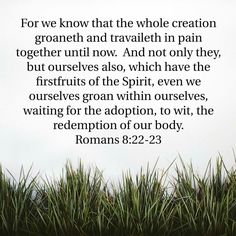
romans823

“That’s All” by Nat King Cole (1953)

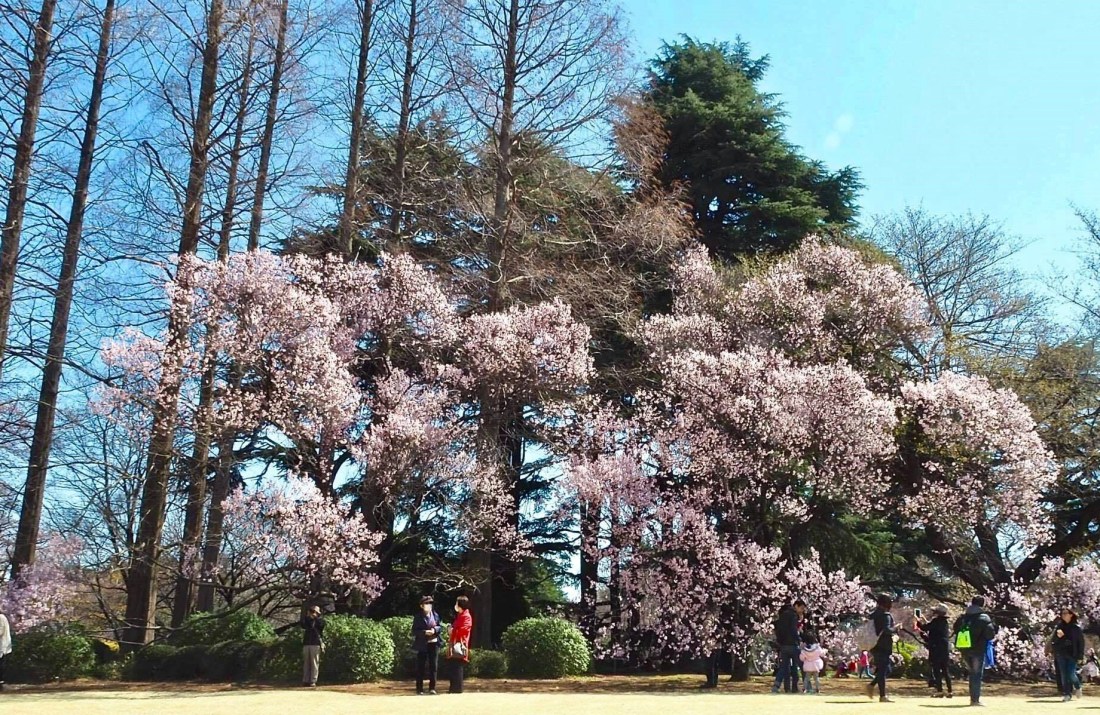
MaiTokyo2
LordMyChefSundayMusic//Week XXXII-B//11 November 2018
Giving Jesus


I can only give you love that lasts forever
And a promise to be near each time you call
And the only heart I own
For you and you alone
That’s all, that’s all

I can only give you country walks in springtime
And a hand to hold when leaves begin to fall
And a love whose burning light
Will warm the winter night
That’s all, that’s all

There are those, I am sure, that have told you
They would give you the world for a toy
All I have are these arms to enfold you
And a love time can never destroy

              This for me is the ultimate love song of all.  So perfect for this Sunday gospel where Jesus is asking us to give Him our total self like the poor widow who put two coins worth a few cents into the donation box in the temple.  When we really come to think, God has given us with so much but we have given so little to Him and with others.  In this age of social media, it is very disappointing to see especially family members gathered at the table or the living room each holding a cellphone or a tablet, busy with other people in the net forgetting the person right beside them.  This Sunday Jesus is asking us to reconnect with Him as well as with our family and friends minus those gadgets.  Let us reconnect person to person, feeling each other’s presence.  You will be surprised at the amazing benefits of rediscovering God and others.  Let us ask the Lord that we may have the grace to give more of ourselves, more of our time, and more of Jesus in us.  Imagine Nat King Cole is Jesus singing to you this song…

If you’re wondering what I’m asking in return, dear
You’ll be glad to know that my demands are small
Say it’s me that you’ll adore
For now and ever more
That’s all, that’s all

If you’re wondering what I’m asking in return, dear
You’ll be glad to know that my demands are small
Say it’s me that you’ll adore
For now and ever more
That’s all…that’s all

*Photo by Dra. Mai B. Dela Pena, Tokyo, 2016.  Used with permission.

Giving Jesus

MaiShowaKinen2
The Lord Is My Chef Sunday Recipe, Week XXXII-B, 11 November 2018
1Kings 17:10-16///Hebrews 9:24-28///Mark 12:38-44

            Maybe you have heard the story of how the chicken and the cow argued who between them gives the most to their master.  The cow said she gives the most because from her supply of milk, the farmer is able to have cheese as well.  But the chicken argued that their master have to go through tedious work in milking the cow unlike with her when she simply has to lay eggs in her nest that can be easily obtained every day.  The pig heard their discussion, praised them both for their daily supply of milk and eggs to their master but reminded them that for her to give ham and bacon, she has to die first by offering her whole life as food.

            Jesus is still in the temple area teaching the people and His disciples some important lessons before His coming Passion, Death, and Resurrection.  Last week He had taught us of asking questions of the above and higher things that is actually a search for God which is the most essential in life.  Today, Jesus deepens this search for God by reminding us of the need to give our total selves to Him in order to find and have Him.  First we ask Jesus, and now we give our total selves to Jesus.

            In the course of his teaching, Jesus said to the crowds, “Beware of the scribes, who like to go around in long robes and accept greetings in the marketplaces, seats of honor in synagogues, and places of honor in banquets.” (Mk.12:38-39)

            The first step in giving our total selves to God and to others is to go back to what I call as our “hallowed hiddenness” in God.  We now live in the midst of social media where everything is “exposed” with nothing hidden from us anymore.  Everyone is either a “bida” or in a “pabida” mode.  Bida is the star or lead character in a movie or a TV show.  It is from the Spanish word vida that means life (contravida is the villain, the opposite of life).  Jesus was attacking here the scribes for being so “pabida”, always seeking popularity and admiration from the people.  They have entirely forgotten God and most likely must have thought of themselves as God Himself.  Sad to say, this continues to our own time.  Check Facebook and you see what I mean.  We have become a clapping generation because everybody is a bida.  Even in church where solemnity of the Mass is sacrificed on the pretext of making it more celebratory and participative that priests encourage so much clapping of hands.  How sad that some Masses have become a variety show with the priest becoming a celebrity that in the process, Jesus is forgotten.  Today’s warning by Jesus is personally directed to us who have become the modern scribes, reminding us how we must present ourselves more before God than before humans.   There is always this danger of hypocrisy and showmanship in every kind of service especially in the Church which is also the reason why laypeople quarrel among themselves on who is the real bida.  When this happens especially in the Church, we all become a kontrabida of the real and only bida, Jesus Christ.

            CNN reported recently that amid South Korea’s being the most wired country in the world with the fastest internet speed, it is now building many public libraries and centers where people can relax minus the ubiquitous smartphones and other gadgets.  The report says how the Koreans have realized the need for silence and stillness to truly progress.  Likewise, many companies and offices in Silicon Valley are reportedly encouraging their people to drop all gadgets once in a while during work to recharge and be refreshed in silence to discover new ideas.  Some tech companies there have even encouraged their workers to go hiking without bringing their gadgets to reconnect with self, others and nature.  Even the latest top of the line model of the iPhone is said to have a built-in monitor that reminds a user for being too focused with the gadget for a certain period of time.  These are all wonderful developments of how people are slowly rediscovering anew the need to be alone, to be still, and be silent.  We need to recapture our “hallowed hiddenness” with God so we can be whole again as a person.  The problem with too much exposure like in FB where even coffee breaks are posted is not only the growth of narcissism and superficiality among us but the grave mistake that one’s meaning in life is measured with the number of likes or followers one gets.  Unknown to us, the more we become visible and popular, the more we also become dependent on others for having meaning in life.  We can only find our true selves and meaning of life in God, the root of our being.  God is always found in emptiness and nothingness, not in abundance of the world.

            In the first reading we find this hallowed hiddenness in God in the beautiful story of the faith of Elijah and of that pagan widow of Zarephath.  Elijah was fleeing from the soldiers sent to kill him after telling King Ahab and his queen Jezebel that there would be drought in Israel due to their worship of baal.  He was first directed to a mountain stream where ravens brought him bread daily.  When the stream ran dry, God told Elijah to hide in Zarephath near Sidon in the home of a pagan widow.  This story of Elijah obeying God in a land of scarcity and danger (Zarephath was under the rule of Jezebel’s father) shows us his complete faith in God, of abandoning himself entirely with God.  The same is true with the pagan widow who gave everything to Elijah, believing in the promise of God told by the prophet.  In their hiddenness in God, relying solely on Him alone than with themselves and with others, Elijah and the pagan widow along with her son never went hungry until the rains came.  When we try to spend some hallowed hiddenness with God daily, taking a break from our busy schedules and social media, that is when we are purified to become better persons filled with the Spirit and substance.

            This is also the point of Jesus in calling His disciples to tell them later while seated opposite the treasury that the poor widow who put in two small coins worth a few cents gave more than the others for she “has contributed all she had, her whole livelihood.” (Mk.12:44)  The issue at hand is not about big money and little coins or amount of contributions but the spirit behind the act of giving.  Jesus was evoking here His coming total gift of self on the Cross that would soon take place which the author of the Letter to the Hebrews underscored in today’s second reading.  According to Pope Francis, “Giving and forgiving means reproducing in our lives some small measure of God’s perfection, which gives and forgives superabundantly” (Gaudete et Exsultate, 81).  Indeed, God has given us with so much but we have given so little.  May we learn to give more of ourselves and more of Jesus in us with others.  AMEN. Fr. Nicanor F. Lalog II, Parokya ni San Juan Apostol at Ebanghelista, Gov. F. Halili Ave., Bagbaguin, Sta. Maria, Bulacan 3022.  Email:  lordmychef@gmail.com   

*Photo by Dra. Mai B. Dela Pena, Showa Kinen Garden in Japan, 2018.  Used with permission.

“(They Long to Be) Close to You” by Gwen Guthrie (1986)

Birds
LordMyChef Sunday Music//Week XXXI-B//04 November 2018
Asking Jesus

            We are known by the questions we ask, not by the answers we give that are often wrong or far from truth and reality.  Asking the right question leads us to the right answer and solution to our problems.  Even if we cannot find any ready answer to our questions but for as long as we are asking the right ones, we find clues for their answers as we move on with our lives.  The questions we ask often reveal who we really are, indicating our focus or distractions in life.

           Been thinking of a song about questions but this piece popularized by the Carpenters in 1970 composed by Burt Bacharach and Hal David kept on playing in my mind with the opening lines “Why do birds suddenly appear, Every time you are near?  Just like me, they long to be close to you.”   Well, the song is about getting closer to a beloved, exactly the meaning of the question asked by the scribe to Jesus in our gospel this Sunday, “Which is the first of all the commandments?” (Mk.12:28).   We can easily identify with that scribe with his honest question because it is more than the most important commandment to follow but about God Himself!  It is a deep longing and desire to rise above, to be closer to God, to find God amidst all the many laws and requirements being asked of us most of the time, just like the song (They Long To Be)Close To You.

           For our LordMyChef Sunday Music today, we have chosen the more jazzy cover by the late Gwen Guthrie released about this time in 1986.  Enjoy the beat, feel the music, and keep asking questions, keep searching.  We may not have all the answers right away but we have a loving and merciful God who knows all the answers to our questions, who listens and answers them always in His own time.

Photo by the author at Malagos Bird Sanctuary, Davao City, August 2018.