Asking Jesus

45333784_1945748215727504_3541947692357779456_nThe Lord Is My Chef Sunday Recipe, Week XXXI-B, 04 November 2018
Deuteronomy 6:2-6///Hebrews 7:23-28///Mark 12:28-34 
                          

            We have seen these past two weeks Jesus in His journey back to Jerusalem asking us – through James and John, and the blind Bartimaeus – the quintessential question, “What do you want me to do for you?”  But this Sunday, we find a reversal of roles when, One of the scribes came to Jesus and asked him, “Which is the first of all the commandments?” (Mk.12:28)

             What question would you ask Jesus if given that chance?

             Jesus had finally reached Jerusalem, frequenting the Temple area which He had cleansed upon His arrival on Palm Sunday.  Mark tells us the building up of antagonism against Him by His enemies asking Him with many questions.  First were the chief priests, scribes and elders who asked about His authority in cleansing the Temple and then the Pharisees who teamed up with the Herodians to ensnare Him with the question about the paying of taxes to the emperor.  Last to test Jesus were the Sadducees who asked about the resurrection by presenting to Him the case of a woman who had married seven brothers after dying one after the other.  Mark tells us how Jesus satisfactorily answered all their questions that people were so amazed with Him.  It was at this time when a scribe who had heard them disputing and saw how well Jesus had answered them came forward with the question we also ask up to this time, “Which is the first of all the commandments?”

             Like that man who asked Jesus what must he do to inherit eternal life (Mk.10:17), we can also identify with this scribe whose question is without guile.  Like him, we find ourselves in many occasions asking the same question due to confusions from the so many things to be followed and fulfilled to be a good person and enter heaven.  We know deep in our hearts like him how humans have stretched God’s commandments that have now exceeded more than ten that many could not even recite in order.  Like this scribe, we have seen how faith and religion have ceased to be a way of life but more of casuistry, of obeying and keeping rules that made God look like a cop watching over us, ready to apprehend us for any violations instead of being a loving Father living with us.  Like that scribe, deep in us is a longing for something higher, of something really akin with God than with our present situation when everything seems to be relative and on ground level.

             We are known by the questions we ask, not by the answers we give that are often wrong or far from truth and reality.  Asking the right question leads us to the right answer and solution to our problems.  Even if we cannot find any ready answer to our questions but for as long as we are asking the right ones, we find clues for their answers as we move on with our lives.  Here in our gospel today we find how our questions reveal who we really are, indicating our focus and distractions in life.  In preparation for His coming pasch in Jerusalem, Jesus would reveal to us today and next Sunday the more essential things with God regarding our obedience to His laws and our attitude on giving.  So, let us reflect on the reply of Jesus to the question of the scribe which is based on the “Shema Israel” prayer that every pious Jew must know by heart:  “The first is this:  ‘Hear O Israel!  The Lord our God is Lord alone!  You shall love the Lord your God with all your heart, with all your soul, with all your soul, and with all your strength.’  The second is this:  ‘You shall love your neighbor as yourself.’  There is no other commandment greater than these.” (Mk.12:29-31) 

           Shema Israel is a verbatim quote from Deuteronomy 6:4-5.  It is a prayer that evolved from the Jews’ experience and reflection of the Ten Commandments as a love involving their relationship with God and with others.  More than a list of laws to be followed, the Decalogue became the sign of God’s covenant with Israel, a relationship to be kept with God at its center whose face is found among everyone as brothers and sisters.  Hence, when the scribe asked Jesus which is the first of all the commandments, it was a desire to find God Himself.  And when Jesus saw how the scribe had understood His answer, He told him “You are not far from the kingdom of God.” (Mk.12:34) 

           Observe that child-like attitude of the scribe with his question.  He was looking up to Jesus, looking for God in Him.  When we ask Jesus any question, that is the only attitude required of us.  Recall the different questions asked to Jesus in the daily readings last month like those concerning inheritance or how many would be saved (Lk.12:13, 23), or if His teachings are meant for us or for everyone (Lk.12:41).  See how Jesus ignored the questions because they were the least of His concerns.  Instead, He proceeded with His teachings to emphasize the importance of storing riches in heaven, passing through the narrow gate and being a wise and faithful steward.  When a teacher of the law asked Jesus who is my neighbor, the Lord replied with the parable of the Good Samaritan so that he would realize in himself that we are all neighbors who must show love and concern for one another.  When Pilate asked Jesus during His trial, the Lord clarified his questions so as to remind him that He is more than of this world.  And speaking of the fourth gospel, it is only John who had recorded Jesus repeatedly saying His being lifted up in glory, that is, His crucifixion when He would draw everyone to Himself (Jn.12: 32).  Here we find my dear readers how that every time we ask Jesus a question, the answer would always be found on His Cross because we can only look upward to Christ crucified.  It is only on the Cross can we be led to higher things like God Himself!  Ask Jesus any question like:

        Do you love me, Lord?
        Why all the sufferings in the world?
        Where are we going?

          Try asking Jesus like a child, like that scribe and most likely, when we see His pains and sufferings on His outstretched arms and folded legs, head crowned with thorns with expressive eyes and lips filled with love, we find His answers on the Cross.  This is why Jesus is “able to save e to save those who approach God through Him (Heb.7:24-26)” because He is our High Priest who literally hanged high up on the Cross for us.  May you be blessed to find God in your questions to Jesus!  AMEN. Fr. Nicanor F. Lalog II, Parokya ni San Juan Apostol at Ebanghelista, Gov. F. Halili Ave., Bagbaguin, Sta. Maria, Bulacan 3022.  Email: lordmychef@gmail.com

*Photo by Richard Val Candelaria.  Used with permission.

Jesus Calls Us In Our Blindness

RaffySunset3
The Lord Is My Chef Sunday Recipe, Week XXX-B, 28 October 2018
Jeremiah 31:7-9///Hebrews 5:1-6///Mark 10:46-52

           After my Mass last Sunday evening, a friend sent me a text message about their janitor who had committed suicide at the top floor of their new school building that afternoon.  She had sought my opinion a few weeks ago about that janitor suffering from depression, and later brought him to a professional for evaluation and counselling by personally paying for it.  But his condition deteriorated until he hanged himself that Sunday afternoon.  What is very disturbing with the suicide story is the seeming lack of support for the victim by their school officials.  And, as if to rub salt on his wounds, an HR officer of the school went to see the janitor at their home Friday before the suicide to serve his termination paper after going on AWOL for several weeks.  It seemed to be the final straw that hit the camel’s back, so to speak, that the poor janitor had totally lost all hopes in life that led to his tragic end Sunday afternoon.  My friend was very sad, deeply pained – and rightly so! – as it happened in their Catholic school run by religious priests and brothers.  Suicides do happen especially these days and there is no need to blame or pin on anybody, but to hear stories of neglect and lack of concern is another thing. One life is always too many to lose in senseless deaths like suicide.  As I prayed over today’s gospel, I cannot resist seeing in that school janitor the blind Bartimaeus, begging and shouting for attention, seeking compassion but alas, many in the crowd were so blind that they ignored him, except maybe Jesus, who knows might be passing by that Sunday afternoon and stopped for another lost soul in our modern Jericho.

         As Jesus was leaving Jericho with his disciples and a sizeable crowd, Bartimaeus, a blind man, the son of Timaeus, sat by the roadside begging.  On hearing that it was Jesus of Nazareth, he began to cry out and say, “Jesus, son of David, have pity on me.”  And many rebuked him, telling him to be silent.  But he kept calling out all the more, “Son of David, have pity on me.”  Jesus stopped and said, “Call him.”  So they called the blind man, saying to him, “Take courage; get up, he is calling you.”  He threw aside his cloak, sprang up, and came to Jesus.  Jesus said to him in reply, “What do you want me to do for you?”  The blind man replied to him, “Master, I want to see.”  Jesus told him, “Go your way; your faith has saved you.”  Immediately he received his sight and followed him on the way. (Mk.10:46-52)

          Last Sunday we reflected how Jesus wanted us to be radical in following Him by going back to the roots (radix in Latin) of our discipleship which is His Cross of suffering and death.  To be radical disciples of Jesus, we also reflected of the need to subvert or overturn our secular ideas of leadership based on power and position by imitating Christ’s kind of loving service that is always hidden in humility.  Today’s gospel is more than a story of the healing of Bartimaeus but also of responding to Jesus’ call for us to remove our different kinds of blindness that prevent us from closely following Him on the road to Jerusalem.  And the first step healing our blindness is deepening our faith in Jesus as the Christ.  Recall that the journey of Jesus back to Jerusalem started at Caesarea Philippi last month when He asked the fundamental question every disciple must personally answer, “who do you say that I am?” (Mk.8:29) 

          Bartimaeus was physically blind but it was very clear with him that Jesus of Nazareth is the Christ, the “Son of David” who would save Israel.  Despite his blindness, Bartimaeus “saw” in Jesus through the many stories he must have heard about Him that He is the fulfillment of God’s promise that Jeremiah prophesied in our first reading, “the Lord shall deliver Israel and bring her back from exile, gathering them all especially the blind and the lame, consoling them and guiding them to brooks of water, on a level road, so that none shall stumble.” (Jer.31:7-9)   His physical disability did not hinder Bartimaeus in growing in faith, “seeing” God as a loving Father who looks after His children especially the sick like him, healing and consoling them that he shouted “Jesus, Son of David, have pity on me.”  Observe that despite his being a blind beggar, Bartimaeus neither asked for his sight nor for any money or material thing except for God Himself.  When he told Jesus that he wanted to see, it was actually a plea for deeper faith in God!  Contrast this with the request of the “seeing” Twelve who were all blinded with ambitions, always debating who among them is the greatest, always seeing selves but not God and others.

          In my 20 years of priesthood, I have realized that most people who come for help are more in need of spiritual things like the warmth of friendship, a pair of listening ears for their many burdens with some sprinklings of humor, a lot of affirmation, prayers and compassion.  Faith in God always leads to faith with others who are also looking for someone to encourage and guide them to grow and mature in that faith.  In our modern Jericho of today, may we share Jesus to the many Bartimaeus longing for that warm and loving human face who can recognize and smile at them, pat their shoulders, and soothe their souls by accompanying them in their journey in life that is often filled with many pains and hurts.  Let us not be blinded with life’s many pursuits where there are no real winners that later in life would fill us with many regrets that make us wish to have loved and smiled more, have been more forgiving, kinder or crazier and funnier.

          Being healed of our blindness to mature in deep faith in Christ is a long process.  This is why Jesus is always passing by, calling us in spite of our blindness for He knows so well our weaknesses.  He is willing to stop to heal us so we could regain our sight, asking us with the same question He had asked Bartimaeus and the brothers James and John last week, “What do you want me to do for you?”  Like Bartimaeus, we can only answer that question truthfully if we are willing to leave the roadside to follow Jesus on the middle of the road that is always filled with danger and difficulties.  Like Bartimaeus, we can only answer that question truthfully if we can throw aside our cloaks, to strip ourselves naked of the many false securities we rely on that hamper us in our journey to Jerusalem.  Trust only in Jesus the Christ like Bartimaeus, following Him every Sunday in the Eucharist where He, as our High Priest (second reading) gives us His Body and Blood to restore our sight and strength in this journey.  Amen.  A blessed Sunday to you!Fr. Nicanor F. Lalog II, Parokya ni San Juan Apostol at Ebanghelista, Gov. F. Halili Ave., Bagbaguin, Sta. Maria, Bulacan 3022.  Email:  lordmychef@gmail.com

*Photo by Mr. Raffy Tima of GMA-7 News, sunset in Dubai, October 2018.  Used with permission.


Jesus is a Radical

44157335_373059289901700_9121462066467569664_n
The Lord Is My Chef Sunday Recipe, Week XXIX-B, 21October 2018
Isaiah 53:10-11///Hebrews 4:14-16///Mark 10:35-45

             Twenty years ago, a popular brand of clothing came with shirts printed with the iconic face of Che Guevarra.  It was the most “in” or most cool to wear among teenagers though many of them knew nothing who Che Guevarra is.  In a newspaper interview, the marketing manager of the clothing company explained the image of the Cuban rebel leader perfectly fit their fashion sense that is supposed to be “revolutionary”.  It may sound funny and superficial but that is how we often see a rebel who is both a radical and a subversive trying to destabilize the status quo, even out to destroy everything to start a new beginning in government and society.

             But that is not the essence of the word radical which came from the Latin word “radix” that means “roots”.  To be radical means to go back to the roots of a belief or a system like in government and in religion.  So often, as the radical strives to go back to the roots of a belief or system, he is also labeled as subversive because of the need to overturn or remove false images and ideas to bring out the original sense.  Last Sunday during canonization of new saints led by Pope Paul VI and Salvadoran Archbishop Oscar Romero, Pope Francis said Jesus is a radical when He told a man to sell his possessions, give to the poor its proceeds and to come follow Him.  It was a very radical step because that is the very root of eternal life which is to leave everything behind for God.  And in that sense, indeed, Jesus is a radical and a subversive too.

             Jesus summoned them and said to them, “You know that those who are recognized as rulers over the Gentiles lord it over them, and their great ones make their authority over them felt.  But it shall not be so among you.  Rather, whoever wishes to be great among you will be the slave of all.  For the Son of Man did not come to be served but to serve and to give his life as a ransom for many.” (Mk.10:43-45)

             Keep in mind that Jesus is now approaching Jerusalem and had predicted for the final third time to the Twelve His coming Passion, Death, and Resurrection.  And He is intensifying too His teachings to His disciples and to us in these remaining six Sundays before we usher in Advent Season for Christmas next month.  In no uncertain terms, He clarifies today the true meaning of discipleship when the brothers James and John requested Him that they be seated beside Him when He reigns in glory.  The two brothers have not fully grasped the full meaning of the pasch of the Lord.  They have blindly followed Him because they knew He would triumph in the end and would want to ensure that they would not miss every bit of His victory.

             The same thing is true with us when sometimes we are like James and John, willing to suffer and bear all hardships in exchange of something so precious, of something that would greatly benefit us after all the sacrifices.  As we would say in Filipino, “hindi na bale, basta…” wherein there is always the overarching sense of rewards in every suffering.  No wonder, many politicians are willing to forego of any little sanity and dignity left in them, sacrifice everything and everyone including family and honor just to be elected into office because of the rewards.  The late Jesuit Fr. Thomas Green used to call this in his books as “humility with a hook” when people would “humbly” bear everything in exchange of a great personal favor.  In that case, there is no real suffering nor service or love at all!

             Jesus is asking us today to be radical in our being Christian, for us to go back to the very root of His mission, that is, save the world by dying on the cross.  And that means we cannot be His disciples and have access to salvation without sharing in His death in order to have a part in His resurrection.  This is the radical idea too of Isaiah’s oracle in the first reading when God said how through the suffering of His servant – the coming Christ – “shall justify many, and their guilt he shall bear.” (Is. 53:11)  Jesus on the cross is the supreme manifestation of the Father’s love for us all and the ultimate reason for all our hopes in life.  Therefore, like Christ, it is into the Father’s hands that we must entrust the future without expecting anything in return!  And this we can achieve if we go back again to our roots, to being like a child confidently trusting our parents that everything would be perfectly well in life.  Like a child, we must learn to believe and to love simply without thinking of how things would eventually turn out.  Like a child, let us simply love and just do it for love.  Period.

             To radically follow Jesus means we also have to subvert, that is, overturn all our ideas about Him and one another.  When Jesus spoke of His “baptism” and “cup of drink” to James and John, He was asking them and us today to cast away and forget all our human standards and conventions of discipleship as if we are entitled to anything at all.  That God blesses only people with comfortable and affluent life, that God loves only those who are good… these are not true!  If wealth and health are the true measures of the goodness of God, then He is not good at all because there are more people suffering financially, emotionally, physically and spiritually.  In fact, in my own experience and among many people, I would dare and radically claim that when we go through many sufferings, it means God trusts us so much that we can handle and bear such trials in life like His Son Jesus Christ on the Cross.  Rejoice when you are going through difficulties because God loves you and believes in you!  Remember that our relationship with Jesus and with one another is always based on a life of service, of servanthood wherein we try our best to make the world more humane as possible, enabling the kingdom of God to come.  It is so unlike the world where relationships are based on power and domination that many of our politicians have turned politics into a family business by creating political dynasties that ironically isolate them from others and from God.

              It is always difficult to live radically as a disciple of Christ but let us be consoled by the words of the author of the Letter to the Hebrews who said we have in Jesus a high priest who “has similarly been tested in every way” (Heb.14:15) like us so that when discipleship becomes so difficult for us, “let us confidently approach the throne of grace to receive mercy and to find grace for timely help.” (Heb.4:16)  This Sunday, let us not be afraid to go back to our roots in God through Jesus Christ who abandoned everything into the Father’s hands to be a servant of everyone.  Let us be radical in our love and service for one another.  A blessed Sunday to everyone!  AMEN. Fr. Nicanor F. Lalog II, Parokya ni San Juan Apostol at Ebanghelista, Gov. F. Halili Ave., Bagbaguin, Sta. Maria, Bulacan 3022.  Email:  lordmychef@gmail.com

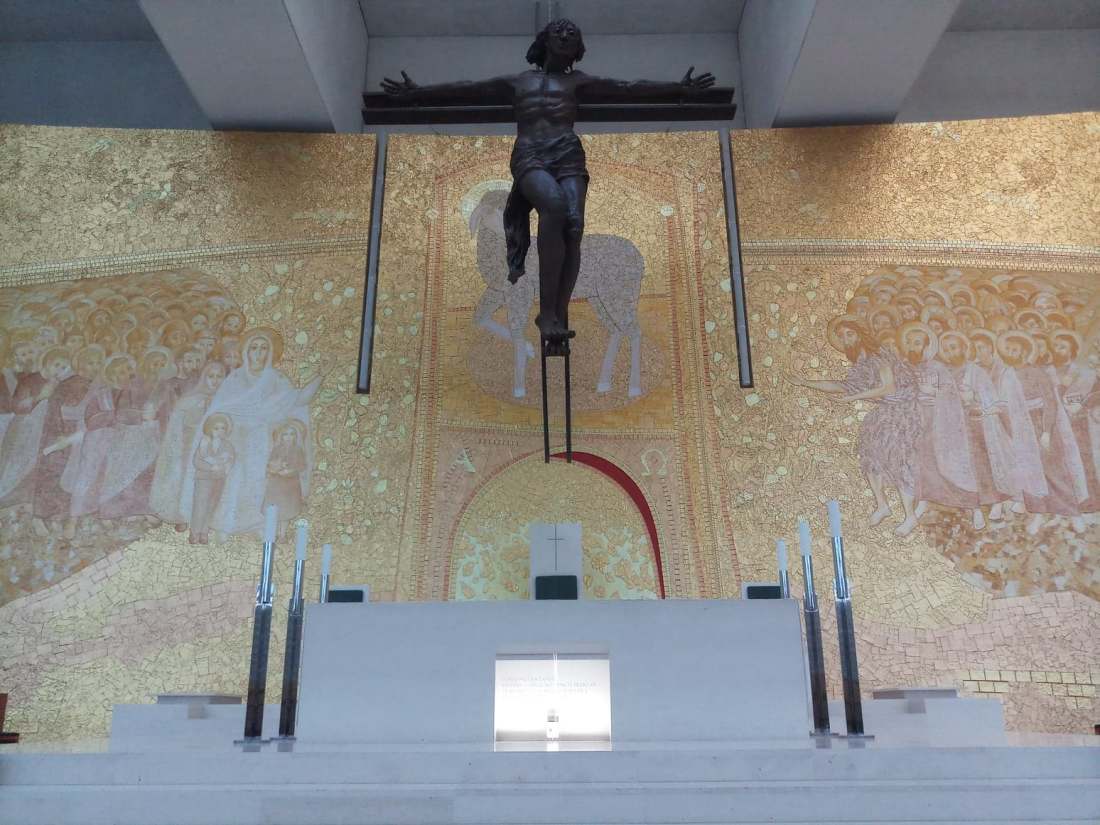
*Photo by my former student at ICSB-Malolos, Arch. Philip Santiago at the Basilica della Santissima Trinita, Fatima, Portugal, October 2018.  Used with permission.

Something’s Gotta Give

autumnkid
The Lord Is My Chef Sunday Recipe, Week XXVIII-B, 14October2018
Wisdom 7:7-11///Hebrews 4:12-13///Mark 10:17-30

            As Jesus was setting out on a journey, a man ran up, knelt down before him, and asked him, “Good teacher, what must I do to inherit eternal life?” (Mk.10:17)

            Each one of us can readily identify with this man because we all carry in our hearts the same question he had asked Jesus.  As we have reflected last Sunday, it is one of the FAQ’s of all time to Jesus next to the Pharisees’ “is it lawful for a husband to divorce his wife?”(Mk. 10: 2)  In our reflection last week, we also said how Jesus answered both questions by bringing us back to God who is our ultimate source and end in life.  Last Sunday, Jesus explained how God planned our relationships “in the beginning” when He created man and woman while today He tells us what to do to inherit eternal life.  So, what is to go back to God?

           First, going back to God to inherit eternal life is reading and studying the Sacred Scriptures prayerfully.  We always meet God in His words found in the Bible.  In enumerating to the man some of the commandments, Jesus reminds us to always consult and fulfill the Laws handed down by Moses in the Old Testament.  Moreover, the second reading today assures us that “the word of God is living and effective, sharper than any two-edged sword, penetrating even between soul and spirit, joints and marrow, and able to discern reflections and thoughts of the heart.  No creature is concealed from him, but everything is naked and exposed to the eyes of him to whom we must render an account.” (Heb.4:12-13)   His words are living because God is living for He Himself is life, personally speaking to us in the Sacred Scriptures!

            Second, going back to God to inherit eternal life is acting on His words by forgetting one’s self in Christ, taking our cross to follow Him.  It is not enough to desire God, to read and listen to His words.  Remember how Herod also loved to listen to the words by John the Baptist and later of Jesus Christ but never had the courage heed them.  We need to have courage to go back to God because He would always direct us to places and instances we never imagined as Jesus told Peter before His ascension at Tiberias.  See how Mark presented to us today the progression of the teaching of Jesus to that man.  Before replying to his question, Jesus chided him, “Why do you call me good?  No one is good but God alone.” (Mk.10:18)  Christ must have seen something deeper with this man that right away He directed him to God through His Laws as the answer to his question.  The man was sincere with his question, unlike the Pharisees last Sunday who asked only to “test” Jesus.  The Lord must have seen him as a possible disciple being a “just man of Israel” who was molded by observance to the Laws, truly searching and waiting for the Messiah and day of salvation.  Then, in a dramatic fashion as recorded by Mark, the Lord challenged him to leave everything behind for God:  Jesus, looking at him, loved him and said to him, “You are lacking in one thing.  Go, sell what you have, and give to the poor and you will have treasure in heaven; then come follow me.” (Mk.10:21)

            Oh how we are very much like that man again, when our faces would fall as we walk away sad from the loving face of Jesus because we could not give up so many possessions we value more than God!  Going back to God means “something’s gotta give” – are we willing to let go of ourselves and of our possessions to inherit eternal life?  In 2003, Jack Nicholson and Dianne Keaton starred in a movie called “Something’s Gotta Give” that is about giving up one’s self, offering some sacrifices to experience real love, real peace and real joy.  All the more are these true if we want to inherit eternal life when we choose God more than anything!  This was the reflection of the author of the Book of Wisdom in the first reading:  he had realized while in a progressive and affluent society of the Greek world at that time that everything in life fades and passes away except Wisdom which is the personification of God:  “Yet all good things together came to me in her company, and countless riches at her hands.” (Wis.7:11)

            Last Tuesday, there were two massive gatherings of people in the country:  one at the Manila Cathedral where the relic of the incorrupt heart of St. Padre Pio was venerated and the other were at the various lotto outlets scattered throughout our archipelago.  The sights have reminded me of Charles Dickens’ A Tale of Two Cities that perfectly describe them:  “It was the best of times, the worst of times, it was the age of wisdom, the age of foolishness, it was the epoch of belief, it was the epoch of incredulity… we had everything before us, we had nothing before us, we were all going direct to Heaven, we were all going direct the other way.”  What I just want to share here is the contrast of the scenes:  the people more concerned with life here on earth, of instantly becoming rich by hitting the one billion peso prize despite the odds of one in 40 million and those wishing for miracles who braved the sun and the rains for six hours just to get near the relic of the incorrupt heart of St. Pedro Pio.  There is nothing really wrong with betting in lotto and in venerating a relic; problem is when people see them as an end in itself, giving rise to “gambling mentality” and “spiritualization”.  The former is the attitude of some people wishing to get rich without working hard while the latter is a simplistic view on leap of faith.  Something’s gotta give if we want to be rich and be blessed!  But if we are wise, we would rather be working to inherit eternal life because it is something Christ has assured us already when He offered Himself on the Cross.“All things are possible for God” in the sense that He does everything to get us back with Him in heaven that is for everyone unlike winning the lotto that is so exclusive to just one or two winners.  How unwise that many of us would rather still do whatever is needed to win that elusive jackpot than have that assured salvation in Christ!

           When we come to consider everything, we realize that what we must really do to inherit eternal life is to be like children.  Twice in these past four weeks that Jesus had taught the need to be like children.  When we examine His life and teachings from His birth to His death and resurrection, everything in Jesus was being like a child, of abandoning His self completely to the Father like a child because “the kingdom of God belongs to children… whoever does not accept the kingdom of God like a child will not enter it.” (Mk.10:14-15)  Children teach us many lessons about giving up everything for the most valuable thing they can have.  This is the attitude Christ demands from us if we wish to join Him in His journey back to Jerusalem, back to God.  AMEN. Fr. Nicanor F. Lalog II, Parokya ni San Juan Apostol at Ebanghelista, Gov. F. Halili Ave., Bagbaguin, Sta. Maria, Bulacan 3022.  Email:  lordmychef@gmail.com

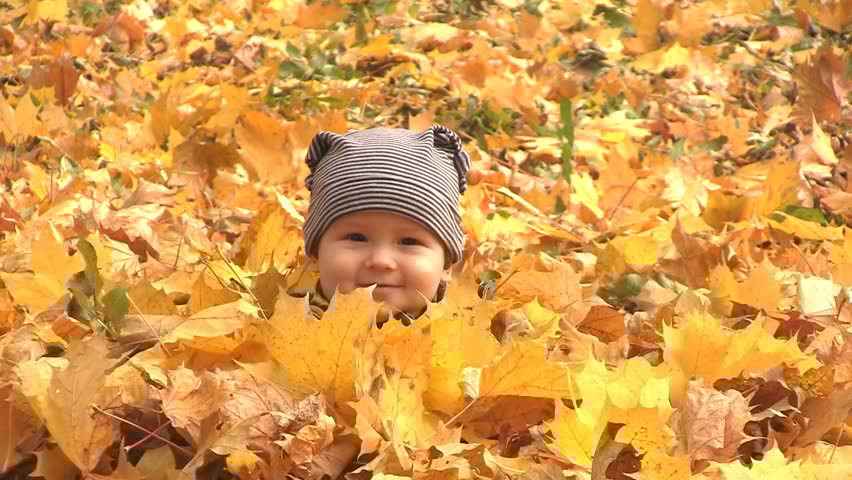
Photo from Google.


Get Back To Whom We All Belong, God

DSCF0895
The Lord Is My Chef Sunday Recipe, Week XXVII-B, 07 October 2018
Genesis 2:18-24///Hebrews 2:9-11///Mark 10:2-14

             Lately I have been having some strange feelings that I think probably comes with age as well as with the reality of my mortality.  Don’t get me wrong.  It is not about being morbid or depressed or whatever.  It is just a kind of feeling wishing every day is a “throwback Thursday” when I want to listen to old songs, see old friends and visit old places I have been to.  It is like singing the Beatles’ “Get Back” over and over again because that is the actual direction we all take eventually in life:  we get back to ourselves, back to our roots, back to everything and everyone, and most of all, back to God.

             Jesus Himself in our gospel these past weeks has been going to the same direction.  From Caesarea Philippi, He took a U-turn to go back to Jerusalem to fulfill His mission which is to get back the people to God.  After identifying Himself as the Messiah, Jesus held special lessons about discipleship with the Twelve until they reached Capernaum the other Sunday where they stayed in a “house”.  Today and next Sunday, Mark tells us how Jesus entertained some questions from the crowd that are very relevant even to our own time, divorce and how to gain eternal life.  In both instances, Jesus would bring us all back to God the Father for the answers.

             The Pharisees approached Jesus and asked, “Is it lawful for a husband to divorce his wife?”  They were testing him.  He said to them in reply, “What did Moses command you?”  They replied, Moses permitted a husband to write a bill of divorce and dismiss her.”  But Jesus told them, “Because of the hardness of your hearts he wrote you this commandment.  But from the beginning of creation, God made them male and female.  For this reason a man shall leave his father and mother and be joined to his wife, and the two shall become one flesh.  So they are no longer two but one flesh.  Therefore what God has joined together, no human being must separate.” (Mk.10:2-9)

             There we have it from the Lord Himself, loud and clear.  Jesus wants us to go back to the very roots and cause of our relationships, God.  More than the fidelity of husband and wife to each other, our gospel is reminding us to always see God as the foundation of the ties that bind us together as persons and communities.  More than the law and human situation, Jesus went back farther to God as the ultimate root and origin of everything in this life in explaining divorce to the Pharisees.  This explains why our first reading is taken from Genesis where it is shown how the sages of Old Testament reflected on the realities of life:  that everything happened because God the Creator willed it so “in the beginning.”  We came into being because of God, “male and female he created them.”  Most of all, it is very clear that it is not man who caused God to create woman for she has always been a part of His plan because “it is not good for man to be alone.  I will make a suitable partner for him.” (Gen. 2:18)  It is also God who is the reason why we get attracted and desire to enter into communion with others most especially in getting married.  Our relationships in general and marriage in particular are a part of the grand design of God; we come together because of God.  And we can only recover our original unity in God through man and woman, “that is why a man leaves his father and mother and clings to his wife, and the two of them become one flesh.” (Gen.2:24)  Human relationships must be governed by God and not by humans.  We also find in these short passages the beautiful vision of marriage and sexuality that drives man and woman toward union, not the impulse of a carnal and uncontrollable blind instinct.

            So many things happen that mar and destroy our relationships.  People change, even those in our family, in our circle of friends, and most especially with spouses.  Without being simplistic about it, Jesus tells us that one reason for this is “the hardness of our hearts” when we are filled with ego, when we refuse to love.  That imagery by the Lord of hardened hearts is timely as we venerate tomorrow the relic of the incorrupt heart of St. Padre Pio at UST.  I am not surprised that St. Padre Pio’s heart has remained incorrupt with the holiness he had shown especially with the sick and the sinners that his heart must be so filled with love of God.  A heart without love is a dead heart, a heart of stone that is hard and selfish.  And this is why I am not also surprised at all when arrogant creatures like politicians caught on camera shamelessly demeaning people later complained of chest pains after going viral in social media.  They are like the Pharisees with hardened hearts.

 A good friend recently wrote in his blog a beautiful reflection about the South African term “Ubuntu” that is very appropriate for us today as we experience divisions due to politics (https://relativejoyforyou.wordpress.com/2018/10/05/ubuntu/).  Ubuntu is the belief that we are defined by our compassion and kindness towards others.  According to my friend, there can be many other ways of defining or describing “Ubuntu” which I believe also rests on God being the very root and foundation of our relationships.  I recalled his blog as I prayed on our gospel this Sunday, especially that part when “in the house the disciples questioned Jesus about this.” (Mk.10:10)  I wish to direct your attention more to that going back in the house where they were staying which is for me an imagery of Jesus bringing back the Twelve into the very heart of God to explain the evils men do to destroy our wonderful ties and relationships.  And for the second time in three weeks, Jesus again would call children to tell the Twelve that “the kingdom of God belongs to such as these.  Amen, I say to you, whoever does not accept the kingdom of God like a child will not enter it.” (Mk.10:14-15)

                 Ubuntu is also a call to go back to our being children.  Two Sundays ago we reflected that the way we relate with children and women reflects our true relationship with God.  After explaining the nature of our relationships being rooted in God, Jesus “inside the house” again showed that the children embody the reality of our communion because only they can show true kindness and compassion, love and trust with one another.  Children have that unique gift of being “aware” of our single origin and unity in God.  By embracing children, Jesus is again inviting us to go back to the pristine image of holiness, of oneness with God and with others when we regard everyone as “brothers and sisters” in Christ. (Heb.2:11)  AMEN. Fr. Nicanor F. Lalog II, Parokya ni San Juan Apostol at Ebanghelista, Gov. F. Halili Ave., Bagbaguin, Sta. Maria, Bulacan 3022

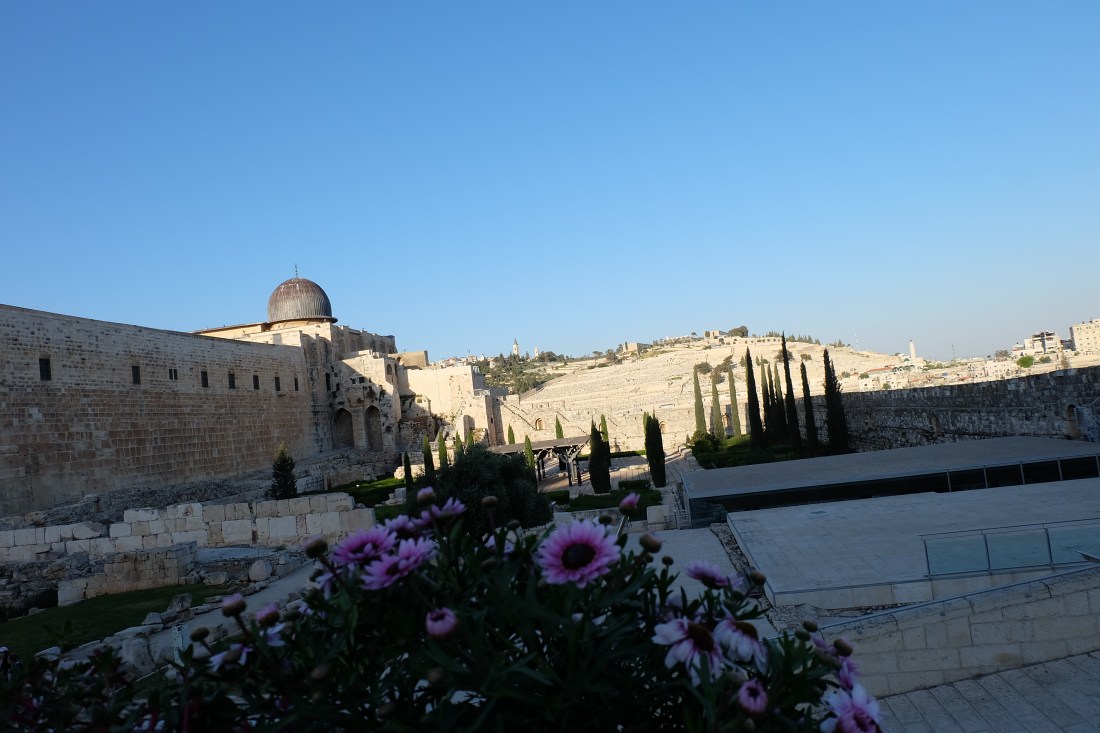
Photo by Fr. Nick f. Lalog II, Wailing Wall of Jerusalem, April 2017.

Discipleship, Not Membership

RaffyBatanes18
The Lord Is My Chef Sunday Recipe, Week XXVI-B, 30 September 2018
Numbers 11:25-29///James 5:1-6///Mark 9:38-48

            Due to the increasing prices of most goods like vegetables and meat products, lately I have been buying most of our groceries at a membership club that offers sales and discounts.  But I have also noticed something so strange, really odd with the people going to these Costco copycats that have become an “R&R” destination like a park or a mall, literally a “pasyalan”.  See how people – not really shoppers – take “groufies” or “selfies” on alleys stacked with imported goods while their grocery cart only have a handful of products readily available in a sari-sari store.  I have asked some of the staff there who told me how some people go to their exclusive, membership-only shop simply for bragging rights in social media like Facebook.

            And there lies the big problem even in our Christian way of life:  we are so concerned with our membership forgetting the more essential which is discipleship.

            At that time, John said to Jesus, “Teacher, we saw someone driving out demons in your name, and we tried to prevent him because he does not follow us.”  Jesus replied, “Do not prevent him… For whoever is not against us is for us.  Whoever causes one of these little ones who believe in me to sin, it would be better for him if a great millstone were put around his neck and he were thrown into the sea.” (Mk.9:38-39, 40, 42)

            Today our gospel is reminding us that there can be no compromises with our Lord Jesus Christ who can be meek and stern, open-minded and demanding.  For Him, the sky is the limit in everything that is good, regardless of affiliations; however, when it comes with evil, the Lord is very clear too that there are no excuses.  What is wrong is always wrong.  Hence, we find in the following verses His famous teachings that “if your hand causes you to sin, cut it off.  It is better for you to enter into life maimed than with two hands to go into Gehennna, into the unquenchable fire.  And if your foot causes you to sin, cut it off.  It is better for you to enter heaven crippled than with two feet to be thrown into Gehenna.  And if your eye causes you to sin, pluck it out.  Better for you to enter into the kingdom of God with one eye than with two eyes to be thrown into Gehenna.”(Mk.9:43-48)  Of course, these teachings are not to be taken literally for Jesus was just using a literary device to stress His point on the need to be good by getting into the very core or root of our sinfulness.  One of the important things I have learned during our 30-day retreat came from our 93-year old Jesuit director, Fr. Arthur Shea who told me that once we understand our sins, then we sin less often.  That is also the point of Jesus:  understand why we commit sin, then we learn how to avoid committing that sin again.

            When we consider the other teachings by Jesus these past two Sundays, we go back to that crucial point in Caesarea Philippi where He asked us all, “who do you say that I am?”  It is not enough to simply know in our minds who Jesus is, to belong to His group, to be “in” with Him though that is the first step.  In fact, Jesus came so that we may all be gathered into one again under God our Father.  That was also the point of Moses to Joshua in the first reading when he declared how God would want to “bestow his spirit” to everyone even those not present in the meeting because we all belong to God.  In John, Jesus mentioned how He cares for the other sheep not in His fold to show that indeed He is the Good Shepherd (Jn.10:16) who gathers His flock. It is clear that we all belong to the Father through Christ in the Holy Spirit.  But that is just the starting point:  more essential than membership to Jesus is discipleship.
              Discipleship means professing Jesus is the Christ like Peter in Caesarea Philippi not once but every day in our life by denying ourselves, taking up our cross and following the Lord daily.  Discipleship means recognizing Jesus among the children and women, among the poor and suffering, preferring nothing for the love of Christ.  Discipleship means taking a U-turn from our sinfulness to truly follow Jesus Christ by being kind and just with the poor as St. James stressed in the second reading today.  This Sunday through the Eucharist, let us not simply renew our membership in Christ in Holy Communion but most of all reaffirm our discipleship in Him by going forth after the Mass to proclaim His gospel in words and in deeds.  A blessed week to everyone! AMEN. Fr. Nicanor F. Lalog II, Parokya ni San Juan Apostol at Ebanghelista, Gov. F. Halili Ave., Bagbaguin, Sta. Maria, Bulacan 3022
*Photo by Mr. Raffy Tima of GMA-7 News, Batanes after Typhoon Ompong, 17 September 2018.  Used with permission.

The Way of the World Or, The Way of the Lord?

RaffyBatanes11
The Lord Is My Chef Sunday Recipe, Week XXV-B, 23 September 2018
Wisdom 2:12, 17-20///James 3:16-4:3///Mark 9:30-37

             One of the things I enjoy with driving is getting lost, asking for directions, and making a lot of U-turns.  And as I age, the more I realize as I have told in July that life is about direction than of destination.  As we go on with life, we need to always go back and make many U-turns.   Maybe this explains why as we get older, we go back to being like children with less hair, less teeth, and less control of many things that eventually, we have to be cared for by others.  It is this imagery of going back in life that our gospeI today is presenting us with Jesus making a U-turn from Caesarea Philippi to head down south to Jerusalem with His disciples.  It is a beautiful imagery of ageing gracefully, of how Jesus would direct our sights back to God the Father symbolized by Jerusalem by directing our attention to a child.

             They came to Capernaum and, once inside the house, he began to ask to ask them, “What were you arguing about on the way?”  But they remained silent.  They had been discussing among themselves on the way who was the greatest.  Then he sat down, called the Twelve, and said to them, “If anyone wishes to be first, he shall be the last of all and the servant of all.”  Taking a child he placed it in their midst, and putting his arms around it said to them, “Whoever receives one child such as this in my name, receives me; and whoever receives me, receives not me but the One who sent me.” (Mk.9:33-37)

              By identifying Himself with a child, Jesus is not only asking us to be childlike but most of all to examine how we treat children – and women – because that mirrors how we relate with God!  See how sad and tragic in this age when children (and women) are abused, maltreated and molested by adults, by the very people supposed to love and care for them that include some priests!  These shameful sins and crimes against children and women show how far we have deviated from God, including those religious men supposed to lead us closer to God.  We in the clergy are so pained and deeply hurt within why some of our fellow workers in the Lord have committed those grievous sins, destroying lives and siding with the devil in the way of the world.  They have turned away from God, miserably and tragically failing to see God among the children and women.  It is plain and simple:  anyone who abuses and molests children and women are not of God.  They may know but do not believe in God just like the devil.

                 See how Jesus lovingly embraced that child in the midst of the Apostles.  Like the Greeks and the Romans of that time, the Jews considered children of no value at all because they were not complete humans.  Childhood was largely seen then as a stage on the way to fullness of humanity.  That is why in the feeding of 5000 in the wilderness, children like women were not counted.  It was the reason why the apostles drove away the children coming to Jesus one day for which they were reprimanded, telling them that “unless you become like little children you will never enter the Kingdom of heaven.”(Mt.18:3)  By lovingly embracing that child in the midst of the Twelve, Jesus is reminding us to go back to the most pristine image of holiness, of God Himself.  Childhood is a value in itself!  Children are the most loving, the most trusting, and the kindest of anyone.  They always tell the truth, they never lie and make stories.  All they see is beauty and goodness that they always have that sense of awe and wonder.  And that is God, is He not?

               “Whoever receives one child such as this in my name, receives me; and whoever receives me, receives not me but the One who sent me.” (Mk.9:37)  Last week, Jesus asked us “who do you say I am?”  Maybe until now we are still grappling for our answers, still wondering or searching, trying to figure out who is really Jesus for us.  Today while He lovingly embraced a child in our midst, Jesus is inviting us to look into their eyes to find Him, to discover anew the giftedness and preciousness of life as well as its fragility and mortality.  Everybody is so excited that we are now just 100 before Christmas but has anyone reflected on God’s wonderful gift of His own Son becoming human, born as an infant, a helpless, little baby entrusting Himself to our care?  What have we done with the children?  Are we still with God?

                 “Ephphata!” Let us be opened to God again, to see Him and welcome Him in Himself as He is, just like the way we take children that is not according to our own ideas.  When we go back in the gospels and see the teachings of Jesus Christ, we always find His constant reference to children and to childhood, warning us not to lead them into sin because their angels are always guarding them (Mt.18:1-10).  This shows us that everything in Christ is all about our return to God, of entering the Kingdom of heaven by “becoming like a little child.” (Mt.18:3)  Jesus was the first to become a child, being born unto us and now identifying Himself with a child to reveal to us Himself as one who is the “last and the servant of all” like a child among us, serving us!  How ironic!  Most of the time, we always brag about our being “adults”, of being the “captain of my ship, master of my fate.” That may be good to a certain extent but it is not really what life is all about which is going back to a child, going back to God, being lowly and humble to bend down and serve.  It is something that runs contrary to the way of the world like what we have heard in the first reading.  St. James reminds us too to go back to God, to go back relating with a child, becoming like a child who is pure and simple for us to attain peace within.  Along with Jesus and the Twelve from Caesarea Philippi, let us make that U-turn and follow the way of the Lord, not the way of the world by seeing God among children and women.  AMEN. Fr. Nicanor F. Lalog II, Parokya ni San Juan Apostol at Ebanghelista, Gov. F. Halili Ave., Bagbaguin, Sta. Maria, Bulacan 3022.

*Photo by Mr. Raffy Tima of GMA News in Batanes a day before Typhoon Ompong hit the country last week.  Used with permission.

Realizing Who Jesus Is

Betania2
The Lord Is My Chef Sunday Recipe, Week XXIV-B, 16 September 2018
Isaiah 50:5-9///James 2:14-18///Mark 8:27-35

            We have a Filipino dictum that says you will never truly know a person until you live with him/her under the same roof.  It is very true, whether you are a married couple or a priest assigned to a parish with another priest.  It is in living together, in staying together especially on hard, trying times when we come to know the other person we are living with.  This requires openness like the command last week by Jesus in healing a deaf mute, “Ephphatha!”, “Be opened!”  Beginning today for three consecutive Sundays, Jesus asks us to be open as He brings us into the very core of His teachings and of His person as the Suffering Christ.  From Decapolis where He had healed that deaf mute last Sunday, He and the Twelve today continue their journey into the pagan regions reaching its capital city of Caesarea Philippi.

              Along the way he asked his disciples, “Who do people say that I am?”  They said in reply, “John the Baptist, others Elijah, still others one of the prophets.”  And he asked them, “But who do you say that I am?”  Peter said to him in reply, “You are the Christ.”  Then he warned them not to tell anyone about him.  He began to teach them that the Son of Man must suffer greatly and be rejected by the elders, the chief priests, and the scribes, and be killed, and rise after three days. (Mk.8:27-31)

             Here we find anew the significance of Mark setting the gospel at Caesarea Philippi where a magnificent temple in honor of the Roman god Pan was located.  Recall how in telling us that healing of a deaf mute at Decapolis, Mark shows us Jesus would reach out to us even in the most hostile and alien situations we are into.  And now in this leading Roman city, Mark is reminding us how in our own time in the midst of all kinds of gods competing for our attention and allegiance is also Jesus Christ present, revealing Himself as the “Suffering Messiah” who would die on the Cross but rose again after three days for our salvation.  The invitation of Jesus remains the same, “Whoever wishes to come after me must deny himself, take up his cross, and follow me.  For whoever wishes to save his life will lose it, but whoever loses his life for my sake and that of the gospel will save it.”(Mk.8:34-35)  What a beautiful setting there at Caesarea Philippi like today when we are surrounded by so many gods offering us fame and pleasures while the True God willing to suffer and die for us, asking us if we still know Him, if we are still with Him.

             See the very simple presentation by Mark unlike in Matthew and Luke where Jesus praised Peter after identifying Him as“the Christ.”  Right after Peter’s answer, we find Mark with his usual “Messianic secret” when Jesus warned them not to tell anyone about Him being the Christ or Messiah.  Jesus, as well as Mark, wanted everyone to experience personally His being the Christ and not just any miracle worker who would give the people’s usual requests for health and wealth.  It is an echo of Christ’s groan last week to be opened with God’s thoughts, not with man’s thoughts like Peter always trying to avoid even negate pains and sufferings.  In revealing to us for the first time the sufferings He would undergo, Jesus is also inviting us all to live with Him, to stay with Him in His Passion and Death to experience His Resurrection.   We can never get to know Him and answer His question “Who do you say that I am?” unless we must first learn to be with Him at the Cross.  Jesus had to insist here at how He “must” suffer greatly because that is the reality of love:  without sacrifice, without giving of self, it is not love at all.  To truly love, one must be willing to give without ifs and buts.

             The Cross is the essence of the good news of Jesus Christ.  We need to ask for that grace from God for us to accept and embrace this Cross that has always been a scandal and stumbling block for everyone’s faith journey.  It is the key in answering His question “Who do you say that I am?” because it was on the Cross where Jesus Christ was fully revealed, the fulfillment of God’s “Suffering Servant” Isaiah had prophesied at the first reading.  Despite its violent tones, it is a beautiful reminder to us of the need for total reliance in God alone, of our need to always pray for that grace of God to free our thoughts of the things that go against His plans as Satan would always do.  To know who Jesus Christ is to join Him in His Cross.  When we refuse to do so, we not only fail in truly knowing Jesus Christ but also mislead others into thinking He is “John the Baptist or Elijah or one of the prophets”as the Twelve told Him at Caesarea Philippi.

             After writing this reflection last night, I saw the viral photo of a student in Atimonan, Quezon doing his homework inside their classroom (https://ph.news.yahoo.com/viral-student-stays-classroom-finish-052524025.html).  It is a very touching story of a student staying behind in their classroom to finish his homework because they have no electricity at home.  His teacher had asked him to go home because it was already 7:30PM with Typhoon Ompong threatening Luzon.  The teacher noted in his Facebook post how the student had “befriended” hunger after so many nights of staying behind in their classroom to do his assignments because it was more difficult to study at home using a gas lamp.  He said such students inspire him to continue teaching in public school no matter how difficult it may be. See how when we are willing to join Jesus Christ in His Cross, we not only get to know Him but we in fact meet Him as well, introducing Him to more people like that teacher and his student in Quezon.  After Jesus Christ’s revelation at Caesarea Philippi, He then made a U-turn to go down to Jerusalem to finally fulfill His mission.  Let us join Him, let us follow Him.  Amen. Fr. Nicanor F. Lalog II, Parokya ni San Juan Apostol at Ebanghelista, Gov. F. Halili Ave., Bagbaguin, Sta. Maria, Bulacan 3022

Photo by the author taken at Betania-Tagaytay, 22 August 2017.

Opening to God

41301847_249136239078432_3924881749493940224_n
The Lord Is My Chef Sunday Recipe, Week XXIII-B, 09 September 2018
Isaiah 35:4-7///James 2:1-5///Mark 7:31-37

            Whenever people come to me for counselling or spiritual direction, the first thing I ask them after listening to their story is“where is God in your experience?”  Most often, they pause, then nod their heads or look up, staring somewhere as they reflect on my question.  But when they get ready to answer my query, their faces would always glow with a sparkle in their eyes or smiles on their lips as if telling me “God has always been with me but I rarely noticed Him.”  A friend once wrote in his blog that “whenever we face difficult situations in life and there is that deafening silence, always remember that the same thing happens when there is an exam:  it is always silent but the teacher is always present.”  Today in our gospel, Jesus is reassuring us of the love of the Father, of His constant presence among us especially in the most trying times of our lives.  Jesus continues to reach out to us, always moving around, visiting us, staying with us.

            Again Jesus left the district of Tyre and went by way of Sidon to the Sea of Galilee, into the district of the Decapolis.  And people brought to him a deaf man who had a speech impediment and begged him to lay his hand on him. (Mk.7:31-32)

            There are two striking things about Christ’s healing this Sunday.  First is the location that happened in a pagan territory.  Mark rarely mentioned the place visited by Jesus unlike today when he specified the Lord going to the “district of Decapolis” or district of ten cities.  It was a region inhabited by pagans and foreigners considered outcasts by Jews who regarded themselves as the chosen people of God.  Jesus did not only reach out to His fellow Jews but even to their considered enemies like pagans and Samaritans.  In today’s gospel, Mark is telling us that Jesus also comes and stays with us in unfamiliar, foreign places and situations in life.  When we feel alienated and lost due to a failure or a defeat, when we feel alone and abandoned and hopeless because of so much pains and sufferings, these are our “Decapolis” where Jesus comes to heal and comfort us.

               The second striking thing about this healing is the manner how Jesus did it:  Jesus took him off by himself away from the crowd.  He put his finger into the man’s ears and, spitting, touched his tongue; then he looked up to heaven and groaned, and said to him, “Ephphata!” – that is, “Be opened!”  And immediately the man’s ears were opened, his speech impediment was removed, and he spoke plainly. (Mk.7:33-35) 

               Whenever Jesus comes to visit us and heal us, He would always separate us first from other people and even situations or locations to be totally with Him.  Here we find the value of “constant prayer” that remains very crucial in life even in this modern time  (Pope Francis, Gaudete et Exultate 147-157).  Likewise, Mark never bothered to tell us the name of that deaf mute because we are in fact that deaf mute too who live in our own worlds filled with so many thoughts and words of others and of ourselves except of God.  Jesus “took him off” from the crowd to teach us that important lesson of praying, of separating from the rest to create a sacred space for God in our daily lives where we experience Him personally and intimately – just the two of us, me and God – like our own experience with a friend or a spouse.

               Observe also how Jesus would usually heal by simply speaking.  With this pagan, Jesus not only “took him off” from the crowd but also had to touch his ears and spit to touch his tongue!  Imagine Jesus touching the deaf mute’s tongue with His own saliva, as if putting His personal seal to this unique healing!  Moreover, in this healing Jesus reminds us of the spiritual nature of His coming to us:  then he looked up to heaven and groaned, and said to him, “Ephphata!” – that is, “Be opened!”  And immediately the man’s ears were opened, his speech impediment was removed, and he spoke plainly.  What a beautiful image of the Son of God looking up to heaven, praying and making it known to all that this healing is the will of our loving and merciful Father.  Jesus came precisely to bring God closer to us and to bring us back to Him.  Of the four evangelists, only Mark would always report the Lord’s request not to tell anyone of a healing to stress the spiritual nature of His mission.  Jesus wants to be known as the Messiah, our Savior and not just like any miracle worker providing health and wealth.  Though it is true that there must be tangible signs of the salvation brought by Christ that we have to work for justice and peace in the society, we have to keep in mind also that effecting changes among peoples and the world are the works of God, not of humans.  We are mere sowers of the seeds but it is God who makes that seed to sprout and grow.

              The very word of Jesus to heal that deaf mute is what we also badly need these days, “Ephphata” or “Be opened!”  We need to be opened daily to cleanse our hearts of sins and selfishness.  Like the Pharisees and scribes last week, our faith and worship emanate more from our lips than from our hearts with all the troubles we are into right now as a nation and a Church.  To be opened to God is to keep God in our hearts through daily conversions, not being focused with outward appearances.  Openness to God is heeding the call of St. James in his letter to “show no partiality as you adhere to the faith in our glorious Lord Jesus Christ.”(Jms.2:1)  How sad that today the celebration of the Holy Mass has become more of a show, and worst, a propaganda tool in politics.  When the Mass is celebrated for political reasons, communion is shattered and destroyed because everybody – the priests and the congregation – are not looking up to heaven but looking down to people and to streets for their own solutions to a problem.  To open our hearts to God means we, especially us priests, must go away from the limelight and partisan politics, to be hidden from the crowd so that it is Christ who is experienced because only He changes peoples and nations.  Opening to God is allowing God to do His work in us and through us, always centered on Him and not to one’s self or anyone claiming to be a messiah.  May we open our hearts today to God so He would truly dwell in us.  Amen. Fr. Nicanor F. Lalog II, Parokya ni San Juan Apostol at Ebanghelista, Gov. F. Halili Ave., Bagbaguin, Sta. Maria, Bulacan 3022.

Photo by the author, sunrise at the Dead Sea, 21 April 2017.

“Cross” My Heart

Lake Tiberias
The Lord Is My Chef Sunday Recipe, Week XXII-B, 02 September 2018
Deuteronomy 4:1-2, 6-8///James 1:17-18, 21-22, 27///Mark 7:1-8, 14-15, 21-23

            When we were growing up, one of the common expressions among us was “cross my heart” to indicate the sincerity and truthfulness of what one is saying.  It is often reinforced with the making of a sign of the cross on one’s chest or heart.  It is a beautiful expression that shows us the centrality of the human heart in our very being and person.  Today’s gospel speaks also of the heart and the many “crossings” we have to make to ensure it remains true.

            After an interruption of five Sundays, we now go back to Mark’s Gospel which we continue to read until the Solemnity of Christ the King in November that closes this liturgical year to usher in Advent, those four Sundays before Christmas.  It is very funny, even ridiculous, that as early as last week, people have been raring to start the Christmas countdown in social media as they hurried to cross into September to get rid of the last few days of ghost month August which actually ends in September 9.  Observe my dear reader that concept of “crossing” into the “ber” months while in the gospel, we find Jesus repeatedly crossing the lake to proclaim the kingdom of God.  After miraculously feeding the more than 5000 people, Jesus sent the Twelve ahead of Him in crossing Lake Tiberias as He sent the crowd home.  He then prayed on top of a hill and at 3AM, He followed His apostles by walking on water in the midst of a storm at the lake.  After calming the sea, they came to Gennesaret, the setting of our gospel today.  Mark reports the growing tensions among Jewish officials and Jesus who have become so popular among the people for His teachings and healings.  Now, some Pharisees and scribes from Jerusalem have found a case against Jesus after observing His disciples non-compliance with their rituals of washing and purification.  But Jesus would mince no words explaining the meaning of the rituals, citing the Prophet Isaiah to highlight their hypocrisy in showing off their “holiness” in complying with their ancient traditions of washing and cleansing.

            See that after His initial explanation, Jesus “summoned the crowd again and said to them that nothing enters one from outside can defile that person; but the things that come out from within are what defile.”(Mk.7:14-15)  After this second explanation to the crowd, Mark tells us that “when Jesus got home away from the crowd … He said to His disciples that from within people, from their hearts, come evil thoughts, unchastity, theft, murder, adultery, greed, malice, deceit, licentiousness, envy, blasphemy, arrogance, folly.  All these evils come from within and they defile.”(Mk.7:17,21-22)  Jesus had to separate – a sort of “crossing” the crowd from the Pharisees and scribes, and later separate too the Twelve from the rest to insist that holiness is about having a clean heart through conversion from sins, not from cleaning and washing of hands and utensils.  That is what all these “crossings” imply in the gospel today, the need for our continuous conversion of the heart within, not in some outward appearances and practices.  Discipleship is a life of crossing the lake with Jesus every night in darkness, even in the midst of storms.  Discipleship is a daily crossing of the Red Sea, an Exodus, from slavery to freedom – a crossing from death into life, from sin into grace.  Discipleship is a daily conversion of our hearts so that Jesus truly reigns in our lives.

               Since the start of His ministry in Galilee, Jesus had been crossing the lake to pray and to rest with His disciples, to preach and to heal the people.  He always crossed that great lake so as to reach out everyone, especially the marginalized ones like the poor, the sick, the orphans, and the widows.  In becoming human like us, Jesus “crossed” heaven to earth, from eternity to temporal to be among us.  His Passion, Death, and Resurrection was in fact a “crossing” that led Him to the glory of Easter.  Through Him, we too are able to cross into a life of fulfillment in Him when we are able to bear our crosses with Him.  In preaching about the purity of one’s heart while in Gennesaret, Jesus dared the Pharisees and scribes to “cross” to His side by discarding their truncated views and practice of the rituals.  In summoning the crowd closer to Him away from the Pharisees and scribes, Jesus invited the people to “cross” to Him to realize true purity based on a clean heart and not from external rituals.  Most of all, He repeated this important teaching to His disciples again after they have gone home, away from the Pharisees and scribes and from the crowd, implying the need to always cross from everyone and everything so that we can solely be focused in God.
                 When we cross our hearts in words and in gestures, let us remember that it was God who first crossed His heart to reach out to us to experience His Fatherly love through His commandments as explained by Moses in the first reading today.  God’s laws are not mere letters to be obeyed but words meant to take root in our hearts for it is also a call to a relationship with Him and with others.  When we cross our hearts in words and in gestures, let us remember how Jesus Christ crossed from heaven to reach us and die on the Cross because of His love for us.  Like Him, when we cross our hearts with words and gestures, we express our desire to follow Him by leaving our comfort zones into the fringes to meet and serve our wounded brothers and sisters as expressed by Pope Francis in his latest encyclical (Gaudete et Exultate, 135).  He calls this as “boldness and passion” or“parrhesia” that are signs of holiness in our modern time.  It is exactly what St. James referred to in the second reading, “Religion that is pure and undefiled before God and the Father when we care for orphans and widows in their afflictions and when we keep ourselves unstained by the world.”(James 1:27)  When we celebrate the Sunday Eucharist, we also cross from the past week into the new week filled with many opportunities to grow and mature in holiness by nurturing in our hearts Jesus we have receive in the Holy Communion, His daily crossing from heaven.  A blessed week to everyone!Fr. Nicanor F. Lalog II, Parokya ni San Juan Apostol at Ebanghelista, Gov. F. Halili Ave., Bagbaguin, Sta. Maria, Bulacan 3022
*Photo by the author.  Lake Tiberias at sunrise, 22 April 2017.